
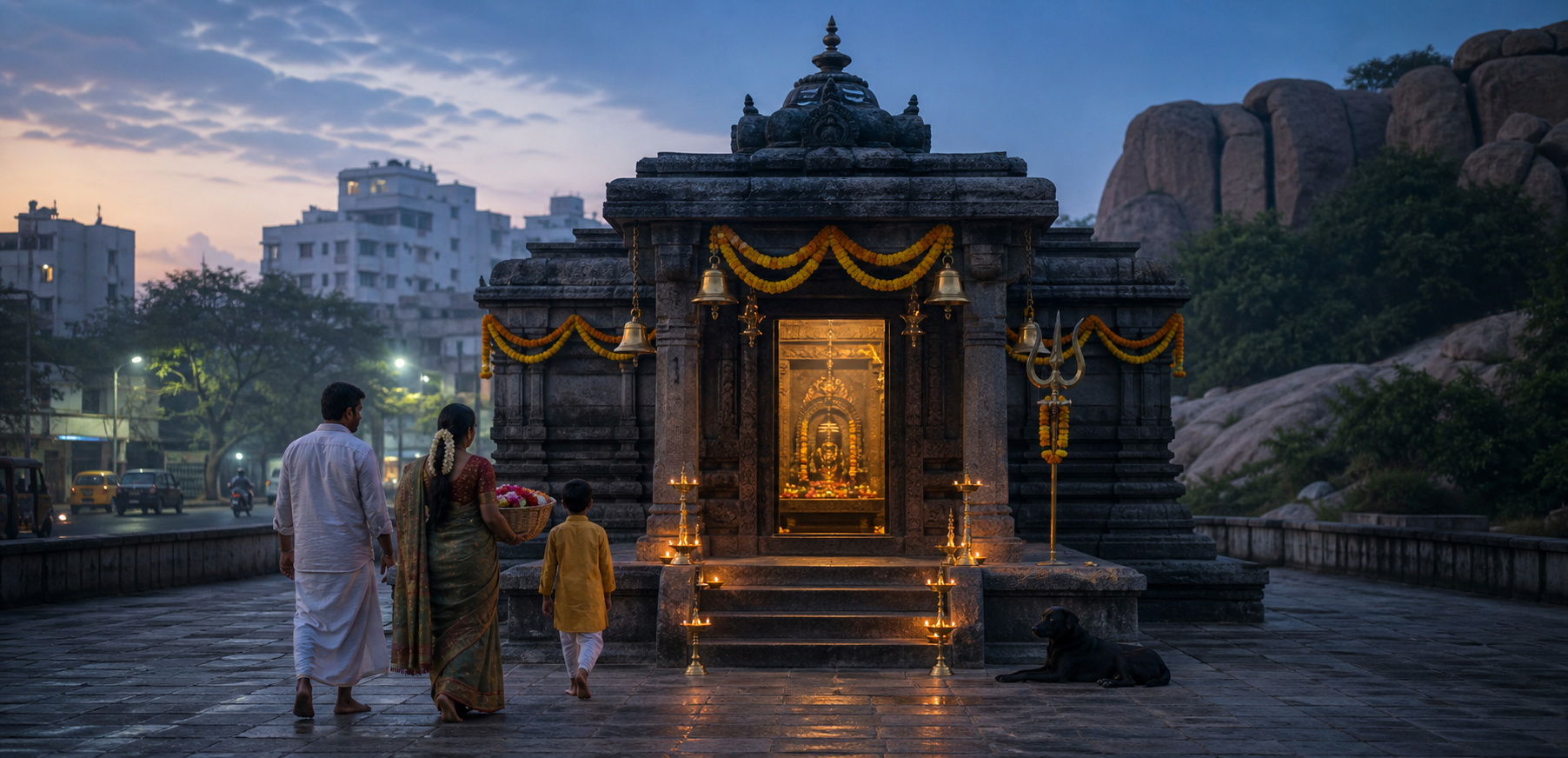
You want to visit Hyderabad’s Kalabhairava temples without losing your day to incomplete directions, similar temple names, or an itinerary that looked efficient before traffic intervened. The practical answer is to build the pilgrimage around three verified name-and-locality pairs, then let your starting point and live conditions determine the order.
This approach gives you a clear circuit without pretending that one sequence will suit every devotee. It also leaves room for the purpose of the visit: unhurried darshan, attention to your companions, and a disciplined use of time.
Place these three Kalabhairava shrines on your map
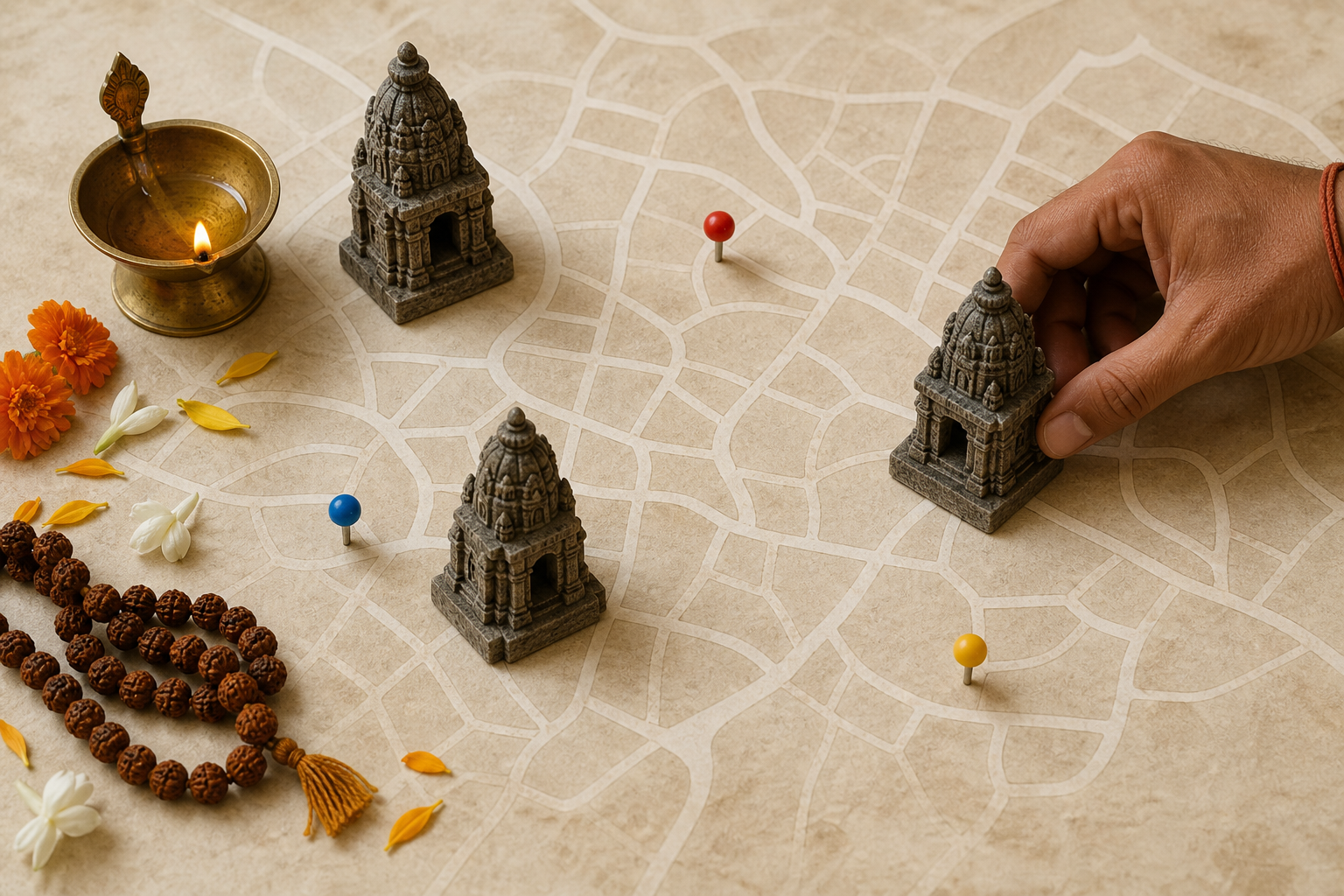
The circuit begins with three locality-qualified destinations in Balanagar, Moosapet, and Lakdikapul. Enter the complete search phrase shown below rather than searching for Kalabhairava temple alone.
| Shrine | Search phrase | Locality to confirm |
|---|---|---|
| Sri Shiva Panchayatana Kalabhairava Swamy Devalayam | Sri Shiva Panchayatana Kalabhairava Swamy Devalayam, Vinayak Nagar, Balanagar | Vinayak Nagar, Balanagar |
| Kalabhairava Swamy Temple | Kalabhairava Swamy Temple, Habeeb Nagar, Moosapet | Habeeb Nagar, Moosapet |
| Bhairav Baba Mandir | Bhairav Baba Mandir, Bazar Ghat, Lakdikapul | Bazar Ghat, Lakdikapul |
Treat each row as a search key, not as a postal address or a promise of current opening hours. The locality is your cross-check. If a result displays only a generic Hyderabad label, or shows a different neighbourhood, refine the query before saving the pin. This matters especially for Bhairav Baba Mandir: its useful search name is not identical to the Kalabhairava wording used for the other two shrines.
Save the three results as separate places before you leave. Do not assume that the first similarly named pin is the intended shrine, and do not begin navigating until both the temple name and locality agree.
Build the route from where you actually start
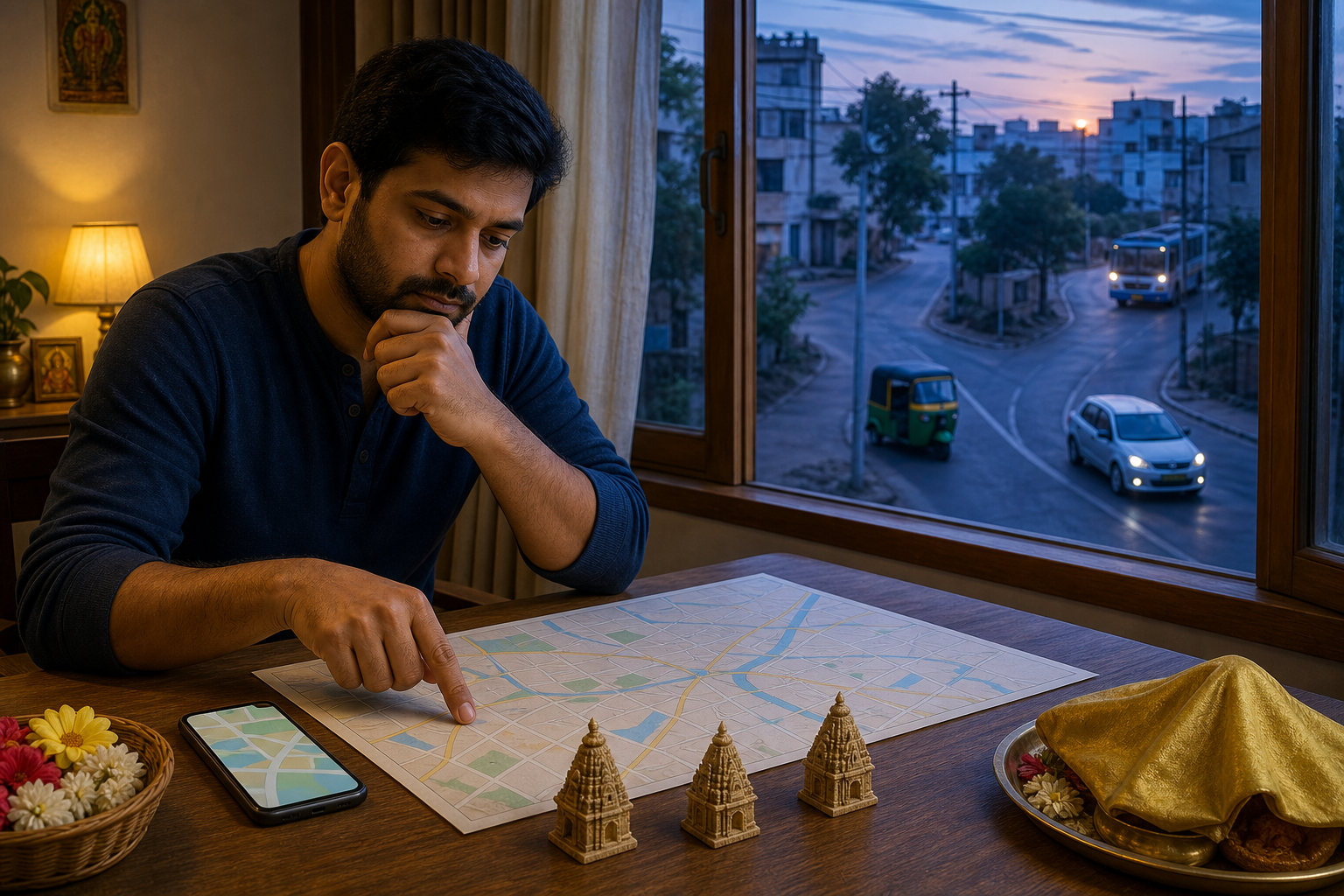
There is no universally best order for Balanagar, Moosapet, and Lakdikapul. A fixed sequence ignores your starting point, your eventual destination, and traffic on the day. Build the circuit shortly before departure, with live-traffic information enabled.
- Search each complete temple-and-locality phrase and save the matching result.
- Enter your real starting point and compare the travel time to all three saved pins.
- Choose the nearest sensible first stop, then compare the remaining two as separate legs.
- Add time between the estimated arrival and any commitment that depends on punctuality. Traffic estimates can change while you are at darshan.
- Save offline directions for every leg so that a weak connection does not leave you searching again.
- Share your live location with the people travelling with you, especially if the group may arrive in separate vehicles.
Recheck the next leg after leaving each temple. If congestion changes, reverse the remaining order rather than following the original plan out of habit. The itinerary serves the pilgrimage; the pilgrimage does not have to serve an itinerary made hours earlier.
If you are coordinating several households, share the exact saved pin instead of saying only Balanagar, Moosapet, or Lakdikapul. Choose one entrance-side meeting point after arrival, and agree that anyone who reaches a different pin will call rather than trying to lead the whole group there.
Plan timing, transport, and family comfort separately
Early morning and evening are preferences, not opening hours
Many devotees favour early-morning or evening darshan to avoid the midday heat and some of the more difficult traffic. That preference does not confirm when a particular shrine opens, closes, or conducts a special puja. If your visit depends on a particular ritual or time window, contact the temple directly before setting out.
Do not assume that all three temples follow the same daily schedule. A map listing can help you locate a shrine, but anything essential to the day’s plan should be confirmed with the temple office.
Plan the long leg and the last mile as two decisions
City buses, metro connectivity in adjacent corridors, ride-hailing services, and auto-rickshaws give you several ways to reach these localities. They do not guarantee a single door-to-door journey. Check how you will cover the final stretch before boarding the first service.
For each leg, decide whether fewer transfers or a shorter walk matters more to your group. A bus or metro-assisted journey may suit the longer movement across the city, while an auto-rickshaw or ride-hailing service may simplify the last mile. If you are driving, ask about parking rather than inferring its availability from the map.
Let the least mobile companion set the pace
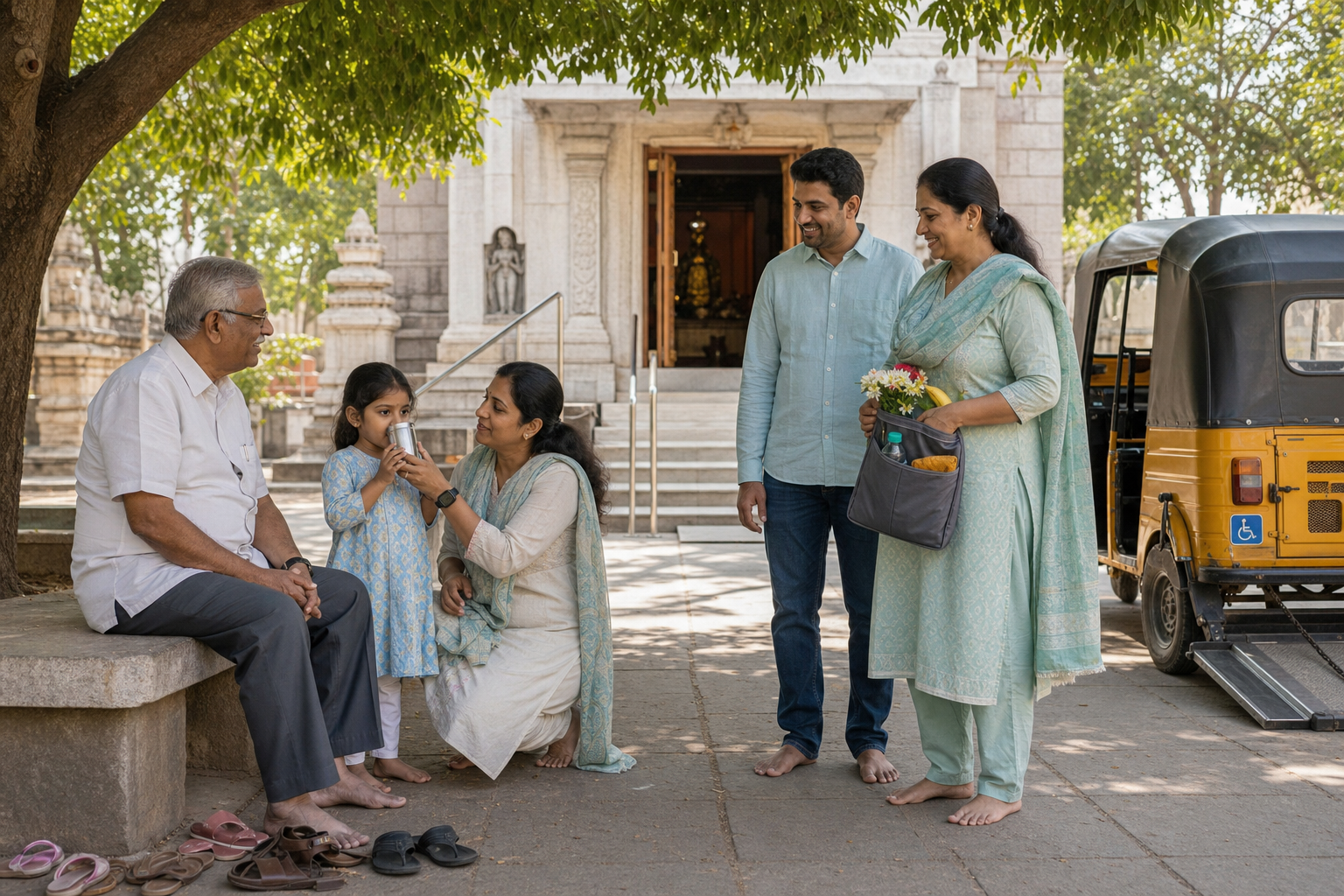
When elders or children are coming, divide the circuit into three independent legs. Carry drinking water for the journey, identify a place to rest between stops, and decide after each darshan whether the group is comfortable continuing. Completing two temples peacefully is better than turning the third into an exhausting obligation.
If accessibility determines whether someone can participate, call ahead with precise questions: Is the entrance manageable for the person travelling with you? Where can a vehicle stop? Is suitable parking available? Is there a place to pause before or after darshan? General assurances about accessibility are less useful than answers tied to your companion’s actual needs.
Make reverence for time part of the darshan
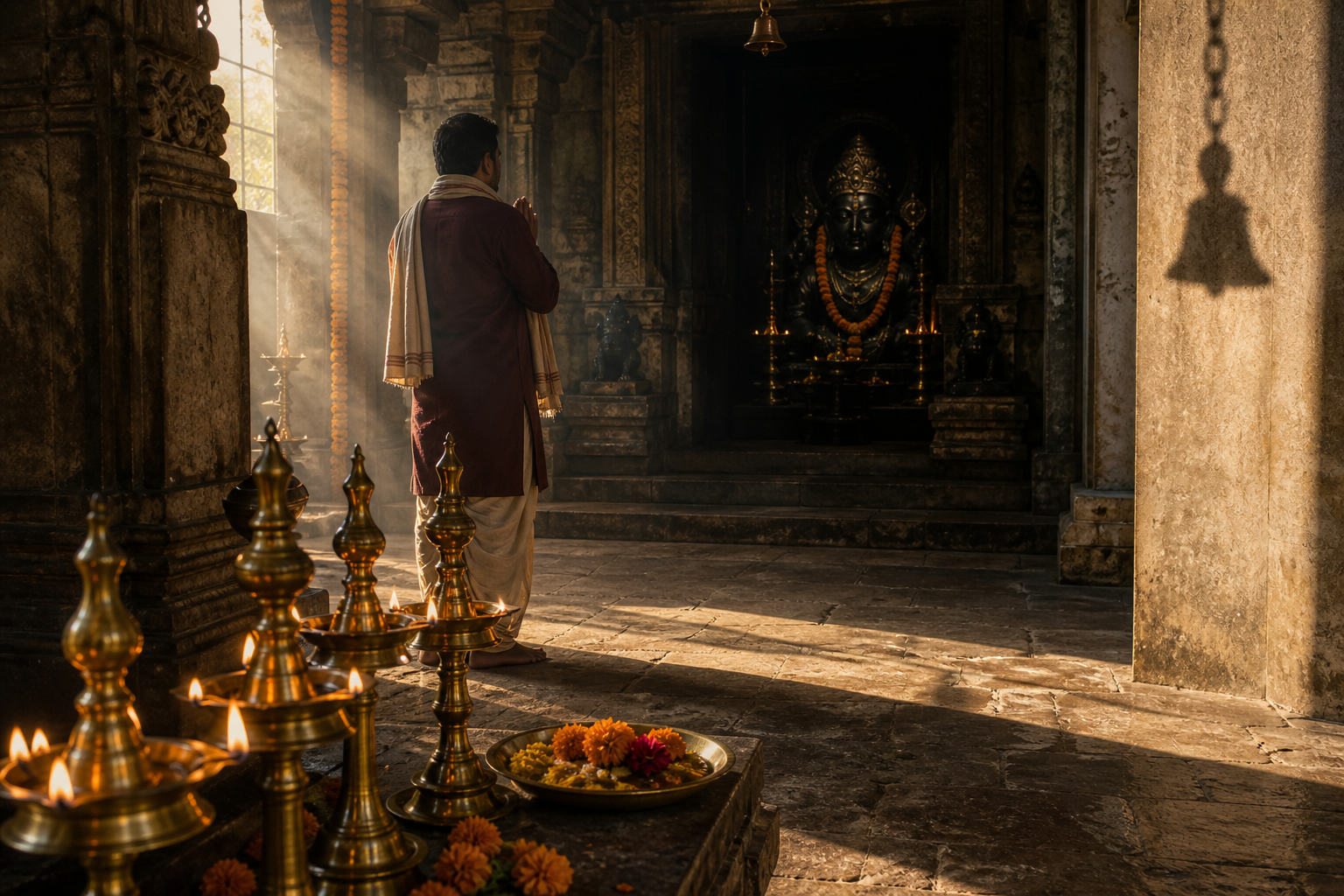
Within the Shaiva tradition, Kalabhairava evokes the guardian and guide, as well as discipline and courage. Those meanings can shape the journey before you reach the sanctum. Keep the time promised to your companions, wait without agitation, assist anyone who needs a slower pace, and avoid turning darshan into a race between map pins.
A simple personal discipline gives the circuit an inner centre. You might keep your phone silent inside the temple, refrain from rushing another devotee, or carry one clear resolve concerning punctuality, self-restraint, clarity, or service. These are modest acts, but they connect the practical management of time with the spiritual meaning of the visit.
The same values can be recognised across the wider dharmic family without pretending that Hinduism, Buddhism, Jainism, and Sikhism are doctrinally identical. Discipline, service, and attentive conduct are points of kinship. At a Kalabhairava shrine, that kinship is expressed most honestly through your behaviour, not through a claim that every tradition is the same.
Protection should not be misunderstood as permission to become careless. Confirming the pin, checking the next leg, sharing your location, and looking after vulnerable companions remain part of responsible pilgrimage.
Key takeaways for a calm Hyderabad darshan circuit
- Search the complete temple name together with Vinayak Nagar–Balanagar, Habeeb Nagar–Moosapet, or Bazar Ghat–Lakdikapul.
- Confirm both the name and locality before saving a map pin.
- Choose the order from your actual starting point and update it using live traffic after every stop.
- Verify opening times, special pujas, parking, and accessibility directly when your plans depend on them.
- Use buses, adjacent metro corridors, ride-hailing services, or auto-rickshaws according to the needs of each leg, including the last mile.
- Save offline directions and share live location when travelling as a family or group.
- Measure the pilgrimage by the steadiness and consideration you bring to it, not merely by whether you complete all three stops.
Before you leave, create the three saved map entries and make any call on which the day depends. Begin with the nearest verified pin, reassess the next leg at the temple gate, and leave enough space in the plan for darshan to remain darshan.
References
