
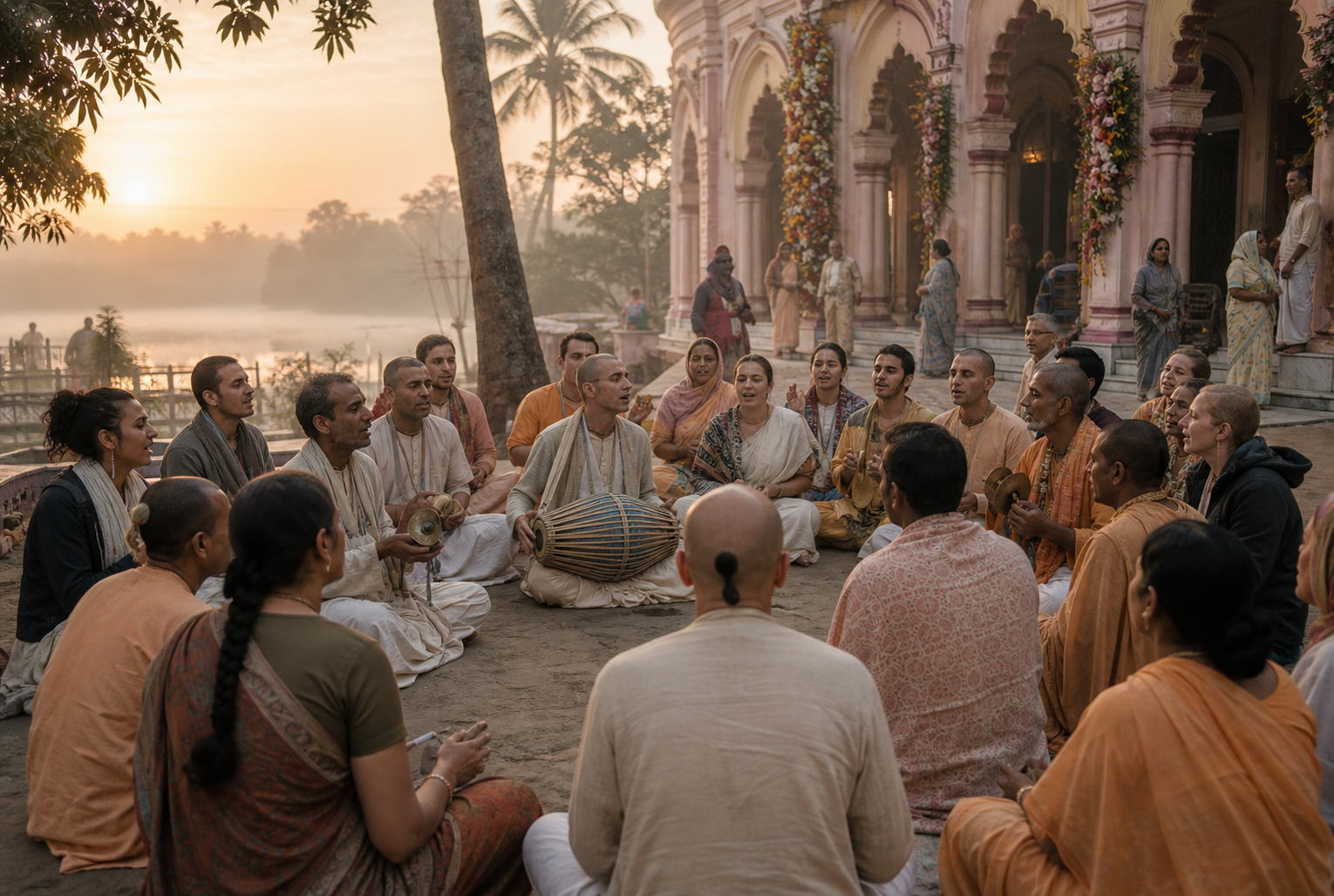
You may feel drawn to Mayapur but still be unsure what to look for when you encounter its devotional life. The music, ceremonies and festival scenes are immediately visible. Their inner logic is easier to miss.
The useful question is not simply, “What happens in Mayapur?” Ask, “How does each activity direct attention toward Krishna, and what can I learn from that orientation?” Once you learn to distinguish kirtan, yajna, pilgrimage and festival, you can engage more thoughtfully from a screen or during a future visit.
Begin with devotional intention, not spectacle
ISKCON Mayapur brings kirtans, yajnas, pilgrimages, festivals and special events into a sacred setting connected to the Hare Krishna movement’s worldwide mission. These forms do not all perform the same function, but they share a crucial feature: they turn ordinary human capacities such as voice, attention, movement and time toward worship.
That changes how you should watch or participate. A kirtan is not merely music. A yajna is not simply an attractive ceremony. A pilgrimage is not religious sightseeing, and a festival is not just a larger version of a public event. The visible form matters because of the intention, discipline and participation it carries.
Use four questions to find that devotional structure:
- What is being offered? Listen and look for the offering of voice, attention, words, movement or ritual action.
- What is repeated? Repetition often reveals the practice beneath the event: a sung response, an ordered action or a shared focus.
- How does the group participate? Notice whether people listen, respond, chant, move or maintain attentive stillness.
- Where is attention directed? Distinguish the person leading an activity from the divine focus the activity is meant to serve.
You do not need to decode every detail before you can learn. Begin by noticing orientation. When you can see what an activity asks people to remember, offer or do together, it stops looking like an unexplained religious image.
Read the four main forms without flattening them
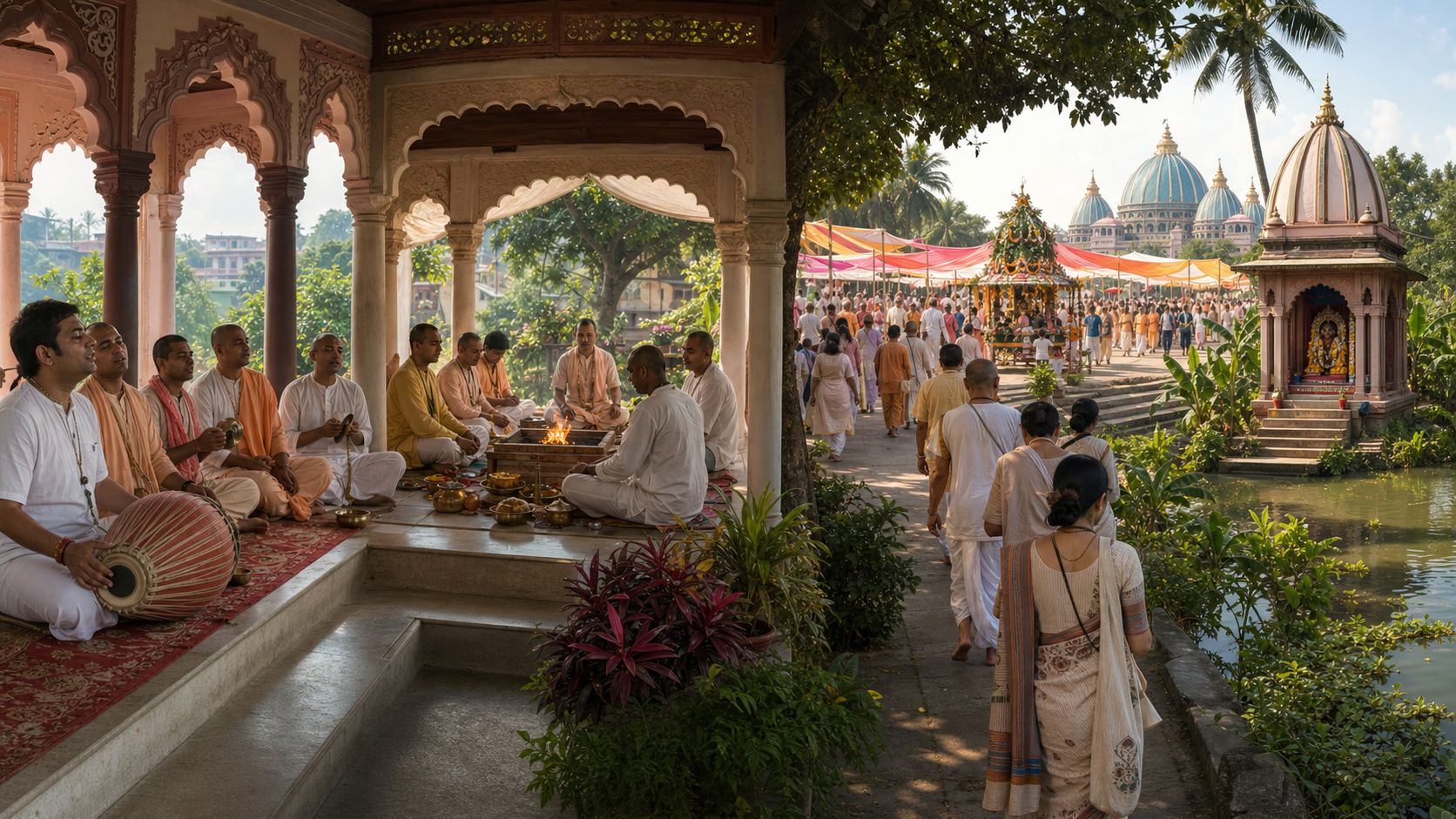
Kirtan: listen for participation
Kirtan is congregational devotional singing. Its meaning is not exhausted by melody, volume or musical skill. Listen for the recurring words and notice whether a lead-and-response pattern invites the gathering to become part of the sound.
If you already know the chant being sung, you can respond attentively rather than treating the kirtan as background audio. If you do not know it, listen closely before trying to reproduce it. The practical shift is small but important: measure the experience by the quality of your attention and remembrance, not by whether the performance impressed you.
Yajna: notice order and offering
Yajna is a formal act of offering conducted through an ordered ritual. A viewer may not know the meaning of every mantra, object or gesture, but the sequence itself tells you something: sacred action is being undertaken deliberately rather than improvised for visual effect.
Observe who performs the rite, how participants direct their attention and when collective responses occur. Do not copy a formal yajna from incomplete footage. If you want to undertake such a rite, learn its procedure and meaning from someone qualified within the tradition. Respectful observation is a valid starting point; imitation without context is not understanding.
Pilgrimage: treat movement as part of practice
Pilgrimage is movement undertaken with sacred intention. The destination matters, but so does the pilgrim’s manner of approaching it. That is the distinction between collecting an image of a holy place and allowing the journey to discipline your attention.
You can practice that distinction even before traveling. Decide what you hope to understand, learn the devotional vocabulary you are encountering, and resist turning every sacred setting into a backdrop for yourself. If you later visit Mayapur, arrive prepared to observe local practice before assuming that every space or activity invites the same kind of participation.
Festivals: look beneath the exceptional moment
Festivals concentrate sound, ritual, community and celebration. That concentration can make devotional life appear to consist only of extraordinary occasions. Look beneath the scale. Ask what recurring habits, shared knowledge and service make the visible celebration possible.
This protects you from a common misreading. A festival is not valuable only because it is visually impressive. Its deeper usefulness lies in gathering people around a shared devotional focus. Instead of asking only which moment was most striking, identify the form of participation that held the occasion together.
Use Mayapur video as a deliberate devotional exercise

If travel is not presently possible, you can begin with the July 2026 English video diary of Sri Dham Mayapur for scenes of kirtan, yajna, pilgrimage, festivals and other devotional events. Use it as a window into practice, not as an endless stream of religious content.
Try this simple viewing method:
- Choose one devotional form. Focus on a kirtan, yajna, pilgrimage or festival rather than trying to absorb everything at once.
- Set one question before you begin. Ask what is being offered, what is repeated or how the gathering participates.
- Watch without multitasking. Do not reduce chanting or ritual to background sound while your attention is elsewhere.
- Separate observation from assumption. Write down what you actually saw or heard before deciding what it meant.
- Carry one lesson into the next day. That may mean giving familiar chanting your full attention, learning the meaning of a term, or seeking reliable guidance about a ritual you did not understand.
This method corrects two unhelpful habits. The first is aesthetic consumption: collecting beautiful sacred images without receiving any discipline from them. The second is vague inspiration: feeling moved for a moment but making no change in attention or conduct. A single, carefully observed practice can teach you more than a large quantity of half-watched material.
Protect the practice from four common misreadings
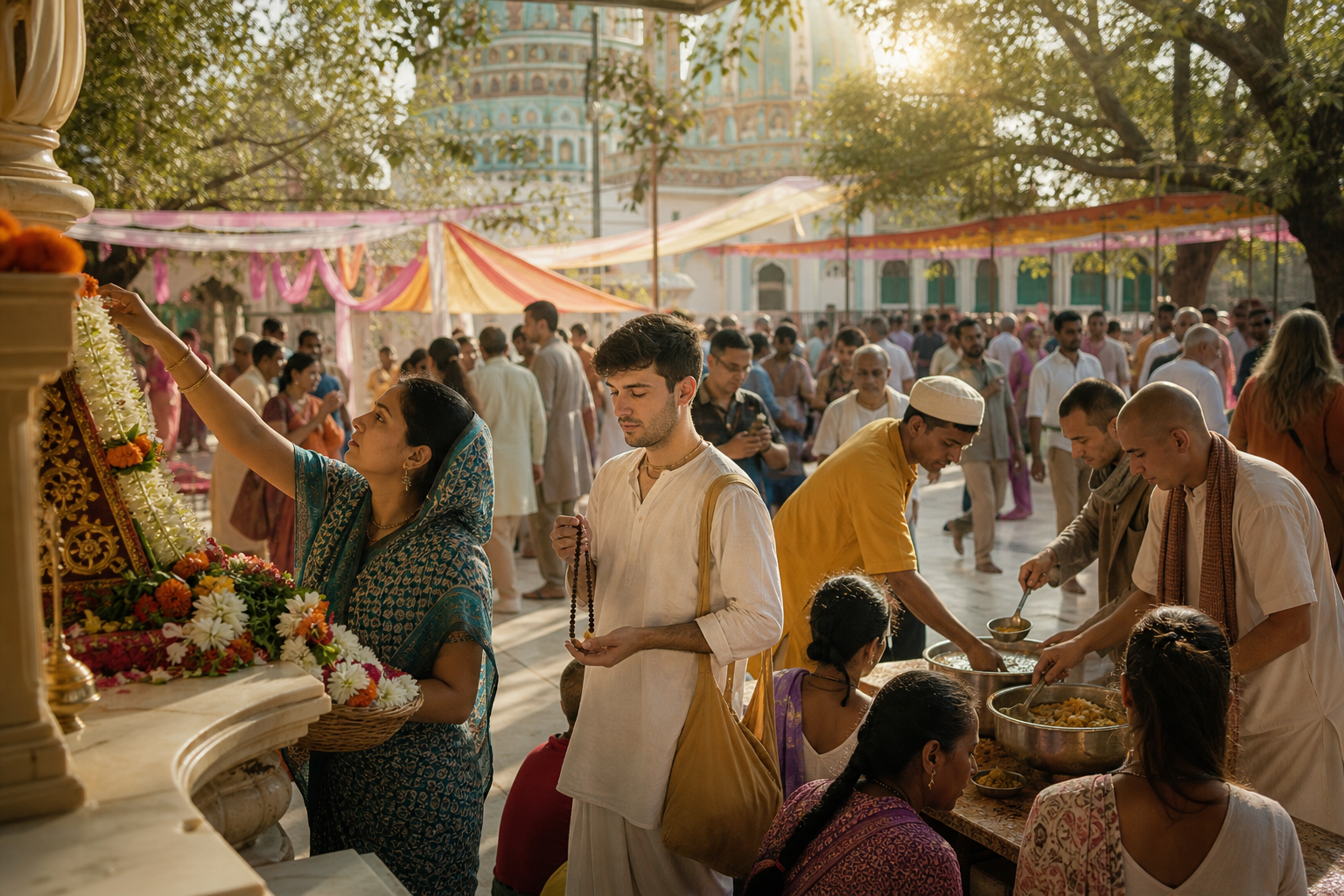
- Do not confuse visibility with importance. A camera naturally favors movement, color and large gatherings. Quiet preparation and repeated discipline may be less visible while remaining essential to devotional life.
- Do not turn sacred culture into generic wellness. ISKCON Mayapur belongs to a particular Krishna-centered devotional world. Respect its names, practices and theological focus instead of translating everything into a vague language of positive energy.
- Do not confuse observation with initiation. Watching a rite can awaken sincere interest, but it does not provide all the instruction needed to perform that rite correctly. Let curiosity lead to learning rather than premature imitation.
- Do not judge devotion only by emotional intensity. A powerful kirtan or festival may move you, but the durable test is what happens afterward. Notice whether the experience makes your attention steadier, your practice more deliberate or your desire to learn more responsible.
These distinctions are especially important online. A screen can bring Mayapur closer, but framing and selection inevitably limit context. Humility is therefore practical, not ornamental: describe what you can see, acknowledge what you do not yet understand, and seek guidance before drawing broad conclusions from a single scene.
Key takeaways and your next step
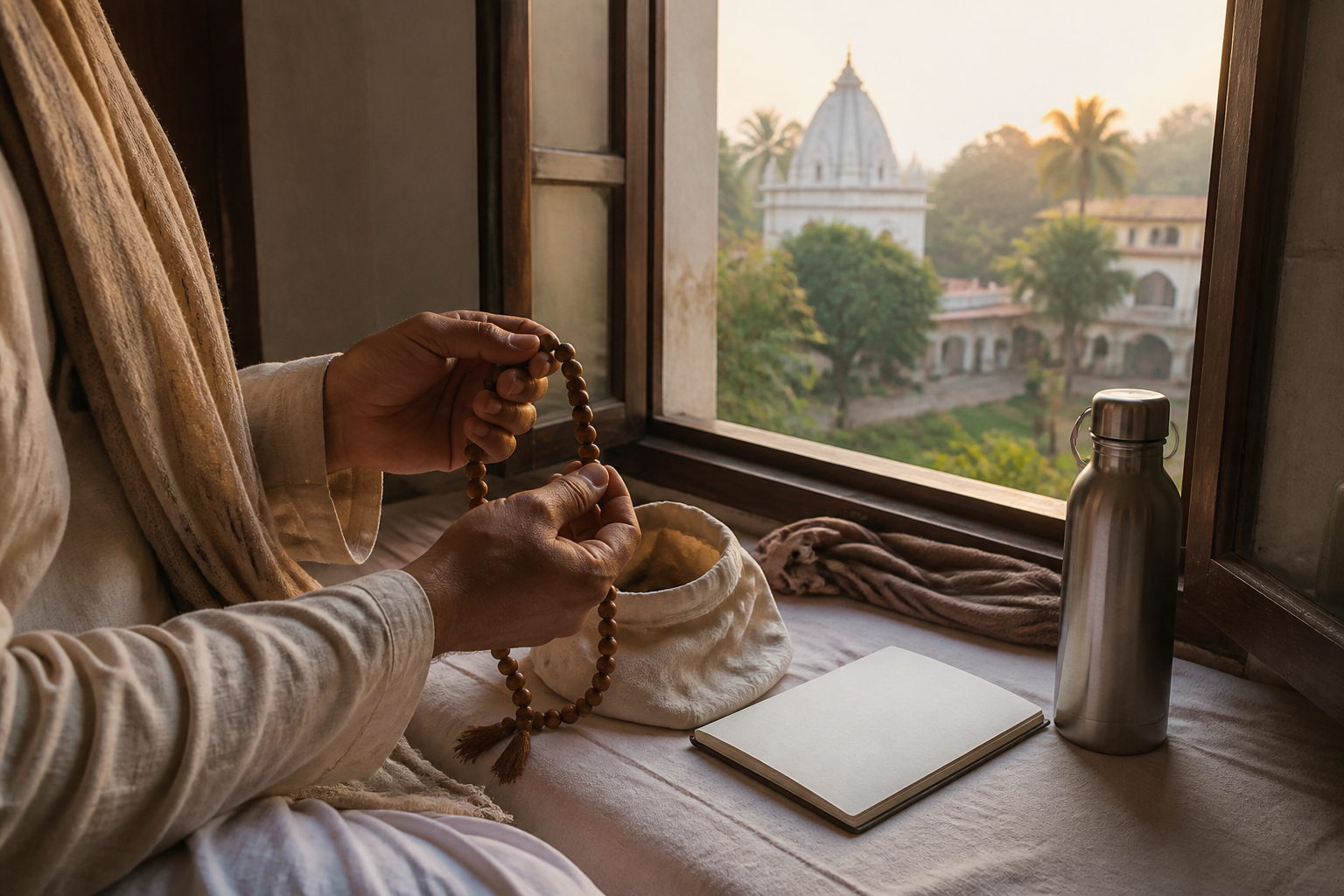
- Approach Mayapur’s devotional life by asking how attention and action are directed toward Krishna.
- Distinguish kirtan, yajna, pilgrimage and festival instead of treating them as interchangeable religious imagery.
- Participate at the level your knowledge permits: attentive listening is better than uninformed imitation.
- Turn one observed practice into one concrete act of learning or devotion in your own day.
Your next step can be modest. Choose one Mayapur scene and watch it with a single question: “What is being offered here?” Record the answer in one sentence. Then decide whether the scene calls you to listen more carefully, learn a term, strengthen a devotional practice you already know or seek instruction from someone competent to provide it.
If you later travel to Mayapur, keep the same posture. Observe before assuming, join where participation is welcomed, and ask when you do not understand. Devotional life becomes intelligible through patient attention. Let that attention begin before the journey.
References
