

If you are trying to decide whether November 12 should be observed as Saptami or Ashtami, look at the early-morning transition rather than assigning one tithi to the entire civil date. On Wednesday, November 12, Krishna Paksha Saptami continues until 5:02 AM, after which Krishna Paksha Ashtami prevails for the remainder of the day in most regions covered by this calculation.
That is enough to plan a simple home observance. It is not enough to copy a formal muhurta from another city. If your vrata, temple visit, sankalpa, or family custom depends on sunrise, moonrise, nakshatra, rashi, or another precisely timed condition, confirm the details in a trusted Panchang calculated for your location.
November 12 Panchang at a glance
| Calendar detail | November 12, 2025 |
|---|---|
| Weekday | Wednesday |
| Paksha | Krishna Paksha, the waning phase of the lunar month |
| Early-morning tithi | Saptami until 5:02 AM |
| Tithi after the transition | Ashtami after 5:02 AM and for the remainder of the day |
| Traditional context | Karthika masam in many regional traditions |
The practical point is easy to miss: the date does not begin as Ashtami. An activity completed before the stated transition falls within Saptami under this calculation, while an activity after it falls within Ashtami. If you need to perform something close to 5:02 AM, do not rely on a rounded boundary time. Move the activity safely away from the transition or obtain the exact local calculation.
Krishna Paksha Ashtami is the eighth lunar day of the waning fortnight. Because the change occurs so early on November 12, most ordinary daytime worship can be planned with Ashtami in mind. The early transition still matters when a household begins worship before dawn or follows a rule tied to the tithi prevailing at local sunrise.
Why the 5:02 AM transition still needs a local check

A civil date changes at midnight, but a tithi follows the relationship between the sun and moon. It can therefore begin or end at any point during the civil day. This is why a date-only calendar label can be misleading: November 12 contains portions of two tithis even though Ashtami occupies nearly all of the date after the early-morning change.
Tithi identification and muhurta selection are also different tasks. Knowing that Ashtami prevails after 5:02 AM does not establish a universally auspicious hour. Nakshatra, rashi, sunrise, moonrise, and shubha muhurta details must be read in their local calendrical context. A time copied from a calendar prepared for another city may not match the conditions at your location.
Before fixing a rule-bound observance, verify these five points:
- The city and time zone used by the Panchang.
- The locally calculated start and end of the relevant tithi.
- Whether your custom depends on the tithi at sunrise, at moonrise, or during a specified worship period.
- The local nakshatra, rashi, sunrise, moonrise, and muhurta entries relevant to the rite.
- The rule followed by your family, sampradaya, temple, or vrata tradition when a tithi crosses an early-morning boundary.
If two calendars differ slightly, avoid assembling a schedule from selected parts of both. Use one reliable regional almanac consistently, preferably the one followed by the temple or tradition connected with your observance. Consistency matters more than trying to manufacture certainty from several calculations prepared under different conventions.
Plan the observance according to what you are actually doing
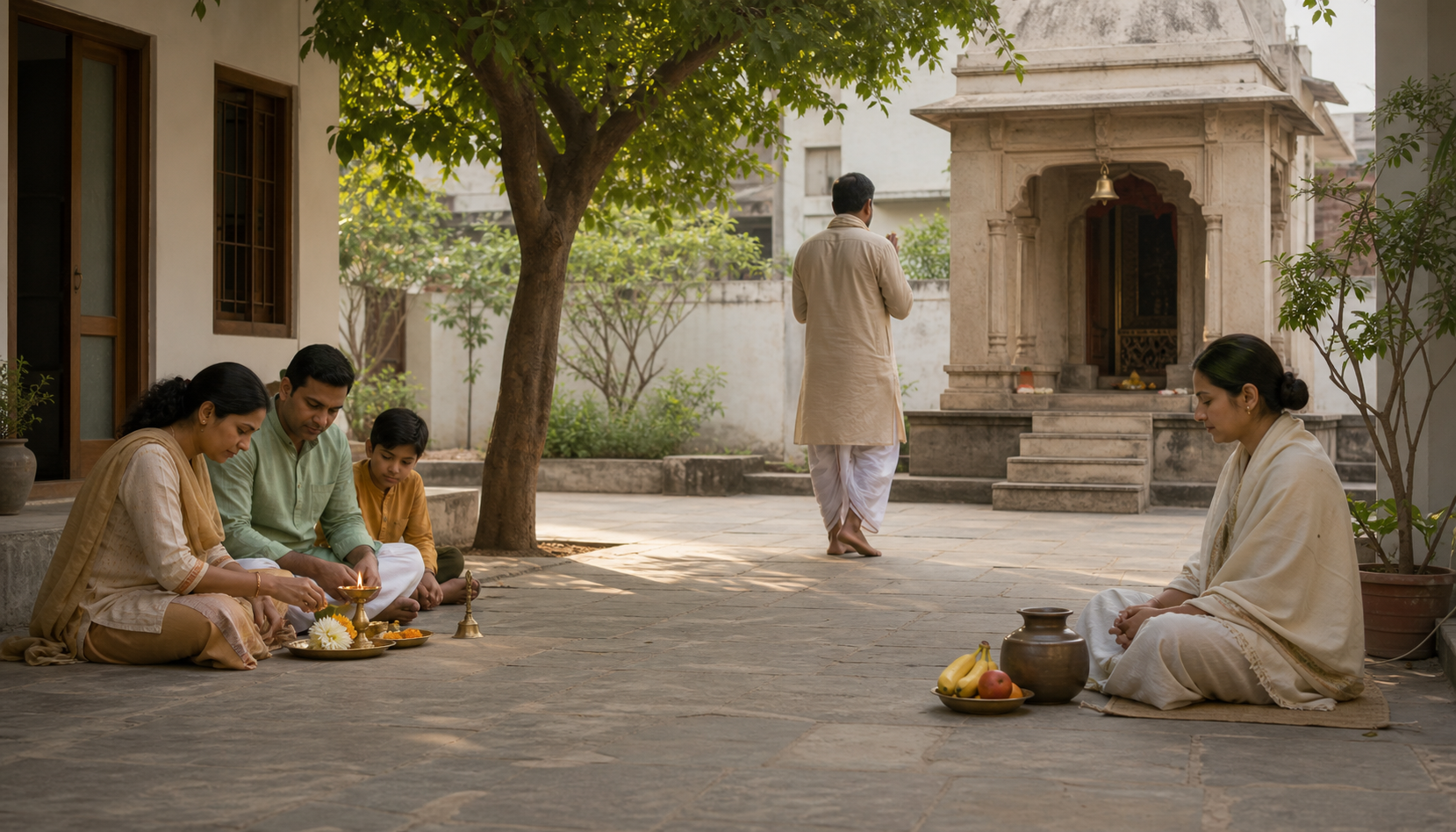
You do not need the same level of calendrical precision for every practice. Begin by deciding whether your observance is flexible, rule-bound, or communal.
- For personal meditation, japa, reflective reading, or seva, use the Ashtami portion of the day and choose a time you can keep without interruption.
- For a formal vrata or sankalpa, confirm which tithi condition your tradition requires before declaring the date and time.
- For a temple visit, follow the temple’s published calendar and service schedule. The institution may calculate timings for its own location and ritual sequence.
- For a family observance, preserve the established regional or household practice unless a knowledgeable elder or priest gives a clear reason to change it.
This distinction prevents two common errors. The first is treating every act of devotion as if it required a minute-perfect muhurta. The second is treating a formal vrata as if any convenient daytime hour must qualify. Simple devotion can remain simple; a rite with specific calendrical rules deserves local verification.
The timing alone does not determine a deity, mantra, dietary rule, or elaborate ritual sequence. Those details come from the particular tradition being followed. Do not add practices merely because the day is Ashtami. If your family has an established Karthika or Ashtami discipline, follow it steadily. If it does not, a modest observance is more honest than an improvised claim of scriptural obligation.
A simple Karthika Ashtami practice you can sustain
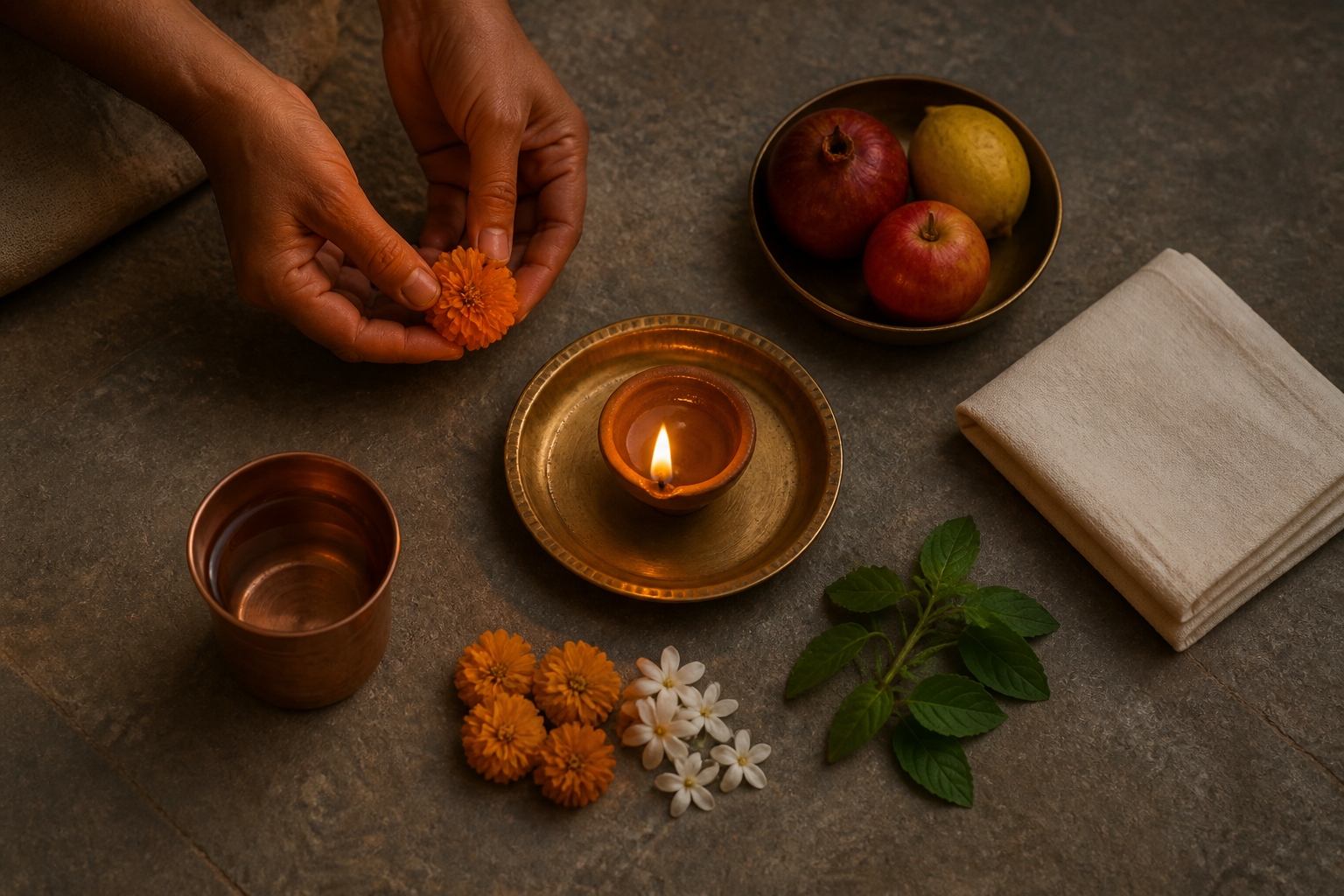
In many traditions that observe Karthika masam, this waning-moon Ashtami is suited to introspection, quiet discipline, recitation, and uncomplicated worship. You can shape the day around four concrete actions without pretending that one household custom applies everywhere:
- Place your practice after the Saptami-to-Ashtami transition, using the locally verified time if the distinction affects your observance.
- Choose one familiar form of japa, meditation, prayer, or recitation and complete it attentively rather than collecting several new practices.
- Examine one habit that weakens steadiness, truthfulness, compassion, or self-restraint, and decide what you will do differently that day.
- Turn reflection into one definite act of seva, such as helping someone directly, supporting a temple responsibility, or completing an overlooked duty without seeking recognition.
The Panchang should help discipline attention, not turn devotion into anxiety about the clock. Precision serves dharma when the rite calls for precision. For an ordinary personal observance, sincerity, continuity, and ethical conduct remain more valuable than building an elaborate programme that you will not sustain.
Meditation, compassion, restraint, and service also resonate across Hindu, Buddhist, Jain, and Sikh paths, but that shared ethical ground should not erase important distinctions. The Panchang has a particular place in Hindu calendrical life; other Dharmic traditions retain their own calendars, authorities, vows, and disciplines. Unity is strongest when it respects those differences.
Key takeaways for November 12
- Wednesday, November 12, 2025 begins under Krishna Paksha Saptami in the stated calculation.
- Saptami continues until 5:02 AM; Krishna Paksha Ashtami follows for the rest of the day.
- Use the transition as a day-planning reference, not as a universal local muhurta.
- Confirm local sunrise, moonrise, nakshatra, rashi, and relevant muhurta details before a formal vrata or timed ritual.
- For a simple observance, choose one established practice and connect it to concrete self-discipline or seva.
Before fixing your November 12 observance, write your city beside the date and check one trusted local Panchang. Once the timing is settled, keep the practice focused: one prayerful discipline, one honest reflection, and one useful act carried into the rest of the day.
References
