
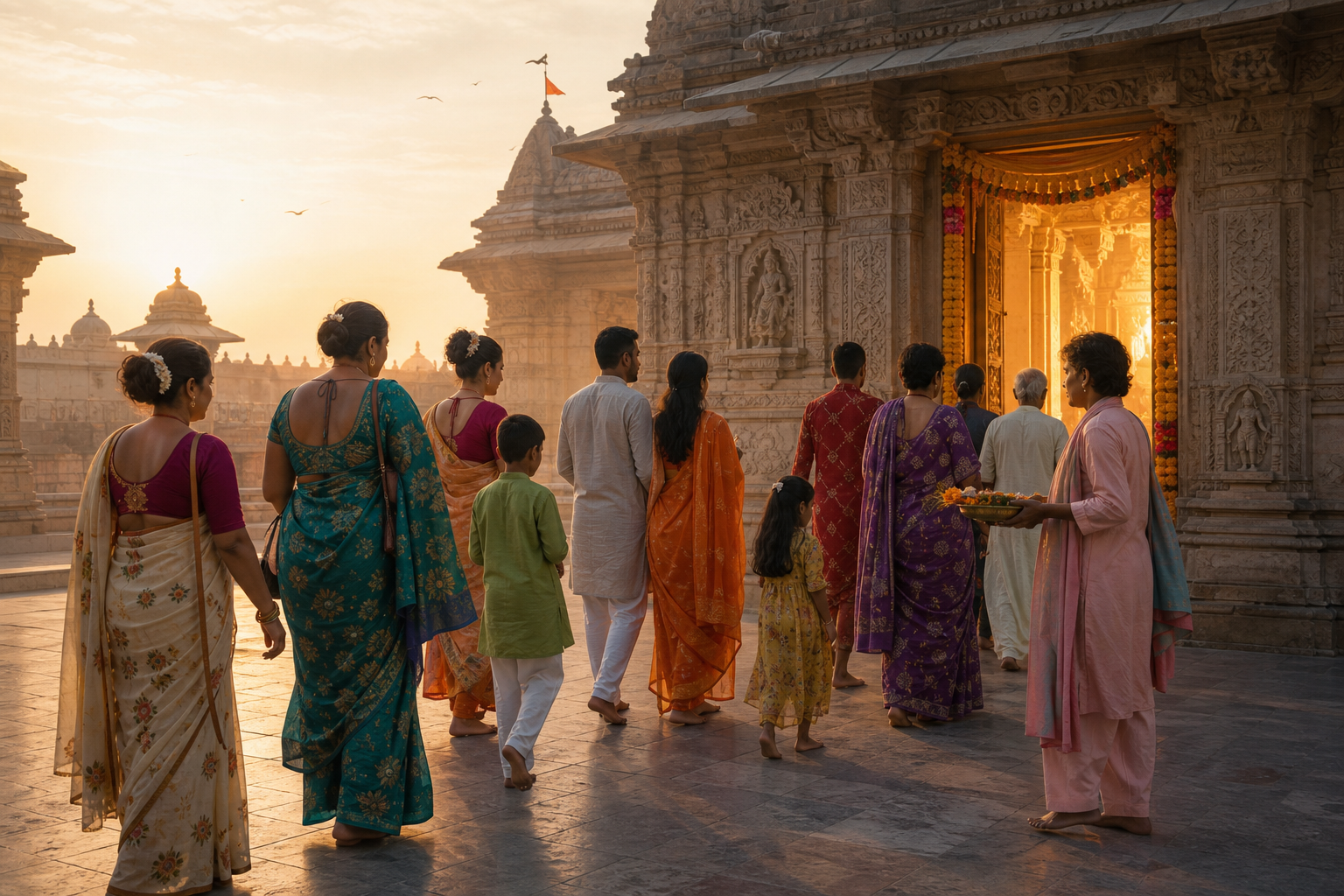
If you are considering darshan of Bahuchara Mata, you may be carrying a deeply personal hope: a prayer for a child, the courage to live truthfully, relief from social rejection, or the wish to begin again. The shrine gives those concerns a sacred place without requiring every devotee to arrive with the same life story.
At the principal shrine at Bahucharaji in Gujarat, couples hoping for children and members of Hijra and transgender communities seek fertility, dignity, acceptance, courage, and new beginnings. If you want to understand the shrine’s inclusive character, begin there: not with labels imposed from outside, but with the different prayers people are permitted to place before the same deity.
Why different hopes meet before Bahuchara Mata
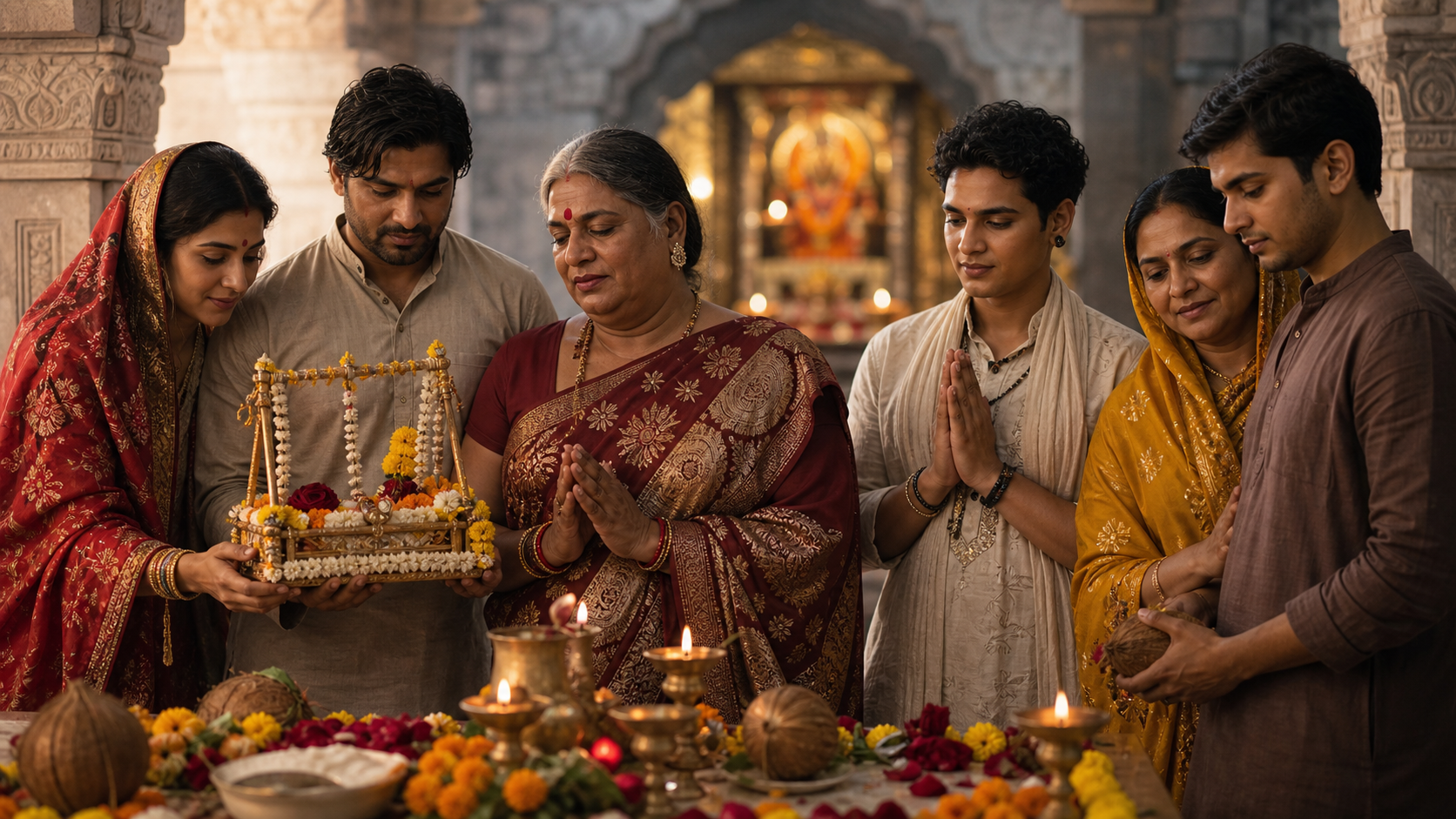
Bahuchara Mata is revered as a compassionate goddess of fertility and as a form of Parvati. Fertility is therefore central to her worship, but it does not exhaust its meaning. Her devotees also seek protection, moral courage, social respect, and the strength required for a new beginning.
This distinction matters if your prayer concerns having a child. A sincere vow can give longing a devotional form, but it should not turn conception into a test of spiritual worth. Make the prayer without making a bargain in which an outcome becomes proof that you were heard. The more durable sankalpa joins hope to responsibility: ask for grace, identify the conduct you will uphold, and refuse to judge yourself or another couple by the result.
The same discipline applies when you speak about Hijra and transgender devotion. Their presence is not a curiosity attached to an otherwise ordinary pilgrimage. Members of these communities approach Bahuchara Mata as devotees seeking blessings, dignity, social acceptance, and inner courage. They are not present to explain themselves to visitors or to serve as symbols in somebody else’s argument.
Hijra and transgender are also not interchangeable words. Hijra names a particular South Asian social and cultural community, while transgender is a broader description of gender identity. The categories can overlap, but you should use the language a person uses for themselves rather than assigning an identity from appearance. That small act of restraint is one of the clearest ways to make inclusive devotion real.
The rooster turns sacred imagery into a daily discipline

Bahuchara Mata’s four-armed form communicates benevolence and protection through blessing gestures and sacred symbols. Her rooster vahana is especially memorable. It represents vigilance, moral courage, and the willingness to voice truth. Read together, these features do more than identify the deity; they tell you what devotion should produce in the devotee.
- Vigilance: Notice humiliation and exclusion before they become normal features of a family, temple group, or community.
- Truthful speech: Say what needs to be said without using truth as permission to shame another person.
- Protection: Measure strength by whether it safeguards someone vulnerable, not merely by how forcefully it asserts itself.
- Self-restraint: Refuse gossip, intrusive curiosity, and ridicule even when a social group rewards them.
The rooster’s alertness makes inclusion an active duty. You do not fulfil that duty merely by approving of compassion in principle. You fulfil it when you interrupt a degrading joke, ask permission before taking a photograph, or decline to repeat a rumour about another person’s body or identity.
This ethical reading also helps when discussing Bahuchara Mata in a wider Dharmic setting. Karuna, ahimsa, and human dignity resonate across Hindu, Buddhist, Jain, and Sikh paths. That shared ground does not erase their different teachings, authorities, or practices. If you are explaining the shrine to an interfaith family or community group, speak of converging ethical commitments rather than claiming that all Dharmic traditions are the same.
Plan your darshan around sincerity, not spectacle
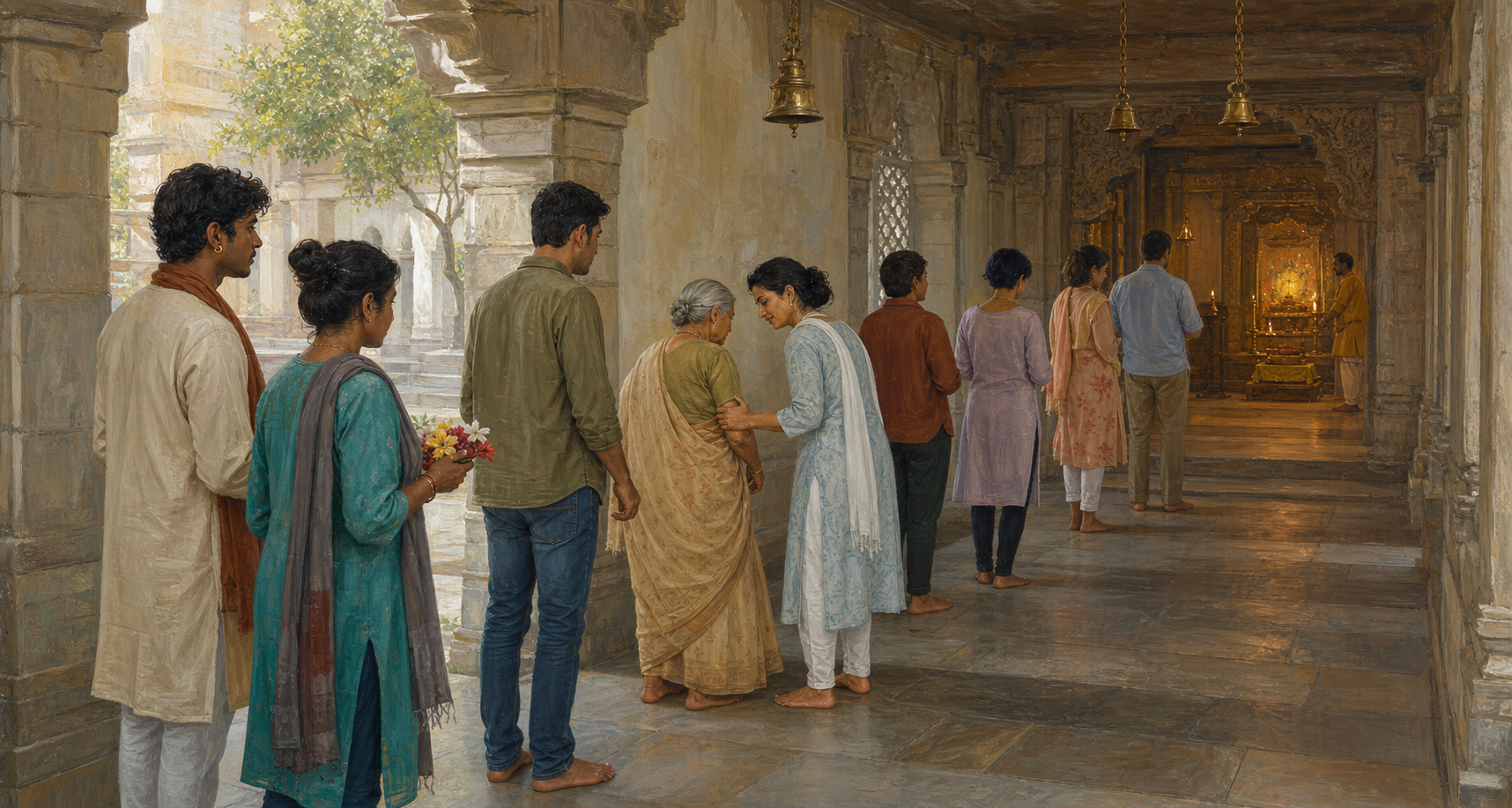
A thoughtful pilgrimage does not require an elaborate performance. It requires a clear intention, attention to the shrine’s living customs, and a promise you are prepared to honour.
- State your sankalpa plainly. Before travelling, put your prayer into one sentence. Name the grace you seek and the responsibility you accept. A clear intention is easier to carry through darshan than a long list of unrelated wishes.
- Confirm practical arrangements locally. Bahucharaji, also known as Becharaji, is in Gujarat’s Mehsana district and can be reached by road and rail from major cities in the state. Opening times, transport connections, queues, and ritual arrangements can change, so verify current details before departure rather than treating general accessibility as a timetable.
- Bring a simple, appropriate offering. Coconuts and sindoor are among the offerings associated with vows at the shrine. If you do not know where or when an offering should be presented, ask a temple attendant instead of copying another devotee without context.
- Let the ritual set your pace. During aarti and darshan, keep your phone from becoming the centre of the visit. Attend to the prayer, incense, sacred image, and movement of the queue. If photography is permitted, permission from the temple does not replace consent from an individual you want to photograph.
- Remember what you promised. Devotees may return to express gratitude after auspicious news. Do not undertake a vow casually or promise something beyond your ability to fulfil. Record its wording privately if necessary, then follow through without turning your gratitude into a public display.
If your prayer concerns fertility, keep spiritual and medical decisions in their proper places. Darshan and a vow can accompany appropriate care from a qualified clinician, but they are not a diagnosis or treatment. This distinction protects hope without blaming either partner when circumstances do not unfold as desired.
Navratri brings large congregations to Bahucharaji for garba, collective prayer, and offerings. That can be the right setting if you want to participate in a major communal observance. If you need quieter space for reflection, do not assume the busiest seasonal celebration will provide it. Decide which kind of pilgrimage you are actually seeking, then confirm current arrangements before choosing when to go.
Respect other devotees without making them a spectacle
The shrine’s inclusive atmosphere depends partly on ordinary conduct. Sacred belonging becomes fragile when visitors stare, photograph strangers, demand personal histories, or treat gender-diverse devotees as an attraction. You can avoid that harm through a few clear choices.
- Ask before photographing or recording any identifiable person, and accept a refusal without argument.
- Do not ask strangers about their bodies, medical history, former names, fertility, or family estrangement.
- Use the name and form of address a person gives you. If none is given, speak as courteously as you would to any unfamiliar devotee.
- Follow the same queue, offering, and temple rules expected of everyone; inclusion does not mean abandoning sacred order.
- If someone is being mocked or harassed, do not join the audience. Refuse demeaning language, and seek help from temple personnel when intervention is needed.
These are not special courtesies for a fashionable cause. They are practical expressions of ahimsa and karuna. A temple can welcome people into the deity’s presence, but each visitor still decides whether that welcome survives in the human interactions surrounding darshan.
Key takeaways for an inclusive pilgrimage
- Bahuchara Mata’s worship holds together fertility, protection, new beginnings, courage, and social dignity.
- Her four-armed form and rooster vahana ask the devotee to practise vigilant compassion, truthful speech, protection, and self-restraint.
- Hijra and transgender devotees should be encountered as fellow worshippers, not as curiosities, interchangeable labels, or material for unsolicited photographs.
- A grounded visit begins with a clear sankalpa, current travel and ritual information, an appropriate offering, attentive darshan, and a vow you can fulfil.
- A fertility vow can accompany qualified medical care, but it should never be used to predict an outcome or measure anyone’s spiritual worth.
- The shrine’s inclusive ethos becomes credible when you carry consent, ahimsa, and dignity into conduct beyond the temple.
Let the vow continue after darshan
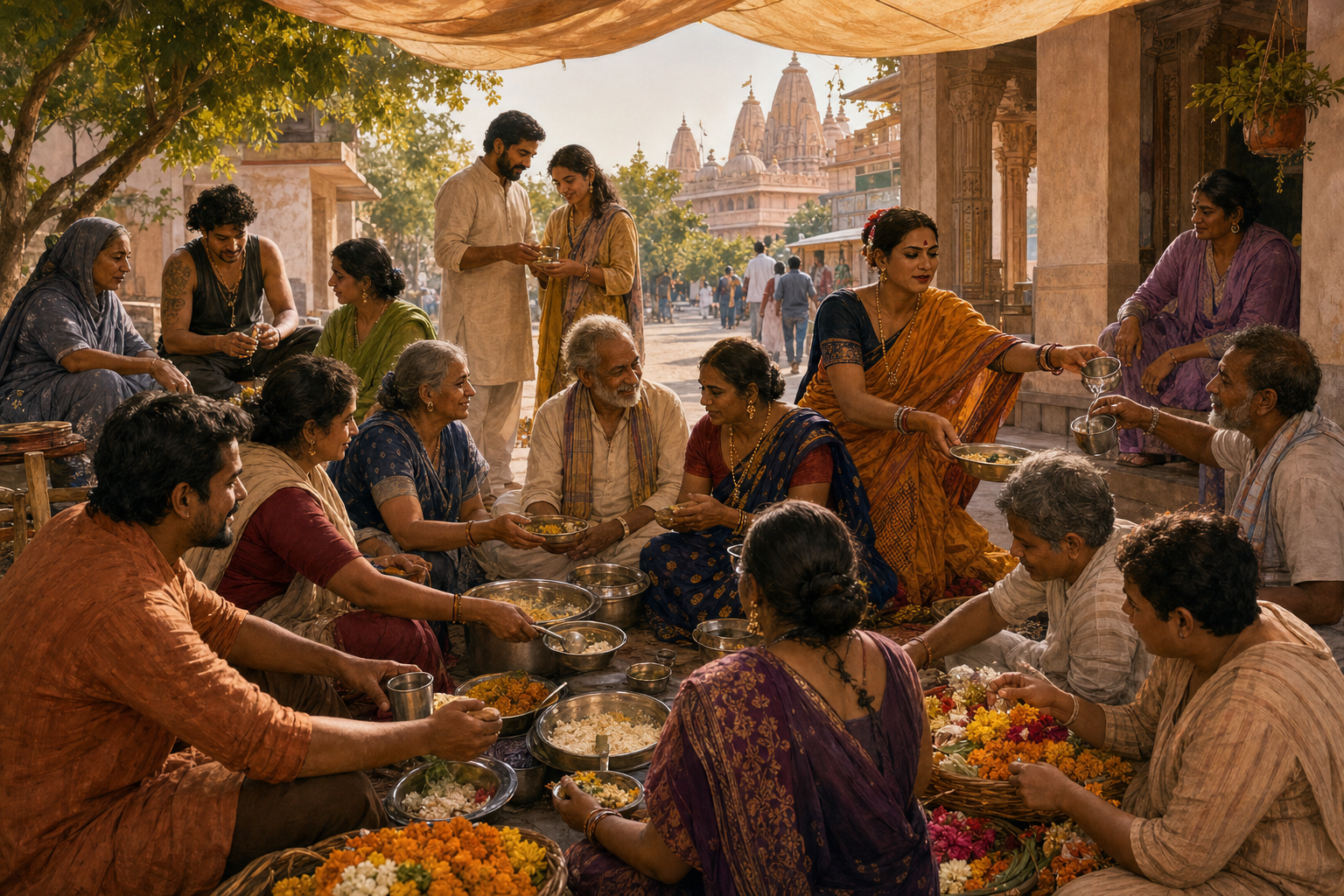
The strongest response to a goddess associated with protection is not to feel inclusive for the duration of a temple visit. It is to become less willing to participate in humiliation after you leave. If your prayer concerns dignity, change a word or habit that denies dignity to someone else. If it concerns courage, tell a necessary truth without cruelty. If it concerns family, begin practising gratitude without waiting for the hoped-for outcome.
Choose a single action before your visit or before the day ends: correct the language you use, seek reconciliation where it is safe, keep a promise already made, or protect someone’s privacy. Then let your darshan be judged by that change. Bahuchara Mata’s grace is approached through prayer; its ethical meaning becomes visible in how you treat the person standing beside you.
References
