
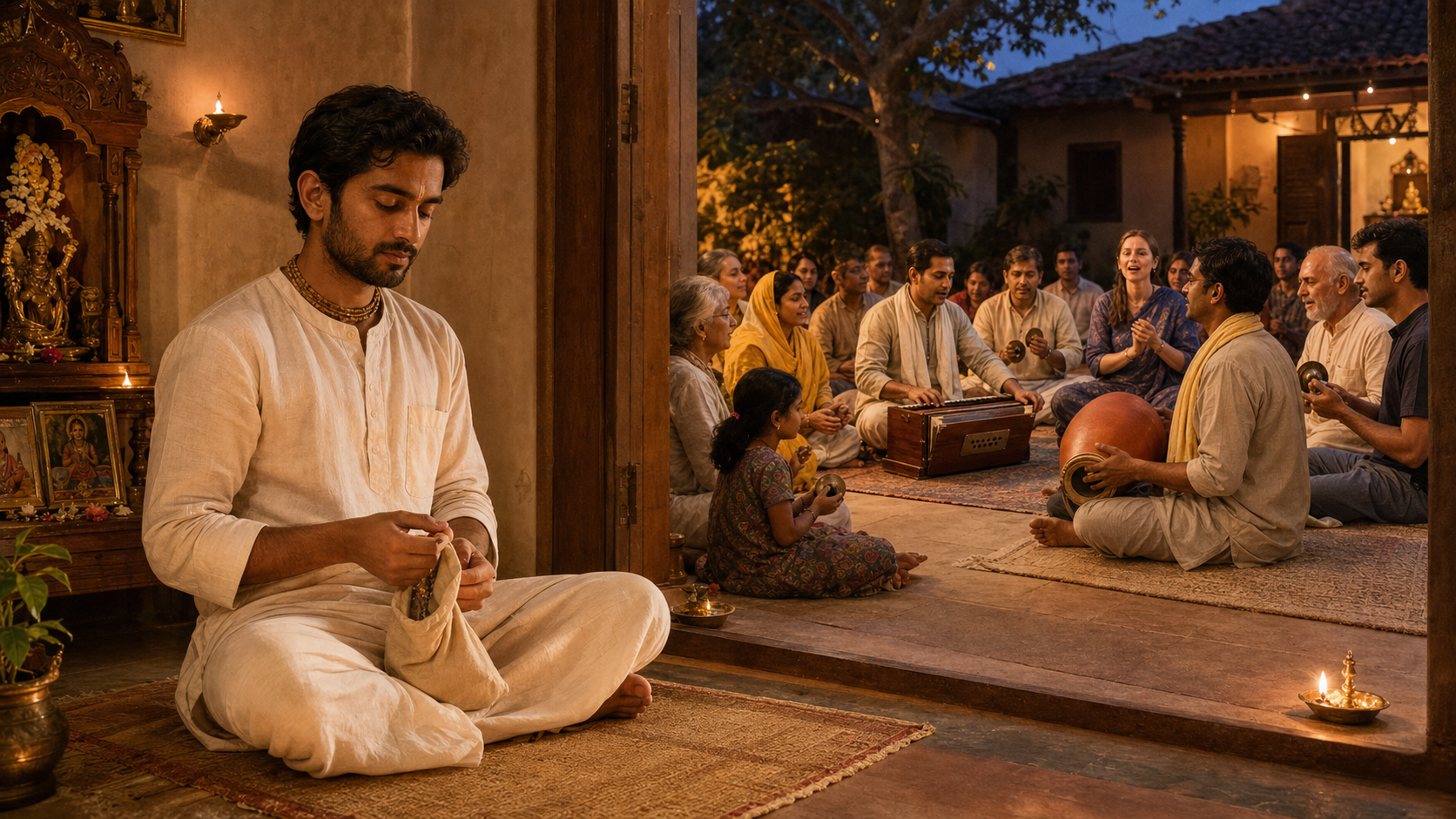
You may already repeat a divine name in private yet wonder why a roomful of voices can affect you so differently. Or perhaps you want to join a kirtana but feel unsure about the words, the etiquette, or whether visible enthusiasm is expected.
The practical answer is that personal japa and collective chanting do different work. Japa gives you a daily discipline that does not depend on a crowd. Kirtana gives that discipline a shared rhythm, public expression, and field of seva. Each becomes stronger when you stop treating it as a substitute for the other.
Why the same divine name feels different in a group
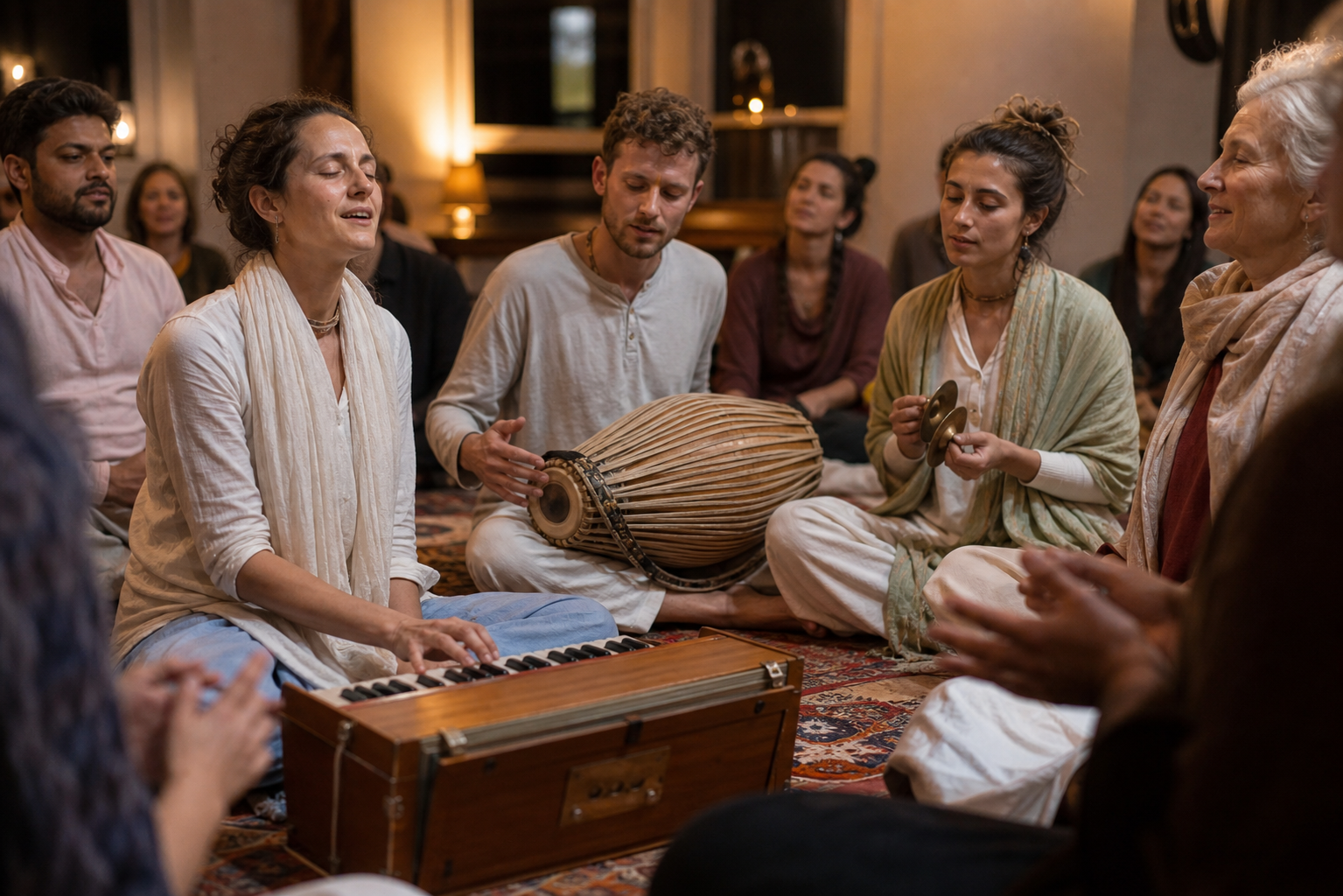
Nama-smarana is remembrance of the divine name. Japa is its deliberate repetition, silently or aloud. Kirtana gives remembrance a melodic form, often through a leader-and-response pattern. Sankirtana brings people together around that practice; Harinam takes the chanting of divine names into a congregational or public setting.
In private japa, you must notice distraction and return without waiting for anyone else to carry you. That is part of its value. Repetition can steady breathing, reduce reactivity, and redirect attention toward the qualities represented by the name. The deeper measure is ethical: clearer intention, kinder speech, stronger self-restraint, and conduct shaped by Dharma.
Collective chanting supplies an external structure. The lead voice tells you where to place attention. The response gives you an immediate way to participate. Melody carries the phrase, while mridanga, kartal, clapping, or another simple pulse helps the group return together. You are no longer managing every part of the practice alone.
That support can produce joy and concentration, but scale by itself does not create bhakti. A loud gathering may still leave newcomers lost, words inaudible, or a sacred space treated like a performance venue. Collective devotion becomes credible when participation, reverence, and care for other people remain visible.
A large Harinam around the Jagannatha Temple in Puri in November 2025 shows what that care looks like in practice. Approximately 400 devotees led the chanting as tens of thousands of pilgrims, residents, and visitors encountered the procession during two circumambulations. Call-and-response chanting, mridanga, and kartal created the devotional center, while volunteers kept pathways usable and protected access for other pilgrims. The transferable lesson is not that every kirtana should become enormous. It is that devotional intensity and orderly seva belong together.
Turn inspiration from kirtana into a sustainable japa practice
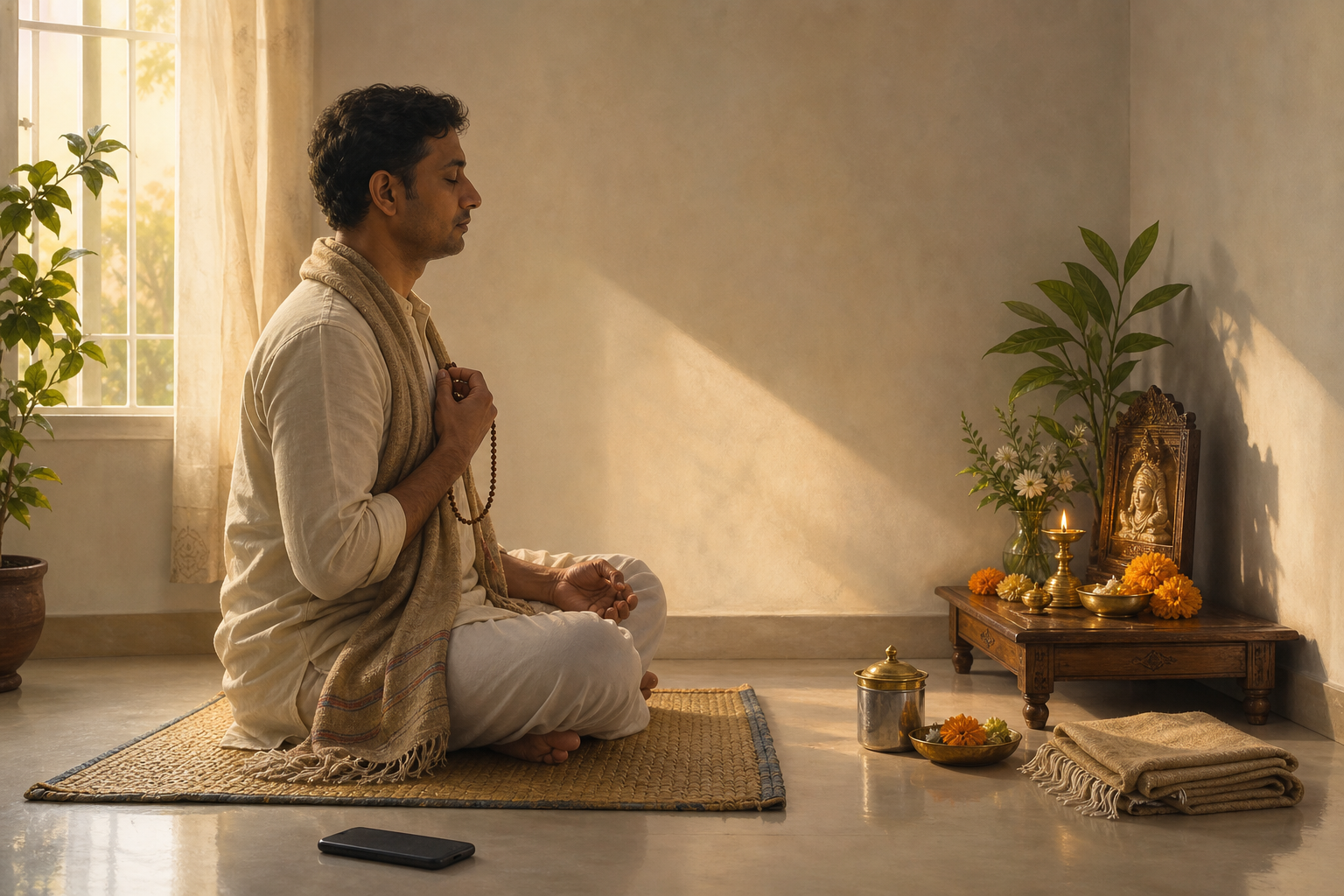
A powerful gathering can reveal what focused chanting feels like. It cannot repeat the name for you the following morning. If your practice exists only when the musicians, friends, and atmosphere are present, your attention remains dependent on an event.
Build a personal foundation with a sequence simple enough to keep on an ordinary day:
- Choose one primary name or mantra. An Ishta-related name from your Hindu tradition is a natural center. If you have received a practice through a guru, sampradaya, or established discipline, follow that guidance rather than assembling a new formula from fragments.
- Attach it to a stable moment. Chant on waking, before rest, or at another point you already encounter every day. A reliable cue is more useful than waiting to feel devotional.
- Begin with a few unhurried minutes. Short periods of silent or gently vocal japa can become part of daily life. Let the breath remain natural. Do not force it to match a pace that makes the body tense.
- Make returning the practice. When the mind moves to a grievance, task, fantasy, or sound, notice it and return to the name. Do not turn each distraction into a verdict on your sincerity.
- Carry one quality into the next duty. Before you rise, identify the immediate test of your chanting: patient speech, truthful action, restraint during conflict, an apology, or a concrete act of seva.
That last step protects you from a common spiritual mistake. Divine-name chanting is not a method for bypassing responsibility. If you have harmed someone, repetition does not replace remorse, correction, or amends. It should help you face those duties with less defensiveness. The name is functioning as a dharmic discipline when remembrance changes what you are willing to do after the chanting ends.
Use group kirtana as reinforcement. Notice the pronunciation, the point at which the response enters, and the devotional quality emphasized by the chant. Then return to personal japa while the memory is fresh. Before the next gathering, keep the daily thread intact. In this rhythm, solitary practice develops steadiness and collective practice renews energy without becoming a dependency.
How to host kirtana that people can actually enter
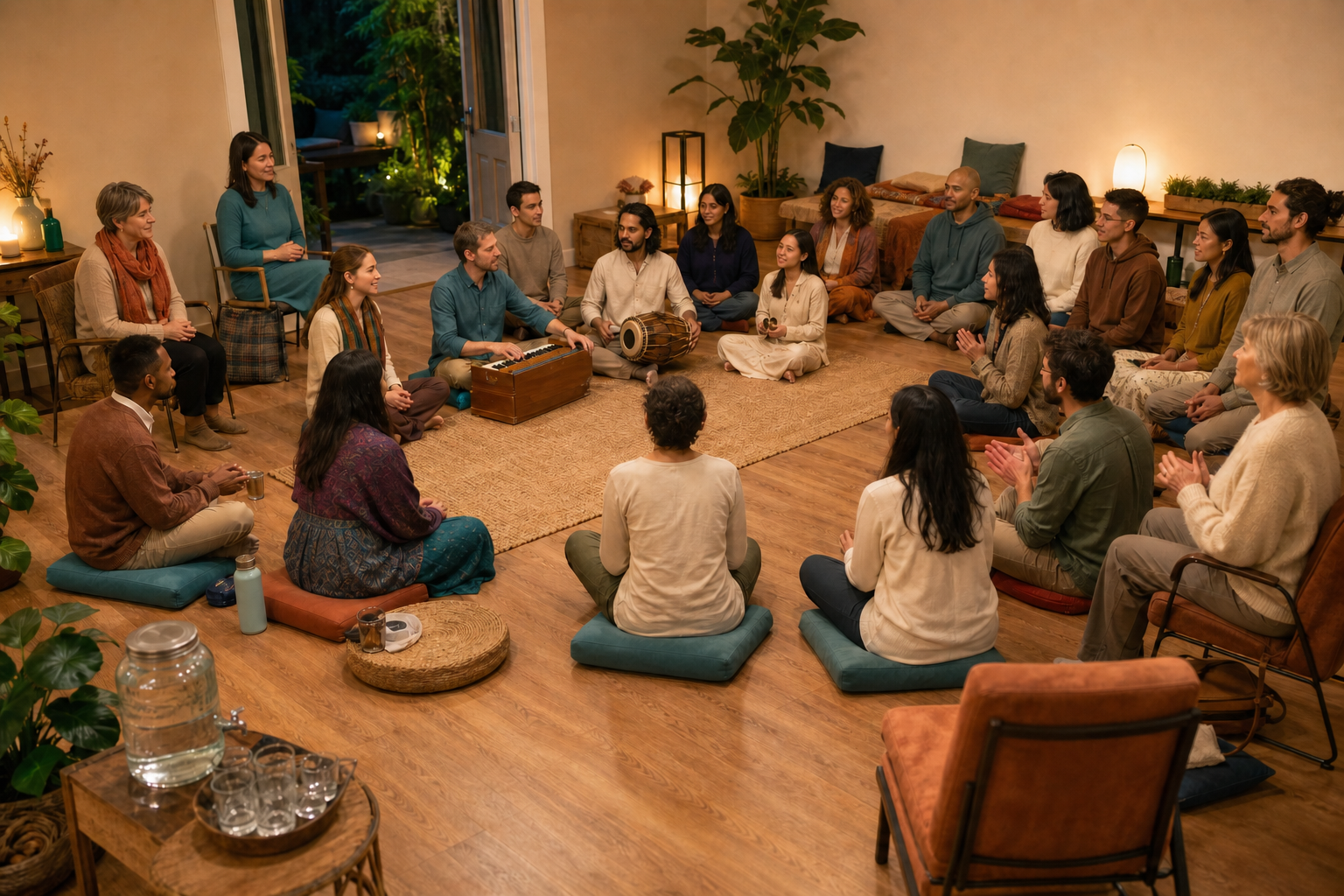
If you organize collective chanting, your first responsibility is not to generate excitement. It is to make reverent participation possible. Experienced singers often know a change is coming from a glance or familiar drum pattern. A first-time visitor does not. Design for the person who has never heard the refrain.
- Name the practice clearly. Tell participants which name or mantra will be chanted, the tradition in which you are using it, and whether the format is call-and-response.
- Teach the response before adding momentum. Speak or sing the words slowly. Let the group repeat them without percussion. Begin the full chant only after people can hear where the phrase starts and ends.
- Lead for participation, not display. Keep the melody within a comfortable range and the initial pace easy to follow. Musical complexity should never make the congregation into an audience.
- Keep the sacred words audible. Percussion should clarify the pulse. If the syllables disappear beneath instruments or amplification, lower the volume or simplify the rhythm.
- Signal changes. Establish an obvious cue before changing melody, speed, or response. This small act preserves attention and prevents newcomers from spending the chant trying to guess what the leader wants.
- Protect freedom of participation. People may sing, listen, sit, stand, or move according to the setting and their capacity. Do not treat dancing, raised hands, or emotional display as proof of devotion.
- Make logistics part of seva. Keep entrances and pathways clear. Provide an appropriate way for elders, children, and people who cannot stand for long to remain included. In a public procession, assign volunteers to guide movement and preserve access for everyone else using the space.
- Close without an abrupt emotional drop. Let the final repetition settle into quiet. Direct participants toward the next expression of bhakti: personal japa, prasada offered according to the community’s practice, help with cleanup, care for another person, or another concrete service.
You can evaluate the gathering without trying to measure inner experience. Were the words understandable? Could a newcomer find the response? Did the leaders preserve temple or community etiquette? Were other pilgrims and visitors treated with consideration? Did participants have a path from singing to sadhana and seva? These observable details reveal whether the event was organized around collective bhakti or merely around collective stimulation.
Children and first-time participants learn more than a tune in such a setting. They watch how sacred sound, bodily movement, shared space, and responsibility fit together. A well-led kirtana therefore transmits culture through practice: the refrain is remembered because its etiquette was embodied around them.
Honor Dharmic kinship without pretending every practice is identical
Sacred repetition appears across the Dharmic family, but shared form does not erase distinct theology. Hindu nama-japa and kirtana may center a name of the devotee’s Ishta. Buddhist recitation of Om Mani Padme Hum is associated with compassion and wisdom, the Jain Namokar Mantra honors realized qualities, and Sikh Naam Simran remembers Waheguru. Each belongs within its own discipline and understanding.
Unity becomes more trustworthy when you acknowledge those distinctions. Saying that every sacred formula means the same thing may sound inclusive, but it asks each tradition to surrender its own account of what it is doing. A stronger basis for solidarity is the shared seriousness with which sacred sound can train attention, support self-restraint, deepen compassion, and direct a person toward service.
For a gathering with people from several Dharmic traditions, use four practical boundaries:
- Identify each chant and its tradition before it begins.
- Invite a knowledgeable practitioner of that tradition to guide its pronunciation and context when possible.
- Do not splice sacred formulas into a medley merely to make them appear interchangeable.
- Let hospitality mean respectful participation or attentive listening, not pressure to recite outside a person’s conscience or discipline.
This approach also protects Hindu bhakti from being reduced to generic wellness. The divine name is not simply a calming sound. Calm may arise, but the name also carries relationship, reverence, memory, moral demand, and a living inheritance. Likewise, collective bhakti is not valuable only because people feel uplifted. Its durable value appears when the gathering strengthens sadhana, seva, cultural continuity, and responsible conduct.
Key takeaways for your next chanting practice
- Keep one daily form of japa that does not depend on music, mood, or a crowd.
- Judge progress partly by conduct: truthful action, restrained speech, compassion, accountability, and seva.
- Use kirtana to support participation. Keep the words audible, the response teachable, and the leadership easy to follow.
- Treat access, volunteer coordination, and sacred-space etiquette as elements of bhakti rather than administrative extras.
- Recognize the kinship among Dharmic practices without collapsing their names, teachings, or lineages into one generic system.
- Let collective uplift return you to personal discipline, and let personal discipline make you more useful to the community.
Choose one divine name today and give it a few quiet, attentive minutes. At your next kirtana, listen for more than musical intensity: notice whether the chanting helps everyone remember, participate, and serve. Then carry the name into the next difficult duty in front of you. That is where bhakti begins to become character.
References
- DharmaRenaissance Blog — The Transformative Power of Divine Names: Vedas, Epics, and Dharmic Unity
- Dandavats — Unforgettable Harinam at Jagannath Temple: Tens of Thousands Join Puri’s Unified Bhakti
