

If you have been told that Mars in the seventh house threatens your marriage, the quickest mistake is to begin treating your spouse, your horoscope, or yourself as the enemy. A useful Mangal remedy does the opposite. It gives heat, courage, and initiative a disciplined purpose: protect the relationship, clean up reactive speech, and serve someone beyond yourself.
You do not have to choose between spiritual observance and practical relationship work. In this setting, the practice becomes credible when your spouse can feel its effect in your conduct. Prayer without repair leaves the real conflict untouched; repair without an inner discipline may disappear the next time tempers rise.
Key takeaways
- Begin with the safest Mars remedy: measured speech, honest conduct, fulfilled responsibilities, and calm negotiation.
- Use Tuesday as a recurring discipline rather than a day of fear. A simple vrata, mantra, prayer, and act of seva are enough.
- The traditional Mangal beej mantra may be recited 108 times: Om Kraam Kreem Kraum Sah Bhaumaya Namah.
- Shared worship or charity can strengthen cooperation, but your spouse should never be pressured to participate.
- Mangal Shanti and Hanuman worship are established devotional options. Red coral requires individual astrological judgment and should not be self-prescribed.
- No planetary placement excuses humiliation, coercion, threats, or violence. Spiritual remedies do not replace appropriate relationship or safety support.
Read Mars as a discipline, not a verdict
Within Lalkitab practice, Mars in the seventh house is interpreted through marriage, partnership, cooperation, contracts, and public dealings. Mars supplies action, firmness, courage, and heat. When that force is not governed well, it can appear as impatience, sharp words, domination, or the urge to win every disagreement.
That is symbolic astrological language, not proof that a planet caused a particular argument or that separation is inevitable. A placement can be treated as a field of sadhana: Where do you need courage without aggression, clarity without cruelty, and commitment without control? That question is more useful than asking whether your chart has condemned your marriage.
Some traditional warnings also connect this placement with strain around a sister or another woman’s marital well-being. Do not turn that symbolism into suspicion, blame, or anxious prediction. Convert it into protective conduct: respect women in the family, support sisters consistently, and refuse to participate in humiliation or unfair pressure. A remedy that causes fear in another person has missed its dharmic purpose.
You can also test your intention before beginning any ritual. If you are performing it chiefly to make your spouse submit or change, stop and reset the sankalpa. A sound intention is closer to: “May I use strength responsibly, speak without injury, and protect the dignity of this marriage.” That puts the first obligation on the person undertaking the remedy.
Make your conduct the first daily remedy

Mars often becomes visible in the instant between feeling provoked and responding. That small interval is where your most important remedy belongs. Mantra can steady the mind, but you still have to decide what you will do when the same disputed subject returns.
Replace reaction with a repeatable response
- Catch the heat before making your case. If your voice is rising or you are reaching for an insult, stop the exchange. Say plainly that you need to settle yourself and that you intend to return to the issue. A pause should not become silent punishment.
- Name the present problem. Keep the discussion to the action or decision in front of you. Do not use the horoscope as evidence against your spouse, and do not recruit old grievances merely to strengthen your position.
- Make a clear request. Replace accusation with the specific change you need. “Please tell me before making this commitment” gives your spouse something to answer; “You never respect me” usually creates another contest.
- Hear the answer without demanding agreement. Cooperation does not require identical opinions. It requires enough steadiness for each person to disagree without being punished or degraded.
- Repair what your anger damaged. If you spoke harshly, acknowledge the words themselves. Do not hide the injury behind “Mars made me do it” or make the apology conditional on your spouse apologising first.
This is how the symbolism of Mars changes direction. The same force that fuels an argument can become the courage to admit fault, keep a promise, defend a spouse’s dignity, or address a neglected problem honestly.
Use the home as a cue for steadiness
Lalkitab-inspired household practices include keeping the kitchen and cooking area clean, handling and storing sharp objects mindfully, and maintaining an uncluttered prayer space. These actions are modest, but that is their advantage: they place reminders of care inside the ordinary settings where irritation often develops.
You may keep a small piece of clean red cloth near the altar or use a copper vessel for water as a symbolic cue. Do not treat the object as a mechanical guarantee of peace. Let it prompt a concrete question whenever you see it: “Is my firmness serving protection, or am I using it to overpower someone?”
Ahimsa in Hindu and Jain practice, maitri in Buddhist practice, and seva in Sikh practice offer related ways of judging the result: strength should reduce injury and increase responsible care. You do not need to blend distinct traditions into one ritual. Remain rooted in your own path while applying the shared ethical test.
Build a Tuesday routine you can actually sustain
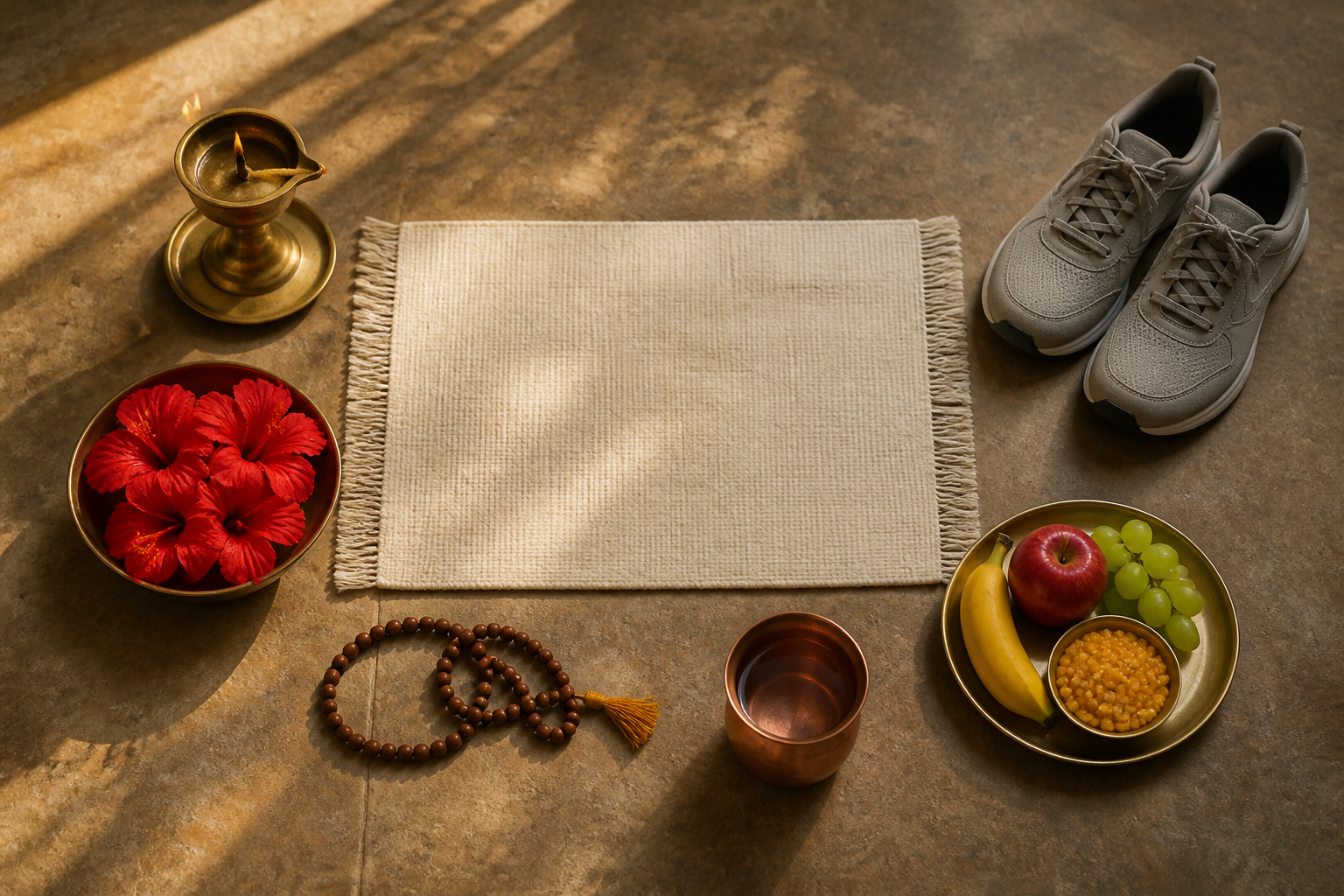
A remedy is easier to maintain when it has a fixed rhythm. Tuesday, traditionally associated with Mangal, can become a weekly point for restraint, prayer, service, and honest review. A small practice repeated sincerely is more useful than an elaborate observance performed once in panic.
- Begin with a relationship-centred sankalpa. Pray for the well-being of your spouse and family, then name the behaviour you will govern that day: harsh speech, impatience, broken promises, or the need to dominate a decision.
- Observe a simple vrata if it is appropriate for you. You may fast or choose simple sattvic food. If fasting conflicts with your health needs, do not force it; keep a simple diet and practise restraint in speech and conduct instead. The purpose is discipline, not self-harm.
- Wear a modest touch of red. Use it as a reminder that intensity must remain under conscious direction. The colour itself should not become an object of fear or magical expectation.
- Recite the Mangal mantra. Chant Om Kraam Kreem Kraum Sah Bhaumaya Namah 108 times with a steady pace and attention to your intention. If this mantra is not part of your practice, the Navagraha Stotra or Hanuman Chalisa is another traditional option.
- Light a sesame-oil lamp in the evening. Place it securely on a stable, fire-safe surface and never leave it unattended. Pray for courage without aggression, directness without insult, and commitment without possession.
- Complete one act of seva. Traditional offerings include red lentils such as masoor dal, jaggery, or useful iron tools for people who work with their hands. Sponsoring a meal or volunteering in community service expresses the same movement from self-centred heat toward protection and contribution.
- Close with one act of cooperation. You and your spouse might read dharmic literature, make a charitable offering, pray, or discuss one household responsibility together. Shared practice must be voluntary; devotion should never become a test imposed on the other person.
Voluntary blood donation is sometimes chosen because Mars is associated symbolically with vitality and courage. Treat donation as a real act of public service, not as a compulsory offering. It is appropriate only when you are healthy, eligible, and donating through a qualified service that applies its normal screening and safety procedures.
Know which remedies require individual judgment
Puja and shanti rites
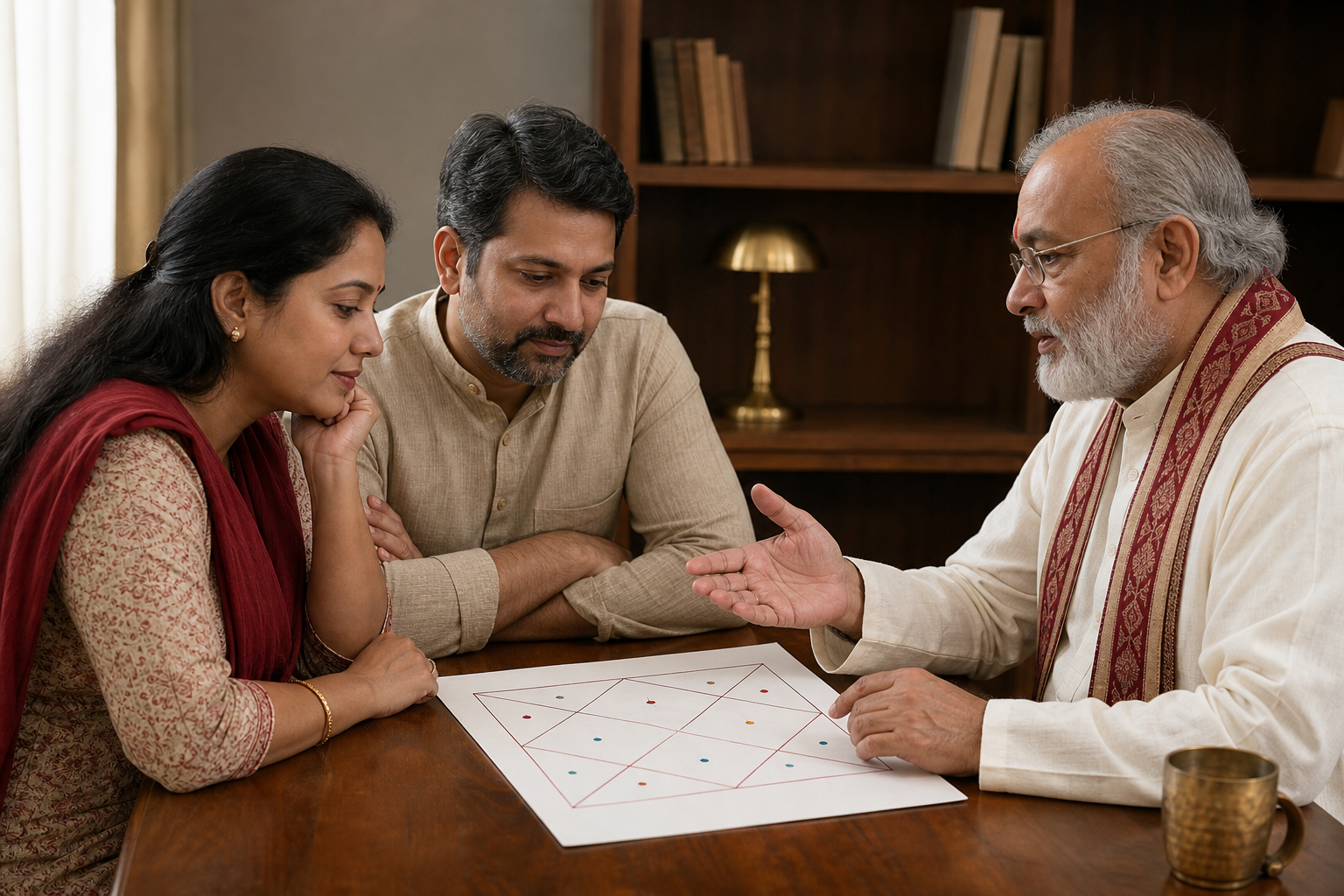
Mangal Shanti, Navagraha Shanti, and a simple Hanuman puja on Tuesday are traditional choices when relationship strain coincides with concern about Mars. You can undertake them humbly at home or seek guidance from a trusted practitioner. Keep the intention precise: you are cultivating governed strength and responsible partnership, not purchasing immunity from the consequences of harmful conduct.
Do not respond to fear by collecting every available rite. Choose a practice you understand, learn its proper form, and connect it to one behavioural commitment. If you chant for calm and then resume humiliating your spouse, adding another puja will not address the contradiction.
Red coral is not a universal Mars remedy
Red coral, or moonga, is frequently associated with Mars, but gemstones occupy a different category from prayer, ethical restraint, and charity. Within astrological reasoning, Mars may be supportive in one chart and difficult in another; strengthening it indiscriminately is therefore not treated as universally appropriate. Seek a competent assessment before wearing red coral, and be wary of anyone who uses a frightening prediction to pressure you into an immediate purchase.
Judge the practice by what changes in the marriage
After each Tuesday observance, look beyond whether every ritual step was completed. Ask whether you interrupted reactive speech sooner, kept your commitments, listened without retaliation, and made it easier for your spouse to raise a concern. Ask your spouse what they actually experienced rather than assuming that your intention was visible.
If repeated conflict is not improving, bring in appropriate practical help. A qualified relationship professional can help a couple address communication patterns that ritual alone has not changed. Where there is intimidation, coercive control, threats, or physical harm, prioritise individual safety and seek trusted local or professional support; do not wait for a planetary remedy to make an unsafe situation safe.
Begin next Tuesday with a manageable cycle: one honest sankalpa, one prayer practice, one act of service, and one calm conversation. Then carry the discipline into Wednesday. Marital harmony is not proved at the altar; it is proved when strength becomes dependable care in the life you share.
References
