
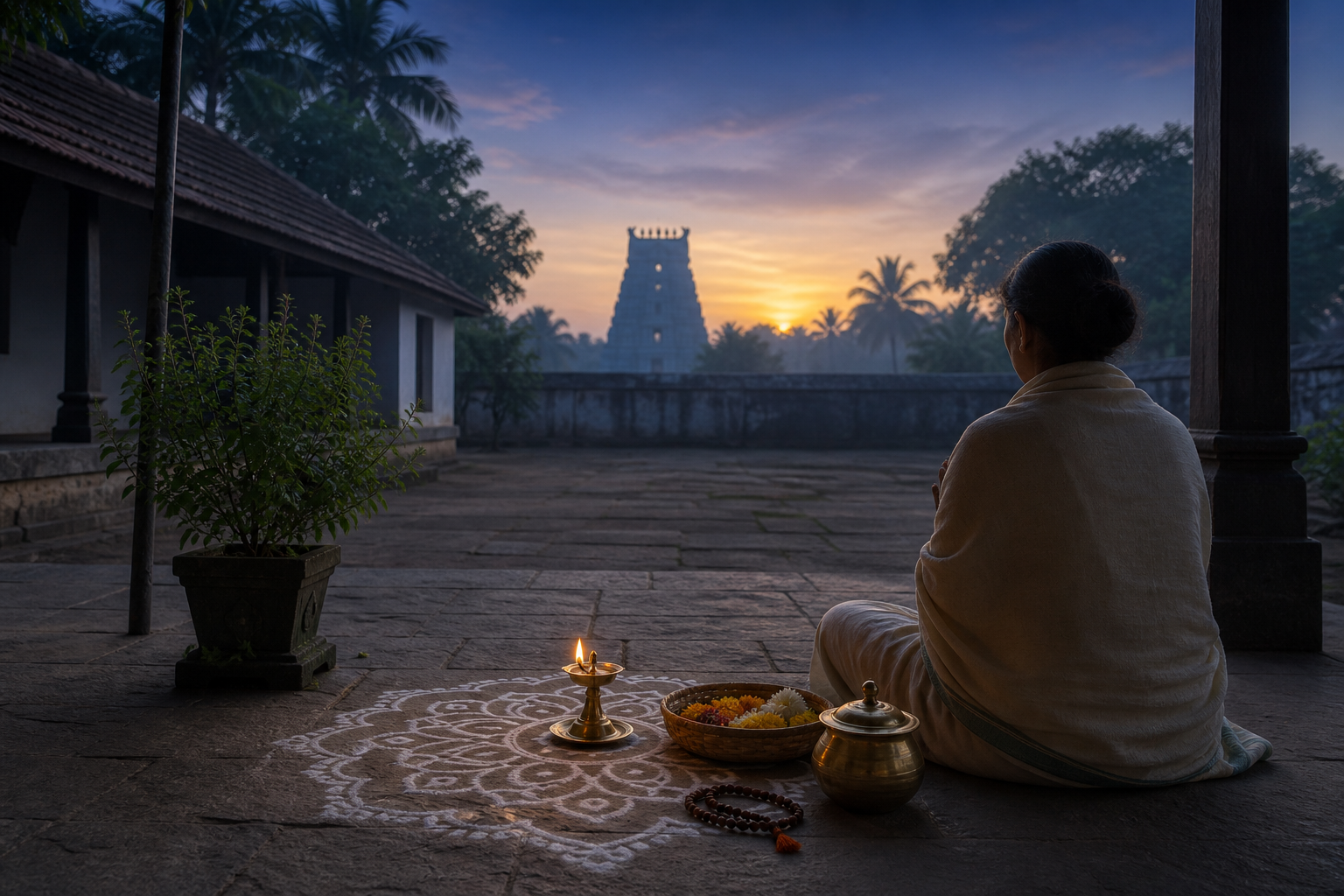
You want to honour the sacred season, but one calendar says Margashirsha, your Tamil temple announces Margazhi, and relatives recommend different vratas. You do not need to compress every custom into one crowded programme. You need to identify the calendar you follow, establish one daily discipline, and add the observances recognised by your family or sampradaya.
That approach gives the month a clear shape. Dawn becomes a dependable spiritual anchor, festival days retain their distinct meanings, and fasting or elaborate ritual never becomes a test of who is more devout.
Two calendars share the season, but not every date
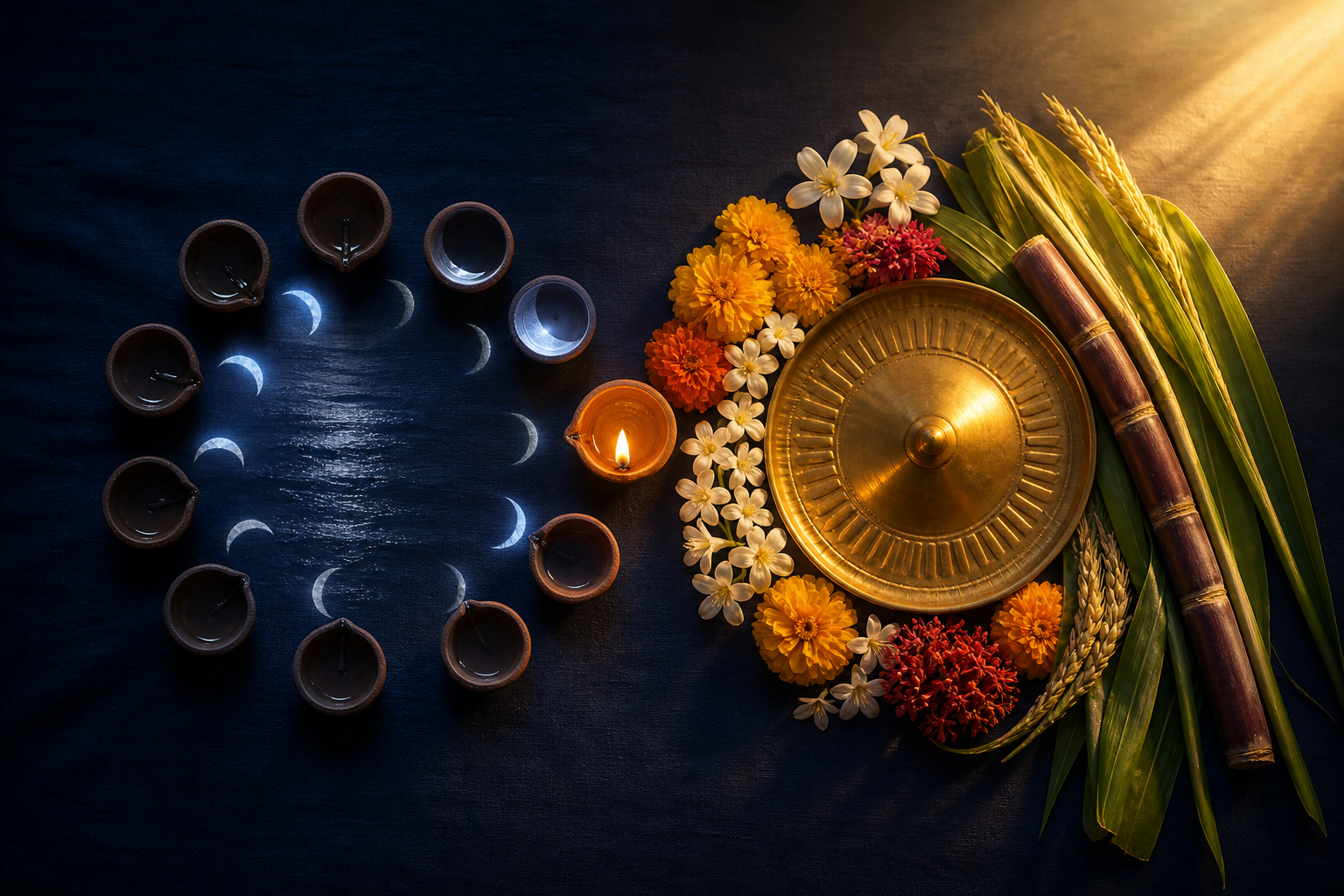
Margashirsha is the ninth month of the traditional Hindu lunar calendar. Its special place in devotional life is grounded in Bhagavad Gita 10.35, where Shri Krishna identifies Margashirsha with divine excellence among the months: māsānām mārgaśīrṣo ‘ham. Gita study, Gita Jayanti, japa, vrata, dana and satsang therefore fit naturally into its rhythm.
Margazhi is the ninth month of the Tamil calendar and corresponds devotionally with Dhanurmasa. Its most recognisable practices include pre-sunrise temple worship, Tiruppavai recitation, bhajans, doorstep kolam, and a rich season of classical music and dance. Arudra Darisanam and, in many years, Vaikunta Ekadasi also fall within this sacred setting.
The distinction matters when you plan. A lunar tithi named for Margashirsha and a date in Tamil Margazhi are not interchangeable scheduling instructions. They belong to related devotional frameworks, but each must be located through the calendar that governs it.
| Framework | What determines the schedule | Useful devotional anchors |
|---|---|---|
| Margashirsha | Lunar month, paksha and tithi in a local Panchang | Bhagavad Gita study, Gita Jayanti, japa, satsang and Margashirsha vratas |
| Margazhi | Tamil calendar and the schedule of your temple | Tiruppavai, dawn puja, bhajans, kolam, Arudra Darisanam and Vaikunta Ekadasi when applicable |
| Household discipline | Family tradition, sampradaya and personal capacity | Prayer, sattvik living, dana, seva and restraint in speech and consumption |
Use one reliable local Panchang for tithis, the temple’s own notice for temple events, and your family tradition for the form of a vrata. This prevents a common mistake: finding a date intended for another region and building an otherwise sincere observance around the wrong day.
Make dawn the anchor, not an endurance test
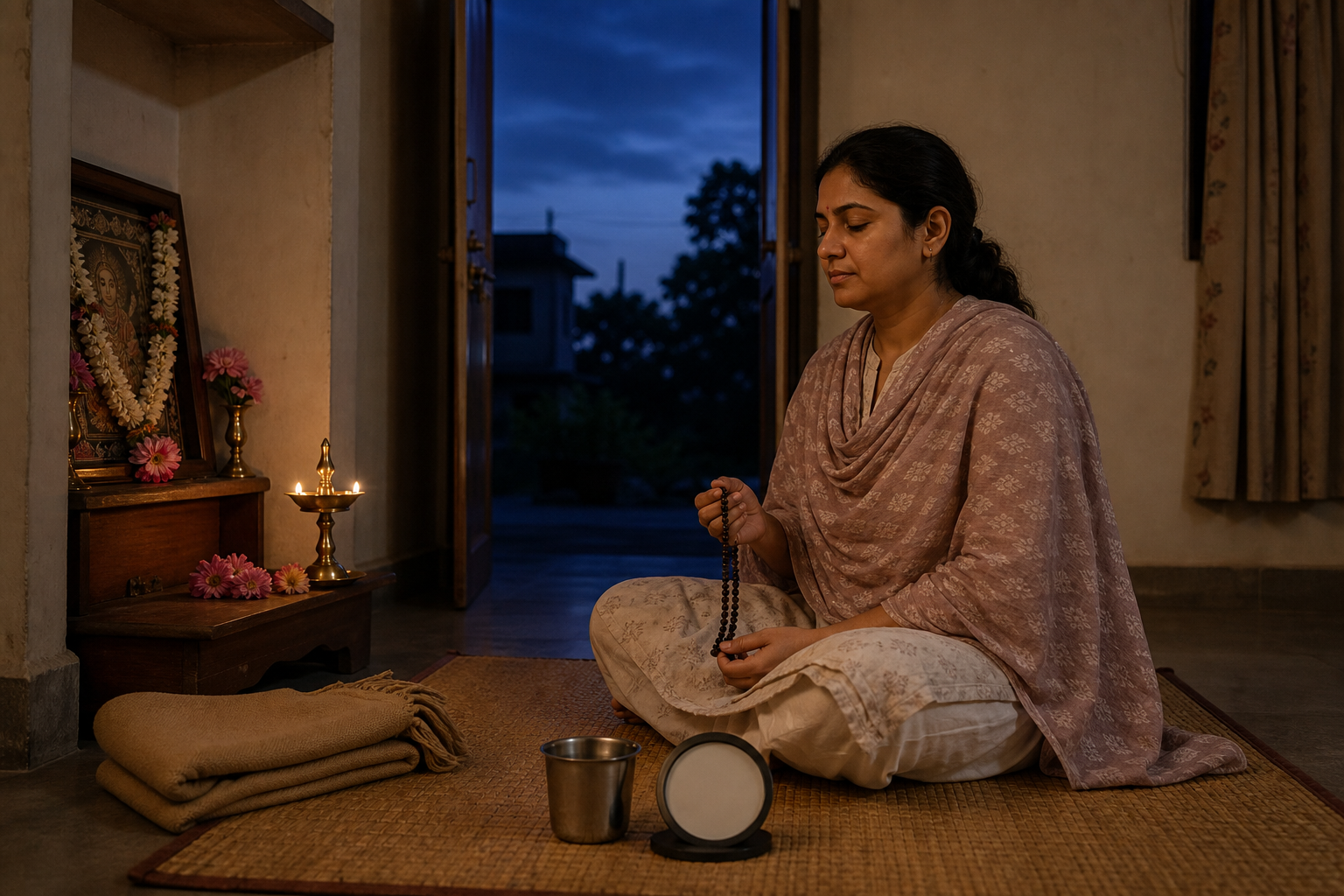
The most useful shared feature of Margashirsha and Margazhi is their emphasis on inwardness before the day’s demands take over. Tamil Margazhi practice gives this a particularly visible form: temples open early, special pujas take place before sunrise, and chanting begins while the surroundings are still quiet.
Your home practice does not have to reproduce a temple programme. The following sequence is a sustainable framework, not a prescribed ritual for every lineage:
- Prepare before sleeping. Set out the text, lamp, clean water and any simple offering you will use. Removing decisions from the morning makes consistency more likely.
- Rise early enough to pray without rushing. If an ambitious schedule repeatedly fails, shorten the practice instead of abandoning the month.
- Wash, tidy the worship space and light a deepa. Begin with a clear sankalpa for steadiness in thought, speech and action.
- Choose one primary recitation. This might be Tiruppavai in a Tamil Vaishnava setting, a passage from the Bhagavad Gita, Vishnu Sahasranama, a family stotra, mantra-japa or bhajan.
- Leave a brief period without recitation. Sit quietly and notice which duty, habit or relationship needs more dharmic attention that day.
- Close by naming one action. Decide whom you will help, what harsh word you will withhold, or which responsibility you will complete without resentment.
A kolam can become part of this dawn rhythm without becoming a contest in complexity. Clean the threshold, draw what your time and skill permit, and treat the act as an offering of order, attention and welcome. On a morning when you are going to the temple, let the temple visit replace part of the home sequence rather than making both so demanding that neither can be sustained.
Give each major observance its own logic

Gita Jayanti and daily Gita study
Margashirsha is an especially fitting time to read the Bhagavad Gita because the text itself singles out the month. The practical aim is not to accumulate pages. It is to carry one teaching into conduct.
After each reading, ask three questions: What is my duty here? Which attachment is distorting it? What would disciplined action look like today? A single passage examined honestly can shape the day more deeply than a long recitation completed mechanically. If your temple or community holds a Gita Jayanti recitation or satsang, use it as a communal culmination of the study you have already been doing at home.
Akhanda Dwadashi
Akhanda Dwadashi is observed on Shukla Paksha Dwadashi in Margashirsha and is especially associated with worship of Lord Krishna. It is also called Dwadasha Aditya Vratam, with some households remembering the twelve solar forms in complementary prayers. The word akhanda directs attention to continuity: the discipline is meant to outlast a single ceremonial morning.
A simple observance can include a sunrise sankalpa, a lit deepa, tulsi offered with reverence, Vishnu Sahasranama or a Gita passage, sattvik naivedya, japa and charity. Some traditions understand the vrata through three connected phases distributed across the year. If that form is not already part of your family practice, ask a knowledgeable elder or temple how the later phases are scheduled rather than guessing from the word akhanda.
Tiruppavai, temple worship and the Tamil cultural season
Margazhi has a distinctly Tamil devotional vocabulary. Andal’s Tiruppavai, early temple worship, communal bhajan and kolam are not decorative additions to a generic winter festival. Together they carry theology, poetry, discipline and cultural memory from one generation to the next.
Follow the temple calendar for Arudra Darisanam and Vaikunta Ekadasi rather than assuming that every highlighted observance belongs on the same household list. A Shaiva family may give particular attention to Arudra Darisanam; a Vaishnava household may organise the month around Tiruppavai and Vaikunta Ekadasi. Respecting those distinctions is a stronger expression of dharmic unity than flattening every practice into one supposedly universal routine.
If classical music or dance is part of Margazhi where you live, attend with the same attention you bring to a recitation. Learn what is being sung, arrive on time, and help younger family members connect the artistic form with its devotional language. Cultural participation becomes spiritual learning when you receive it as more than entertainment.
Let restraint result in service
A vrata loses its centre when the visible difficulty of fasting becomes more important than remembrance, humility and self-mastery. Upavasa may involve a strict fast, a lighter sattvik diet or another form of disciplined restraint, depending on health, capacity and inherited practice.
Children, elders, pregnant people, and anyone whose health or medication depends on regular food should not copy a strict fast simply because another devotee follows one. Choose an appropriate sattvik meal or a non-food restraint, and follow medical advice where relevant. You can preserve the vrata’s intent through japa, mindful eating, simplicity and seva without treating physical strain as proof of sincerity.
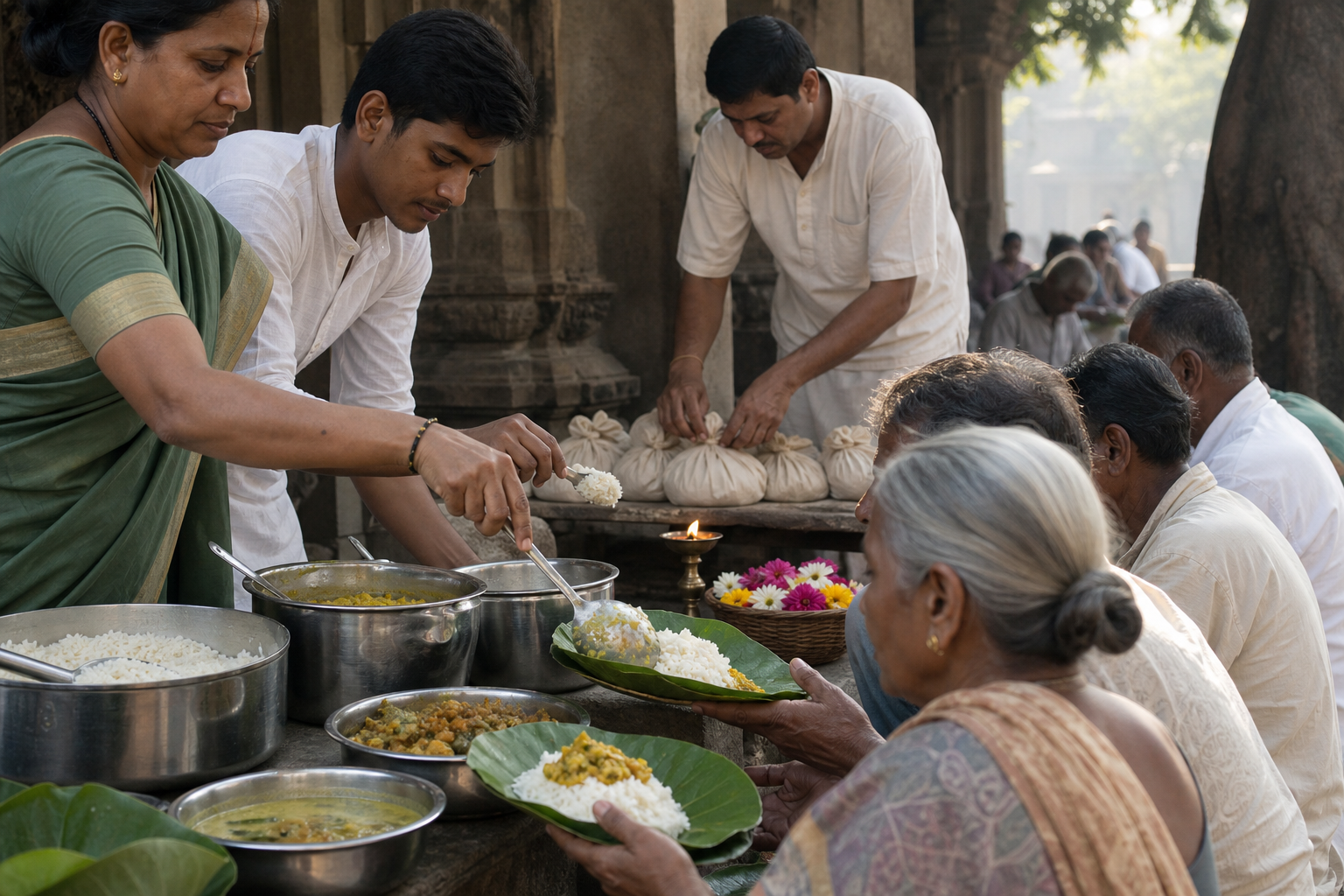
Pair every renunciation with a constructive act. If you simplify a meal, share food through annadana. If you reduce entertainment, give the recovered time to temple work, family care or community service. If you reduce discretionary spending, support a food drive, education effort or a concrete local need. Japa, dana, seva and sattvik living belong together because devotion must eventually affect how you use attention, food, money and speech.
This is also where the season can include a wider Dharmic family without erasing differences. Hindu ritual forms should remain recognisably Hindu, while silence, compassion, ethical restraint, remembrance and selfless service offer genuine points of participation for Buddhist, Jain and Sikh relatives. Unity does not require identical worship.
Use a month plan you can actually sustain
The following plan is a household framework, not a replacement for sampradaya-specific instructions. Its purpose is to prevent an enthusiastic first week from giving way to an abandoned second half.
- Every day: Keep one dawn anchor: deepa, primary recitation, quiet reflection and one ethical intention.
- Once each week: Bring the household together for a longer Gita reading, Tiruppavai session, bhajan or discussion. Give children a real role, such as choosing a verse, preparing the lamp or helping with kolam.
- On the relevant tithi or temple date: Add the specific vrata, puja, satsang or darshan. Confirm the date locally before making travel or fasting plans.
- Throughout the month: Repeat one form of seva instead of scattering effort across unrelated gestures. Consistency makes service part of the vrata rather than an occasional supplement.
- At the close: Keep one discipline that improved ordinary life. It might be dawn silence, daily Gita reading, gentler speech, regular annadana or a recurring temple responsibility.
Key takeaways
- Use a local Panchang for Margashirsha tithis and the Tamil calendar or temple notice for Margazhi events.
- Treat Margashirsha and Margazhi as closely related devotional frameworks, not as interchangeable date labels.
- Build the month around one repeatable dawn practice before adding special observances.
- Keep Gita study, Akhanda Dwadashi, Tiruppavai, Arudra Darisanam and Vaikunta Ekadasi distinct according to tradition.
- Adapt fasting to health and capacity, then express restraint through dana, seva and better conduct.
Tonight, choose the calendar that will govern your dates and prepare one text for the morning. Tomorrow, light the lamp, complete a practice small enough to repeat, and let it change one action before the day is over. That is how a sacred month becomes a lived discipline.
References
- DharmaRenaissance Blog — Why Margashirsha Maas Matters: Bhagavad Gita’s Revered Month and Living Traditions
- DharmaRenaissance Blog — Margazhi Masam 2025-2026: Sacred Tamil Month Dates, Dawn Pujas, and Cultural Splendor
- DharmaRenaissance Blog — Akhanda Dwadashi 2025 (Margasira Dwadasi): Sacred Vratam, Puja Steps, and Deeper Meaning
