
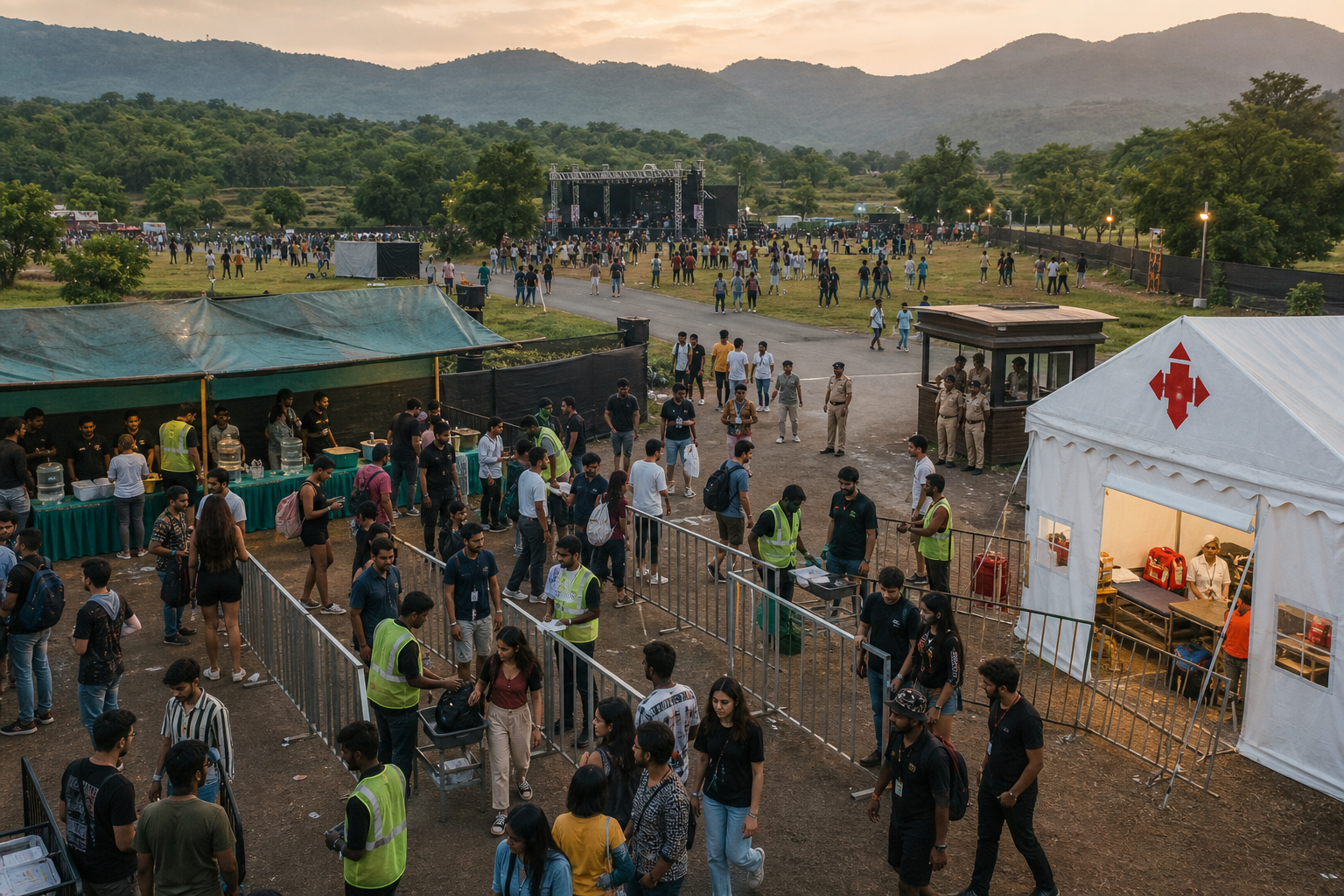
If you are a parent, organizer, resident or public official assessing a youth-oriented festival in Maharashtra, asking whether the event calls itself drug-free is not enough. The useful question is whether the organizer can prevent foreseeable harm, respond when prevention fails and accept enforceable consequences.
That distinction keeps the debate both strict and fair. Festivals perceived as drug-associated raise legitimate concerns about substance misuse, medical emergencies, crowd safety, travel and policing burdens. Perception alone, however, is not proof. Permission should turn on verifiable controls, including risk assessment, compliance protocols, on-site medical support, law-enforcement coordination, age verification and organizer accountability.
Key takeaways
- A drug-free slogan is a promise. A written licence condition, assigned to a responsible person and backed by consequences, is a control.
- Age verification, medical readiness, prohibited-substance procedures and police coordination should be demonstrated before permission is granted.
- Medical personnel, security staff and police need distinct roles. A seriously unwell attendee requires qualified care, not an improvised investigation by untrained staff.
- Parents should be able to find the age rule, medical-help process, travel arrangements and accountable event contact before buying a ticket.
- Permission should be withheld when essential safeguards cannot be verified. An organizer that meets the standard can be licensed under auditable conditions rather than trusted on reputation alone.
Turn every safety promise into a licence condition
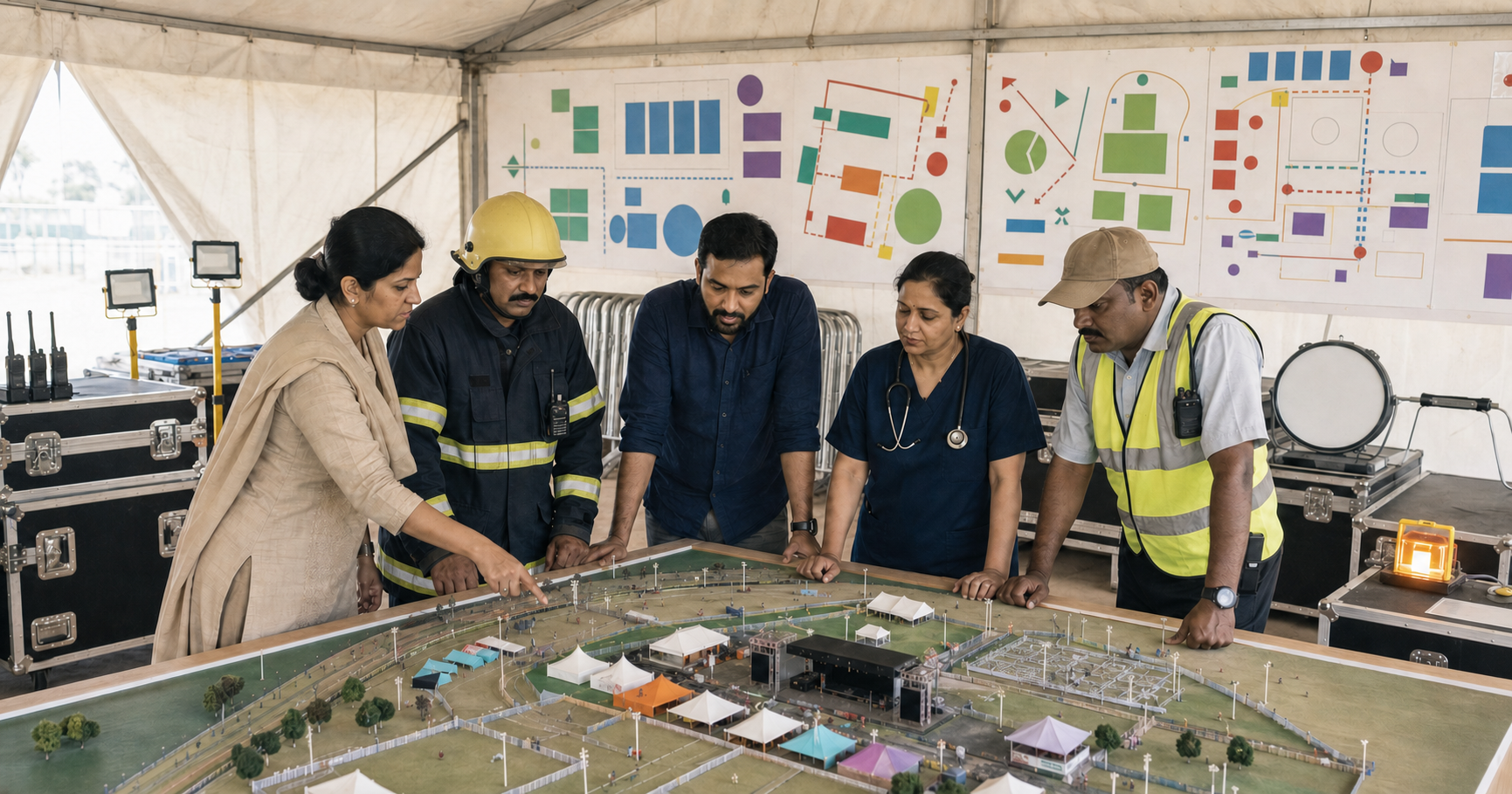
The weak point in festival regulation is often not the absence of promises but the absence of a test. Phrases such as zero tolerance, high security and complete safety do not tell an inspector what will happen, who will do it or what evidence will show that it was done.
A defensible permission process should require the organizer to answer five practical questions:
- What can go wrong? The event risk assessment should cover the expected audience, youth vulnerability, crowd movement, arrival and departure, possible prohibited activity, medical emergencies and effects on the surrounding neighborhood.
- What will prevent it? The operating plan should explain age verification, entry controls, staff responsibilities and the procedure for reporting and escalating suspected prohibited conduct.
- What happens when prevention fails? The response plan should identify on-site medical support, communications, an early-warning process and the route for obtaining additional emergency assistance.
- Who has authority? The organizer, security team, medical personnel and law-enforcement contacts should know who makes each kind of decision. Shared responsibility must not become nobody’s responsibility.
- What proves compliance? The organizer should provide evidence that required arrangements exist before the gates open and maintain an incident record afterward for regulatory review.
The licence should also state what happens when a condition is not met. If age controls, medical coverage or essential coordination are missing before opening, the authority needs a clear basis to withhold or pause permission. If a serious breach emerges during the event, the people in charge need a predetermined escalation path. A condition without a consequence is brochure language, not regulation.
Staffing and infrastructure should follow the event’s scale and assessed risk. Copying a fixed arrangement from a smaller venue can create false confidence, while demanding an unsupported number can turn regulation into guesswork. The organizer should explain why its proposed capacity is adequate, and the licensing authority should record why it accepts or rejects that explanation.
Keep medical response coordinated but distinct from policing
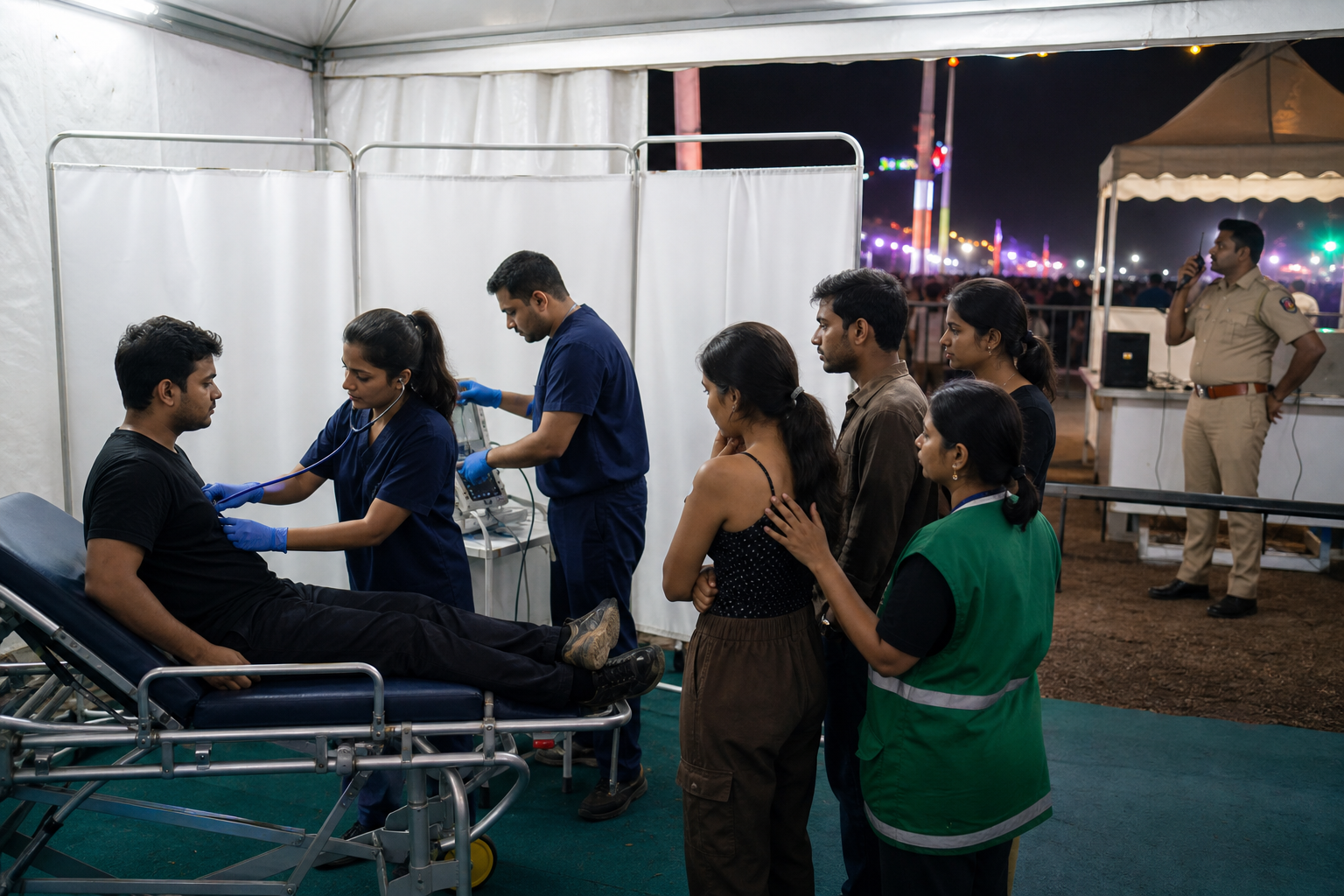
Zero tolerance for illicit activity must not become zero compassion for a person in distress. When an attendee appears seriously unwell, immediate access to qualified medical help is the first safety requirement. Staff should not guess the cause, make a diagnosis or delay care while deciding whom to blame.
- Medical personnel should assess the person, provide care within their professional role and escalate to emergency services when required.
- Security staff should protect access to the patient, manage the surrounding crowd and relay accurate information through the event’s command structure.
- Police should address suspected offences and threats to public order under applicable law rather than asking medical volunteers to perform an enforcement role.
- The designated event lead should combine medical and security alerts, identify an emerging pattern and authorize a coordinated response.
An early-warning system does not have to mean indiscriminate surveillance. It can be a defined process through which medical and security teams report emerging concerns to a common decision point. The purpose is to notice a developing problem early enough to redeploy resources, inspect a reported area or request outside assistance.
Enforcement also needs consistency. Clothing, appearance, surname, faith or taste in music cannot stand in for evidence of prohibited conduct. Written procedures reduce arbitrary treatment and help staff respond to behavior rather than stereotype an entire youth audience.
Give families a safety test they can use before ticket day
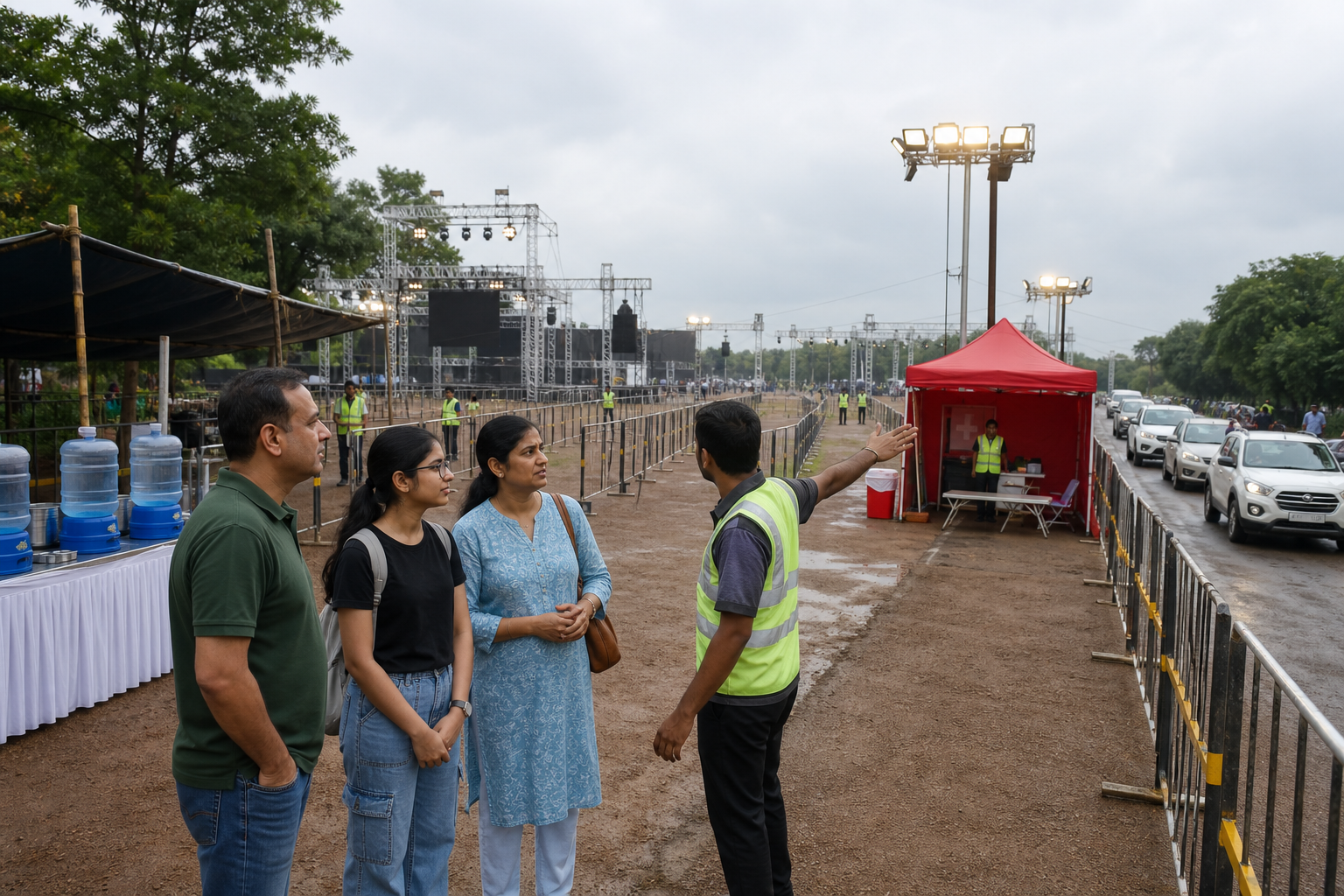
Parents cannot inspect a festival’s internal command plan, and they should not be expected to replace the licensing authority. They can still test whether an organizer is transparent about the controls that matter.
- What age rule applies, what proof is accepted and how will it be checked at entry?
- How can an attendee locate or contact the on-site medical team?
- What should a young person do if a friend becomes seriously unwell?
- How are medical assistance, security reporting and police involvement separated and coordinated?
- What arrangements address crowd movement, arrival, departure and safe travel?
- Who is the accountable organizer contact before, during and after the event?
If those answers are unavailable, treat the missing information as an unresolved risk. Ask the organizer or relevant licensing authority for the plan. Ticket advertising and social-media assurances are not substitutes for a verifiable response.
Within the family, agree on transport, a return plan, check-in expectations and how to reach official help. Make one instruction unambiguous: if someone is unresponsive or seriously unwell, contact on-site medical personnel or emergency services immediately. Do not leave the person with friends, assume the cause or try to manage a possible medical emergency privately.
Young attendees should also know that they are not expected to confront suspected drug distribution themselves. They can move to safety and report the concern through official security or law-enforcement channels. Personal bravery is not a substitute for trained intervention.
Apply Dharmic responsibility without creating moral panic

A Dharmic approach gives this regulatory standard moral depth without turning it into a campaign against music or young people. Ahimsa asks us to reduce foreseeable harm. Mindfulness asks us to recognize risk before a crisis. Seva asks us to help a person in distress without humiliation. Collective responsibility places real duties on the state, organizer, families and attendees rather than using any one of them as a scapegoat.
Calling a festival drug-linked does not by itself prove illicit activity or show that every attendee is in danger. The opposite shortcut is equally weak: a polished brand or an uneventful promotional campaign does not prove readiness. Regulators should examine the event’s controls, the evidence behind them and the organizer’s willingness to be held accountable.
Maharashtra does not have to choose between cultural energy and youth welfare. Music, art, tourism and community celebration can flourish within a firm drug-risk standard. Drug-free cultural alternatives deserve encouragement, but they too should meet meaningful safety conditions rather than receive trust from a label alone.
At the next community meeting or permission hearing, ask for the control plan rather than another slogan. If verified age controls, medical readiness, enforcement coordination and an accountable organizer cannot be shown, oppose permission until the deficiencies are corrected. If they can be shown, insist that they be written into the licence and monitored. That is how a festival earns public trust while Maharashtra protects its youth.
References
