

If your phone is filling with clips, accusations, and angry appeals after the Pune clash, you do not have to choose between justice and communal harmony. Your first duty is to keep them joined: help anyone who was harmed, preserve evidence, demand a lawful investigation, and refuse to turn an unverified accusation into a verdict against an entire community.
That is accountable healing. It does not ask Hindus to suppress legitimate concerns or abandon the demand for justice. It asks us to build a response strong enough to survive scrutiny and disciplined enough not to create new victims.
Verify the claim before you amplify the conflict

The responsible starting point is deliberately narrow: reports describe a disturbing street confrontation in Pune, but important facts remain partial and contested. Circulating accounts include an allegation involving a local political functionary. That allegation requires investigation; it is not a proven finding.
Before forwarding anything, sort it into three different categories. This small discipline prevents the most common escalation: a claim loses its qualifiers as it travels, then returns to the public as supposed fact.
- Documented: You can identify where the material came from, when it appeared, and what it actually shows. A documented video still may not establish what happened before or after the recorded segment.
- Alleged: Someone has made a claim about identity, conduct, motive, leadership, or political involvement, but an investigation or legal proceeding has not established it.
- Unknown: The available material does not establish who initiated the confrontation, whether it was planned, what each participant did, or whether communal or political direction was involved.
Apply the same test to every side. A clip can document that certain words were spoken or an act occurred within the frame. It cannot automatically identify everyone present, establish who organized them, or prove the motive attributed by a caption. If the caption claims more than the recording demonstrates, do not repeat the caption as fact.
Keep original links and files rather than circulating cropped or recompressed copies. Record where you found an item and why you believe its time or location is accurate. Do not add names based on facial resemblance, clothing, religious appearance, or somebody else’s viral thread. Misidentification can expose an innocent person to danger while weakening the credibility of legitimate evidence.
Use precise language when you speak publicly. Say that a confrontation was reported, that a particular involvement has been alleged, and that responsibility remains to be determined. If later evidence changes the picture, correct your earlier statement where the same audience can see the correction. Quietly deleting misinformation rarely repairs the impression it created.
For a pro-Hindu civic voice, this discipline is not self-censorship. It protects the credibility of a legitimate demand: if Hindus or Hindutva activists were targeted, establish that through evidence and hold the responsible individuals accountable. The conditional matters until the evidence establishes the identities, acts, and motive. Refusing collective blame does not require refusing to name a communal motive if a fair investigation eventually proves one.
Center victims while protecting evidence and witnesses

You do not need a judicial conclusion before helping an injured or frightened person. You do need reliable evidence before publicly assigning criminal responsibility. Keeping those standards separate allows compassion to begin immediately without converting care into a premature verdict.
- Move people away from immediate danger. Do not send someone back toward a volatile crowd merely to obtain better footage. Contact local emergency services when there is an active threat or an injury requiring urgent attention.
- Help the injured obtain appropriate care. Preserve medical papers and related records with the person’s permission. Do not publish photographs of wounds or treatment details merely to win an online argument.
- Preserve original material. Retain unedited photos, recordings, messages, and links. Note who created each item, when it was received, and whether anyone altered it. Give investigators or qualified legal counsel the original rather than only a social-media copy.
- Protect witness independence. Collect contact information with consent and keep it private. Do not gather witnesses into a group chat where their memories may influence one another. Each person should describe what they personally saw, heard, or did not see.
- Use lawful reporting channels. Keep acknowledgements, complaint documents, correspondence, and the names or designations of officials contacted. If a witness or complainant fears retaliation, seek advice from a qualified local lawyer before exposing identifying details publicly.
- Offer practical support with consent. Transport, help with paperwork, contact with family, and access to legal assistance are often more useful than public declarations made in a victim’s name. Let the affected person decide who may speak for them.
Never post a witness’s address, telephone number, workplace, travel route, or family details. Public exposure can create a second danger and may discourage other witnesses from cooperating. Sensitive evidence should go to the proper investigative or legal channel, not into an online contest over who can publish first.
A victim-centered response also avoids using suffering as communal theatre. Support must not depend on whether a person’s account produces the slogan, party advantage, or religious narrative somebody wants. Care for the person first. Test every accusation through evidence afterward.
Demand accountability that can survive legal scrutiny
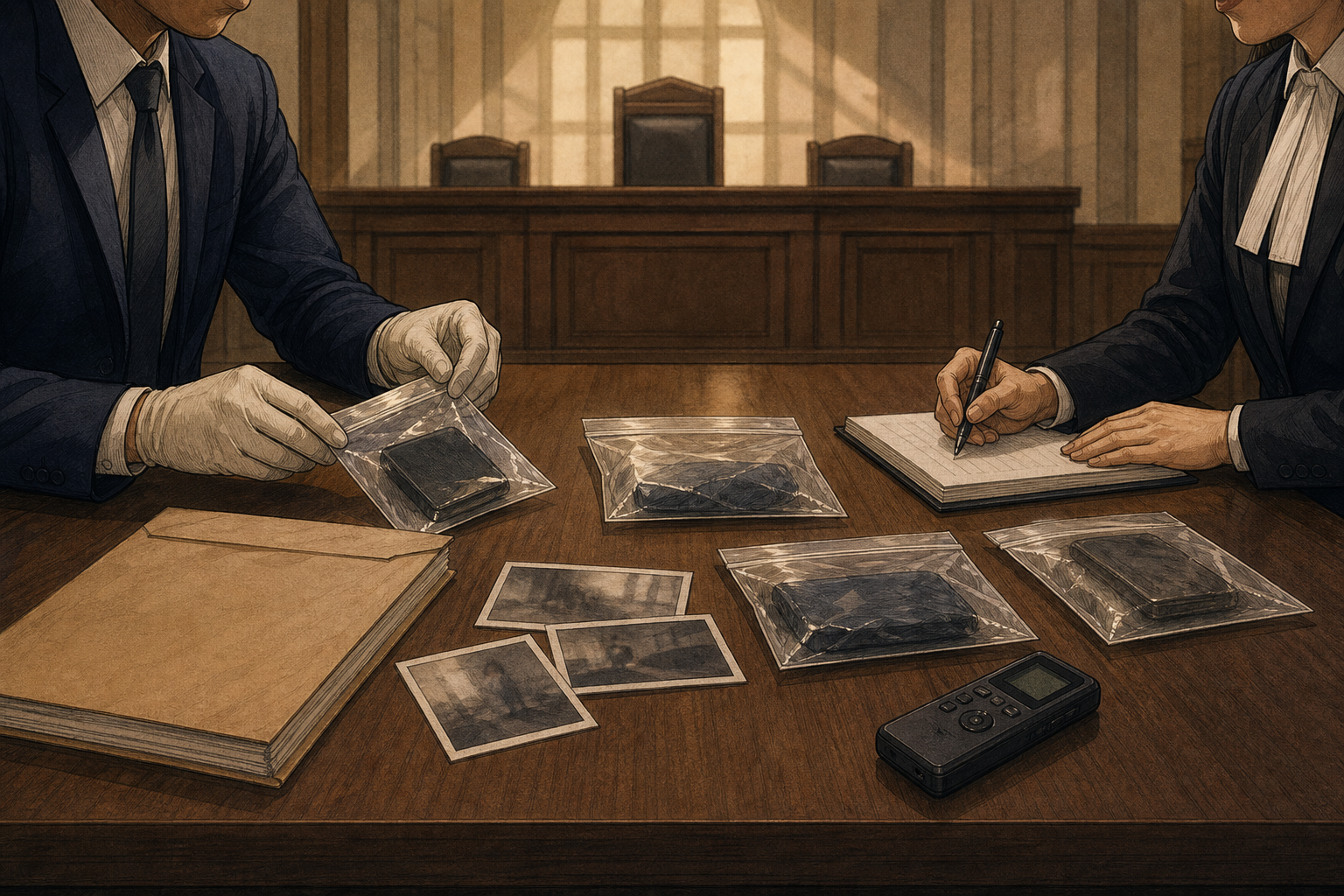
Accountability is more than demanding an arrest, and due process is more than asking the public to wait indefinitely. The credible route is an impartial investigation grounded in evidence, witness testimony, witness safety, and the rule of law. That standard protects victims while preserving the presumption of innocence for anyone accused.
Individualize responsibility
Ask what each identifiable person is alleged to have done. Participation in violence, instigation, organization, obstruction, and failure of official duty are different claims. They require different evidence. Religious identity, party membership, or presence near a confrontation cannot substitute for proof of conduct.
This principle cuts in both directions. Political affiliation must not shield a person from investigation, but affiliation alone does not prove that the person led or authorized a mob. A political organization can be asked to confirm whether an individual held a position, preserve relevant records, and cooperate with investigators. It cannot credibly settle criminal responsibility by issuing its own declaration of guilt or innocence.
Ask authorities process questions, not verdict questions
Citizens and community representatives can press for transparency without demanding that investigators reveal protected evidence. Useful questions include:
- Has the complaint been formally acknowledged, and which authority is responsible for the investigation?
- Have investigators requested original recordings, medical records, and separate witness accounts?
- How can additional witnesses submit material safely?
- What protection is available if a witness reports intimidation or retaliation?
- How will authorities provide status updates without prejudging the proceeding or exposing witnesses?
- What mechanism will review any credible allegation of official neglect, bias, or interference?
Transparency does not mean livestreaming an investigation. Publishing witness identities, raw statements, or every evidentiary lead can compromise safety and fairness. It means making the responsible institution, procedural stage, and route for submitting information clear enough that the public can distinguish progress from silence.
Keep legal, political, and civic accountability distinct
Criminal responsibility belongs in a lawful investigative and judicial process. Party discipline belongs to the relevant political organization. Review of police or administrative conduct belongs to the appropriate oversight process. Civic repair belongs to the neighborhood and its institutions. Confusing these tracks produces two bad outcomes: a peace meeting may be used to pressure a complainant into silence, or a public accusation may be treated as if it were already a judicial finding.
A peace committee must never bargain away a victim’s legal rights. Equally, the beginning of an investigation or an arrest must not be represented as final proof of guilt. Justice is credible when the same evidentiary standard applies whether the accused is politically useful, politically inconvenient, Hindu, Muslim, or otherwise.
Put Dharmic ethics to work in neighborhood repair

Dharmic principles are not decorative words to be invoked after violence. Ahimsa, karuna, maitri, and seva provide a practical discipline shared across Hindu, Buddhist, Jain, and Sikh moral life. Each principle changes what you do next.
- Ahimsa: Refuse retaliation, intimidation, vandalism, and speech intended to make uninvolved people fear collective punishment. Non-violence does not cancel lawful self-protection or the pursuit of justice; it governs the means used.
- Karuna: Attend to injury, fear, and vulnerability before turning people into symbols. Compassion can extend to every innocent person without creating false equivalence between proven wrongdoing and victimization.
- Maitri: Preserve relationships with neighbors who reject collective blame and violence. A community becomes harder to polarize when ordinary people can communicate before a rumor becomes a crowd.
- Seva: Convert moral concern into useful labor: safe transport, help with documents, literacy support, disaster relief, or a neighborhood cleanliness effort. Shared service creates repeated evidence that cooperation is possible.
Restraint under Dharma is not surrender. It is power kept answerable to truth and right conduct. Nor does communal harmony mean asking Hindus to remain quiet about violence or intimidation. A durable peace can name substantiated wrongdoing clearly while refusing inherited guilt: no Muslim neighbor is responsible merely because an accused person is Muslim, just as no Hindu neighbor inherits responsibility for the conduct of another Hindu.
Local dialogue is useful only when it has a defined job. Do not begin with a public photograph of religious leaders declaring that everything is normal. Begin with private listening, victim safety, and a record of unresolved concerns. Then build a structured process involving affected residents who consent to participate, dharmic community representatives, Muslim civil-society partners, a trusted facilitator, and relevant local officials.
- State the boundary. The dialogue will not determine criminal guilt, interfere with complaints, or ask victims to forgive on demand.
- Separate facts from rumors. Maintain a shared list of verified public information, contested claims, and unanswered questions. Update it when reliable information changes.
- Create a rapid contact route. Identify responsible community and administrative contacts who can check a dangerous rumor before it spreads through neighborhood networks.
- Record concrete commitments. Assign responsibility for victim support, witness-safety referrals, rumor correction, and follow-up with authorities. A general appeal for peace is not a substitute for named tasks.
- Build cooperation after grievances are heard. Youth service projects, literacy support, disaster-relief preparation, and neighborhood cleanliness work can create repeated, low-drama contact across communities.
- Review conduct, not appearances. Ask whether intimidation stopped, victims received help, witnesses could participate safely, false claims were corrected, and official questions received answers.
Healing fails when it means forgetting, forced forgiveness, or equal blame without equal evidence. It succeeds when victims are not abandoned, accused people receive due process, wrongdoers face consequences established by law, and uninvolved neighbors are protected from retaliatory suspicion.
Key takeaways
- Treat the reported Pune confrontation as serious, but keep contested allegations explicitly labeled as allegations.
- Help injured or threatened people immediately; do not wait for a final legal conclusion before offering practical care.
- Preserve original evidence, independent witness accounts, and complaint records while protecting personal information.
- Demand individualized accountability through an impartial process; do not assign guilt through religion or political affiliation.
- Use ahimsa as disciplined action, not passive silence: reject retaliation while pursuing truth and lawful justice.
- Make dialogue measurable through victim support, rumor correction, safe communication, official follow-up, and repeated community service.
If you are deciding what to do now, choose one bounded action: preserve an original file, correct an unsupported claim you repeated, help an affected person reach care or qualified legal assistance, or ask the responsible authority one precise process question. Pune will not heal by forgetting what happened. It can heal by establishing the truth, individualizing culpability, caring for victims, and refusing to make innocent neighbors inherit somebody else’s guilt.
References
