
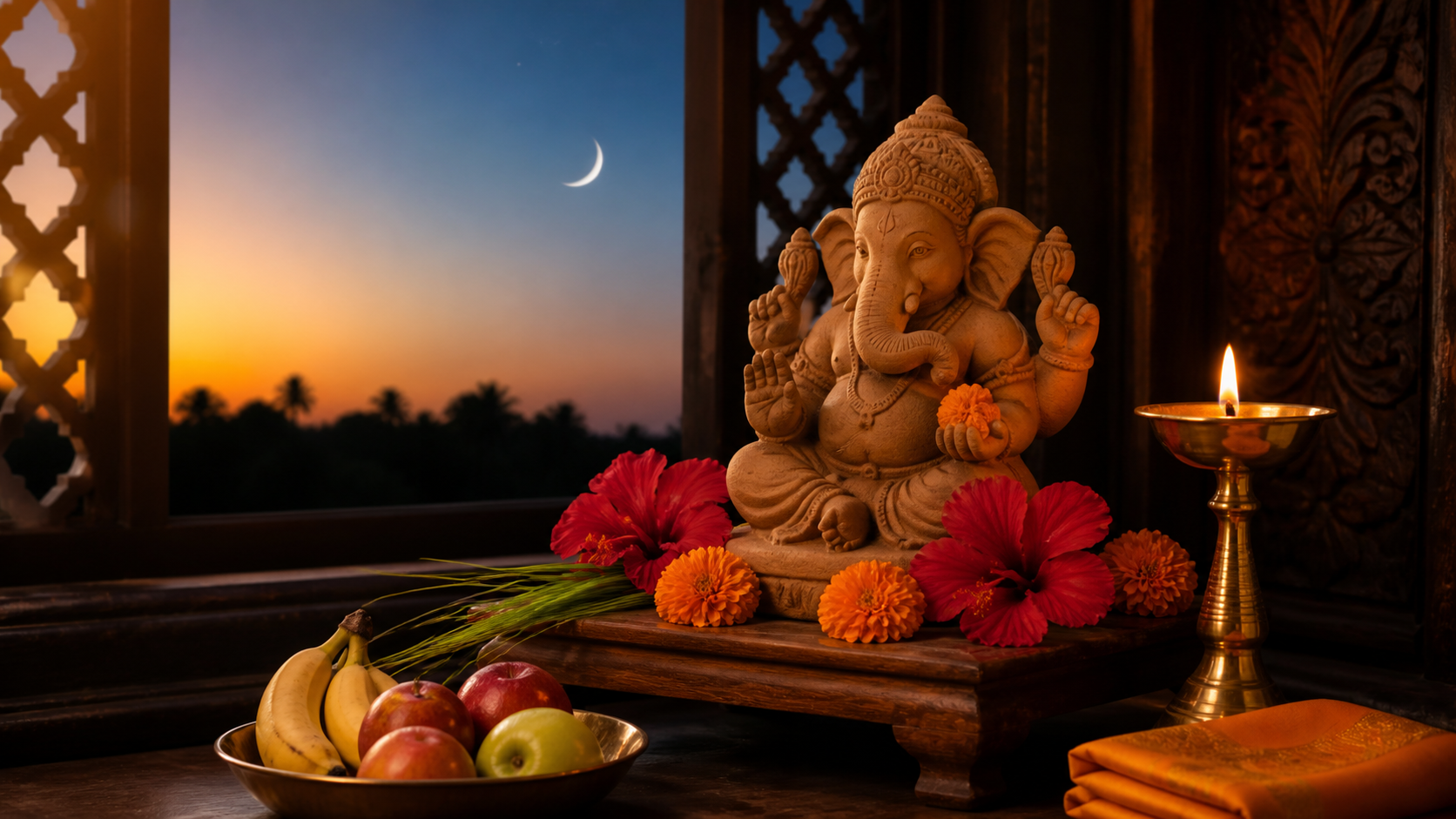
If you are deciding when to perform Monday’s Chaturthi prayer, the useful dividing line is 6:18 PM. For the location assumed by this Panchang, Shukla Paksha Chaturthi prevails before that time and Shukla Paksha Panchami begins afterward.
That does not mean every activity before 6:18 PM is automatically auspicious, nor that the same clock time applies in every city. Use the tithi change to place a Chaturthi observance, then verify local Panchang details before fixing a muhurta for anything consequential.
The exact tithi change on November 24
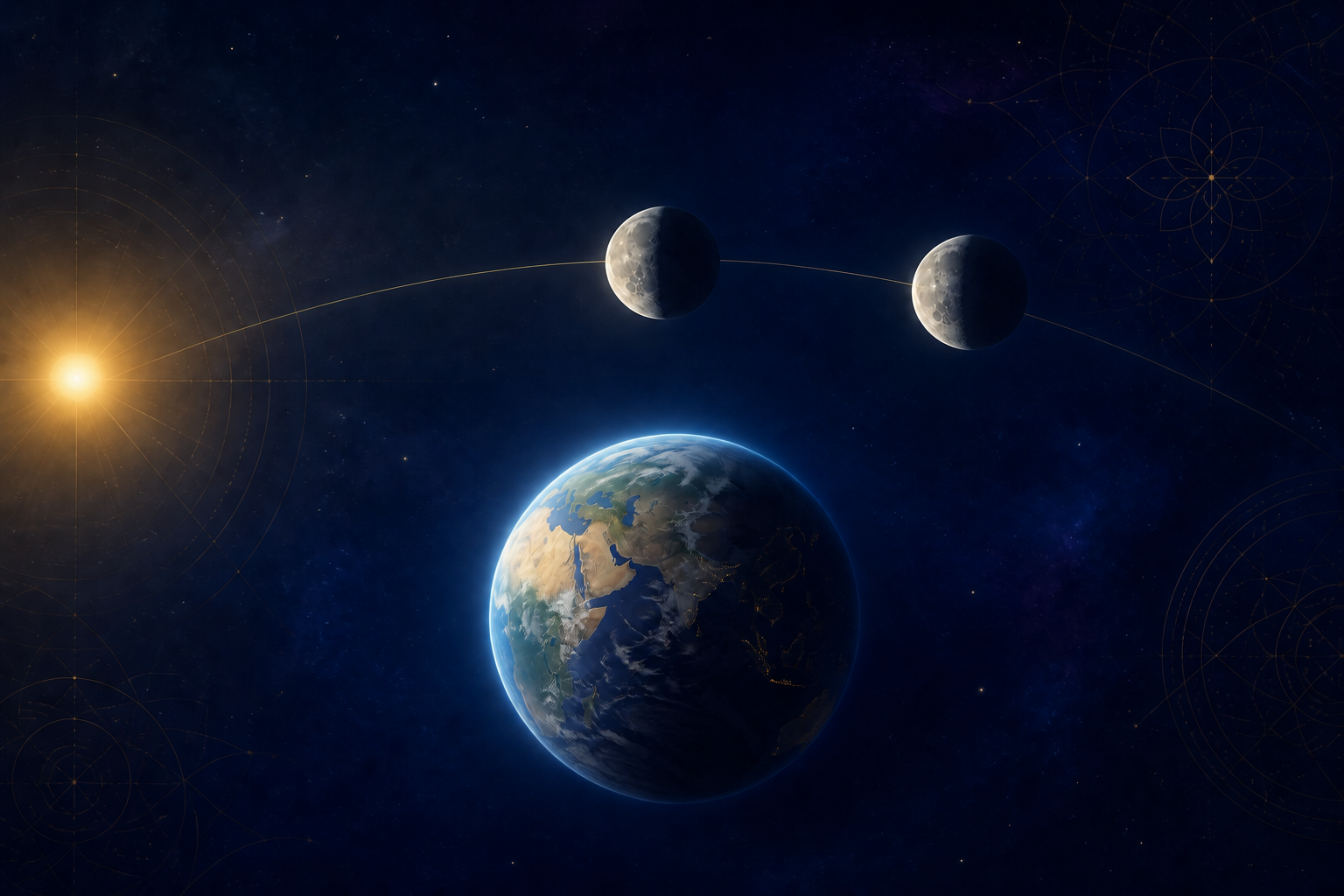
A tithi is a lunar-day division, so it does not necessarily begin or end at civil midnight. On Monday, November 24, 2025, the waxing fortnight is in its fourth lunar day until early evening. Shukla Paksha Chaturthi continues until 6:18 PM, followed by Shukla Paksha Panchami for the rest of the evening and night.
| Calendar point | November 24, 2025 |
|---|---|
| Weekday | Monday |
| Lunar fortnight | Shukla Paksha, the waxing phase |
| Before 6:18 PM | Chaturthi, the fourth tithi |
| From 6:18 PM onward | Panchami, the fifth tithi |
Read 6:18 PM as the end of Chaturthi, not as the start of a special two-part muhurta. If an observance specifically requires Chaturthi, the practical choice is to complete its tithi-dependent portion before the transition rather than beginning close to the cutoff.
How to arrange a simple Chaturthi observance
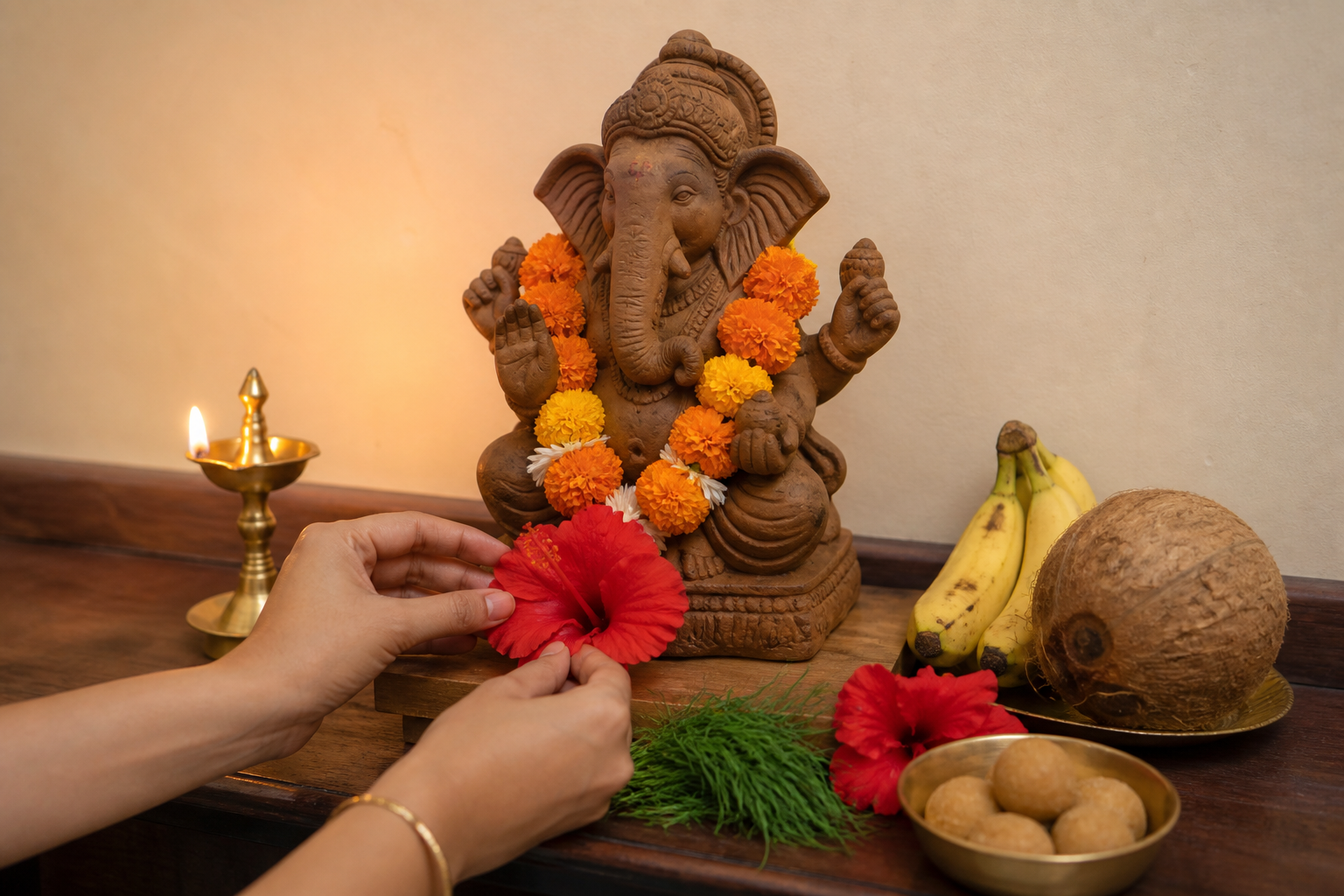
Shukla Paksha Chaturthi is commonly approached as a monthly occasion for devotion to Shri Ganesha. You do not need to turn a home observance into an elaborate ceremony. The central purpose is to bring attention to obstacles, clarify your intention, and begin the next step with steadiness.
- At your normal morning prayer time, light a lamp and sit quietly for a few minutes. State the obstacle or unfinished duty you need to address in precise terms.
- Recite Om Ganapataye Namah with attention. If you follow an established family or sampradaya practice, retain its prescribed mantra and sequence instead of replacing them with a generic routine.
- Before 6:18 PM, where that local endpoint applies, perform the part of your prayer or vrata that you intend specifically for Chaturthi.
- After Panchami begins, move from invocation to consolidation. Review what you started, organize the next action, read a few verses from a foundational text, or express gratitude for the guidance you have received.
The movement from Chaturthi to Panchami can also shape an ordinary working day. Use the earlier portion to name and begin one obstructed task. Use the evening to check the work, correct its weak points, and put the next step on your calendar. This is a devotional way to inhabit the lunar rhythm, not a universal ritual rule.
If you cannot observe before the transition, distinguish simple devotion from a formal vrata. A personal prayer to Shri Ganesha need not be abandoned because the clock has passed 6:18 PM. A vrata governed by particular tithi rules should follow your lineage, temple, or trusted regional almanac.
Why 6:18 PM may not be your city’s cutoff

Panchang timings depend on place. Time zone, geographic location, and local sunrise and sunset calculations affect how a calendar presents the day’s observances. The 6:18 PM endpoint is therefore an anchor for the locale behind that calculation, not a clock time to copy automatically in Bharat, North America, Europe, or elsewhere.
Before scheduling a tithi-sensitive puja, travel departure, new initiative, or other important activity, check four things:
- Confirm that the Panchang is set to the city where you will perform the activity, not merely your preferred language or home region.
- Confirm the displayed time zone and the civil date, November 24, 2025.
- Read the notation carefully: 6:18 PM is the stated ending time of Chaturthi, after which Panchami prevails.
- Check Nakshatra, Lagna, and the relevant local muhurta separately if your decision requires more than a tithi match.
This distinction prevents a common mistake: treating a favorable devotional association as a complete electional judgment. Chaturthi tells you which lunar day is operating. It does not, by itself, provide every factor needed to choose the best minute for a ceremony or major undertaking. Because the available timing here does not include a location-specific Nakshatra, Lagna, or muhurta window, no narrower universal “good time” can be responsibly claimed.
Key takeaways
- Monday, November 24, 2025 begins under Shukla Paksha Chaturthi for the locale used in this Panchang.
- Chaturthi ends at 6:18 PM local time in that calculation; Shukla Paksha Panchami follows.
- If your Ganesha observance is specifically tied to Chaturthi, complete its tithi-dependent portion before the stated transition.
- A lamp, attentive mantra recitation, quiet reflection, scriptural reading, or unobtrusive seva can make the observance meaningful without unnecessary complexity.
- Do not transfer 6:18 PM to another city without checking a location-specific Panchang.
- For a formal vrata or consequential muhurta, follow your lineage or temple and verify Nakshatra, Lagna, and other required factors.
Write your city’s verified Chaturthi endpoint beside the activity you intend to perform. Keep ordinary devotion simple, but confirm formal observances with the tradition you actually follow. That small distinction lets you use the Panchang with both faith and precision.
References
