

If you are deciding how to observe Wednesday, November 26, 2025, the important detail is not midnight. It is the evening change of tithi. Your daytime practice belongs to Shukla Paksha Sashti, while your evening can mark the arrival of Shukla Paksha Saptami.
You do not need an elaborate ceremony to honour that movement. A clear sankalpa, a manageable discipline, and a deliberate evening transition will give the day a coherent spiritual shape. The only caution is that the stated time is a general reference, not a substitute for a Panchang calculated for your location.
Plan the day around the 7:33 PM tithi change

For November 26, Shukla Paksha Sashti prevails until approximately 7:33 PM in most regions, after which Shukla Paksha Saptami begins. That creates a natural two-part observance: steadiness before the transition and renewal after it.
| Part of the day | Tithi | Practical emphasis |
|---|---|---|
| Morning through early evening | Shukla Paksha Sashti | Discipline, devotional steadiness, japa, satvik food, and completion of a chosen duty |
| After approximately 7:33 PM | Shukla Paksha Saptami | Vitality, clarity, gratitude, renewed study, and a fresh spiritual intention |
Do not treat 7:33 PM as a deadline before which every prayer must be finished. A tithi change is a change in the lunar day, not a command to rush worship. Use the boundary to decide the character of each practice. If your family already follows a sampradaya-specific vidhi, that established discipline should take priority over a generic schedule.
Give the Sashti hours one clear discipline
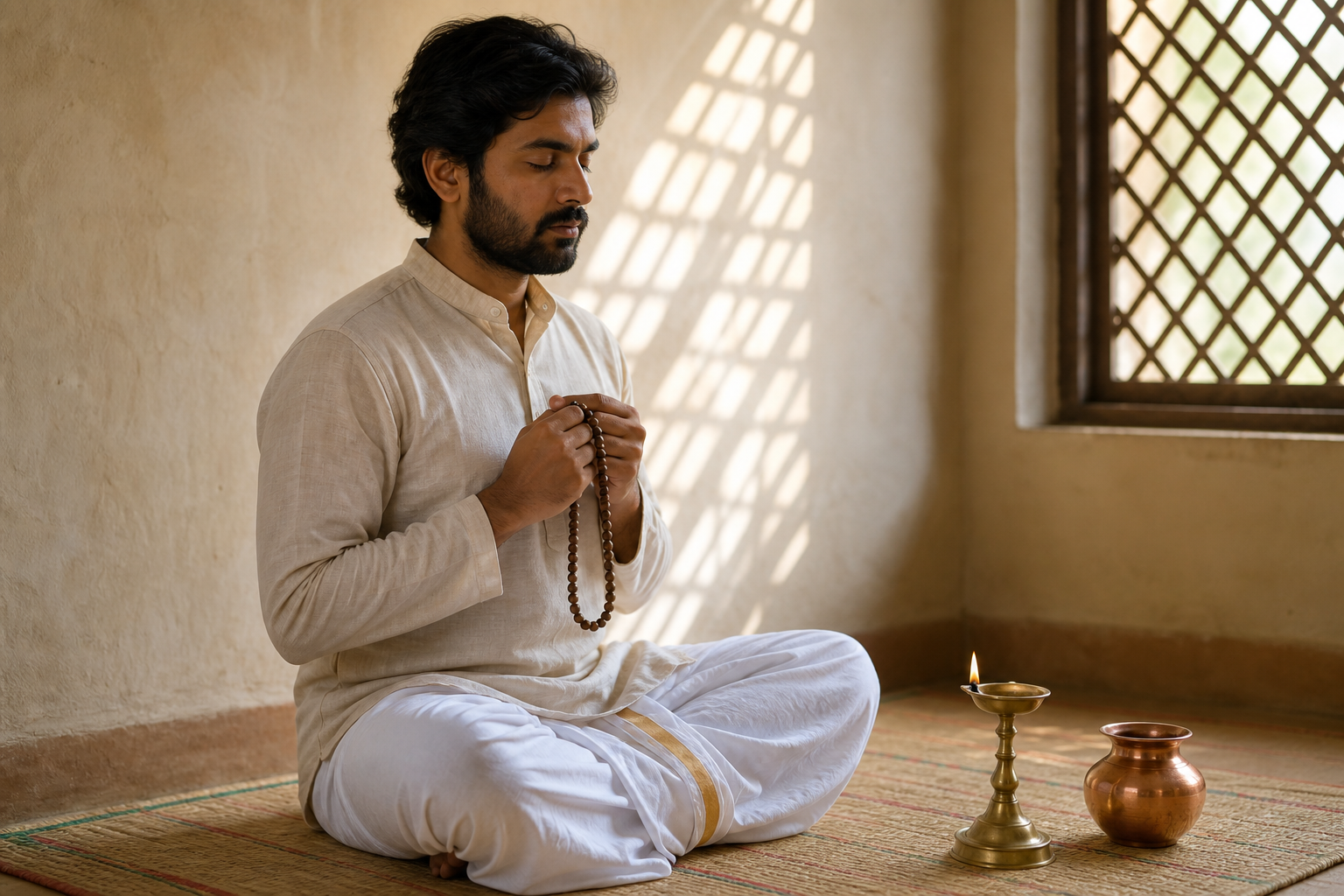
Sashti is commonly approached through disciplined growth and devotional constancy. The most useful way to express that is to choose one practice you can actually keep from morning into the day. Several ambitious vows that are abandoned by noon do less for inner resolve than one modest sankalpa completed with care.
- Make a specific sankalpa. Name the practice and its limit: a set period of quiet japa, attentive puja, simple food discipline, or one defined act of seva.
- Remove one predictable distraction. Protect the time you selected instead of hoping a free interval will appear.
- Complete an existing duty. Sashti’s quality of steadiness is well served by finishing a neglected responsibility rather than continually adding new observances.
- Keep the household practice proportionate. If children or elders are participating, use a short prayer, shared offering, or act of service that everyone can complete without strain.
If your tradition has a particular Sashti observance, deity, mantra, or food rule, follow the version received from your family, temple, or teacher. Regional and sectarian variation is part of living dharma. A general Panchang entry cannot settle every ritual detail, and it should not erase inherited practice.
Mark Saptami with an intentional evening reset
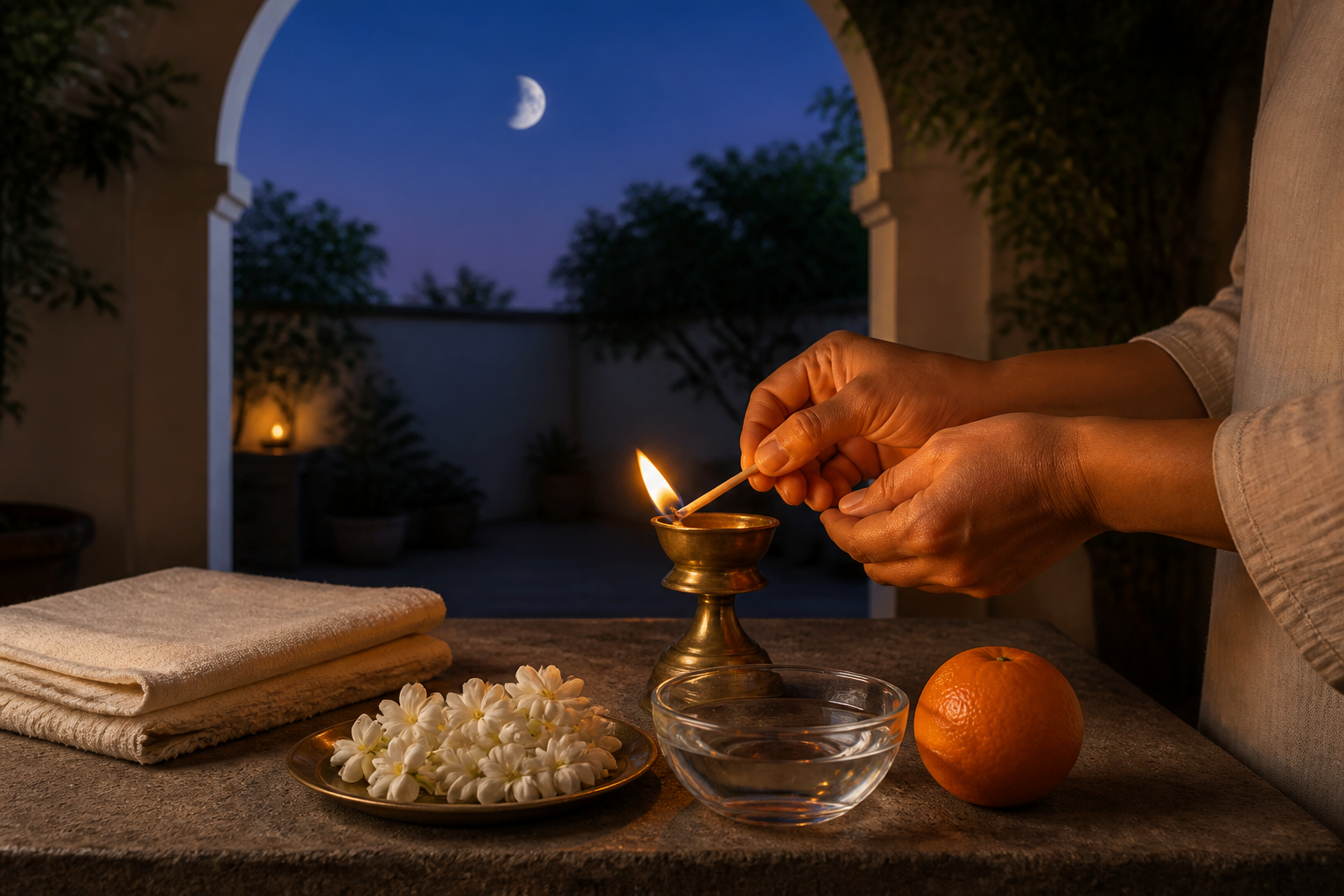
Once Saptami begins, shift the emphasis from maintaining discipline to directing renewed energy. You can make that change visible without turning the evening into a second large ritual.
- Light a diya after the transition and sit quietly long enough to recognise that a new tithi has begun.
- Offer gratitude for the discipline you were able to maintain during Sashti, without making the reflection into an inventory of failures.
- Begin or resume a small course of sacred study. Choose the text and the first passage before the evening so that the intention becomes an action.
- If you observe with family, invite each person to name one dharmic quality they will carry forward: clarity, steadiness, service, restraint, or courage.
The transition can also help a household avoid a common imbalance. Spiritual discipline is not only restriction, and renewal is not mere enthusiasm. Sashti supplies continuity; Saptami asks where that gathered attention will now be directed. Pairing the two gives the day an arc rather than a collection of unrelated religious activities.
Respect across the wider dharmic family does not require identical ritual. Hindu, Buddhist, Jain, and Sikh communities retain distinct teachings and forms of observance. If your home belongs to one of these traditions, express steadiness, gratitude, service, and clarity through its own authorised practice rather than assuming that every community follows the same Panchang ritual.
Verify local timing before planning a formal rite
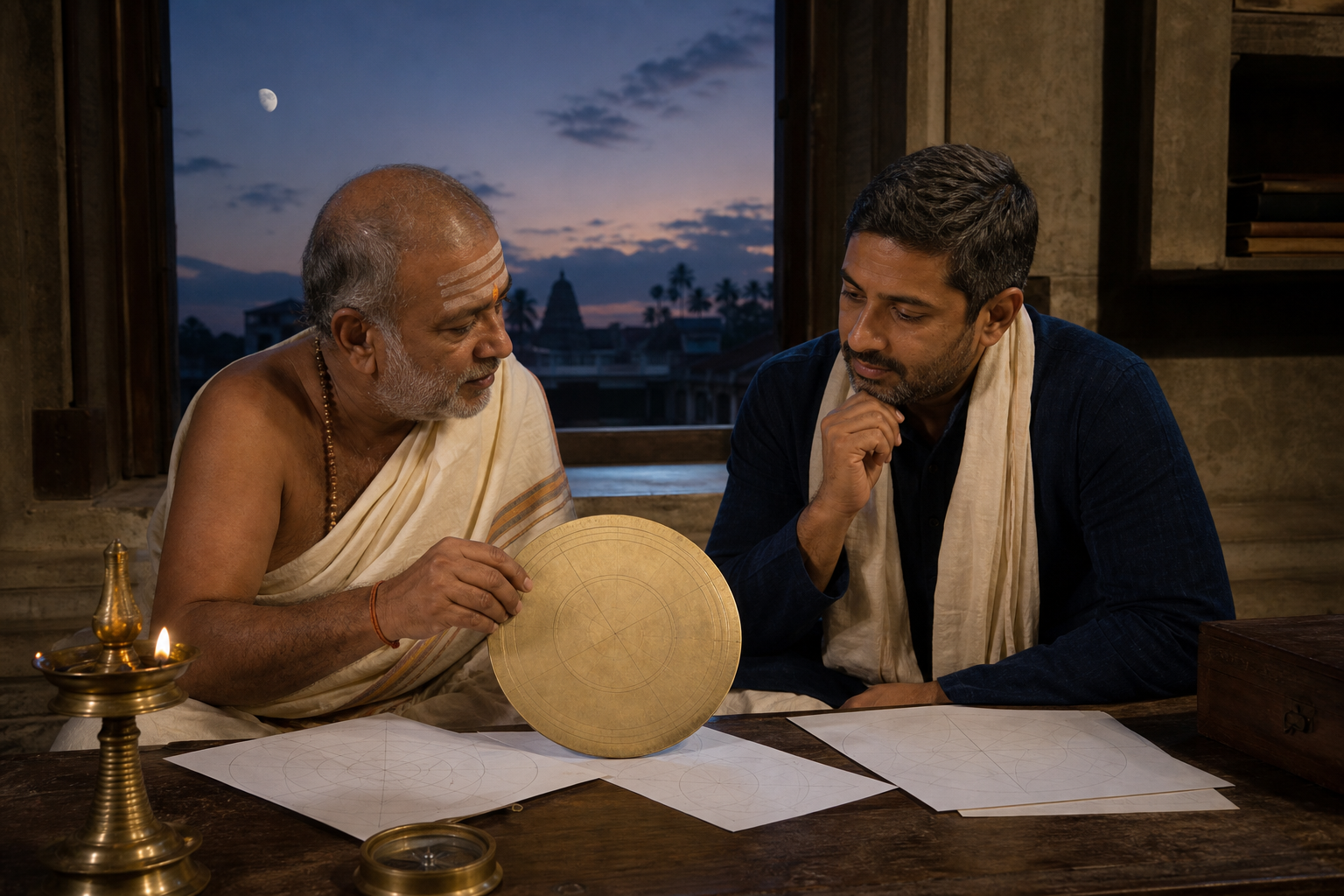
Tithis follow the lunar cycle rather than the civil clock. They can begin or end during the morning, afternoon, or evening, and they do not wait for midnight. Panchang presentations can also vary with location, local sunrise, and the calculation standard being followed.
Use 7:33 PM as the working transition for a simple personal observance only where it agrees with the convention you normally follow. If the timing determines a formal puja, samskara, journey, or other muhurta-sensitive undertaking, check a locally applicable Panchang or temple bulletin. Nakshatra, Rashi, and muhurta should not be inferred from the tithi alone.
- Confirm that the Panchang is calculated for your city or nearby region.
- Check which local time zone and sunrise convention it uses.
- See whether your temple or family follows a particular regional standard.
- For a formal observance, follow that local authority consistently instead of combining isolated timings from different calendars.
This matters most near a boundary. A person in another region may see a different clock time without either calendar necessarily being careless. The practical response is to verify the location, not to argue from a universal civil time that the Panchang does not claim.
Key takeaways for November 26
- Observe Shukla Paksha Sashti through the daytime and until approximately 7:33 PM in most regions.
- Use the Sashti period for one sustainable discipline: sankalpa, japa, satvik restraint, completed duty, or seva.
- After the transition to Saptami, light a diya, offer gratitude, or begin sacred study with renewed intent.
- Follow your sampradaya and family practice where it gives more specific instructions.
- Verify a city-specific Panchang before using the time for muhurta-sensitive rituals or decisions.
Before the day arrives, make two choices: the discipline you will complete during Sashti and the intention you will begin under Saptami. Then confirm the local transition time. That small amount of preparation is enough to turn a calendar entry into lived dharma.
References
