
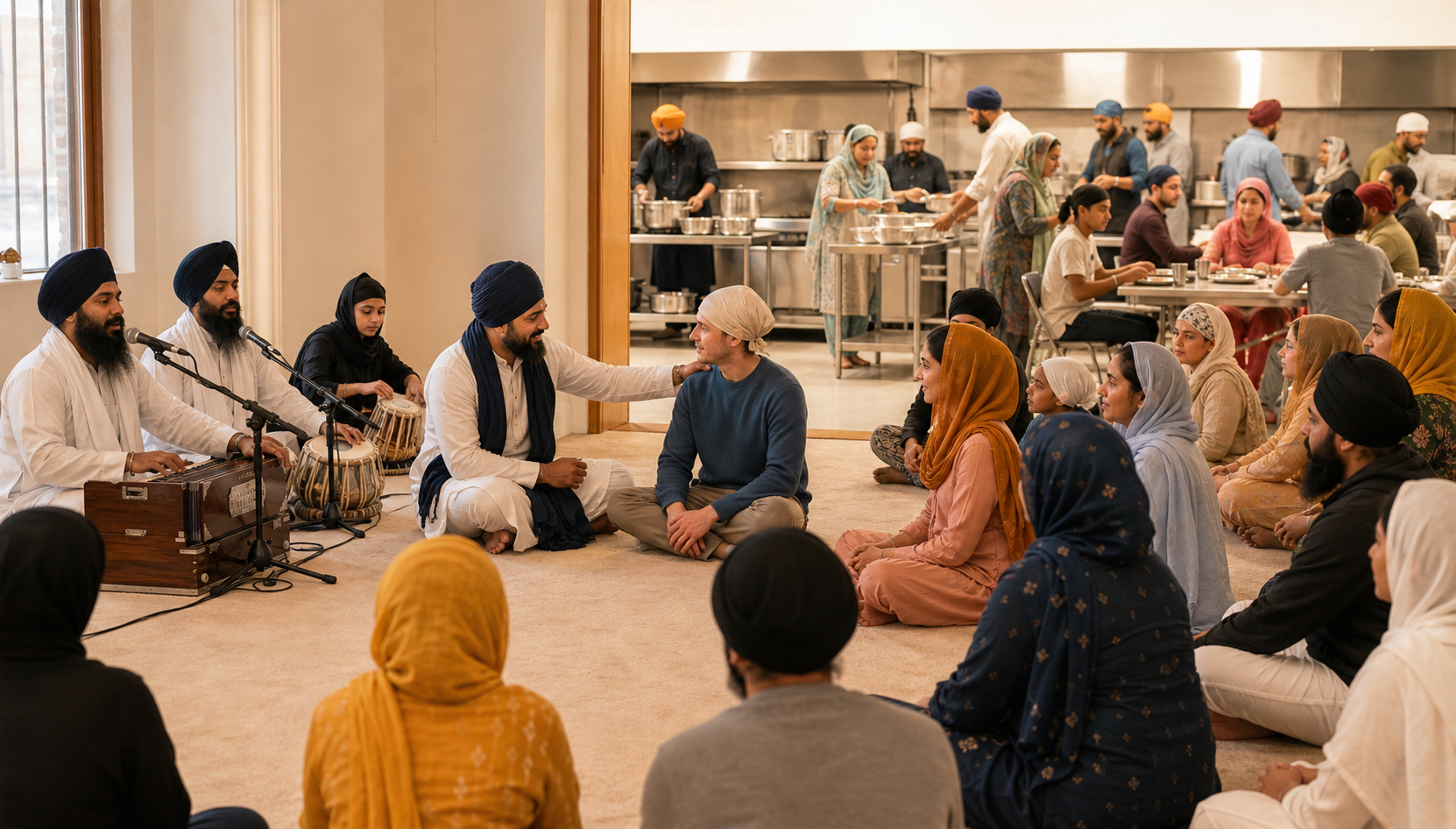
You can sit through beautiful shabad kirtan, help in the langar, exchange a few greetings, and still leave a gurdwara wondering whether you actually took part in Sikh community life. That uncertainty is common when the music, language, etiquette, or people are unfamiliar.
The way forward is not to master everything before returning. Begin by seeing shabad kirtan, seva, and sangat as parts of one discipline. Listen to what the Guru teaches, place your time and abilities at the service of others, and let repeated participation turn a room of strangers into a community in which you carry responsibility.
Kirtan, seva, and sangat belong together
Shabad kirtan is Gurbani sung in a congregational setting. Its purpose is not exhausted by musical beauty. Melody, rhythm, voice, breath, and raag help the shabad enter sustained attention, but the centre remains the wisdom conveyed through the words. A gifted voice may draw you in; the measure of the experience is whether you become more attentive to the Guru’s message.
This distinction changes how you listen. At a concert, it is natural to focus on the performer. During kirtan, keep redirecting your attention from the ragi’s personality to the shabad. Technical accomplishment matters because clear, disciplined singing can carry Gurbani faithfully. It becomes a problem only when admiration for the musician displaces contemplation of what is being sung.
Seva carries that contemplation into conduct. It asks you to offer time, skill, attention, and physical effort without making recognition the purpose. Supporting langar, helping younger learners, caring for a shared space, or completing an ordinary administrative task can all become seva when the work answers a genuine need and the ego does not demand the central position.
Sangat brings listening and service into relationship. Other people interrupt the fantasy that spirituality is only an inner mood. They need patience, reliability, restraint, and cooperation from you. In turn, their voices carry the shabad when your own attention falters, and their work makes it possible for you to be fed, taught, welcomed, and included.
Key takeaways
- Listen for the meaning of the shabad, not merely the quality of the performance.
- Choose seva by asking what the community needs, not by selecting the most visible role.
- Return consistently enough for people to rely on you; belonging grows through shared responsibility.
- Use recordings and translations to prepare, but let them lead you back to Gurbani, mentorship, and sangat.
- Respect similarities across dharmic traditions without erasing Sikh teachings or practices.
How to listen when the shabad is unfamiliar
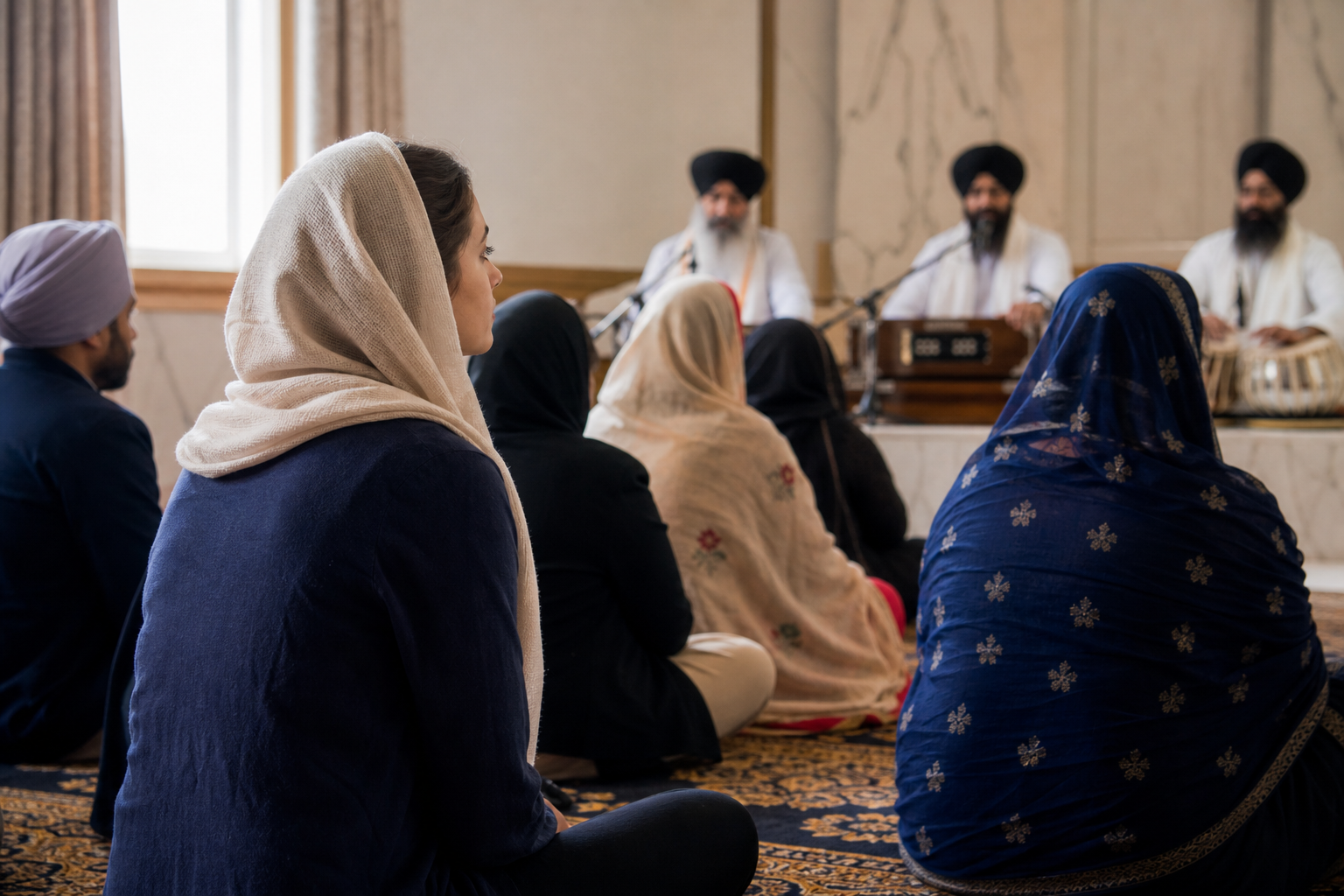
If you do not understand every word, passive listening is tempting. The sound may still quiet you, but you can move from atmosphere toward engagement without pretending to possess knowledge you do not yet have.
- Settle before trying to interpret. Put away the phone, release the urge to survey the room, and give the opening phrases your full attention. Scattered attention cannot become contemplative merely because sacred music is playing.
- Find the recurring line. A repeated phrase gives you an anchor. Listen for its pronunciation and musical return. If text or a translation is available, follow that phrase first instead of racing through every line.
- Identify the governing idea. Ask what the shabad is directing you to notice: the Divine, ego, truth, remembrance, humility, separation, service, or another theme present in the words. Do not infer an entire teaching from melody alone.
- Carry one question out of the hall. Ask a knowledgeable person about a word, image, or line you did not understand. A precise question invites better guidance than a request to explain everything.
- Return to the same shabad. Read, listen again, and notice whether the musical treatment helps the meaning become clearer. Repetition is not failure to progress; it is how attentive familiarity develops.
Raag-based Gurmat Sangeet adds another layer. Musical form and scriptural meaning are meant to work together, which is why disciplined riyaaz matters. Voice, breath, pronunciation, concentration, and musical structure require patient cultivation. For a learner, this means resisting two shortcuts: treating raag as decorative background, or treating feeling as sufficient preparation for leading others in Gurbani.
If you want to learn kirtan, begin with a teacher who treats musical training, textual care, and ethical formation as connected responsibilities. The discipline associated with serious Gurmat Sangeet includes careful practice and fidelity to the shabad, not just the ability to reproduce a pleasing tune.
Choose seva that makes you dependable
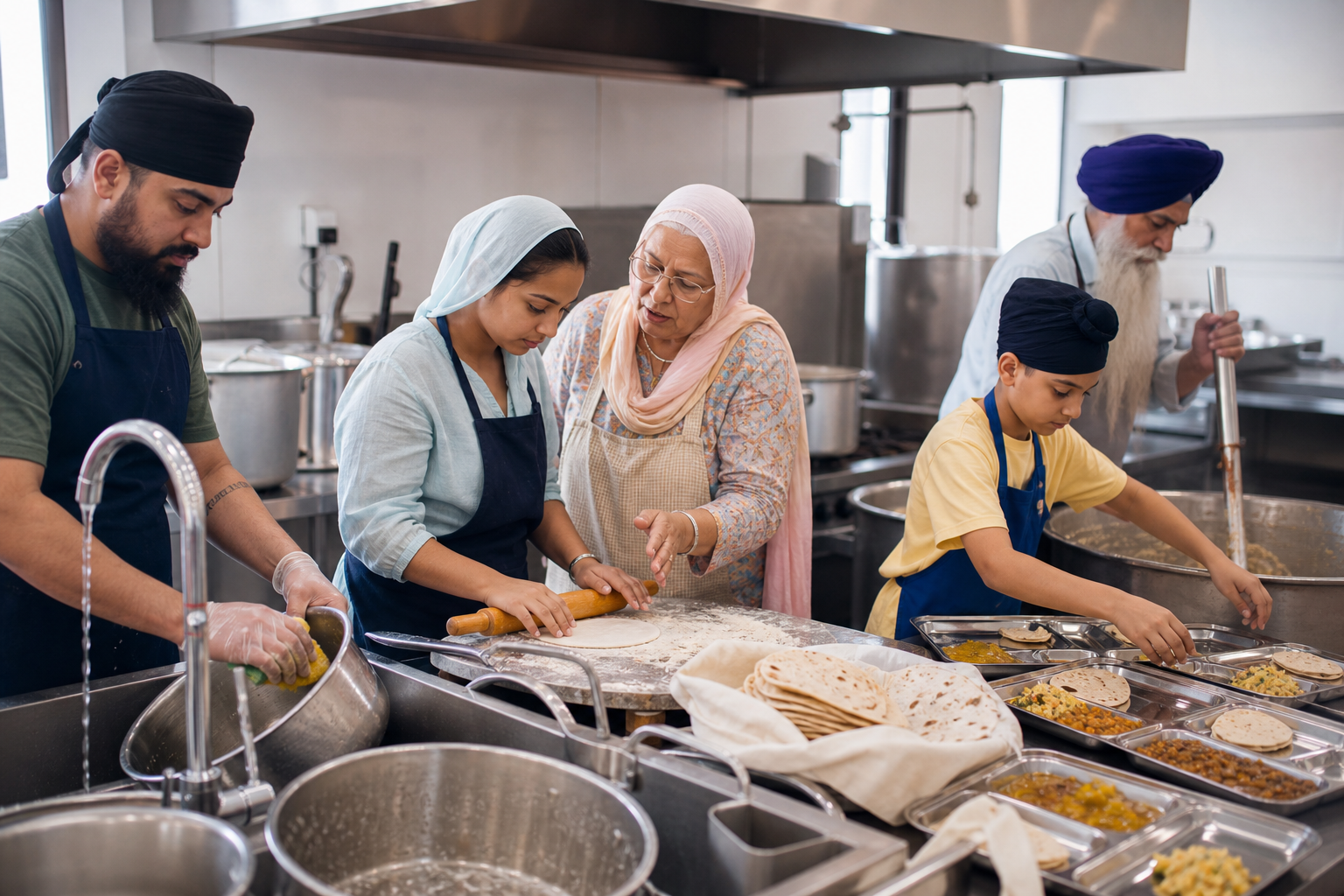
A newcomer often makes one of two mistakes. You may hold back because you assume only established members are entitled to help, or volunteer for a conspicuous task before learning how the local community works. A better opening is simple: ask the person coordinating an activity what is needed and what you should know before beginning.
The task itself may be modest. Its spiritual weight lies in how you do it. Arrive when you said you would. Accept instruction without defensiveness. Notice the work around the visible assignment, including preparation and cleanup. Finish what others are depending on you to finish. If you cannot return, say so rather than allowing a commitment to dissolve silently.
Use these questions to test a possible form of seva:
- Is this work actually needed? Service responds to the sangat rather than inventing a role for yourself.
- Can I perform it safely and competently? If the task requires training, receive the training. Humility includes respecting limits.
- Am I willing to do the less visible part? Setup, cleaning, follow-through, and patient repetition often reveal your intention more clearly than the public-facing moment.
- Can people rely on my commitment? A small responsibility completed steadily is more useful than an ambitious promise abandoned midway.
- Can I be corrected? Seva is not a claim to authority. Local procedures and experienced volunteers may expose assumptions you need to release.
You do not need to restrict seva to physical labour. A community may need patient attention for elders, support for youth, teaching ability, musical skill, organisation, or help making learning accessible. The governing question remains the same: where can your capacity meet a real need without turning the work into a stage for status?
Do not wait for a perfectly selfless motive. Ego can attach itself to nearly anything, including the desire to appear humble. Begin the needed work, watch your reactions, and notice what happens when somebody else receives credit, changes your plan, or asks you to do a quieter task. Those moments show where seva is becoming discipline rather than self-description.
Build belonging through a repeatable community rhythm
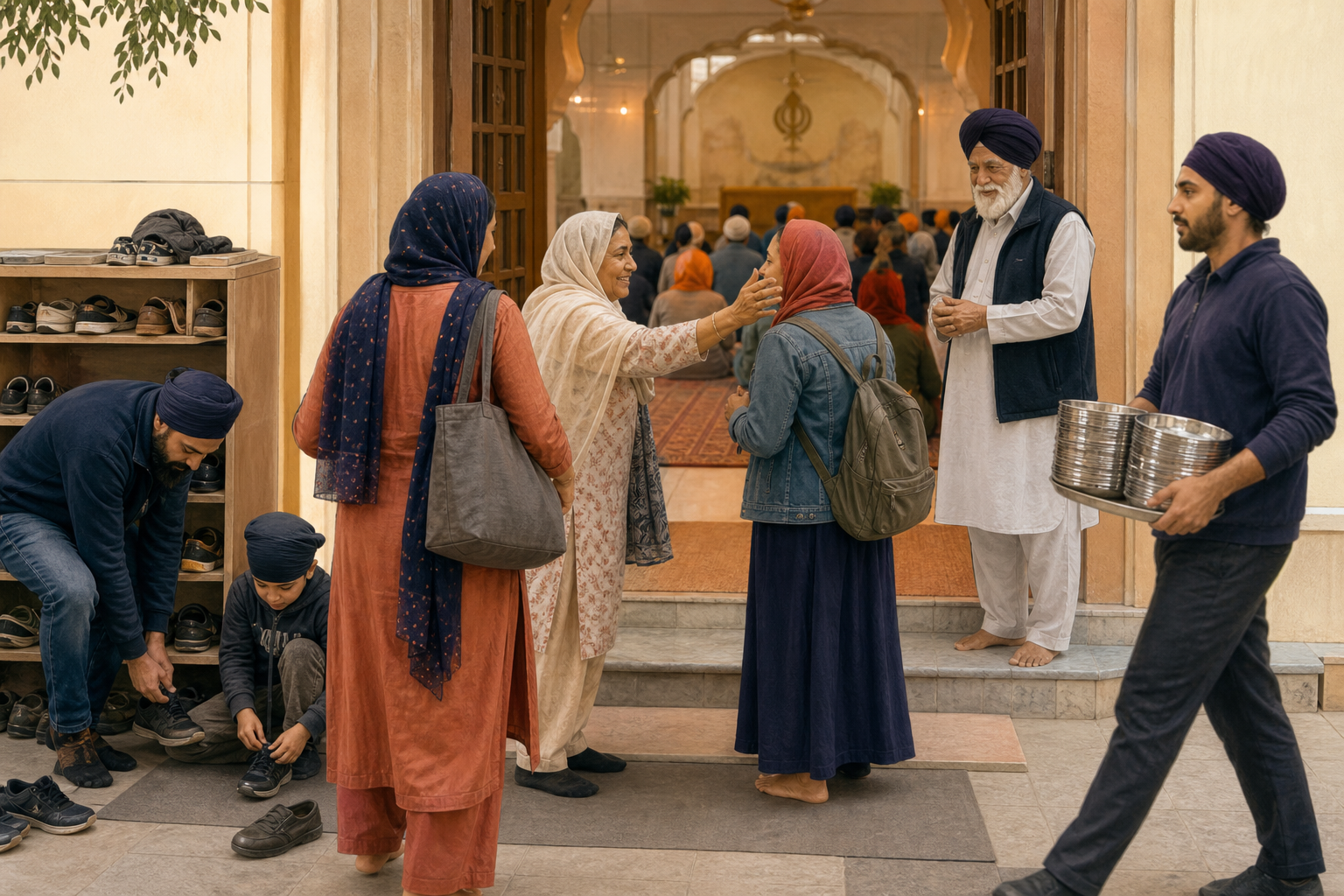
Belonging rarely arrives as a single emotional breakthrough. It develops when people recognise your presence, learn how you contribute, and discover that your word can be trusted. This is especially important when family life is scattered across a diaspora or younger members are trying to understand why inherited practices should matter to them.
Create a rhythm you can sustain. Attend kirtan with attention. Stay for one clearly defined form of seva. Learn the name of someone serving beside you. Ask one sincere question about a shabad or practice. Then return. This pattern joins worship, work, learning, and relationship without requiring you to manufacture instant intimacy.
If you are bringing children or teenagers, do not reduce their role to silent observation or cultural display. Give them an age-appropriate responsibility with a person who can guide them. Invite questions about the words being sung. Let them see that heritage is carried through participation, discipline, and care for others, not merely through attendance at special occasions.
If you are already established in the sangat, remember that community life can appear impenetrable from the edge. Familiar members know whom to ask, where materials belong, and which customs remain unspoken. A newcomer does not. Give concrete directions, introduce the person to the relevant coordinator, and explain the reason for a practice when you know it. Welcome becomes real when it gives someone a responsible way to participate.
Congregational singing has a particular role here. It gives elders, adults, and youth a shared field of attention even when their daily lives differ sharply. A family does not need identical levels of knowledge to begin. It needs enough patience to listen together, learn the meaning of Gurbani, and resist turning differences in fluency into differences in spiritual worth.
Use technology as a doorway, not a replacement
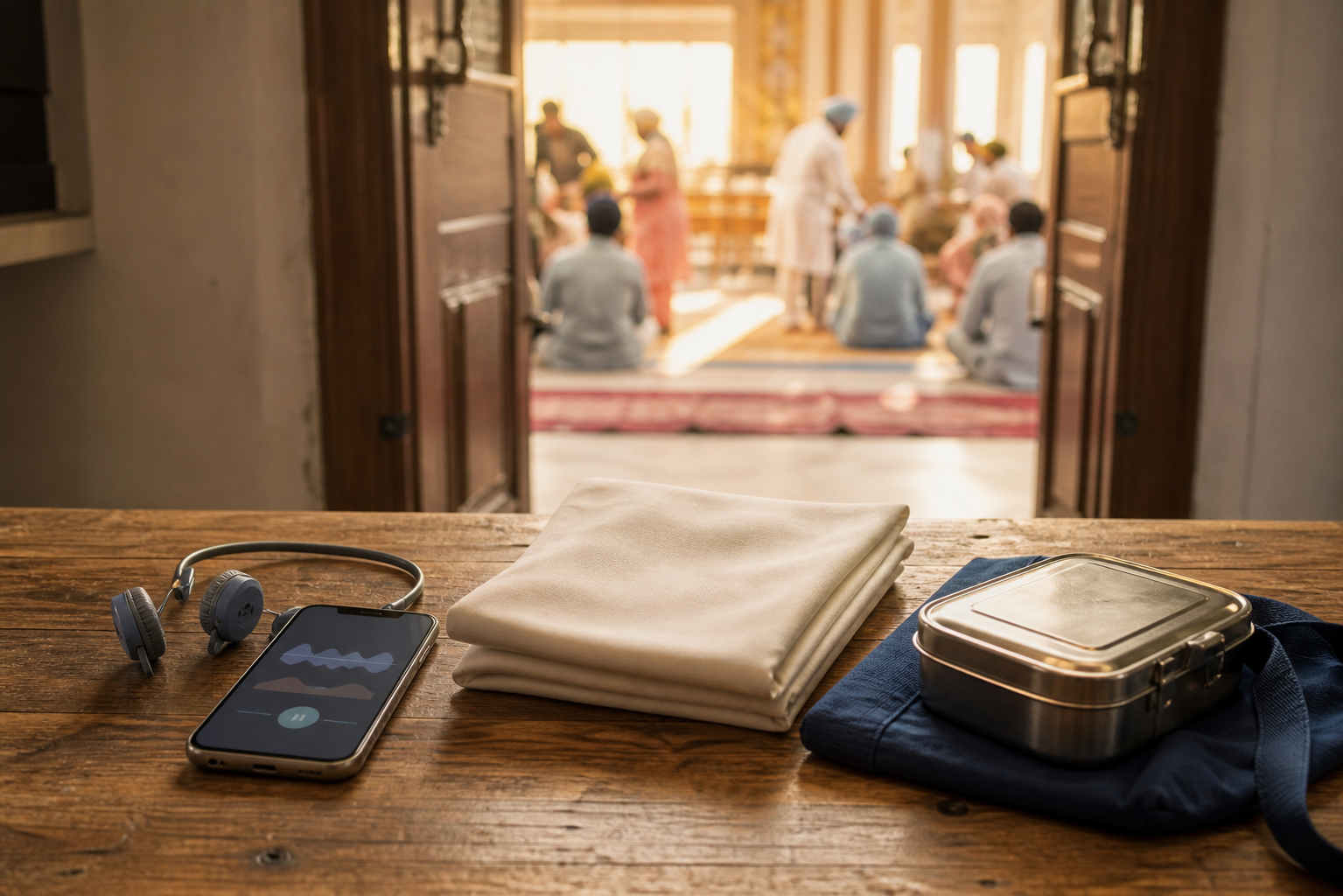
Recordings, digital texts, translations, and remote lessons can make Sikh musical heritage more accessible, particularly when distance separates learners from teachers and established centres. They can help you revisit a shabad, practise pronunciation, hear a raag repeatedly, or prepare questions before meeting a mentor.
The same convenience can weaken attention. A sacred recording becomes another track in an endless feed. A short clip detaches a line from its larger meaning. Musical imitation outruns understanding. A translation is treated as though it removes every interpretive question. Access is valuable, but access is not the same as formation.
Use a practical filter before relying on digital material:
- Can you verify the Gurbani text rather than relying on an unlabelled transcription?
- Does the resource keep the shabad, its meaning, and its musical treatment in view together?
- Does it identify enough context for a learner to know what is being heard?
- Will you bring uncertainties to a trustworthy teacher or knowledgeable member of the sangat?
- Does the resource deepen your participation, or merely multiply what you consume?
The Guru-Shishya tradition remains important because transmission is more than copying sound. A teacher can hear errors, explain choices, model discipline, and observe whether a learner’s ambition is overtaking reverence. Technology can extend that relationship across distance; it cannot reproduce the whole moral and interpersonal work of mentorship by itself.
The same principle applies to sangat. Listening alone can support private reflection, but it does not ask you to coordinate with volunteers, make room for another person’s needs, receive correction, or share responsibility. Let digital access prepare you to return more attentively to embodied community life.
Recognise dharmic kinship without flattening Sikh practice
A Hindu familiar with bhakti may recognise the devotional force of sacred singing. A Buddhist may recognise the cultivation of steady attention. A Jain may recognise the ethical seriousness of restraint and non-harm. Compassion, truthfulness, self-restraint, dignity, and service can create meaningful ground for dharmic conversation.
Recognition should lead to respect, not premature equivalence. Shabad kirtan is not merely an Indian example of inspirational music. Seva is not simply generic volunteering with religious language added. Sikh community life is shaped by Gurbani, the Guru Granth Sahib, Gurmat discipline, and the concrete relationships of the sangat. Shared values do not make these forms interchangeable with practices from another tradition.
If you are visiting from another dharmic path, begin with observation and precise questions. Ask what a line means, why a particular practice matters, or how seva is organised. When you draw a parallel, present it as a point of recognition rather than a claim that two teachings are identical. This allows kinship to deepen understanding instead of swallowing difference.
If you are Sikh and explaining the tradition, you do not need to dilute doctrinal clarity to be hospitable. Explain the Sikh meaning first. A comparison can follow if it genuinely helps the listener, but the comparison should not become the definition. Durable unity is built by people who can honour a neighbour’s path without asking either community to become vague about its own.
Your next visit can therefore be uncomplicated. Listen closely enough to carry one line or question with you. Ask where help is needed. Complete one useful task with care. Speak to the person beside you. Then return before unfamiliarity hardens into distance. Sikh community life becomes intelligible from within that rhythm of Gurbani, seva, and sangat.
References
