
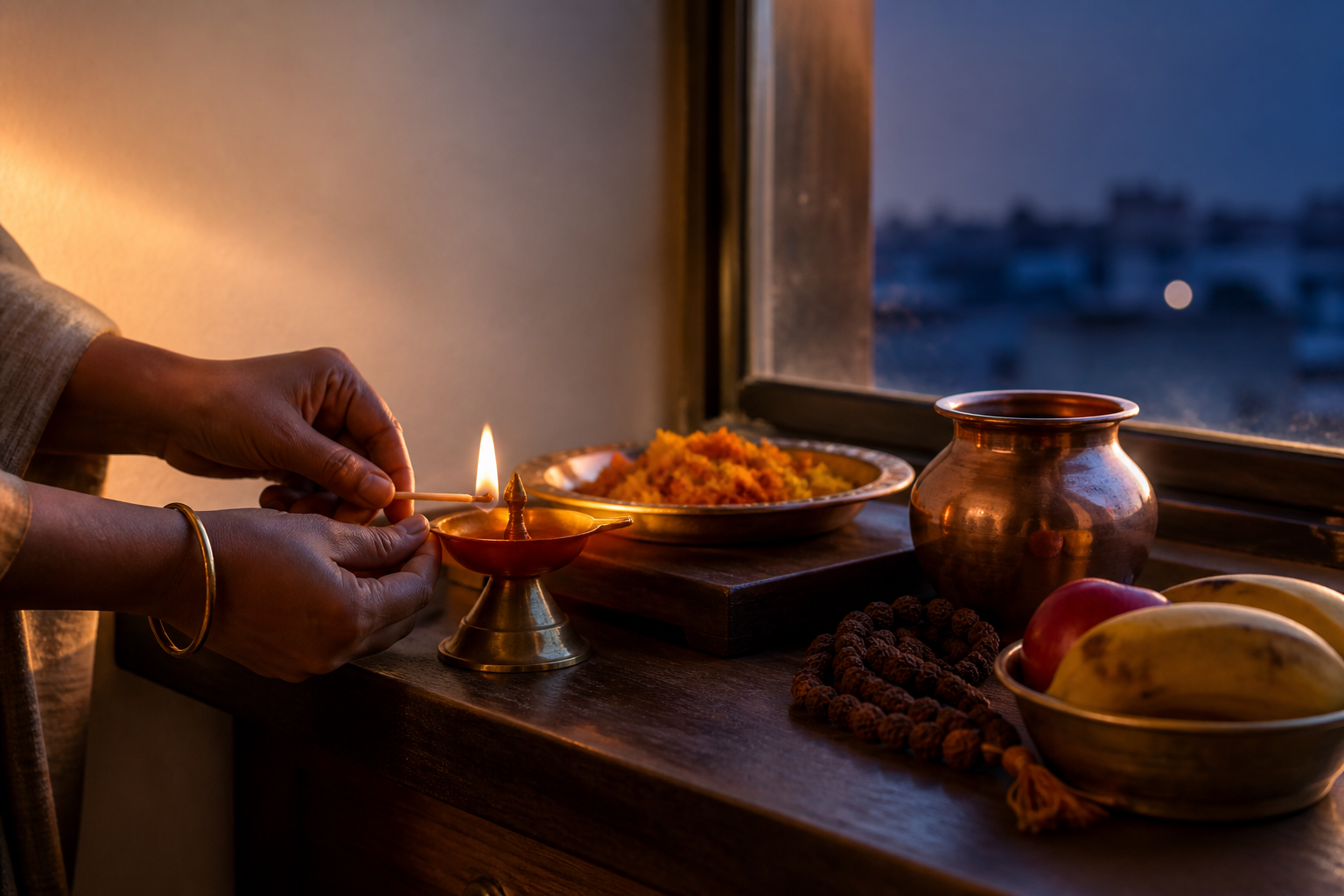
If you are deciding when to perform your puja or quiet practice on Thursday, November 27, the day offers a simple two-part rhythm. Begin with the steadiness associated with Shukla Paksha Saptami, then use the evening change to Ashtami as a deliberate point of review and renewal.
The key time is 7:24 PM, when Saptami ends and Ashtami begins. That transition can organize your personal observance, but it should not be mistaken for a complete muhurta calculation.
The November 27 Panchang at a glance
| Part of the day | Tithi | Practical emphasis |
|---|---|---|
| Until 7:24 PM | Shukla Paksha Saptami | Steady growth, clarity, disciplined effort, and completion of the practice already begun |
| From 7:24 PM onward | Shukla Paksha Ashtami | Renewed resolve, closer introspection, and a more focused spiritual rhythm |
Both tithis fall within Shukla Paksha, the waxing half of the lunar cycle. The civil date therefore does not contain two unrelated observances. It carries one movement of increasing lunar light through two successive tithis.
Keep an important distinction in view: 7:24 PM is the stated tithi marker for this observance, not an all-purpose declaration that every activity after that moment is auspicious. A full determination of a good time may also depend on Nakshatra, Rashi, location, and the calculation system used by your tradition.
Build one practice across the Saptami-Ashtami transition
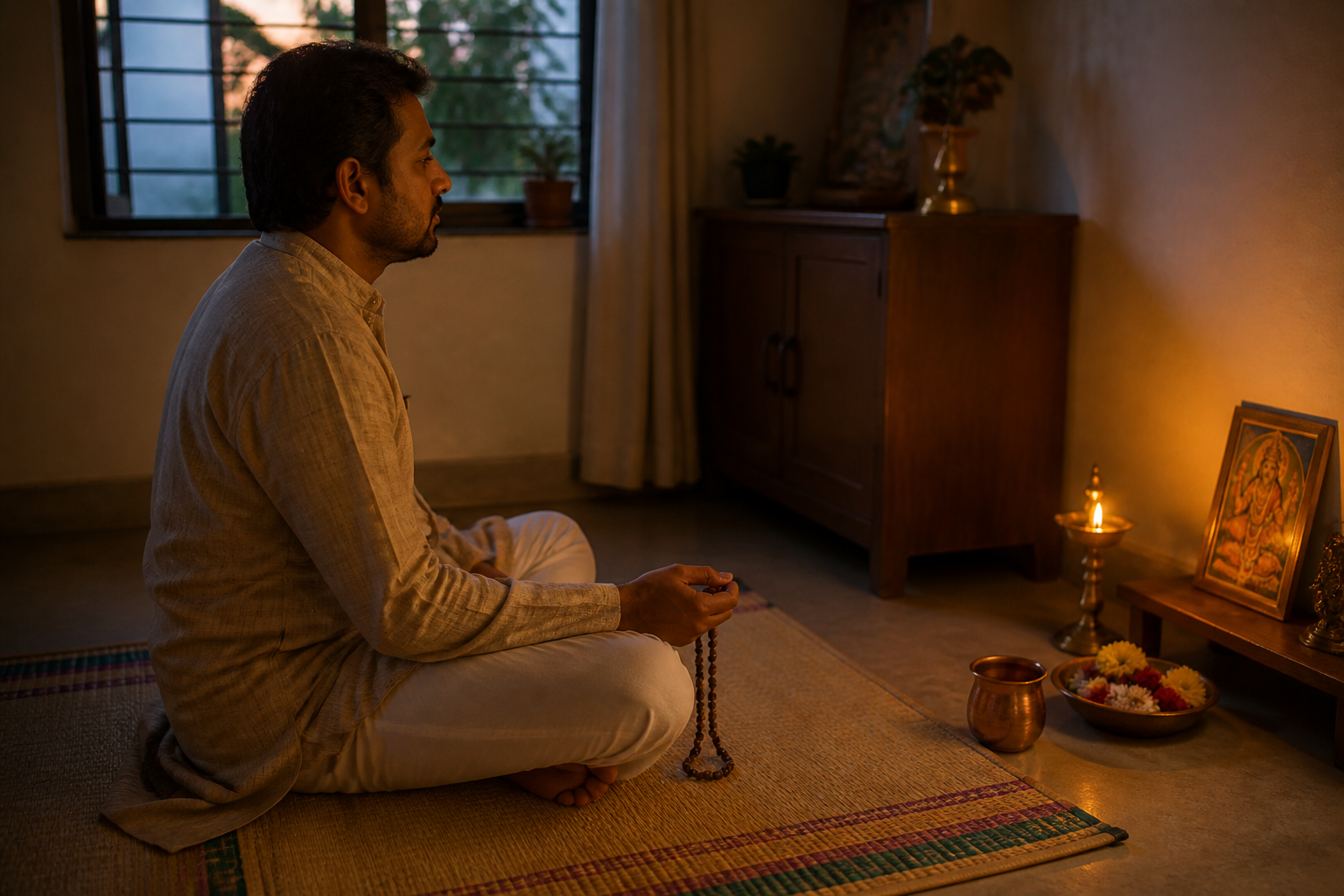
You do not need two elaborate ceremonies simply because the tithi changes during the evening. A more coherent approach is to choose one intention and let its expression mature through the day.
- Choose one clear sankalpa. Keep it specific enough to remember during work and family obligations. You might commit to completing your regular japa without distraction, reading a chosen passage of scripture attentively, or maintaining greater restraint in speech.
- Begin during Saptami with consistency. Use the earlier part of the day for the practice you can actually sustain: puja, japa, meditation, scriptural reading, or a disciplined act of service. Saptami’s practical value here lies in steadiness, not in multiplying ritual tasks.
- Notice what interrupts the intention. During the day, observe where haste, distraction, irritation, or carelessness weakens your sankalpa. This turns ordinary duties into part of the observance rather than treating spiritual life as something confined to the puja space.
- Pause around the evening transition. At or after 7:24 PM, stop briefly and review the day without dramatizing either success or failure. Ask what was completed, where attention slipped, and what needs firmer resolve.
- Carry the same intention into Ashtami. Do not discard the morning’s effort and start over. Refine it. A short period of japa, meditation, prayer, or reflective reading can give the evening a deeper and more concentrated direction.
This method makes the tithi change useful even when you cannot rearrange your whole Thursday around it. The observance becomes a structure for attention: establish, practise, examine, and renew.
What the evening change means, and what it does not
A tithi is a lunar day, so its boundary need not coincide with midnight. That is why November 27 begins under Saptami and continues under Ashtami after 7:24 PM. The change is calendrical, but it can also serve as a meaningful threshold in your practice.
Shukla Saptami is traditionally approached through qualities such as clarity, disciplined effort, and steady development. Shukla Ashtami can turn attention toward resolve and introspection as the waxing cycle advances. These associations offer a way to shape the day; they do not mean that every household must perform an identical rite.
The transition also does not invalidate a puja or spiritual discipline performed earlier. If you begin under Saptami and finish your evening reflection under Ashtami, continuity is the point. Let the later tithi deepen the intention rather than treating it as a reason to abandon what came before.
Nor should the tithi time be used as a substitute for a regional Panchang when precision matters. If you are arranging a temple visit, making a formal sankalpa, coordinating a family rite, or selecting an auspicious muhurta, confirm the local Nakshatra, Rashi, and good-time details with the Panchang followed by your temple, family, or sampradaya.
Make the observance workable for a household
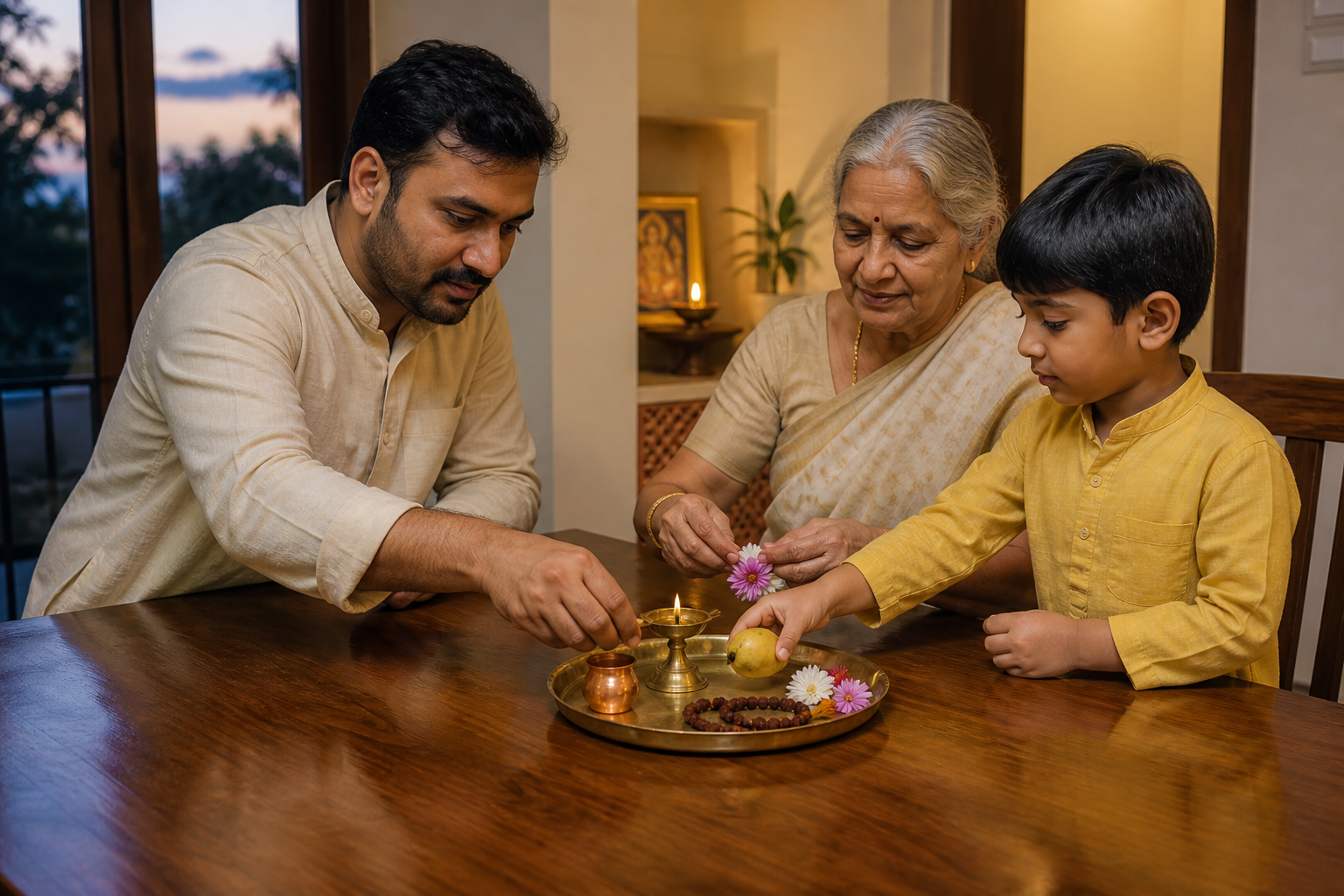
A family observance works best when everyone knows what is essential and what is optional. State the day’s tithi sequence in plain language: Saptami continues until 7:24 PM, and Ashtami follows. Then choose a short common practice that does not prevent household members from completing their existing duties.
- Before the evening: keep the household’s regular puja, japa, reading, or seva with particular attention to steadiness and clarity.
- Near the transition: gather for a brief pause if schedules allow. If they do not, each person can review the sankalpa individually.
- After 7:24 PM: renew the intention through a focused practice rather than adding ritual complexity for its own sake.
- For formal timing: use the regional Panchang and the guidance customary in your family or temple.
If members of the household follow different Dharmic paths, the day can still be marked without pretending that Hindu, Buddhist, Jain, and Sikh forms of observance are interchangeable. Their distinct teachings and disciplines should remain distinct. The shared ground lies in ethical effort: compassion, truthfulness, self-restraint, clarity, and timely conduct.
A common household reflection can therefore remain simple: Which duty did we perform with care? Where did we speak or act without enough restraint? What one correction will we carry into the evening? Those questions preserve a broad Dharmic harmony while allowing each person to practise according to their own path.
Key takeaways for November 27
- Thursday, November 27, 2025 begins under Shukla Paksha Saptami.
- Saptami continues until 7:24 PM; Shukla Paksha Ashtami begins from that time onward.
- Use Saptami for steady, disciplined practice and the evening transition for review and renewed resolve.
- You can carry one sankalpa across both tithis; two separate elaborate rituals are not necessary for a meaningful personal observance.
- Do not treat the tithi boundary as a complete muhurta. Check your regional Panchang for Nakshatra, Rashi, and location-specific auspicious timings.
Before November 27 arrives, decide on one practice you can maintain through the day and identify the regional Panchang you will consult if exact ritual timing matters. When 7:24 PM comes, use it as a conscious threshold: review the effort already made, correct what needs correction, and enter Ashtami with a steadier mind.
References
