
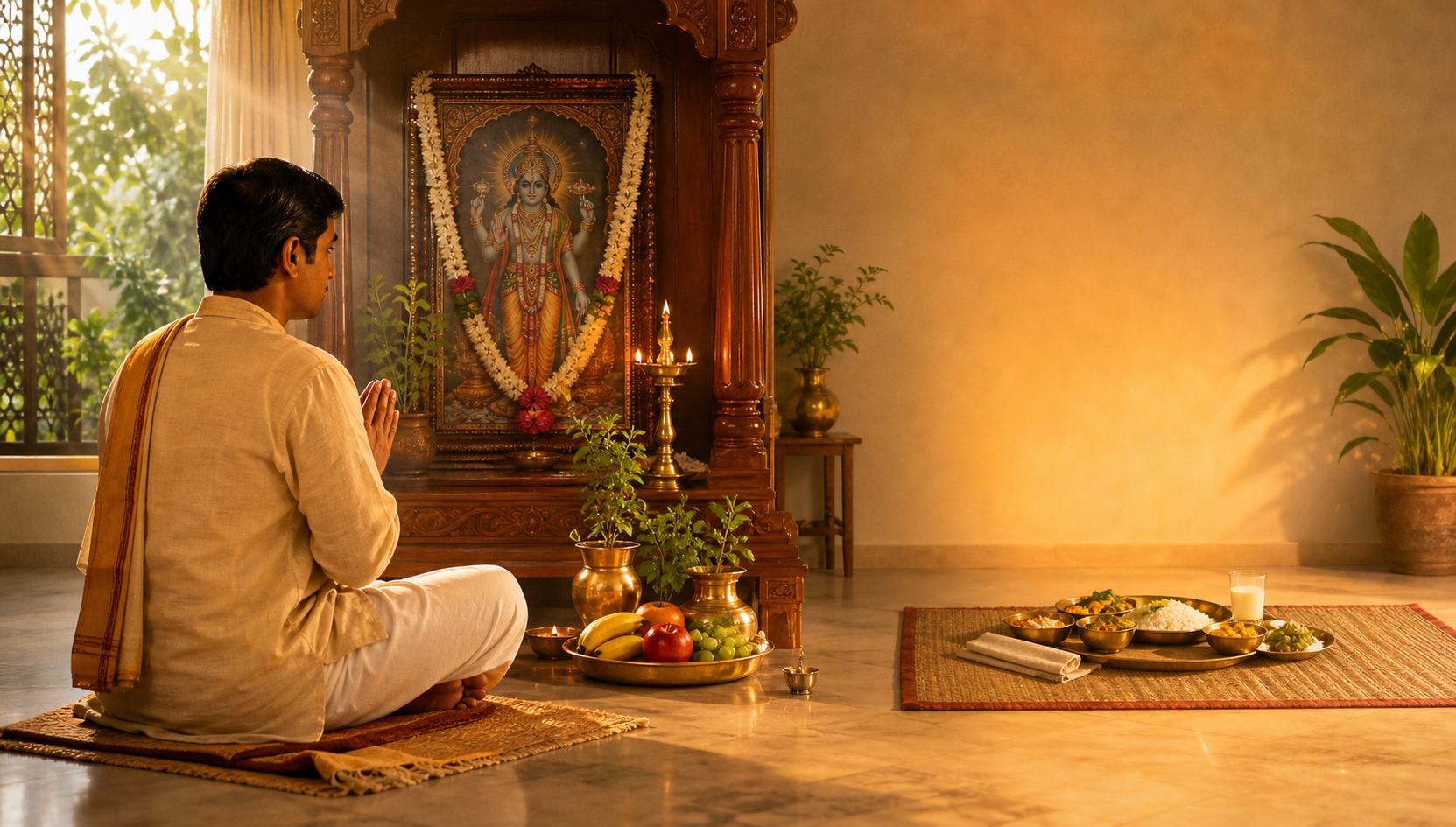
If you are planning your vrata for December 1, the immediate question is whether 2:20 PM ends the observance. The useful answer is more careful: Shukla Paksha Ekadashi prevails until 2:20 PM, after which Shukla Paksha Dwadashi begins, but that tithi change is not automatically a universal instruction to break your fast at 2:20.
Your safest plan is to verify the timing for your location, follow the parana rule of your sampradaya or temple, and choose a form of fasting that your health can sustain. That lets the day remain an act of restraint and remembrance rather than a contest with the clock.
The tithi changes at 2:20 PM, but your local rule still matters
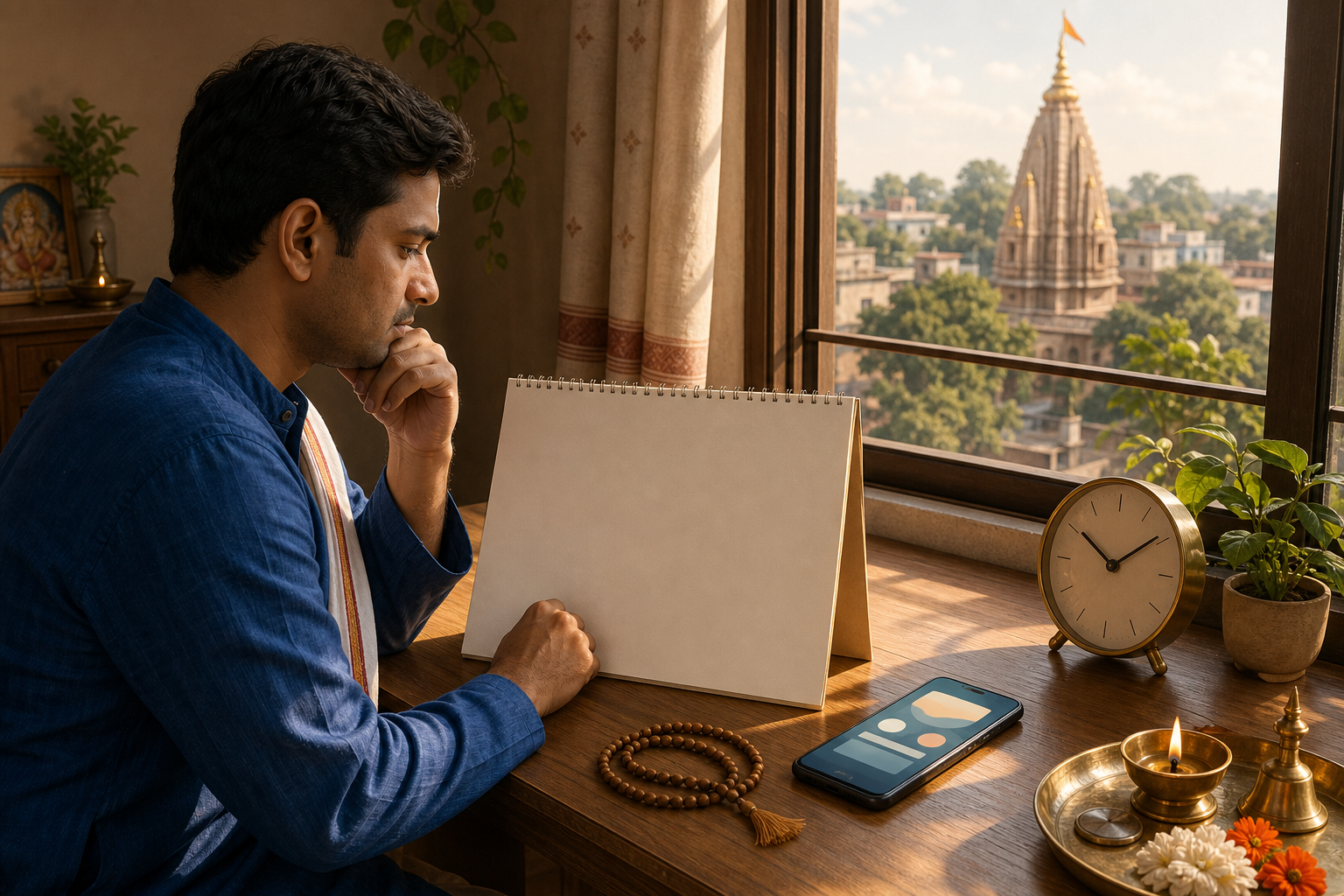
Monday, December 1, 2025 begins under Shukla Paksha Ekadashi, the eleventh lunar day of the waxing fortnight. Dwadashi, the twelfth lunar day, begins after the stated 2:20 PM transition. This gives the day a clear inner movement: the earlier period emphasizes vrata, recollection, and self-restraint, while the later period opens the phase associated with completing the observance and returning gently to ordinary activity.
The stated time is a working calendar guide, not a time to apply blindly in every city. Panchang calculations can vary slightly by location. Before making food, worship, travel, or temple plans, check four details:
- Select your actual city in a reliable regional Panchang rather than using an undated or location-free calendar image.
- Confirm that the displayed time is expressed in your local time zone.
- Look for a separately stated parana period. Do not assume that the beginning of Dwadashi and the permitted fast-breaking window are always identical.
- If your family, guru, sampradaya, or local temple follows a particular vrata rule, use that rule instead of assembling a new one from several generic calendars.
This distinction prevents the most common practical mistake: treating a tithi endpoint as though it were a complete ritual instruction. The Panchang tells you when the lunar day changes. Your tradition tells you how that change governs your vrata.
Build the observance around intention and honest capacity
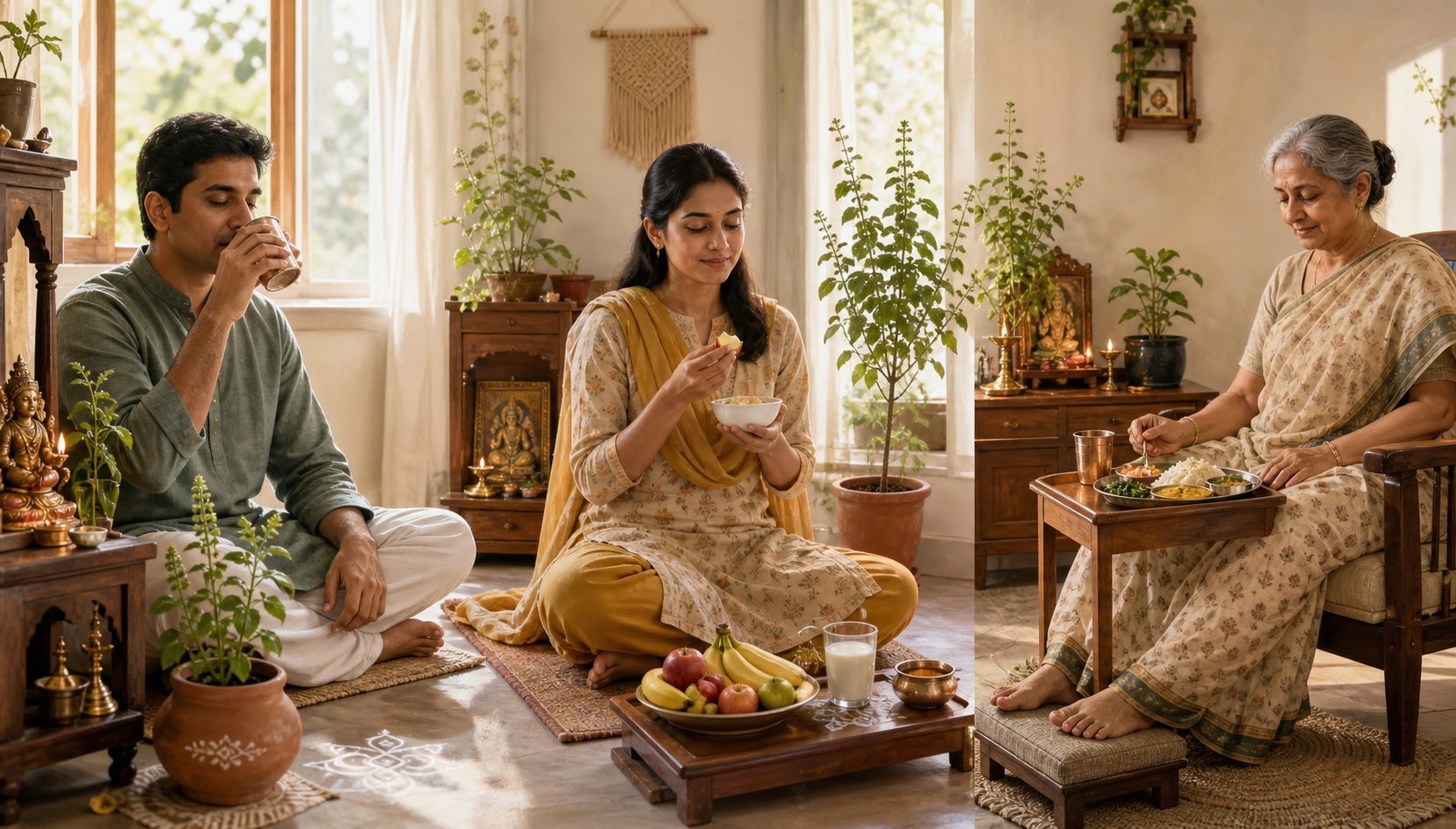
Upavasa should increase clarity, not leave you preoccupied with proving how much discomfort you can endure. Decide your form of observance before the day becomes busy. A last-minute decision often turns the vrata into repeated bargaining over food rather than steady remembrance.
You can organize the day in one of three responsible ways:
- Follow the customary fast taught in your household or sampradaya when you already know the rule and can observe it safely.
- Use a modified fast with light, nourishing sattvic food when complete abstention is not suitable.
- When food restriction is inappropriate, center the vrata on japa, meditation, simple worship, calm speech, mindful work, seva, and dana.
These approaches are not interchangeable ritual prescriptions, so do not invent detailed food rules and attribute them to a tradition that has not taught them. They are practical ways to keep the central disciplines of the day present while respecting differences in health, age, duties, and lineage.
If fasting conflicts with a medical condition, necessary medication, pregnancy, recovery from illness, or a history of disordered eating, do not skip needed nourishment merely to satisfy a generic calendar instruction. Seek appropriate medical guidance and use a non-harmful form of restraint. A vrata intended to cultivate awareness should not be turned into avoidable harm.
A workable rhythm is simple. Begin with a clear sankalpa in the morning. Set aside a definite period for japa, meditation, or worship instead of hoping that spare time will appear. Keep speech measured during work and family activity. Choose one concrete act of service or giving. Until the Ekadashi-to-Dwadashi transition, let restraint shape the whole day, not only the contents of your plate.
Let Dwadashi complete the vrata rather than abruptly cancel it
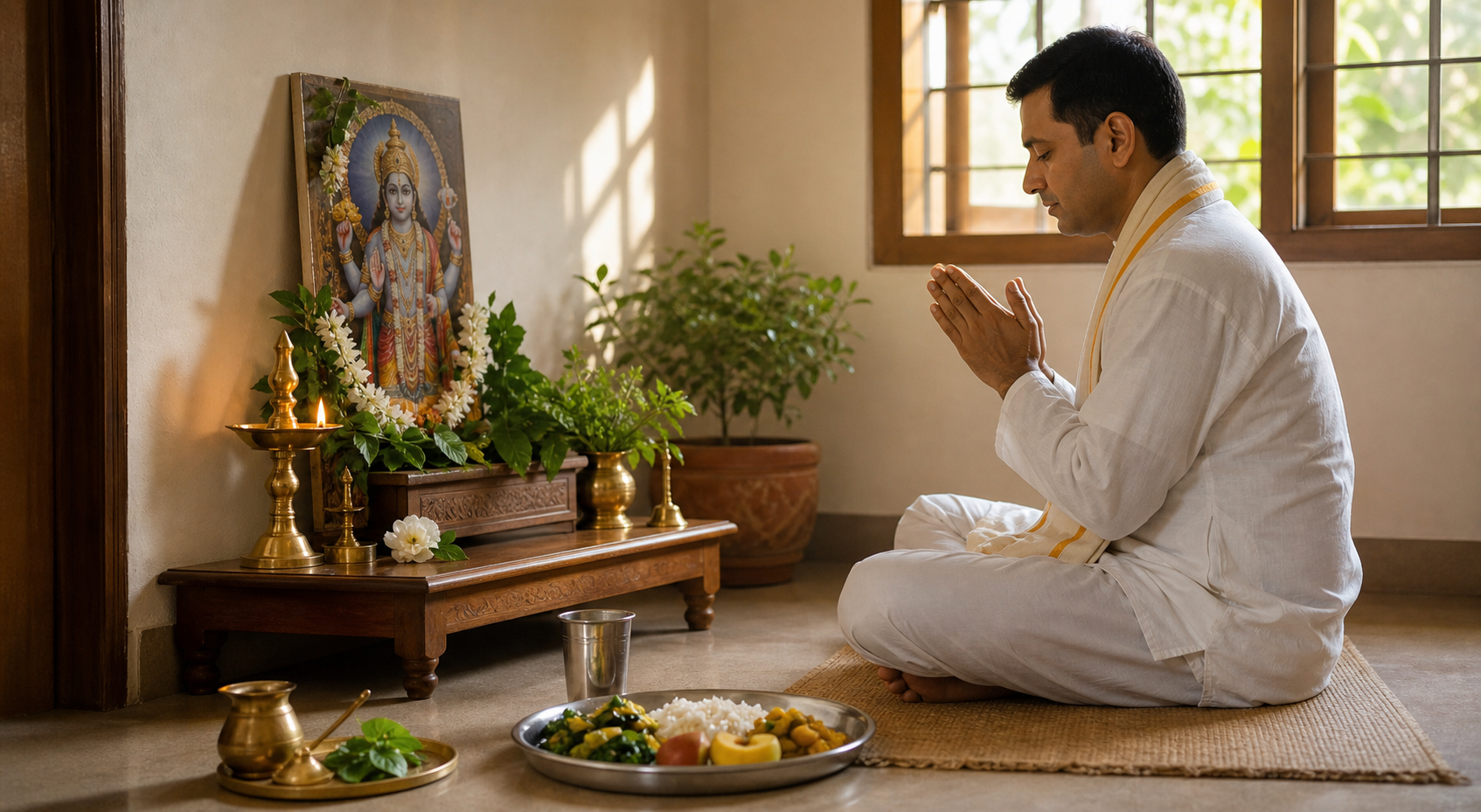
After 2:20 PM, the day enters Dwadashi. That change should feel like completion, not like a switch from discipline to excess. Parana belongs within Dwadashi according to the applicable sampradaya and local guidance, so first verify whether your tradition permits it during the relevant period.
When the authorized parana window arrives, keep the transition deliberate:
- Conclude the principal prayer, japa, or worship without rushing through it because food is waiting.
- Pause in gratitude before eating.
- Break the fast with gentle sattvic nourishment rather than compensating immediately with a heavy meal.
- Return to routine gradually, carrying forward the restraint in speech and conduct that marked Ekadashi.
- If possible, connect the completion of the vrata with kindness, assistance, or dana so that personal discipline opens into service.
If your local calendar does not provide a parana period, that absence is a reason to ask your temple or customary authority, not a reason to manufacture an exact time. The difference matters because precision without the correct local calculation can look authoritative while still being wrong for you.
Use auspicious cues without inventing false precision
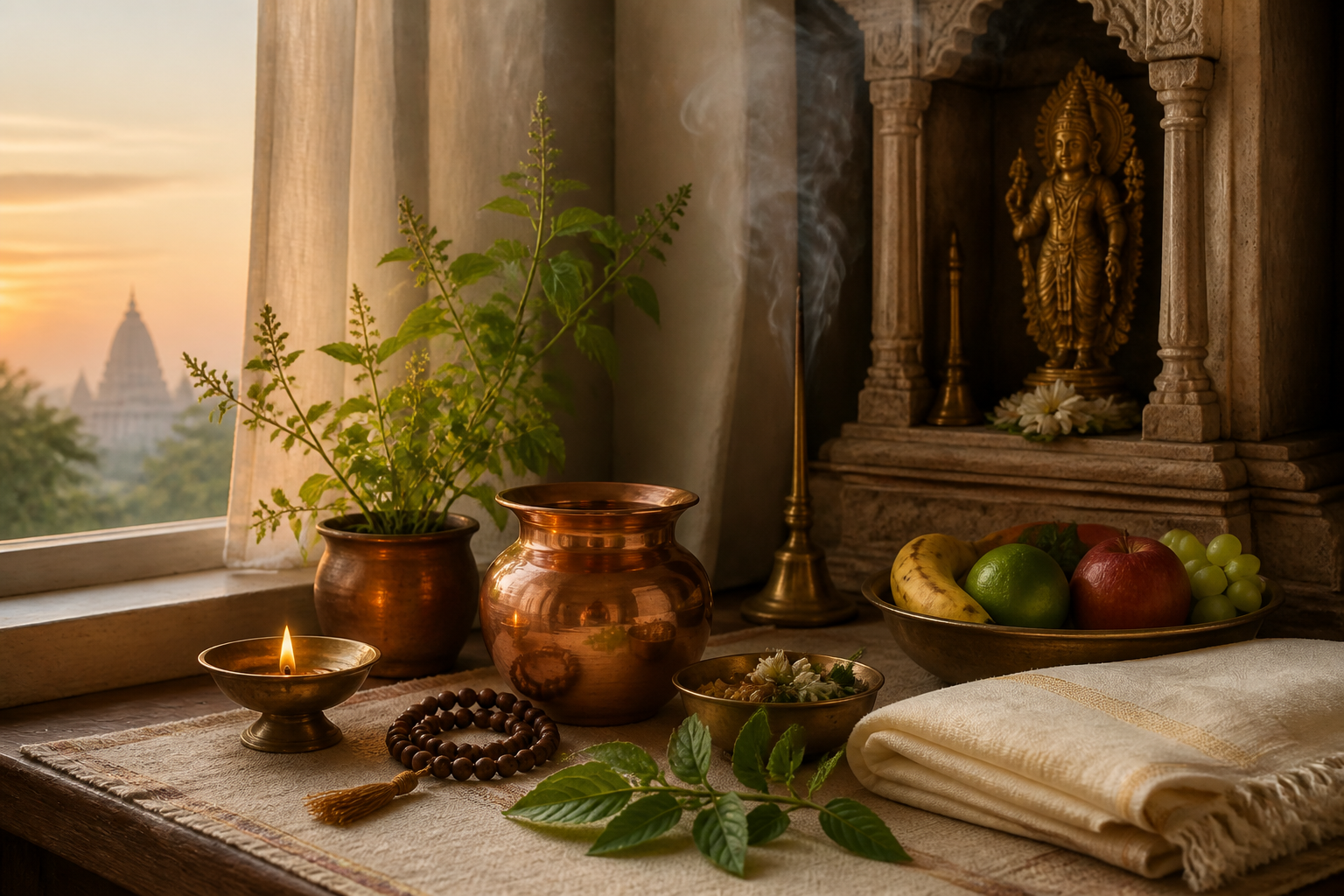
Brahma Muhurta before dawn can support prayer, japa, meditation, and quiet study. Abhijit Muhurta around midday may also be useful for suitable activities. Neither should be reduced to a fixed clock time copied from a calendar for another city: these intervals depend on local sunrise and regional calculation.
The same caution applies to nakshatra and the Moon’s rashi. Those factors can refine the choice of time for prayer, study, travel, or service, but the date and tithi alone do not tell you their locally applicable details. If an activity genuinely requires muhurta selection, consult a complete regional Panchang. If you are simply making time for sincere daily worship, do not postpone it while searching for a perfection that your available information cannot establish.
This is also why 2:20 PM should not dominate your attention. It is the day’s most visible numerical marker, but the quality of your observance is formed by what you do before and after it: the sankalpa you keep, the care you show your body, the attention you give to the Divine, and the conduct you extend toward other people.
Key takeaways for December 1
- Observe December 1 as Shukla Paksha Ekadashi until 2:20 PM and as Shukla Paksha Dwadashi afterward, subject to slight local variation.
- Do not treat 2:20 PM as an automatic universal parana time; verify the separate rule for your place and sampradaya.
- Choose a safe form of upavasa before the day begins. When food restriction is unsuitable, emphasize japa, meditation, worship, seva, dana, calm speech, and sattvic conduct.
- Use Brahma Muhurta or Abhijit Muhurta only with a locally calculated Panchang if exact timing matters.
- Break the fast gently and gratefully when the proper Dwadashi parana period arrives.
Before the observance begins, write down three things: your locally verified Ekadashi endpoint, your permitted parana window, and the spiritual practice you will protect from interruption. Once those are settled, you can stop watching the calendar and give your attention to the vrata itself.
References
