
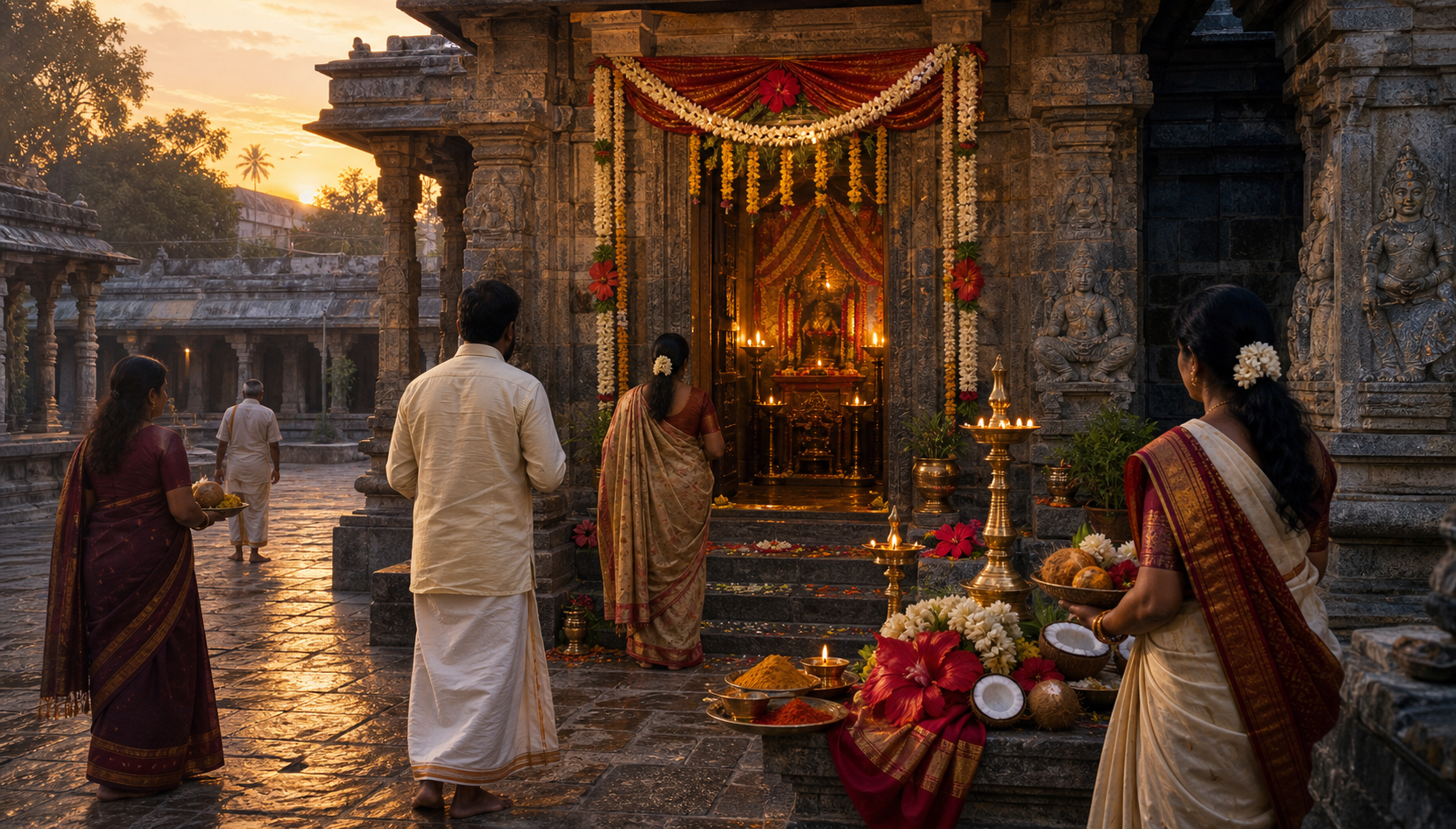
You may have found Pithapuram on one Shakti Peetha list, missed it on another, and wondered whether Puruhutika Devi belongs in a serious pilgrimage. In the tradition that recognizes 18 Shakti Peethas, Pithapuram is widely regarded as one of them. The apparent disagreement is usually a question of enumeration, not a reason to dismiss the shrine.
Your visit will make more sense once you stop treating the Peethas as entries in a universal registry. Pithapuram is a living seat of Devi worship: local names, daily puja, family vows, festivals, mantras, offerings, and the presence of worshippers all matter. The number identifies a pilgrimage tradition; the life of the temple reveals what that tradition preserves.
What “one of the 18” actually tells you
A Shakti Peetha is a sacred “seat” of Shakti, the divine feminine power. Many Peetha traditions place these shrines within the sacred narrative of Sati and Shiva. Their spiritual meaning is therefore geographical as well as theological: Devi is encountered not only as an idea or image, but through a particular place maintained by worship.
Hindu sacred geography has been transmitted through texts, regions, teachers, pilgrimage routes, and local communities. More than one enumeration consequently circulates. Calling Pithapuram one of the 18 Shakti Peethas tells you which pilgrimage framework is being used. It does not establish that every other list must contain the same sites or describe each site in exactly the same way.
This distinction prevents two common mistakes. The first is assuming that a different list automatically disproves a temple’s status. The second is combining details from several enumerations and presenting the result as a single uncontested tradition. If you encounter competing claims about a Peetha, ask three precise questions:
- Which enumeration or regional tradition is being followed?
- What name does the local worshipping community use for the goddess?
- Which details belong to living temple practice, and which come from a wider sacred narrative or pilgrimage list?
Those questions are more useful than asking which list “wins.” They let you respect textual variation without treating every claim as interchangeable. For Puruhutika Devi, the secure starting point is straightforward: Pithapuram holds a distinguished place in the 18-Peetha tradition and remains an active center of Shakti worship in coastal Andhra Pradesh.
Let the goddess’s local names orient you
You may see the goddess named Pithapuram Puruhutika, Puruhuta, Puruhutamba, Puruhutika, or Puruhuthika. These forms should not send you searching for several unrelated temples. In this setting, they express the same place-based devotional identity through differences of spelling, pronunciation, transliteration, and affectionate local usage.
The place-name is the most reliable anchor. When planning your route, save “Puruhutika Devi, Pithapuram” together with the alternative spellings. If a map, sign, local conversation, or pilgrimage list uses Puruhutamba or Puruhuthika, you will recognize the reference instead of assuming you have reached the wrong shrine.
The multiplicity of names also tells you something important about Hindu temple traditions. A deity’s identity is not preserved by standardized spelling alone. It is carried through speech, family memory, ritual repetition, festivals, and attachment to a particular kshetra. “Pithapuram Puruhutika” does more than identify a location; it expresses the bond between Devi and the community that approaches her there.
Notice which name worshippers actually use and how they say it. If you are writing about the temple afterward, retain those local forms rather than replacing all of them with one supposedly definitive English spelling. That small discipline protects living usage from being flattened by pilgrimage directories.
Plan for darshan without turning the temple into a checklist
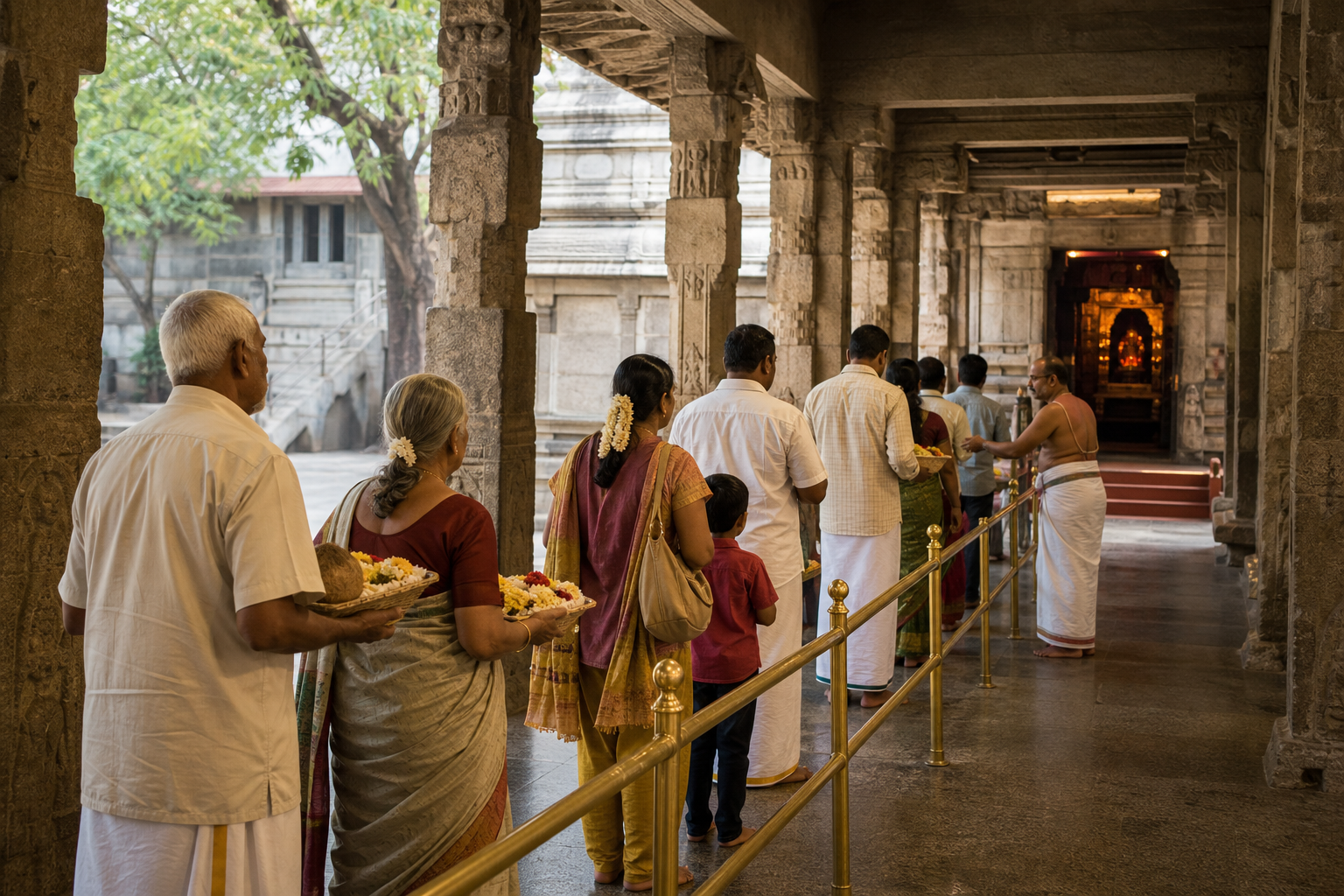
Pithapuram lies near Kakinada in coastal Andhra Pradesh, making it practical to include in a wider regional journey. That accessibility can tempt you to squeeze darshan between several other stops. Give the shrine enough time for worship to set the pace. A Shakti Peetha visit loses much of its meaning when arrival, prayer, and departure are reduced to a photograph and a checked box.
- Name your purpose before you travel. Decide whether you are going for a family vow, personal prayer, gratitude, cultural study, or quiet reflection. You do not need an elaborate declaration, but one clear intention will keep the visit focused.
- Choose the kind of visit you want. Navaratri and other auspicious days dedicated to Devi bring collective worship to the foreground. If your priority is unhurried contemplation, a non-festival visit may suit you better. Neither choice is spiritually superior; they reveal different dimensions of the shrine.
- Verify current timings locally. Festival schedules, access arrangements, and worship timings can change. Confirm them close to your travel date, especially if you are fulfilling a vow or need guidance about a particular offering.
- Keep the name variants with your route details. Save Puruhutika, Puruhuthika, Puruhuta, and Puruhutamba alongside Pithapuram. Use Kakinada as the broader geographical reference, not as a substitute for the temple’s actual place-name.
- Follow the local ritual order. Do not assume that the procedure followed at your family temple applies unchanged here. Watch the queue, observe instructions, and ask before presenting an offering or taking photographs.
- Allow silence after the formal act. The courtyards, cadence of mantras, movement of worshippers, and rhythm of traditional offerings are not background scenery. Stay long enough to notice how they hold the community’s relationship with Devi.
If your purpose is research, separate what you observe from what you arrived expecting to find. Record the name used locally, the kind of worship taking place, the role of families and visitors, and the atmosphere of the shrine. Do not infer an exact textual claim merely from a ritual, and do not dismiss a living practice because it differs from a list you read elsewhere.
Read Pithapuram as living Dharmic heritage
Puruhutika Devi’s shrine is specifically a Hindu Shakta sacred place. Its identity should not be diluted into a generic celebration of spirituality. At the same time, its disciplined worship, service, compassion, wisdom, and continuity can enter a wider Dharmic conversation without erasing the differences among Hindu, Buddhist, Jain, and Sikh paths.
The responsible approach is to hold specificity and kinship together. You can recognize shared ethical ground while allowing Shakti worship to speak in its own theological and ritual language. Mutual respect does not require pretending that every Dharmic tradition understands divinity, liberation, scripture, or ritual in the same way.
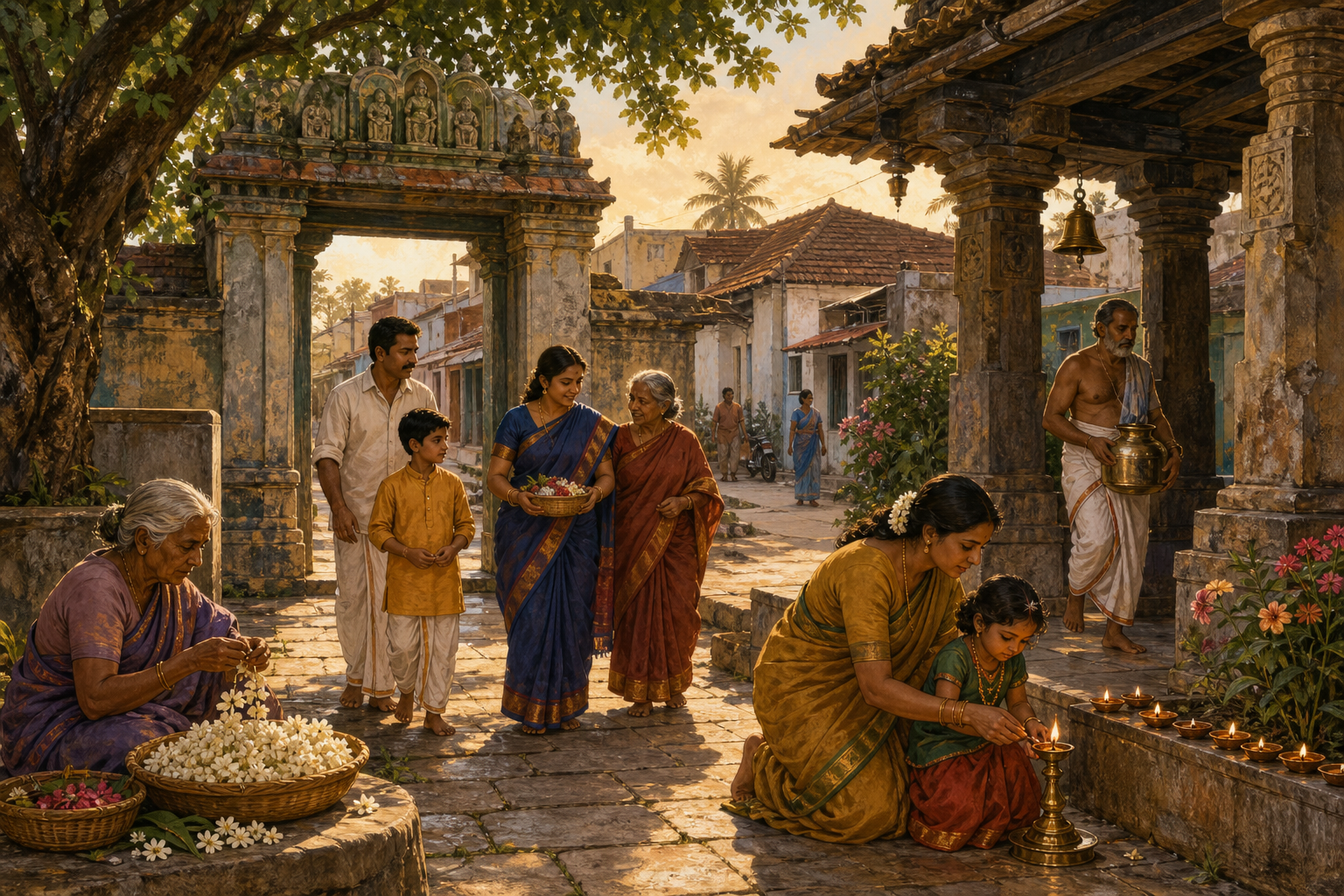
Pithapuram also shows why a temple is more than a surviving structure. Daily worship keeps sacred time. Festivals gather a community. Family vows connect private responsibility with public ritual. Local names preserve intimacy with the goddess. Visitors bring the shrine into new journeys and memories. Cultural heritage remains alive because people continue to practice it, not merely because a site appears in a historical or pilgrimage catalogue.
If you approach the temple as a cultural historian, give worshippers the dignity of being practitioners rather than exhibits. If you approach as a pilgrim, let local practice correct the abstractions you carried in. In both cases, the right question is not only “What happened here?” but also “What is being sustained here now?”
A practical Puruhutika Devi FAQ
- Where is the Puruhutika Devi shrine? It is in Pithapuram, near Kakinada in coastal Andhra Pradesh. Use Pithapuram as the primary destination when planning your route.
- Is Puruhutika Devi one of the 18 Shakti Peethas? Yes. Pithapuram is widely regarded as one of the 18 within that Shakti Peetha enumeration. The existence of other Peetha lists does not by itself negate this tradition.
- Do Puruhuta, Puruhutamba, Puruhutika, and Puruhuthika name different goddesses? In the Pithapuram context, they are local and transliterated forms associated with the same Devi and shrine. Include the variants in your travel notes so spelling differences do not cause confusion.
- When should you visit? Choose Navaratri or another Devi-centered auspicious day if you want to encounter the shrine’s collective festival life. Choose a non-festival day if quiet reflection matters more. Confirm current worship and access timings locally before setting out.
Your next step is simple: enter the shrine in your itinerary under both “Puruhutika Devi” and “Pithapuram,” decide whether you want festival energy or quieter darshan, verify the local schedule, and arrive with one clear intention. Let the living temple, rather than a contest between lists, teach you why this Peetha endures.

References
