

If you honor Srila Prabhupada but aren’t sure what fidelity to his legacy requires, ask a practical question: has his teaching changed how you hear, question, serve, and live? Admiration can preserve a revered name. Only disciplined bhakti carries a teaching into the future.
You don’t need to imitate the biography of an earlier generation. You do need to receive the method without thinning it into vague inspiration. Prabhupada’s enduring gift was a form of devotion that joined spiritual authority, reasoned study, personal discipline, service, and community.
A legacy is carried by a method, not by nostalgia

Memories of a guru matter because they reveal what happened when a teaching entered an actual life. Their value is not exhausted by affectionate recollection. The decisive question is whether the same principles can shape a disciple, family, temple, or community that never met the teacher personally.
Prabhupada’s bhakti legacy can be recognized through several connected movements:
- Hearing before reacting: You receive the teaching attentively instead of reducing it to a phrase that confirms what you already believe.
- Questioning without vanity: You ask for clarity because you want to understand and practise, not merely display intelligence or defeat another person.
- Studying with devotion: Reason helps you see what a teaching means, while devotion keeps intellectual analysis from becoming spiritually sterile.
- Serving after hearing: Seva gives doctrine consequences. What you have understood begins to affect how you use your time, speak to others, and accept responsibility.
- Practising in community: Fellow practitioners provide encouragement, correction, and opportunities for service that private enthusiasm cannot supply by itself.
The Maitreya-Vidura dialogue in the Srimad-Bhagavatam offers a model for this kind of learning. Vidura’s reverent questions are not presented as a failure of faith. Inquiry becomes part of faith when sincerity, humility, and the desire for truth govern it. A class on Srimad-Bhagavatam 3.20.30-31 used that relationship to connect difficult teachings about creation and divine oversight with remembrance of Krishna, gratitude, and ethical self-discipline.
Carry that method into your next class or reading. Before you begin, name the question you are bringing. As you listen, distinguish the central claim from the examples used to explain it. Afterwards, ask what the claim changes in your conduct. If nothing changes, the teaching may have been heard as information but not yet received as sadhana.
Universal reach does not require doctrinal dilution
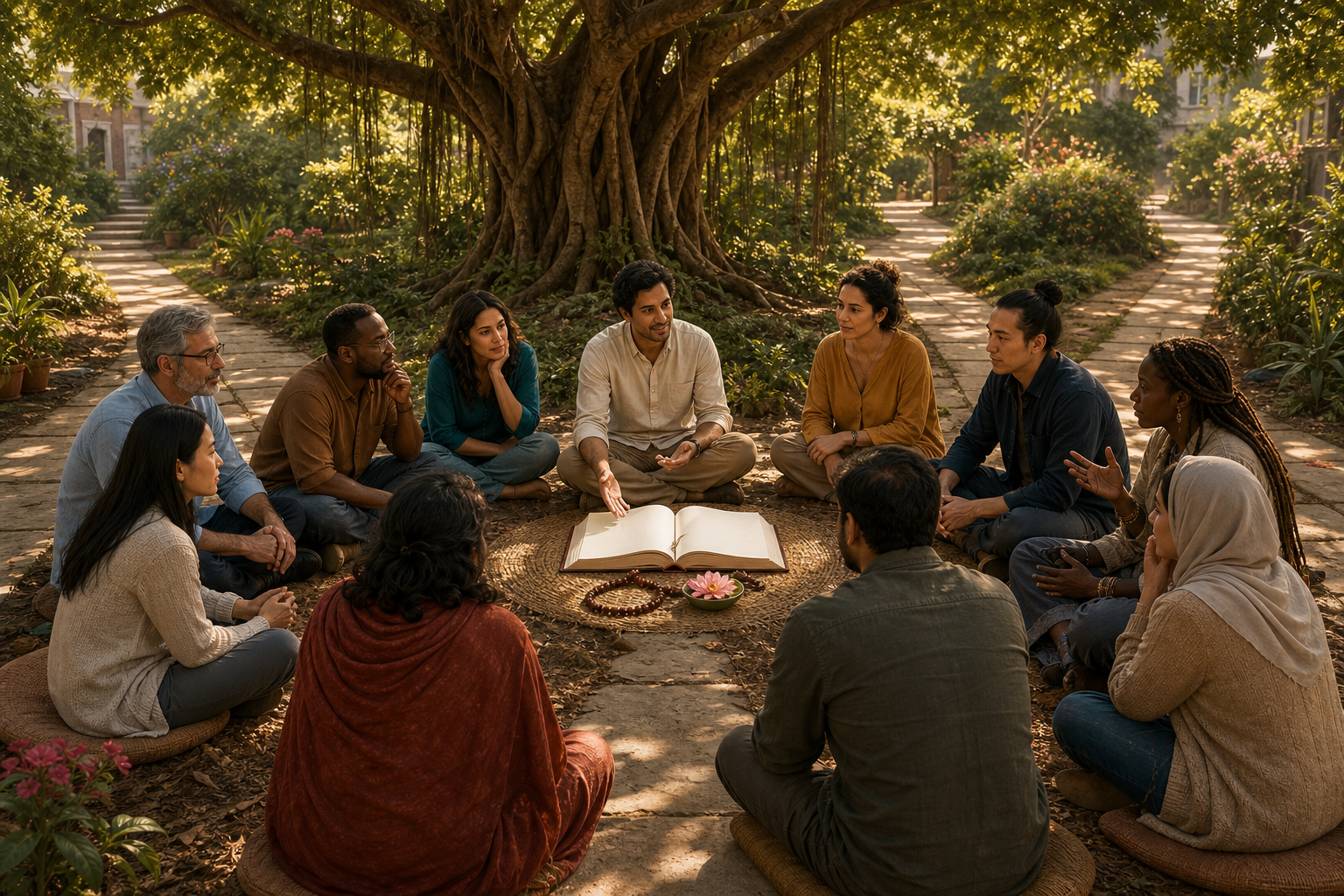
Prabhupada’s message crossed cultural boundaries because bhakti addressed the human capacity for devotion, discipline, gratitude, and service. It did not require every seeker to begin with an Indian upbringing or a Hindu household. The journey from a modest dairy farm in rural Minnesota and occasional childhood church attendance to committed bhakti shows how a person outside the tradition’s birthplace could recognize a coherent spiritual path in it.
That universality should not be confused with vagueness. Prabhupada’s teaching was not simply an invitation to become nicer, calmer, or generically spiritual. Krishna-centered remembrance, guidance through guru-shishya parampara, study, devotion, and seva give the path its form. Remove that center and the language of bhakti may remain while its direction disappears.
Nor does fidelity require hostility toward another sincere path. A seeker may recognize continuity between earlier habits of reverence and a later commitment to bhakti without claiming that all religions teach the same theology. Hinduism, Buddhism, Jainism, and Sikhism retain real differences, yet a Dharmic reader can recognize family resemblances in ahimsa, compassion, truthful living, inner discipline, and self-refinement. Respect becomes credible when it acknowledges both the common ethical ground and the distinctions that make each tradition intelligible.
If you teach or discuss Prabhupada’s legacy, apply a simple test. Could a newcomer understand the purpose of the practice without prior cultural knowledge? Could an experienced Vaishnava still recognize Krishna, devotion, parampara, and seva at its center? If only the first answer is yes, the teaching has probably been diluted. If only the second is yes, its presentation may have become unnecessarily closed.
Turn attentive hearing into a repeatable practice

Inspiration often fades because it is treated as the completion of spiritual work. In bhakti, a moving class or memory is an opening. The deeper work begins when hearing is carried into reflection, conduct, and service.
- Bring an honest question. Ask about something you genuinely do not understand or cannot yet live. A real question gives your attention somewhere to go.
- Hear the teaching in context. Notice who is speaking, who is asking, and what problem is being addressed. This prevents an isolated line from becoming a slogan detached from its purpose.
- State the central claim plainly. Put it into language you understand without changing its meaning. If you cannot do that, remain with the hearing instead of rushing to application.
- Identify the ethical consequence. Ask what the teaching requires of your speech, habits, relationships, use of resources, or treatment of other beings.
- Choose a corresponding act of seva. Let service embody the lesson. Humility becomes concrete when you accept useful work without needing attention for it.
- Return to the community for correction. Test your understanding through respectful discussion with qualified practitioners. The aim is not approval for your preferred interpretation but greater fidelity to the teaching.
This sequence is especially important when the subject is metaphysical. A discussion of cosmic creation can easily remain an impressive system of ideas. Its devotional significance appears when contemplation of order, conscious agency, and divine oversight produces humility and gratitude rather than intellectual pride. The movement from macrocosm to conscience is the difference between merely knowing a framework and allowing it to educate you.
Keep your application proportionate to what you actually understood. If a passage clarified the value of attentive hearing, practise listening more carefully in the next exchange. If it exposed pride in your questioning, reform the motive before trying to reform everyone else’s conclusions. Small, faithful applications are more revealing than grand declarations that leave ordinary conduct untouched.
Test whether you are preserving the substance or its appearance
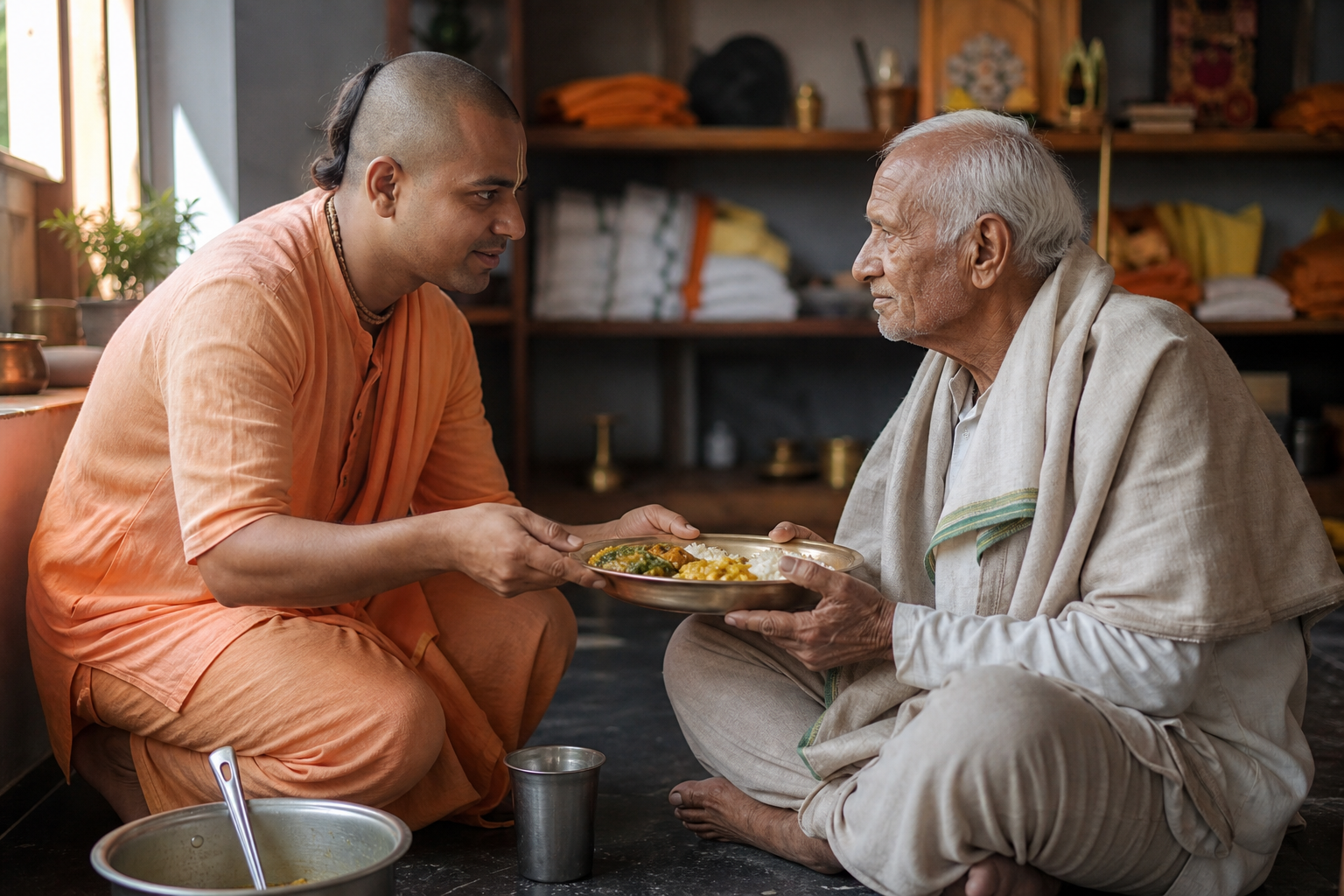
A living tradition needs recognizable forms, but a form can outlast the disposition it was meant to cultivate. The following distinctions help you examine a class, community initiative, personal routine, or public presentation of Prabhupada’s legacy.
| Area | Preserving the appearance | Carrying the living legacy |
|---|---|---|
| Guru | Repeating authority as a substitute for understanding | Hearing with reverence, asking sincerely, and applying the instruction |
| Study | Collecting information or winning arguments | Joining reason, devotion, humility, and ethical practice |
| Universal outreach | Removing the tradition’s Krishna-centered identity | Explaining bhakti accessibly without concealing its center |
| Community | Using membership as a badge of status | Accepting accountability and becoming available for seva |
| Memory | Remaining with nostalgia for an earlier generation | Letting remembered qualities reshape present conduct |
| Interfaith respect | Claiming that every path is interchangeable | Recognizing shared virtues while speaking honestly about differences |
Two distortions deserve equal attention. Rigidity can turn parampara into an identity defence in which questions are treated as disloyalty. Dilution can turn universality into a lowest-common-denominator spirituality with no clear object of devotion. The needed balance is an accessible message grounded in steady practice, humility, and service, transmitted through disciplined hearing, sincere inquiry, remembrance, and reasoned understanding.
You can examine your own practice with the same standard. Are you becoming easier to correct? Does study deepen gratitude? Does devotion make you more dependable in service? Can you explain your convictions without contempt for another tradition? These are not replacements for theology. They are signs that theology is reaching character.
Key takeaways
- Prabhupada’s legacy remains alive when hearing leads to understanding, service, discipline, and transformed conduct.
- Reverence and inquiry belong together; sincere questions can deepen rather than weaken devotional learning.
- Bhakti can cross cultural and religious backgrounds without hiding its Krishna-centered identity.
- Shared Dharmic virtues create room for respect, but respect does not require erasing theological differences.
- Community is more than belonging. It supplies correction, accountability, and practical occasions for seva.
- The best test of spiritual study is not how impressive it sounds, but what it changes in the person who heard it.
At your next opportunity to hear, don’t leave with only a memorable idea. Carry away a clarified question, an ethical consequence, and a useful act of service. That is how Prabhupada’s teaching moves from inherited history into living bhakti.
References
- Dandavats – From Rural Minnesota to Prabhupada’s Grace: Visvakarma and Sujan dd’s Transformative Memories
- Dandavats – Revealing Creation’s Design: HH Bhakti Prabhupada Vrata Damodara on SB 3.20.30-31 in Alachua
