

If you or someone close to you is facing intimidation, sexualised abuse online, coercion at home, or fear in a public place, the first question is not which slogan best describes the wrong. It is what protects her now, what preserves her choices, and who must be called upon to act.
Women’s dignity becomes practical when three layers work together: immediate safety, usable law, and rehearsed self-protection. None can replace the others. This framework will help you decide what to do first, preserve information without increasing the danger, seek the right professional help, and build a community response that does not leave the entire burden on the woman at risk.
Start with the threat in front of you
People often begin by asking whether an act is illegal. That matters, but urgency comes first. A legal remedy that may take time cannot protect someone from an immediate assault, and collecting evidence is never more important than leaving a dangerous place.
- Separate immediate danger from continuing harm. If violence appears imminent, move towards an exit, a populated place, a known safe location, or nearby people who can help. Contact the local emergency authorities as soon as it is safe. Do not remain within reach of an aggressor merely to obtain a better recording.
- For a continuing threat, make a confidential safety plan. Identify people who will answer, a place you can reach, transport options, and essential documents or medicines you may lawfully need. A person who may retaliate should not be told about the plan merely for the sake of giving warning.
- For digital abuse, preserve first when it is safe, then secure and report. A screenshot without context may be less useful than a record containing the account, address, date, surrounding exchange, and original message. If continued exposure is distressing or dangerous, block promptly; evidence collection should not become prolonged surveillance of your own abuse.
- For family-law or institutional harm, obtain advice before a confrontation. Marriage status, child welfare, inheritance, employment, housing, and financial dependence can change the risks. A qualified advocate, recognised legal-aid service, cybercrime authority, or appropriate support professional should assess the actual facts.
Self-protection also includes recognising what is not your job. You do not have to debate a threatening person into becoming reasonable. You do not have to publish your experience before you are ready. You do not have to conduct your own investigation. The responsibility for abuse remains with the person committing it, while public institutions remain responsible for lawful protection and redress.
Key takeaways
- Leave immediate danger before trying to document it.
- Preserve original digital material and its context; do not edit the only copy.
- Use platform reporting, police or cybercrime reporting, and legal advice as distinct routes rather than assuming one automatically triggers the others.
- Choose self-protection training that teaches awareness, boundaries, escape, emergency response, and legal literacy.
- Make families and community institutions carry defined responsibilities instead of telling women simply to be more careful.
Turn an incident into a record without spreading the harm

Digital abuse creates a cruel tension: the material may disappear, but repeatedly viewing or forwarding it can deepen the injury. The goal is a controlled record, not wider circulation. Before deleting a message or closing an account, preserve what you safely can in a form that helps an advocate, platform, or investigating authority understand what occurred.
- Capture the full account name, handle, profile address, telephone number, email address, group name, or other available identifier.
- Keep the content address or link when one exists, along with the date and time shown on the device.
- Record enough surrounding conversation to show context. A cropped sentence may conceal whether it was repeated, directed at a particular woman, accompanied by a threat, or distributed to others.
- Retain original messages, emails, images, audio, or video without editing the only copy. Work from a duplicate if annotation is needed.
- Write a short chronology in plain language: what happened, when you noticed it, which accounts were involved, who received it, and what reporting steps followed.
- Store the record in a location the alleged abuser cannot access. If a shared device or account may be monitored, seek technical help from a trusted person before changing settings in a way that could reveal your plan.
- Keep acknowledgement numbers, automated platform emails, police complaint records, and the names or designations of officials contacted. These show the path already taken even when a decision is still pending.
After preservation, review account security. Change compromised passwords, use a separate password for each important account, enable the strongest multi-step sign-in method available to you, check active sessions, and verify that recovery email addresses and telephone numbers still belong to you. Do this from a device you reasonably trust. If another person controls the device, telephone plan, or recovery account, ordinary password changes may not be enough; obtain competent technical assistance.
Evidence is not the same as publicity. Avoid reposting humiliating material in order to condemn it, identifying a survivor without consent, or inviting a crowd to confront the suspected offender. Wider circulation can magnify the reputational and emotional injury. It may also create new disputes that distract from the original complaint.
A Goa campaign concerning an application alleged to sexualise and defame local women illustrates the available institutional channels: a formal police representation, cybercrime involvement, preservation of digital material, notices to intermediaries, and requests to application stores. Those channels serve different functions. A platform can restrict content under its rules; police can examine possible offences; an advocate can explain available remedies. A takedown request alone does not necessarily create an investigation, and an investigation does not guarantee immediate removal.
Use law as a remedy, not as a slogan
Law can prohibit conduct, deter violations, authorise investigation, and provide a route to relief. It cannot substitute for immediate safety, accessible procedures, trained officials, or reliable support. A severe penalty written into legislation means little to a vulnerable person who cannot find the correct office, preserve the relevant facts, or obtain advice without exposure to retaliation.
The Assam Legislative Assembly’s 2025 prohibition of polygamy measure prescribed imprisonment of up to ten years for contracting another spousal union while a valid marriage subsists. The state government presented the reform as religion-neutral and connected it with equal legal protection. Yet the practical effect still depends on clear rules, lawful procedure, public awareness, accessible assistance, impartial enforcement, and safeguards against misuse.
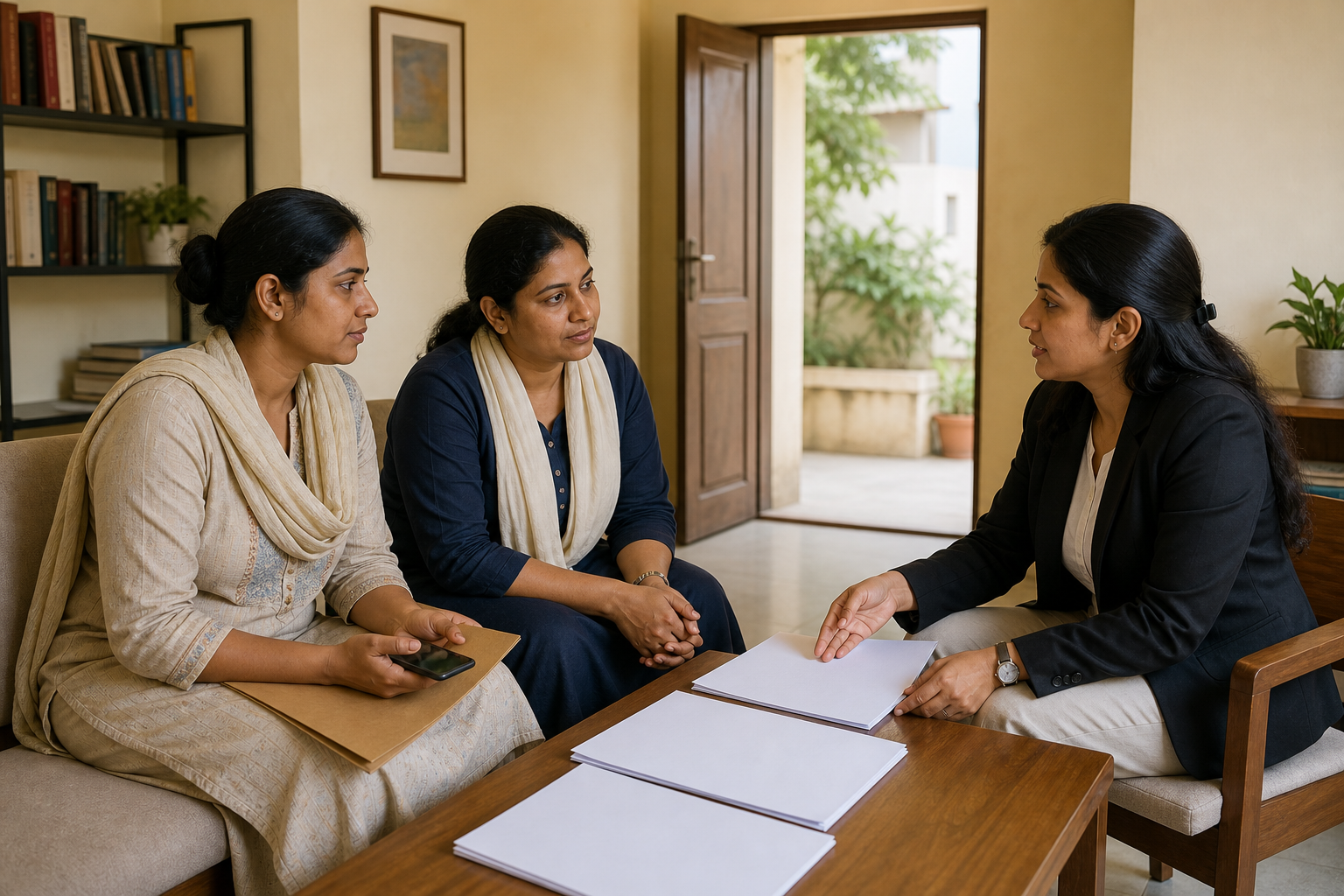
If you are dealing with a disputed marriage, do not assume that a newspaper description or a social-media claim settles your legal status. The date and place of each ceremony, registration records, applicable law, prior marriages, court orders, and the position of children or property may matter. Exact provisions and procedures can also change. Obtain advice from a qualified family-law advocate or recognised legal-aid provider before signing documents, surrendering records, leaving property, making accusations in public, or agreeing to an informal settlement with lasting consequences.
You can make that consultation more useful by bringing documents you are entitled to possess and a short list of questions:
- What is the present legal status of the relationship, and what facts remain uncertain?
- Is any immediate protective or interim remedy available in this jurisdiction?
- Which authority or court has the relevant role?
- What original records should be kept, and which copies may be submitted?
- Could a proposed step affect a child, residence, maintenance, inheritance, property, immigration status, or an existing proceeding?
- How can communication occur without increasing the risk of retaliation?
Due process is not an obstacle to women’s dignity. It is what turns a serious allegation into a fair and enforceable decision. Impartial procedure, confidential access, reasoned orders, grievance mechanisms, and penalties for deliberate misuse protect complainants as well as the integrity of the system. The correct demand is firm enforcement with procedural fairness, not punishment by rumour or community identity.
Choose self-protection training designed for escape

Good self-protection training does not promise invulnerability. It builds earlier recognition, clearer decisions, a usable voice, movement towards safety, and the ability to seek help under stress. Its purpose is to create options, not to prove bravery in a confrontation.
A Kolhapur Shaurya Jagruti training initiative scheduled for more than 1,000 women on 7 December combined the right kinds of subjects: personal safety, bystander support, basic legal knowledge, digital security, emergency response, foundational physical skills, mental resilience, and peer networks. A large shibir can introduce these disciplines and make training socially accessible. Competence, however, comes from realistic instruction and continued practice rather than attendance alone.
When you assess a class, school, college programme, or community shibir, look for a curriculum that answers practical questions:
- Does it teach participants to notice exits, distance, isolation, escalating language, and changes in another person’s behaviour?
- Does it practise short boundary statements and attracting help without blaming a participant who freezes, complies, or cannot speak?
- Are physical methods limited to simple break-contact and escape objectives, with safe supervision and adaptations for different bodies and abilities?
- Does the instructor explain that fighting may increase danger and that escape is a successful outcome?
- Are digital abuse, stalking concerns, emergency contacts, evidence preservation, and basic legal routes included?
- Does the programme teach bystanders how to summon help, create a distraction, accompany the targeted person, record information safely, and report through an appropriate channel?
- Are instructors accountable through clear credentials, consent rules, safeguarding procedures, and a way to report misconduct within the programme?
Be wary of instructors who guarantee that one technique works against every attacker, humiliate participants for fear responses, encourage revenge, introduce dangerous stunts before basic movement, or make weapons the centre of the course. No technique removes differences in size, surprise, numbers, weapons, disability, terrain, or physical condition. A responsible instructor names those limits plainly.
The ethical aim also matters. Ahimsa does not require a woman to accept abuse, and courage need not become aggression. The aim of self-protection is to interrupt harm, create distance, reach safety, and call responsible institutions into action. It is not domination, punishment, or communal retaliation.
Make dignity a rule for families and Dharmic institutions

A community fails when its only safety instruction is directed at women: do not go there, do not speak, do not post, do not embarrass the family. Restrictions may reduce a woman’s freedom while leaving the abusive conduct, unsafe venue, negligent institution, or predatory account untouched. A serious dignity policy assigns duties to everyone with power.
If a woman tells you that she is being threatened or humiliated, begin with disciplined listening. Ask whether she is safe now and what practical help she wants. Do not interrogate her for inconsistencies in the first conversation, contact the accused person behind her back, pressure her into reconciliation, demand public disclosure, or circulate her account as community news. Help her reach qualified support and preserve her freedom to decide among lawful options.
A mandir, gurdwara, vihara, Jain sangh, school, cultural association, or neighbourhood group can turn principle into procedure:
- Name at least one confidential contact and a backup so that reporting does not depend on a single gatekeeper.
- Publish what the contact can and cannot keep confidential, especially where a child or immediate danger is involved.
- Maintain a current referral list for emergency authorities, legal aid, cybercrime reporting, medical care, and appropriate support services.
- Separate support for the affected person from fact-finding and disciplinary decisions. One volunteer should not act as counsellor, investigator, judge, and spokesperson.
- Set rules for photography, messaging groups, personal data, transport, accommodation, youth activities, and communication between volunteers and minors.
- Train organisers and bystanders to record concerns through a defined channel rather than relying on private whispers.
- Do not publish names, allegations, screenshots, or intimate material merely to demonstrate that the institution is taking action. Communicate only what is necessary and lawful.
- Review whether a complaint exposed a recurring weakness: an unmoderated group, an isolated room, uncontrolled access to personal information, or an official who discouraged reporting.
Ahimsa, karuna, daya, and abhaya become meaningful here as operating principles. Non-harm means stopping practices that expose people to foreseeable abuse. Compassion means listening without turning suffering into spectacle. Care means accompanying someone through an unfamiliar process. Fearlessness means refusing both intimidation and mob vengeance.
Religion-neutral protection is essential in a plural society. A woman’s access to law should not expand or contract with her faith, sect, caste, family reputation, political usefulness, or the identity of the accused. Dharmic advocacy is most credible when it asks for the same evidentiary care, procedural fairness, institutional courage, and human dignity in every case.
Choose the next action before the situation chooses for you
You do not need to solve the whole system today. Choose the step that preserves the most safety and the most future options.
- If danger is immediate, leave and contact nearby help or the local emergency authorities.
- If abuse is digital, preserve one controlled record, secure the affected accounts, and identify the correct platform and official reporting routes.
- If marriage, children, property, or livelihood may be affected, prepare a chronology and obtain qualified legal advice before making an irreversible move.
- If you are choosing training, inspect the curriculum and safeguarding rules rather than judging the programme by spectacle.
- If you lead a community institution, name a confidential contact, a backup, and a referral pathway before the next complaint arrives.
Dignity is not protected by asking a woman to carry more fear more skilfully. It is protected when she has a safer route out, a record she controls, competent advice, practical training, trustworthy allies, and institutions prepared to do their duty. Put one of those supports in place now.
References
- Hindu Existence – Assam’s Bold Polygamy Ban: 10-Year Jail Term, CM Affirms Religion-Neutral Reform
- Hindu Jagruti Samiti – Protecting Women’s Dignity in Goa: Ranragini Wing Demands Urgent Ban on Obscene App
- Hindu Jagruti Samiti – Shivpratap Din, Kolhapur: Powerful Training Shibir to Empower and Safeguard 1,000+ Women
