
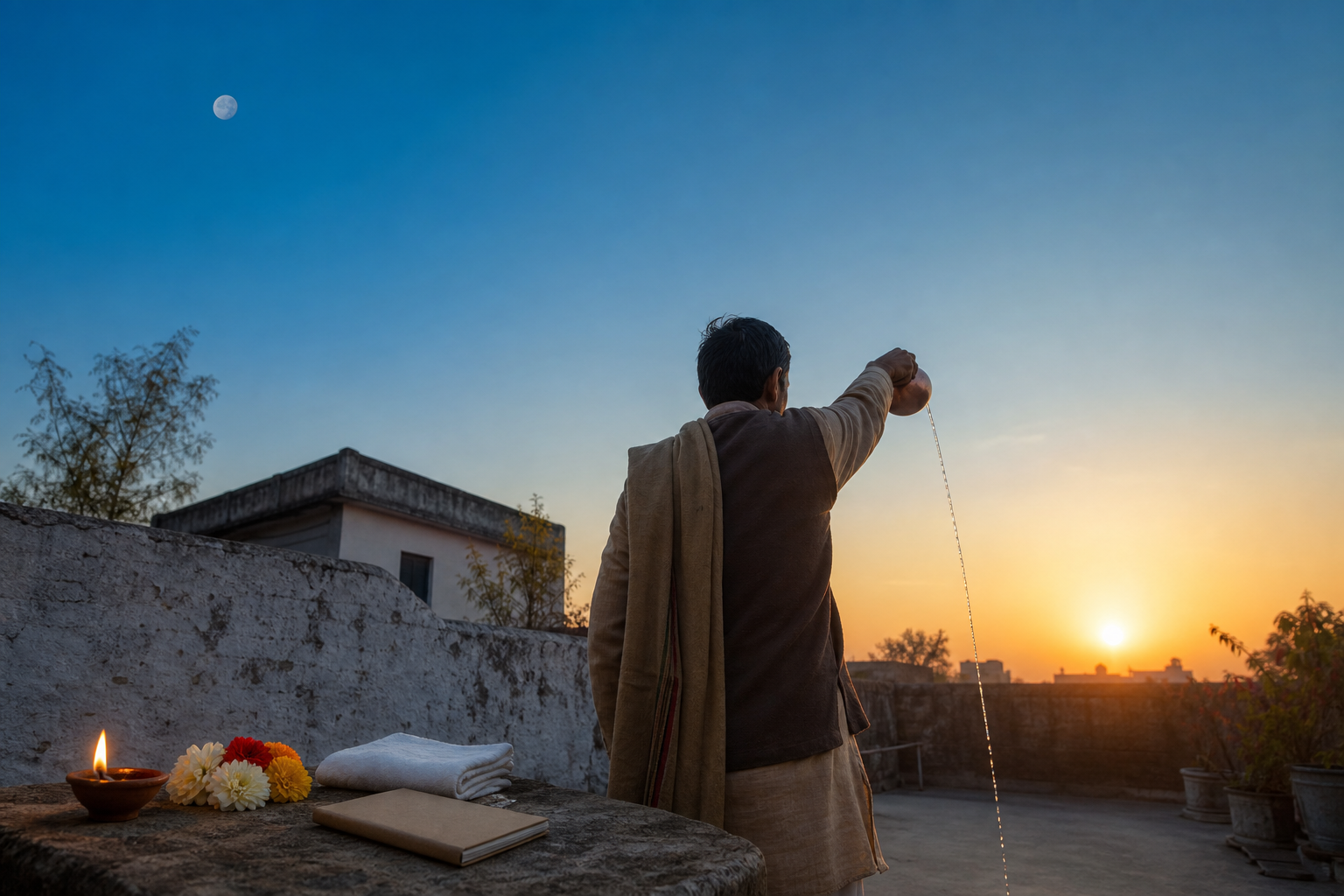
If you are deciding what to observe on Sunday, December 7, the first detail to get right is the midnight transition. The civil date starts in Krishna Paksha Dwitiya, but Tritiya begins shortly afterward and governs almost the entire waking day.
You do not need to turn that transition into an elaborate programme. Confirm the timings for your location, anchor the day with a simple sunrise offering to Surya, and give the waning fortnight what it asks of you: less display, more attention, restraint, study, and service.
Read the 12:51 AM transition correctly
Krishna Paksha Dwitiya continues until 12:51 AM on December 7, after which Krishna Paksha Tritiya begins. In plain terms, 12:51 AM falls shortly after the midnight that starts Sunday. It does not mean 12:51 AM after Sunday evening.
| Part of December 7 | Prevailing tithi | What it means for you |
|---|---|---|
| Midnight to 12:51 AM | Krishna Paksha Dwitiya | If you are performing a practice in this brief interval, treat it as Dwitiya. |
| From 12:51 AM onward | Krishna Paksha Tritiya | Morning worship, daytime discipline, and evening prayer fall under Tritiya in the stated calculation. |
That distinction matters when you are recording a sankalpa, following a tithi-based vrata, or matching a household ritual to the lunar day. For an ordinary Sunday observance after waking, however, Tritiya is the relevant frame.
The timing can vary slightly with location and almanac method. Treat 12:51 AM as the supplied general timing, not as a universal timestamp for every city or time zone. If the tithi determines a formal ritual, use a Panchang calculated for the place where the ritual will occur.
A simple Sunday observance that fits Tritiya
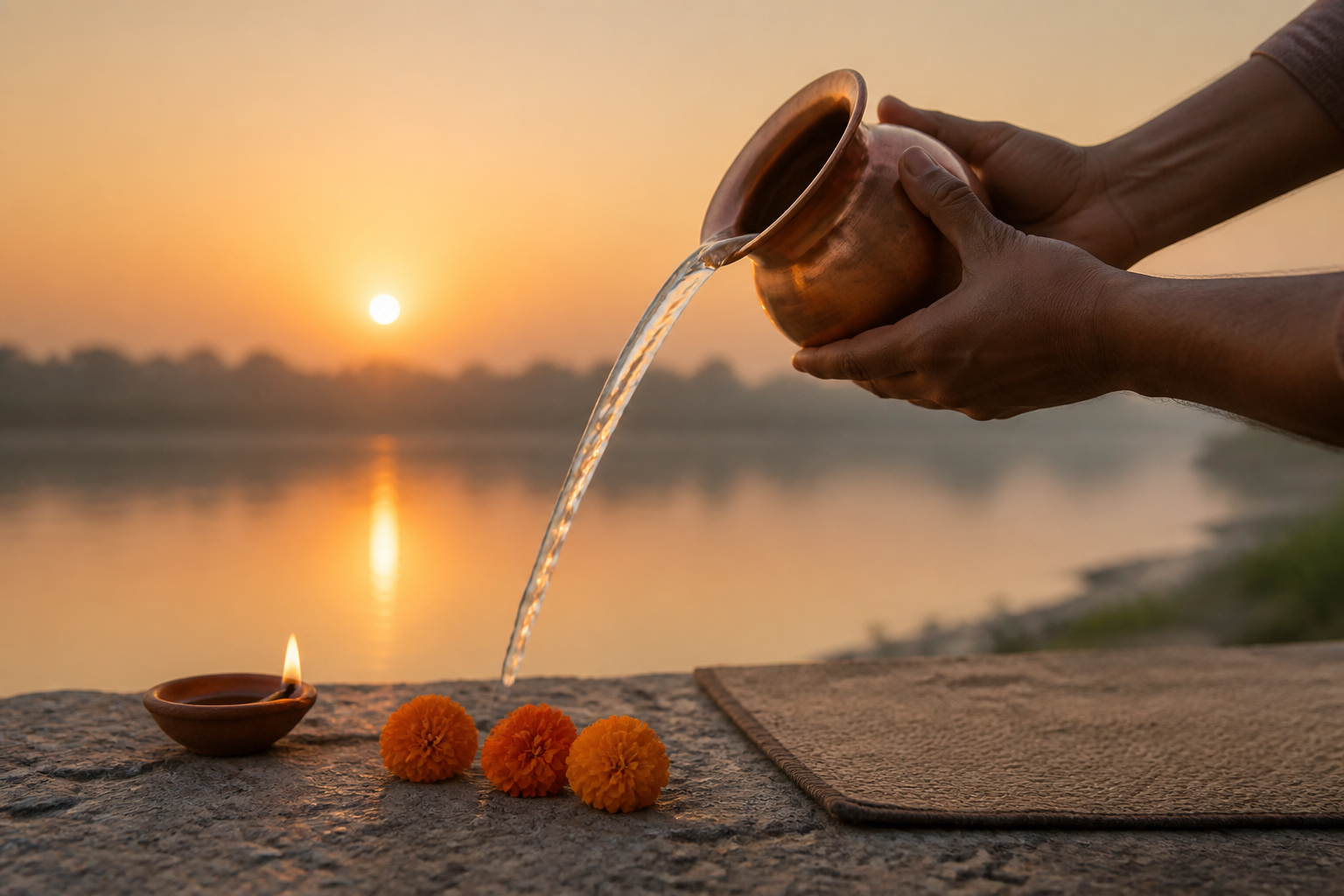
Krishna Paksha is the waning half of the lunar month, and Tritiya is its third tithi. The fitting emphasis is inward: steady practice, honest self-examination, measured action, and less unnecessary agitation. You can express that emphasis through a compact routine rather than collecting unrelated rituals.
- Begin at sunrise with Surya. Because December 7 is a Sunday, offer water to Surya at sunrise. Hold a clear intention for vitality, discernment, and right action rather than treating the offering as a hurried formality.
- Choose one morning practice. Use pratah kala for quiet puja, japa, or attentive reading from a sacred text followed in your home. One practice completed with concentration is more useful than several begun mechanically.
- Carry one restraint into the day. Select something observable: speak without needless harshness, postpone an impulsive reaction, reduce distraction during study, or finish a duty you have been avoiding. Tritiya’s contemplative quality becomes real only when it changes conduct.
- Make service concrete. Perform one act of seva or daan that meets an actual need. If the donation belongs to a formal vow or ritual, verify its prescribed timing locally; ordinary compassionate service need not become an excuse for endless astrological delay.
- Close at sandhya. Use the evening for prayer, meditation, or a short review of the day. Ask where your conduct matched your intention and where correction is still needed.
If family members follow different dharmic paths, do not force every practice into one ritual form. The Panchang supplies a Hindu calendrical frame, while mindfulness, ethical restraint, compassion, and seva can be honoured in ways consistent with Hindu, Buddhist, Jain, or Sikh discipline. Shared values need not erase distinct teachings.
Use Shubh Muhurat without inventing a universal clock time
There is no single location-free Shubh Muhurat that can responsibly be given to every reader for December 7. Sunrise changes by city, and local Panchang calculations can produce small differences in tithi, Nakshatra, Chandra Rashi, and auspicious intervals.
Match the precision of your timing to the importance of the act:
- For daily puja, japa, or sacred reading: use your established morning practice, with pratah kala generally favoured for worship.
- For prayer or meditation at the day’s close: use sandhya, keeping the practice quiet and deliberate.
- For a formal vrata, daan, or griha ritual: check a city-specific Panchang and follow the rules of your sampradaya, family tradition, or officiating priest.
- For travel chosen specifically by muhurat: verify the departure location and local time rather than copying a window published for another city.
When two regional almanacs differ slightly, first check whether they were calculated for the same city and time zone. Then identify which calendar tradition your household or temple follows. Consistency with a living tradition is usually more meaningful than switching between almanacs merely to obtain the most convenient result.
Auspicious timing should support dharmic action, not replace judgement. Do not use the absence of a preferred window to neglect a necessary duty, delay compassionate help, or avoid responsibility.
Confirm Nakshatra and Chandra Rashi before personalising practice
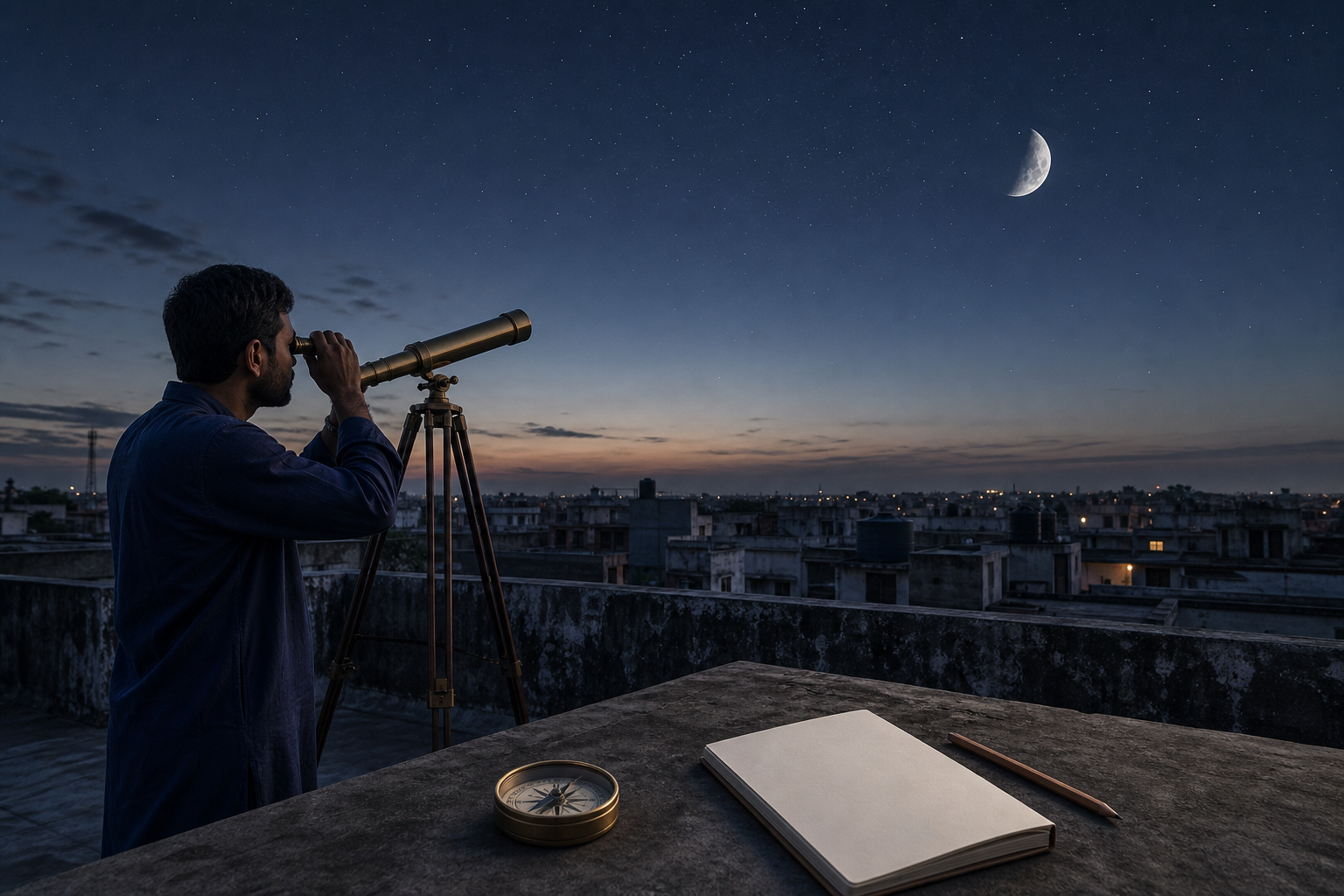
The day’s Nakshatra and Chandra Rashi are time-dependent lunar positions. A generic calendar image may be correct for its own location yet misleading for yours, particularly near a transition. Check the city, date, time zone, and stated end time before using either value.
Do not confuse the prevailing daily Nakshatra with your Janma Nakshatra. The former describes the Moon’s placement at the relevant time; the latter is tied to the Moon’s placement at birth. Likewise, the day’s Chandra Rashi is not automatically the same as your natal Moon sign.
If your tradition adapts mantra, study, or contemplation to the ruling devata or graha of the prevailing Nakshatra, confirm the Nakshatra first. If you cannot verify it, keep to a familiar daily mantra or sacred reading rather than guessing. A practice grounded in your actual tradition is preferable to an elaborate correspondence taken from a location-free calendar.
Regional differences are not a defect in the dharmic calendar. Bengal, Tamil Nadu, Gujarat, Himalayan regions, and diaspora communities may rely on different local almanacs and inherited conventions. Record the location and calendar tradition whenever you preserve a Panchang entry for later use; the date alone does not capture the whole calculation.
Key takeaways for December 7
- The date begins in Krishna Paksha Dwitiya, which lasts only until 12:51 AM in the supplied calculation.
- Krishna Paksha Tritiya begins at 12:51 AM and therefore governs nearly the entire practical day.
- As it is Sunday, a simple offering of water to Surya at sunrise is an appropriate opening observance.
- Morning puja, japa, or sacred reading can be balanced with daytime restraint and seva, followed by evening prayer or meditation.
- Exact Shubh Muhurat, Nakshatra, and Chandra Rashi details should be confirmed using a Panchang calculated for your location.
- For a formal vrata, griha ritual, timed daan, or muhurat-based journey, follow the local almanac and the discipline of your family, temple, or sampradaya.
Your practical next step is small: open the Panchang used in your city, confirm the three location-sensitive details, and write down one sunrise practice, one daytime discipline, and one evening practice. That is enough to make December 7 an observed tithi rather than another date merely noticed on a calendar.
References
