
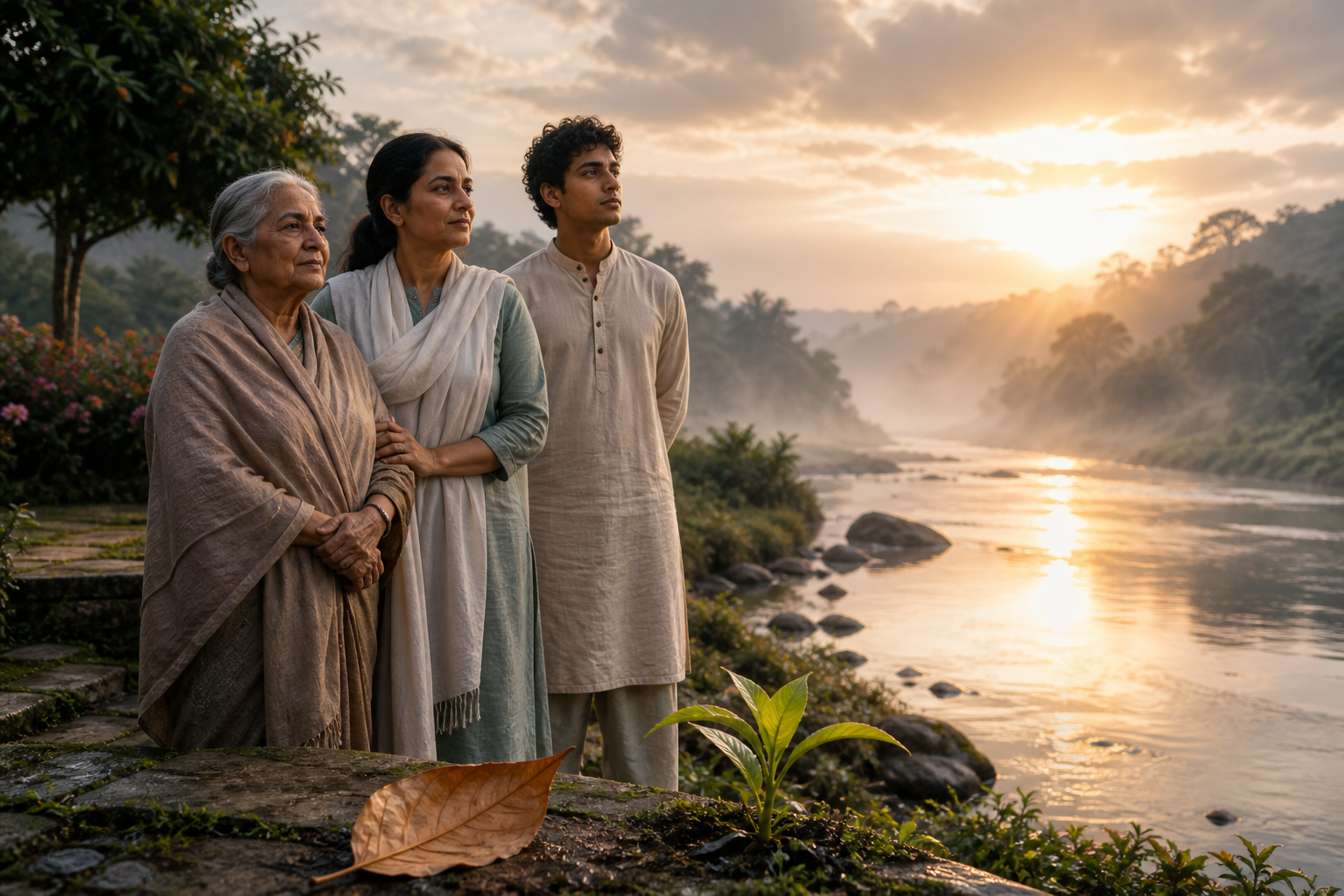
If death has stopped being theoretical – because someone you love has died, because your own mortality has become harder to ignore, or because fear keeps intruding on ordinary life – a philosophical answer alone will not settle you. You need a way to face what changes without treating life as meaningless, and a way to seek freedom without withdrawing from the people who still depend on you.
Dharmic traditions meet this need with a demanding insight: mortality should change how you live before it becomes a question about what happens afterward. Hinduism, Buddhism, Jainism, and Sikhism do not give identical accounts of the self, but each asks you to loosen attachment, act ethically, and stop living as though the present form of things could be permanently possessed.
Separate death, continuity, and liberation

Fear tends to compress several questions into one: What dies? Does anything continue? What would spiritual freedom mean? Separating them prevents a vague dread from controlling the discussion.
- What dies? The physical organism dies. The relationships, roles, possessions, abilities, and public identity organized around that body also change. Impermanence is already visible in smaller forms whenever health, age, status, emotion, or circumstance changes.
- What continues? The answer depends on the tradition. Hindu schools commonly distinguish the changing body-mind from atman, the witnessing self. Jainism affirms jiva and explains bondage through karma. Buddhism denies a permanent, independent self while teaching causal continuity through dependent origination and a stream of consciousness. Sikh thought places the atma under hukam and understands release from rebirth through union with the Divine.
- What is liberation? Mere continuation is not liberation. An endless sequence of births would still be samsara. In Hindu thought, moksha requires the ending of avidya, the ignorance through which the changing body, mind, and ego are mistaken for the deepest self.
The Bhagavad Gita distinguishes the field of embodied experience from the kshetrajna, the knower of that field. The Upanishadic orientation is similarly radical: atman is not born when the body appears and does not die when the body dissolves. This is why the Hindu account of death begins with the identity of the witness, not with a promise that the present personality and all its preferences will remain unchanged forever.
This distinction also corrects a common misuse of karma. Karma is not a warrant for blaming a dead person, a grieving family, or someone suffering from illness. It describes moral causation and the shaping of the jiva’s journey; it does not give an observer access to another person’s unseen karmic history. If a theory of karma makes you less compassionate, you are using it to protect the ego rather than to understand dharma.
You do not have to erase the differences among Dharmic traditions to recognize their shared practical challenge. A Hindu inquiry into atman should not be relabeled Buddhist anatta. Buddhist dependent origination should not be made into a disguised eternal soul. Jain jiva and Sikh union with Waheguru must likewise be heard in their own vocabularies. The useful common ground is ethical and soteriological: clinging binds, conduct matters, and freedom requires more than preserving the ego’s preferred story.
Contemplate mortality without rehearsing catastrophe
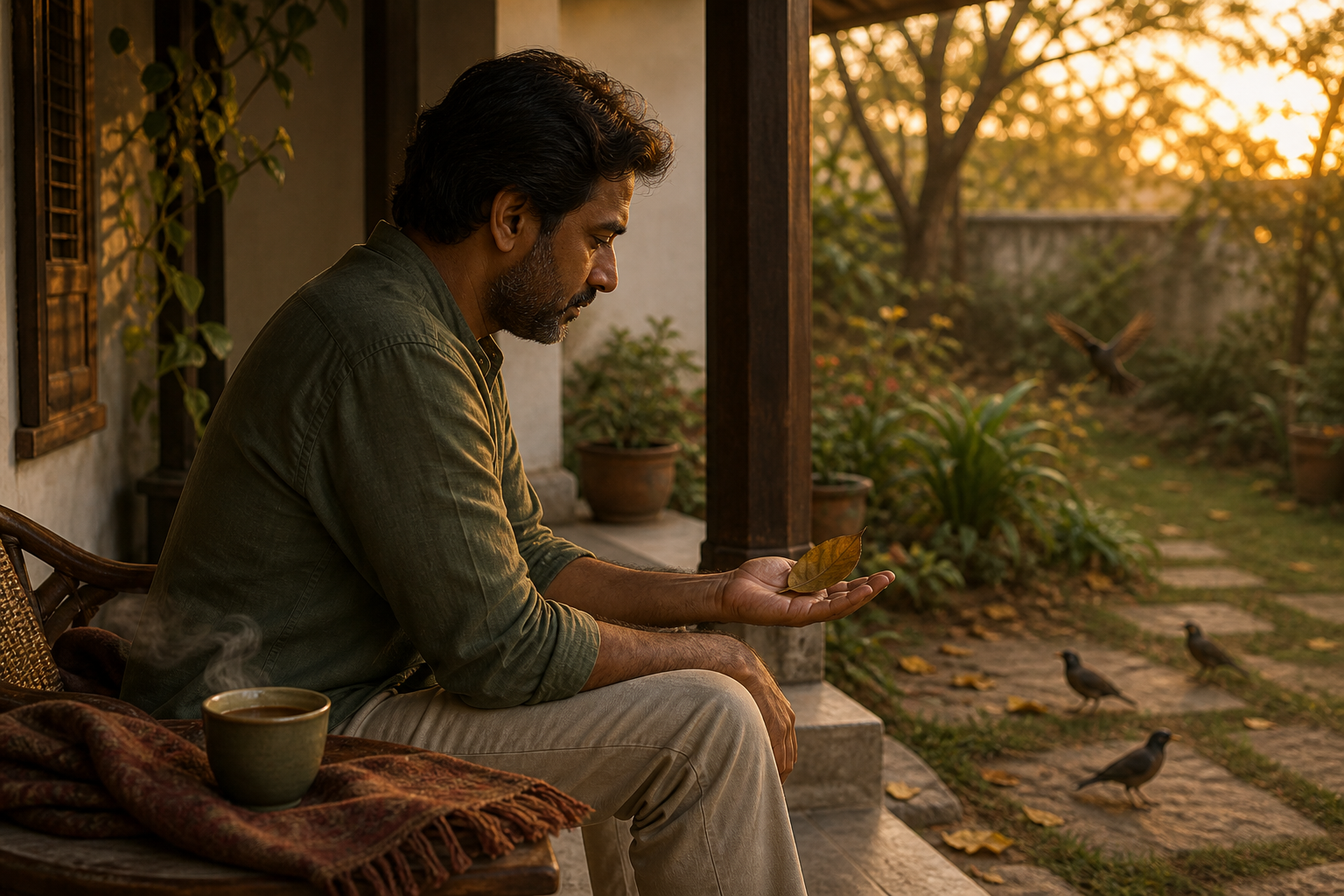
Remembering death is not the same as repeatedly imagining a disaster. Catastrophizing multiplies frightening scenes while leaving your conduct unchanged. Dharmic contemplation does something more exacting: it brings a transient attachment into clear view and asks what truthful action follows from seeing its limits.
Chamunda’s cremation-ground imagery makes that distinction difficult to evade. The Devi Mahatmya identifies her as the destroyer of Chanda and Munda. Her gaunt form, skull garland, kapala, trident, and association with jackals place the devotee at the border between life and death. Yet the cremation ground functions as a field of transformation, not as a celebration of morbidity. Ornament falls away. Egoic claims meet their limit. Fear becomes material for discernment.
The jackal is especially instructive. It inhabits a threshold: settlement and wilderness, familiar order and decomposition, fear and sacred power. Chamunda does not promise that the threshold is aesthetically comfortable. Her abhayamudra instead points toward fearlessness within reality as it is. Fearlessness here does not mean numbness. It means that fear no longer gets the final vote on your duty.
You can apply this symbolism without imitating cremation-ground rites or adopting a Tantric practice for which you have not been prepared. Bring one attachment into awareness and make four distinctions:
- Love versus possession: You can cherish a person while accepting that neither body nor relationship can be owned permanently.
- Detachment versus neglect: Detachment removes the demand that life obey you. Neglect abandons a duty. They are not the same.
- Fearlessness versus denial: Fearlessness allows you to discuss death, make necessary arrangements, and remain present. Denial avoids the subject until circumstances force it upon you.
- Contemplation versus rumination: Contemplation ends in clearer conduct. Rumination repeats distress without yielding a decision, an insight, or an act of care.
Use the result as a test. If remembering death makes you harsher, more fatalistic, or indifferent to suffering, pause. The practice has drifted away from dharma. Jain maranasmarana, Buddhist charnel-ground reflection, Sikh fearlessness under hukam, and Hindu cremation-ground symbolism differ in doctrine and method, but their disciplined encounter with impermanence is directed toward courage, humility, and care.
Build a liberation practice for ordinary days
Mortality becomes spiritually useful through repetition, not intensity. You do not need to produce a dramatic state. You need to notice change, question identification, and carry the insight into conduct. The following sequence can sit within an established Hindu practice and can be adapted, without mixing doctrines, to another Dharmic path.
- Set the intention. Begin with a plain resolve: may seeing impermanence make conduct more truthful. This protects the exercise from becoming fascination with death.
- Settle through a familiar discipline. Use dhyana, japa, or the form of pranayama in which you have already been properly instructed. If you have a mantra received through your lineage, stay with it. This is not the place to invent an esoteric ritual or force the breath.
- Observe one changing element. Choose a bodily sensation, emotion, thought, memory, role, or expectation. Notice that it appears, alters, and passes. Do not begin with the most traumatic event available; begin with something you can observe without losing steadiness.
- Ask the question appropriate to your path. A Vedantin may ask what knows the changing thought or sensation. A Buddhist practitioner may attend to arising, dependence, and passing without positing a permanent owner. A Jain may remember the distinction between jiva and karmic bondage. A Sikh may place the changing circumstance within hukam. Respecting these differences keeps contemplation honest.
- Name one attachment precisely. Avoid a vague declaration that everything is temporary. Say what the ego is demanding: this role must define me, this person must never leave me, this body must always obey me, or this grievance must remain part of my identity.
- Release the demand, not the duty. You may still need to care for the body, protect a relationship, earn a living, oppose injustice, or keep a promise. Give up the claim of permanent control while retaining the dharmic responsibility.
- Close with one visible action. Complete an overdue duty, apologize without defending yourself, offer practical help, restrain a harmful impulse, or give undistracted attention to someone you love. The action is how you determine whether contemplation has moved beyond abstraction.
Vedanta also uses jagrat, svapna, sushupti, and turiya – waking, dreaming, deep sleep, and the transcendental – as a map for examining awareness beneath changing experience. This can deepen inquiry into the witness. It should not be presented as a laboratory demonstration that consciousness survives bodily death. The Dharmic case draws on sruti, yukti, and anubhava: scriptural testimony, reasoning, and disciplined experience. That is a philosophical and spiritual mode of knowing, not a substitute label for scientific proof.
You also do not need a memory of a previous birth to practice seriously. Classical explanations place ordinary forgetting within avidya and sometimes understand it as allowing fresh moral effort. Reports of unusual memories may be considered, but sensational claims are a poor foundation for conduct. Karma, rebirth, and moksha form a coherent moral and spiritual arc even when a practitioner has no personal recollection of another life.
The reliable measure is not whether you can produce an extraordinary story. It is whether practice weakens ahankara, makes ahimsa more concrete, and reduces the distance between what you claim to value and what you actually do.
Let ritual support grief rather than silence it
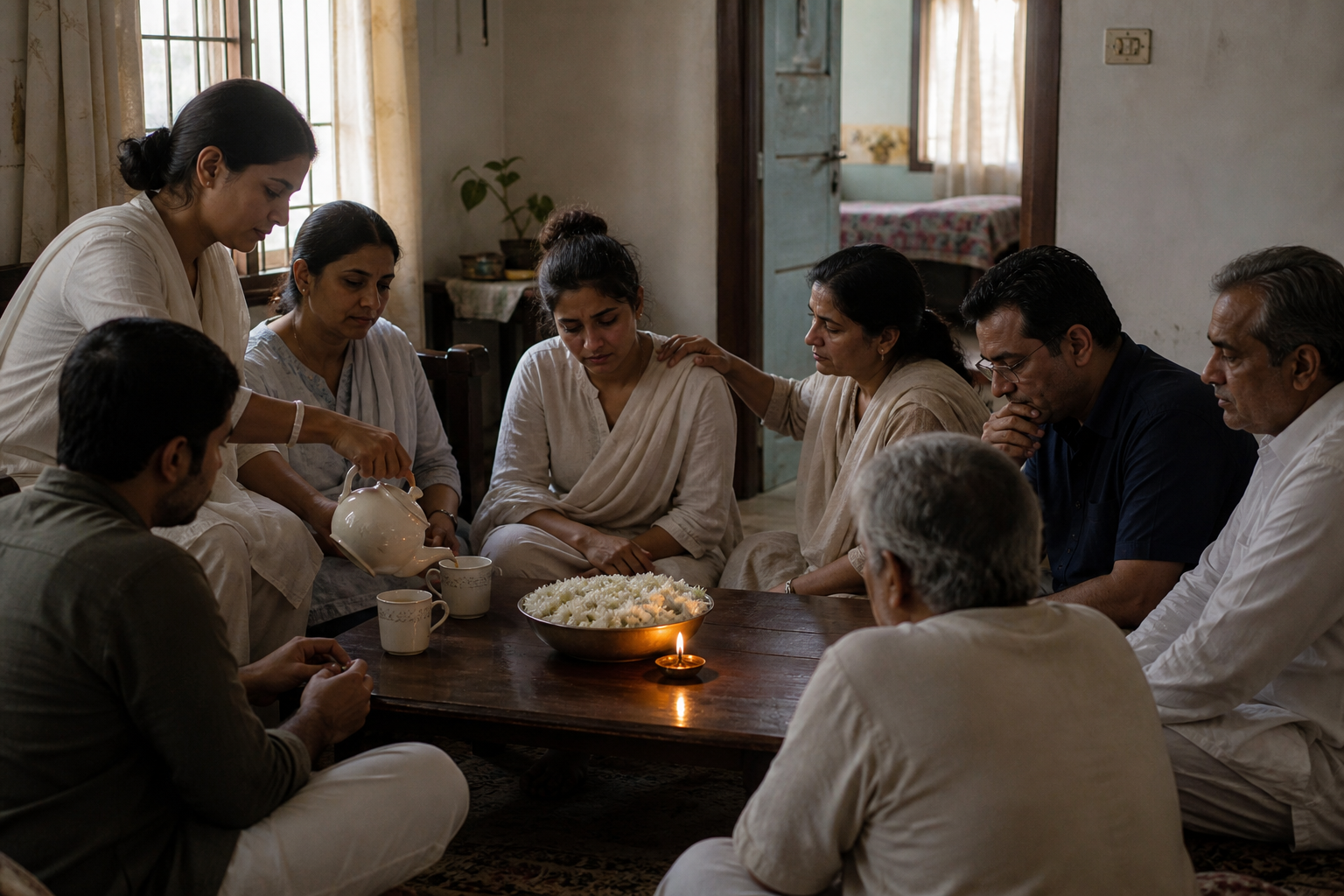
When someone dies, metaphysical conviction does not cancel bereavement. You can believe that atman is not destroyed and still miss the person’s voice, habits, touch, and place in the household. Telling a mourner not to grieve because the self is eternal confuses doctrine with emotional suppression.
Hindu rites such as antyesti and shraddha give death a structure. They honor the deceased, acknowledge the body’s dissolution, locate the family within a continuing sacred order, and create duties when ordinary language may be inadequate. Their precise forms vary by family, community, region, and sampradaya, so follow the tradition of the household and the guidance of a trusted, competent officiant rather than assembling instructions from disconnected ritual fragments.
Ritual and practical care should work together. If you are supporting a bereaved person:
- Help with the concrete duty in front of them instead of forcing a theological discussion.
- Allow tears, silence, prayer, remembrance, and ordinary conversation to coexist.
- Do not speculate about the deceased person’s karma, destination, or previous births.
- Do not demand visible serenity as proof of faith. Grief and conviction can occupy the same life.
- Continue practical support after the public rites, when the household is quieter but the absence remains.
The same boundary matters in personal practice. Dhyana, japa, prayer, and ritual can provide meaning and steadiness, but they are not substitutes for appropriate mental-health care. If contemplating death repeatedly triggers overwhelming panic, makes ordinary functioning impossible, or creates thoughts of self-harm, stop the exercise and seek qualified professional help. If you may be in immediate danger or cannot stay safe, contact local emergency or crisis support now.
Spiritual language should increase your capacity to remain with suffering. It should never become a reason to leave a suffering person alone.
Key takeaways
- Impermanence means that embodied forms, roles, feelings, and circumstances change; it does not by itself settle every tradition’s account of what continues after death.
- Hindu atman, Buddhist anatta and dependent origination, Jain jiva, and Sikh atma under hukam should not be collapsed into one doctrine.
- Moksha is more than survival after death. It is freedom from ignorance and bondage, so its discipline must begin while you are alive.
- Useful death contemplation ends in a specific dharmic action. If it produces only dread, passivity, or indifference, change the practice.
- Detachment releases the demand for permanent control; it does not release you from love, compassion, or duty.
- Ritual can hold grief without denying it, while acute psychological distress still warrants qualified professional support.
Begin with the unfinished duty you would least want death to find neglected. Complete it without drama. Then sit with one changing experience and notice how tightly you call it yours. Liberation may be the final aim, but the next evidence of movement is close at hand: less possession, more truth, and a duty performed while you still have the opportunity.
References
- DharmaRenaissance Blog – Beyond Death: Hinduism’s Powerful Answer on Consciousness, Atman, and Rebirth
- DharmaRenaissance Blog – Goddess Chamunda and Her Jackals: Unmasking Cremation-Ground Power, Fearlessness, and Grace
