
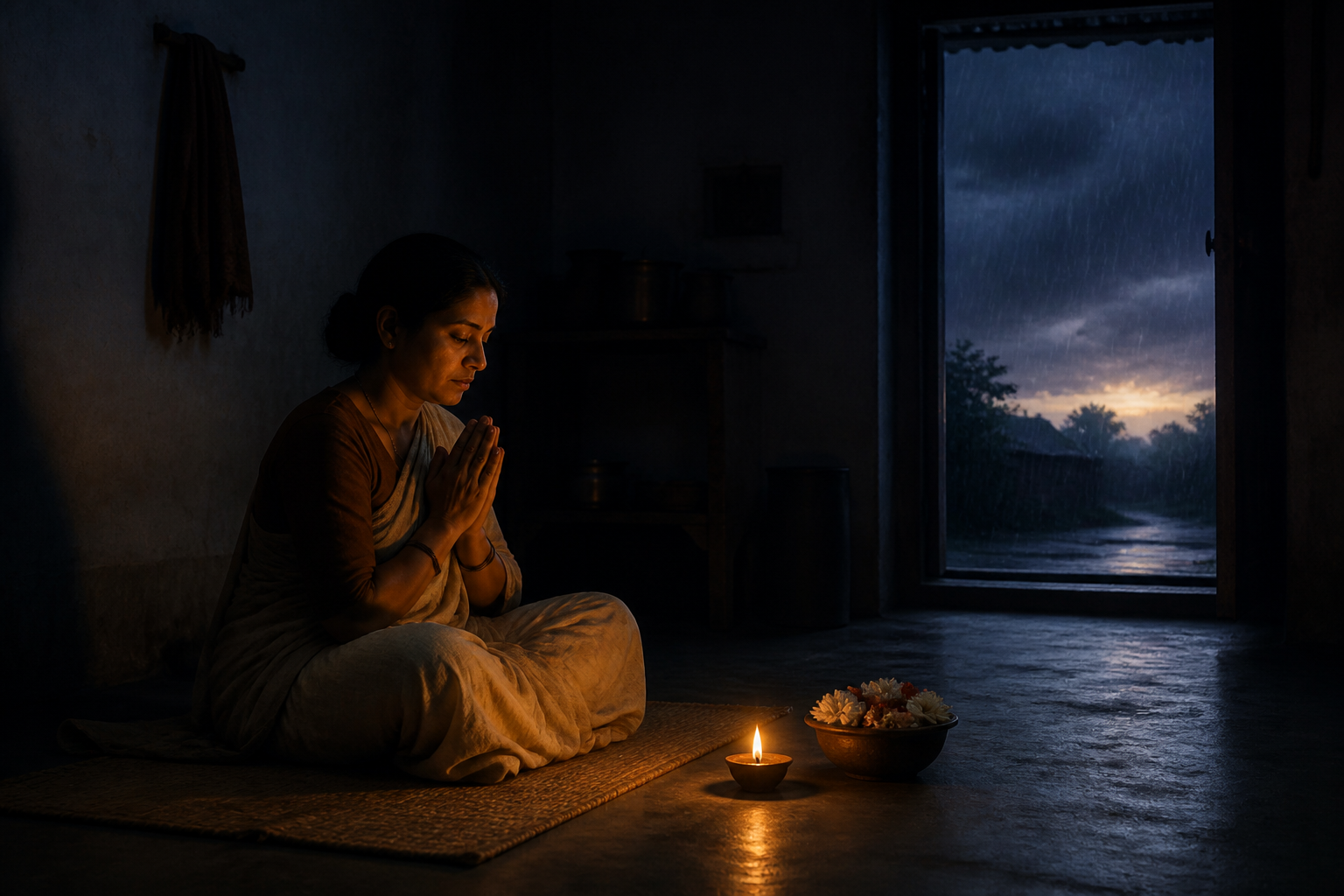
If distress has made your prayer urgent, you do not need to apologize for arriving at the Divine through need. Perhaps your devotion was inconsistent until illness, grief, fear, humiliation, or uncertainty cornered you. The Dharmic response is not to reject that prayer as selfish. It is to make the prayer truthful, focused, and capable of guiding your next action.
You can begin with the words you actually have. You do not need an elaborate ritual, an elevated mood, or certainty about how the crisis will end. You need a sincere turning of attention, a form of remembrance you can sustain, and the willingness to do the duty that remains in front of you.
Begin with the devotion you actually have
Hindu tradition has a precise name for devotion awakened by suffering: Artabhakti, the devotion of a person in distress. In Bhagavad Gita 7.16, the arta is recognized as one of four kinds of devotees who turn toward the Divine. Need-born prayer is therefore not disqualified before it begins.
This matters because a second pain often attaches itself to the first. You are already frightened or grieving, and then you judge yourself for praying only because you need help. Drop that second burden. The more useful question is not whether your motive is perfectly pure. Ask whether your turning makes you more honest, more steady, and more willing to act according to dharma.
Distress can strip away social performance and expose what you truly depend upon. It can also narrow attention so severely that the mind circles the same fear. Mantra, prayer, and remembrance give that concentrated attention a sacred direction. The crisis supplies emotional intensity; practice supplies an anchor. This is one reason surrender, or sharanagati, can become unusually direct when ordinary self-confidence fails.
There is still a distinction between bargaining and surrender. Bargaining says, “Give me the outcome I demand, and then I will believe.” Surrender says, “This is what I fear, this is what I cannot control, and this is the duty I will not abandon.” You may ask plainly for protection, healing, relief, or justice. But leave room for courage, clarity, trustworthy help, and ethical resolve to be forms of grace even before circumstances change.
Use a simple sequence when the mind will not settle
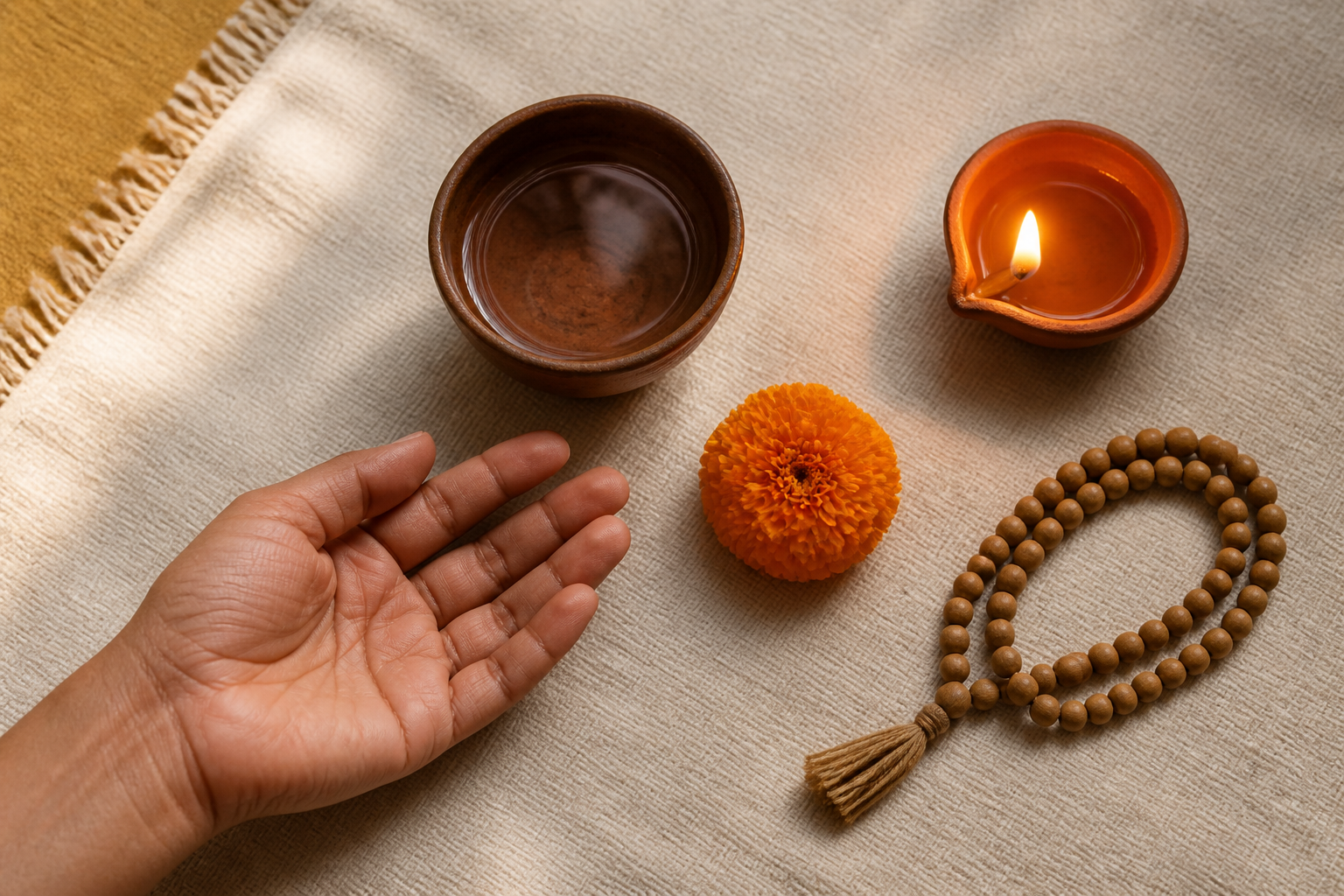
A crisis is a poor time to build a complicated spiritual routine. Too many choices can become another form of agitation. Use a familiar sacred form and connect it to the next responsible action.
- Name the distress without embellishment. Say what is happening in one plain sentence: “I am afraid of this diagnosis,” “I do not know how to bear this loss,” or “I cannot see the right decision.” Truthfulness is already a movement away from panic and concealment.
- Turn toward the sacred in the language you know. Use the name of your ishta-devata, a mantra received or learned within your tradition, a refuge formula, the Navkar Mantra, or Ardas. Do not spend the crisis hunting for a supposedly more powerful formula. Familiarity lets attention enter the practice without another round of decision-making.
- Repeat steadily. Japa may be silent or audible. If solitary repetition feels impossible, kirtan, congregational prayer, or the presence of a trusted spiritual companion can hold the practice with you. Let the words follow your natural breath; there is no need to force a special experience.
- Offer what is beyond your control. Name the result you want, and then acknowledge that you cannot command every cause, person, or consequence. Surrender the outcome without surrendering discernment.
- Identify the next dharmic act. Call the person who needs to know. Seek appropriate care. Leave an unsafe place. Fulfil a neglected responsibility. Apologize where you caused harm. Accept practical help. Prayer should return you to reality with a cleaner intention, not become a hiding place from it.
If words fail, the appeal can be very short: “You know this suffering. Keep me close to dharma.” Sincerity matters more than verbal polish. A single sacred name remembered with attention may be more useful than a long recitation performed while the mind is struggling to keep up.
Prepare for difficult moments while life is calmer. Decide which invocation you will use, where you will sit if sitting is possible, and which trusted people you can contact for spiritual and practical support. Save those contacts somewhere easy to reach. The purpose is not to predict suffering. It is to avoid rebuilding your entire support system while under pressure.
Read the crisis narratives without turning them into bargains

Dharmic narratives do not hide helplessness. They place it directly within the spiritual life. Their value is not that they give you a technique for controlling the Divine; they show what remains possible when ordinary control collapses.
- Gajendra: The elephant king, seized by a crocodile and brought to helplessness, offers a lotus and calls to Vishnu. Gajendra Moksha presents his appeal as the opening to compassionate intervention and liberation. Notice the movement from exhausted self-reliance to wholehearted refuge.
- Draupadi: During the vastraharana episode in the Mahabharata, Draupadi appeals to Krishna when human power and social protection have failed her. Her remembrance represents trust under violation, but it does not absolve witnesses of their duty to oppose adharma.
- Kunti: Her prayers in the Srimad-Bhagavatam connect adversity with sustained remembrance. The lesson is not to seek misfortune or romanticize preventable harm. It is to notice that hardship can expose dependence on the Divine and deepen a relationship that comfort had allowed to remain peripheral.
Do not convert these sacred narratives into the claim that sufficiently intense prayer guarantees the exact rescue you requested, on the schedule you requested. That claim does not hold. Sometimes relief is visible and immediate; sometimes help appears as endurance, insight, an unexpected human ally, or the strength to accept a painful truth. Sometimes suffering continues, and faith must coexist with unanswered questions.
The practical test is what the narrative awakens in you. Gajendra can teach you to release pride when your strength is insufficient. Draupadi can teach you to appeal without consenting inwardly to adharma. Kunti can teach you to carry remembrance beyond the crisis. None of them asks you to imitate danger, tolerate abuse, or refuse available help.
Let surrender return you to courage, care, and duty
Sharanagati is not passive resignation. Resignation says that nothing matters because nothing can be done. Surrender distinguishes what you cannot command from the duty that still belongs to you. It may soften the demand to control every outcome while making your immediate responsibility harder to evade.
That distinction becomes crucial when suffering involves health or safety. Prayer, mantra, and satsang may accompany medical or psychological care; they are not substitutes for it. If you are in immediate danger, move toward safety and contact local emergency services or someone able to intervene. If emotional distress is becoming unmanageable, tell a trusted person and seek qualified professional support. Remaining alone or untreated to prove the strength of your faith is not a requirement of devotion.
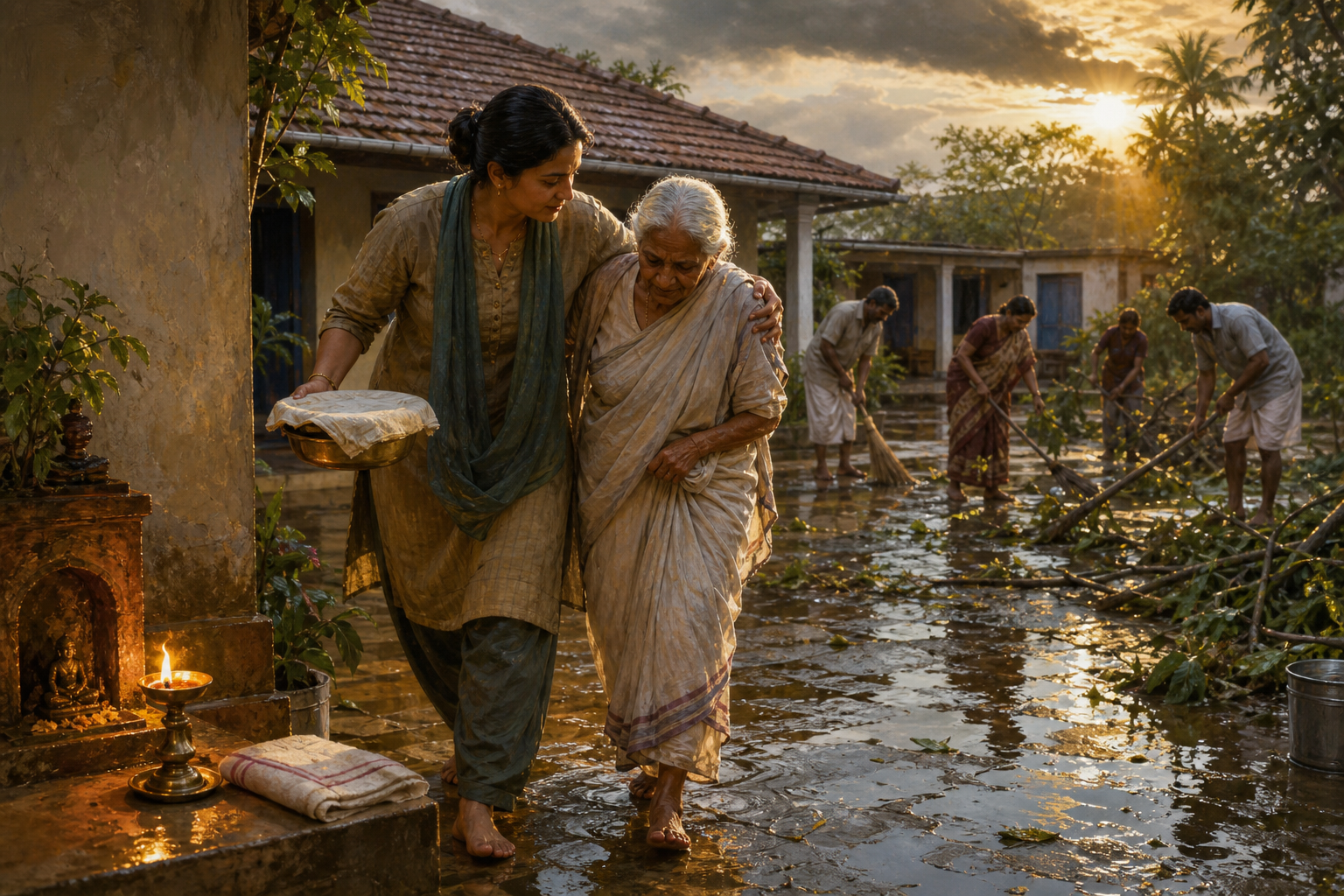
When the immediate emergency has passed, give devotion a practical outlet through seva. Bring food to a household carrying grief. Sit with someone who should not be alone. Help with a necessary task. Protect a person being mistreated. Make amends for harm you caused. Small acts of service can redirect helplessness toward purposeful compassion. They do not erase your pain; they prevent pain from closing the moral horizon around you.
Recognize Dharmic kinship without erasing differences
The Dharmic family contains distinct teachings, objects of refuge, and devotional languages. Their practices should not be treated as interchangeable. Yet they share a recognizable movement from fear toward sacred orientation and ethical conduct.
- In Hindu practice, prayer, nama-japa, kirtan, remembrance, and surrender to the Divine can gather a scattered mind and direct it toward right action.
- In Buddhist practice, taking refuge during fear or suffering turns attention toward a path of liberation rather than toward the promise of intervention by a creator deity.
- In Jain practice, recitation of the Navkar Mantra can recollect humility, equanimity, and ahimsa when distress tempts the mind toward anger or retaliation.
- In Sikh practice, Ardas carries personal and collective supplication into courage, trust, and seva.
Use the form your tradition has taught you, and understand what that form means within its own path. You do not need to blend several traditions in order to prove unity. Dharmic unity is better served when we honor genuine differences while recognizing a shared refusal to let suffering have the final word on conduct.
Key takeaways for your next difficult moment
- Do not postpone prayer until your motive feels pure. Begin with the need you can honestly name.
- Choose one familiar invocation and repeat it steadily instead of searching for a more dramatic practice.
- Surrender the outcome, but keep the duty: seek help, protect life, tell the truth, and take the next responsible step.
- Receive scriptural crisis narratives as schools of refuge and courage, not as guarantees of a preferred miracle.
- When some steadiness returns, continue through gratitude, regular remembrance, satsang, and a concrete act of seva.
You do not have to wait until you feel fearless or spiritually accomplished. Turn as you are, name what hurts, and use the sacred form already within reach. Then let that remembrance carry you into the next act of dharma. A prayer born in distress can become more than an emergency appeal when you continue the relationship after the emergency has loosened its grip.
References
