
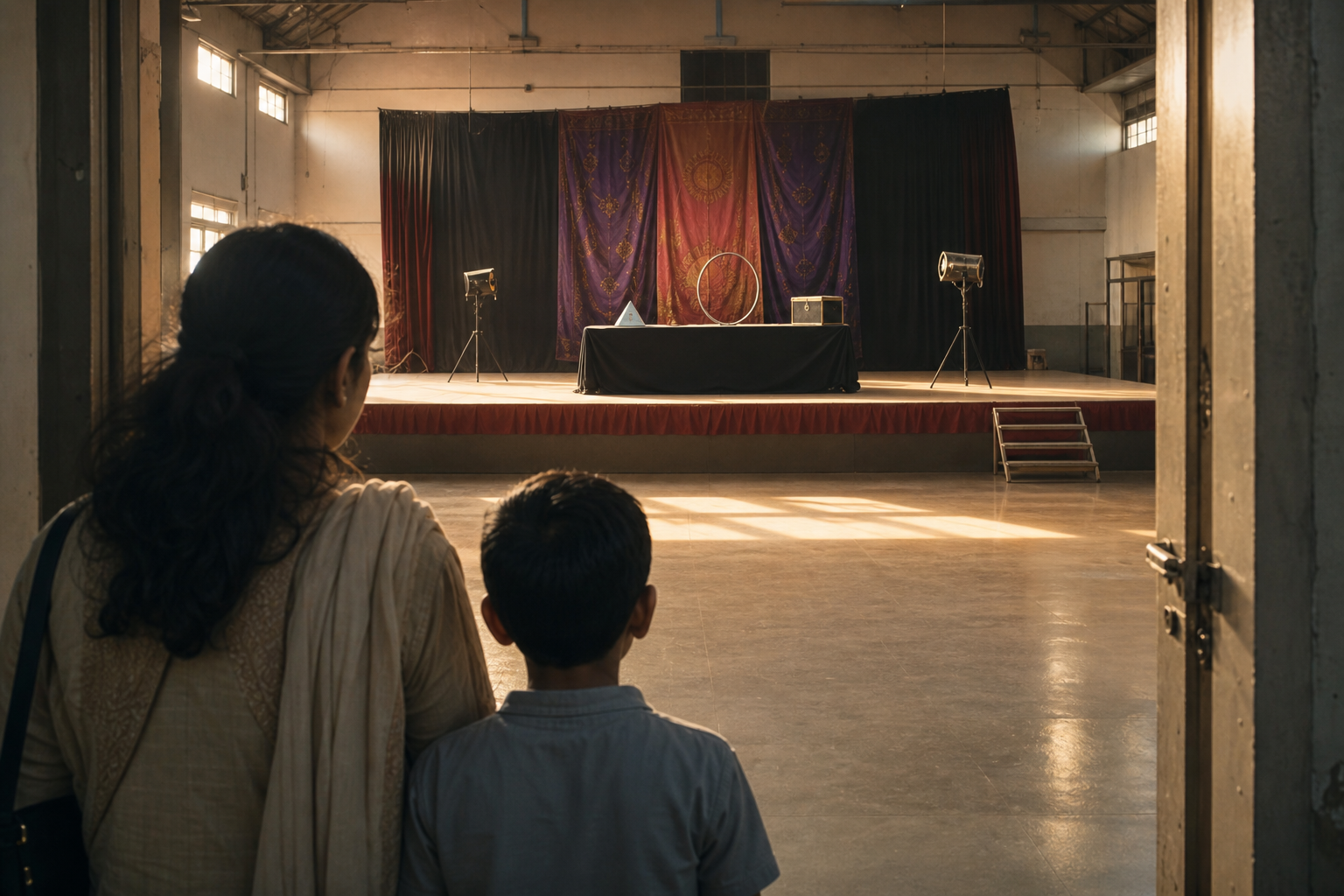
If your child watched a school performance that mixed a spectacular demonstration with religious-looking symbolism, you may be unsure what to challenge first. Was it a science lesson, an ideological performance, an unauthorized event, or simply a badly designed program whose costume communicated more than its organizers intended?
The Shevgaon controversy will not be clarified by louder accusations. You need a disciplined way to separate verified conduct from interpretation, ask the school for records, protect children from stereotyping, and insist that any response strengthens both critical inquiry and respect for Dharma.
What is known, and what still needs to be established
An ANiS worker reportedly staged a miracle demonstration at a Shevgaon school while wearing saffron attire. Hindu Janajagruti Samiti subsequently asked Zilla Parishad officials for an independent, time-bound investigation, preventive measures, and a written action-taken report.
Those reported facts justify serious questions. They do not, by themselves, establish the presenter’s exact words, the educational purpose approved by the school, whether teachers knew about the costume in advance, or what children were told before and after the performance. They also do not prove intent. A complaint is grounds for an inquiry, not a substitute for one.
Before reaching a conclusion, the school and Zilla Parishad should establish:
- Who invited the presenter, and who gave final approval?
- What objective, outline, script, or demonstration plan was submitted beforehand?
- What exactly did the presenter do and say in front of the pupils?
- Were the apparent miracles explained as tricks, physical effects, misdirection, or claims to be tested?
- Was any faith, deity, guru, sadhu, tradition, or community explicitly named or implicitly caricatured?
- Why was saffron attire used, and did the school examine its likely religious meaning?
- Which teachers supervised the event, and did any of them record an objection?
- What explanation or debriefing did pupils receive afterward?
Each answer should be supported by something concrete: an approval note, event outline, recording if one exists, teacher account, presenter response, or contemporaneous school communication. Memory and interpretation still matter, especially when no recording exists, but the inquiry should clearly distinguish corroborated facts from disputed recollections.
Scientific temper does not require a caricature of Dharma

Schools should teach children to test extraordinary claims. A pupil should learn to ask what happened, whether the effect can be repeated, what alternative explanation fits the evidence, and what would disprove the claim. Neither Hindu Dharma nor any other serious tradition needs immunity from honest questions.
But testing a claim is different from visually coding a religious identity as fraudulent. Saffron is not merely a neutral theatrical color in the Indian setting. Many viewers associate it with religious life, renunciation, and Dharmic belonging. When a performer adopts that symbolism, the costume becomes part of the lesson whether or not the presenter intended it to do so.
The useful distinction is between a claim, a claimant, and a community. A claim can be tested. A person who deceives others can be held responsible for the deception. A religious community should not be turned into a proxy for misconduct through costume, accent, imagery, or stereotype.
A sound classroom demonstration therefore does four things. It identifies the claim being examined. It shows or explains the mechanism behind the effect. It invites pupils to question and, where appropriate, reproduce the result. It avoids suggesting that fraud belongs naturally to one religious appearance or tradition.
This standard protects both sides of the educational purpose. Children learn that apparent wonders can have ordinary explanations, while also learning that evidence should be directed at conduct rather than identity. That is stronger scientific teaching than merely replacing uncritical belief with an unexamined cultural prejudice.
How a parent can seek answers without inflaming the dispute

If your child attended the program, begin with an uncoached account. Ask what happened first, what happened next, what words the presenter used, what the costume looked like, and what the teacher said afterward. Avoid supplying labels such as insult, attack, miracle, or fraud before the child has described the event. Leading questions can alter later recollection and make a legitimate complaint easier to dismiss.
- Write down your child’s account in the child’s own language. Separate exact remembered words from the child’s interpretation of them.
- Send the school head a short written request for the event’s purpose, approving authority, presenter details, submitted outline, safeguarding arrangements, and post-event explanation. Ask for an acknowledgement and a date by which a written response will be provided.
- Describe only conduct you can support. Use reportedly or my child recalls for unverified details. Do not claim that the presenter attacked Hinduism unless the words or acts actually establish that conclusion.
- Ask the school to preserve relevant material, including permission records, communications, teacher notes, and any authorized recording. Preservation is important before memories fade or routine records are discarded.
- If the school cannot answer, forward the same factual request to the relevant Zilla Parishad officials. Include the original letter, acknowledgement, response if any, and a numbered list of questions that remain unresolved.
- When communicating publicly, remove pupils’ names, faces, class details, and other identifying information. Avoid threats, religious abuse, or claims about motives. Those tactics expose children, damage reputations before findings are made, and distract from the governance failure that needs correction.
A concise request can say: My child attended the program and recalls a performer using saffron attire during a miracle demonstration. Please confirm the approved educational objective, the content submitted in advance, who authorized the event, why this symbolism was considered appropriate, and what explanation pupils received afterward. We request a written response and the safeguards proposed for future programs.
Parents do not need to demand punishment before the facts are established. Ask first for disclosure, preservation of records, an impartial review, and a defined response date. If wrongdoing is confirmed, corrective or disciplinary action can then be tied to a finding rather than to public pressure alone.
What a fair inquiry and a workable school policy should contain
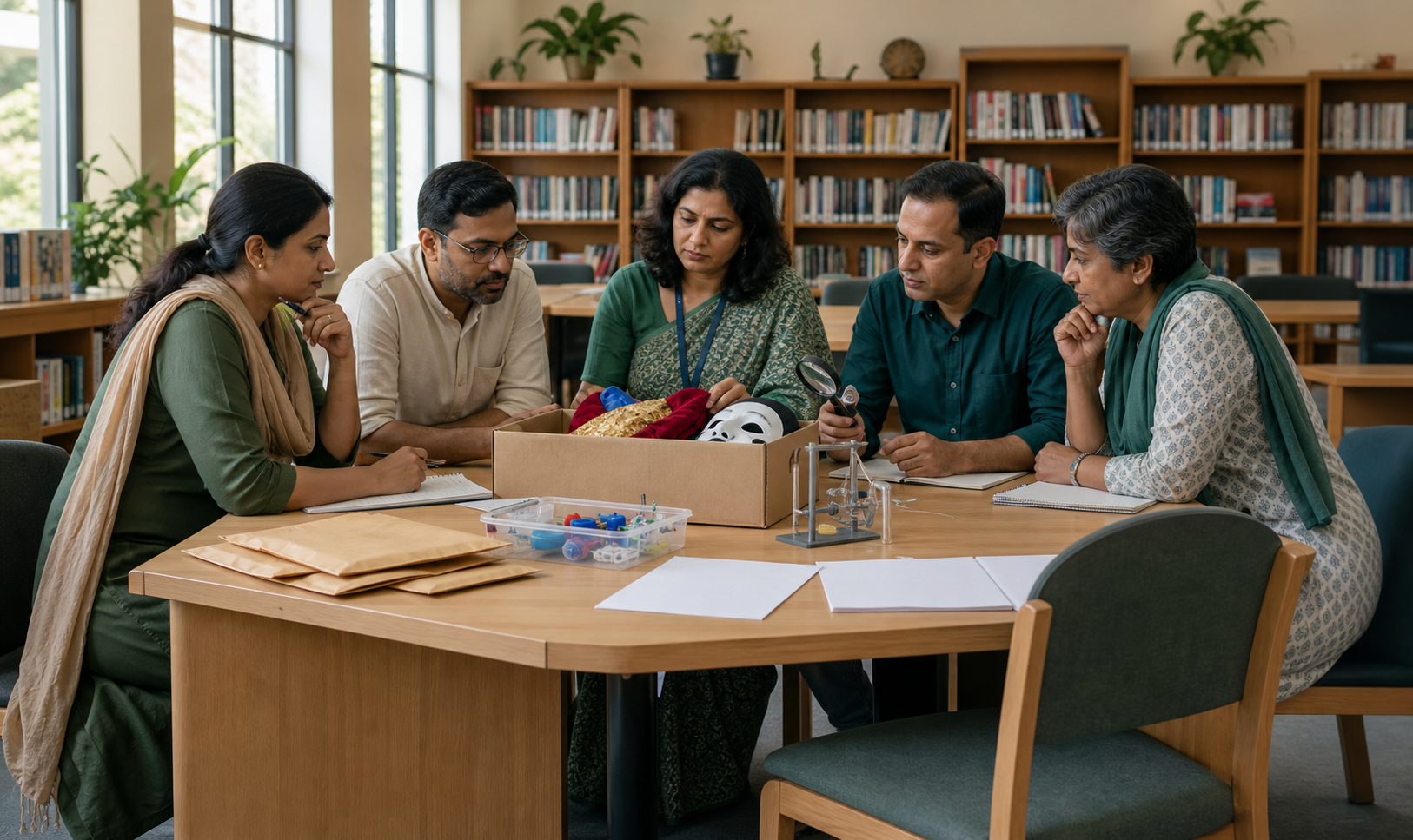
A fair inquiry is not a meeting in which competing organizations repeat their positions. It is a record-based process with a defined scope. The reviewer should examine the school’s authorization, the presenter’s submitted and actual content, the use of religious symbolism, teacher supervision, pupil debriefing, complaints received, and the school’s initial response.
Independence matters. The person deciding what happened should not be the only person whose earlier approval is under examination. The final report should distinguish among established facts, unresolved or disputed claims, failures of procedure, and recommended corrective action. A written action-taken report should then state which recommendations were accepted, who is responsible for implementing them, and how compliance will be checked.
The policy that follows should apply to every outside organization and every religious or ideological viewpoint. A rule designed only for ANiS, HJS, Hindu programs, or one category of speaker will create the next controversy instead of preventing it.
- Require written pre-approval for outside programs. The submission should identify the presenter, educational objective, intended age group, content outline, props, attire, and any recording plans.
- Vet content against curricular goals. A program described as scientific should teach observation, method, causation, or evidence rather than relying only on spectacle.
- Review religious and cultural symbolism explicitly. If a costume, image, title, or prop can reasonably imply a religious association, the organizer should explain why it is educationally necessary and how stereotyping will be avoided.
- Give parents meaningful advance notice for special demonstrations involving sensitive belief-related content. The notice should identify the organizer, topic, format, symbolism, and any available alternative for families who do not consent.
- Keep a responsible teacher present throughout. That teacher should know the approved outline and have authority to pause the program if the presenter departs from it.
- Build in a debrief. Pupils should be told what the demonstration established, what it did not establish, how the apparent effect worked when appropriate, and why no community should be judged through a theatrical stereotype.
- Create a documented complaint route. Parents and teachers should know where to write, when acknowledgement will arrive, who reviews the matter, and whether a written outcome will be issued.
- Train staff to distinguish criticism of a verifiable claim from disparagement of a religious identity. The same protection should extend to Hindu, Buddhist, Jain, Sikh, and other pupils.
These safeguards need not turn every visiting program into a bureaucratic exercise. A short approval form, a named supervising teacher, clear parent communication, and a standard debrief can prevent most ambiguity. More intensive review is appropriate when a program uses religious imagery, discusses sensitive beliefs, invites audience participation, or may be recorded and circulated.
Dialogue can help after the factual record is secured. School administrators, teachers, parents, the presenter, ANiS representatives, HJS, and education officials can then discuss the policy without asking children to carry the burden of an adult ideological dispute. The objective should be a repeatable standard, not a negotiated exception for whichever group has the strongest local influence.
Key takeaways
- The Shevgaon concern is not only about a demonstration. It is also about the religious meaning created by saffron attire inside a school-authorized setting.
- The reported conduct warrants an independent inquiry, but an allegation should not be treated as a completed finding.
- Parents should first obtain an uncoached account from their child, then request the program’s approval, content, supervision, and debriefing records in writing.
- Scientific temper is best served by testing claims and explaining mechanisms, not by making a religious identity stand in for deception.
- Preventive rules should cover every outside organization and include content review, symbolism review, parent notice, teacher oversight, debriefing, and a written complaint process.
Your most useful next step is one calm, factual letter. Ask what the school approved, what pupils actually saw and heard, what role the saffron costume served, and what safeguards will now be adopted. A clear written trail gives the school a fair opportunity to respond and gives Zilla Parishad officials a precise case to examine if escalation becomes necessary.
References
