

You sit down to pray or meditate, find a little stillness, and then lose it as soon as messages, unfinished work, and tomorrow’s problems return. The difficulty is usually not understanding presence. It is carrying presence across the threshold into ordinary life.
Dharmic practice gives you a practical way forward: place attention on a reliable anchor, return whenever the mind wanders, and bring that steadiness into the duty immediately in front of you. You do not need an empty schedule or a perfectly silent mind. You need a repeatable way to come back.
Presence does not mean escaping duty
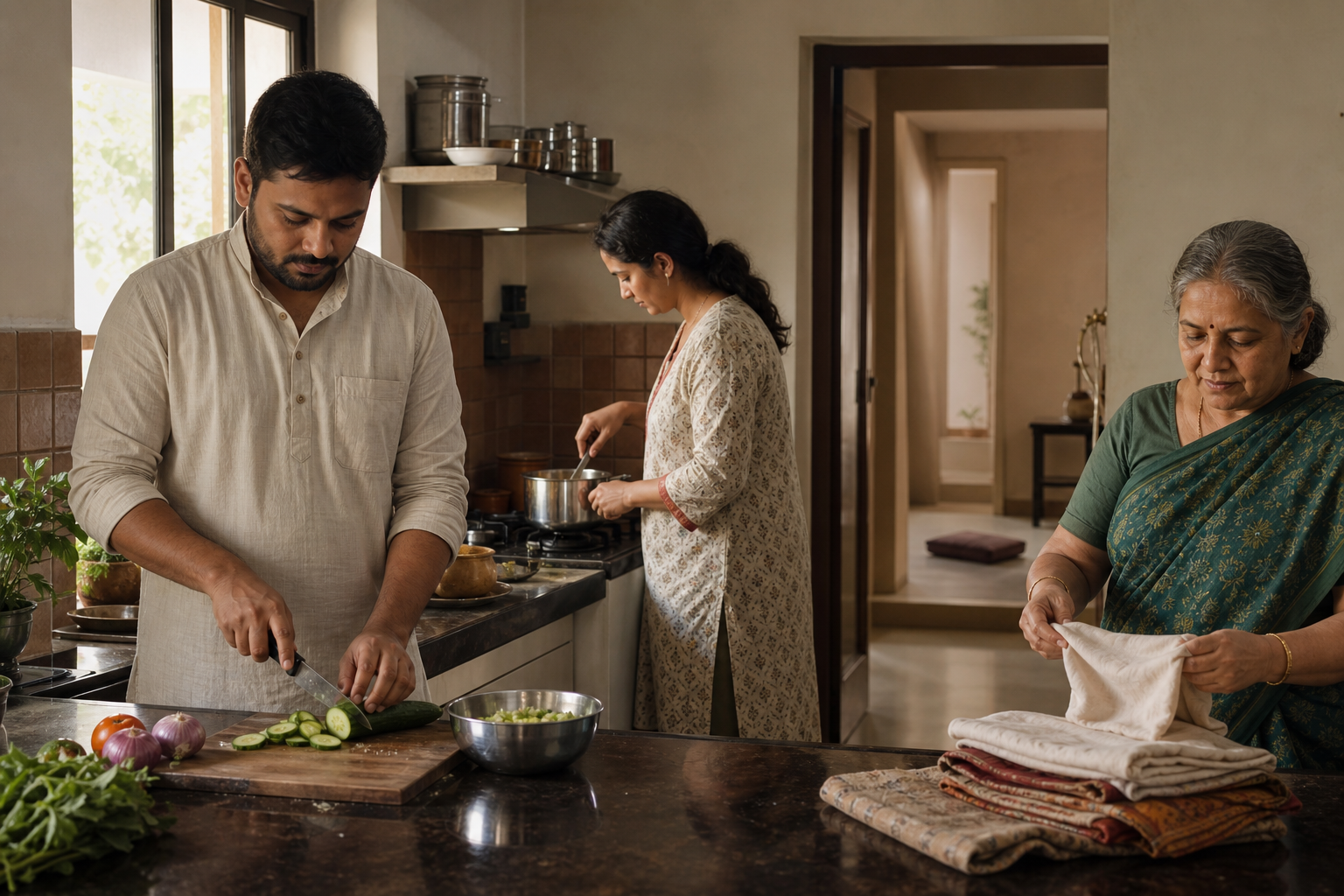
Present-moment awareness is sometimes mistaken for a pleasant state in which plans, obligations, and difficult feelings disappear. That misunderstanding makes practice fragile. The moment discomfort returns, you assume presence has been lost or the method has failed.
A useful Hindu distinction is the difference between sukha and ananda. Sukha is the pleasure that rises when conditions suit you and fades when they change. Ananda is abiding bliss, not another favorable mood to secure. If you judge every practice by whether it produces immediate sukha, you will keep chasing experience. If you treat practice as the uncovering of an inner steadiness that does not depend on the next outcome, you can remain present even when the moment is demanding.
This is why the Bhagavad Gita connects stable wisdom, or sthitaprajna, with Karma Yoga. Presence is expressed through action performed attentively and without clinging to its fruit. Non-attachment does not mean that results are irrelevant. You still prepare, choose carefully, and learn from consequences. What you stop doing is asking an uncertain result to provide your inner stability.
Before a difficult duty, make one distinction. Ask what can be done now, and notice what outcome you are merely rehearsing. Give full attention to the available action. Leave the unavailable part where it belongs. This converts non-attachment from an inspiring idea into a decision you can make during a meeting, a family disagreement, a journey, or a period of concentrated work.
Planning is not opposed to presence. Planning is a present activity when it has a defined purpose: consider the situation, make the decision, record the next action, and stop. Repeating the same possible future after the decision has been made is no longer planning. Recognizing that boundary prevents anxiety from disguising itself as responsibility.
Use one Dharmic doorway instead of collecting techniques
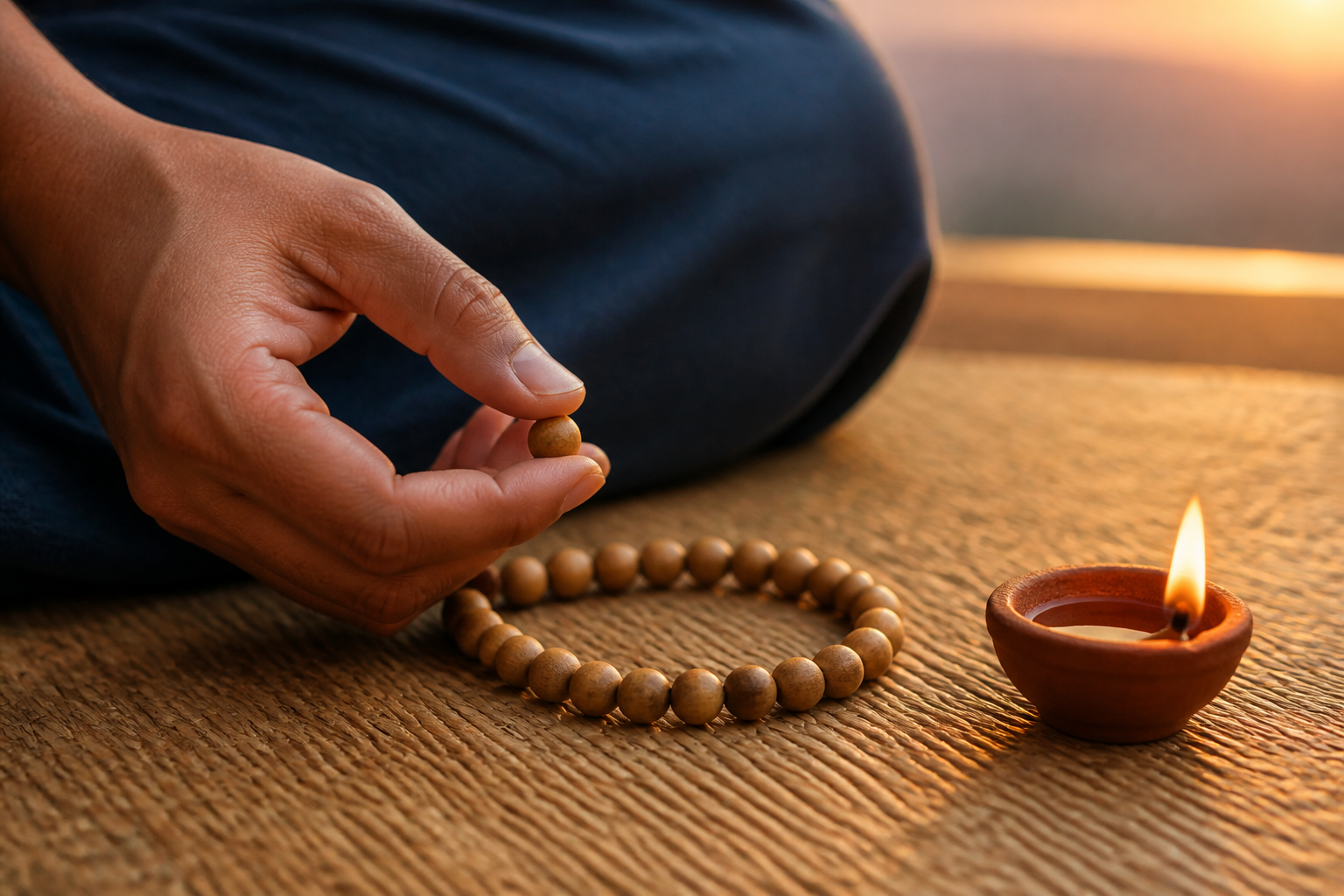
Hinduism, Buddhism, Jainism, and Sikhism all cultivate attentive living, but their practices should not be flattened into one generic wellness technique. Each belongs to a distinct spiritual vocabulary and ethical purpose. You can recognize the kinship while practicing the path available to you with seriousness.
- Hindu practice: Breath awareness and gentle pranayama settle scattered attention. Dhyana sustains attention, japa gives it a mantra, and Karma Yoga carries it into action. If you have not learned a particular pranayama method, observe the natural breath rather than improvising forceful breathing or breath retention.
- Buddhist practice: Sati trains attentive awareness through immediate experience. The breath and the movement of each step become places to recognize wandering and return.
- Jain practice: Samayik cultivates equanimity and self-discipline. Its purpose is not simply to feel calm; it creates a deliberate interval in which habitual reactions can be seen and restrained.
- Sikh practice: Simran and Naam center attention in remembrance. This is more than the repetition of a neutral sound. Remembrance reorients the mind toward the Divine amid ordinary activity.
Choose an anchor according to the distraction you actually face. When thoughts are racing, feel the natural breath without trying to improve it. When the body is restless, place attention in each step. When internal commentary will not stop, use japa or Simran as taught within your tradition. When a task itself requires you, let the task become Karma Yoga: do one part fully before reaching mentally for the fruit.
Do not change techniques every time attention wanders. Wandering is not evidence that you selected the wrong practice. The return is the practice. A dependable anchor becomes effective through abhyasa, repeated application, rather than novelty.
Build a daily routine that survives a busy day
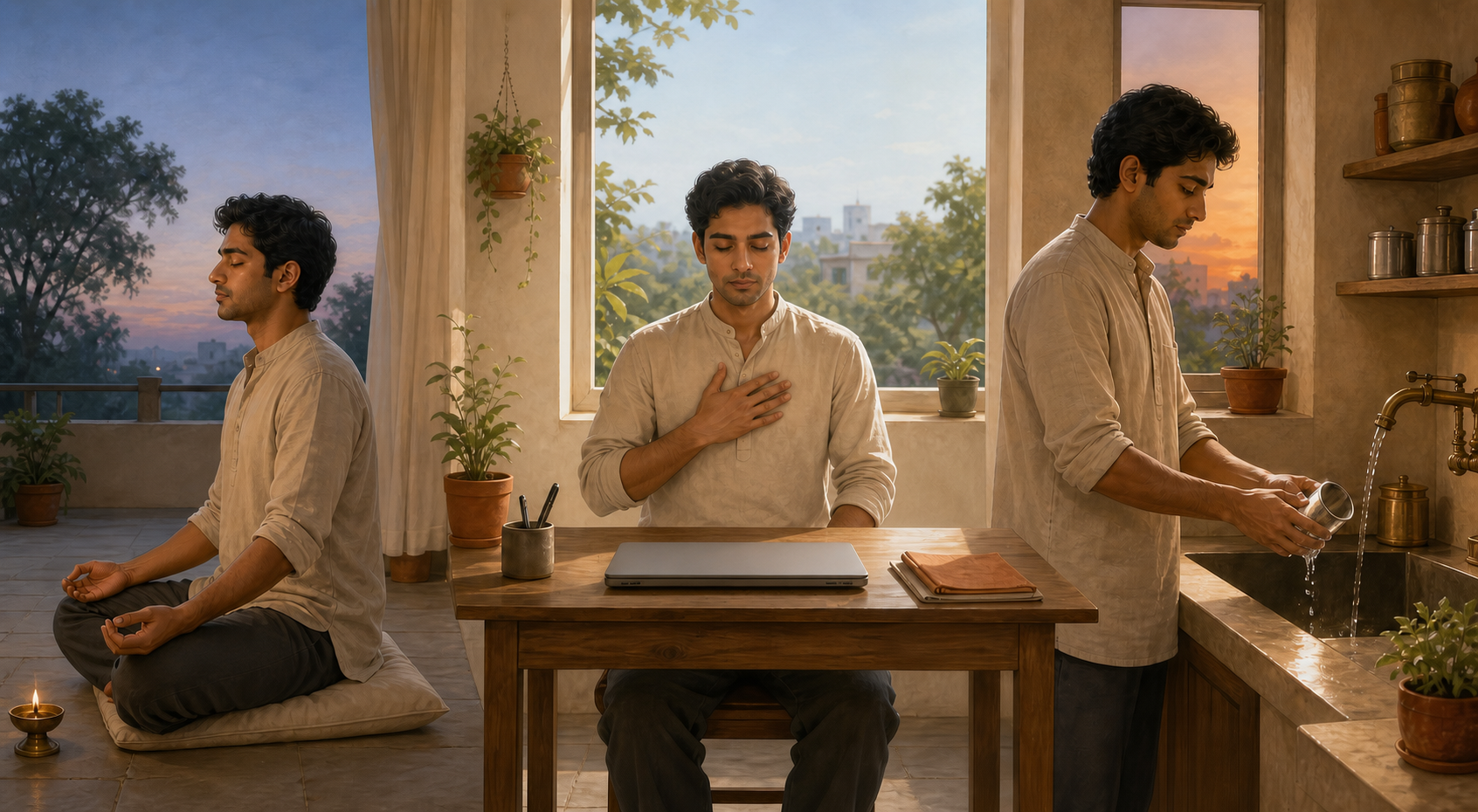
A practice that exists only under ideal conditions will keep losing to ordinary life. Use a small daily structure that includes formal stillness, transitions, work, and evening reflection.
- Begin with five minutes of breath awareness. Sit steadily before entering messages and demands. Observe natural breathing or use a gentle pranayama already familiar to you. When attention leaves, recognize it and return. Before rising, name the first duty that deserves your full attention.
- Take three conscious breaths at transitions. Use the pause before a meeting, meal, journey, prayer, difficult conversation, or new work task. Let the previous activity end. Feel three breaths, then enter the next activity without carrying unnecessary mental residue into it.
- Give routine work one-pointed attention. During washing, cooking, writing, walking, or administrative work, stay with one natural unit of the activity. When you notice yourself reaching for another stimulus, return to the movement, words, or person already before you.
- Pause where reaction becomes conduct. When irritation arises, locate it in the body and feel one natural breath before speaking. Presence at this point is not passivity. It gives you enough space to choose a response instead of allowing the first impulse to choose for you.
- Close with japa or quiet dhyana. Let the evening practice gather the scattered parts of the day. Do not conduct a harsh audit of how often you forgot. Notice where attention was lost, return to the mantra or chosen anchor, and end in remembrance rather than self-judgment.
The important movement is from the prayer seat into the day and back again. Formal practice trains attention under simple conditions. Transitions test whether you can retrieve it. Work and relationships reveal whether presence is becoming part of your character.
Make the return precise when the mind wanders
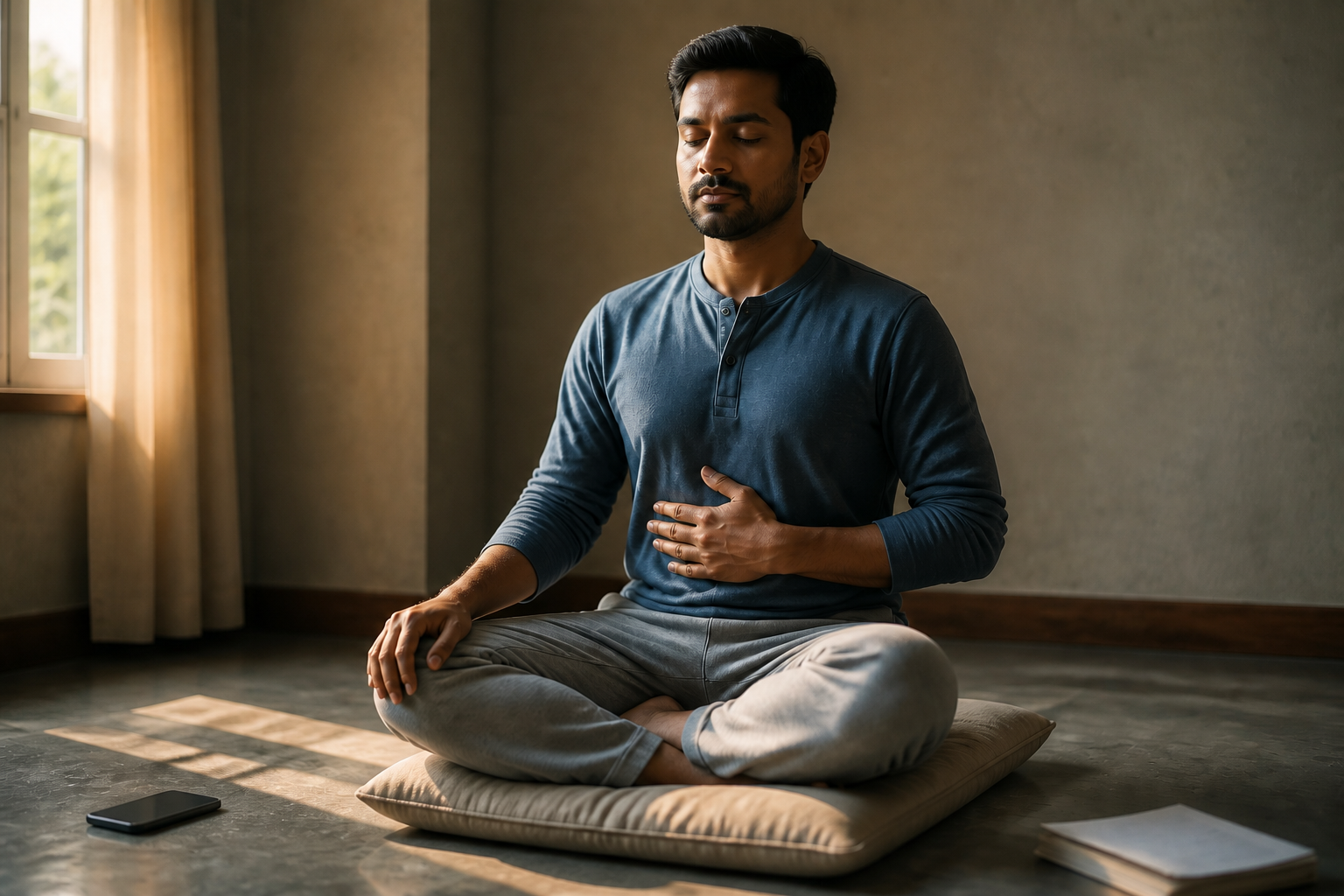
A vague instruction to “be present” is not much help when rumination has already taken hold. First identify the direction in which attention has moved. Then use the remedy that matches it.
When the mind replays the past, ask whether a repair, apology, lesson, or unfinished duty remains. If an action is available, record or perform the next responsible step. If no action is available now, feel the body’s contact with the floor or chair and return to the breath. You are not declaring the past unimportant. You are refusing to reenact it after its present demand has been identified.
When the mind predicts the future, distinguish planning from repetition. Useful planning produces a decision, question, or next action. Anxiety often produces another circuit through the same possibilities. Complete the useful part, then return to what can actually be done in this moment.
When the senses keep pulling attention outward, practice pratyahara as a gentle reduction of unnecessary input. Put aside the device during the current prayer, conversation, or work interval. Close what is unrelated to the task. This is not hostility toward the senses; it is a refusal to let every available stimulus issue a command.
When you start striving for a special spiritual state, return to the anchor without evaluating the quality of the moment. Chasing calm is still a form of distraction. An uncomfortable breath can be known clearly. A difficult duty can be performed steadily. Presence is not reserved for experiences you would like to preserve.
The traditional movement from pratyahara to ekagrata and continuing abhyasa can be made very concrete: reduce competing inputs, rest attention on one object or duty, and repeat the return whenever you notice that attention has left. Short, frequent rests in awareness are more sustainable than an ambitious effort that is soon abandoned.
Key takeaways: judge presence by the way you live
Inner quiet matters, but Dharmic presence cannot be measured only by how calm you feel while sitting. Its ethical test appears when another person needs your attention, when speech is about to become harsh, and when a desired result remains uncertain. Ahimsa becomes more practicable when you notice an impulse before it hardens into words or action.
- Presence is the repeated return of attention, not the permanent absence of thought.
- Use an anchor suited to the moment: breath for mental agitation, steps for restlessness, mantra or Naam for remembrance, and the duty itself for Karma Yoga.
- Begin with five minutes in the morning and use three conscious breaths before transitions so formal practice enters ordinary life.
- Plan what must be planned, then stop rehearsing results that cannot be produced in the present.
- Look for practical fruits: gentler speech, fuller listening, less impulsive reaction, clearer decisions, and steadier attention to the next rightful action.
If your practice feels peaceful but you routinely interrupt, react carelessly, or neglect the task before you, do not chase a more impressive meditation experience. Use the next interaction as the practice. Listen through the other person’s full sentence. Pause before the cutting reply. Complete the present duty without making your peace dependent on praise or success.
Tomorrow, begin before the first rush of messages. Sit with the breath for five minutes, carry one mantra or form of remembrance into the day, and take three conscious breaths at the next transition. When you forget, resume at the next available breath. That return is how presence becomes a way of living rather than an occasional state.
References
