

You may have been told that a troubled Shukra explains tension at home, dissatisfaction despite comfort, or repeated friction around relationships and property. Before you buy a gemstone or collect a dozen remedies, pause. The sounder aim is not to force Venus to deliver pleasure. It is to bring beauty, affection, comfort, and prosperity under the guidance of dharma.
Kamalatmika worship and Lal Kitab guidance can support that aim in different ways. Upasana refines the person who desires prosperity; Lal Kitab asks whether conduct at home, family relationships, and property decisions agree with the harmony being requested. You can begin with a simple Friday observance, but its real test comes in the choices you make after the diya is extinguished.
Know what Shukra harmony is meant to restore
Shukra should not be reduced to a switch for wealth, romance, or luxury. In this devotional framework, harmony means being able to enjoy without grasping, love without manipulation, appreciate beauty without vanity, and receive prosperity without withholding it from every worthy purpose.
Kamalatmika gives that work a sacred centre. Within the Mahavidya tradition, she is revered as a luminous manifestation of Mata Lakshmi whose grace joins material well-being to contentment, wisdom, and ethical responsibility. Her worship is therefore poorly understood if it becomes a bargain in which an offering is exchanged for income, status, or another person’s affection.
Keep three practices distinct. Kamalatmika upasana is worship of the Devi. A Jyotisha reading is an interpretation of a horoscope. Lal Kitab is a particular remedial framework within astrology. They may be used together, but they are not interchangeable: worship does not prove that Shukra is weak, and a single planetary placement does not establish every promised or feared result.
If your concern specifically involves Shukra in the fourth house, confirm the placement and its context before adopting placement-specific measures. The fourth house is read here in relation to home, mother, emotional security, vehicles, and property. Lal Kitab practice may also examine the condition of the second and seventh houses when Venus stands alone, so a generic remedy list is not a complete chart reading.
Build a simple Friday Kamalatmika practice
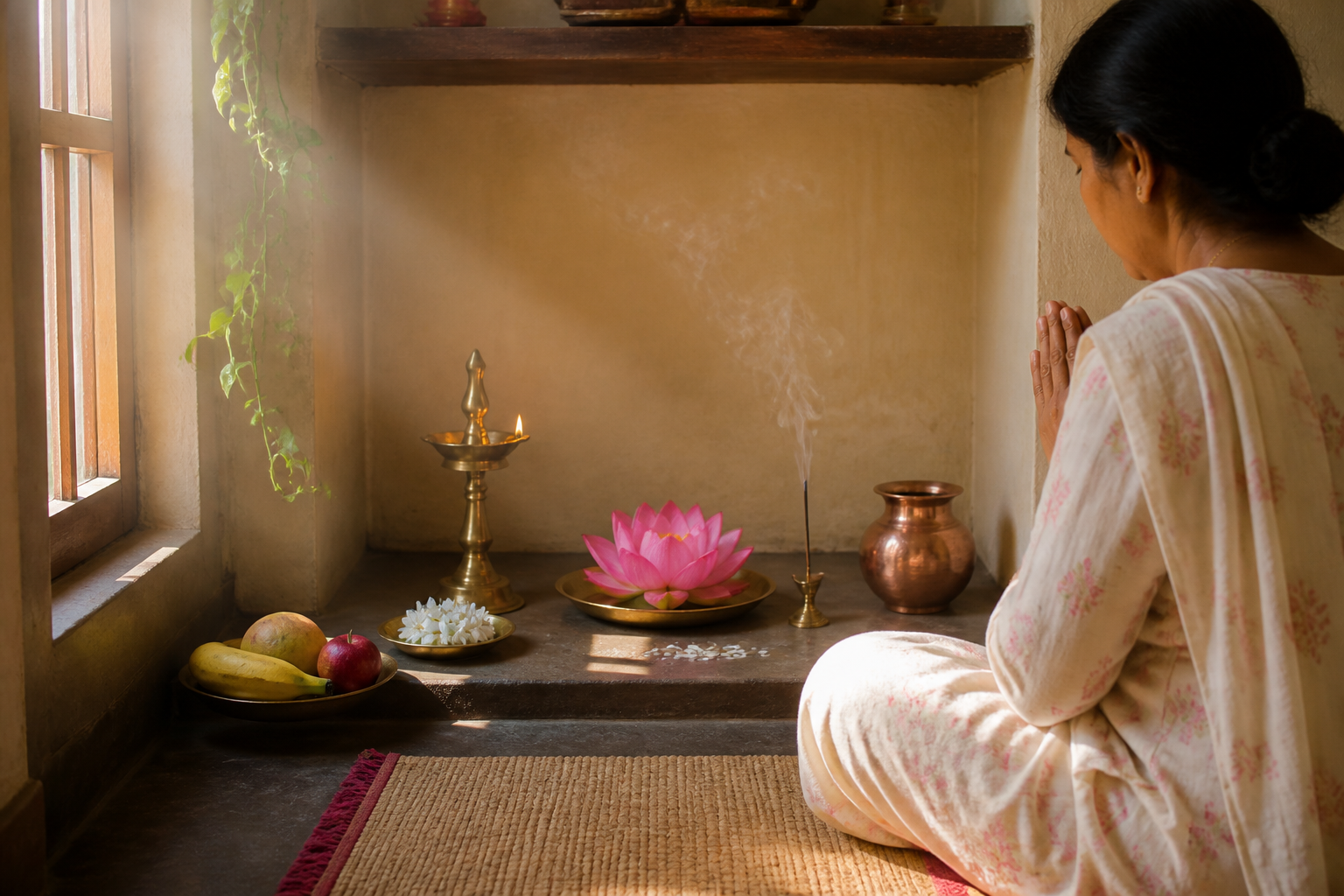
A modest observance performed attentively is more coherent than an elaborate rite followed by careless conduct. If you have a family sampradaya, a guru-given discipline, or established temple instructions, follow those first. Otherwise, keep the practice recognisably devotional and avoid borrowing initiatory formulas you do not understand.
- Prepare the space. Clean the worship area and the part of the home immediately around it. For a practice concerned with serenity and refinement, avoid surrounding the altar with preventable disorder.
- Place a simple offering. A lotus is traditional when it is responsibly available; another fragrant flower is also customary. Do not let the rarity or cost of an offering become the focus.
- State a dharmic intention. Ask for prosperity that supports right livelihood, household peace, gratitude, generosity, and wise use of resources. Name the conduct you are prepared to change.
- Light a diya and settle the mind. Let the act mark a transition from demanding an outcome to becoming receptive and accountable.
- Recite a familiar Lakshmi prayer or mantra mindfully. Use a prayer established in your family or taught by a competent guide. Repetition is not a race, and an impressive count cannot compensate for distracted or exploitative behaviour.
- Contemplate the lotus-heart. See the lotus as the capacity to remain inwardly clear while participating fully in worldly life. Let gratitude arise for what already sustains you.
- Close with a practical commitment. Choose a charitable, relational, or household action that is within your means and complete it without treating it as payment for a favour from the Devi.
The iconography can guide the contemplation. Kamalatmika is traditionally shown with a golden complexion and four hands, seated on a blossoming lotus; two hands bear lotuses, while elephants offer gentle ablutions. These features associate purity, spiritual flowering, auspicious growth, and a steady flow of blessings. Instead of merely visualising wealth arriving, ask what would make you trustworthy enough to hold it.
Do not evaluate the worship by searching for an immediate financial event or romantic sign. Notice the nearer field of action: whether your wants become more ordered, your speech less agitated, your home more cared for, and generosity easier to practise. If the ritual makes you anxious about omens, simplify it and return attention to reverence, gratitude, and conduct.
Make the offering visible in daily conduct

A Shukra remedy becomes credible when the quality invoked at the altar enters ordinary life. Select a concrete discipline that corresponds to the area in which you are seeking harmony.
- For relationships: replace indirect tests and silent punishment with a clear request. Keep promises, listen without preparing a counterattack, and do not use affection as leverage.
- For the home: clear a neglected area before purchasing more decoration. Share domestic work fairly, reduce avoidable noise and hostility, and make the home hospitable without turning appearance into competition.
- For prosperity: choose charitable giving that is quiet, sustainable, and within your means. Dana is an expression of sufficiency and responsibility, not a wager placed in expectation of a larger return.
- For desire: pause before a comfort purchase and ask whether it creates secrecy, unmanageable obligation, or conflict at home. Shukra is not honoured by a polished exterior maintained through disorder.
- For family and property: use fair terms, accurate representations, and respectful speech. A puja cannot turn an exploitative bargain into a dharmic one.
On Friday, examine the week without self-dramatisation. Where did enjoyment remain compatible with restraint? Where did convenience make you inconsiderate? Which act of gratitude or generosity can be repeated without becoming performative? This review prevents upasana from becoming a sealed compartment unrelated to the way you spend, speak, and share.
The protective disciplines are familiar across Dharmic traditions: non-harming, truthfulness, generosity, compassion, humility, and self-restraint. Their presence does not make prosperity anti-worldly. It makes prosperity capable of nourishing a family and community rather than merely enlarging appetite.
Apply fourth-house Lal Kitab guidance without fear
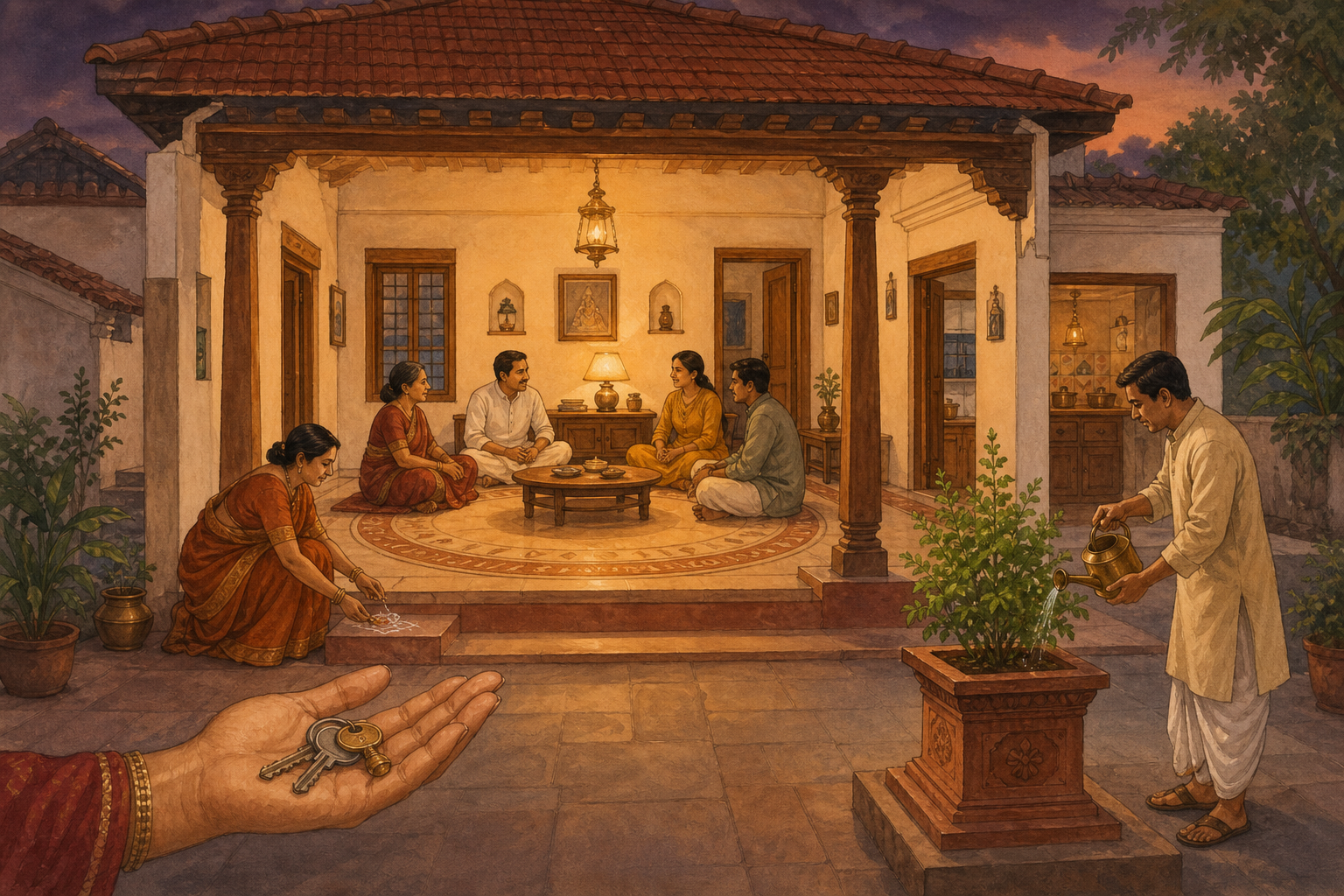
If Shukra is confirmed in the fourth house, begin with the domain of that house: the condition of the home, the treatment of mother and caregivers, emotional steadiness, and integrity in matters involving vehicles or property. These are not decorative additions to a remedy. They are where the remedy has to become observable.
- Verify the chart context. Do not infer an adverse Venus solely from unhappiness, debt, a strained relationship, or a property problem. Ask a qualified practitioner to explain why a remedy applies, including any relevant second- and seventh-house conditions.
- Correct behaviour before buying an object. Restore cleanliness and calm at home, act fairly in property dealings, and improve your conduct toward elders and motherly figures. Respect does not require tolerating harm; healthy boundaries and dharmic speech can coexist.
- Treat existing water sources seriously. Lal Kitab cautions against constructing a house after covering an existing well. Within that tradition, the act is considered inauspicious and is associated with obstacles concerning progeny and household peace.
- Protect the physical site before arranging ritual measures. If a project affects a well or another water feature, stop before covering, filling, relocating, or building over it. Seek the necessary engineering, environmental, legal, and local-authority advice, as well as competent ritual guidance. A ceremony cannot replace safe construction or lawful stewardship.
- Use stones only after considered counsel. A gemstone recommendation based only on a generic fourth-house description ignores the wider chart. It may also lead you to spend money on an object when the more relevant remedy is fairness, domestic discipline, or respect for a water source.
The well caution should be handled with precision. It is a tradition-specific astrological claim, not an engineering prediction. Yet its ethical direction is clear: do not erase a natural or communal resource casually and then expect ritual action to remove every consequence. Preservation or properly planned relocation, accompanied by appropriate care, is more responsible than acting first and seeking a remedy afterward.
Key takeaways for a workable Shukra practice
- Treat Shukra harmony as the dharmic ordering of pleasure, affection, beauty, comfort, and prosperity, not as a demand for more of them.
- Keep Friday worship simple: a clean space, diya, lotus or fragrant flower, familiar Lakshmi prayer, lotus contemplation, gratitude, and an ethical commitment.
- Pair every offering with conduct that can be observed in your relationships, spending, generosity, or care of the home.
- Use fourth-house Lal Kitab measures only after confirming the placement and considering the wider horoscope, including relevant second- and seventh-house conditions.
- Do not cover or alter an existing well casually. Resolve engineering, environmental, legal, and ritual questions before irreversible property work.
- Judge the practice by steadier desire, fairer behaviour, greater gratitude, and a more peaceful home rather than by omen-chasing or immediate gain.
Begin this Friday with an offering you can make sincerely and a promise you can keep. Then carry that promise into the room, relationship, purchase, or property decision where harmony is actually needed. That is where Kamalatmika upasana and Lal Kitab guidance cease to be separate ideas and become a disciplined way of living.
References
- DharmaRenaissance Blog – Unlocking Abundance and Serenity: The Profound Significance of Kamalatmika Mahavidya
- DharmaRenaissance Blog – Lal Kitab Guidance for Shukra in the 4th House: Remedies to Restore Harmony at Home
