
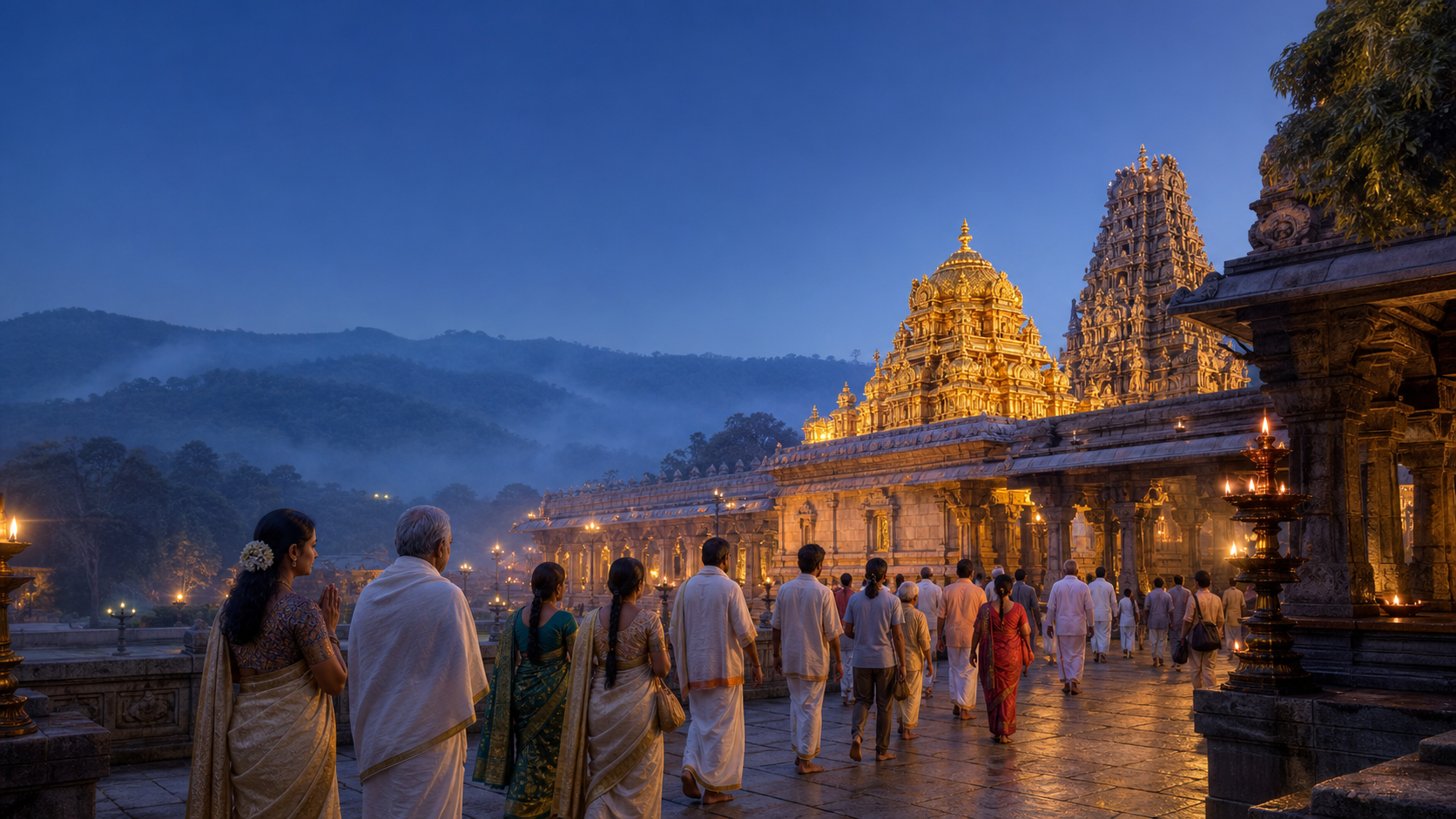
If you are considering a Tirumala pilgrimage specifically for Mukkoti Pradakshinam, the first thing to understand is what you are planning around. This is not merely another name for the usual act of walking around a temple. It is rare access to a circumambulatory passage close to the sanctum of Sri Venkateswara.
The opportunity is associated with Vaikunta Ekadasi and Vaikunta Dwadasi. You therefore need two kinds of preparation: reliable confirmation of that year’s arrangements and a clear devotional intention for the brief time you spend within the passage.
What makes the Mukkoti passage unusual
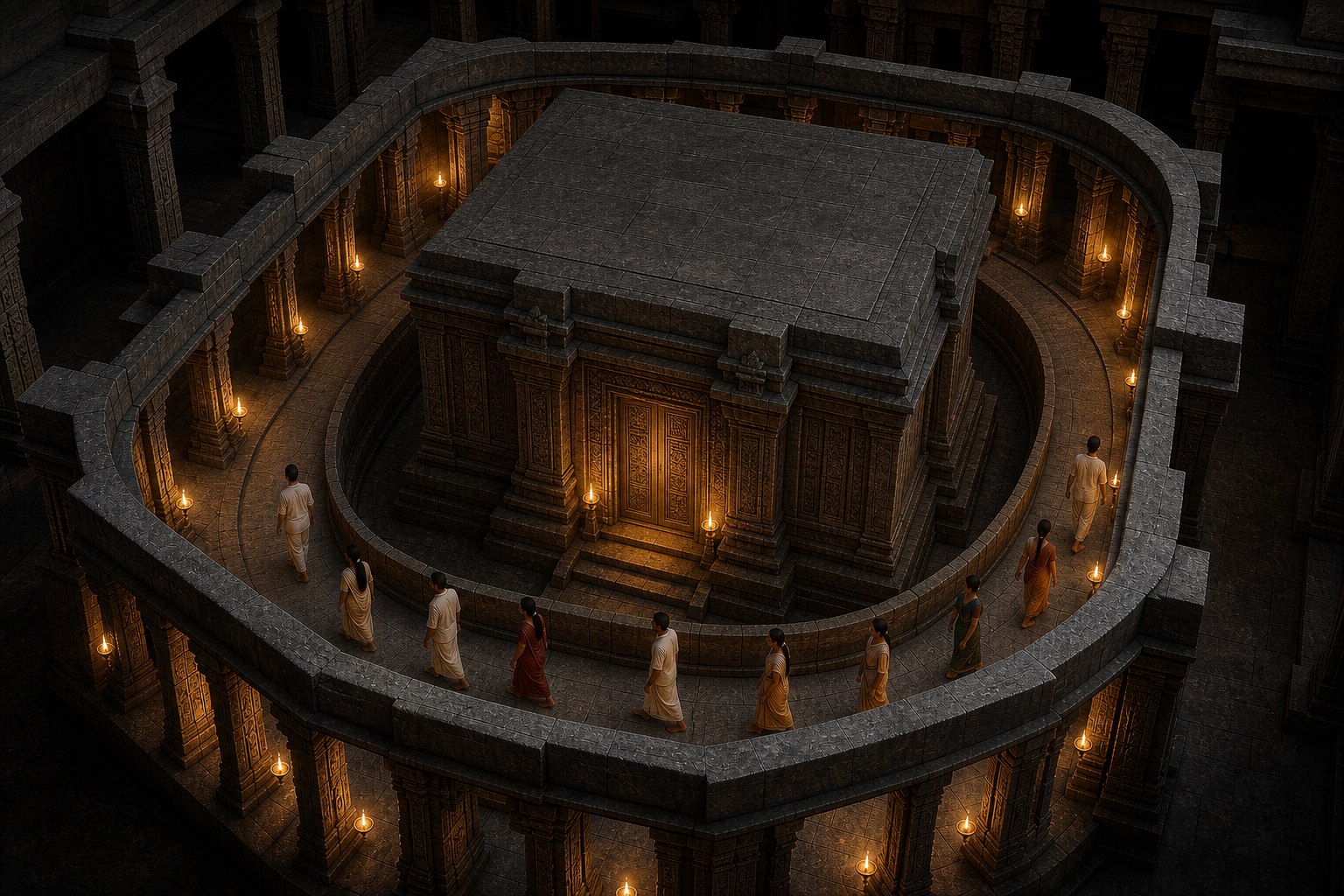
Mukkoti Pradakshinam encircles the sanctum sanctorum of the Tirumala Sri Venkateswara Temple. The passage ordinarily remains closed and is opened only twice a year, for Vaikunta Ekadasi and Vaikunta Dwadasi. Access to this inner route, rather than circumambulation by itself, is what makes the observance exceptional.
The word “Mukkoti” evokes the traditional image of three crores of divine beings. You do not need to turn that image into an arithmetic claim to grasp its devotional meaning. It expresses an immeasurable gathering of divine presence and grace around the observance. The pilgrim enters that sacred field not as its centre, but as one participant among countless beings oriented toward Bhagavan.
That distinction should shape your expectations. The opening is not a sightseeing privilege, a shortcut through the temple, or an achievement to collect. It is an unusually intimate setting for a familiar Hindu discipline: keeping the deity at the centre while the devotee moves around that centre.
Turn the circuit into sadhana, not a race for access
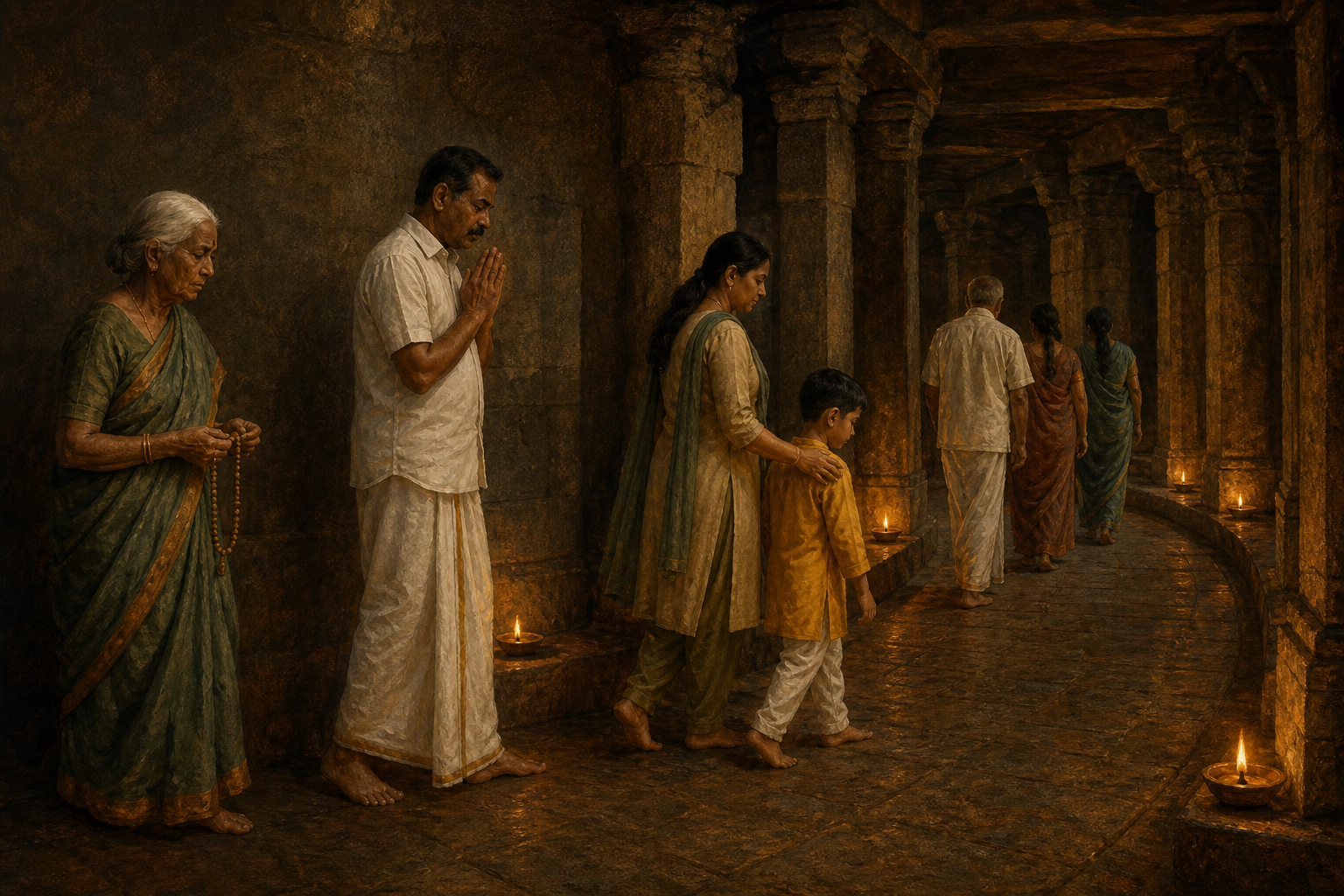
Pradakshina is performed clockwise, with the sacred centre kept to your right. Its outer form is simple, but its inner demand is precise. Your body moves around Bhagavan so that thought, speech, and action can be brought back into alignment with Bhagavan.
A dense pilgrimage crowd can easily pull your attention toward pace, position, and comparison. Prepare a simple practice before you enter so that changing conditions do not decide the quality of your attention for you.
- Choose one sankalpa. State in a single sentence what you are offering, seeking to correct, or placing before Sri Venkateswara. A concise intention is easier to retain than a long list of wishes.
- Choose one divine name or short prayer. Repeat it inwardly or softly. The purpose is to steady your own mind, not to make your chanting dominant in a shared sacred space.
- Move with the managed flow. Do not stop abruptly, push for a preferred position, or treat other devotees as obstacles. Following temple directions is part of the discipline, especially when many pilgrims are using a rarely opened passage.
- Return to the sankalpa after the circuit. Ask what the pradakshina requires from your conduct once you leave the temple. Without that step, a powerful moment can remain only a memory.
You may have less quiet or time than you imagined. That does not make the practice empty. Attention, restraint, and consideration for the people around you are themselves forms of worship. The point is not to manufacture a private experience inside a collective observance; it is to remain inwardly directed while respecting its collective order.
Separate the sacred occasion from a copied calendar date
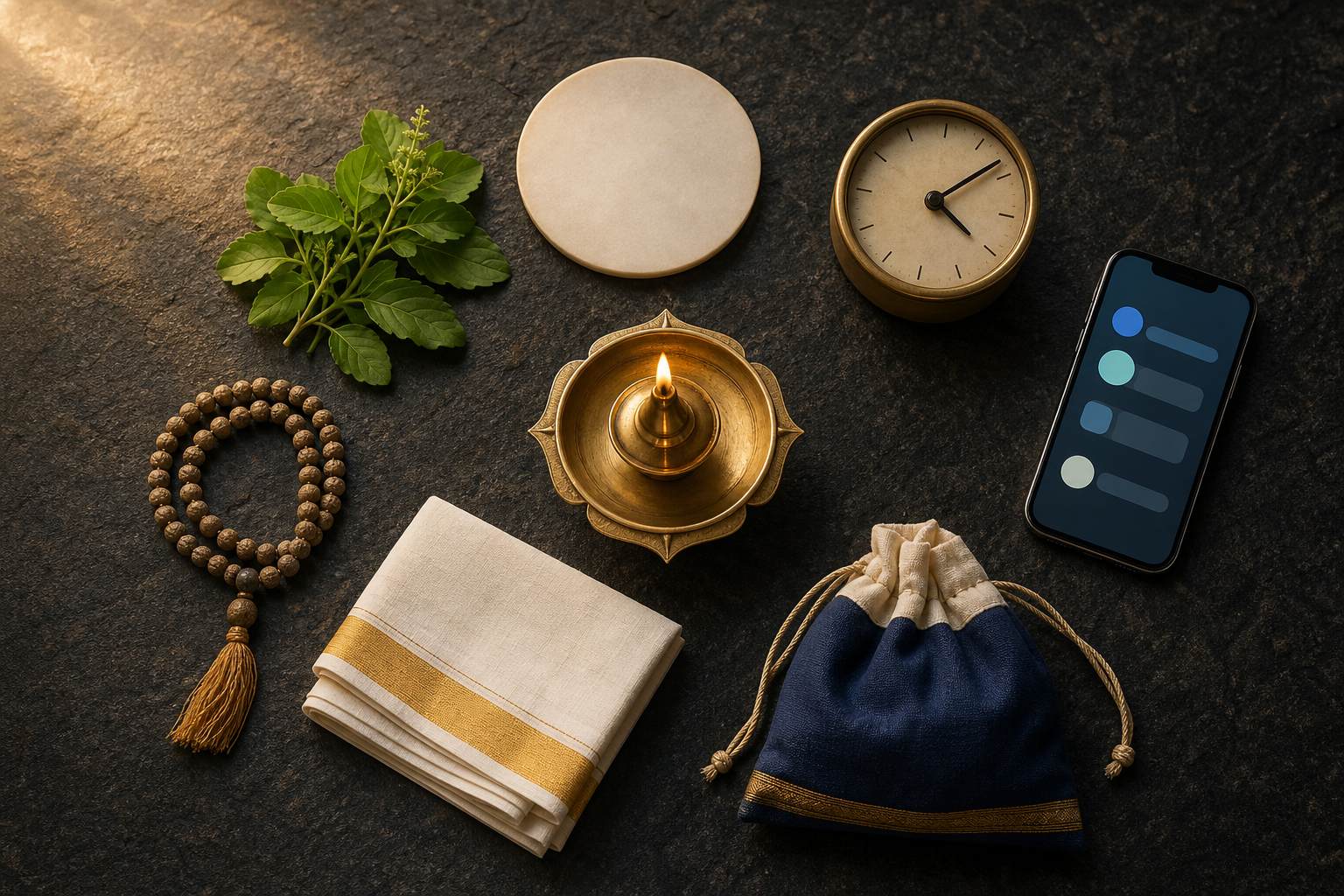
Vaikunta Ekadasi and Vaikunta Dwadasi are the recurring occasions; their civil-calendar dates must be identified for the particular year in which you intend to travel. The stated dates for 2025 were December 30 for Mukkoti Ekadasi and December 31 for Mukkoti Dwadasi. Those are year-specific dates, not a permanent December schedule.
If a forwarded message, saved image, or old webpage gives only “December 30 and 31,” check the year before making any booking. A correct date detached from its year becomes bad pilgrimage advice.
Before committing to travel for a later observance, verify four separate points:
- The civil dates of Vaikunta Ekadasi and Vaikunta Dwadasi for your intended year.
- Whether the Mukkoti passage will be opened on both days under that year’s arrangements.
- The current Tirumala Tirupati Devasthanams instructions governing temple entry, access, queues, and permitted items.
- Whether any general darshan arrangement you hold also covers the experience you expect, rather than assuming that one form of access guarantees another.
Tirumala Tirupati Devasthanams uses crowd-management and devotional protocols to protect both sanctity and safety during this heavily sought observance. Treat those instructions as part of the pilgrimage, not as an inconvenience external to it. If current official directions differ from an older itinerary, follow the current directions.
The shared Dharmic grammar of circling a sacred centre
Mukkoti Pradakshinam belongs specifically to the worship of Sri Venkateswara at Tirumala, yet its underlying bodily grammar is recognisable across Dharmic traditions. Hindus perform pradakshina around temple sanctums and mandapas. Buddhists move clockwise around stupas. Jain temple practice includes meditative circuits, while Sikh devotees undertake parikrama in gurdwara settings.
These parallels should not be used to erase different theologies, histories, or forms of worship. They reveal something more modest and more useful: sacred movement can train the body to acknowledge that the ego is not the centre. The devotee, pilgrim, or practitioner repeatedly returns attention to what the tradition holds worthy of reverence.
If you are explaining the observance to a child or to someone unfamiliar with temple practice, begin there. The simplest explanation is that we walk around the sacred centre to remember where the centre of life should be. The special Mukkoti opening intensifies that lesson by bringing the movement into rare proximity to Sri Venkateswara’s sanctum.
Key takeaways for your Tirumala pilgrimage
- Mukkoti Pradakshinam is a rarely opened circumambulatory passage around the sanctum of Sri Venkateswara, not simply another term for ordinary temple pradakshina.
- It is associated with Vaikunta Ekadasi and Vaikunta Dwadasi and is opened only for those two observances each year.
- The 2025 dates were December 30 and 31. Do not reuse them when planning for another year.
- Confirm the intended year’s dates, passage arrangements, and temple-entry rules through current TTD information before finalising travel.
- Enter with one sankalpa and one name or prayer, move clockwise with the managed flow, and let consideration for fellow devotees become part of the worship.
- Judge the pilgrimage by the reorientation it produces in thought, speech, and conduct, not by how long you remained near the sanctum.
If Mukkoti Pradakshinam is the reason for your journey, begin by confirming the year’s arrangements. Then prepare the quieter part of the pilgrimage: the intention you will carry around Sri Venkateswara and the change you will carry home.
References
