
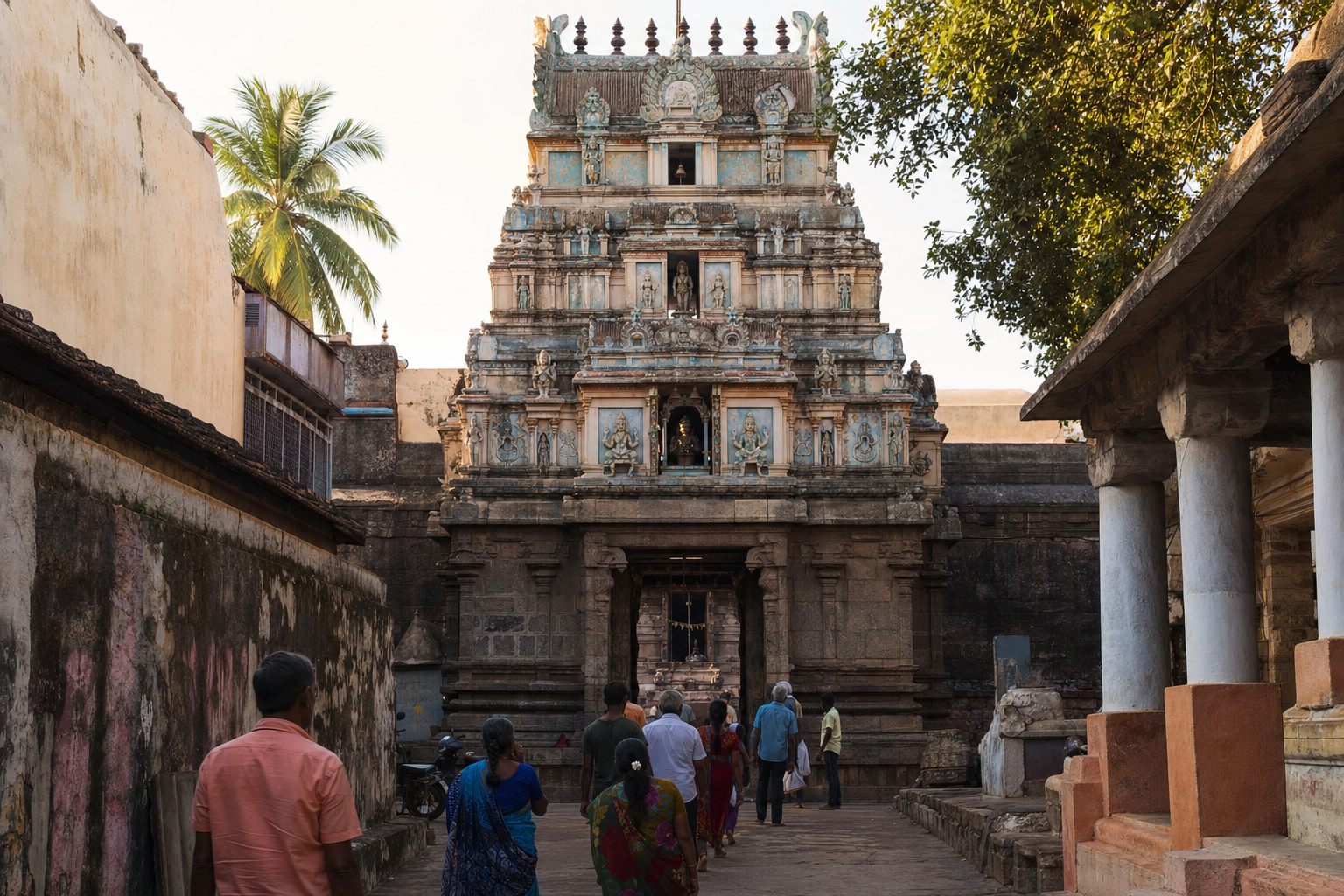
If you are planning a temple circuit around Kumbakonam’s Mahamaham Tank, you need two things before visiting Agora Veerabhadra Swamy Temple: a reliable way to recognise the shrine and a clear idea of what deserves your attention inside.
Use the tank as your geographical anchor, look for the west-facing temple with its three-tier rajagopuram, and approach the sanctum as a deliberate sequence rather than a hurried stop. The architecture prepares you for the central darshan: Veerabhadra Swamy standing in a valiant form.
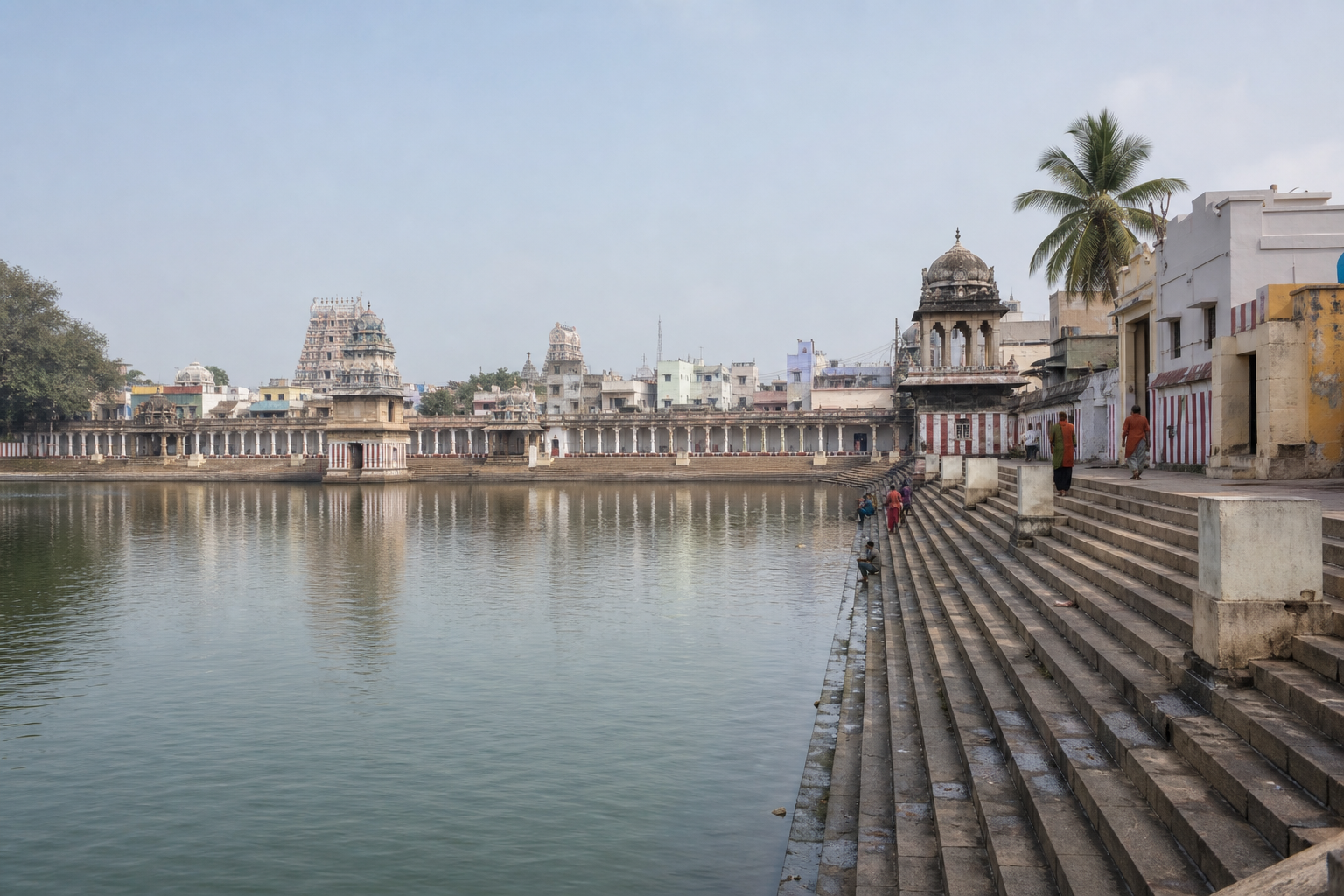
Use Mahamaham Tank as your navigation anchor
The shrine is close to Mahamaham Tank, faces west, and has a three-tier rajagopuram. Those are the most useful identification details to carry with you.
Save the full name, Sri Veerabhadra Swamy Temple, on your phone or write it down. When asking for directions, mention all three identifiers together: Veerabhadra Swamy, Mahamaham Tank, and the west-facing temple with the three-tier gateway. A landmark plus visible architectural features is more useful than relying on the name alone.
Do not build a tightly timed itinerary around assumed opening hours. Confirm the day’s opening and closing times locally before setting out, particularly if this darshan is the main purpose of your visit. Temple access can also be affected by puja or festival arrangements, so a same-day enquiry is better than an undated schedule.
Read the sacred sequence from gateway to sanctum
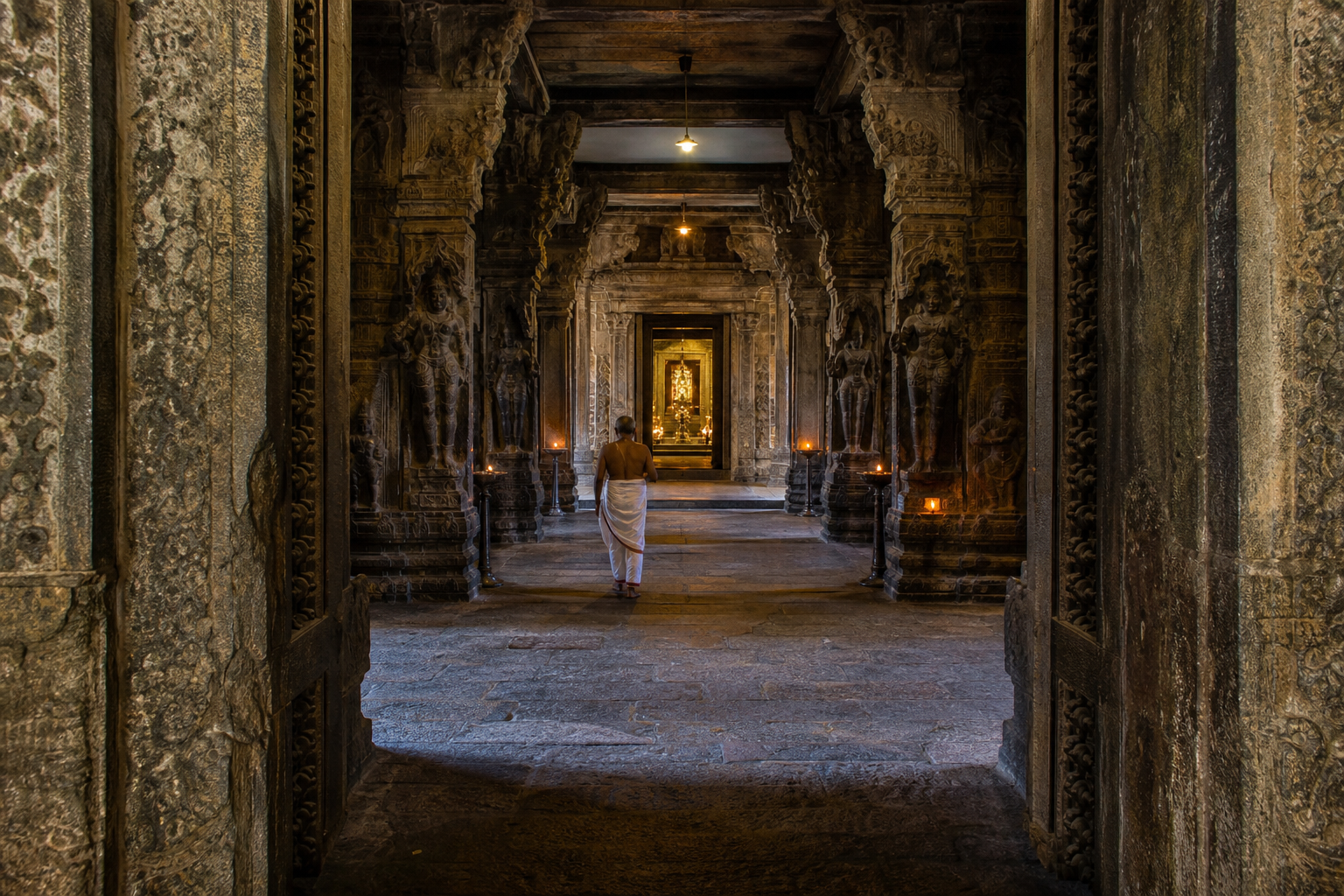
The temple’s layout gives you a simple progression to follow. Each element changes the quality of your attention before you reach the moolavar, the fixed presiding deity in the sanctum.
- Begin at the rajagopuram. A rajagopuram is the monumental entrance tower, not merely a signboard. Pause long enough to register that you are crossing from the activity of the street into sacred space.
- Notice the mandapam. This hall shelters the balipeedam and Rishabam. The balipeedam is the ritual offering pedestal, while Rishabam, the sacred bull, establishes the shrine’s Shaiva setting.
- Offer your respects to Vinayagar. His presence at the approach is an invitation to settle obstacles and distractions before proceeding.
- Notice Arumugar, the six-faced form of Murugan. Do not rush past the accompanying deities as though only the final sanctum matters; they help establish the devotional world in which Veerabhadra is worshipped.
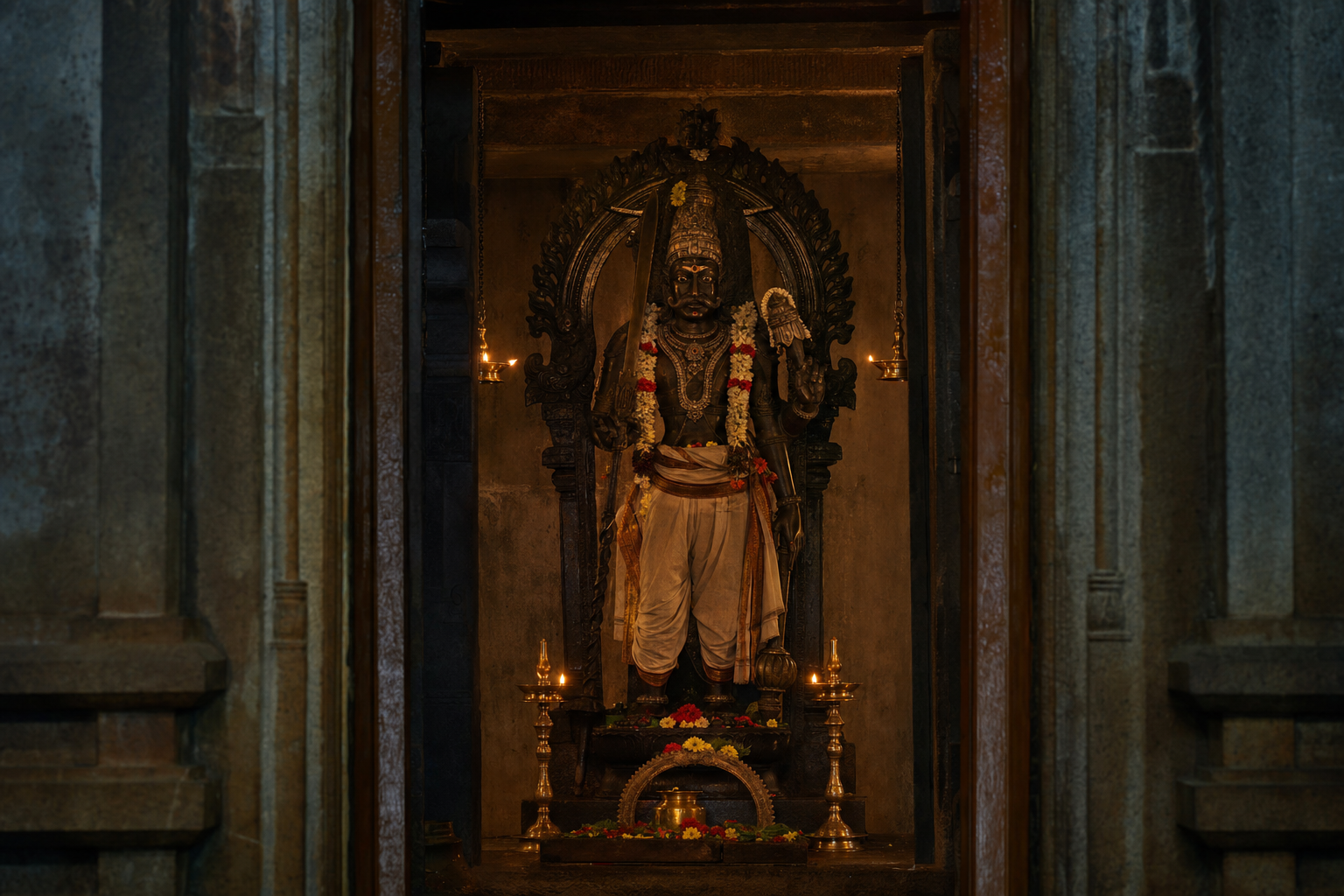
- Bring your attention to Veerabhadra Swamy. The moolavar appears standing in a brave and commanding form. Let the posture, rather than a long list of requests, hold your attention first.
This sequence is useful even if the temple is quiet and you have no guide. Gateway, mandapam, balipeedam, Rishabam, accompanying deities, and moolavar together provide a readable path. You do not need to manufacture a complicated ritual to enter that path respectfully.
Approach Veerabhadra as disciplined courage
Veerabhadra’s valiant appearance can be misunderstood if fierceness is treated as ordinary anger. A more fruitful devotional reading is disciplined courage: strength placed under dharma, ready to confront disorder without becoming disorder itself.
The standing posture matters here. It conveys readiness rather than withdrawal. You can turn that visual quality into a focused contemplation by carrying three questions into the darshan:
- Where do you need courage to do what is right rather than what is merely comfortable?
- What fear, resentment, or confusion must be governed before you act?
- What worthy responsibility are you being asked to protect?
These questions keep the encounter from becoming a vague appeal for power. In a Dharmic frame, power is meaningful when it serves truth, restraint, protection, and rightful action. Stand quietly, observe the form, and choose one question that belongs to your present life. That is enough for a sincere visit.
Prepare for the parts a map cannot settle
The shrine’s location and visible features can help you find it, but they do not settle practical matters such as current hours, photography, offerings, or accessibility. Handle those questions directly instead of filling the gaps with assumptions.
- Confirm opening hours and any special worship arrangements on the day of your visit.
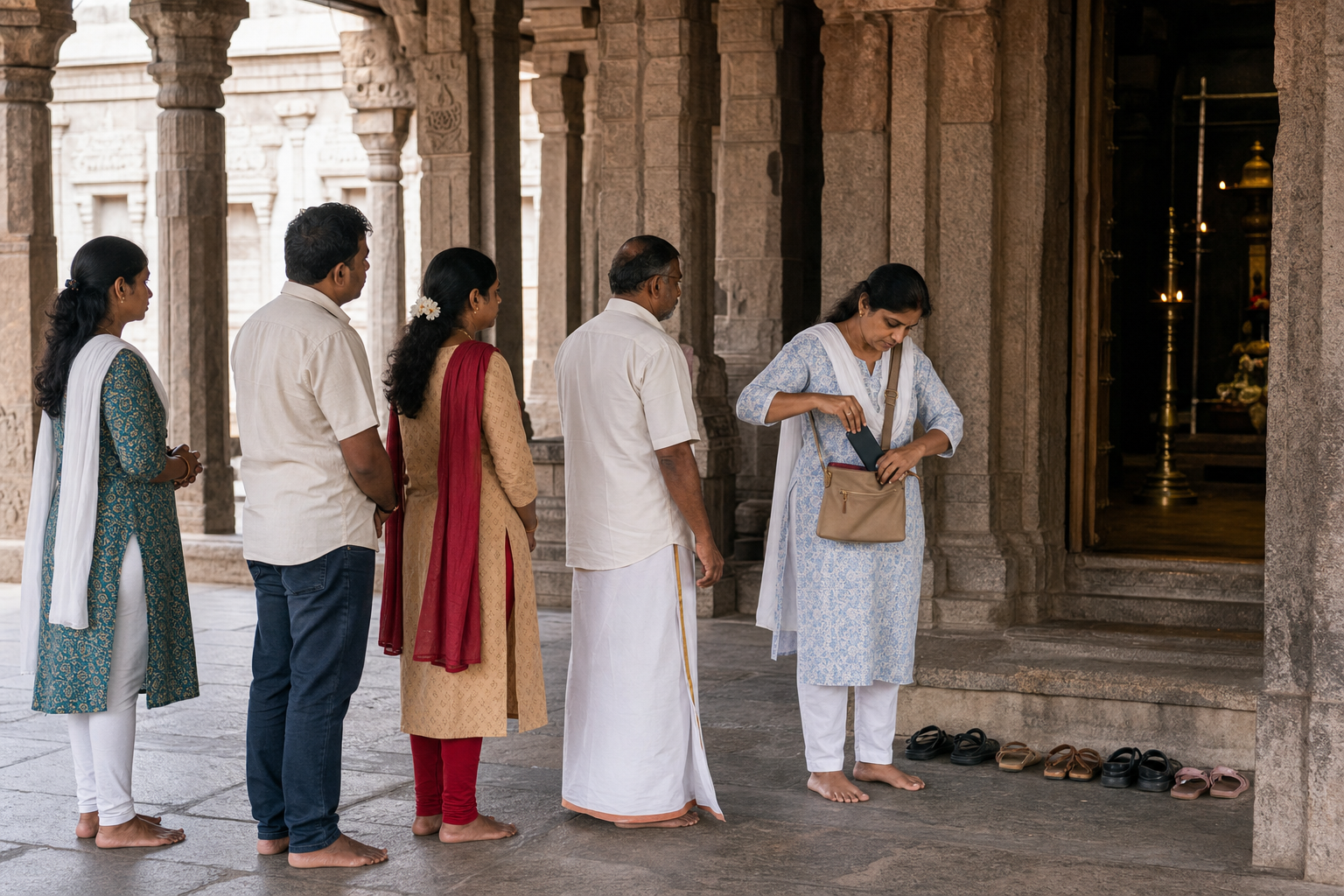
- Wear clothing appropriate for a Hindu temple and remove footwear at the place indicated by temple practice or staff.
- Ask before photographing the sanctum, icons, worshippers, or a ritual. Permission in an outer area does not automatically mean permission everywhere.
- If you wish to bring flowers, fruit, or another offering, first check what the temple accepts and where it should be handed over. Do not place an offering directly on a pedestal or icon unless instructed.
- If you need step-free access or assistance for an older visitor, confirm it in advance. The presence of a gateway and mandapam does not establish an accessible route.
- Keep enough flexibility to wait through a brief closure or active puja without pressing forward. Darshan is not improved by forcing your itinerary onto the temple’s rhythm.
You also do not need detailed iconographic knowledge to behave well. Keep your voice low, follow the movement indicated by worshippers or temple personnel, avoid obstructing the sanctum entrance, and give anyone performing worship enough space. Observation is part of learning.
Key takeaways for your visit
- Navigate using Mahamaham Tank, the full temple name, the west-facing orientation, and the three-tier rajagopuram.
- Notice the internal progression: balipeedam and Rishabam beneath the mandapam, followed by Vinayagar, Arumugar, and the principal darshan of Veerabhadra Swamy.
- Give special attention to the moolavar’s brave standing posture; it is the shrine’s central visual teaching.
- Contemplate courage governed by dharma, not fierceness detached from restraint.
- Verify current hours, ritual arrangements, photography rules, offerings, and accessibility locally rather than assuming them.
When you arrive, let the rajagopuram slow your pace. Follow the temple’s sequence, stand before Veerabhadra without rushing to fill the silence, and leave with one concrete act of disciplined courage to carry into ordinary life.
References
