

Someone in your team, movement, or public life will eventually invoke Kurukshetra to argue that hesitation is cowardice. That is precisely when you should slow the moral argument down. The question is not simply whether your side has a righteous cause. You must also ask whether the leader, the method, the limit, and the aftermath remain answerable to dharma.
Kurukshetra does not sanctify aggression. It portrays attempted peace, disciplined duty, battlefield restraints, anguished exceptions, and victory followed by remorse. Read as a leadership text, its value lies in showing you how to confront unavoidable conflict without giving anger, ambition, or tribal loyalty a sacred vocabulary.
Key takeaways
- A credible effort at peace is part of righteous courage, not evidence of weakness.
- Name the concrete adharma you intend to stop; hostility toward an identity, faction, or rival is not a just cause.
- Rules and vows must serve living dharma, but departing from them creates a moral debt that tactical success cannot erase.
- Never send people into a conflict with an entry plan but incomplete knowledge of the risks, support, and exit.
- Define the stopping condition and the duties of victory before escalation begins.
Dharma is not whatever the winning side does
The Mahabharata refuses two easy conclusions. It does not teach that every use of force is adharma, and it does not teach that claiming dharma makes every use of force righteous. Kurukshetra follows a peace mission in which Krishna argues for reconciliation, restraint, and a proportionate settlement. The failure of that mission makes the later conflict intelligible, but it does not remove the moral constraints on those who fight.
Arjuna’s crisis matters for the same reason. His hesitation is not merely fear of losing. He sees teachers, elders, relatives, and the destruction that action will bring. The Bhagavad Gita answers this paralysis by joining svadharma, disciplined action, equanimity, and freedom from attachment. Duty must be performed without turning victory, hatred, or personal glory into the object of action.
That gives you four distinctions to preserve whenever someone calls a conflict dharmic:
- Cause: What identifiable wrong must be stopped?
- Responsibility: Why is intervention your duty rather than an excuse to pursue a private grievance?
- Intention: Are you protecting an order, a person, or a principle, or are you seeking humiliation and revenge?
- Conduct: Which limits continue to bind you when respecting them becomes costly?
A worthy cause cannot make every tactic worthy. Nor does a painful tactic automatically prove that the cause was false. Ethical leadership has to judge both without collapsing one into the other.
Different Dharmic paths place different weight on nonviolence, warrior duty, karmic consequence, compassion, and resistance to oppression. Hindu deliberations about dharma-yuddha, Buddhist and Jain attention to ahimsa, and Sikh understandings of dharam yudh do not produce a single effortless formula. They do preserve a common demand: courage must remain restrained by conscience, and victory must remain accountable to truth.
Begin, then, by refusing false Kurukshetras. Criticism, electoral defeat, loss of status, or disagreement within a community is not automatically adharma. War language can inflate an ordinary dispute until compromise looks like betrayal. State the wrong in observable terms. If you can describe the situation only by calling the other side evil, you have not yet defined a dharmic cause.
The first leadership failure happens before the battlefield
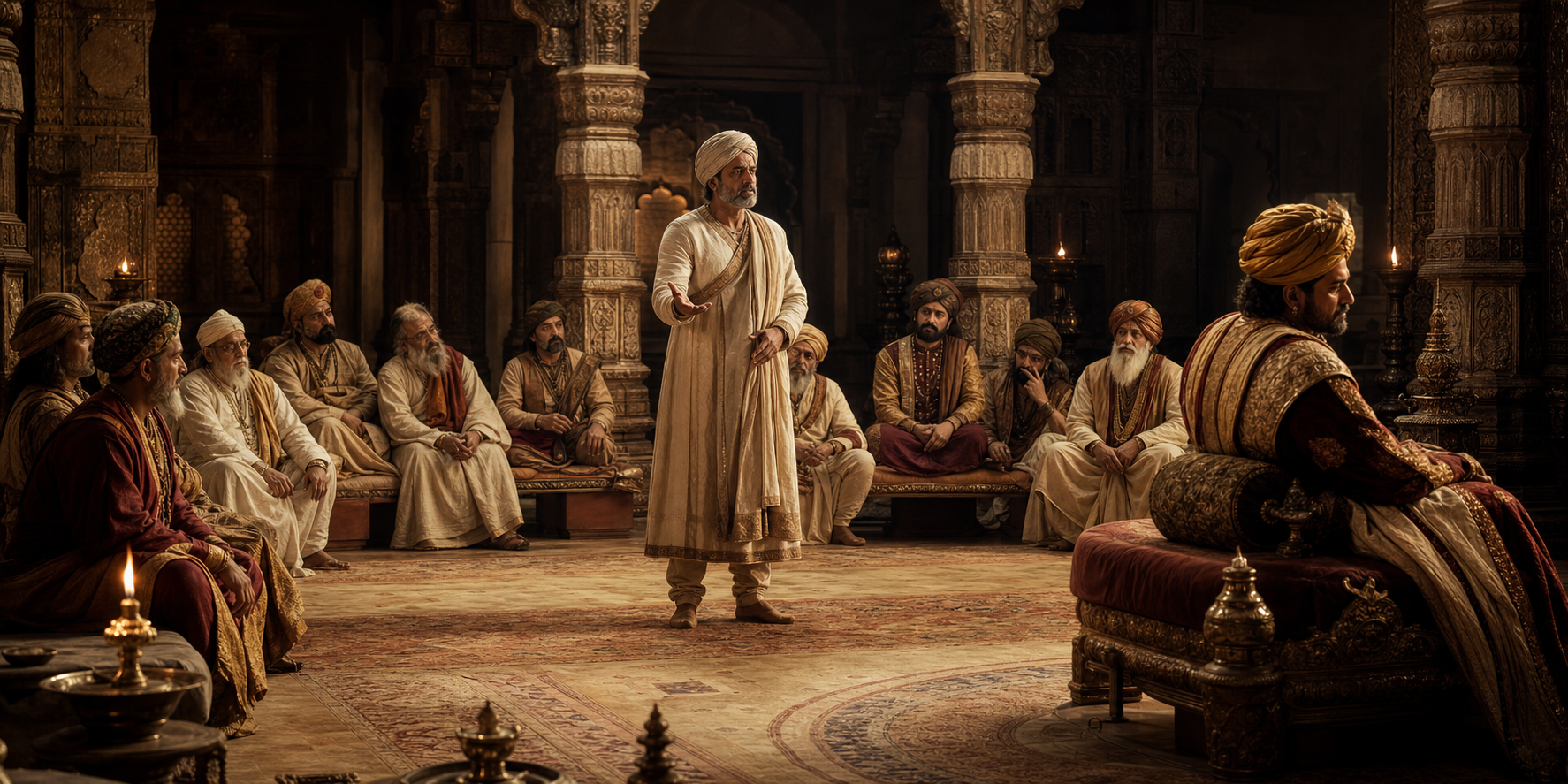
The road to Kurukshetra runs through a court in which people with rank, knowledge, and moral authority fail to interrupt wrongdoing. During the game of dice, manipulation is allowed to acquire the appearance of procedure, while the elders’ silence leaves Draupadi’s dignity undefended. Adharma grows not only through an aggressor’s will but through the passivity of those who could impose a boundary.
This is the first practical lesson for a leader. Do not wait for a crisis to decide whether anyone may stop the process producing it. Establish three controls while disagreement is still manageable:
- A red line: Name the violation that ends normal procedure. It may be coercion, deliberate deception, public humiliation, or the removal of another person’s meaningful ability to object.
- An interrupter: Give a named role the authority to pause the process. Moral concern without the power to halt anything becomes ceremonial dissent.
- A just off-ramp: Decide the minimum correction that would restore order. If your demand is total submission or humiliation, you are offering capitulation, not peace.
Krishna’s embassy also corrects a familiar misunderstanding of restraint. Peace is not passivity when it is backed by moral clarity and the capacity to act. A genuine last resort does not require endless delay while harm continues. It requires a credible peaceful remedy, terms the other party could actually accept without surrendering its dignity, and honest recognition of whether those terms were refused.
Before escalation, record the settlement you sought, the reply you received, the wrong that remains active, and the limits that will still govern your response. This is not merely a public-relations record. It prevents memory from rewriting the conflict after anger rises. The other side’s refusal may establish the need to act; it does not release you from your own restraints.
Five questions to ask before calling a conflict dharmic
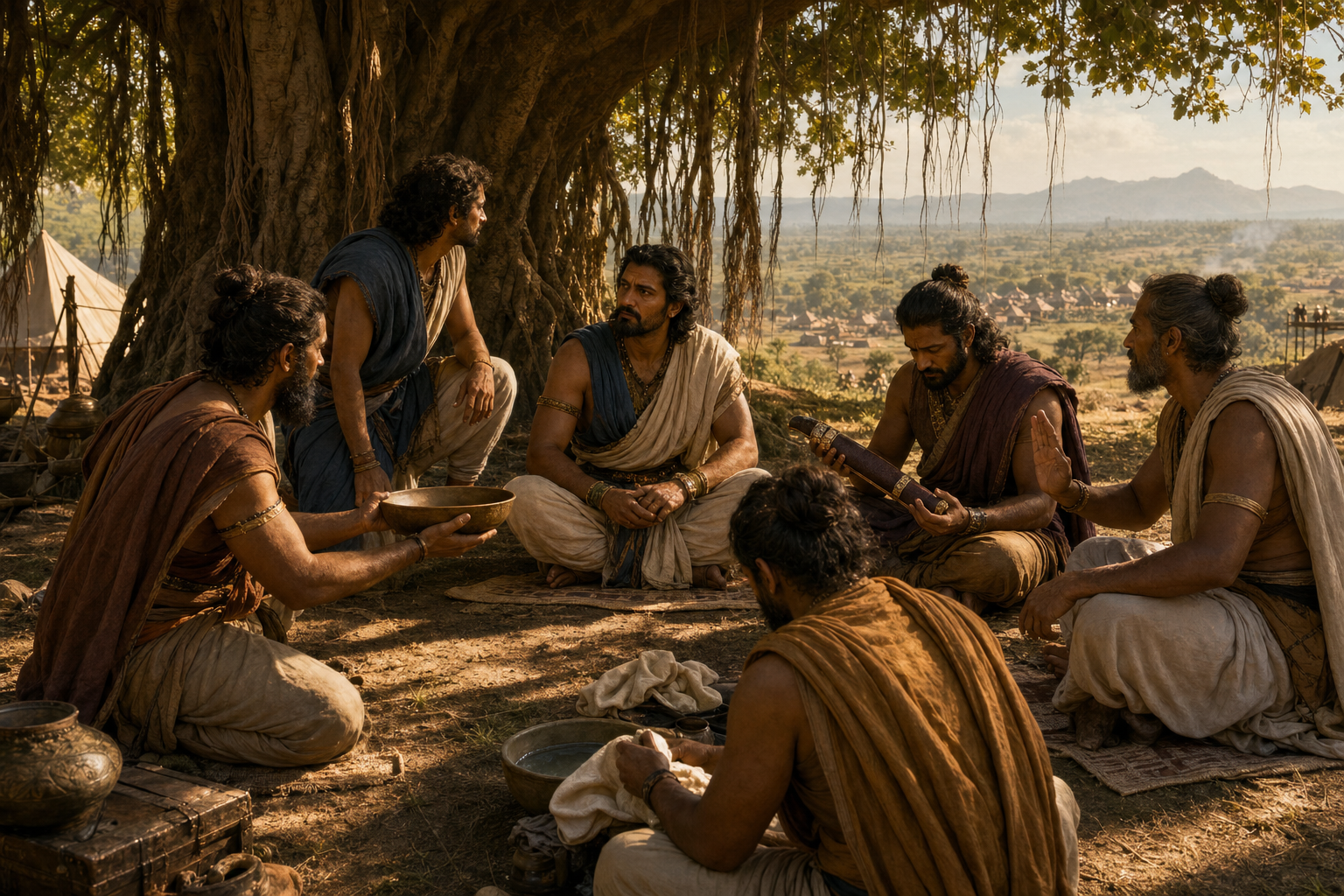
The language of dharma should make a decision harder to manipulate, not easier to advertise. Put the proposed action through these five questions before you support it.
- What concrete adharma are you trying to stop? Write one sentence containing the wrongful action, the person or order it harms, and the condition that would end the intervention. Replace labels with verbs. Preventing coercion is a cause; punishing a disliked community is not.
- Is this your duty or your grievance? Drona’s humiliation by Drupada leads to Drupada’s capture, the division of his kingdom, and a later determination to produce the warrior destined to kill Drona. The cycle between injury, retaliation, and foretold revenge shows how easily wounded honour can impersonate duty. Ask whether you would support the same principle if your rival benefited from it.
- What is the least destructive action sufficient to protect the just end? Proportionality is not indecision. It prevents a limited need from becoming permission for unlimited punishment. Define what success requires and what lies beyond it.
- Who chooses the risk, and who actually bears it? Senior leaders often make the moral claim while younger or less powerful people absorb the danger. Confirm that those assigned the burden know how to enter, what may change around them, what support exists, and how they can withdraw.
- Which limits survive necessity? Name the rules you will keep even when they obstruct an advantage. If you foresee a possible exception, specify who may authorize it, how narrowly it applies, and how it will be examined afterward. An unnamed exception becomes a habit; an unreviewed habit becomes the new rule.
Then give your answers to someone who does not share your factional loyalty. Their task is not to agree with your goal. It is to see whether the protected principle can be distinguished from your side’s advantage. If that distinction disappears under scrutiny, rewrite the case before you escalate.
Three battlefield dilemmas every leader should study
Bhishma: when a noble vow sustains the wrong order
Bhishma combines formidable discipline with a tragic limitation. As commander of the Kaurava army during the opening phase, he retains personal restraints even while serving a side whose conduct has made war unavoidable. His own understanding of Shikhandi’s past identity leads him to refuse combat against Shikhandi. On the tenth day, Arjuna follows Krishna’s strategy, positions Shikhandi before Bhishma, and brings down the commander whose presence had sustained the Kaurava advantage.
The episode is not a licence to ridicule vows. Bhishma’s restraint is real, and the opposing strategy works through the boundary he has chosen rather than forcing him to renounce it. The harder leadership question is whether personal honour is enough when loyalty helps preserve an unjust order. A person may keep an oath with remarkable integrity while avoiding the larger responsibility that gave integrity its purpose.
Run a vow audit whenever an old commitment blocks corrective action. Ask whom the commitment originally protected, whom it protects now, what harm follows from keeping it unchanged, and whether revising it would preserve its moral purpose better than literal compliance. Do not discard a promise because it has become inconvenient. Do not defend it merely because your identity has become attached to never changing.
Bhishma’s leadership does not end with military defeat. Remaining on the bed of arrows, he redirects his authority toward counsel, instructing Yudhishthira on governance, conduct, truth, and restraint in the Shanti and Anushasana Parvas. His transition from command to conscience offers a demanding lesson: losing office does not remove your duty to help the next ruler govern without rancour.
Drona: necessary deception is never morally free
After Bhishma falls, Drona assumes command and inflicts devastating losses. The Pandavas conclude that he cannot be overcome while armed. Bhima kills an elephant named Ashwatthama, and Yudhishthira announces Ashwatthama’s death before quietly adding that the dead being was the elephant. Drona trusts the man known for truthfulness, lays aside his weapons, and enters meditation. Dhrishtadyumna then kills him. The death remains ethically disturbing even within accounts that stress battlefield necessity.
The practical issue is larger than whether the sentence contained a technical qualification. Yudhishthira’s reputation for truth is what makes the stratagem effective. Trust accumulated through years of conduct is spent in a moment. A leader who asks the most credible person in an institution to make a predictably misleading statement is not merely selecting words; that leader is consuming a shared moral asset.
Necessity may explain an exception, but it cannot make the exception clean. When an extreme situation appears to require departure from an ordinary rule, write down the immediate threat, the compliant alternatives considered, why they would fail, the narrow scope of the departure, and the authority that must answer for it. Afterward, restore truthful accounting rather than converting the exceptional tactic into a celebrated precedent.
Abhimanyu: competence includes a way out
Abhimanyu knows how to enter the Chakravyuha but lacks complete knowledge of how to leave it. His brilliance carries him deep into the formation, where he is eventually surrounded and killed in a breakdown of fair conduct. His courage is unquestioned. The leadership failure lies in allowing partial knowledge and youthful valour to bear a burden that required complete preparation.
Whenever you assign a dangerous or irreversible responsibility, test five elements: entry, changing conditions inside, reliable support, exit, and the trigger for aborting the mission. If any one of these is missing, enthusiasm is not readiness. A junior person’s willingness to serve does not release senior leaders from the duty to provide full knowledge and a realistic recovery plan.
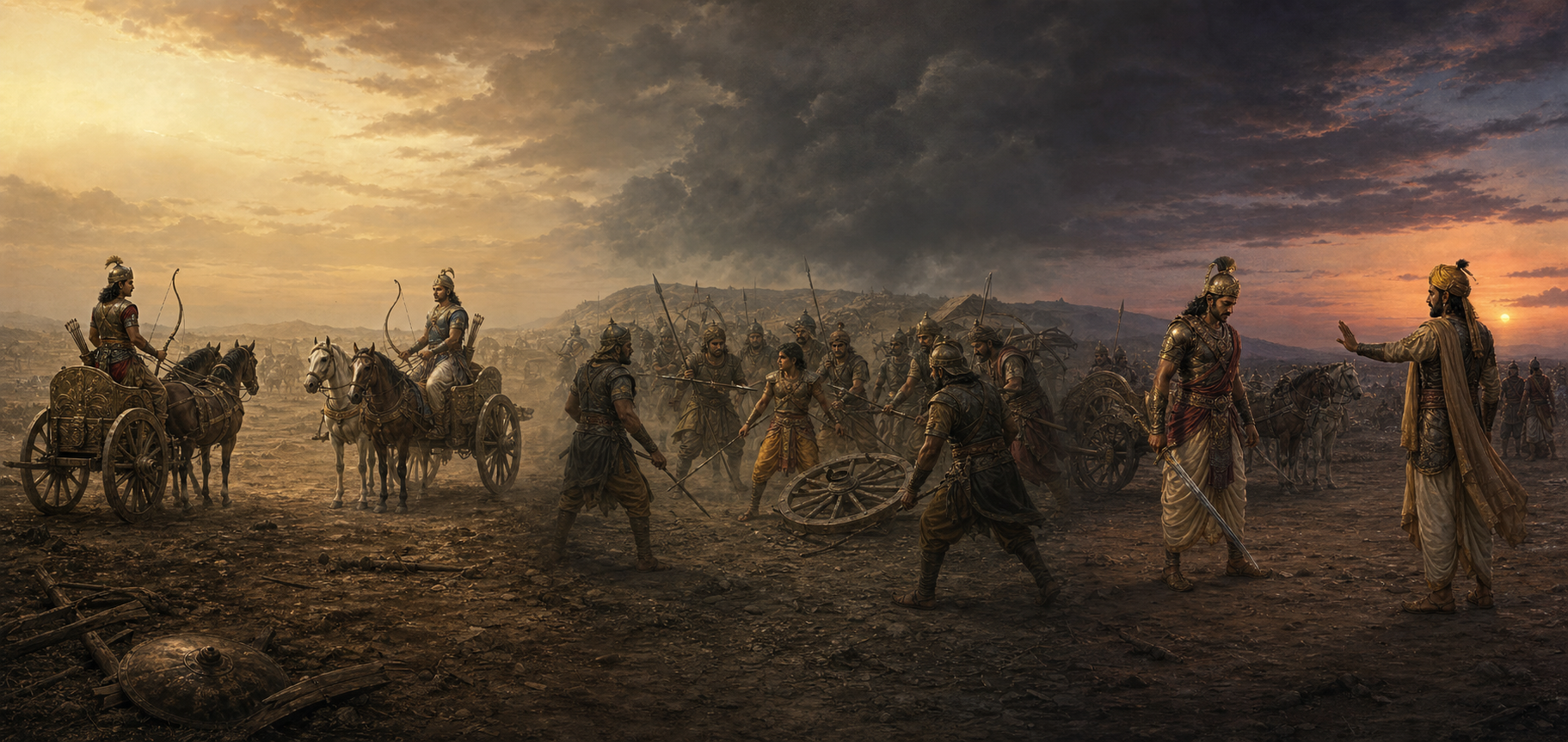
Krishna’s willingness to rush forward with a chariot wheel to protect Arjuna, despite his commitment to remain unarmed, prevents the opposite error: worshipping a rule after it has become detached from the purpose it was meant to serve. The moment illustrates the tension between literal consistency and fidelity to a higher protective duty. Principled flexibility must still be limited and explainable. If breaking a rule benefits only your faction and cannot be connected to the rule’s original moral purpose, skepticism is warranted.
A righteous victory must survive the morning after
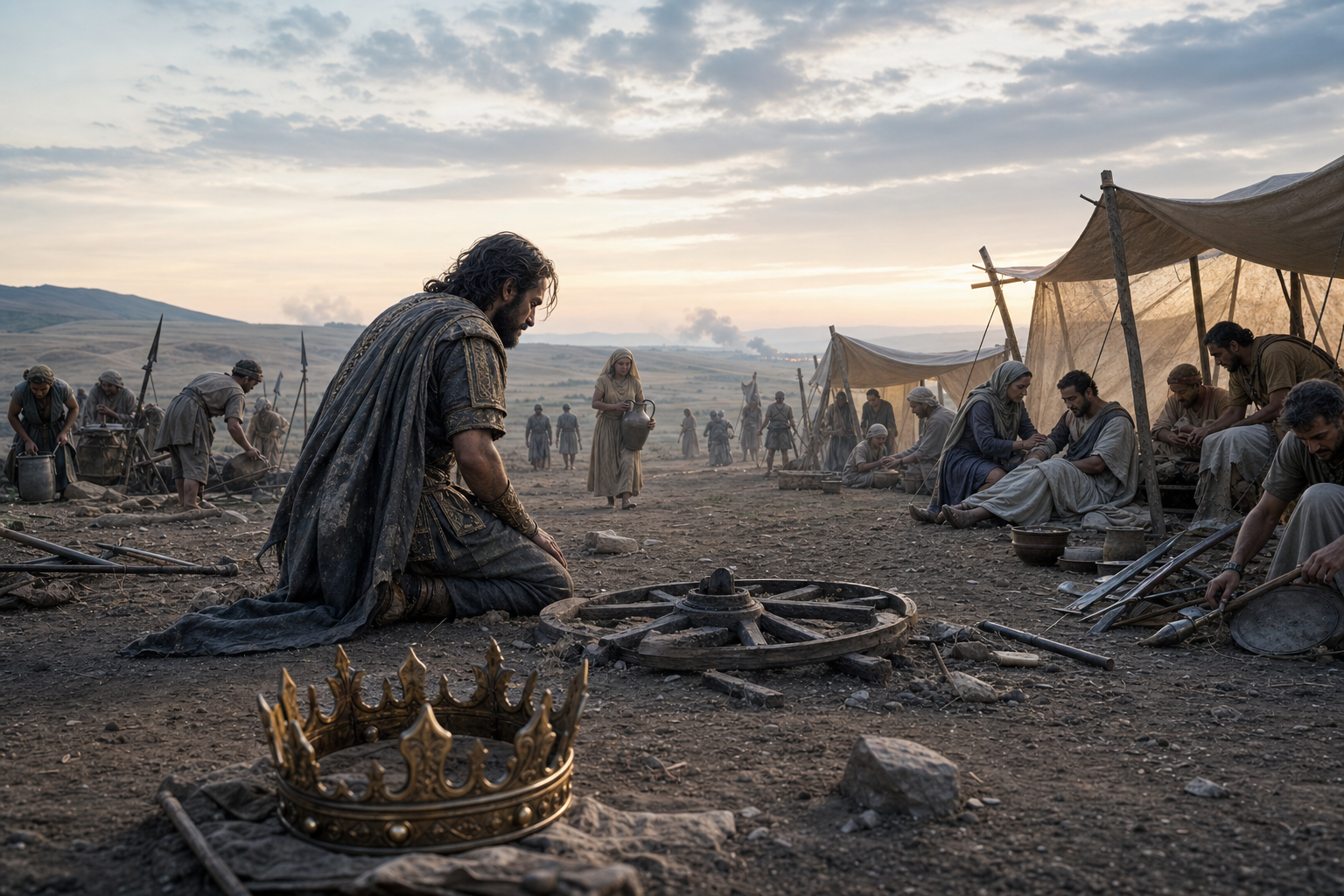
Kurukshetra does not close with uncomplicated triumph. Gandhari’s curse, the Pandavas’ remorse, Yudhishthira’s difficulty accepting rule, and eventual renunciation keep the cost of victory visible. The ending insists that winning power does not end moral accountability.
Your plan is therefore incomplete if it ends when the opponent loses. Before conflict begins, define four responsibilities of the aftermath:
- A stopping condition: Describe the observable correction that ends extraordinary action. Do not substitute the destruction of an opponent for the removal of the wrong.
- An expiry for exceptions: Emergency permissions should end when the emergency ends. State who confirms that transition.
- A truthful account: Record which methods were used, which boundaries were strained, and who accepted responsibility. Concealed moral costs tend to return as institutional mistrust.
- A plan for legitimate governance: Victory must become service rather than permanent vengeance. Bhishma’s counsel to Yudhishthira places truth, self-restraint, and rule without rancour at the centre of authority after war.
Before your next irreversible escalation, write a one-page Kurukshetra brief under six labels: Cause, Duty, Peace Attempt, Limits, Burden, and Aftermath. Give it to a person who is not rewarded by your victory and ask them to challenge every answer. Most importantly, state the exact condition under which you will stop. If you cannot name that point, you are not yet leading the conflict; you are giving momentum permission to lead it for you.
References
- DharmaRenaissance Blog — Bhishma’s Fall in the Mahabharata: Strategy, Dharma, and Leadership Lessons from Kurukshetra
- DharmaRenaissance Blog — Dronacharya and Dhrishtadyumna: Destiny, Deception, and Dharma in the Kurukshetra War
- DharmaRenaissance Blog — Mahabharat Stories: 10 Iconic Moments That Shaped Dharma, Destiny, and the Kurukshetra War
