
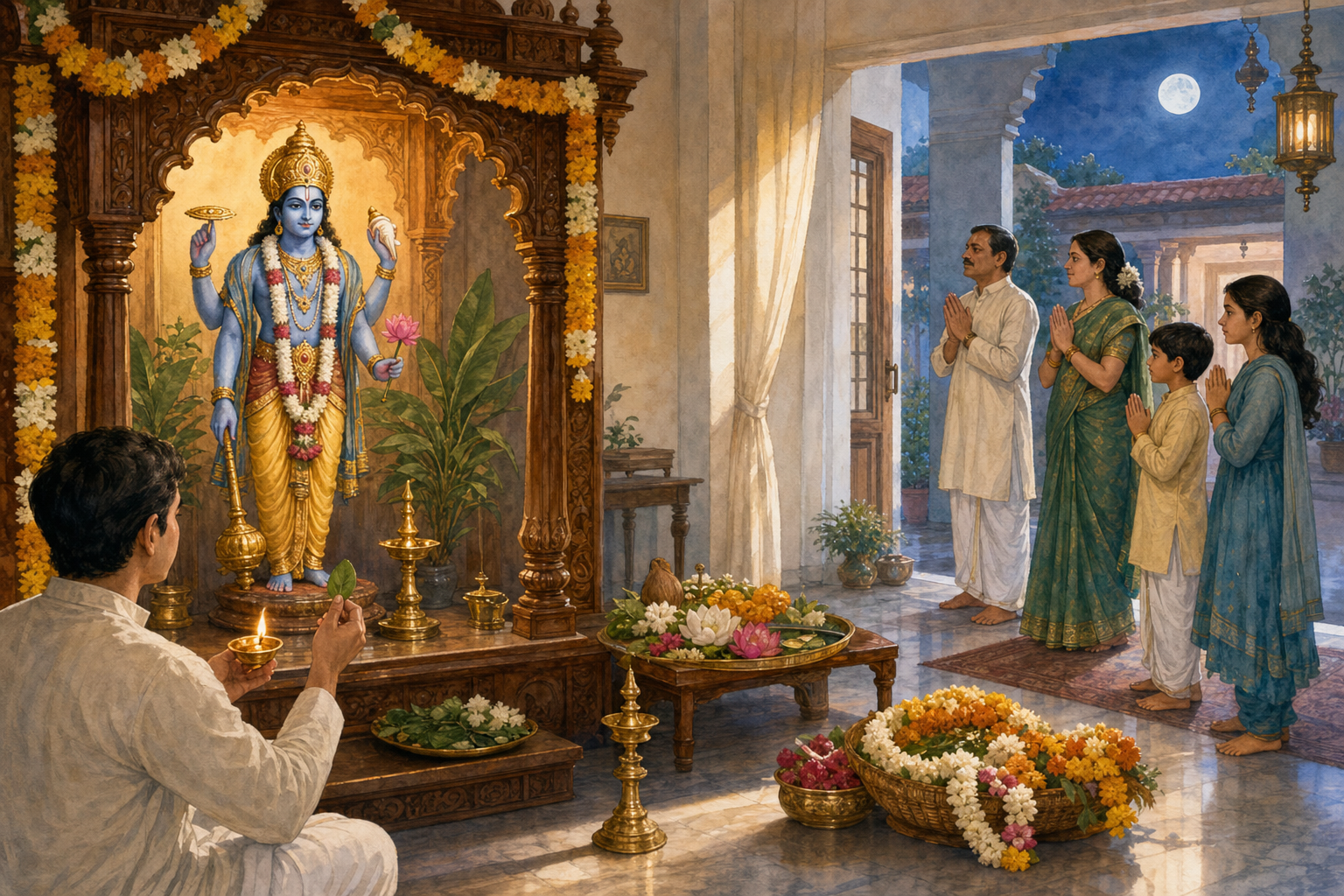
Perhaps you can sustain a long puja on a sacred day but lose the thread of Vishnu-smarana when work, family duties, fatigue, or travel take over. That gap is not solved by trying to make every day resemble a festival.
The workable pattern is continuity on ordinary days and concentration on festival days. A small daily anchor keeps the relationship alive. A fuller observance gives that same relationship more time, discipline, generosity, and community.
Make remembrance part of things you already do
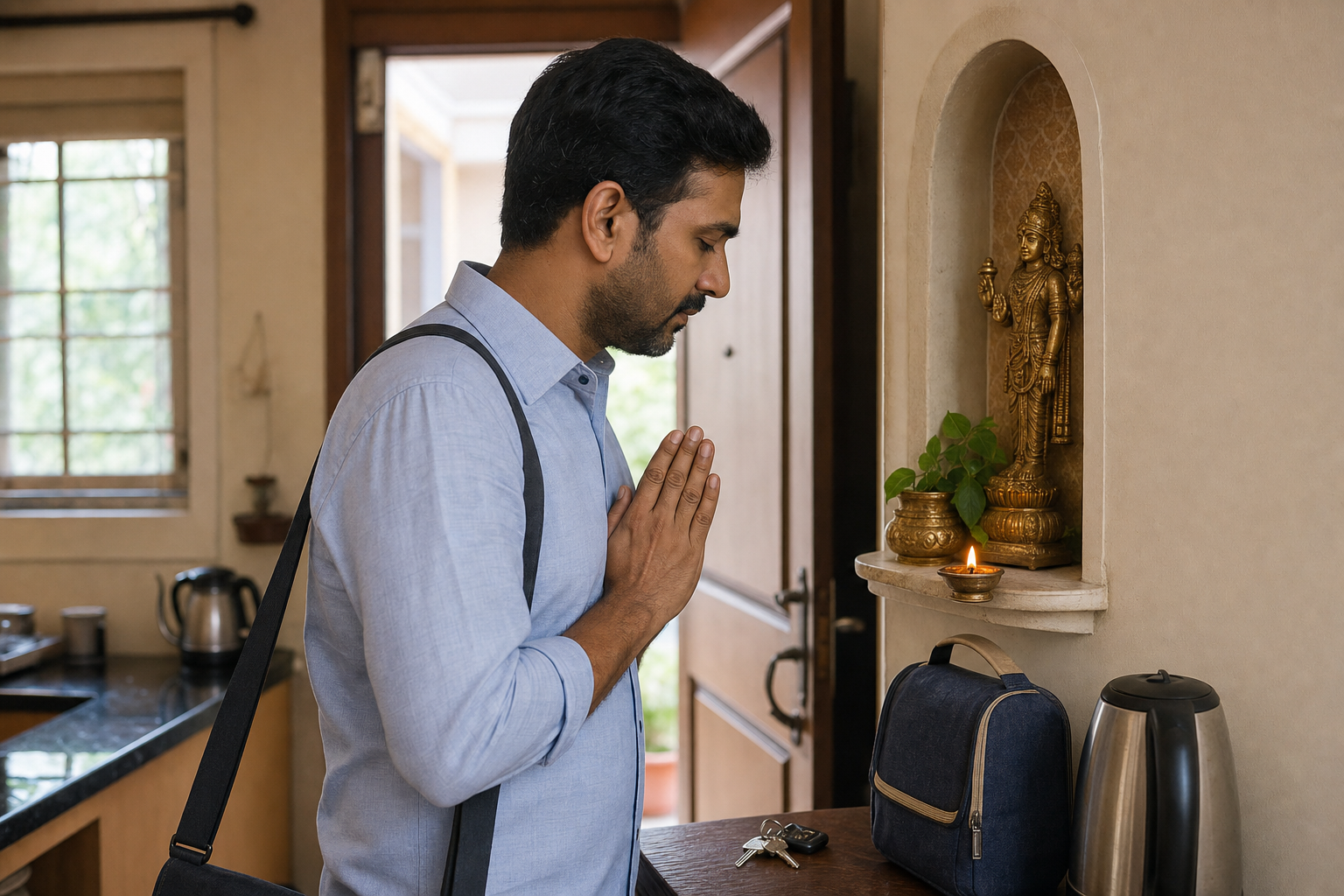
Daily devotion becomes fragile when it depends on finding an empty hour. It becomes much more durable when it is attached to events that already happen: waking, drinking water, eating, travelling, seeing daylight, returning home, or preparing for sleep.
The senses do not have to be treated only as sources of distraction. The taste of water, the sight of sunlight, and the recognition of strength or beauty can become prompts for remembering Krishna. For a devotee centred on another form of Vishnu, the same method can direct attention toward Narayana, Rama, Narasimha, Venkateswara, or the chosen ishta-devata.
Create a small map between ordinary cues and devotional responses:
- Water: before the first sip, pause and remember that life is being sustained. Recite your mantra once with attention rather than repeating it mechanically in the background.
- Morning or evening light: let sunrise or sunset cue a short pranam, a diya when it is safe, or a familiar line of kirtan.
- Food: before eating, offer it inwardly and acknowledge the people, soil, rain, labour, and grace through which it reached you.
- A regular journey: use a safe part of the commute for silent japa or Krishna-katha. If you are driving or doing work that requires full attention, keep the practice simple enough that it does not compete with safety.
- Nature, strength, or beauty: stop the impulse to possess or merely consume the experience. Let it turn the mind toward the divine quality it reflects.
You do not need to use every possible cue. Choose the ones that already recur reliably. When the cue appears, perform a definite practice and end with gratitude. This gives remembrance a place in the architecture of your day instead of leaving it dependent on mood.
Use a minimum daily rule, not a maximum ambition
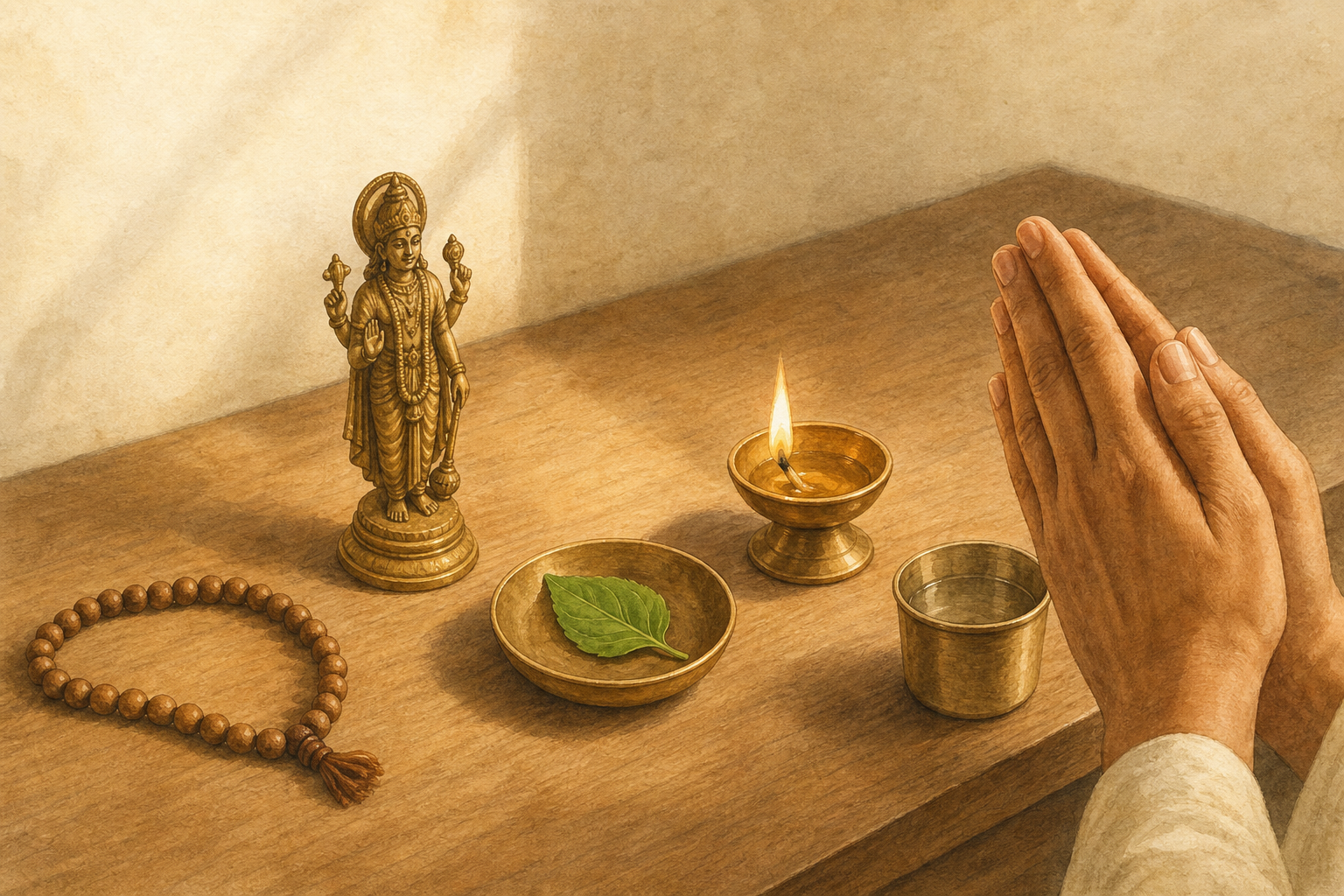
Your minimum rule is the practice you will protect on an inconvenient day. It should be substantial enough to bring Vishnu consciously to mind but modest enough to survive deadlines, guests, illness in the household, and disrupted travel.
- Begin at a reliable morning point. Sit or stand before a clean worship space. Light a diya only where it can be attended safely.
- Recite the divine name deliberately. Om Namo Narayanaya is a direct option for Vishnu worship. If your sampradaya or guru has given you a particular mantra, retain that discipline rather than assembling a new collection of mantras.
- Hear or read a small portion of katha. A single verse, a brief passage, or a short recorded discourse is enough for the minimum rule. Srimad Bhagavatam 10.1.8-13 places Krishna-katha within a living culture of attentive hearing; the point is not to cover pages but to carry something into the day.
- Connect remembrance to a meal. Pause before eating, make the offering appropriate to your household tradition, and receive the food with gratitude.
- Return at the day’s closing transition. Use sunset, arrival at home, or the end of household work for a short aarti, kirtan refrain, or silent remembrance.
If the full routine is impossible, preserve its core: the name, a line of katha, and gratitude. Do not repeatedly redesign the practice because one session felt dry. Devotional taste is not the same as constant emotional intensity. The first work of abhyasa is simply to return.
Personal practice also needs periodic contact with shared practice. A weekly satsang or study circle can provide encouragement, reflection, and accountability. Choose a gathering that helps you hear, ask honest questions, and live more carefully. Mere attendance should not become a substitute for daily remembrance.
On Paush Purnima, deepen the same devotional movements
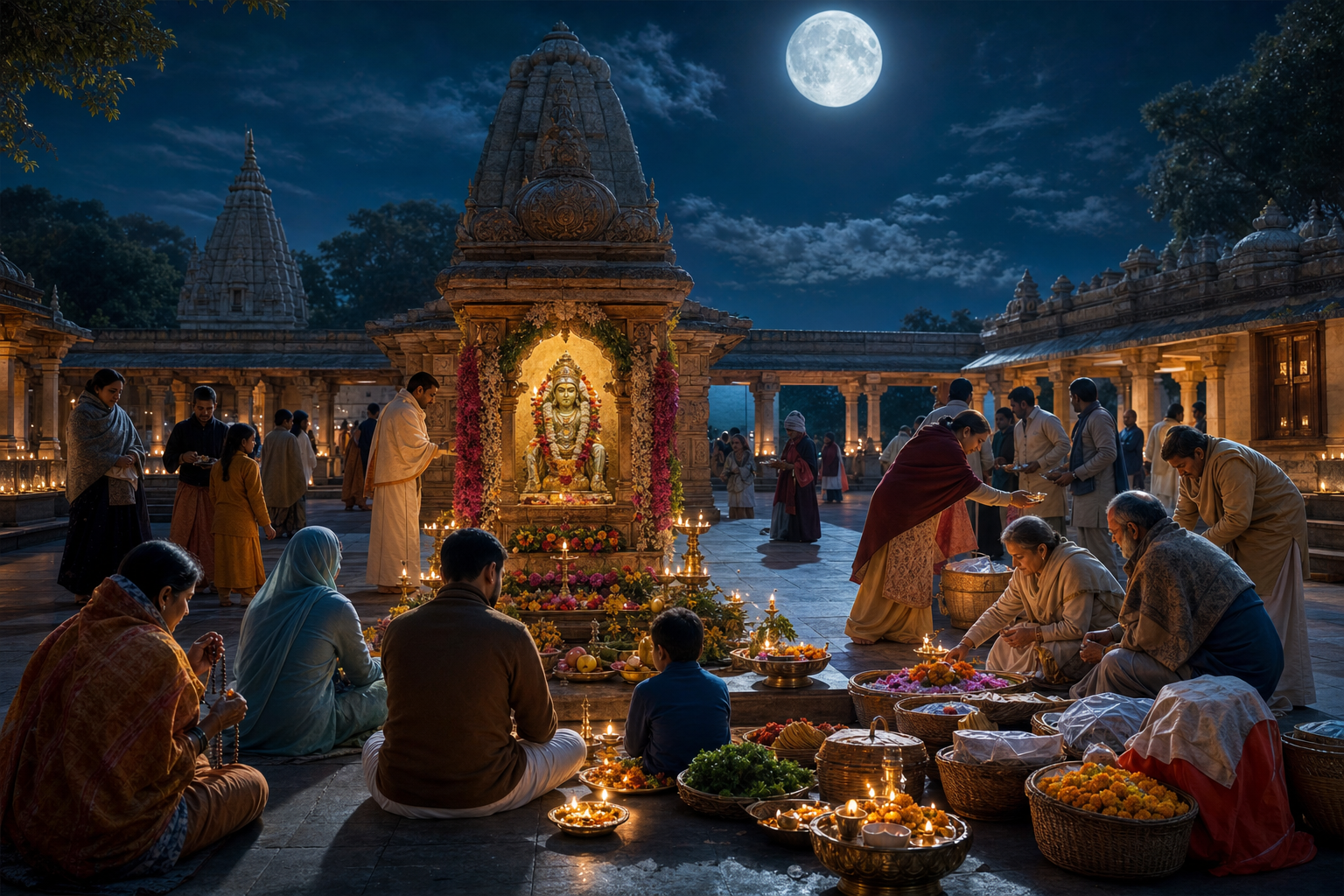
A festival does not need a completely different spiritual logic. It can enlarge what you already practise: purification, worship, remembrance, restraint, generosity, and fellowship. Paush Purnima offers a clear model for doing this around Vishnu devotion.
Paush Purnima occurs on Shukla Paksha Purnima in the month of Paush, usually during December-January. The applicable tithi and muhurta can differ by location, so check a trustworthy local Panchang rather than assuming that a Gregorian calendar date applies everywhere. In many regions, the day also begins the Magha Snan vrata that continues toward Magha Purnima.
- Prepare before the observance begins. Clean the worship space, check the local tithi, decide what recitation is realistic, and set aside the food, blanket, sesame, or other item you intend to give. Advance preparation protects dana from becoming an afterthought.
- Begin with snan. Where a sacred river or local tirtha is accessible and conditions are safe, devotees may bathe there at dawn. Do not treat dangerous winter exposure, unsafe water, or risky travel as a test of faith. Use the safe bathing arrangement available to you and begin worship in a clean state.
- Centre the day on Vishnu Puja. A trained household may perform Panchopachara or Shodashopachara Puja. A simpler observance can use a clean altar, diya, water, flowers, tulsi, and suitable naivedya. Tulsi leaves, yellow-hued foods, and sesame-based lamps are associated with the day’s worship, but unavailable materials need not become a reason to abandon sincere puja.
- Choose a primary recitation. Recite Om Namo Narayanaya, hear the Vishnu Sahasranama, or participate in Satyanarayana Puja at home or in a temple. Choose according to your lineage, capacity, and access instead of rushing through every option.
- Practise restraint wisely. Upavasa can simplify the day and direct attention toward the vrata. If fasting is medically unsuitable, do not improvise a harsh restriction. Take appropriate nourishment and keep the day disciplined through sattvik food, moderation, prayer, and truthful conduct.
- Make dana concrete. Annadanam, winter blanket donations, and offerings involving sesame are established forms associated with Paush Purnima. Give something useful, through a trustworthy channel, without humiliating the recipient or turning the act into a display.
- Join collective devotion where possible. Kirtan, bhajan, temple worship, or a household gathering can carry the observance beyond private intention. If you cannot attend in person, devote an undistracted period to recitation and listening at home.
Vishnu remains the devotional centre, while the day’s traditional reverence for Indra and Brihaspati can broaden gratitude. Indra represents dependence on life-giving rains, and Brihaspati represents wisdom and auspicious counsel. Remembering them in this context directs attention toward sustenance, ecological balance, learning, and dharmic judgement.
Keep water stewardship and cleanliness within the vrata itself. Avoid plastic waste, unattended flames, or conduct that pollutes the place chosen for snan or worship. A ritual intended to refine gratitude should not damage what it treats as sacred.
Adapt the form without bargaining away attention
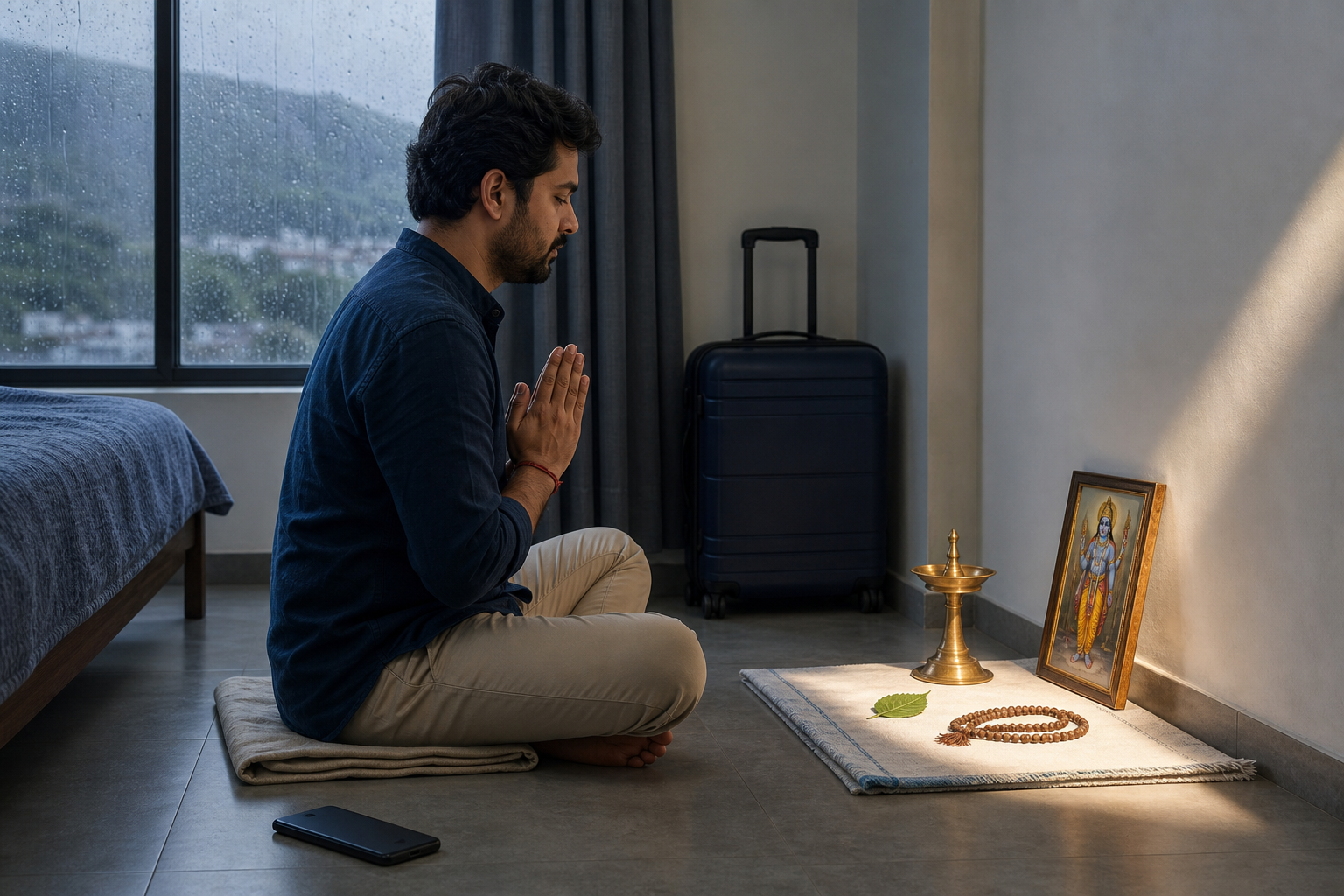
Devotees differ in temperament, household role, energy, mobility, and available time. A practice fitted to the person’s actual circumstances is more sustainable than a single routine imposed on everyone. Adaptation, however, should protect attention rather than quietly remove it.
- If your schedule changes constantly: attach practice to events rather than clock times. Use waking, the first meal, leaving home, or sunset as the anchor.
- If fatigue makes reading difficult: hear a short passage of katha or recite a familiar name. Change the mode while keeping the appointment.
- If you care for children or elders: use a shared diya, a brief bhajan, or one narrated lila that the household can receive together. Do not make family participation depend on everyone tolerating an adult-length ritual.
- If you have more time: extend attentive recitation, study, temple service, or dana. More available time does not require multiplying decorative details.
- If you miss the practice: return at the next cue. A missed morning does not require a punishing evening session, and it does not justify abandoning the rest of the day.
Distraction is often a design problem before it becomes a moral judgement. Keep the mala, text, or audio selection near the place where its cue occurs. Decide in advance what you will recite. Silence unnecessary notifications during katha. Small preparation removes the negotiation that otherwise begins every time you intend to practise.
Watch how worship moves into conduct. Are water and sunlight beginning to recall Vishnu without effort? Do you return more quickly after distraction? Does a festival lead naturally to dana and consideration for others? Are you more truthful about what you can sustain? These are more useful questions than whether every session produced a dramatic feeling.
The shared dharmic values surrounding remembrance, mindfulness, ahimsa, seva, sangat, and satsang can also deepen mutual respect among Hindus, Buddhists, Jains, and Sikhs. That kinship does not require flattening distinct doctrines or liturgies. It asks us to recognise disciplined attention, compassion, and truthful conduct wherever they are sincerely cultivated.
Key takeaways
- Build daily Vishnu-smarana around unavoidable cues such as water, food, daylight, and regular journeys.
- Protect a minimum rule containing the divine name, a small portion of katha, and gratitude.
- Let festival worship deepen the daily relationship through snan, puja, japa, restraint, dana, and collective devotion.
- For Paush Purnima, check a local Panchang because the relevant tithi and muhurta vary by location.
- Choose devotional forms consistent with your sampradaya and actual responsibilities; adaptation should preserve attention.
- Judge continuity by how readily you return and how worship shapes conduct, not by the scale of the ritual or the intensity of a passing emotion.
Tonight, choose the first reliable cue you will meet tomorrow and place your mala, text, or reminder where that cue occurs. Then check your local Panchang for the next Paush Purnima and select one practical act of dana in advance. Daily faithfulness and festival depth can begin with those two decisions.
References
- DharmaRenaissance Blog – Make Krishna-katha a Daily Joy: Practical Insights from Srimad Bhagavatam 10.1.8-13
- DharmaRenaissance Blog – Paush Purnima Explained: Profound Vishnu Worship, Sacred Rituals, and Life-Enriching Benefits
