

You may be preparing for Kashi, a sacred river bath, or another tirtha-yatra with a difficult question in your heart: will the journey truly purify you, or will you return with the same attachments, injuries, and habits?
A pilgrimage can become a real turning point, but distance travelled is not the measure. Sacred water, darshan, mantra, and temple worship create an opening. You still have to cross it through repentance, restitution, restraint, meditation, and a changed way of living. The practical aim is to join the outer journey to an inner discipline that continues after you come home.
A tirtha is a crossing, not a cancellation of karma

A tirtha is a place of crossing. You leave familiar routines, enter sacred geography, and encounter practices shaped by generations of devotion. That break in ordinary life can loosen the mind’s defenses. It can make remorse more honest, prayer less distracted, and a new resolve easier to form.
But crossing into a sacred place does not automatically mean crossing beyond your old conduct. A ritual bath does not mechanically cancel the consequences of harmful action. If you lied, the truth still has to be told. If you took what was not yours, restitution still matters. If anger repeatedly wounds your family, immersion in the Ganga cannot substitute for restraint, apology, and patient retraining of speech.
This is not a denial of grace or of the sanctity of sacred rivers. Devotional language about the purifying power of the Ganga can be received with reverence without being reduced to a transaction. Grace can soften what pride kept rigid. It can give you the courage to face what you avoided. It does not turn adharma into dharma merely because a rite was completed.
It helps to distinguish three layers of purification:
- Ritual purification: You bathe, worship, offer, recite, fast, or receive darshan according to your tradition. The body and attention enter a sacred rhythm.
- Ethical purification: You identify the conduct that must stop, the damage that must be repaired, and the duty you have been postponing.
- Purification of attachment: Through japa, dhyana, self-examination, and selfless action, you loosen the demand that life, other people, and the fruits of effort obey your preferences.
The layers support one another. Ritual without ethical reform can become spiritual decoration. Ethical effort without inner steadiness can collapse into guilt or exhaustion. Meditation without responsibility can become an escape from the people affected by your actions. A mature pilgrimage holds all three together.
You can test the distinction immediately. Ask whether you want purification from the habit itself or merely relief from feeling guilty about it. Relief seeks a moment. Purification accepts a discipline. Moksha is not a certificate awarded for travel, and a pilgrim can cross a great distance without crossing the ego.
Prepare by naming exactly what must change

Do not begin with the vague resolution to become a better person. Vagueness protects the very tendencies you hope to transform. Before you leave, name the burden precisely enough that it can guide a decision.
- Name the action or attachment. Replace “I have made mistakes” with a truthful statement: “I use anger to control this relationship,” “I concealed something for personal advantage,” or “I am so attached to recognition that service becomes resentment when no one notices.”
- Decide what kind of work it requires. Harm calls for repair. A recurring habit calls for restraint and practice. Attachment calls for non-grasping. Confusion calls for study, contemplation, and guidance. One problem may require more than one form of work.
- Separate repentance from self-condemnation. Repentance says that a particular action violated dharma and must be corrected. Self-condemnation turns attention back toward the wounded ego and can leave the action untouched. Keep returning to what you will do differently.
- Make restitution where it is genuinely appropriate. Return what should be returned, correct a falsehood, fulfil a neglected obligation, or offer an apology that does not demand immediate forgiveness. Do not force contact on someone who has set a boundary; repair must not become another way of centering yourself.
- Write a workable sankalpa. Link the vow to a situation you will actually encounter. “When disagreement begins, I will slow my speech and refuse the insult” is more useful than “I will never be angry again.”
- Choose a practice you can carry home. Select japa, meditation, scriptural reflection, Naam Simran, pratikraman, mindful breathing, seva, or another discipline grounded in your lineage. If the practice exists only at the pilgrimage site, the old routine will reclaim the space as soon as you return.
If possible, begin the correction before departure. The pilgrimage should deepen your resolve, not serve as a deadline that permits continued harm until you reach the river. A truthful act performed before the journey can be a more meaningful offering than an elaborate ritual used to postpone it.
Prepare materially in the same spirit. Simplicity is part of the inner work. Notice when comfort, shopping, photographs, status, or the wish to display piety begins to dominate the journey. Aparigraha does not require contempt for useful belongings. It asks whether possessions and presentation are serving the pilgrimage or quietly replacing it.
At the sacred place, bind every rite to an inner act

Kashi is revered as a Moksha Sthala because sacred place and spiritual purpose meet there. Its ghats, the Ganga, and the traditional geography of the Varuna and Asi can draw your attention toward a deeper crossing. Yet the outward Kashi is also an invitation to discover an inward field of clarity. The city is not a substitute for that discovery; it is a powerful aid to it.
Use a simple sequence so that ritual does not dissolve into hurried sightseeing:
- Arrive before you perform. Pause at the threshold. Let the senses settle. Notice whether you are present or merely trying to complete an itinerary.
- State the sankalpa inwardly. Bring one concrete attachment, harm, or neglected duty into awareness. Do not rehearse a dramatic identity as a sinner. Remember the action clearly and the dharmic response it requires.
- Receive the rite rather than purchase an outcome. If you bathe, take darshan, make an offering, or recite a mantra, do it as an act of humility and reorientation. Do not bargain with the Divine for immunity from consequence.
- Allow silence after the rite. Resist the urge to move immediately to the next site or photograph. Watch what the mind does when the formal action ends. Defensiveness, grief, gratitude, and resistance can each reveal where further work is needed.
- Join devotion to dana or seva. Give or serve without turning generosity into a performance. The useful question is not whether the act makes you feel purified, but whether it reduces self-importance and benefits another being.
- Close with the next earthly action. Name what you will do upon returning: the truth you will tell, the duty you will resume, the indulgence you will restrain, or the daily practice you will protect.
If your lineage uses chakra contemplation, one yogic interpretation associates the inner Kashi with the Ajna center, the locus of collected attention and discernment. Treat that as a lineage-specific contemplative method, not as a requirement imposed on every pilgrim. Follow the method you have been taught. A seeker formed by bhakti may remain with the name and form of the Ishta; another may use breath awareness, inquiry, or silent remembrance.
You do not need to manufacture an extraordinary state. Crowds, fatigue, noise, or a restless mind do not invalidate sincere practice. Judge the pilgrimage less by emotional intensity and more by three signs: your conscience becomes more specific, your grasping becomes easier to see, and your willingness to practise dharma becomes less dependent on praise or convenience.
This is where shraddha and dhyana belong together. Disciplined faith steadies your orientation, while meditation refines attention and discernment. Faith without examination can harden into credulity. Examination without steadiness can remain endless speculation. Joined together, they help you receive the sacred encounter without surrendering moral clarity.
The return home reveals whether you actually crossed
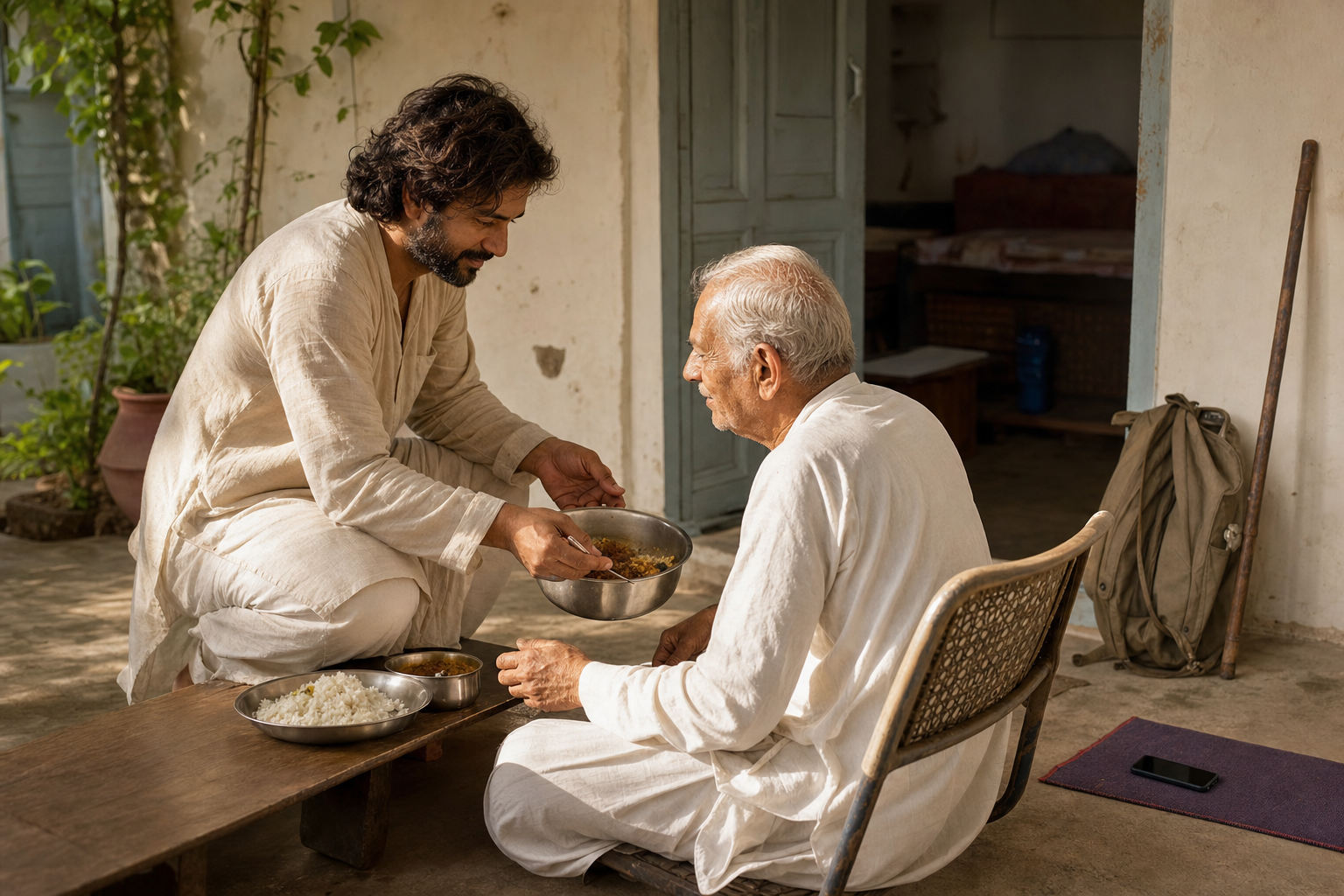
The decisive test usually appears in ordinary friction: how you speak when contradicted, how you handle money when no one is watching, whether you honour an inconvenient duty, and whether you can work sincerely without controlling the result. The atmosphere of a ghat can support clarity. Home shows whether clarity has entered character.
Build your return around four connected practices:
- A stable daily anchor: Keep one practice at a consistent point in your routine. Japa, dhyana, contemplative prayer, breath awareness, or Naam Simran should be modest enough to continue on difficult days.
- A visible ethical restraint: Choose one expression of ahimsa, satya, or aparigraha that another person could actually experience. Gentler speech, honest dealing, reduced possessiveness, and fulfilment of duty make purification tangible.
- A channel of service: Let seva prevent the inward path from becoming self-absorption. Offer time, attention, labour, or resources without using service to avoid obligations closer to home.
- A regular examination: Ask what triggered the old tendency, what you did, whom it affected, and what correction is now possible. Record concrete incidents rather than awarding yourself a spiritual grade.
When you lapse, do not declare the pilgrimage a failure and do not invoke it as proof that the lapse no longer matters. Acknowledge the action as soon as you see it, repair what can be repaired, and resume the discipline. Abhyasa is built by returning. It is not the fantasy of never being tested again.
Non-attachment is essential here. Karma Yoga joins committed action to release of possessiveness over results. That does not mean becoming careless about consequences. You plan, work, apologise, serve, and persevere. What you relinquish is the demand that every sincere action produce the response you prefer.
This distinction is especially important after restitution. You may offer a truthful apology, but you cannot command forgiveness. You may correct your conduct, but you cannot dictate how quickly trust returns. You remain responsible for the action while releasing your claim over another person’s response. That is non-attachment joined to accountability, not indifference.
Keep the integrity of your own Dharmic path
Hinduism, Buddhism, Jainism, and Sikhism share strong ethical resonances, but they do not use identical doctrines of self, karma, or liberation. Respectful unity does not require erasing those differences. Let each tradition supply its own grammar for the inner journey:
- For a Hindu seeker, tirtha-yatra can be joined to bhakti, japa, dhyana, Karma Yoga, and vairagya. The pilgrimage points toward moksha by weakening ignorance and attachment while deepening dharmic action.
- For a Buddhist practitioner, purification is cultivated through sila, samadhi, and prajna: ethical discipline, meditative steadiness, and insight. A sacred journey or rite serves the path when it sharpens mindfulness and compassionate conduct.
- For a Jain practitioner, pratikraman, ahimsa, tapas, and aparigraha address harmful action, karmic obscuration, and possessiveness. External cleanliness supports the discipline but cannot replace non-violence and restraint.
- For a Sikh practitioner, immersion at a sarovar receives its spiritual depth from Naam Simran, seva, humility, righteous living, and acceptance of hukam. Water is not a licence to continue in haumai; remembrance must enter conduct.
You can learn from this wider Dharmic family without constructing a mixture that belongs to none of its lineages. Practise faithfully within the path you have received, study other paths without caricature, and notice the shared insistence that inner clarity must become ethical life.
Key takeaways for a liberating pilgrimage
- Sacred travel can catalyse purification, but it does not mechanically erase karma or remove responsibility.
- Before leaving, name one specific harm, habit, attachment, or confusion. Match it to repair, restraint, non-grasping, or study.
- Use a sankalpa that describes what you will do in a real situation, not an idealised identity you hope to acquire.
- At the tirtha, connect ritual to silence, moral examination, dana or seva, and a definite action after your return.
- Measure the journey by changes in speech, duty, honesty, compassion, and attachment rather than by spiritual emotion alone.
- Follow the practices and understanding of your own lineage while respecting the genuine differences among Dharmic traditions.
Before you book another journey or step into sacred water, write down one thing that must be released and one duty that must be embraced. Carry both to the tirtha. Then let someone in your ordinary life encounter the difference when you return. That is where pilgrimage begins to become purification, and purification begins to serve liberation.
References
- DharmaRenaissance Blog – Keep Flowing: Hinduism’s River Wisdom on Non-Attachment and the Path to Liberation
- DharmaRenaissance Blog – Awakening Inner Divinity: Faith and Meditation as a Universal Remedy in a Scientific Age
- DharmaRenaissance Blog – Do Sacred River Baths Erase Sin? Symbolic Purification, Karma, and Inner Transformation
- DharmaRenaissance Blog – Kashi-Varanasi as Moksha Sthala: Uncover the Sacred City Within and the Path to Liberation
