
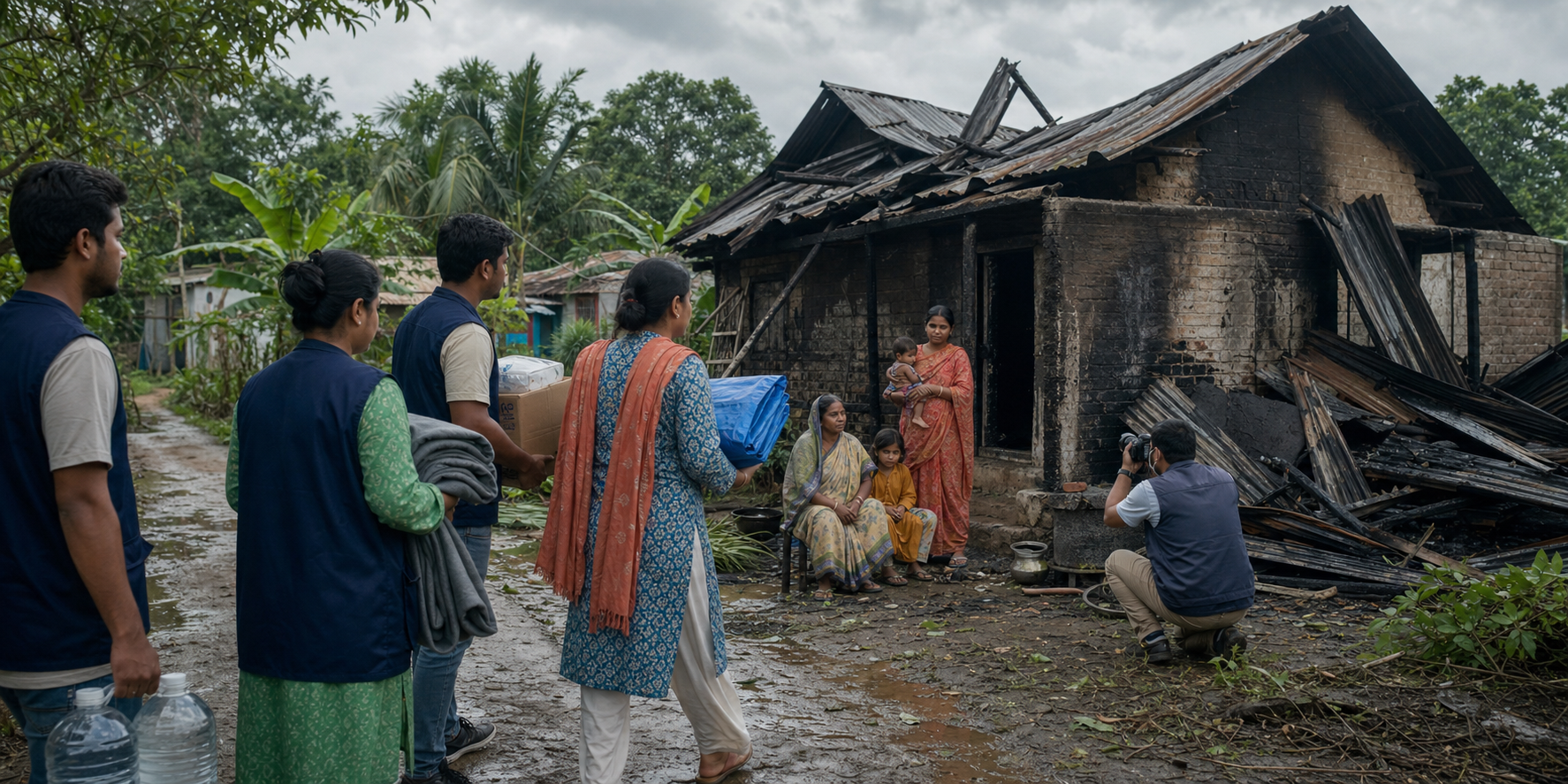
If you have just seen footage of burned Hindu homes in Bangladesh, the most useful response is neither to scroll past nor to forward it immediately. First separate what has been credibly reported from what remains unknown. Then act in a way that protects survivors, preserves evidence, and increases pressure for justice.
Hindu homes were reportedly singled out and set on fire amid protests, institutional uncertainty, and concern about radicalisation. Publicly circulating field footage records the aftermath, but images of burned buildings cannot by themselves identify the attackers, establish their chain of command, or prove every claim attached to a social-media caption. You do not have to minimise anti-Hindu persecution in order to be careful with evidence. Careful evidence is what makes denial harder.
Name anti-Hindu violence without outrunning the evidence
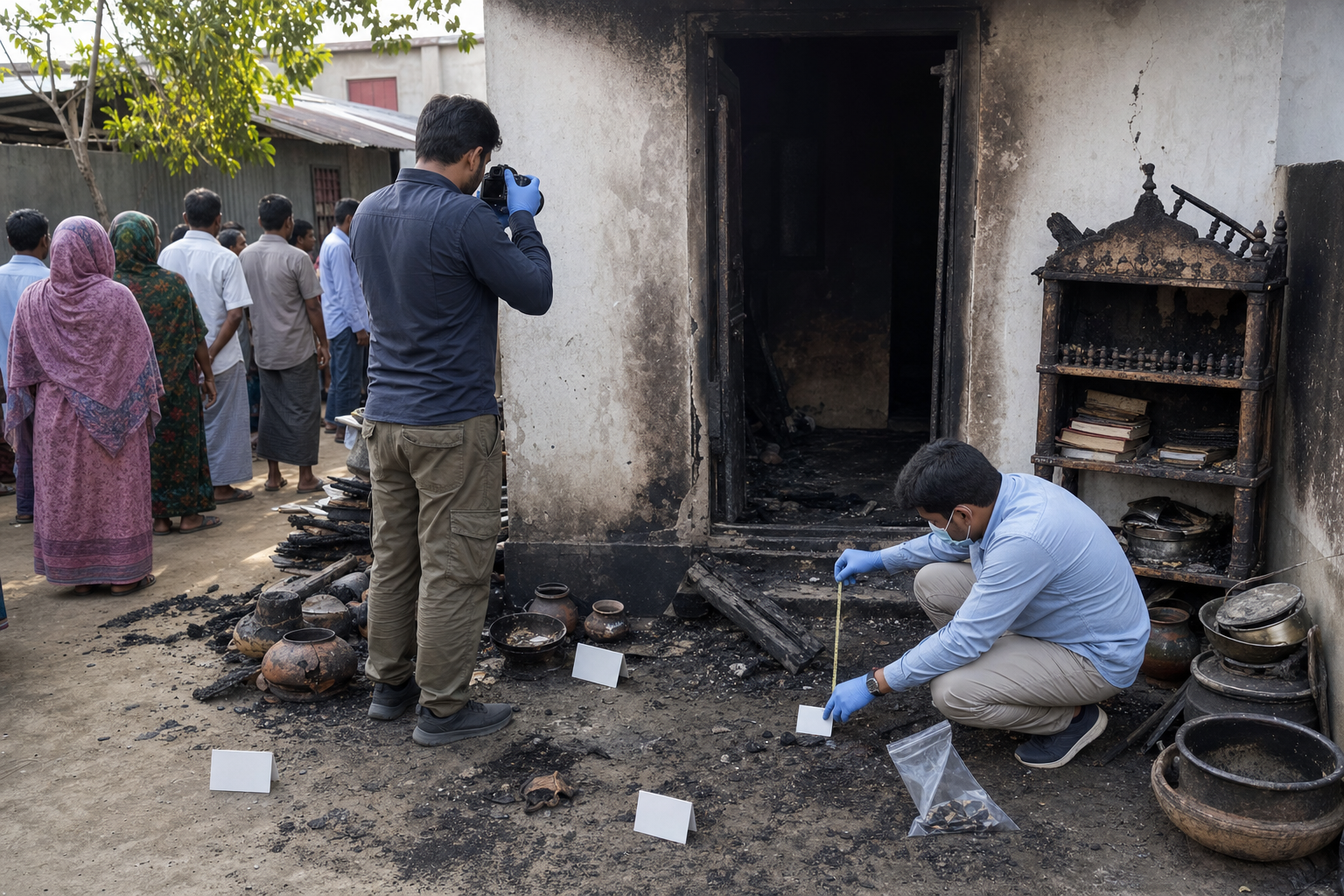
The responsible formulation is direct: Hindu homes in Bangladesh were reportedly targeted in arson attacks. Target selection matters. When homes are chosen because their occupants are Hindu, the attack is not merely property damage or an unfortunate side effect of unrest. It is communal intimidation directed at a religious minority.
At the same time, targeted arson is a description of the reported conduct, not a licence to invent missing facts. The material available here does not establish a reliable total for damaged homes, name the individual perpetrators, prove which organisation may have directed them, or provide a completed judicial finding on motive. Those gaps should remain visible until investigators fill them.
This distinction is especially important during political disorder. A plausible concern is that hardline groups may exploit instability, but that remains a hypothesis until case evidence identifies who acted, who assisted, and whether the incidents were coordinated. Treating a plausible explanation as a proven one gives opponents an easy way to attack the entire account through its weakest claim.
Before you repost a photograph, video, donation appeal, or accusation, check five things:
- Origin: Can you identify the earliest available upload, rather than a cropped repost with a new caption?
- Place and time: Are the location and date established? If either is uncertain, say so plainly.
- Visible facts: Describe what can actually be seen, such as burned dwellings or displaced residents. Do not claim that aftermath footage shows who started a fire.
- Victim safety: Does the material expose a survivor’s face, name, house, temporary shelter, travel route, or testimony without consent?
- Appeal verification: If money is requested, can you verify who controls the fund, who qualifies for assistance, and how distributions will be documented?
Preserve the original URL, uploader name, caption, and the time at which you accessed the material. Where lawful and safe, retain the original file separately. If you edit a public copy to hide faces or identifying details, record what you changed and keep the unedited version in restricted storage. Never publish a survivor’s location merely to make a claim appear more convincing.
A burned home creates a protection crisis, not just a repair bill
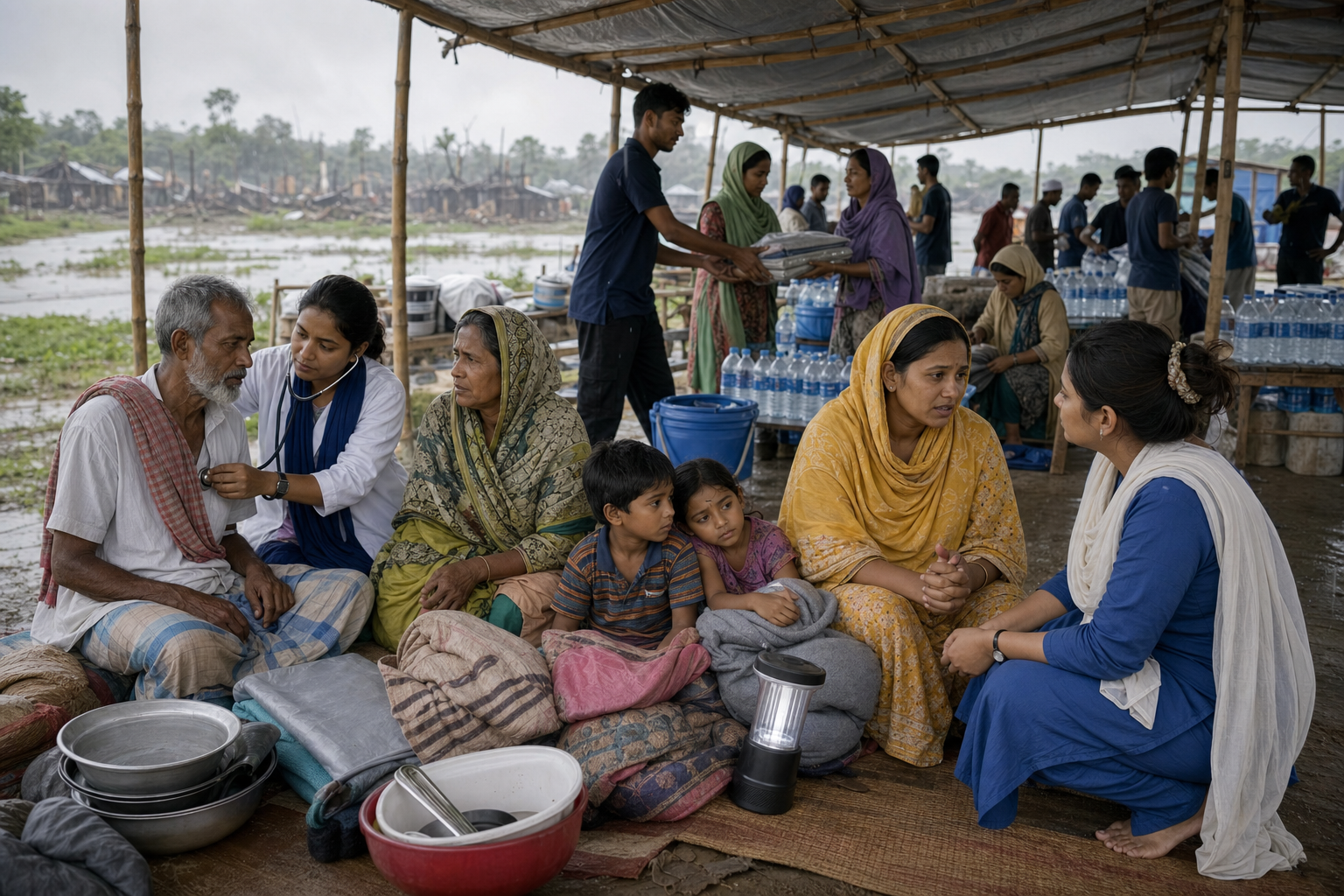
Arson removes more than a roof. Affected families can lose shelter, livelihood assets, documents, household savings, family possessions, and objects of worship at the same time. Displacement also creates new risks: relatives may become separated, witnesses may be easier to intimidate, and families may feel pressured to leave the area permanently. The psychological harm continues after the flames are extinguished.
That changes how relief should be judged. A photograph of distributed food may show that something was delivered; it does not show that a family is safe, able to work, or free to return home. Survivor-centred assistance should proceed in a practical order:
- Secure immediate safety. Confirm temporary shelter, privacy, food, essential medicines, and safe communication before requesting testimony or media appearances.
- Ask each household what was lost. Do not assume that every family needs the same package. Livelihood tools, documents, school materials, clothing, or religious items may be as urgent as building supplies.
- Protect legal and evidentiary needs. Photograph damage with consent, preserve ownership or tenancy records where available, and keep copies of complaints, receipts, and repair estimates.
- Plan for livelihood recovery. Rebuilding walls will not restore income if tools, inventory, livestock, or access to a workplace have disappeared.
- Provide dignified emotional support. Trained, confidential help is more useful than repeatedly asking survivors to relive the attack for cameras.
- Report assistance without exposing recipients. Donors can receive totals, categories of support, and distribution updates without publishing names and locations that create further risk.
If you are donating, ask for a basic chain of accountability: who receives funds, who approves payments, how needs are assessed, how complaints are handled, and what information will be published afterward. Privacy and financial transparency are compatible. A credible relief effort can account for money without turning frightened families into promotional material.
Turn public anger into demands that can be measured
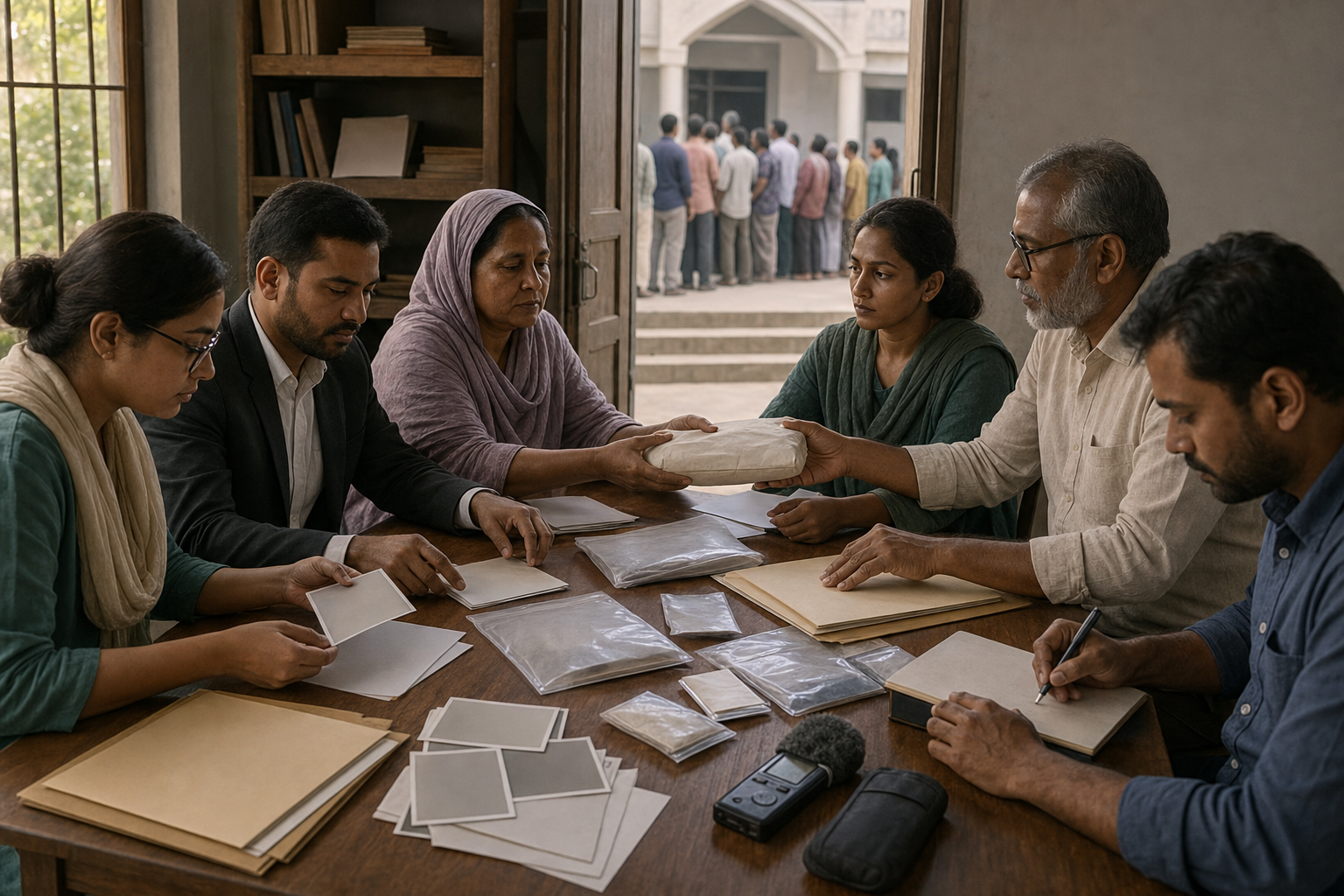
The incidents were reported during a sensitive political period in which the administration led by Muhammad Yunus faced pressure to demonstrate that institutions could protect minorities. A general promise of harmony is not enough. The relevant test is what happens in each case after the public attention fades.
Bangladeshi authorities should be pressed for a response with traceable components:
- Immediate protection: Secure affected areas, assess continuing threats, and prevent repeat or copycat attacks.
- A transparent investigation: Treat each fire as potential targeted communal violence rather than automatically reducing it to ordinary property damage.
- Evidence preservation: Protect physical evidence, original recordings, witness accounts, and official records from loss or manipulation.
- Witness safeguards: Keep identities confidential where disclosure could expose residents to intimidation or retaliation.
- Evidence-based prosecution: Charge identifiable perpetrators and organisers through lawful process, without substituting collective blame for individual responsibility.
- Redress: Help families obtain safe housing, restore documents and livelihoods, repair or rebuild property, and pursue compensation.
- Public updates: State what has been verified, what remains under investigation, and what corrective action has been completed. Correct false claims quickly.
Community dialogue can help prevent rumour, isolate incendiary rhetoric, and create local warning networks. It cannot replace investigation or prosecution. Asking victims to reconcile while perpetrators remain unaccountable shifts the burden from the people who used violence to the people who survived it.
For India and other international partners, constructive engagement should also be concrete. Diplomatic attention is useful when it seeks protected survivors, case-level progress, witness security, redress, and consistent enforcement of minority guarantees. Broad expressions of concern without follow-up are difficult to evaluate and easy to ignore.
Practise Dharmic solidarity without feeding retaliation
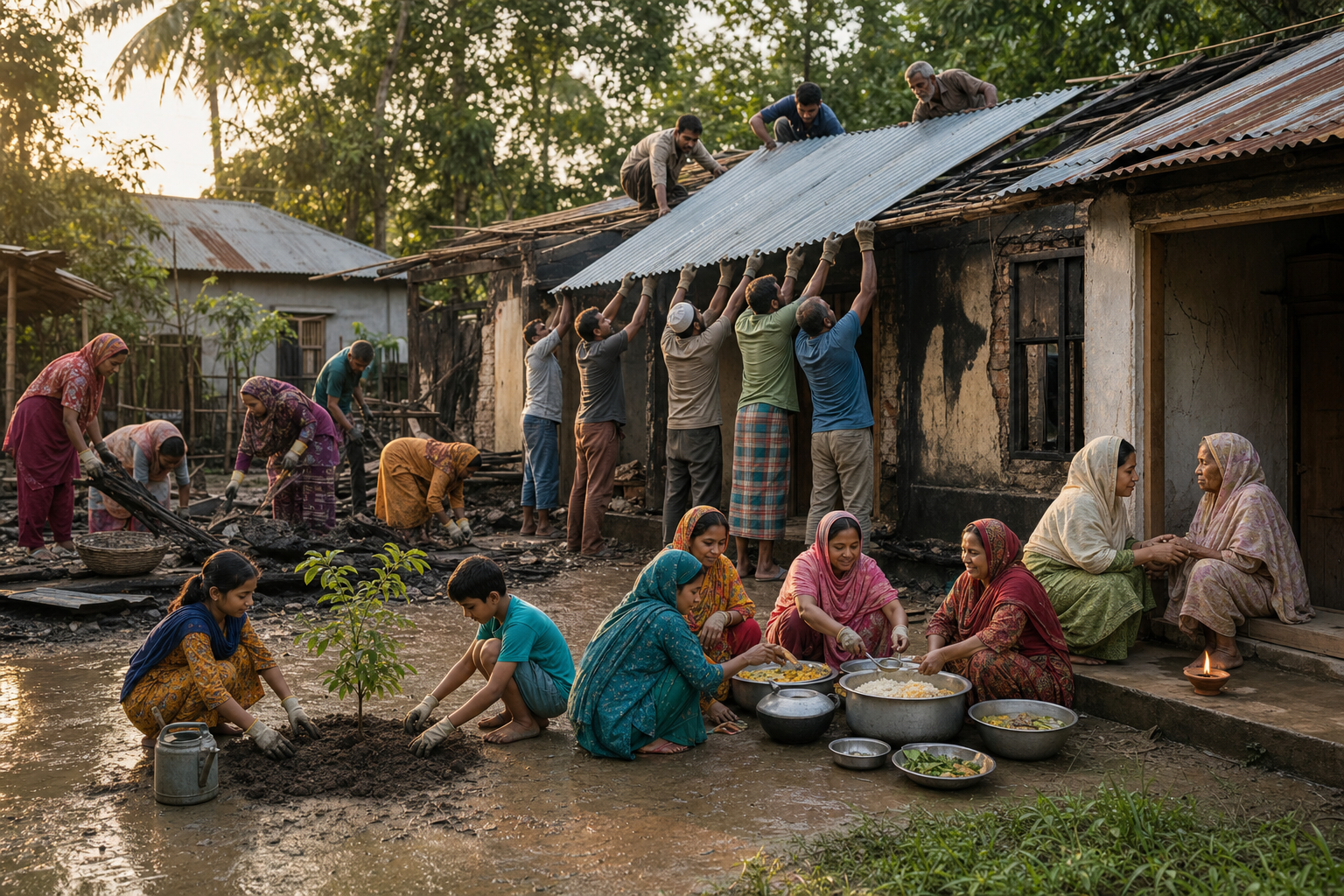
Ahimsa does not require silence about the targeting of Hindus. It requires disciplined action that protects life, refuses indiscriminate hatred, and directs accountability toward actual perpetrators. A pro-Hindu response should be clear enough to name persecution and controlled enough not to endanger uninvolved people.
Hindu, Buddhist, Jain, and Sikh organisations can cooperate on relief, documentation, legal assistance, public advocacy, and non-violent peacebuilding. Wider interfaith participation can help isolate hardline mobilisation. That solidarity should amplify Hindu victims rather than dissolve their identity into vague language about unrest.
If you live outside Bangladesh, you still have useful options:
- Share carefully qualified information with the original link and remove unverified claims from your caption.
- Support a relief channel only after checking its leadership, distribution method, privacy rules, and financial reporting.
- Write to your elected representative, foreign ministry, or relevant human-rights body with four specific requests: survivor protection, transparent investigation, witness safeguards, and redress.
- Offer secure copies of original material to a credible documentation or legal effort instead of repeatedly circulating graphic footage.
- Correct false or exaggerated claims even when they appear to support your side. Credibility is a form of protection for victims whose cases will later face scrutiny.
- Reject retaliatory language against an entire religious or national population. Collective blame reproduces the logic that made minority homes vulnerable.
If you are in or near an affected area, personal safety comes first. Do not travel to an active scene merely to gather images, confront suspected attackers, or publish the location of people in hiding. Use trusted local emergency, legal, and community channels appropriate to your location. Documentation can be reconstructed; a life cannot.
Key takeaways
- Describe the incidents as reported targeted arson against Hindu homes while keeping unverified claims clearly labelled.
- Preserve original material and metadata, but remove identifying details from public copies when disclosure could endanger survivors or witnesses.
- Judge relief by safety, dignity, livelihood recovery, and transparent distribution, not by the visibility of a donation campaign.
- Demand investigation, evidence preservation, witness protection, prosecution, redress, and public progress updates as separate obligations.
- Use Dharmic and interfaith solidarity to protect victims and resist hardline mobilisation, never as a substitute for legal accountability.
- Refuse retaliatory rhetoric and collective blame. They endanger other innocents and weaken the case for justice.
Your next step does not need to be dramatic. Share one verified appeal, preserve one useful piece of evidence, or send one focused message to an official. Ask for outcomes that can later be checked: protected families, a transparent investigation, safeguarded witnesses, lawful prosecution, and meaningful redress. That is how outrage becomes durable pressure.
References
