
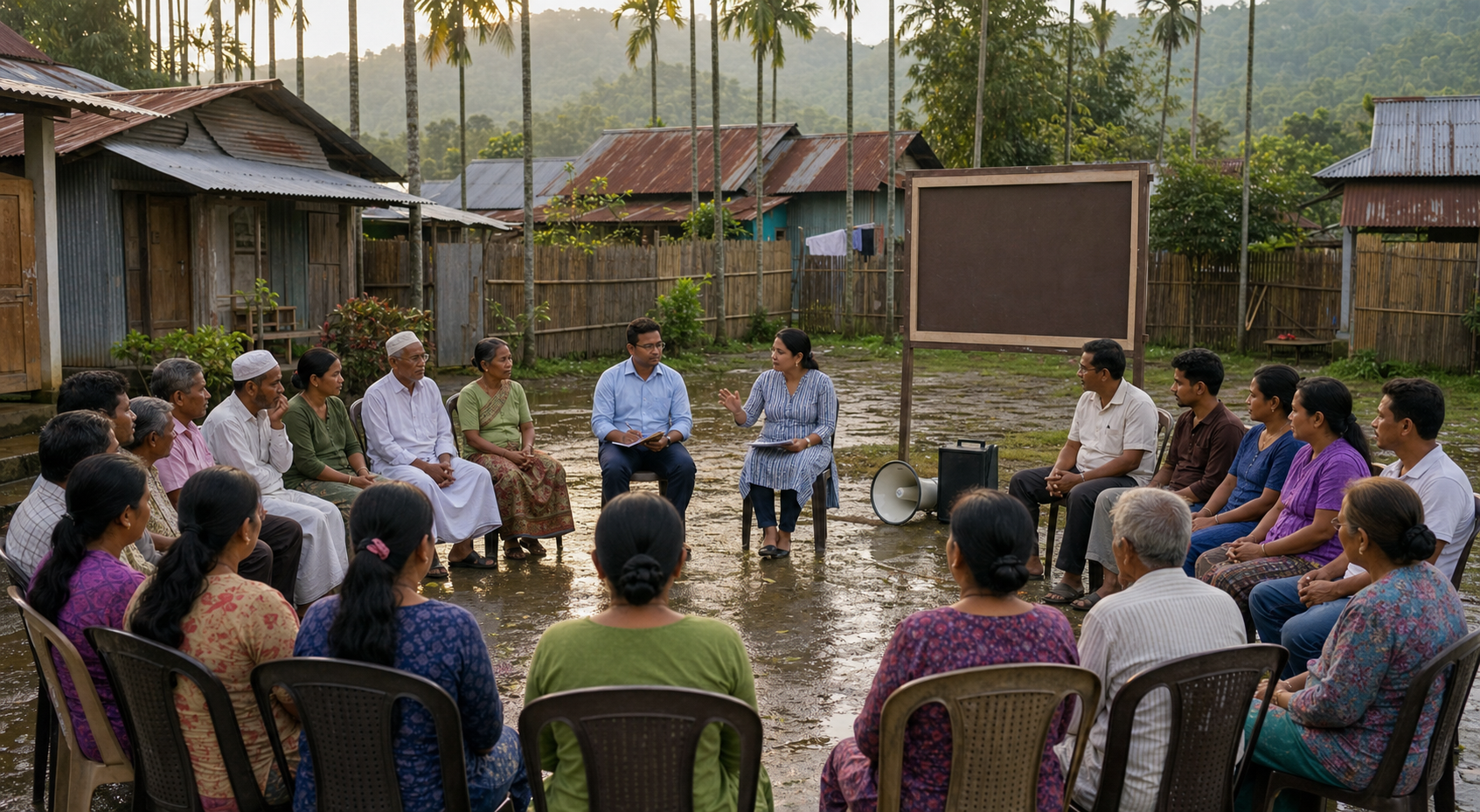
If you live in Panisagar, organise religious programmes, or represent a neighbourhood, a disputed loudspeaker announcement can put you in a difficult position. You may want rules enforced without allowing an argument about permission to become a confrontation between communities.
That distinction matters after an alleged confrontation in Pekuchhara on December 31, 2025. Local accounts linked the tension to a public announcement for a waz mehfil, questions about authorisation, and an exchange that reportedly escalated into scuffles. Verified official information remained limited. Until an administrative inquiry establishes the sequence, forwarded claims should be treated as claims rather than verdicts.
Key takeaways
- Do not describe an announcement as “unauthorised” until the competent authority has checked the applicable rules and documents.
- Separate the urgent safety problem from the permission question. Threats, crowding, or physical contact require an immediate police response; paperwork can be examined after people are safe.
- Do not enforce a suspected permit violation physically. Request a voluntary pause, contact the administration, and let an authorised official determine compliance.
- Record times, actions, witness details, and available documents. Avoid communal labels, speculative motives, and edited social-media clips.
- Religious organisers, neighbourhood representatives, and officials should agree on a standing contact and verification process before the next event.
Begin with facts, not a communal verdict
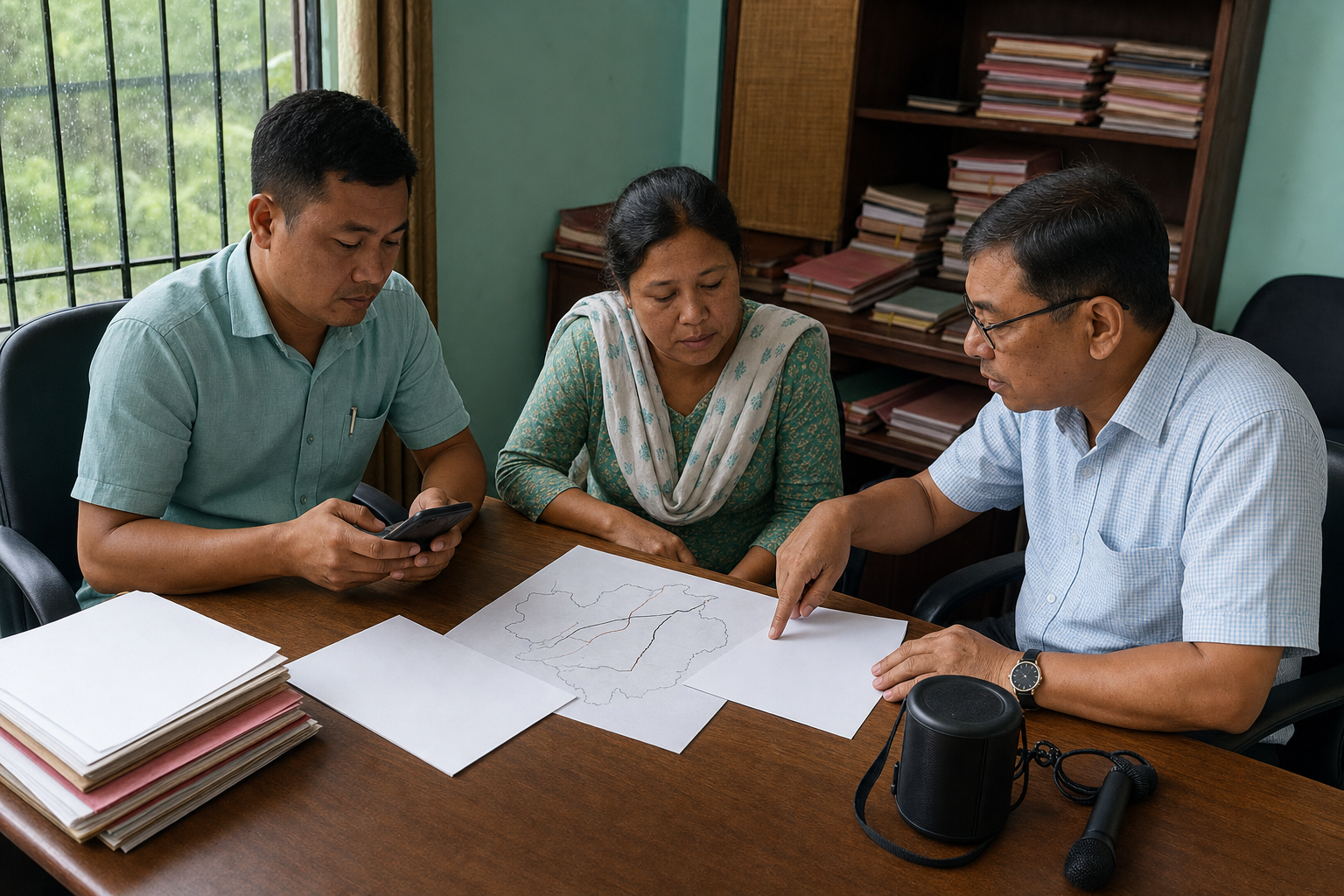
The first discipline is linguistic. “Residents questioned the permission” and “the announcement had no permission” are not interchangeable statements. The first describes an objection. The second reaches a legal or administrative conclusion that requires verification.
An announcement for a religious gathering and the gathering itself are also related but distinct facts. Instead of arguing over a broad label, ask precisely what is disputed:
- What was being announced, and where was the announcement made?
- Was sound amplification used?
- Had any application, approval, notice, or related document been issued?
- What activity, place, timing, and conditions did the document cover?
- Who allegedly threatened, obstructed, pushed, or struck another person?
- Which parts of the sequence are supported by direct witnesses or unedited material?
These questions prevent two common errors. An objection does not prove that a rule was broken, and uncertainty about permission does not excuse intimidation or violence. Conversely, the right to hold or publicise a religious event does not place its organisers outside sound, assembly, and public-safety procedures that lawfully apply.
A fact-first approach is not a demand for moral equivalence. If one or more people committed assault, issued threats, or deliberately violated a lawful condition, an impartial inquiry should identify that conduct and assign responsibility. What must be resisted is collective blame: the act of an individual cannot be converted into a charge against every Hindu, every Muslim, or an entire locality.
If you receive a dramatic message about the incident, inspect it before forwarding it. Look for the original time and location, the full recording rather than a clipped segment, an identifiable official confirmation, and a clear separation between witnessed conduct and the sender’s interpretation. If those elements are missing, do not help an allegation outrun the evidence.
What to do when an event dispute begins
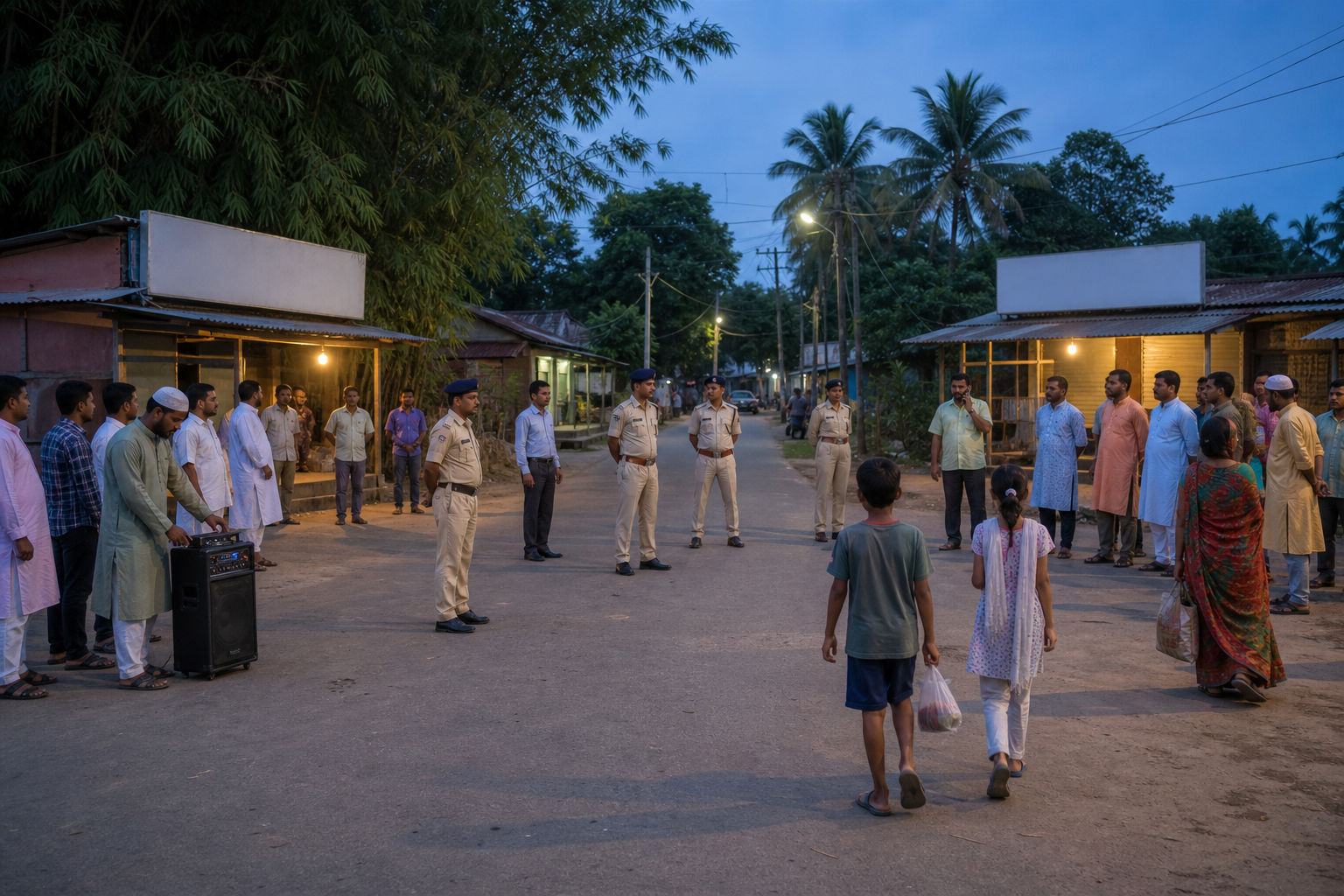
The most dangerous interval is the period between the first objection and the arrival of a responsible official. A small disagreement can attract onlookers, competing claims, and people who know little about the original issue. Your aim during that interval is to reduce contact, preserve evidence, and transfer the decision to the lawful authority.
- Create distance. Move children, older residents, customers, and bystanders away from the point of dispute. Keep exits open. Do not summon supporters or form a counter-crowd.
- Request a temporary pause. If you are an organiser, stop the contested announcement voluntarily while the documents are checked. If you are an objector, make the request without touching equipment, blocking people, or trying to impose the pause yourself. A temporary pause is a safety measure, not an admission of wrongdoing.
- Contact the police or local administration. Give the exact location and describe observable conduct: crowd size, obstruction, threats, injuries, or physical contact. State separately that there is also a permission dispute.
- Use one representative from each side. One event representative and one neighbourhood representative should speak with the official. A crowd cannot conduct a reliable document check.
- Make a contemporaneous note. Record the approximate sequence, words you personally heard, available documents, and names of willing witnesses. Preserve existing material in its original form. Do not endanger yourself by filming faces inside a volatile crowd.
- Move the follow-up into writing. Ask the administration to acknowledge the complaint, identify what it will verify, and communicate the result through a named contact. This keeps the disagreement from being retried through rumours.
If there is an immediate threat of violence, leave the area and seek police assistance. Do not remain in danger merely to collect evidence or defend a position. If an individual receives a police notice, is accused of an offence, or faces possible legal action, that person should obtain advice from a qualified local lawyer rather than rely on messages circulated by either community.
Once calm is restored, the administration should answer the permission question through records, not impressions. The useful questions are whether an application or notice existed, which activity it covered, what timings and conditions applied, and whether those conditions were followed. The requirements for the particular event must come from the applicable local process; neither a crowd nor a social-media account can substitute its own interpretation.
Dharmic firmness does not require street enforcement
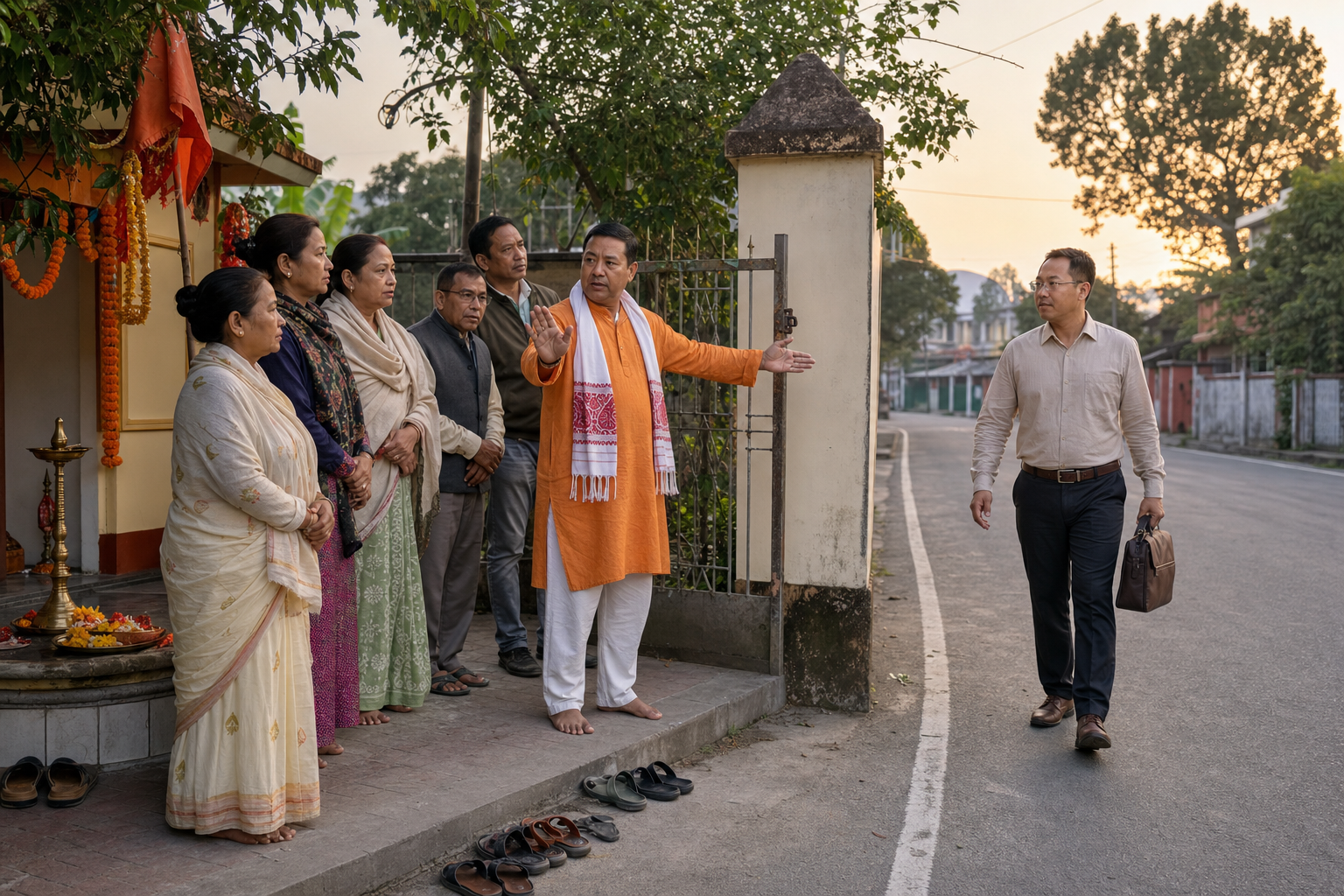
A pro-Hindu response need not choose between silence and confrontation. It can insist on equal rules, transparent permissions, protection of neighbourhood peace, and accountability for misconduct. Its firmness should attach to verified conduct rather than religious identity.
Dharmic ethics give this civic discipline a deeper foundation. Ahimsa asks us to prevent avoidable injury. Truthfulness requires us to distinguish what is known from what is alleged. Compassion keeps ordinary families from becoming targets for something they did not do. Self-restraint prevents a legitimate concern from being captured by anger.
None of those principles demand passivity. If rules governing public announcements or amplification were breached, the breach should be established and addressed. If anyone used threats or force, that conduct should be investigated independently of the paperwork. Restraint means choosing a method that can produce a defensible result without creating a larger wrong.
This is also why the language used by community leaders matters. A responsible statement names the location, the disputed activity, the steps taken to verify it, and the present safety situation. It does not guess at motives or treat a local incident as proof of a permanent characteristic of another faith. Leaders should correct false claims from their own supporters as readily as they challenge false claims directed at their community.
Dialogue should follow accountability rather than replace it. A mediated meeting cannot decide whether an offence occurred, and an administrative inquiry cannot by itself repair damaged trust. Panisagar needs both: a fair examination of conduct and a structured conversation about how the next disagreement will be handled.
Build a protocol before the next announcement
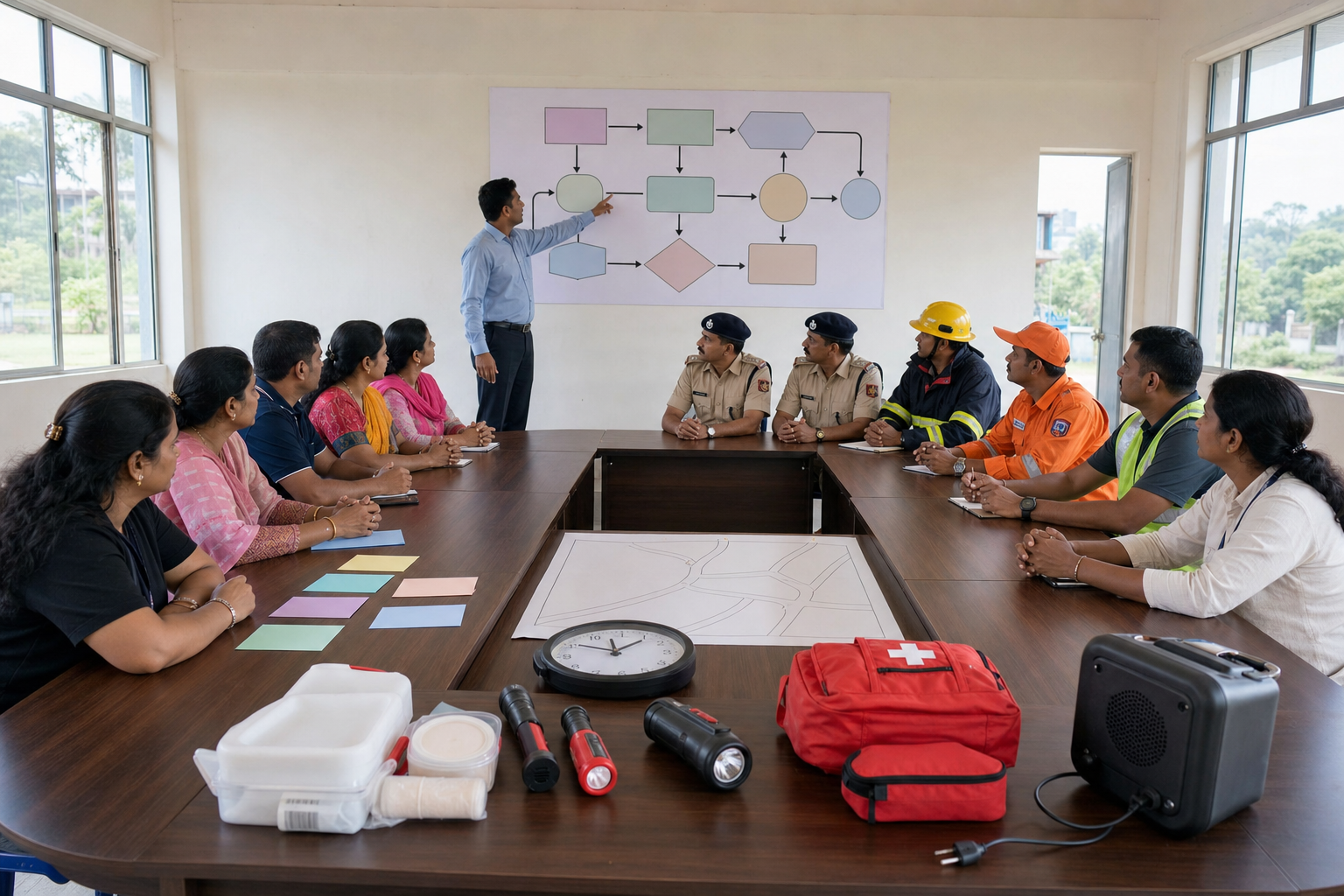
Communal peace becomes more durable when it depends on a routine rather than the temperament of whoever reaches the scene first. A short local protocol can cover advance coordination, rapid verification, and post-incident review without giving any community control over another community’s lawful worship.
Before a religious event
- Organisers should notify the relevant local authority in advance and identify one person responsible for official communication.
- Any required written permission or acknowledgement should be kept where the designated representative can retrieve it promptly.
- The operational details should be explicit: location, date, timings, proposed announcement arrangements, sound amplification, and any conditions imposed by the authority.
- Nearby neighbourhood representatives should receive practical notice of the schedule and a contact for complaints. Notice is coordination, not a request for one community to approve another’s beliefs.
- The administration should maintain a current rapid-contact route for event organisers, police, and recognised neighbourhood representatives.
When an objection is raised
- The complainant should identify the exact activity believed to be non-compliant rather than making a general accusation against the event.
- The organiser should show documents to the authorised official, not negotiate them before a crowd.
- The disputed activity should be paused voluntarily when a short pause can reduce danger while verification occurs.
- The official should communicate an interim direction through the designated contacts so that competing rumours do not fill the gap.
- Any allegation of violence or intimidation should be recorded and examined separately from the administrative question.
After an incident
- An impartial administrative review should establish the sequence, the relevant requirements, the status of documents, and any procedural failures.
- A facilitated meeting should include event organisers, neighbourhood representatives, civic authorities, and other trusted local participants who can help repair communication.
- The participants should amend the protocol where a practical gap became visible, such as an unreachable contact, an unclear timing condition, or uncertainty about who could verify a document.
- The administration should communicate enough of the outcome to stop unresolved factual claims from circulating indefinitely, while respecting lawful investigative limits.
The next useful step is modest and concrete. Religious organisers and neighbourhood representatives in Panisagar can ask the local administration for one meeting with a draft one-page protocol: named contacts, documents to retain, event timings, a rapid verification route, and the procedure for reporting threats or force. The real test will come before another crowd forms. If the next dispute can be moved from the street to a phone call, a document check, and a recorded decision, communal peace will have gained working machinery rather than another temporary appeal for calm.
References
