
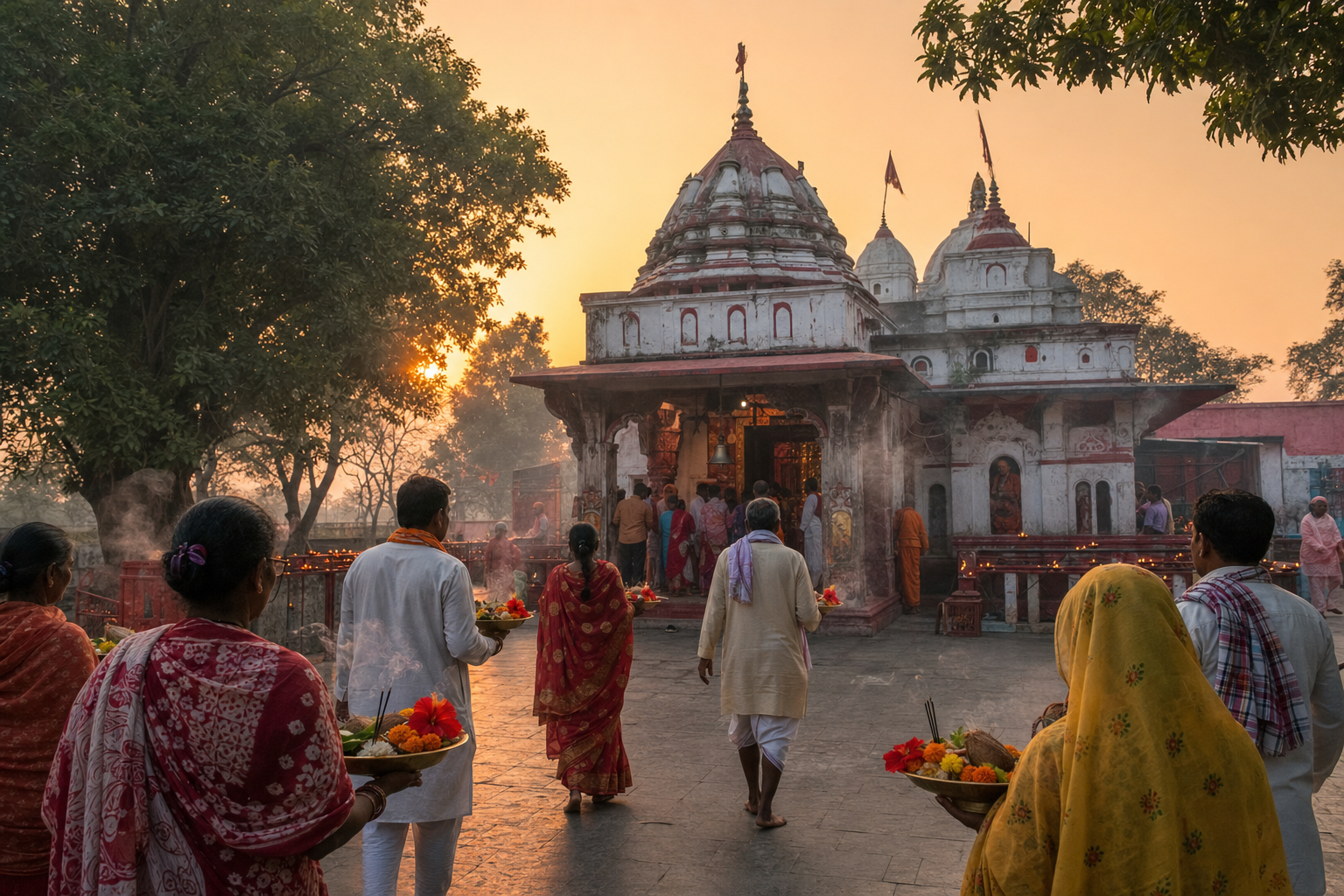
If you are considering a pilgrimage to Maa Ugratara in Chandwa, you probably want more than a location on a map. You want to know why devotees regard this shrine as spiritually powerful, what you can reasonably expect there, and how to approach darshan without turning a living sacred place into a sightseeing stop.
The essential point is that Maa Ugratara Nagar Temple is sustained by worship, seva, festivals, and local memory. Its importance does not depend on producing a neat founding date. Once you understand that, you can enter the temple on its own terms: attentive to the Divine Mother, respectful of the community, and honest about what is known and what remains uncertain.
Why the shrine’s living tradition matters more than a disputed date
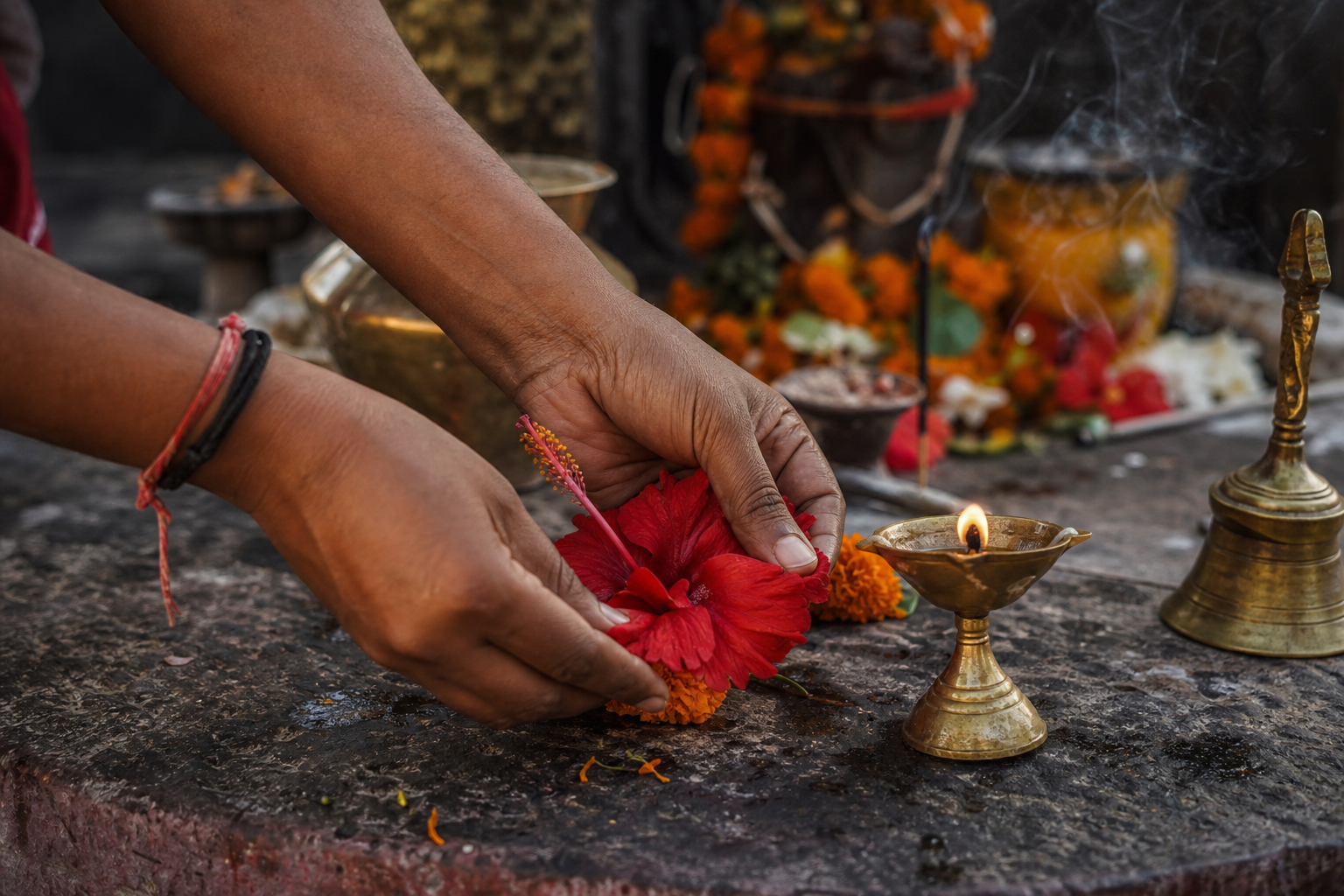
Maa Ugratara Nagar Temple stands at Chandwa in Latehar district, Jharkhand, and is widely revered as a Siddha Shaktipeeth. That designation tells you how worshippers receive the place: as a spiritually potent seat of Shakti where devotion has been cultivated and transmitted across generations.
Precision still matters. The shrine’s exact origin is not securely established in detailed scholarly records, while oral histories and community practice carry the memory of centuries of veneration. The responsible description is therefore both confident and restrained: this is an ancient, continuously revered Shakta shrine, but a precise founding date should not be asserted without stronger documentation.
This distinction protects the temple in two ways. It prevents scepticism from treating the absence of a dated record as the absence of heritage. It also prevents enthusiasm from hardening an unverified story into historical fact. Neither extreme serves dharma. Living continuity has its own evidence: daily worship, inherited ritual practice, recurring festivals, collective seva, and a community that continues to recognise the sanctity of the place.
When you speak about the temple, lead with that continuity. Say that Maa Ugratara is revered at Chandwa as a Siddha Shaktipeeth and that its worship has been preserved through local tradition. If someone asks for an exact age, acknowledge that the chronology remains limited rather than supplying a dramatic number. Reverence does not require careless certainty.
Meet Maa Ugratara as both fierce protector and compassionate mother
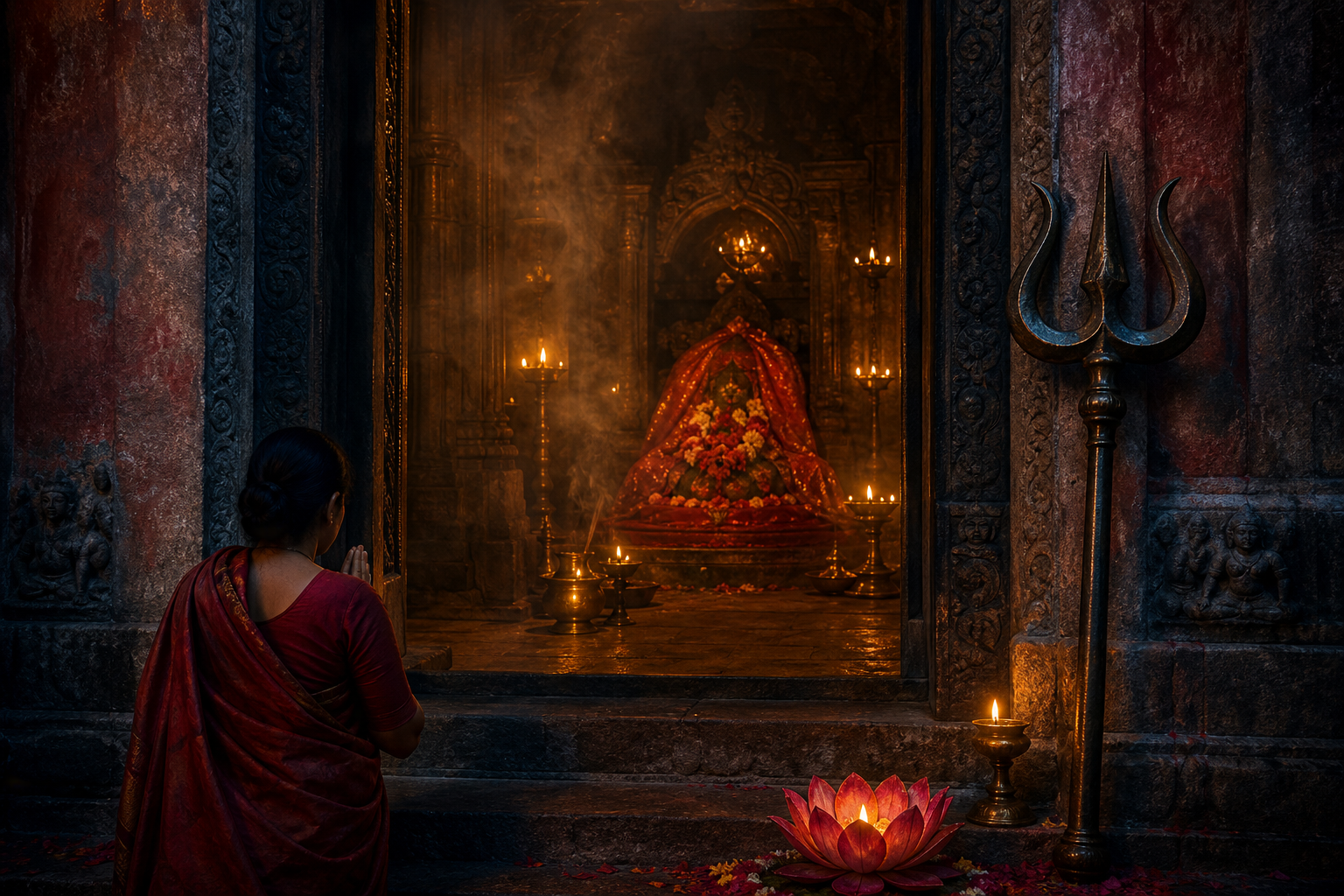
The word ugra can make a newcomer expect only severity. Within the Shakta understanding expressed at Chandwa, however, Maa Ugratara unites protective ferocity with maternal compassion. Her fierceness is not cruelty. It is the force that confronts danger, fear, confusion, and whatever keeps a seeker inwardly weak. Her maternal aspect offers refuge, courage, and reassurance.
That balance gives you a practical way to prepare for darshan. Do not approach only with a list of desired outcomes. Before entering, identify one fear, avoidance, or harmful tendency that requires firmness. Then identify the person, duty, or part of your own life that requires compassion. Hold both before the Mother. This is not a prescribed temple ritual; it is a simple reflective discipline that helps you encounter Ugratara’s symbolism rather than merely observe her image.
After darshan, convert the reflection into one concrete action. If you prayed for courage, make the decision you have been postponing. If you sought protection for someone, accompany prayer with responsible care. If you asked for clarity, remove one habit that keeps the mind agitated. Shakti becomes meaningful in a devotee’s life when inner resolve changes conduct.
The name Tara also has resonance in Hindu and Buddhist lineages. That resonance can open a genuine Dharmic conversation, but it should not be used to claim that every tradition means exactly the same thing by Tara. Shared sacred vocabulary is a bridge, not permission to erase doctrinal differences.
A Buddhist, Jain, Sikh, or Hindu visitor does not need to flatten those differences in order to behave reverently. You can recognise the shrine as a Hindu Shakta place, follow its local discipline, and still appreciate the wider Dharmic values visible there: disciplined practice, courage, compassion, service, and respect for inherited wisdom. Harmony becomes stronger when traditions meet honestly rather than being forced into artificial sameness.
Plan the visit around the kind of darshan you need
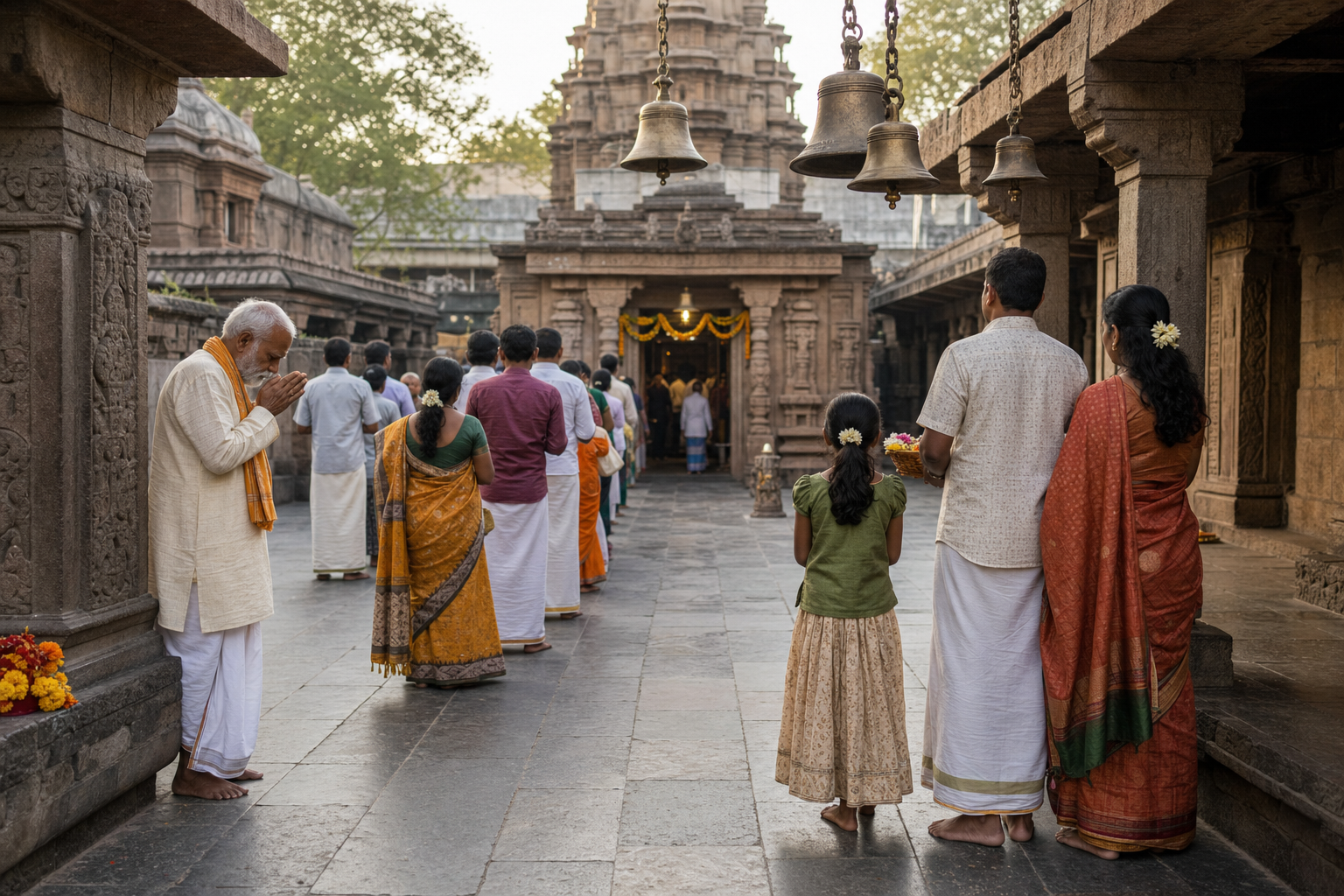
A useful pilgrimage begins with one decision: do you want quiet devotional space or the energy of collective worship? The temple receives pilgrims through the year, while Navaratri, other auspicious tithis, and major observances bring larger gatherings. A festival visit offers shared worship and cultural activity. A non-festival visit is more suitable when your priority is unhurried reflection.
- Confirm current access and ritual times. Daily puja and aarti are central to the shrine, but do not assume that an opening time remembered from another temple will apply here. Check the current schedule through a reliable local or temple contact before travelling, especially around a festival.
- Choose your day deliberately. Go during Navaratri if collective devotion is the purpose of your journey. Choose an ordinary day if silence and a slower darshan matter more to you. Neither is spiritually superior; they support different forms of attention.
- Arrive in modest clothing. Temple etiquette at Chandwa calls for modest attire and mindful participation. Wear something suitable for worship and practical enough for moving through the precinct without fuss.
- Ask before improvising. Offering practices, photography rules, queue arrangements, and access within a sacred precinct can vary. Observe posted instructions and ask the people responsible for the temple rather than copying what another visitor happens to do.
- Carry away everything you bring. The shrine’s green, quiet setting contributes to its contemplative character. Avoid disposable clutter, do not leave packaging behind, and treat the surrounding landscape as part of the pilgrimage rather than as unused space.
Do not build a tight onward schedule around an assumed duration for darshan. Festival crowds, rituals, and local arrangements can affect the pace. Leave enough room to wait without irritation. Patience in a queue is not separate from worship; it is where your declared reverence is tested against the presence of other devotees.
Let the temple’s rhythm shape your attention
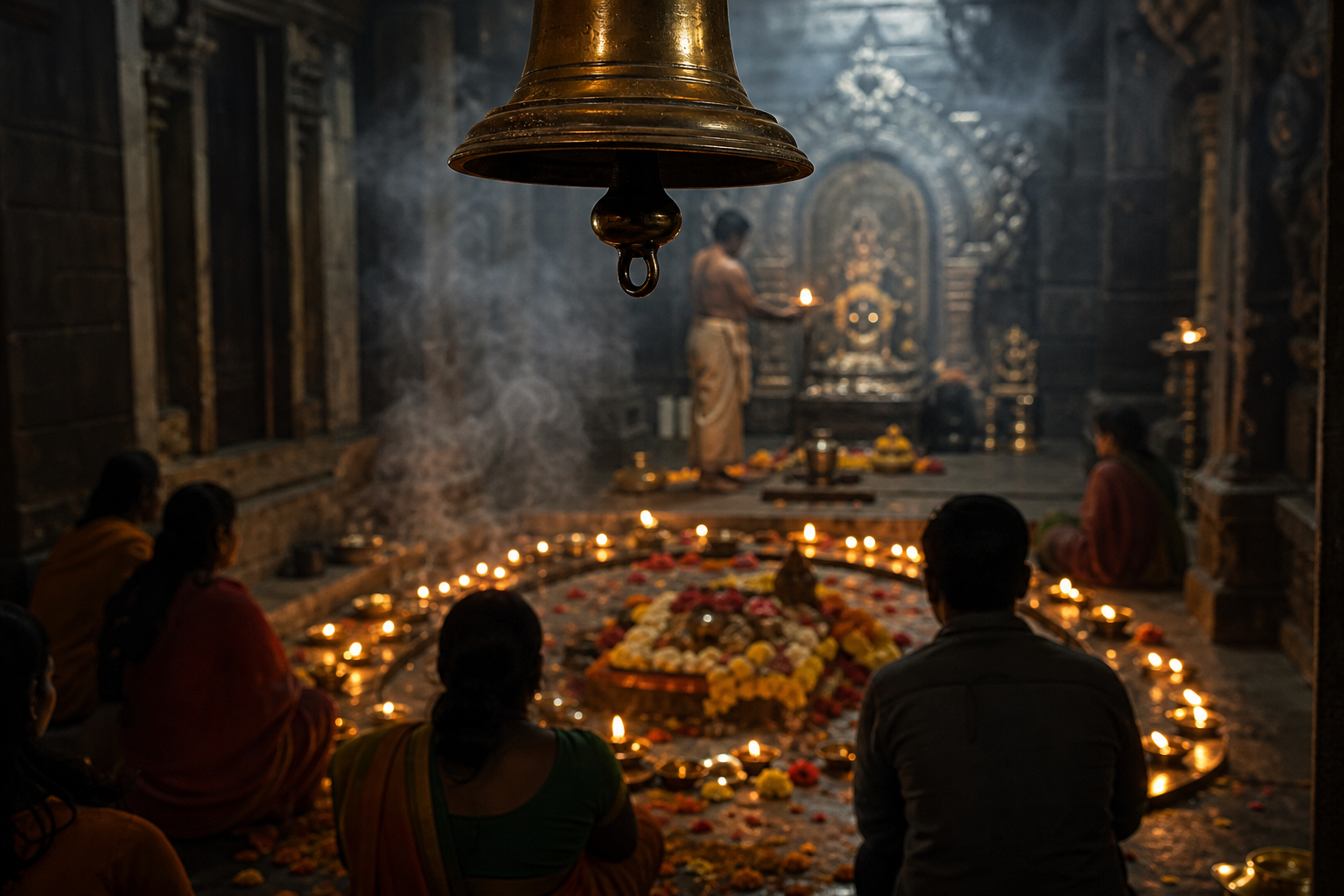
The precinct is associated with green pathways, a simple and dignified garbhagriha, lamps, incense, bells, and rhythmic mantra recitation. These are not decorative details. Together they gather the senses and help turn a distracted visitor toward a single sacred presence.
Pause briefly at the threshold instead of entering while talking or looking for a camera angle. Notice how local devotees move, where they stand, and when they offer pranam. That observation will teach you more about appropriate conduct than assuming that every Shakta temple follows an identical sequence.
During aarti, let the flame, sound, and mantra hold your attention together. You do not need to manufacture an extraordinary experience. Devotees often associate the sanctum with courage and reassurance, but another person’s testimony is not a promise that you must feel the same sensation. A quiet darshan is not a failed darshan. Your task is attention, not spiritual performance.
If space and local rules permit, spend a few silent minutes in the precinct after leaving the sanctum. Ask what your prayer now requires from you. The movement from darshan to duty is important: protection should deepen responsibility, courage should strengthen truthful action, and compassion should become seva.
Your conduct also affects more than your individual visit. The temple acts as a cultural anchor for Latehar, sustaining oral narratives, community gatherings, local cultural expression, and intergenerational learning. Orderly participation, respect for local guidance, ecological care, and support offered through authorised channels all help preserve that living inheritance.
This is why preservation cannot be reduced to maintaining walls. The physical shrine matters, but so do the people who perform puja, organise observances, remember local narratives, welcome pilgrims, and teach younger generations how the sacred place is approached. A pilgrim protects intangible heritage by learning before speaking, listening before correcting, and refusing to spread unsupported claims for the sake of a more dramatic story.
Key takeaways for a respectful Maa Ugratara pilgrimage
- Maa Ugratara Nagar Temple is located in Chandwa, Latehar district, Jharkhand, and is widely revered as a Siddha Shaktipeeth.
- Treat it as a living centre of Shakta worship, not merely an old structure or a claim to be debated.
- Describe its antiquity honestly: continuous community veneration is clear, while a precise origin date is not securely established.
- Approach Ugratara through both sides of her sacred character: fierce protection and maternal compassion.
- Choose a festival visit for collective worship or a quieter day for reflection, then confirm current access and aarti times locally.
- Follow local instructions, dress modestly, limit waste, and let patience, attention, and seva become part of your darshan.
Before you leave for Chandwa, make three choices: decide whether you want festival energy or quiet darshan, confirm the current temple schedule, and name the one inner obstacle you are ready to face. Once you arrive, let the local rhythm set the pace. Offer your prayer, listen carefully, and return with one act that gives your devotion a visible form.
References
