

You may be looking back because something still has a grip on you: a harsh exchange, a promise you did not keep, a decision made in anger, or a habit that keeps returning. If every review ends in shame or in a carefully argued case for your innocence, memory has become a courtroom. It will keep trying the past without showing you what to do next.
Dharmic retrospection asks a narrower and more useful set of questions: What happened? What moved within me? Which duty or value did I neglect? What response would reduce harm and serve something larger than my self-image? The review is complete only when it changes your next act.
Begin with dharma, not a verdict on yourself

The first mistake is to make your identity the subject of the review. Asking whether you are a good or bad person invites either condemnation or self-defence. Asking whether a particular thought, word, or action was aligned with dharma gives you something you can examine and correct.
Ahimsa should govern the examination itself. That does not mean protecting yourself from every uncomfortable conclusion. Gentleness without accuracy becomes evasion; accuracy without compassion becomes punishment. A non-harming review names conduct plainly while refusing to reduce an entire human being, including yourself, to one failure.
Use a page with four entries:
- The event: Describe what an observer could have seen or heard. Leave out motives you cannot verify.
- The inner movement: Name the fear, attachment, anger, pride, haste, or avoidance that influenced you. Treat it as something to understand, not as an excuse.
- The dharma at stake: Identify the neglected value or responsibility, such as truthfulness, non-harm, restraint, fairness, gratitude, courage, or care for a dependent person.
- The next repair: Choose one action that can still be taken. It may be an apology, a correction, a fulfilled commitment, a boundary stated without contempt, or a change in your routine.
This structure keeps reflection close to conduct. It also gives you a common frame for several distinct Dharmic disciplines. Contemplation, mindfulness, pratikraman, and seva-oriented introspection arise within different traditions and should not be flattened into interchangeable techniques. Yet each can interrupt self-deception and return attention to responsible action.
- Manana helps you examine an idea until it becomes more than borrowed language. Ask which belief governed your conduct and whether you have understood it deeply enough to live by it.
- Mindfulness helps you notice thoughts, sensations, and impulses before adding a defensive story. Ask what was actually present in the moment.
- Pratikraman directs attention toward transgression, responsibility, and return. Ask what must be acknowledged and corrected rather than merely regretted.
- Seva-oriented introspection moves the centre of gravity away from private self-improvement. Ask whose burden your changed conduct could reduce.
Choose the language native to your own path, and learn formal practices through the appropriate tradition rather than casually imitating a ritual from outside it. The practical test remains simple: does the reflection make you more truthful, less harmful, and more dependable?
Do not force yourself to relive a traumatic experience as proof of spiritual seriousness. If recollection produces overwhelming distress or disrupts ordinary functioning, keep the practice gentle and seek appropriately qualified mental-health support. Spiritual retrospection can accompany such care; it is not a substitute for it.
Use Anekantavada to examine conflict without surrendering truth

Conflict is where retrospection becomes difficult. You remember not only what happened but also what the event seemed to prove about the other person, your community, or yourself. Identity then recruits memory as evidence, and each recollection strengthens the same conclusion.
Anekantavada, the Jain discipline of many-sided truth, offers a way out of that loop. It asks you to recognise that a finite viewpoint may disclose part of a complex reality without exhausting it. This is not the claim that every statement is equally accurate or every action equally defensible. It is a demand for intellectual humility before you turn a partial account into the whole.
Review a disagreement in three passes:
- State your account. What do you believe happened, and what evidence supports that belief?
- Find the missing angle. What pressure, intention, experience, or legitimate concern might the other person see that your account excludes?
- Name the duty that survives both accounts. Even if you still disagree, what do truthfulness, Ahimsa, restraint, fairness, or responsibility require from you?
Suppose a family dispute concerns a religious observance. You may believe a relative treated the practice dismissively. The relative may believe you used tradition to control a personal decision. Many-sided examination does not require you to abandon the observance or accept an accusation you think is false. It asks whether reverence was mixed with coercive speech, whether a request was heard as a command, and whether the relative’s discomfort contains information you need. Your duty might then be to defend the practice without humiliation, clarify what is voluntary, and acknowledge any words that crossed the line.
When you are stuck, answer these questions in writing:
- What could a camera or recording have verified?
- Which interpretation am I treating as if it were an observable fact?
- What part of the other person’s concern can I acknowledge honestly?
- What part of my own account could be incomplete?
- What evidence would cause me to revise my view?
- Even if my conclusion remains unchanged, what form of speech would be firm without becoming cruel?
This discipline is especially useful when media narratives and identity-driven rhetoric create pressure to react quickly. Apply viveka before sharing or condemning: separate the claim being made, the evidence actually offered, and the emotion the presentation is trying to evoke. A brief pause can prevent community loyalty from becoming a licence for careless assertion. Practised consistently, many-sided examination can reduce polarization and support dialogue without erasing real differences.
Do not misuse Anekantavada to blur deliberate falsehood, excuse harmful conduct, or avoid a necessary boundary. Multiple perspectives can deepen your understanding of an event; they do not eliminate your responsibility to judge evidence and act against adharma. Humility concerns the limits of your viewpoint, not the abandonment of discernment.
Turn accountability into one act of Karma Yoga
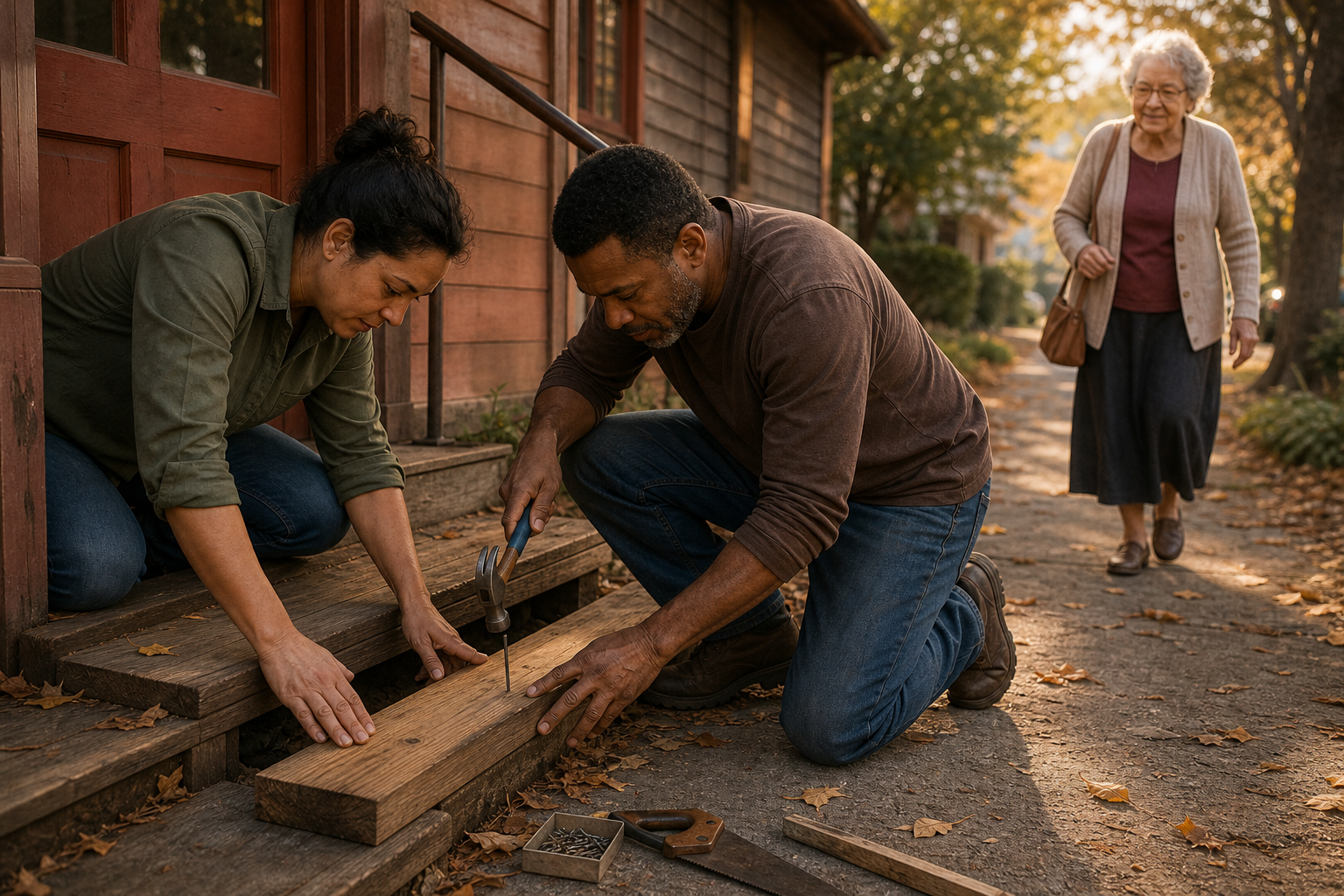
Insight that never enters conduct becomes another possession of the ego. You can understand exactly why you acted badly, describe the pattern in spiritual language, and still repeat it. Purposeful growth begins when understanding changes a condition, a choice, or a relationship.
As a practical discipline, karmic accountability means recognising that your present response is also a cause. You cannot alter the original act, but you can decide what the act produces next: concealment or honesty, repetition or restraint, estrangement or a sincere attempt at repair. Karma Yoga and Lokasangraha sharpen this choice by joining skillful action to the welfare of the wider whole.
Non-attachment to the fruits of action does not mean indifference to consequences. It means doing the duty carefully without making your comfort, praise, vindication, or control of the result the condition for doing it. You can offer a sincere apology without demanding immediate forgiveness. You can correct misinformation even if the correction costs you status. You can serve without turning service into evidence of your virtue.
Use this repair sequence when your review identifies something that is yours to own:
- Stop the repetition. Do not wait for complete inner transformation before changing the behaviour. End the harmful message, recurring omission, careless claim, or avoidable provocation first.
- Name the act precisely. Replace vague self-condemnation with a factual statement: what you said, failed to do, or allowed to continue.
- Repair what can be restored. Correct the record, replace what was damaged, fulfil the neglected duty, or apologise without adding a defence disguised as context.
- Change the conditions around the pattern. If haste produces harsh replies, draft and pause before sending. If distraction breaks commitments, place the duty where it cannot be casually displaced. If pride hides errors, ask a trusted person to question your account.
- Let seva carry the lesson outward. Choose service related to the value you neglected. Do this to strengthen right conduct, not to purchase moral innocence.
An apology should serve the person harmed, not merely relieve the speaker’s conscience. If renewed contact would be unsafe, intrusive, or clearly unwelcome, do not force a meeting in the name of closure. Seek trusted guidance and choose a form of accountability that does not create another injury.
You also need a practice for the few moments between impulse and action. Gentle breath awareness, short meditation, and pauses before consequential decisions help steady attention. Keep the technique modest: notice one natural breath before replying, sending, sharing, or deciding while emotionally charged. The purpose is not to eliminate emotion. It is to prevent the first impulse from receiving automatic authority.
The language of the gunas can help you diagnose the quality of your response without turning it into a clinical label. When rajas appears as agitation, speed, or the need to prevail, delay the decision long enough to separate fact from reaction. When tamas appears as avoidance, dullness, or refusal to repair, choose the smallest owed action you can perform. Sattva is visible in a response that is clear, proportionate, truthful, and beneficial.
Before acting, apply a Lokasangraha test: Will this response lower unnecessary heat? Will it improve the truthfulness of the situation? Will it reduce a burden rather than shift that burden to someone else? Will it protect legitimate spiritual difference? A choice can feel satisfying and still fail every one of these questions.
Run a five-step review each week

Retrospection works better as a rhythm than as an emergency procedure used only after a serious mistake. Set aside a quiet weekly period and examine one event closely. Reviewing every grievance at once invites rumination; one event gives you a realistic chance to see, decide, and act.
Use this five-step cycle:
- Pause. Put aside the feed, argument, and demand for an immediate verdict. Settle your attention with natural breathing or silent remembrance.
- Observe. Record the relevant thoughts, words, actions, and omissions without praise or abuse. Distinguish what happened from what you inferred.
- Interpret. Apply viveka and Anekantavada. Identify the value at stake, the partiality of your viewpoint, and the perspective you may be excluding.
- Act. Choose one specific step aligned with Ahimsa and seva. State what you will do and the first opportunity at which you will do it.
- Offer gratitude. Acknowledge whatever clarity, restraint, guidance, or opportunity to repair has appeared. Recommit without pretending the work is finished.
The sequence matters. If you act before observing, you may repeat the reaction in a more pious form. If you interpret without acting, you may confuse explanation with transformation. If gratitude becomes self-congratulation, it will conceal the work that remains. Pause, observation, many-sided interpretation, concrete action, and gratitude belong to one continuous discipline.
Keep a simple record with these prompts:
- The event I am examining:
- The observable facts:
- The reaction that governed me:
- The viewpoint or evidence I may be missing:
- The dharmic value or duty involved:
- The smallest meaningful repair:
- The person or community that can help me remain accountable:
Look for behavioural evidence rather than a dramatic feeling of renewal. Did you speak more calmly during the next disagreement? Did you pause before a pressured decision? Did you keep the practice or repair you had chosen? These small, measurable shifts in speech, choice, and consistency reveal more than a grand resolution made in an emotional moment.
Reflection also needs community. Satsang, Sangha, and sangat can provide encouragement and correction, but only if you do not use them as echo chambers. Bring one concrete question: What am I failing to see? Which responsibility is actually mine? What would repair look like without self-display? Ask for discernment rather than automatic agreement.
The Guru-Shishya tradition likewise reminds us that wisdom is transmitted as a way of being, not merely as accumulated information. A teacher or mature practitioner can expose a blind spot, place a difficult passage in context, and model steadiness. Guidance does not remove your moral agency. It helps you exercise it with greater clarity.
When studying the Upanishads, the Bhagavad Gita, or the primary teachings of your own tradition, connect study to the live question in your review. Ask what the teaching requires you to notice or do before the next session. Collecting sacred quotations while leaving conduct untouched is not integration.
Key takeaways
- Examine a specific act, not your worth as a person. Dharmic responsibility is precise enough to guide repair.
- Let Ahimsa govern both the conduct under review and the way you review it. Compassion should improve honesty, not cancel it.
- Use Anekantavada to identify partial viewpoints while retaining viveka about evidence, falsehood, harm, and necessary boundaries.
- Treat insight as unfinished until it produces a concrete act of restraint, correction, service, or fulfilled duty.
- Measure growth in observable changes: calmer speech, a pause before reaction, consistent practice, and repairs actually completed.
- Use satsang, Sangha, sangat, or trusted mentorship to expose blind spots rather than to secure validation.
At your next weekly pause, choose one event and write only four things: what happened, what moved within you, which dharmic duty was involved, and what you will do next. Then complete the smallest honest repair before the following review. You do not need to win a case about the past. You need to let the past refine the cause you set in motion now.
References
- SikhNet News — Looking Back with Purpose: Transformative Lessons from a Dharmic Journey toward Unity
