
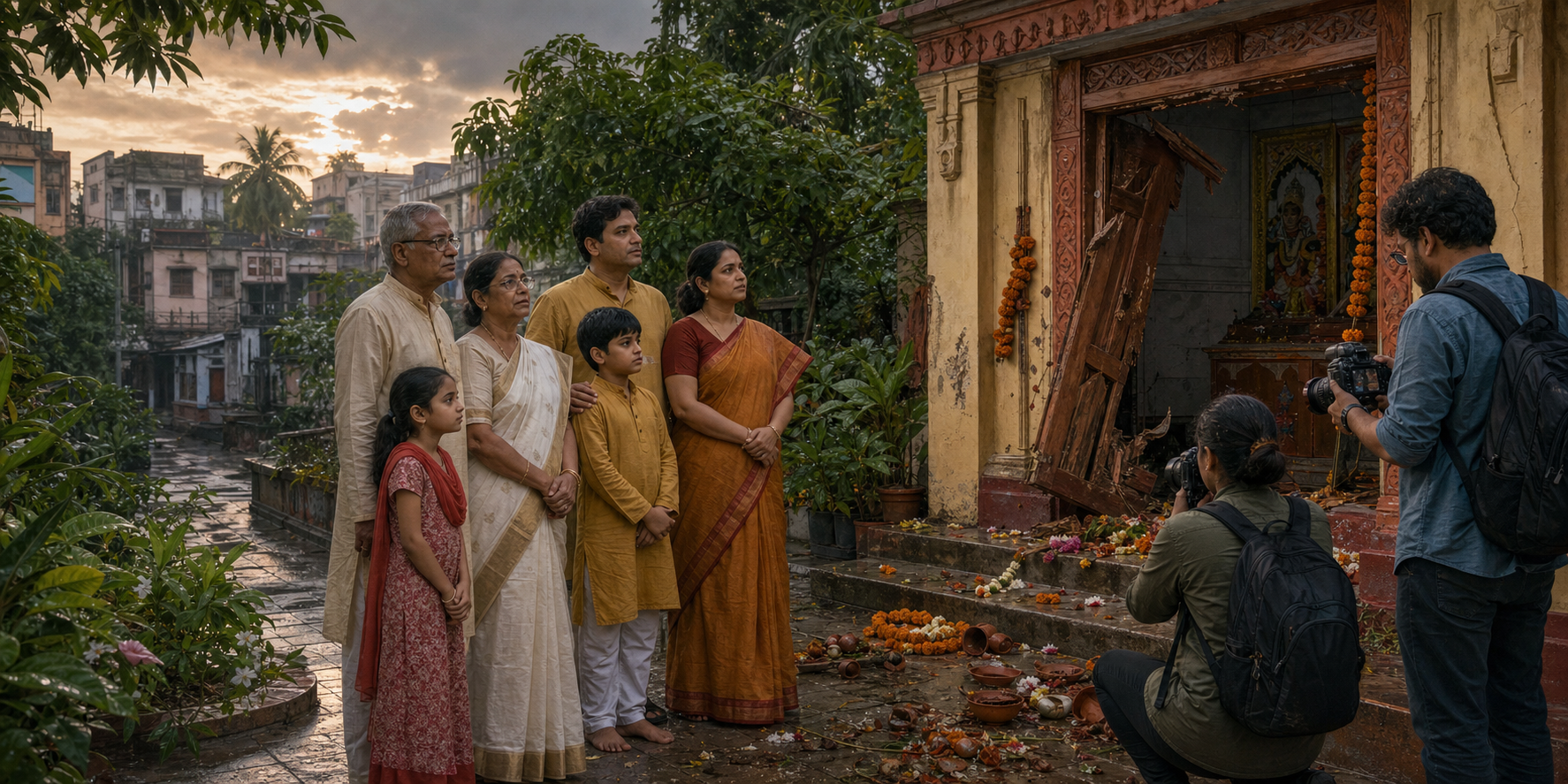
If you are trying to decide whether reports of anti-Hindu violence in Bangladesh are credible, and what a useful response looks like, your first duty is neither disbelief nor instant amplification. It is disciplined attention: name the victim, distinguish a reported event from an allegation, protect witnesses, and press for an answer that an authority cannot evade.
Genuine violence can be obscured twice: first by official minimisation, then by careless advocacy that gives critics an excuse to dismiss every claim as rumour. You do not have to accept either failure. The proper objectives are protection, investigation, justice and equal citizenship for Bangladesh’s Hindus, pursued without exposing vulnerable people or assigning collective guilt.
Separate what is reported from what still needs proof

The available accounts are serious enough to require an urgent response. Community observers and rights advocates say that at least six Hindus were killed during an 18-day period, including two Hindu men killed within 24 hours. That is a reported count, not a substitute for a public, case-by-case record from the authorities. The correct response is to demand that record, not to make the uncertainty disappear in either direction.
| Claim | How it should be treated | What to ask next |
|---|---|---|
| At least six Hindu community members were reportedly killed over 18 days, with two deaths occurring within 24 hours. | A serious reported count that needs case-by-case official confirmation. | Names of the cases, investigating offices, present status and dates for public updates. |
| Sarat Chakraborty Moni, a Hindu shop owner, was reportedly attacked with sharp weapons at Chor-sindur Bazaar in Narsingdi and later died. | A named incident with a stated place and method. The public status of any police investigation is not established. | Whether a case was registered, what evidence was preserved and whether witnesses received protection. |
| Community accounts allege that unidentified people demanded money described as jizya two days before Moni was attacked. | An allegation requiring investigation. The attackers’ identities, motive and any connection between the alleged demand and the killing must not be presumed. | Whether investigators are examining extortion, religious targeting and a possible link to the later attack. |
| Videos purporting to show the aftermath of incidents are circulating online. | Potential evidence, but not self-authenticating proof. The origin, date, location and complete context of each clip require verification. | Who first recorded or uploaded it, whether the original file survives and whether independent details corroborate it. |
| Community and civil-society voices accuse the interim administration led by Muhammad Yunus of failing to acknowledge the scale of the crisis publicly. | A criticism made by advocates, not a neutral finding about every official action. | A consolidated public response listing cases, investigations, protective measures and results. |
Key takeaways
- Use reportedly for a death count until each case has a verifiable public record, but do not use uncertainty as an excuse for inaction.
- Keep the alleged extortion demand separate from the documented attack unless an investigation establishes the connection.
- Treat a video as a lead whose provenance must be checked, not as proof merely because it is graphic or widely shared.
- Describe a pattern by linking named cases and repeated conduct. Do not make one viral clip carry the weight of the entire claim.
- Put witness safety ahead of publicity. A post that exposes a survivor, travel route or hiding place can turn advocacy into another danger.
This distinction between established, reported, alleged and unverified information is not pedantry. It makes the case harder to dismiss. It also protects families from having an error in one circulating claim used to discredit the violence they have actually suffered.
Build an incident record that can survive scrutiny
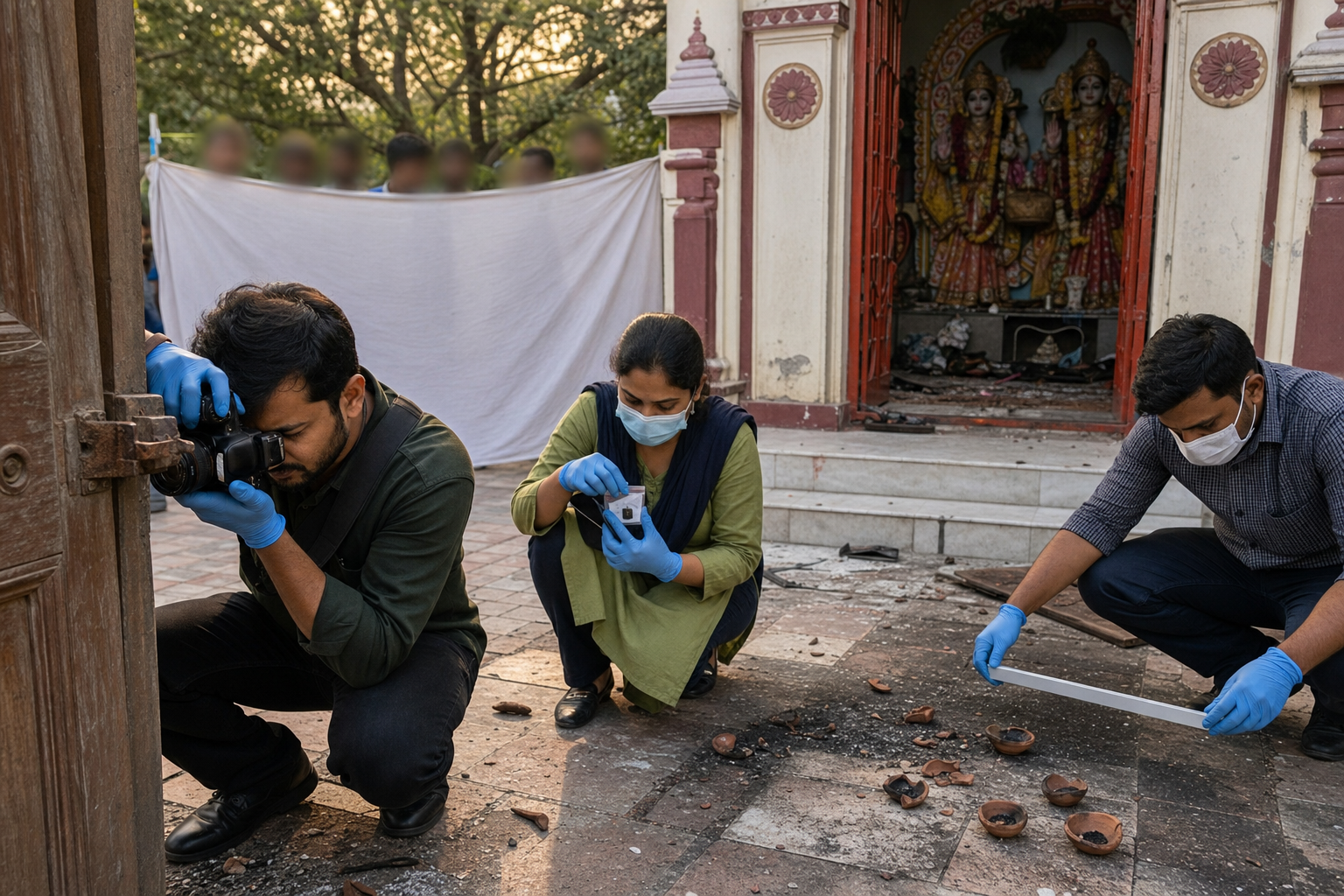
If you receive a video, photograph or first-person account, pause before reposting it. Social platforms reward speed, but investigations depend on provenance. Cropped footage, rewritten captions and chains of unattributed reposts can erase the very details needed to authenticate an incident.
- Preserve the earliest version you can locate. Record the full link, account name, upload time, original caption and the date on which you accessed it. Do not rely on a screenshot when the original upload is still available.
- Record the claim without upgrading it. Write down who is said to have been harmed, the place, the approximate time, the alleged conduct and who supplied each detail. If the location is only claimed, label it claimed.
- Keep separate fields for status. Useful labels are reported, independently corroborated, officially confirmed, disputed and unknown. A detail can move from one status to another as evidence appears.
- Look for independent corroboration. A second account is useful only if it does not merely repeat the first. Compare names, landmarks, shop signs, sequence of events and statements from people who can plausibly know what occurred.
- Retain the original file where it can be stored lawfully and securely. Forwarded or compressed copies may lose metadata and image quality. Restrict access if the file reveals an injured person, witness or private residence.
- Remove dangerous details from public versions. Do not publish a witness’s phone number, exact home address, safe location or planned route. Preserve an unredacted copy securely only for a trusted investigator, lawyer or credible rights body that needs it.
- Maintain a correction trail. If a date, name or location changes, update the record openly. Quietly deleting an error allows old versions to keep circulating and weakens trust.
Safe case wording: Sarat Chakraborty Moni, a Hindu shop owner, was reportedly attacked with sharp weapons at Chor-sindur Bazaar in Narsingdi and died from his injuries. Community accounts separately allege that unidentified people demanded money described as jizya two days earlier. The alleged demand, the identity of those involved and any connection to the killing require formal investigation.
That wording does three jobs at once. It keeps the named victim visible, preserves the gravity of the allegation and marks the part that investigators still have to prove. Avoid replacing it with a slogan such as jizya killing unless evidence establishes both motive and connection.
The same discipline applies to the larger pattern. Repeated killings, threats, extortion allegations, disrupted livelihoods and fear around public religious life may indicate targeted intimidation. A strong pattern file shows this through individual case records, shared methods, timing and official responses. It does not depend on an adjective such as systematic doing the evidentiary work by itself.
Make authorities answer precise, measurable questions
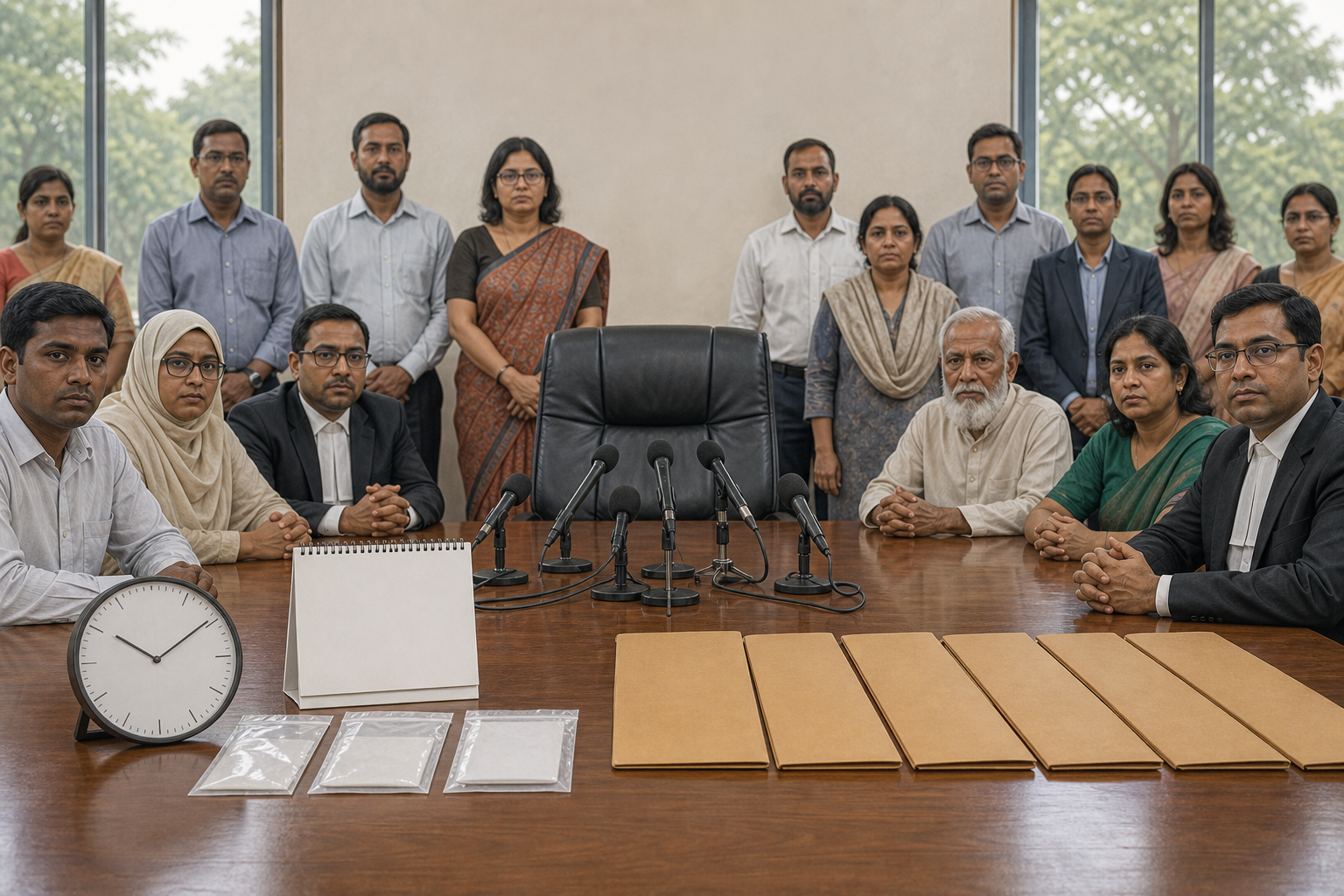
Outrage is understandable, but a general demand to stop violence is easy to acknowledge without changing anything. A useful request identifies the case, the responsible institution, the protective action required and the date by which a public update should appear.
- For every reported killing: request confirmation that an investigation has been opened, the office responsible for it and the present procedural status.
- For the Moni case: ask whether investigators preserved market footage, examined the alleged extortion demand and assessed religious targeting without prejudging the conclusion.
- For witnesses and relatives: ask what confidential protection is available and how retaliation allegations will be reported safely.
- For sensitive markets and neighbourhoods: request visible, impartial policing based on an assessment of local risk. Police presence must protect residents rather than intimidate them.
- For national accountability: request a consolidated public list of reported minority-targeted attacks, investigation status, charges where applicable and reasons for any closed case.
- For public confidence: ask national human-rights institutions to monitor the response and publish findings that distinguish allegations, verified incidents and unresolved cases.
A case-specific message can be brief:
Subject: Request for a public update on the reported killing of Sarat Chakraborty Moni in Narsingdi
I request confirmation of whether an investigation has been opened into the reported killing of Sarat Chakraborty Moni at Chor-sindur Bazaar, which office is responsible and when the next public update will be issued. Please clarify whether investigators are examining the separate allegation of an extortion demand described as jizya, while avoiding any premature conclusion about motive. Please also confirm that relevant footage is being preserved and witnesses are being protected.
Send a message like this to the relevant police or administrative office, a national rights institution, a Bangladesh diplomatic mission or an elected representative who can raise the matter. Adapt the addressee and request; do not imply that an official has jurisdiction when you have not checked. Keep the factual paragraph unchanged unless you can document a correction.
Dialogue among religious leaders, administrators and civil society can reduce immediate tension and create channels for warnings. It cannot replace investigation or prosecution. If a meeting ends with calls for harmony but no named authority, deadline or protective measure, ask for those details before treating it as progress.
Protect Hindus without multiplying risk or communal hatred
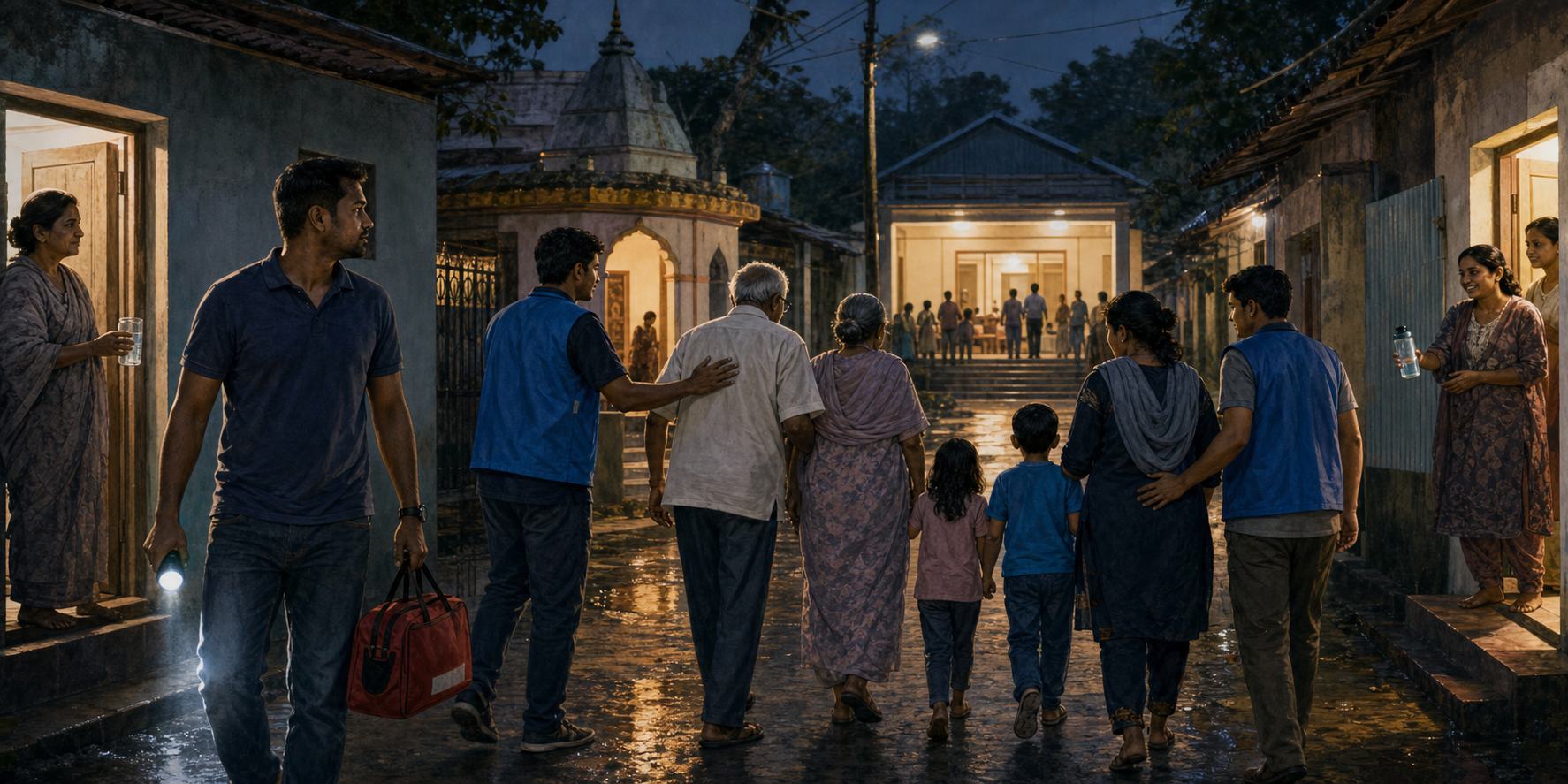
The pressure is already changing ordinary behaviour. Families have reportedly closed shops early, coordinated safer travel and observed festivals more quietly at home. Those are not minor inconveniences. They show how violence and fear can narrow economic, social and religious life even for people who are not physically attacked.
If you are in Bangladesh
- Do not travel alone to inspect an attack site or confront a suspected perpetrator. Evidence collection is not worth an additional assault.
- Use check-in arrangements with trusted relatives or neighbours when travelling through an area where a concrete threat has been reported.
- Keep safe routes and temporary locations within the people who need to know them. Do not publish a community security plan on an open social network.
- If a shop, temple or festival faces a specific threat, record the wording, time, delivery method and recipient. Preserve the message or call record where lawful, then seek help from trusted local authorities, legal counsel or rights advocates where doing so will not increase the danger.
- If you witness an attack, prioritise leaving danger and obtaining emergency help. Record only when you can do so without exposing yourself or another person.
If you are outside Bangladesh
- Ask relatives what assistance is safe before naming them publicly. Overseas attention can help, but it can also identify a family to local aggressors.
- Support documentation, legal assistance and immediate relief only through organisations whose identity, safeguarding practice and use of funds you can verify.
- Give journalists a compact case file with links, status labels and a safe contact. A large folder of unattributed clips is less useful than one well-documented incident.
- Ask representatives and diplomatic missions for case-specific action. Request a written response and keep it with the incident record.
- Correct false or miscaptioned material even when it supports your broader concern. Accuracy is part of protecting Hindu credibility, not a concession to those who deny persecution.
Do not name an alleged attacker as guilty without reliable evidence or lawful findings. A false identification can expose an innocent person, endanger the accuser and damage a real investigation. Describe conduct and allegations precisely; let due process determine individual responsibility.
The same rule applies to communities. Accountability belongs to perpetrators, accomplices and officials who fail their duties; it does not attach automatically to every Muslim in Bangladesh. Collective blame reproduces the logic that makes minorities unsafe. It also drives away Muslim neighbours and civic allies whose testimony, intervention or public support may help protect Hindu families.
Use a Dharmic response that joins courage to restraint
Ahimsa does not require passivity in the face of violence. It governs the means by which we resist: protect life, refuse cruelty, reduce retaliation and pursue lawful accountability. Satya requires equal discipline. A killing must not be minimised, and an allegation must not be promoted into a proven fact merely because it fits a feared pattern.
The shared Dharmic commitments to dignity, compassion and nonviolence give Hindus, Buddhists, Jains and Sikhs a basis for practical solidarity. That solidarity should be visible in documentation, witness care, legal support and sustained demands for equal protection. It should never become a reason to spread dehumanising language or celebrate revenge.
You can begin within the next 48 hours:
- Choose one named incident. Do not begin with an attempt to explain every episode of violence in Bangladesh.
- Create a one-page record. Include the victim’s name, place, reported sequence, links, evidentiary status and unanswered questions. Remove details that could expose a witness.
- Send one precise accountability request. Ask for the investigating office, protective measures and a dated public update.
- Give three trusted people distinct roles. One can verify material, one can contact institutions and one can track replies. This reduces duplication and makes corrections easier.
- Review what changed after 48 hours. Add official responses, corroboration and corrections to the same record. If there is no response, document the silence and escalate the same questions through another legitimate channel.
Start with a name, a place and a question that requires an answer. Keep the family safer than you found them. If enough people do that work carefully, denial becomes harder, evidence becomes stronger and solidarity becomes more than a slogan.
References
