
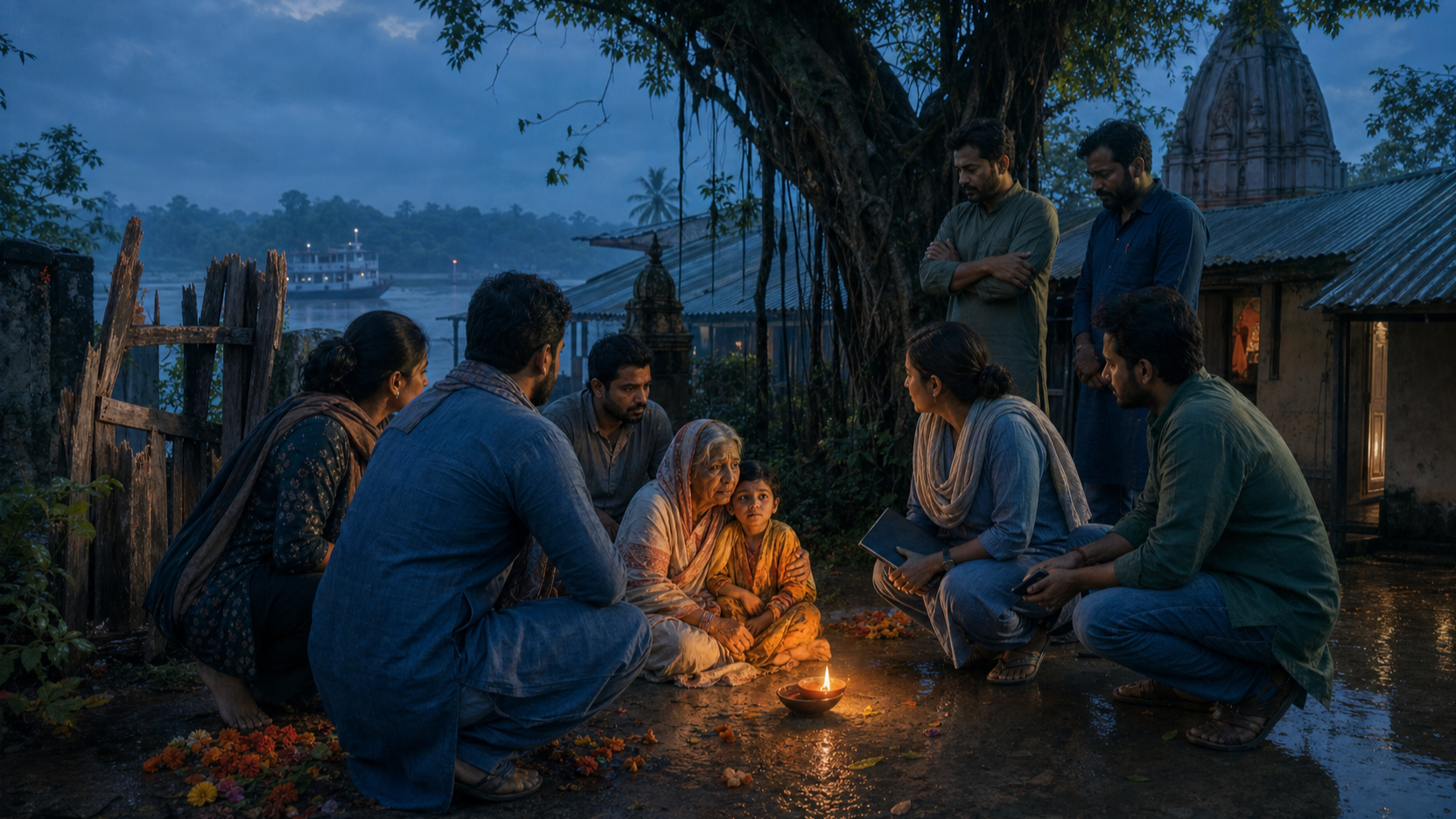
You have seen a disturbing claim about an attack on Hindus in Bangladesh. You want to help, but you do not want to circulate a false detail, expose a frightened family, or turn justified anger into indiscriminate hostility. The right response begins by holding two duties together: tell the truth about anti-Hindu violence, and protect the people whose lives are inside that truth.
The death of Mithun Sarkar shows why this discipline matters. He reportedly drowned while fleeing a violent mob. His case should not become a passing slogan. It should sharpen how you verify an allegation, safeguard those at risk, demand state action, and build solidarity that can survive after public attention moves elsewhere.
Name the danger precisely enough to act on it
In early January 2026, Hindu communities in Bangladesh faced accounts of escalating intimidation, vandalism, mob aggression, and fear. Some attacks were attributed to extremist actors invoking religious slogans. That is enough to warrant urgent scrutiny, but not enough to treat every circulating allegation as established or every Muslim citizen as complicit.
Three different questions are often collapsed into one. Keep them separate:
- What happened in a particular case? Identify the person, place, approximate time, alleged conduct, injuries or damage, and what remains unconfirmed.
- Does the case appear to involve anti-Hindu targeting? Look for evidence about the selection of the victim, temple, home, business, festival, or community. Do not infer motive solely from the victim’s identity when the circumstances remain unclear.
- How are institutions responding? Ask whether a complaint was accepted, an investigation began, witnesses were protected, threatened sites received security, and any procedural update was made public.
This separation does not minimize anti-Hindu violence. It makes the charge harder to dismiss. A specific allegation can be investigated. A vague claim about an entire population cannot.
Do not measure the harm only by deaths, injuries, or damaged buildings. Fear changes ordinary life before it appears in a case tally. Families may reduce festival gatherings, change children’s school routes, limit travel, or withdraw from public worship. Those choices are warning signs: a minority is losing the practical freedom to live openly, even if a temple has not yet been attacked.
Bangladesh’s constitutional commitments to equality before law and protection of religious minorities provide the correct civic benchmark. The essential question is not whether Hindus should become less visible to avoid danger. It is whether public institutions are making those guarantees real.
Verify a claim before you give it a larger audience

A forwarded image, clipped video, or emotional caption can contain a real warning and still contain the wrong name, date, place, or motive. Repetition is not corroboration: a hundred accounts may all be copying one unverified upload. Before you share, build a small verification record.
- Reduce the claim to one sentence. Write what is alleged without adding motive or certainty: who was affected, what reportedly happened, where, and when.
- Trace the material backward. Look for the earliest available upload or testimony rather than the most popular repost. Save the original link and note when you accessed it.
- Separate visible facts from the caption. A video may show damage without proving its location, date, victim identity, or cause. Record each of those as a separate question.
- Seek independent confirmation. A local resident, community institution, journalist, rights group, lawyer, or official record can add corroboration. Two accounts are not independent if both repeat the same unnamed message.
- Preserve the evidence. Keep the original file when it can be obtained safely, along with screenshots, URLs, names of consenting witnesses, and the sequence in which information emerged. Work from a copy so the original is not accidentally altered.
- Label the status honestly. Use terms such as verified, corroborated but incomplete, reported, disputed, or unverified. Update or retract a claim visibly when new evidence changes it.
Never publish a survivor’s address, escape route, temporary shelter, phone number, school, or identifiable family details merely to make a claim look credible. The downside is immediate: hostile actors can use the same information. Give sensitive evidence privately to a trusted lawyer, investigator, or established rights organization, and obtain informed consent before making a witness identifiable.
Use restrained language in the first public account. Say that a person reportedly suffered a particular harm and that verification is continuing. Do not convert uncertainty into certainty, and do not use graphic material when a factual description will do. Sensationalism can retraumatize victims, inflame retaliation, and give opponents an easy reason to challenge otherwise credible documentation.
Put the threatened person ahead of the public campaign

If you are close to someone facing a direct threat, their immediate safety outranks the need to post. Do not encourage them to confront a mob, remain at a threatened site for filming, or publish live location information. Help them reach a safer place through trusted local contacts and use whatever local emergency, legal, or community-reporting route they judge safe. A person on the ground may understand risks that are invisible to a distant supporter.
Ask what help is wanted
A family may need transport, medical care, a lawyer, temporary accommodation, help replacing documents, repair funds, or discreet accompaniment to make a complaint. Do not assume that publicity is the first need. Public attention can help, but it can also expose relatives, complicate testimony, or attract renewed harassment.
- Designate one trusted contact so the family does not have to repeat a traumatic account to every supporter.
- Record the family’s consent separately for legal use, private advocacy, and public identification. Agreement to one does not imply agreement to all three.
- Keep an incident log with dates, threats, damage, expenses, official contacts, and procedural updates. Distinguish what the family witnessed from what others told them.
- Preserve receipts and a clear distribution record for donated money. Do not disclose a safe address or identifying details in a public fundraiser.
- Connect the family with qualified local legal assistance when a complaint, compensation claim, property dispute, or witness-safety issue is involved. Online advice is not a substitute for counsel familiar with the applicable law and local conditions.
Build protection around places as well as people
Temples, community centres, festival routes, schools, and clusters of minority homes may become predictable pressure points. Local leaders can identify vulnerable entrances, safe exits, trusted transport, emergency contacts, and people able to check on elders or children. Any neighborhood watch should include respected people from more than one community, coordinate lawfully, and focus on warning and de-escalation rather than vigilantism.
During tense periods, designate one person to verify rumors before they are relayed through community groups. A false alert can send families onto unsafe roads or pull volunteers away from a genuine emergency. A simple rule helps: no operational alert is forwarded without a location, time, named contact, and indication of whether the information is firsthand.
Turn concern into demands that can be answered
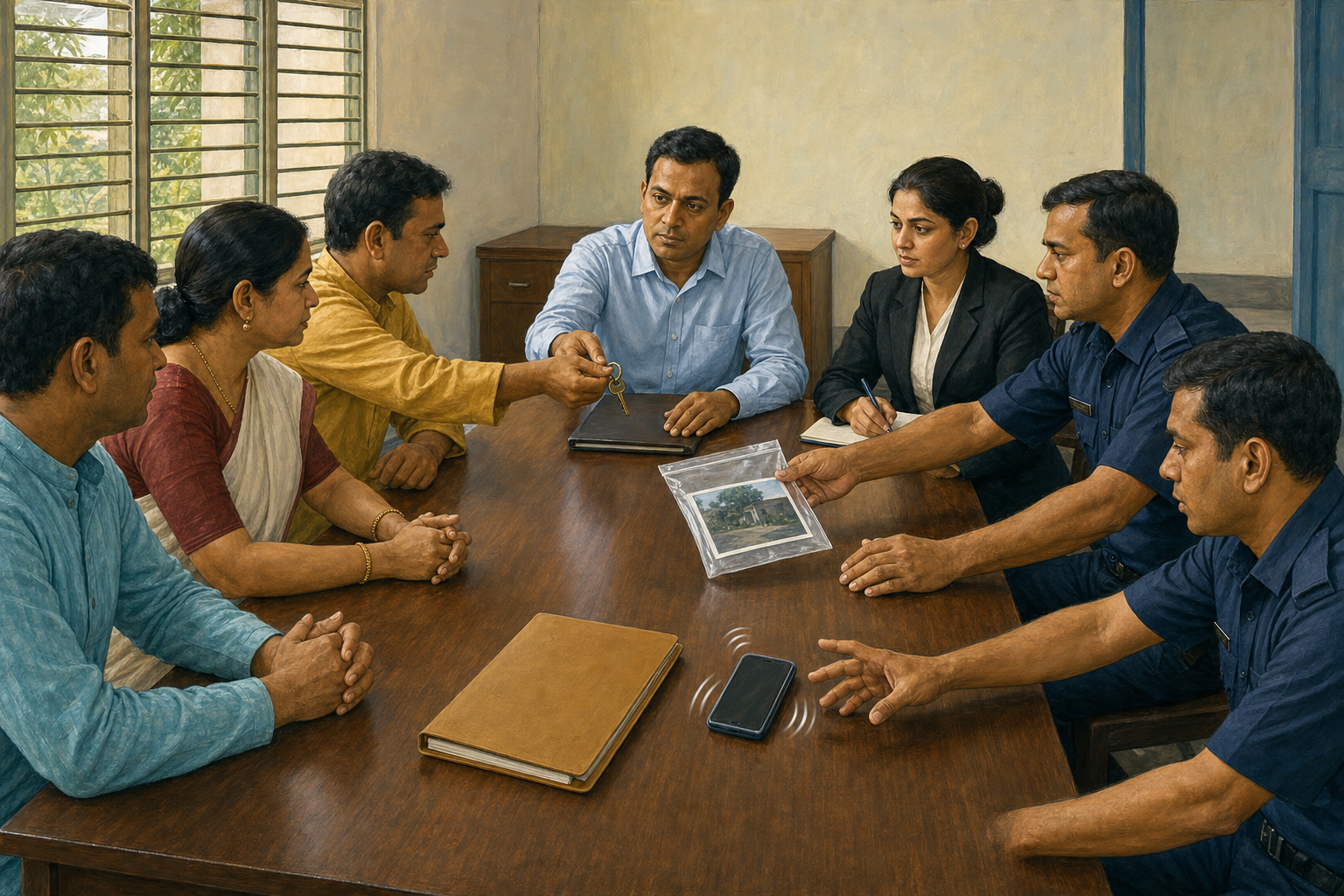
General condemnations are easy to acknowledge and easy to forget. An accountable demand names the responsible institution, the requested action, and the information needed to judge whether anything changed.
For a documented incident, an advocacy letter can ask:
- Was a formal complaint registered, and which authority is responsible for the investigation?
- What steps are being taken to identify and prosecute perpetrators regardless of political or communal affiliation?
- How can witnesses report threats without making their identities public?
- What protection is being provided to the affected family, temple, community centre, or neighborhood?
- What lawful process exists for compensation, repair, medical expenses, or legal aid?
- When and where will a procedural update be made available?
Keep the request tied to a case file or clearly described incident when possible. Send the same factual chronology to the relevant authorities, reputable civil-society organizations, and representatives able to pursue the matter. Then maintain a response log: date sent, recipient, reply, promised action, and next follow-up. This converts a burst of outrage into a record of institutional performance.
For areas experiencing repeated threats, press for measures that reduce opportunity for violence: secure reporting channels, witness protection, lawful community policing, protection for temples and gathering places, impartial prosecution, legal aid, and transparent compensation. During festivals or politically sensitive periods, add rumor monitoring and rapid correction because inflammatory misinformation can become a trigger for mob action.
Civil society can fill gaps without pretending to replace the state. Interfaith rapid-response contacts, local helplines, women-led safety circles, and mixed-community teams repairing damaged homes or shared spaces can restore practical trust. Their work should produce records that strengthen legal accountability, not private settlements that pressure victims into silence.
Regional and international advocacy should be equally concrete. India-Bangladesh engagement can raise minority protection, legal cooperation, and early-warning practices without turning vulnerable Bangladeshi Hindus into instruments of partisan rhetoric. International human-rights support is most useful when it strengthens impartial investigation, survivor assistance, and transparent case data while respecting lawful national processes.
Practice Dharmic solidarity without surrendering moral clarity

Ahimsa does not require silence about aggression. It requires discipline in how force, speech, and judgment are used. You can name anti-Hindu targeting plainly, demand punishment for perpetrators, and insist on protection for Hindu life and worship without assigning inherited guilt to every member of another faith.
That distinction is morally important and practically useful. Collective blame isolates Muslim neighbors, clergy, local influencers, and officials who may be able to prevent an attack, open a safe route, verify a rumor, or testify against an aggressor. Public repudiation of violence by Muslim leaders should be welcomed and converted into durable cooperation: shared emergency contacts, joint peace commitments, protection around vulnerable sites, and rapid intervention when inflammatory claims begin to spread.
Interfaith cooperation must not become a demand that Hindus soften or conceal what happened. The proper standard is mutual responsibility under law: safeguard the threatened neighbor, reject vigilantism, preserve evidence, and support prosecution based on conduct. Solidarity earns credibility when it survives contact with a difficult case.
Key takeaways
- Name anti-Hindu targeting when the available facts support it, but keep incident, motive, and institutional response as separate questions.
- Trace viral material to its origin, seek independent corroboration, preserve evidence, and state what remains unverified.
- Do not disclose a victim’s location, identity, or escape arrangements without informed consent; immediate safety comes before publicity.
- Replace general outrage with case-specific requests for investigation, prosecution, witness protection, site security, legal aid, compensation, and public updates.
- Rejecting collective blame does not weaken Hindu advocacy. It keeps responsibility fixed on perpetrators and preserves alliances capable of preventing further harm.
Choose one lane now: verify one circulating case, support one affected family through a trusted channel, or send one documented accountability request to an institution able to act. Keep the record, follow the response, and protect the people behind the names. That is how remembrance becomes sustained protection rather than another cycle of alarm and forgetting.
References
