
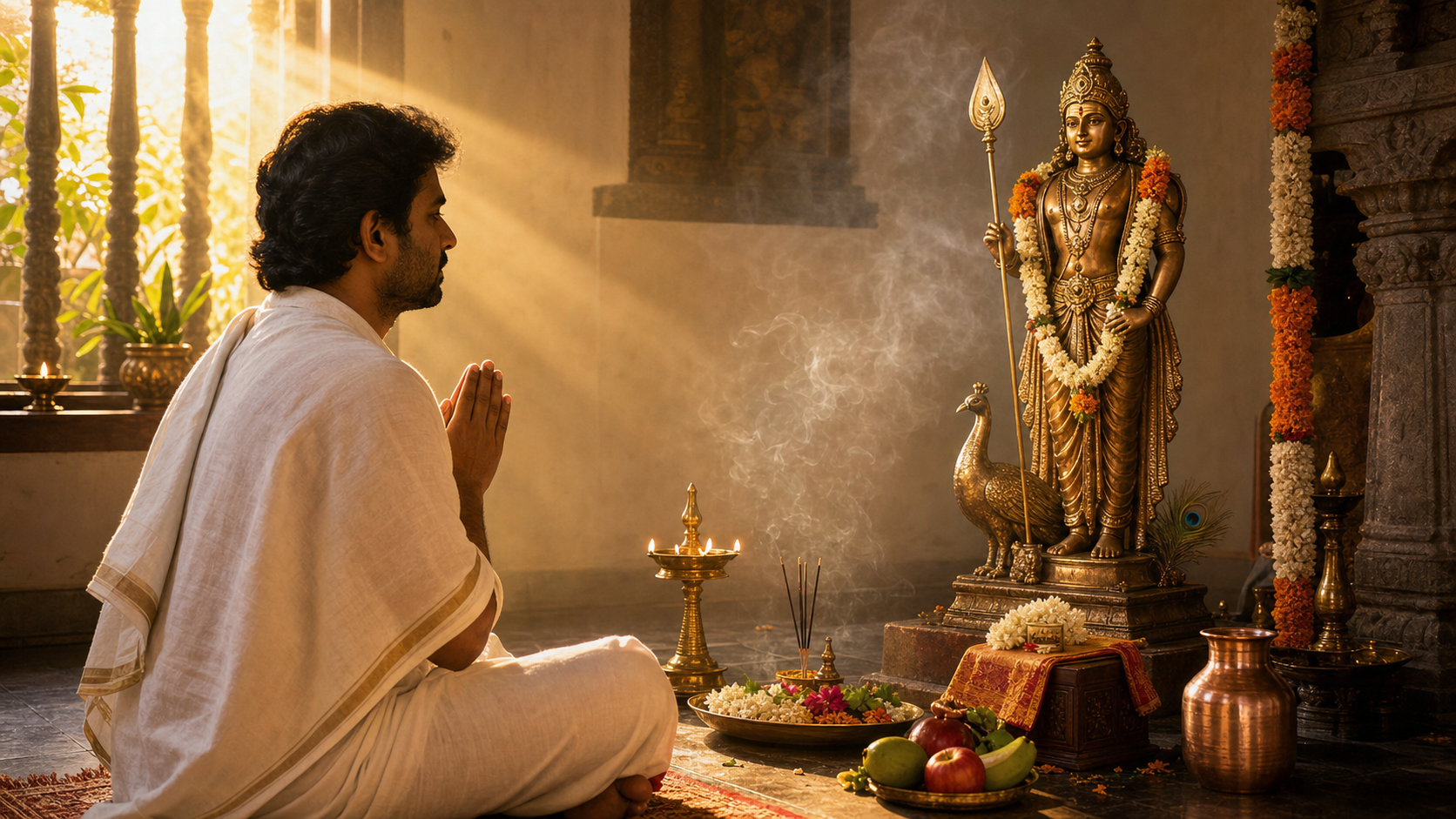
You want to keep a vrata for Surya, Muruga, or another devata, but the instructions around you do not quite agree. One family observes a complete fast, another permits sattvic food, and the temple schedule may differ from the date shown on a general calendar.
The answer is not to make the day as severe as possible. It is to make one coherent promise and fulfill it with attention. When the deity, calendar, worship, restraint, service, and conclusion belong to the same intention, the vrata becomes more than a food rule.
Start with the deity, not the fasting menu
A deity-centered vrata begins with a relationship. Before deciding what you will eat, ask what the chosen form of the Divine is asking you to remember and embody.
In a Surya vrata, for example, the central themes are light, prana, time, discipline, and cosmic order. A sunrise arghya to Surya therefore is not an isolated ornament. It brings your body, schedule, gratitude, and attention into alignment with the arrival of light. If the offering is followed by careless speech, wasted time, or avoidable disorder, the outer rite and the inner vow have separated.
A Muruga vrata has a different devotional center. The Vel given by Ma Shakti to Muruga represents the defeat of ignorance and the union of divine will, knowledge, and action. Your observance should therefore connect all three: name the change you seek, understand the discipline it requires, and perform a concrete action instead of stopping at a wish.
Before you choose the severity of the fast, answer these questions:
- Which deity or particular form of the deity is at the center?
- Which festival, tithi, nakshatra, or family occasion establishes the day?
- What act of worship is distinctive to this observance?
- What restraint will you keep in food, speech, consumption, and conduct?
- What dana or seva will carry devotion beyond your own household?
- How and when will you formally complete the vow?
If you cannot yet answer those questions, you are not ready to select a fasting menu. Clarify the devotional structure first. The food discipline should support that structure, not replace it.
Fix the local sacred time before making your sankalpa
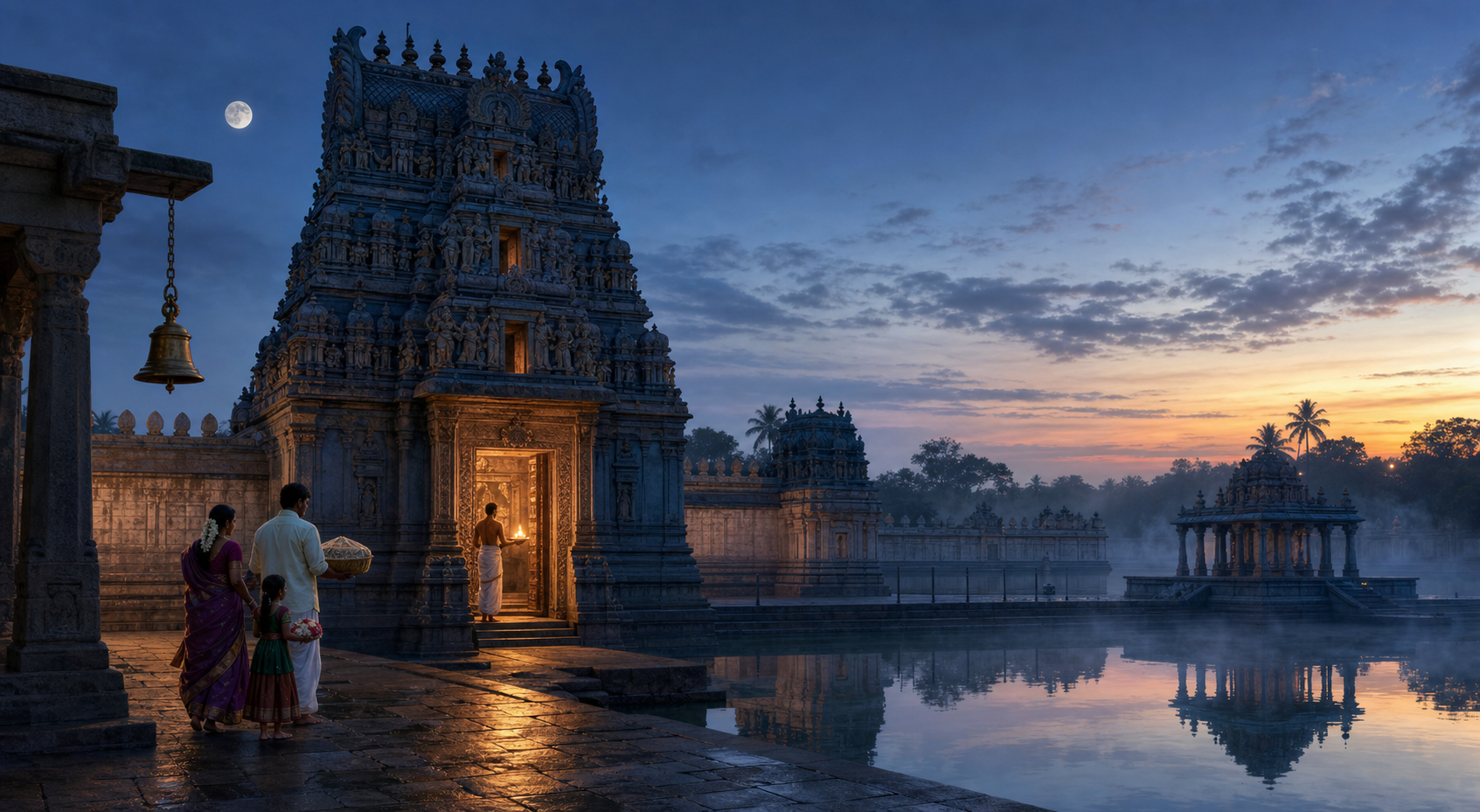
A civil date is sometimes only a convenient label. Hindu observances may be governed by a tithi, a lunar day, or by the presence of a particular nakshatra. Those boundaries do not necessarily begin and end at midnight, and they must be checked for the place where you will actually perform the vrata.
Mandar Shashti illustrates the point. Its calendrical anchor is Magh Shukla Paksha Sashti. In 2026 it corresponds to January 24, but the precise tithi boundaries and local sunrise must be confirmed regionally. Thaipusam uses another kind of marker: it is observed when the Poosam star occurs in the Tamil month of Thai. Copying a date from a calendar prepared for another location can therefore detach your ritual from its intended time.
Use a simple order of authority. First check a reliable Panchang calculated for your location. Then check the schedule of the temple where you will participate. Finally, ask how your family, sampradaya, or guru-parampara handles boundary cases. If these differ, do not conceal the difference by combining whichever details are most convenient. Ask a knowledgeable elder or priest which practice governs your observance.
Once the timing is clear, write your sankalpa in one sentence before attempting a formal recitation. A useful planning sentence is:
On [the locally determined observance], I will worship [deity] through [specific acts], keep [food and conduct disciplines], offer [dana or seva], and conclude in [prescribed manner] for [a dharmic intention].
This is a planning aid, not a substitute for a liturgical formula used in your lineage. Its purpose is to expose vague promises. Replace words such as properly, strictly, or sincerely with actions you can identify. State whether you are keeping a complete food fast or a partial sattvic fast, which prayers you will recite, what service you will perform, and when the fast will end.
Do not promise the maximum and plan to renegotiate with yourself when the day becomes difficult. A smaller vrata kept faithfully has greater integrity than an elaborate one abandoned halfway through. If your family already has an inherited form, preserve it unless health, location, or another real constraint requires an adaptation.
Give the vrata a beginning, a center, and a completion
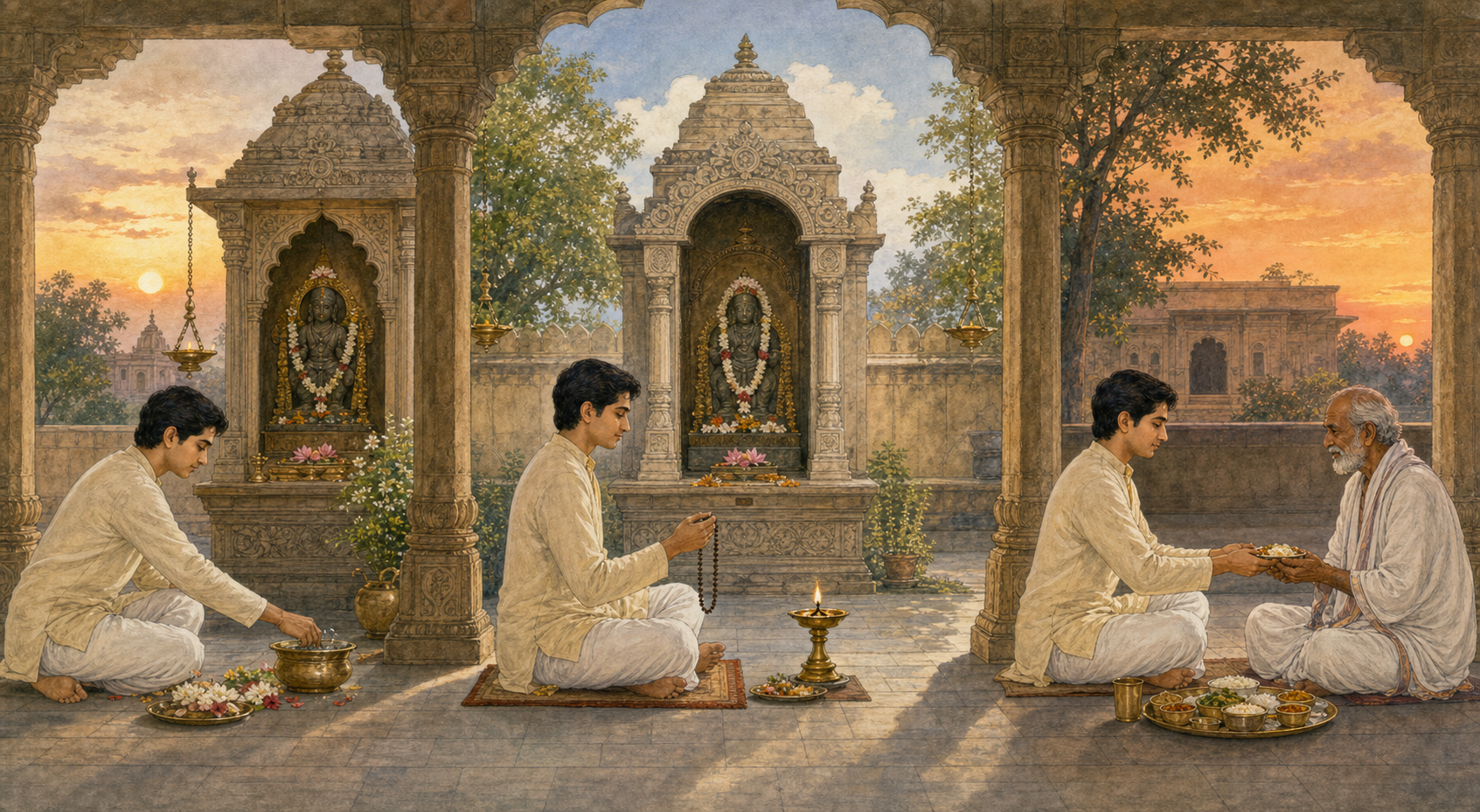
A well-formed vrata has an arc. Without one, the day easily becomes a long wait for the next meal. Use the following sequence as a framework, while allowing your family or temple tradition to determine the actual mantras, offerings, and ritual order.
- Prepare before the observance. Confirm the local time, decide whether you will worship at home or at a temple, collect the permitted offerings, place the prayer text where you can use it, and arrange the dana or seva in advance. Do not leave charity as an optional task for the end of an exhausting day.
- Enter the vow deliberately. Where the observance calls for it, bathe before sunrise, wear clean clothing, prepare the worship space, remember the deity, and make the sankalpa. Keep the phone and ordinary distractions away from this transition.
- Perform the defining act at its proper time. A Surya observance may center on arghya at local sunrise. A Muruga festival vow may involve paal kudam, kavadi, temple worship, or another inherited offering. Use the form recognized by your community rather than assembling a private ritual from disconnected practices.
- Sustain remembrance between rituals. Choose a manageable practice and return to it during the day. For Surya, this may include a Surya mantra or the Aditya Hridayam. Muruga devotees may join bhajans and processional worship. The purpose is to keep the devata present in your attention after the principal offering has ended.
- Make conduct part of the fast. Restrain harmful speech, anger, dishonesty, needless consumption, and self-display. A person who avoids food but feeds resentment has kept only the most visible part of the discipline.
- Carry the vow outward. Perform the dana or seva you selected. Community worship, collective recitation, pilgrimage, and service prevent the observance from becoming spiritual self-absorption.
- Complete rather than merely stop. Offer the concluding prayer at the time prescribed by your tradition, express gratitude, and perform parana, the formal ending of the fast, in the permitted manner. In Mandar Shashti practice, the day may conclude after sunset with simple offerings and prayer. Do not assume that endpoint applies to every vrata.
Protect the defining elements when work, travel, crowds, or family duties complicate the day: the correct sacred-time anchor, the sankalpa, the principal offering, sustained remembrance, one act of service, and a conscious completion. Extra decoration can be reduced. The spine of the vow should remain intact.
Adapt the fast without emptying the vow
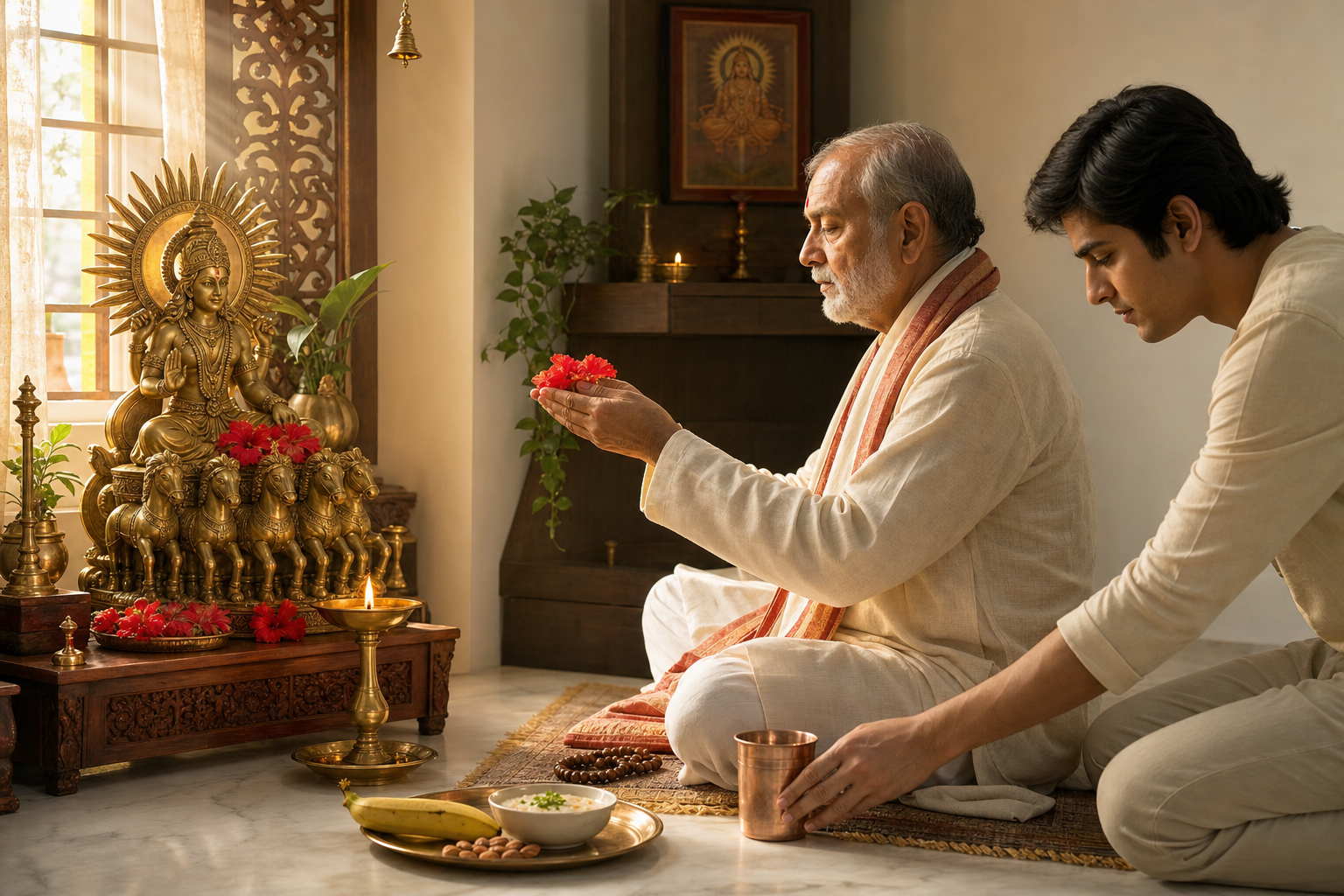
Upavasa and vrata are closely associated with fasting, but no single food rule governs every deity, festival, region, or lineage. A complete food fast and a sattvic partial fast are not interchangeable labels. Before the day begins, determine what your tradition permits, whether water is allowed, which foods are excluded, when food may be taken, and what ends the fast.
Do not use physical distress as proof of devotion. If illness, medication, pregnancy, age, an eating-disorder history, or another health circumstance makes food restriction uncertain, do not alter treatment or improvise a severe fast. Ask a qualified clinician what is safe, then ask a knowledgeable religious elder how the vrata can be adapted. Prayer, mantra, sattvic food, dana, seva, and ethical restraint can preserve the devotional intention when a stricter food practice would violate non-harm. A religious observance is not a substitute for medical care.
The same principle applies to demanding public austerities. Kavadi and other embodied vows belong within living temple and community disciplines. Follow the temple’s rules and experienced guidance. If that setting is unavailable, choose a form you can undertake safely, such as prayer, an accepted offering, bhajan, pilgrimage within your capacity, or service. A practice does not become authentic merely because it is difficult or conspicuous.
You should also distinguish a blessing from a guarantee. Traditional belief associates Surya vrata with clarity, vitality, well-being, and prosperity, but these are devotional hopes connected with disciplined living, not promised medical or financial outcomes. Approach the deity with a sincere purpose, while leaving the result outside your control.
After the observance, examine the promise rather than counting hours of hunger. Did you keep the agreed discipline? Did the deity’s qualities shape your speech and action? Did someone besides you benefit through dana or seva? Did you complete the vrata with gratitude instead of rushing back to excess? Those questions reveal whether the vow entered your life.
Key takeaways
- A deity-centered vrata is a complete devotional promise, not simply a restriction on food.
- Choose the deity, sacred-time anchor, defining worship, ethical restraint, service, and completion before selecting the fast.
- Use a local Panchang and living family or temple guidance; a date copied from another region may not preserve the correct tithi, nakshatra, or sunrise.
- Write a precise sankalpa that names actions you can keep. Do not confuse severity with sincerity.
- Link intention, remembrance, conduct, dana or seva, and formal completion so the entire day serves one purpose.
- Adapt food restrictions when health requires it, without abandoning prayer, restraint, service, or devotion.
Before your next festival, set aside ten minutes to do three things: confirm the local calendrical marker, write your one-sentence sankalpa, and arrange the act of seva or dana. Take that page to a family elder or temple if any detail remains uncertain. Once those choices are clear, you can enter the vrata without anxiety about making it harsher, larger, or more public than it needs to be.
References
- DharmaRenaissance Blog – Mandar Shashti Vrata 2026: Sacred Sun-God Fast, Date, Ritual Guide, and Spiritual Benefits
- DharmaRenaissance Blog – Velayudha Moorthy: Lord Muruga’s Divine Vel, Thaipusam’s Glory, and the Triumph of Dharma
