

If you followed the Khargone violence, the acquittal may leave you with a blunt question: did the court decide that the attack during the Ram Navami procession never happened, or did masked offenders simply discover a formula for escaping punishment? Neither conclusion accurately describes what was decided.
The useful distinction is between proving that a violent event occurred and proving that particular people committed particular crimes. Khargone exposes the distance that can open between those two findings. If you want justice for the victims, you need to understand that distance, because anger at the standard of proof will not repair a failed investigation.
The verdict answered a narrower question than public anger asks
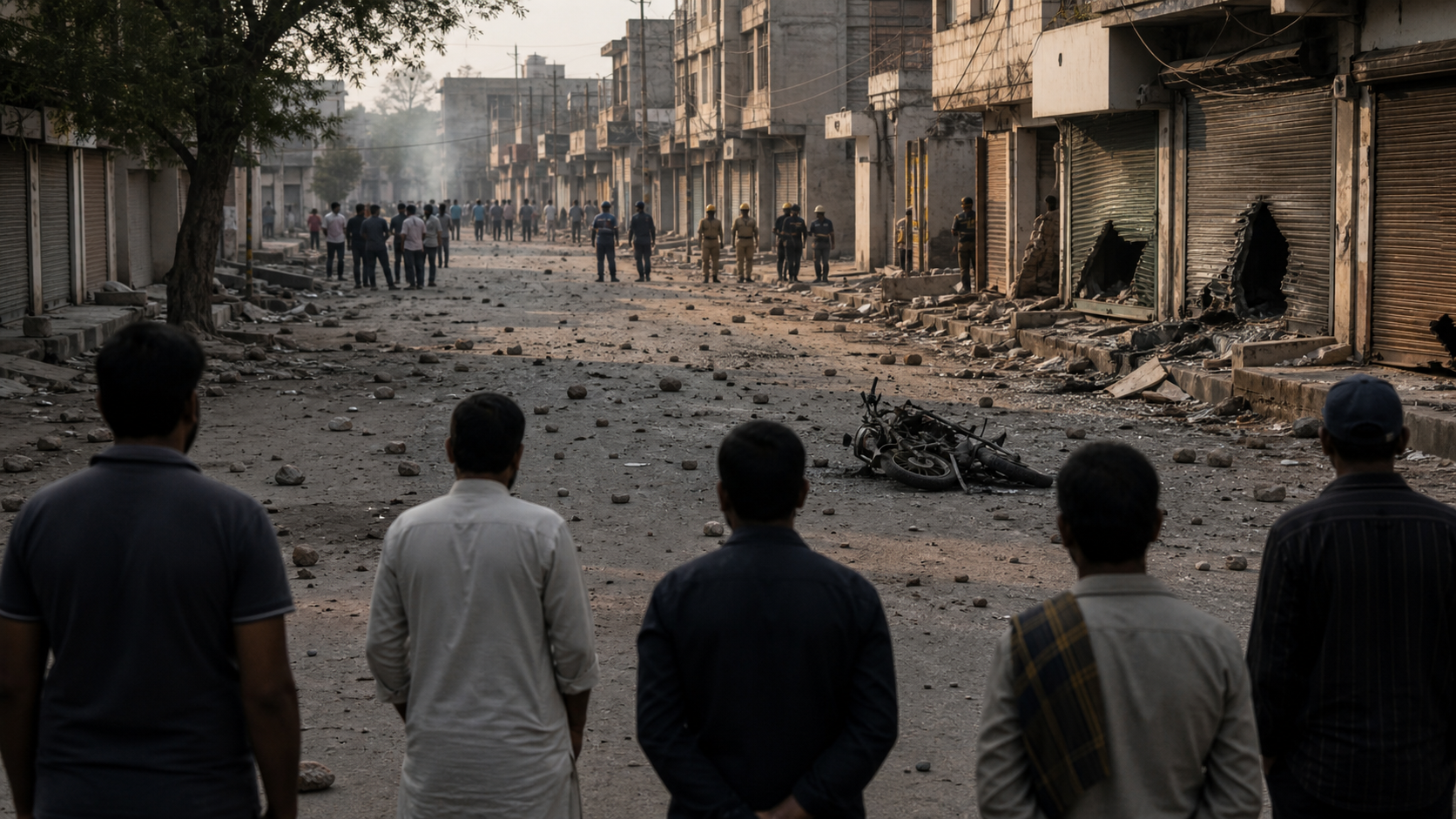
On 10 April 2022, violence broke out during a Ram Navami procession in Khargone’s Bhatwadi area. The episode involved stone-pelting, arson and damage to homes and vehicles. At least 24 people, including six police personnel, were injured; one person died, and the city remained under curfew for three weeks. Those consequences do not disappear merely because a prosecution later fails.
On 27 July 2026, Fourth Additional Sessions Judge Mukesh Nath acquitted all 11 defendants in Sessions Trial No. 75/2022 because the prosecution had not proved beyond reasonable doubt that these individuals committed the charged acts. That is not a finding that no violence occurred. It is a finding that the evidence presented in this trial did not establish the criminal responsibility of these 11 people.
Keep four questions separate whenever you read about an acquittal arising from crowd violence:
- Did a criminal event occur?
- Can a particular person be reliably identified as part of the crowd?
- Can that person be connected to a specific criminal act, rather than merely to the place or gathering?
- Is the evidence reliable enough to exclude a reasonable possibility of mistaken identification?
A court may have ample reason to accept the first proposition while finding the remaining propositions unproved. The existence of burned vehicles, damaged property, injuries or a curfew cannot by itself identify who threw a stone, launched an incendiary device or set a vehicle on fire.
The reverse restraint is equally important. An acquittal does not give the public permission to continue calling the acquitted people rioters. The accurate description is that 11 accused were acquitted because the case against them was not proved. If the evidence did not establish their guilt in court, communal suspicion cannot be used as a substitute verdict.
Key takeaways
- The occurrence of the Khargone violence and the guilt of the 11 accused were separate propositions. The acquittal resolved the latter, not the former.
- Benefit of doubt is the legal consequence of unresolved, material uncertainty. It is not a judicial reward for hiding one’s identity.
- The central weaknesses were not abstract technicalities: key witnesses did not identify the accused clearly, important testimony conflicted, one crucial statement came 51 days later, and no test identification parade was held.
- Accountability should now focus on how the suspects were selected, why identification safeguards were missed, why witnesses changed their evidence and what lawful options remain for identifying the actual offenders.
- Justice for Hindu victims requires a stronger evidence chain, not a weaker standard of proof.
The case failed where a crowd prosecution is most vulnerable

In an offence committed by a crowd, it is rarely enough to prove that someone was recognizable or present nearby. The prosecution must connect an accused person to conduct that attracts criminal responsibility. That connection becomes especially difficult when faces are covered, the scene is chaotic and witnesses are asked to recall individual actors long after the event.
The prosecution called 13 witnesses. Eight important witnesses, including the complainant, could not clearly identify any defendant in court, and several departed from their earlier statements. The court also distinguished between recognizing a person and testifying that the person was seen committing the alleged offence. That distinction goes to the centre of guilt; it is not a paperwork error.
The remaining identification evidence carried its own problems. Vaishnavi Jain presented herself as an eyewitness and said that she recognized the accused by their faces. Her father and brother, who also testified, said that the offenders had covered their faces with cloth. That contradiction directly affected whether facial recognition was possible under the circumstances described.
Timing made the problem harder. Her statement was recorded 51 days after the violence, with no satisfactory explanation given for the delay. The investigators also did not arrange a test identification parade. In this setting, the court was left with a basic unanswered question: why were these 11 individuals selected from among all the people who might have been in or around the crowd?
A test identification parade is an investigative check intended to test a witness’s ability to identify a previously unknown suspect before the witness’s courtroom identification becomes the main issue. Its absence does not mechanically decide every criminal case. Here, however, the combination of covered faces, delayed testimony and conflicting accounts made the missing check consequential.
There is another distinction you should insist upon. Calling a witness hostile means that the witness departed materially from the position expected by the party that called them. It does not, by itself, prove why the testimony changed. Fear, pressure, fading memory, an inaccurate earlier statement or some other cause may each be proposed, but none becomes fact merely because it suits a preferred political conclusion.
If witness interference is suspected, it should be investigated as its own factual question. Accusing witnesses without evidence merely creates another unproved allegation. The practical demand should be for a documented review of when each statement was taken, how each witness was handled, whether safety concerns were raised and what corroboration existed independently of oral identification.
Benefit of doubt is a restraint on state power, not a loophole

The phrase benefit of doubt can sound offensive when the violence itself is visible. It can seem as though the court is giving an undeserved advantage to whoever caused the harm. That is a misreading of the rule.
In a criminal trial, the state chooses whom to prosecute and seeks the power to punish them. The state therefore carries the burden of proving guilt beyond reasonable doubt. The standard does not require the elimination of every imaginary possibility, but it does prohibit conviction when a material and rational uncertainty remains about identity, conduct or the reliability of the evidence.
The benefit is not a prize handed to a clever offender. It is the legal consequence of the prosecution’s failure to remove a reasonable uncertainty. If the court fills that gap with outrage, reputation or communal identity, it risks punishing an uninvolved person while the actual offender remains untraced.
That protection is not hostile to Hindus. A standard weakened for an unpopular defendant will also be weak when a Hindu devotee, procession participant or activist is mistakenly named in a criminal case. A system capable of convicting on assumption cannot be trusted to use that power only against people whom you distrust.
A Dharmic concern for nyaya cannot be separated from pramana, a justified means of knowing. Moral certainty that a wrong occurred does not supply factual certainty about which individual committed it. Refusing to punish an unproved accused is therefore not indifference to the victim. It is a refusal to answer one injustice by risking another.
This does not excuse institutional failure. Police action, arrests, curfew and demolition activity may display state power, but none substitutes for admissible, reliable proof. Visible toughness after communal violence is politically easy. Building an evidence chain that survives cross-examination is the harder measure of administrative competence.
What an accountable response should look like now
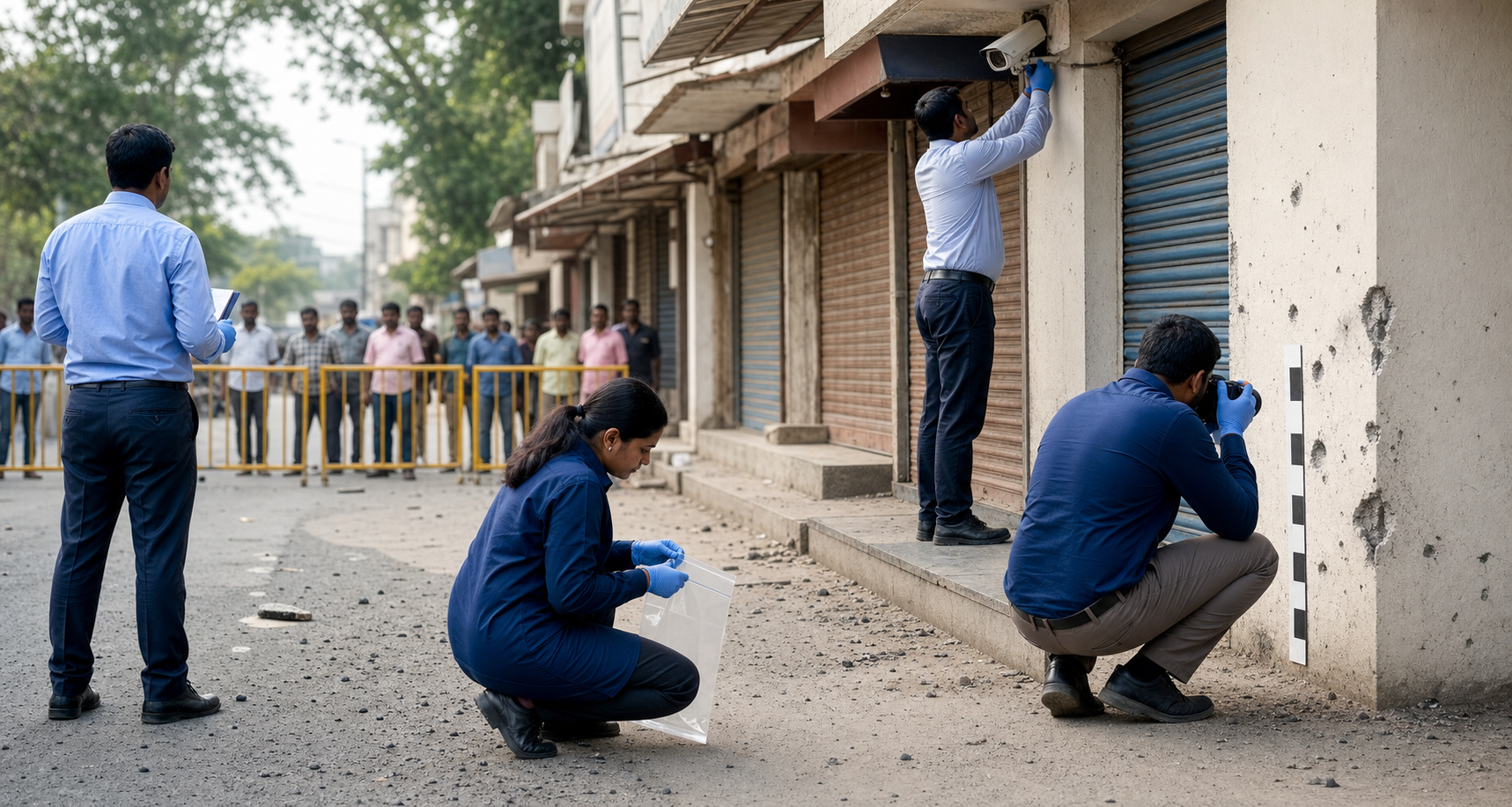
The wrong response is to demand that courts convict despite unresolved identification problems. The equally wrong response is to treat the acquittal as the end of every public obligation. The state still owes victims and citizens an explanation of why such a serious case reached trial without a dependable answer to who did what.
Community representatives, journalists and elected officials should seek written, case-specific answers to these questions:
- What evidence originally connected each of the 11 accused to a specific criminal act?
- Why was the crucial eyewitness statement recorded 51 days after the incident, and who was responsible for that delay?
- Why was no test identification parade conducted when disputed identification became central to the case?
- Why did eight important witnesses fail to support the prosecution in court, and was any formal assessment made of witness safety or possible interference?
- What independent material, if any, was collected to corroborate eyewitness identification?
- Has the prosecution conducted a case-failure review, and what lawful appellate or investigative step, if any, remains available?
- What work continues to identify the people actually responsible for the death, injuries, arson and property damage?
These questions should be answered institutionally, without exposing protected witness details or encouraging a public hunt for suspects. A lawful review may identify an investigative lapse, a witness-management failure, an evidentiary dead end or a combination of them. The conclusion must follow the record; it should not be chosen in advance.
If you possess original photographs, recordings or messages connected to communal violence, preserve the original files and their metadata. Do not crop, enhance, recompress or repeatedly forward the only copy. Record when, where and how the material was obtained, keep an untouched duplicate, and provide it through an advocate or the proper investigating authority. Do not confront a suspected offender or publish a private witness’s identity. Either action can create a safety risk and compromise legitimate investigative work.
When discussing Khargone publicly, use language that keeps all three truths intact: serious violence occurred; the prosecution failed to prove its case against these 11 people; and the identity of the actual offenders remains the central accountability question. Saying that the court found no violence erases victims. Calling acquitted people convicted rioters ignores the verdict. Treating a failed case as adequate performance excuses the institutions responsible for producing reliable evidence.
The next time an acquittal in communal violence provokes the claim that courts always give offenders the benefit of doubt, ask for the evidence timeline first. Who was identified, by whom, how soon, through what procedure and for which act? Direct your pressure toward those missing answers. Hindu society does not need courts that punish on suspicion; it needs investigators and prosecutors capable of proving the truth.
References
