
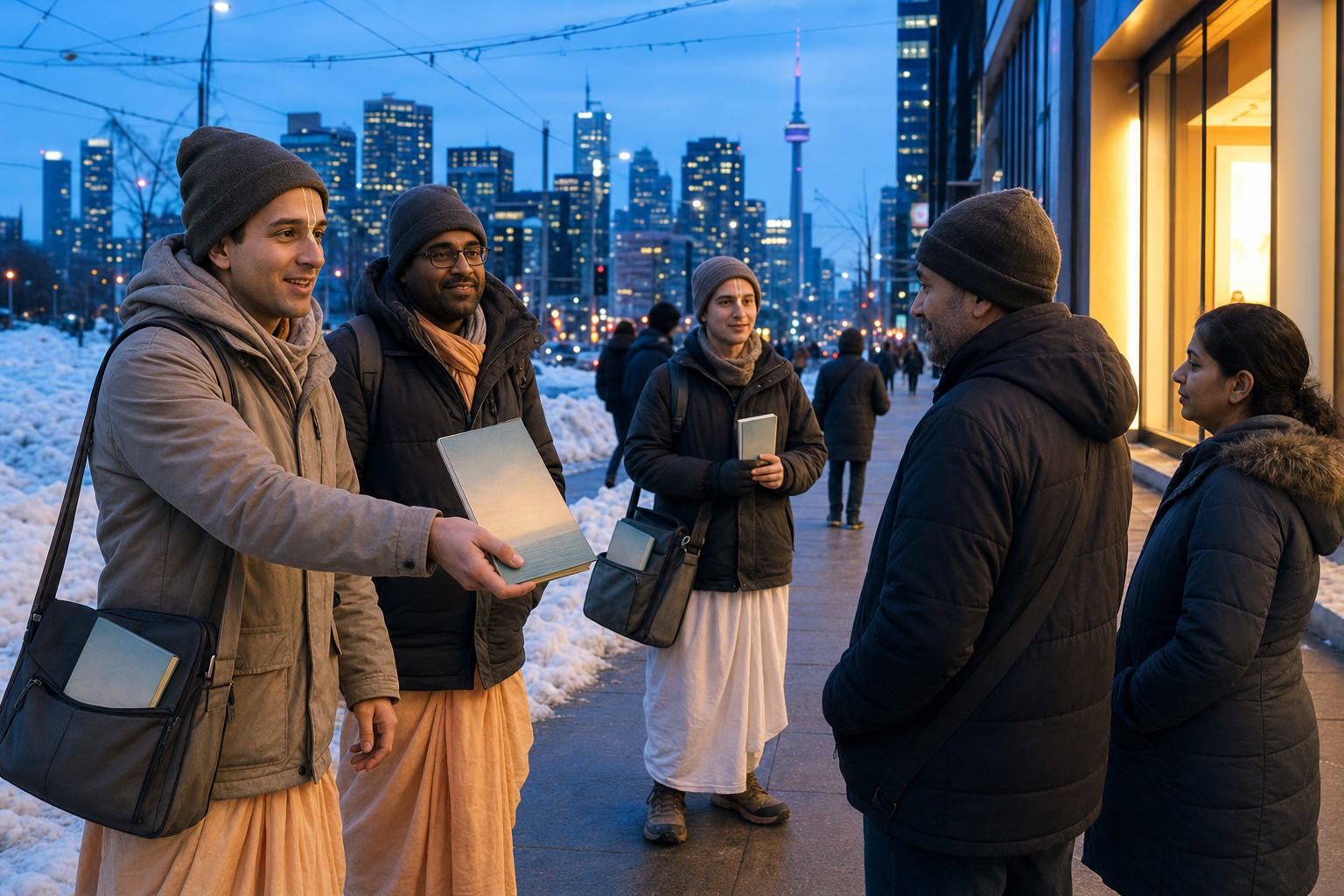
If you heard that Toronto devotees carried the 2025 Prabhupada Marathon through severe winter weather, you may be wondering what made the effort sustainable. The useful number is more than 110 outings in sub-zero conditions. These were separate acts of service, not one prolonged display of endurance.
That distinction gives you a practical model. Sankirtan in a cold, hurried city becomes manageable when you shorten the outing, prepare for the conditions, listen before speaking, and give people a clear path to reconnect. The marathon then becomes a disciplined rhythm of seva rather than a contest over who can tolerate the most discomfort.
Measure the marathon by continuity, not one heroic day
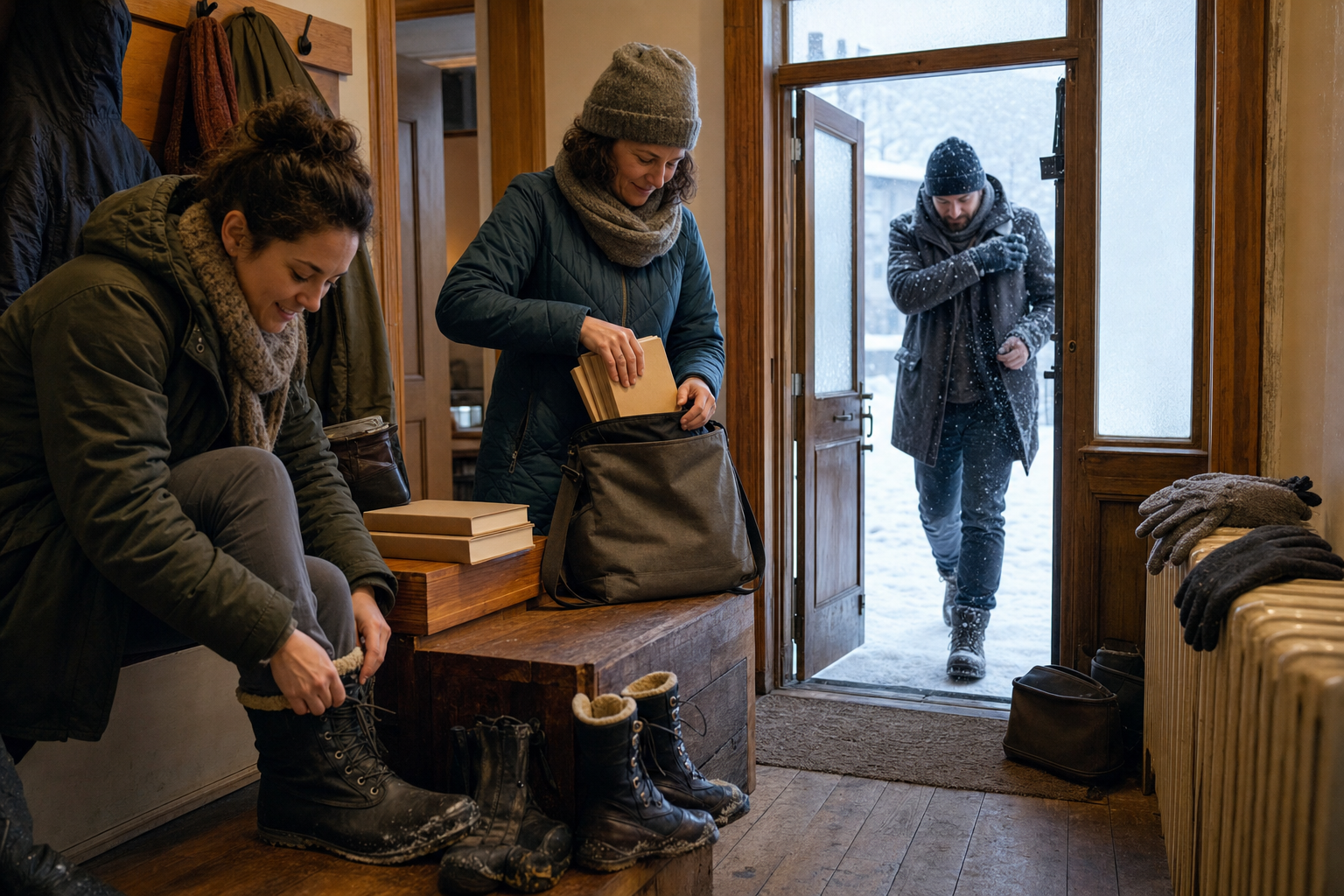
A total of 110-plus outings tells you something different from a tally of books distributed. It shows repeatability. Someone had to prepare, leave a warm building, enter a public setting, approach people respectfully, return, and then do it again. In winter, that repeated transition is often harder than staying out once the conversation has begun.
This is why a Prabhupada Marathon should not be judged through a single number. Literature distribution remains central, but the Toronto experience also produced greater receptivity, requests for follow-up gatherings, and a stronger sense of community solidarity. Those outcomes reveal whether an encounter ended at the sidewalk or opened a continuing relationship.
If you are coordinating a future campaign, keep four records separately:
- Outings completed, so you can see whether the team is maintaining a rhythm.
- Literature accepted, so the central service remains visible.
- Conversations that moved beyond a greeting, so volunteers learn which approaches create real engagement.
- Requests for another meeting, kirtan, temple visit, or gathering, so interest does not disappear after the first contact.
Do not turn every human exchange into a data point. A simple campaign log is enough. Its purpose is to help the team notice where service is becoming sustainable and where people are asking for a next step.
Micro-outings make winter service repeatable
The most transferable Toronto practice was the micro-outing: go out for a shorter period, return before exhaustion takes over, and repeat the service more frequently. This lowers the practical barrier for householders, students, workers, and volunteers who cannot devote an entire day to street outreach.
Shorter does not mean casual. A useful micro-outing has a defined place, an appropriate way of approaching people, enough literature for that session, and a clear point at which the volunteer returns. The aim is to preserve attention and warmth in the interaction. A person who is cold, rushed, or focused only on finishing a quota will struggle to offer the patient presence that Sankirtan requires.
Practical preparation did much of the hidden work in Toronto. Volunteers used layered clothing, hand warmers, sheltered locations, and quieter forms of chanting. Transit corridors and community centres offered protection where access had been permitted. Low-volume kirtan or japa allowed the devotional character of the outing to remain intact without ignoring the setting.
Cold exposure is a real constraint, not a test of spiritual sincerity. Check the conditions before leaving. If the outdoor setting becomes unsafe, move to a permitted sheltered location or end that segment of the outing. Perseverance in seva includes protecting the volunteer’s ability to return another day.
The human preparation matters just as much. A warm smile, sincere listening, and sometimes a cup of chai opened conversations more effectively than a long explanation delivered before the other person had shown interest. You do not need to compress the whole philosophy into the first encounter. You need to make the encounter truthful, respectful, and worth continuing.
Use shared Dharmic language without erasing differences

Toronto’s diversity changes the first question a volunteer must answer. It is not only, “What should we say about this book?” It is also, “What does this person already recognize as sacred or ethically important?” Listening for that point of recognition makes the conversation more precise.
Four words offer useful bridges across Dharmic traditions:
- Seva gives a Sikh listener an immediate language for selfless service.
- Ahimsa gives a Jain listener a clear point of connection through non-harm.
- Karuna connects with the Buddhist cultivation of compassion.
- Bhakti names the devotional relationship at the heart of the Hindu and Vaishnava approach being shared.
These terms should function as doors, not as claims that all traditions teach the same doctrine. Shared ethical concerns do not erase distinct understandings of the self, liberation, karma, the Divine, or spiritual authority. Respect grows when you can recognize common ground without pretending that real differences are unimportant.
A simple opening can therefore begin with the listener’s concern: “We are sharing a passage from the Bhagavad-Gita about service and inner steadiness. Is that something you think about in your own tradition?” This gives the other person room to answer. It also lets the Gita speak from its own setting rather than being reduced to a generic slogan.
The same discipline helps when speaking with Muslim or Christian neighbours. Toronto volunteers found that compassion, service, and inner resilience supported respectful interfaith conversations. Begin with the value, explain how the Bhagavad-Gita approaches it, and invite a response. Do not assume agreement, and do not treat a polite listener as a convert.
This is where Srila Prabhupada’s emphasis on compassion becomes operational. The book is not an object to place in someone’s hand by any available method. Distribution is an encounter with a person. Humility, clarity, and concern for that person’s freedom are part of the offering.
A field plan for your next cold-weather outing

You can adapt the Toronto method without building a large campaign first. Start with one outing that the team can repeat.
- Choose a lawful, suitable location. Confirm permission where the site requires it, especially in transit corridors or community facilities. Identify a sheltered alternative before the team leaves.
- Define a small outing. Agree on the area you will cover and when the outdoor segment will end. The first goal is a format volunteers can sustain, not the longest possible session.
- Prepare for the weather. Use proper layers and hand warmers, and carry only the literature and supplies needed for that outing. If conditions become unsafe, relocate or stop.
- Select the devotional mode for the setting. Open kirtan may suit one place; low-volume chanting or personal japa may suit another. Adapt the volume without hiding the devotional purpose.
- Lead with attention. Make eye contact, offer a warm greeting, and listen for the person’s actual interest. Share one relevant value and one clear thought from the literature instead of delivering an uninterrupted speech.
- Offer a next step. If someone wants to continue, provide accurate details for a gathering, kirtan, temple visit, or follow-up conversation. Do not collect contact information without clear consent.
- Record what happened. Note the outing, literature distributed, substantial conversations, and follow-up requests. Use the record to improve the next outing, not to rank volunteers.
A cup of chai, when practical, can support the atmosphere of hospitality, but it cannot replace listening. Likewise, a polished explanation cannot compensate for ignoring the setting. The method works because practical care and spiritual purpose reinforce one another.
Key takeaways
- Toronto’s 110-plus outings matter because they demonstrate consistency under constraint, not because cold itself makes service more meritorious.
- Short, frequent micro-outings are easier to repeat and can keep volunteers attentive during winter conditions.
- Layers, hand warmers, sheltered sites, permission, and an appropriate chanting volume are part of responsible Sankirtan planning.
- Seva, ahimsa, karuna, and bhakti can open Dharmic dialogue when each tradition’s distinct teachings are still respected.
- Track follow-up requests as well as outings and literature distribution; they show where a brief encounter may become a relationship.
If you want to carry Toronto’s momentum into the next season, choose one permitted location, prepare one short outing, and decide how an interested person can meet the community again. Then repeat what works. A marathon becomes durable when the next act of seva is small enough to begin and meaningful enough to continue.
References
