

If you are following Nepal because family, pilgrimage, business, or concern for Hindu society connects you to the country, your first decision may be whether to share an alarming claim, join a mobilisation, donate, or advise someone near the violence. Anger will not help you make that decision. A disciplined account of what is known will.
Use a clear rule: protect people first, verify every incident at the local level, demand individual accountability, and reject collective punishment. That is not passivity. It is how Hindu society can defend itself without allowing fear or political labels to turn uninvolved neighbours into targets.
Key takeaways
- As of August 2, 2026, communal violence was reportedly spreading beyond Sunsari, with mosques, homes, and businesses described as targets in several districts.
- The label “Hindutva retaliation” is a claim about motive. It does not establish who committed each act, who directed it, or whether every incident belongs to one sequence.
- Immediate defence, lawful Hindu mobilisation, and communal reprisal are different actions. Only the first two can protect a community without punishing people for their identity.
- Before sharing a claim, identify the locality, date, original upload, visible event, and independent local confirmation. Keep alleged identities, motives, and casualty claims separate from verified facts.
- If danger is close, leave the flashpoint, contact local emergency services and trusted people, and preserve evidence only when doing so is safe.
- A credible public response should demand equal protection, evidence-based prosecutions, transparent incident updates, rumour correction, and accountable relief for victims.
Hold the factual line before choosing a side
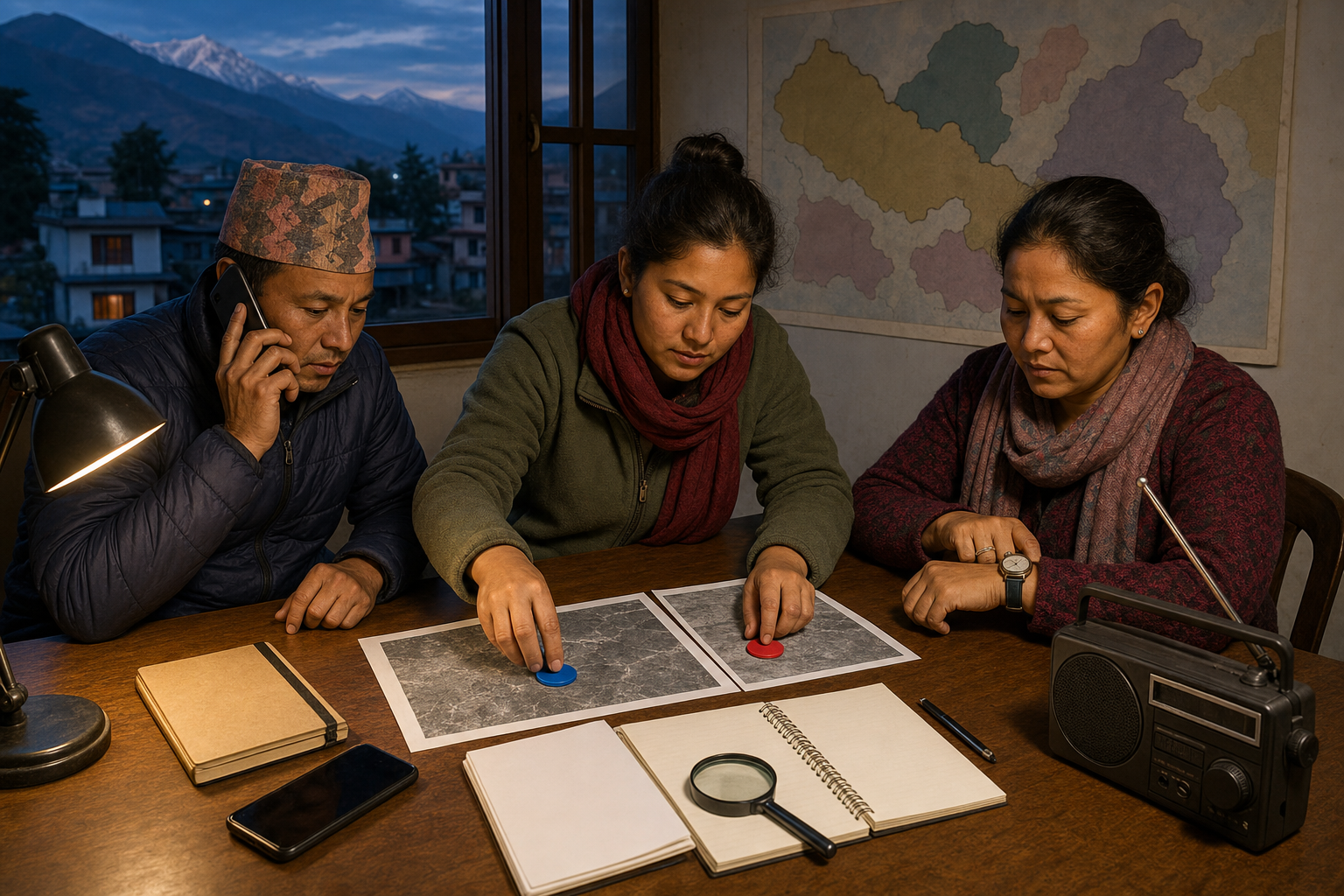
As of August 2, 2026, Nepal’s communal violence was reportedly moving beyond Sunsari. Mosques, homes, and businesses were described as targets in several districts amid growing religious tension.
That is the limit of confident specificity. No complete district list, incident count, casualty total, authenticated chronology, perpetrator roster, or official finding accompanies those claims. You should not fill those gaps with assumptions. A serious allegation does not become more reliable when its caption becomes more certain than the underlying evidence.
Some alleged attacks are being framed as “Hindutva retaliation”. Treat that wording as an interpretation until the underlying incidents are individually established. Retaliation for what event? Who allegedly participated? Was the target connected to that event, or selected because of a religious identity? Is responsibility supported by identifiable evidence? These are not evasive questions. They determine whether you are describing self-defence, organised political action, opportunistic crime, or collective punishment.
Use narrow language while those answers remain unknown. Say “an alleged retaliatory attack on a mosque in the claimed locality,” not “Hindus attacked Muslims across Nepal.” Say “a business was reportedly damaged,” not “an entire community has declared war.” The narrower sentence is easier to correct, less likely to inflame another district, and more useful to anyone trying to protect people or investigate a crime.
Separate defence, mobilisation, and communal reprisal

The word “retaliation” can conceal a decisive moral distinction. Hindu self-protection, lawful mobilisation, and attacks on uninvolved people are not points along one acceptable spectrum. They have different objects, limits, and consequences.
| Response | Immediate object | Stopping point | Dharmic and civic test |
|---|---|---|---|
| Immediate defence | Move people away from an imminent threat and stop present harm | Ends when the threat is no longer imminent | Necessary, restrained, and directed at the actual danger |
| Lawful mobilisation | Secure protection, investigation, relief, and institutional accountability | Continues through evidence, advocacy, protest, and lawful process | Firm but non-violent; demands equal application of the law |
| Communal reprisal | Punish people or property associated with a religious category | Has no natural limit because identity replaces individual responsibility | Collective punishment; reject it even when presented as community defence |
An attack on a mosque, home, or shop merely because it is associated with Muslims does not defend Hindus. It exposes more civilians, creates a new grievance, obscures the original wrong, and gives authorities or political actors an excuse to treat every Hindu demand as a security problem. The same standard must govern any allegation that a Hindu person, temple, home, or business has been attacked: protect the threatened, identify the offender, preserve evidence, and prosecute the responsible individual.
In a Dharmic frame, courage and restraint are not opposites. You may organise evacuation help, legal assistance, documented complaints, peaceful demonstrations, victim relief, and protection requests. You may insist that anti-Hindu violence be named and prosecuted. What you cannot do is transfer another person’s guilt to a neighbour who shares that person’s religion.
Do not let “Hindutva” become either a blanket alibi for mob violence or a blanket accusation against Hindus. Judge conduct precisely. A person escorting families away from danger is not equivalent to a person attacking a place of worship. A campaign demanding arrests is not equivalent to a crowd choosing a shop by the owner’s faith. Precision protects both justice and Hindu credibility.
Use a verification-and-safety protocol
Before you share, donate, or mobilise
- Pin the claim to a locality and time. Record the district or municipality, the specific site, the claimed date, and what is said to have happened. A caption that says only “Nepal” is too vague to act on.
- Find the earliest available upload. Save its URL, publication time, caption, and uploader identity. A chain of reposts is not independent confirmation.
- Inspect what the image or video actually proves. Look for matching signage, landmarks, spoken language, road features, and an unbroken view of the claimed event. Use a reverse-image search to check whether the media appeared before the alleged incident.
- Seek local confirmation through people or institutions positioned to know: directly contacted residents, local journalists, police notices, medical facilities when injuries are claimed, or the committee responsible for the affected temple, mosque, or community property.
- Separate observation from inference. “A building is burning” may be visible. The building’s identity, the fire’s cause, the crowd’s affiliation, and the motive may still be unverified.
- Publish the uncertainty with the claim. A useful format is: “Verified: [place, date, and visible event]. Not verified: [identity, motive, casualties, or responsibility]. Avoid the area and await local confirmation.”
- If you discover an error, correct it where the original claim was shared. Do not quietly delete a viral falsehood and leave everyone who saw it with the wrong conclusion.
Do not publish the faces of vulnerable victims, private addresses, evacuation routes, the location of a temporary refuge, or other details that could guide a hostile crowd. If an image may be evidence, keep the unedited original with its metadata. Share a redacted copy publicly only when publication serves a clear protective purpose.
If the danger is close to you
- Leave the immediate flashpoint. Do not approach a crowd to observe, argue, livestream, or obtain dramatic footage.
- Contact local emergency services or police and a trusted person who is outside the affected area. Tell that person your location, destination, and when you expect to check in again.
- Move children, older people, people with disabilities, and anyone requiring regular medication before protecting property. Carry identification, essential medicine, a charged phone, and a basic charger if they are immediately accessible.
- If a place of worship, home, or business faces a specific threat, notify authorities in writing when possible and preserve the acknowledgement. Community volunteers should focus on warning, communication, evacuation, and observation from safety, not confrontation.
- Document damage only after the immediate threat has passed. Retain original files, note the location and time separately, and keep a duplicate with a trusted person. Evidence can support an investigation; a livestream can reveal your position and attract a crowd.
If violence is imminent, documentation is secondary. No video, damaged building, or disputed claim is worth remaining within reach of a mob. Advice from a distant group chat must never overrule the judgment of people who can see the local danger.
If you are responding from outside Nepal
Check on relatives or contacts directly instead of tagging them publicly. Do not ask a person in hiding to send live images, reveal a location, or investigate a rumour for you. If direct contact fails, use trusted local intermediaries without posting the person’s address or travel plans.
Before donating, establish who controls the fund, which victims or expenses it covers, how recipients will be identified, and whether disbursements will be recorded. Prefer relief centred on verified injury, displacement, repair, food, medicine, or legal assistance. A religious slogan is not a substitute for financial accountability.
If you contact officials or civic organisations, make the request narrow enough to answer: protect a named locality or worship site, confirm whether a reported incident occurred, publish the status of a complaint, preserve camera footage, or provide a channel for victim reports. Broad accusations produce broad denials. Specific requests create a record.
Demand a response that protects every community
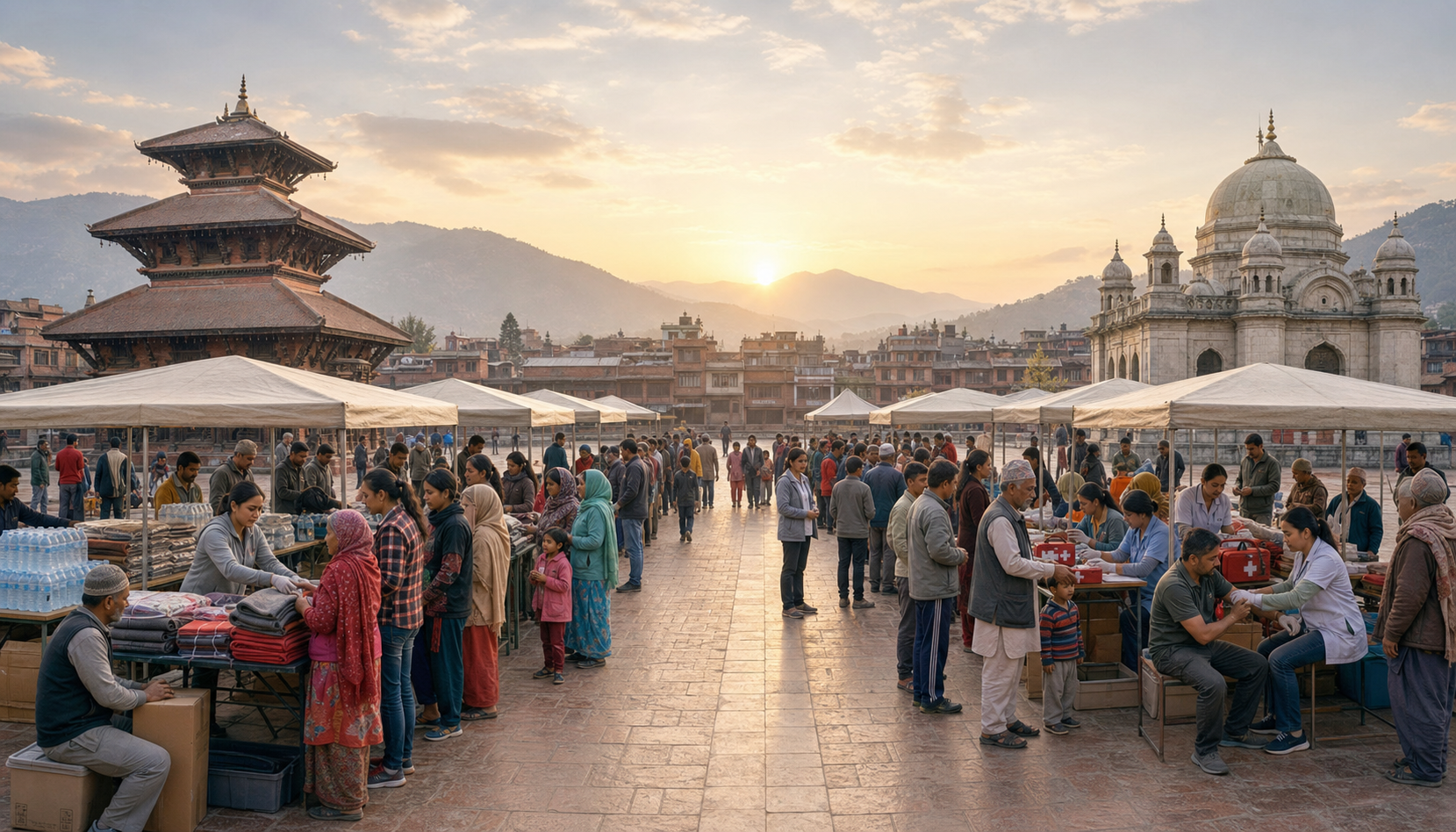
A strong Hindu position does not require silence about attacks attributed to Hindus. It requires the same rule that Hindus rightly demand when they are victims: identify actual offenders, protect threatened civilians, and refuse to treat an entire religious population as guilty.
Community leaders, journalists, and public authorities should be pressed for concrete measures:
- A public incident ledger organised by locality and date, separating confirmed damage, alleged responsibility, investigation status, and unresolved claims.
- Protection for vulnerable temples, mosques, homes, and commercial streets based on credible threats rather than the political usefulness of the affected community.
- Evidence-based investigation of individuals, including anyone who planned, incited, financed, or carried out an attack, without using religious affiliation as a substitute for proof.
- Prompt public correction of false location, casualty, and responsibility claims before they trigger reprisals elsewhere.
- Transparent victim relief with published eligibility rules, named custodians, and records of how funds are used.
- Written commitments from Hindu and Muslim civic representatives to report threats, protect neighbours, and reject attacks on places of worship, homes, and businesses.
Do not accept the false choice between denying communal violence and endorsing revenge. If you are far from the danger, your next useful act is to verify before sharing. If you are near it, move people to safety and establish reliable communication. If you lead an organisation, publish your verification standard and your rejection of collective punishment before issuing another charged statement. That is how concern for Hindu security becomes disciplined public action rather than fuel for the next attack.
References
