
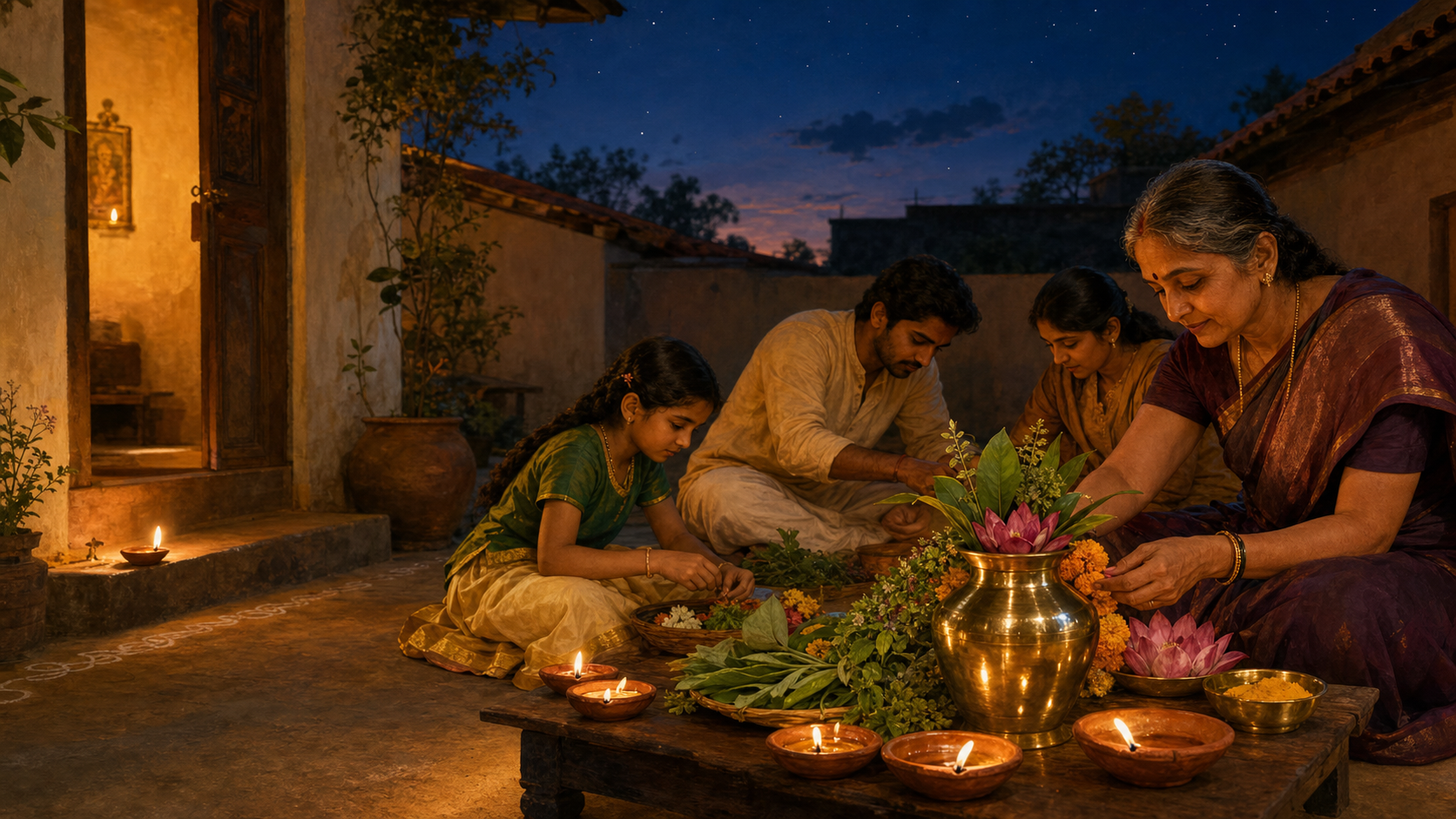
If two calendars place Dhanteras on different civil dates, you don’t need to choose the one with the most confident graphic or the earliest shopping offer. Dhanteras is anchored in the Trayodashi tithi of Kartik, and a tithi does not necessarily begin at midnight or last through an entire calendar day.
Your practical task is simpler: find the Trayodashi interval calculated for your location, identify which part of that interval your family or temple uses, and place the relevant observance there. Preparation, worship, purchasing, and a commitment to health do not all require the same minute.
Let the tithi determine the day
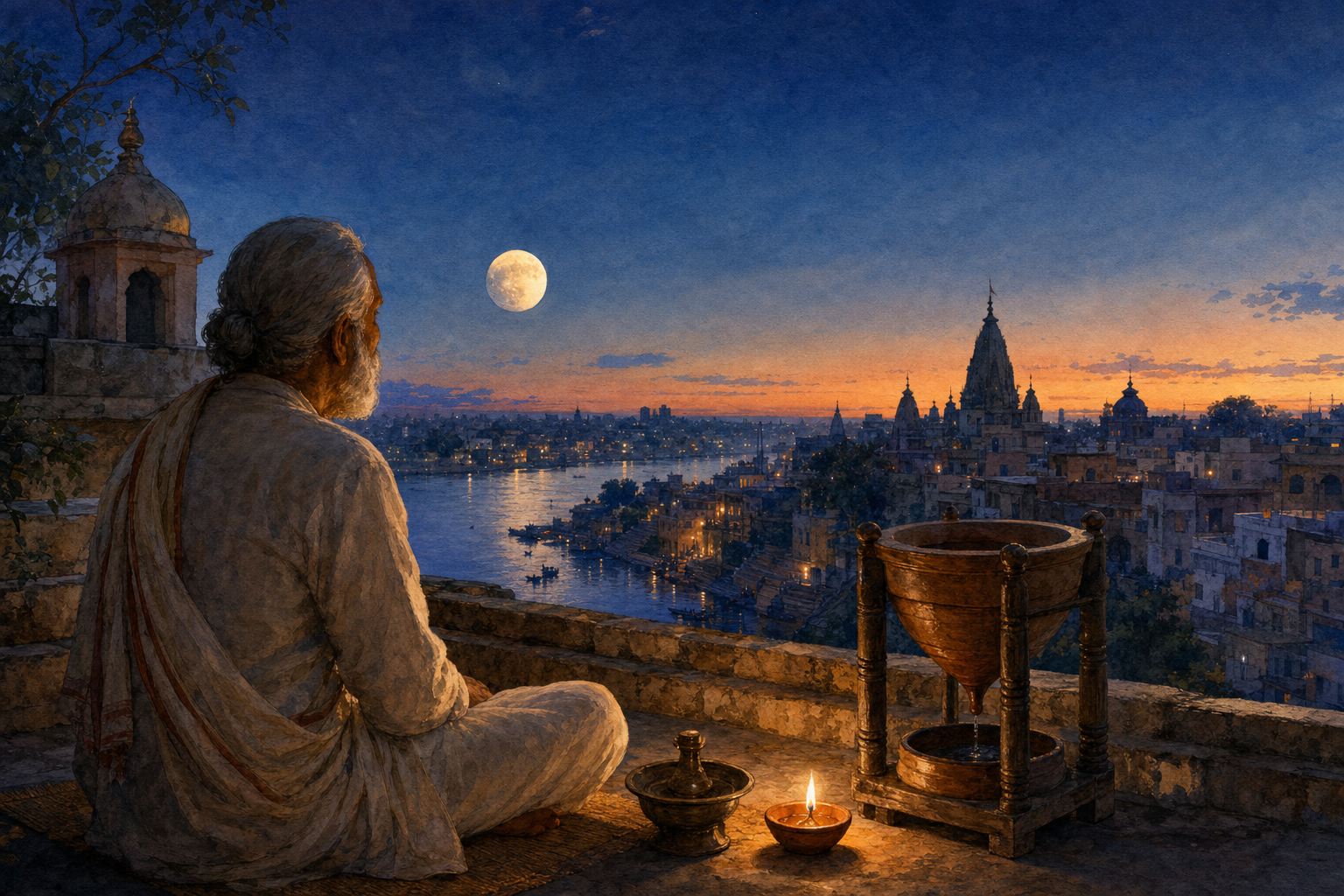
Trayodashi is the thirteenth lunar day of a paksha. Because lunar and civil days use different boundaries, one civil date can contain the end of one tithi and the beginning of another. Sunrise may arrive during one tithi, while evening worship falls during the next.
A useful example of this mechanism appears on January 30, 2026: Shukla Paksha Dwadashi continues until 9:21 AM in most regions, with Trayodashi beginning afterward. That date is not Dhanteras; it simply shows why a date printed without a location and tithi boundary is incomplete.
Local calculations can differ slightly because the observer’s longitude and latitude matter, as do the conventions used by a regional calendar. Sunrise, moonrise, nakshatra, and other panchang elements may also affect the timing of a particular observance. A time copied from another city may therefore be precise on the screen and wrong for your home.
This also explains why two trustworthy calendars can appear to disagree. They may be calculating for different places, using different regional conventions, or assigning the festival according to the part of Trayodashi relevant to a particular ritual. Treat the disagreement as a question to resolve, not as proof that sacred timing is arbitrary.
Build your Dhanteras schedule in the right order
Do not begin by searching for a universal Dhanteras muhurta. Begin with your location and the tithi. Then add the requirements of your family’s sampradaya, regional practice, or temple.
- Set the correct locality. Use a panchang configured for your city or the nearest location it supports. Check the time zone if you are observing outside Bharat.
- Find Kartik Trayodashi. Record both its beginning and ending times. Do not rely only on the festival label attached to a civil date.
- Check which portion your observance requires. If your family follows an evening lamp or temple worship schedule, determine which evening the local tradition selects. Pradosh-related practices, where observed, should follow the applicable regional or temple calculation.
- Use one consistent authority. If your household normally follows a particular temple or regional panchang for vrata and festivals, use the same one here. Mixing the start time from one calendar with the festival date from another creates confusion.
- Ask when the boundary is close. If Trayodashi begins or ends near the time of worship, confirm the schedule with the temple you actually attend. Do not average two published times.
- Separate preparation from the timed act. Clean the worship space, arrange the lamp, prepare offerings, and discuss the family’s health commitment beforehand. The available tithi window should not be consumed by avoidable errands.
A printed date remains useful for planning leave, travel, or a family gathering. It is simply not the final authority for a lunar observance. Think of the civil date as the page in your diary and the tithi as the ritual window written on that page.
| Activity | How to time it | Common mistake to avoid |
|---|---|---|
| Cleaning and arranging the worship space | Complete it before the selected worship period | Assuming every preparatory task must wait for Trayodashi |
| Lamp, prayer, or temple worship | Follow the locally accepted Trayodashi and evening schedule used by your family or temple | Copying an evening time calculated for another city |
| An auspicious household purchase | Use the locally accepted festival window when practical | Treating spending itself as the purpose of Dhanteras |
| Health checkup, Yoga session, or Ayurveda workshop | Schedule it when qualified help and responsible participation are available, then dedicate the act to the day’s intention | Delaying useful care merely to force it into a narrow muhurta |
| Seva or charity | Begin or renew it in connection with the observance and make it repeatable afterward | Reducing service to a symbolic gesture that ends with the festival |
Key takeaways
- Dhanteras follows Kartik Trayodashi, not a universal midnight-to-midnight date.
- Your city matters. Use local tithi times rather than a national graphic or another city’s schedule.
- Confirm which portion of Trayodashi your family or temple uses for evening worship.
- Preparation can happen before the ritual window; worship and customary timed acts should follow local guidance.
- A useful purchase may support the observance, but Dhanvantari places health, restoration, and responsible care at its centre.
Dhanvantari gives the timing its purpose
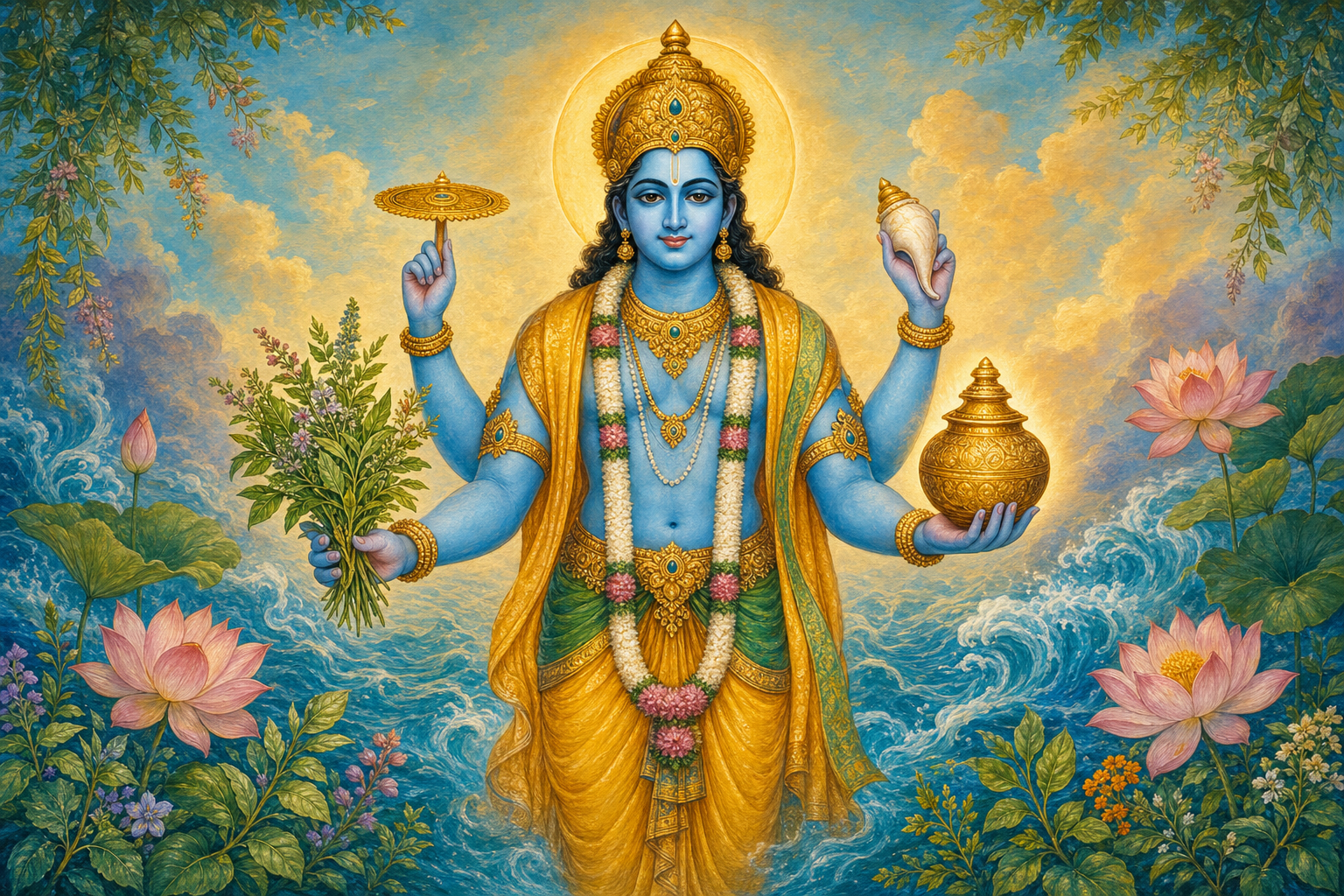
The clock matters because the day remembers a manifestation, not because a favourable minute can replace dharma. In the Samudra Manthan narrative, devas and asuras churn the Kshira Sagara in search of amrita. Dhanvantari emerges holding the amrita kalasha, embodying restoration, health, and the preservation of life.
Dhanvantari is revered as an avatar of Vishnu and as the divine physician. Ayurvedic tradition connects his legacy with the transmission of healing knowledge, including the clinical and surgical stream preserved through the Sushruta tradition. That connection gives Dhanteras a demanding definition of prosperity: resources are auspicious when they sustain life and support responsible action.
This is why the day becomes thin when it is reduced to buying metal, jewellery, or a household object. Such purchases can be meaningful, and many families choose simple, useful items. The better question is what the object will help you do. A vessel used for regular nourishing meals has a clear place in a Dhanvantari-centred observance. An anxious purchase made only to avoid feeling inauspicious does not carry the same moral weight.
The Samudra Manthan image also corrects another mistake. Amrita appears through sustained effort, cooperation, and the endurance of difficulty. Healing is rarely produced by one dramatic gesture. Dhanteras can mark the decision to seek balance, but the result depends on the routines and care that continue after the lamp is extinguished.
Turn worship into one durable act of care
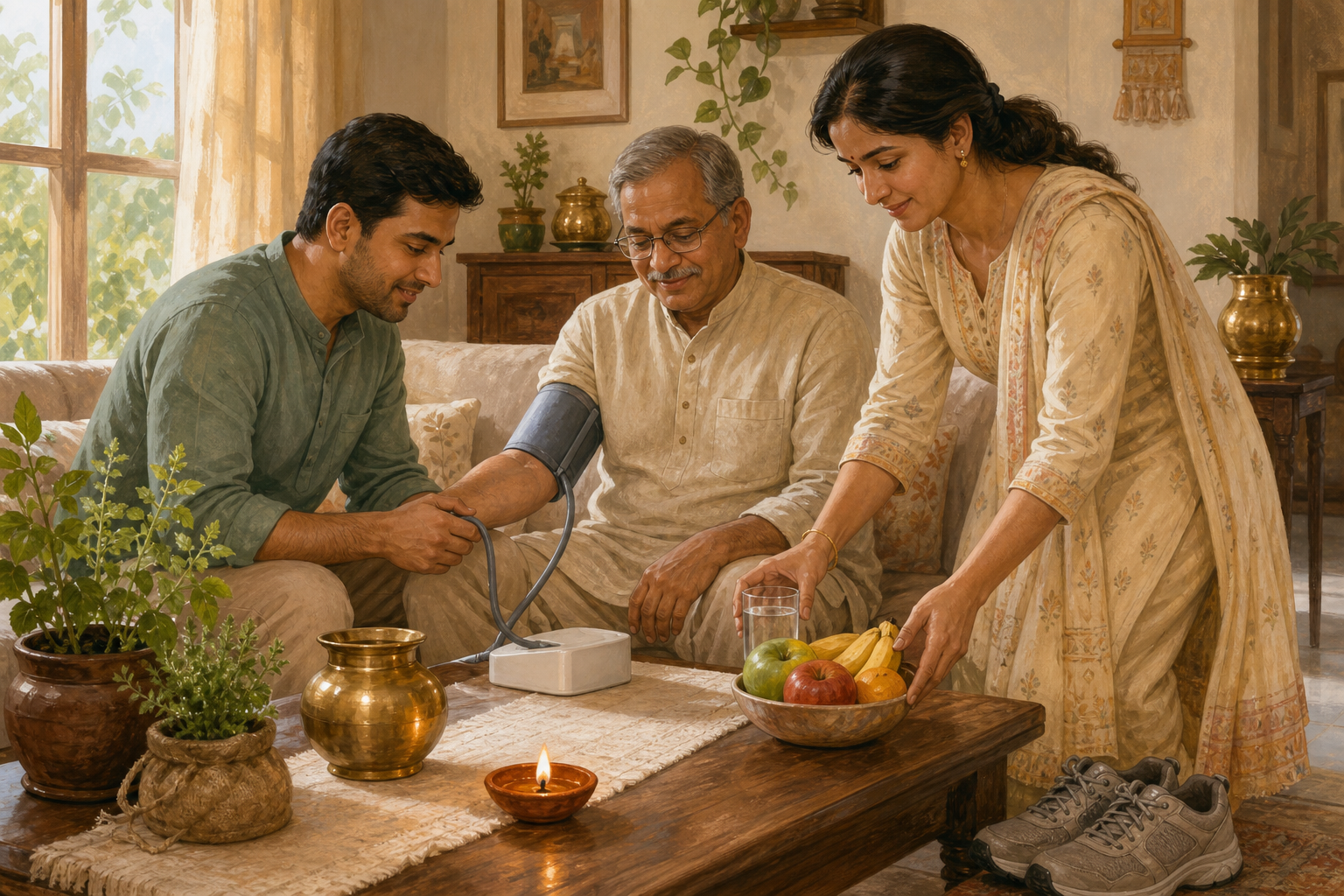
Choose one commitment before the festival so that you are not improvising a vague resolution during worship. Keep it small enough to repeat and concrete enough to verify.
- Attend to neglected care. Book an overdue appointment or health checkup with an appropriately qualified professional.
- Correct one daily rhythm. Select a realistic improvement in meals, rest, movement, or reflection rather than declaring a complete lifestyle overhaul.
- Make the purchase serve the vow. If you buy a household item, decide how it will support cleanliness, nourishment, worship, or care.
- Include seva. Connect personal wellbeing with the wellbeing of another person or your community. Ahimsa, service, mindfulness, and collective care give the observance significance beyond the household.
- Record the next action. Put the appointment, routine, or service commitment on your calendar before the day ends. Intention becomes practice only when it has a place in ordinary time.
Ayurveda’s concern with diet, routine, seasonal alignment, and ethical conduct offers a framework for reflection, not permission for casual self-treatment. A festival vow cannot diagnose a condition or replace medical care. Do not stop prescribed medicine, delay urgent attention, or begin herbs solely because Trayodashi is auspicious; discuss treatment decisions with a properly qualified clinician.
Before Dhanteras arrives, save the local Trayodashi boundaries, confirm the evening schedule your household follows, prepare the worship space, and choose one act of care that will outlast the festival. Then sacred timing will do what it is meant to do: gather your attention around a dharmic purpose and send you back into daily life with that purpose intact.
References
- DharmaRenaissance Blog — Dhanvantari’s Ocean-Born Emergence: Divine Ayurveda and the Healing Power of Dhanteras
- DharmaRenaissance Blog — January 30, 2026 Panchang: Dwadashi to Trayodashi Transition, Auspicious Timings Guide
