
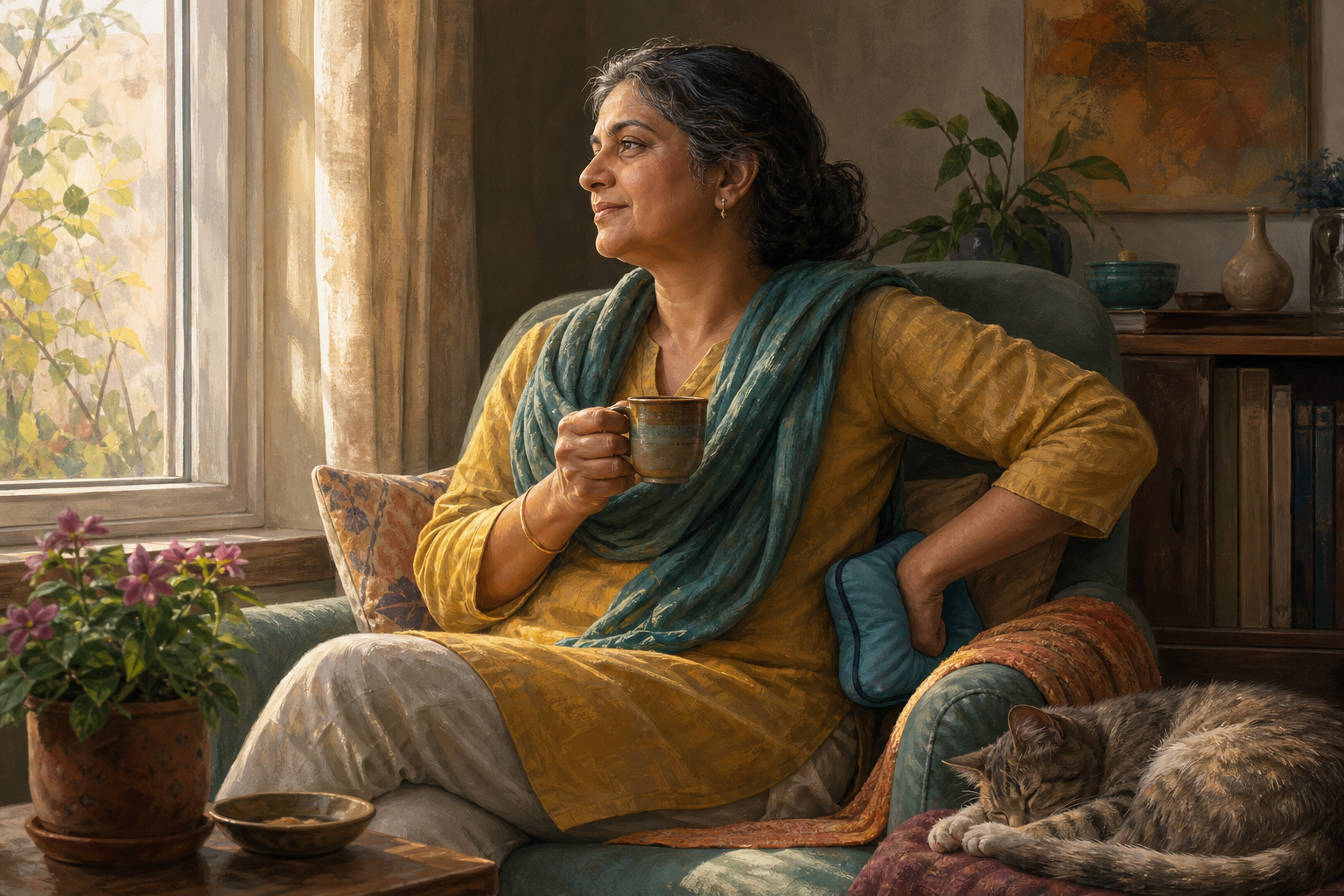
If chronic pain has reduced your day to managing symptoms, conserving energy, and calculating what you must cancel, the question “What brings you joy?” can feel like one more demand. You do not need a better attitude. You need a smaller question.
What could feel genuinely pleasant, steadying, or connecting for thirty seconds without asking your body to pay for it later? That is the scale of a micro-moment of joy. It does not require pain to disappear, and it does not pretend that illness is easy. It gives you a practical way to experience something besides pain while continuing to take your condition seriously.
Pain can occupy your attention without owning the whole day
Chronic stress can crowd the nervous system with alarm signals while ordinary experiences of pleasure and connection become scarce. Appointments, test results, food restrictions, interrupted sleep, and unpredictable capacity may then push everything else to the edge. Even your identity can begin to collapse into one role: patient.
It can help to call this a joy deficiency, but only as a practical description, not a diagnosis. It does not mean that you are ungrateful, spiritually weak, or failing to cope. Survival consumes attention. When the body has been protecting you for a long time, it may notice threat more readily than warmth, humor, beauty, or ease.
The honest physiological claim is modest. Emerging work in psychophysiology and contemplative practice links positive affect with parasympathetic activity and a gentler stress response. A pleasant minute is not proof that tissue is repairing, inflammation is falling, or an underlying disease is improving. It may, however, give your system a brief opportunity to reduce its bracing and experience safety, connection, or ease.
That distinction protects you from two harmful extremes. You do not have to dismiss joy as frivolous, and you do not have to turn it into a cure. Medical care addresses the causes, risks, and treatment of illness. Micro-moments address something medicine can overlook: whether any part of daily life still feels alive.
Build a joy menu for the body you have today
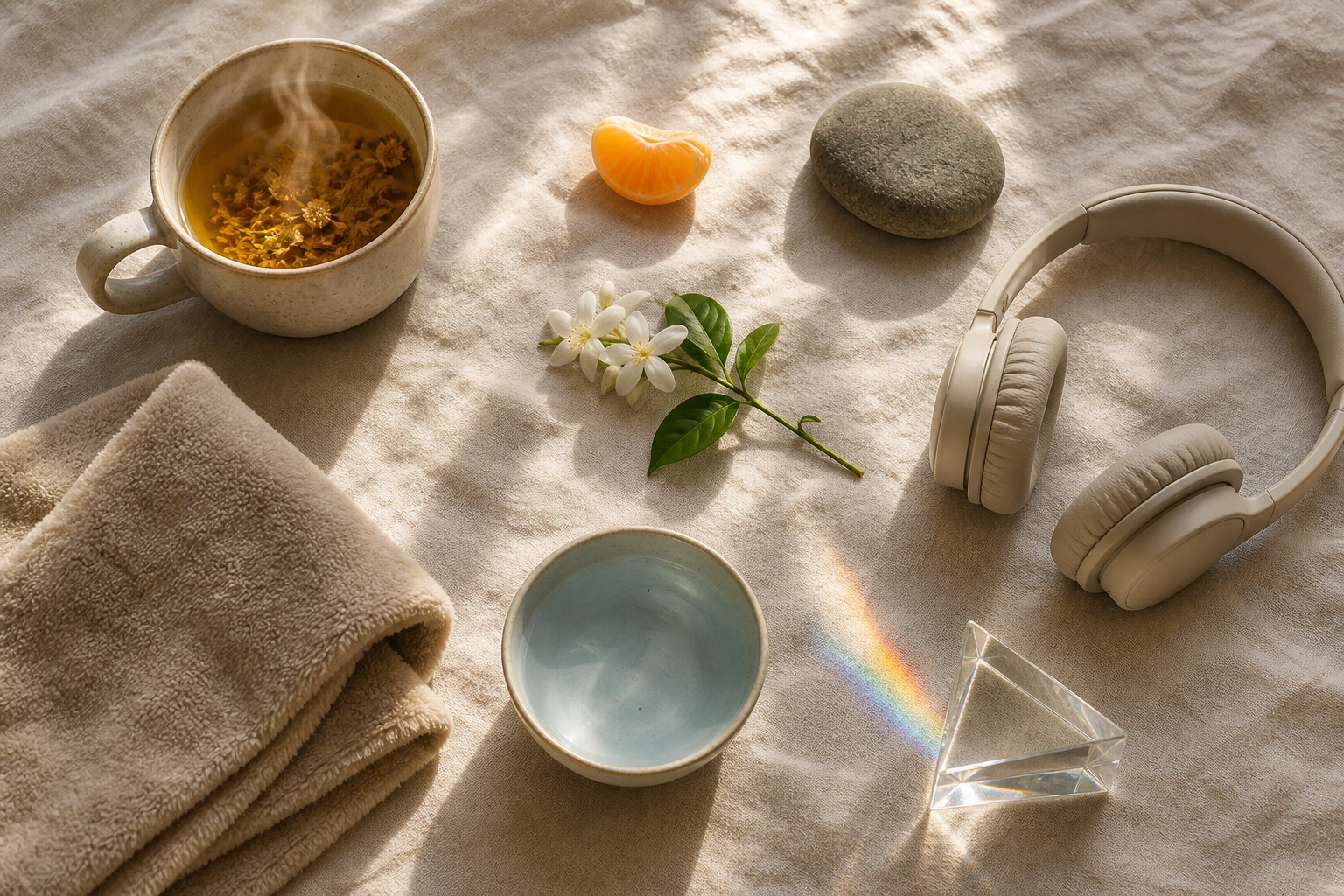
Do not begin with what used to make you happy. A former joy that now requires travel, vigorous movement, sustained concentration, or a recovery day may sharpen your sense of loss. Ask instead: “What is available to me in this body, in this place, right now?”
Create a short menu before the next difficult flare. Give yourself options that use different senses and different amounts of energy:
- Light: Sit by an open window or let sunlight warm one hand for up to two minutes.
- Sound: Play one familiar song, chant, or quiet piece of music without making yourself listen to the end.
- Taste or fragrance: Attend to the first sip of a warm drink or one comforting scent.
- Touch: Feel your feet against the floor, the texture of a blanket, or the reassuring weight of a loved one’s head against your knee.
- Connection: Receive a kind message, offer a few attentive words, or let someone sit with you without requiring conversation.
- Humor: Keep one brief video, memory, or exchange that can still invite a real smile on a hard day.
- Ease: Notice a fleeting reduction in pain, a less tense breath, or one position that feels slightly more comfortable.
A useful option passes five tests: it is accessible now, needs little preparation, can be stopped immediately, does not predictably aggravate your symptoms, and feels authentic rather than dutiful. If light worsens a migraine, sunlight is not your practice that day. If nausea makes tea unpleasant, choose sound or touch. If touch is painful, use a view, fragrance, or quiet companionship. The practice must adapt to the body; the body should not have to endure the practice.
Do not confuse intensity with value. Joy may arrive as delight, but it may also feel like interest, tenderness, relief, warmth, amusement, or simple okayness. A quiet moment counts even when it would look insignificant to someone else. You are looking for a true spark, not an impressive one.
Use a one-minute practice without making it homework
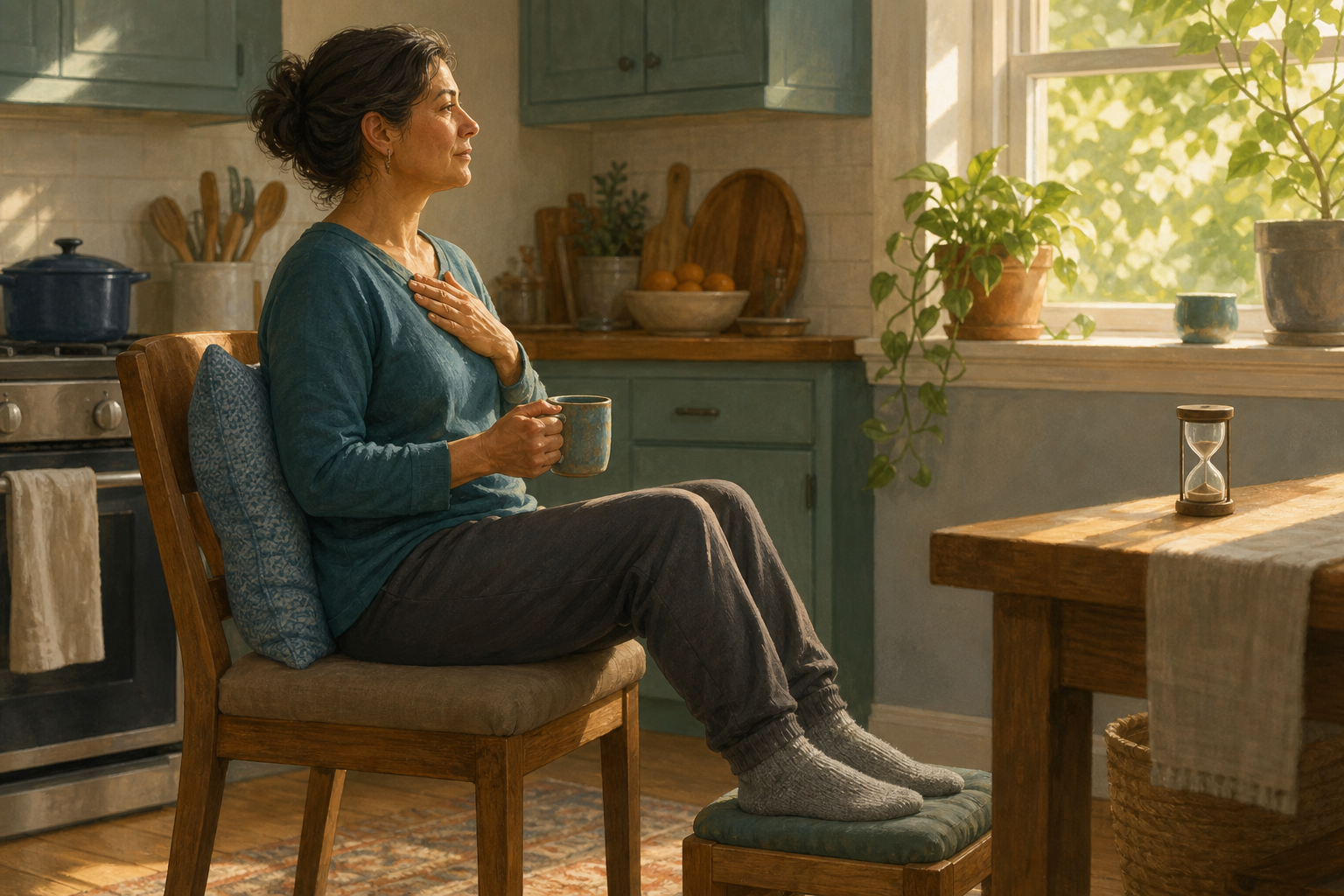
When pain is loud, a complicated routine creates another opportunity to feel defeated. Use this short sequence instead:
- Name the present state. Use plain words: “Pain is loud and energy is low.” You do not need to analyse or correct it.
- Choose one accessible spark. Pick from your menu according to today’s symptoms, not yesterday’s plan.
- Notice one concrete detail. Feel the warmth of the cup, hear one instrument, see one patch of light, or register the exact moment your shoulders soften.
- Stay for three natural breaths. Do not force deep breathing. If the experience remains welcome, continue for thirty seconds or as long as two minutes.
- Finish without demanding a result. Pain may be unchanged. The moment still counts if something pleasant, meaningful, or steadying was present beside it.
Track the spark, not your performance
A small record can reveal what remains accessible during different kinds of days. Keep it brief enough that it does not become another health log. Write the spark, what you noticed, and whether you would choose it again. For example: “Sunlight; warmth across my fingers; pain unchanged but less braced; yes.”
Avoid turning the record into a streak. Missing a day does not erase anything. A flare is not evidence that you practised badly. Consistency here means returning when you can, not maintaining an unbroken chain.
Watch for the traps that make joy feel compulsory
- Waiting to earn it: Joy is not a reward for productivity, discipline, or improvement.
- Forcing gratitude: You can appreciate one warm sip without declaring yourself grateful for illness.
- Measuring only pain relief: The practice can matter even when your pain score would not change.
- Chasing yesterday’s response: A song that helped yesterday may irritate you today. Choose again.
- Using positivity to silence yourself: A joyful moment does not cancel anger, grief, fear, or the need to ask for better care.
The most sustainable rhythm is to attach one small option to a transition that already occurs: opening the curtains, preparing a drink, settling into a chair, or getting ready for sleep. The transition is a reminder, not a rule. On a depleted day, noticing one pleasant detail is enough.
Let Dharmic practice deepen joy rather than demand it
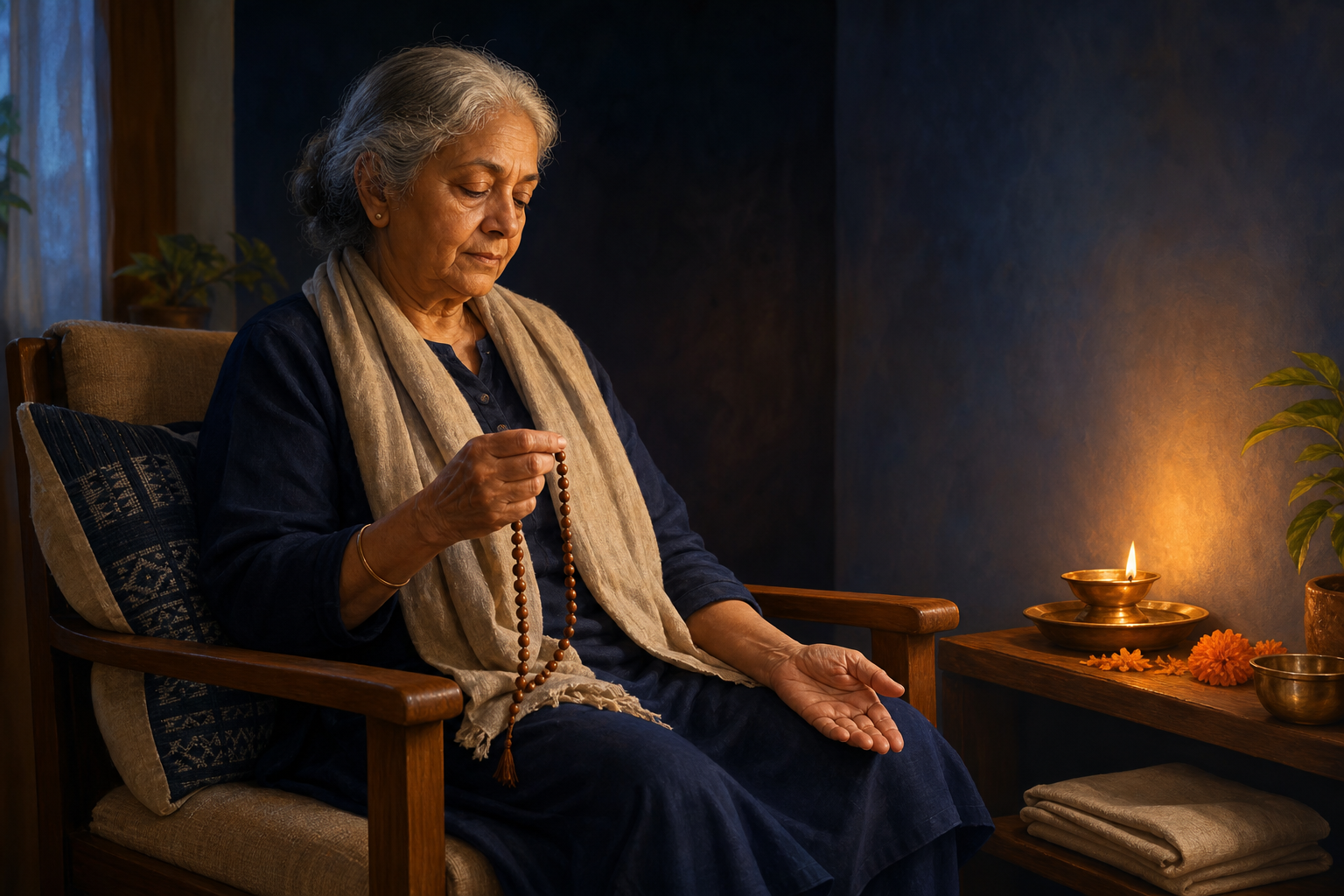
Hindu, Buddhist, Jain, and Sikh traditions are distinct paths; they should not be flattened into one doctrine. Yet each offers a useful way to protect this practice from forced positivity and self-judgment:
- Hindu yoga and ananda: Inner joy need not mean performing cheerfulness or denying bodily suffering. Let one moment remind you that your being is larger than the diagnosis currently occupying your attention.
- Buddhist mindful awareness: Notice a pleasant experience as it appears, without insisting that it last. The fading of warmth or music does not make the moment false.
- Jain ahimsa: Extend non-violence to the way you address yourself. Modifying a practice, resting, or stopping when symptoms rise is gentleness, not failure.
- Sikh seva: When capacity permits, a small act offered with love can restore connection beyond the patient role. Service might be a sincere message or a few minutes of attentive presence; it must not become another test of usefulness.
Ananda, mindful presence, ahimsa, and seva provide complementary doorways into attentive, compassionate living. Choose the doorway that fits your path and capacity. The spiritual purpose is not to become pleased with pain. It is to meet yourself without adding inner violence to physical difficulty.
This also changes the metaphor of illness. Your body does not have to be treated as an enemy that ruined the plan. It can be approached as a vigilant messenger whose signals deserve investigation, medical attention, and compassion. If a supposedly joyful activity increases your symptoms, listen. Alter it or let it go. Respecting that information is part of the practice.
Key takeaways for your next difficult day
- Aim for one authentic moment lasting thirty seconds to two minutes, not a cheerful day.
- Ask what is possible now, rather than trying to recover a pleasure your present body cannot afford.
- Choose an option that needs little preparation, can stop immediately, and does not predictably worsen symptoms.
- Let joy and pain coexist. Relief is welcome, but it is not the admission price.
- Record what worked in a few words, without building a streak or judging a flare.
- Use Dharmic practice to support presence, compassion, and connection, never to impose spiritual guilt.
Micro-moments are supportive care for daily life, not treatment for the cause of pain. Do not stop or change medical or psychological treatment because a practice feels helpful. New, severe, rapidly worsening, or otherwise concerning symptoms need assessment from an appropriate health professional.
If joy feels wholly inaccessible and you are also struggling with depression, deepening hopelessness, or thoughts of self-harm, tell a qualified mental-health professional. If you may act on thoughts of harming yourself, seek local emergency or crisis help immediately and stay with a trusted person if possible.
At your next natural pause, choose one item from your menu and give it three unforced breaths. Do not wait for a good day. Let this small moment show you that pain may be present without being the only thing present.
References
