
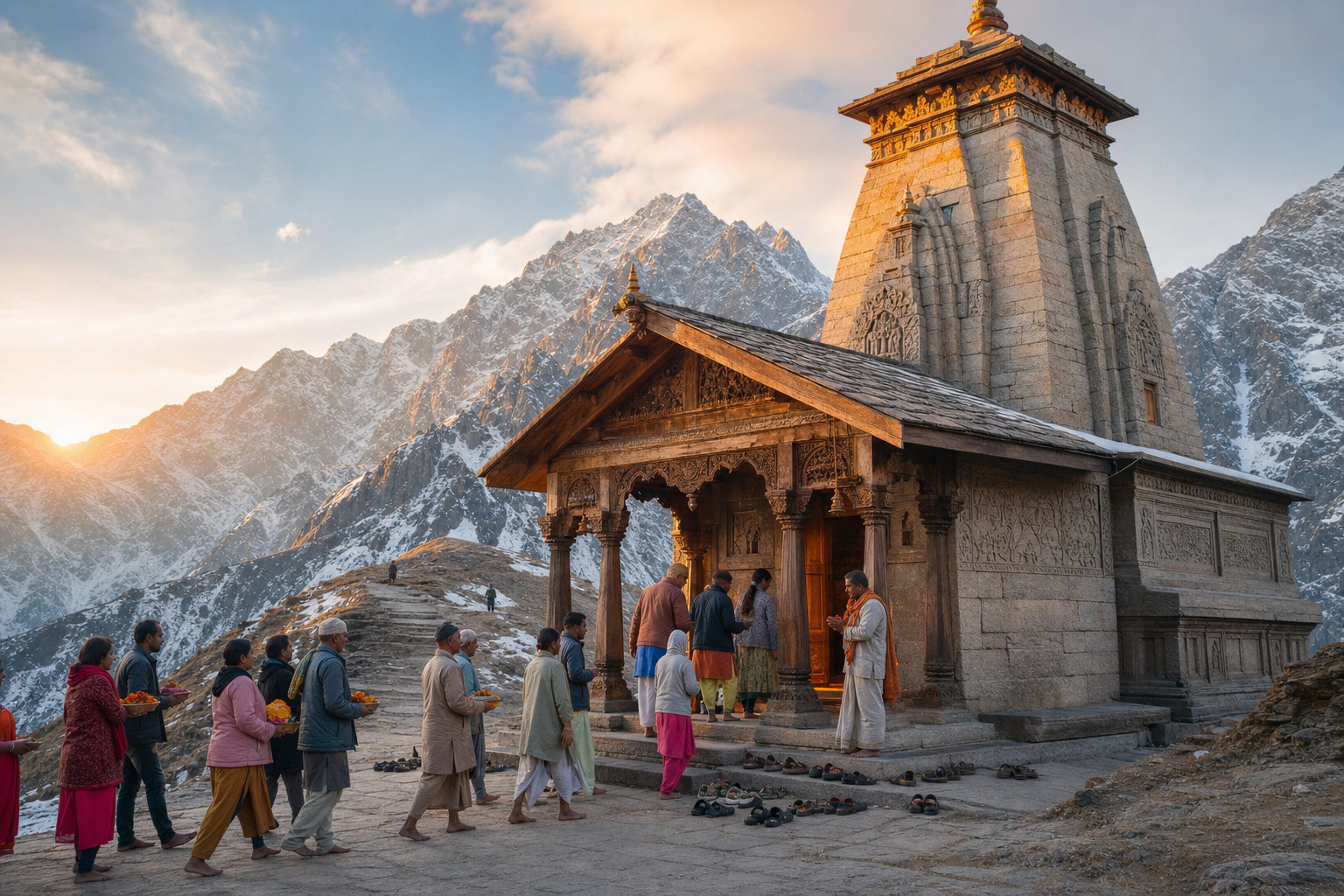
If you are deciding whether Char Dham should admit everyone or exclude non-Hindus, a simple yes-or-no answer will mislead you. A temple can welcome respectful darshan, reserve particular ritual functions, screen every visitor for danger, and limit numbers on a fragile route at the same time. Those are different powers, and each needs its own rule.
The practical question is not whether sanctity or inclusion should win. It is how to protect a Hindu tirtha at the precise places where conduct, crowding, security, or ritual participation can affect it. A well-designed policy does that more reliably than an identity label used as a substitute for administration.
The real decision is not simply open or closed
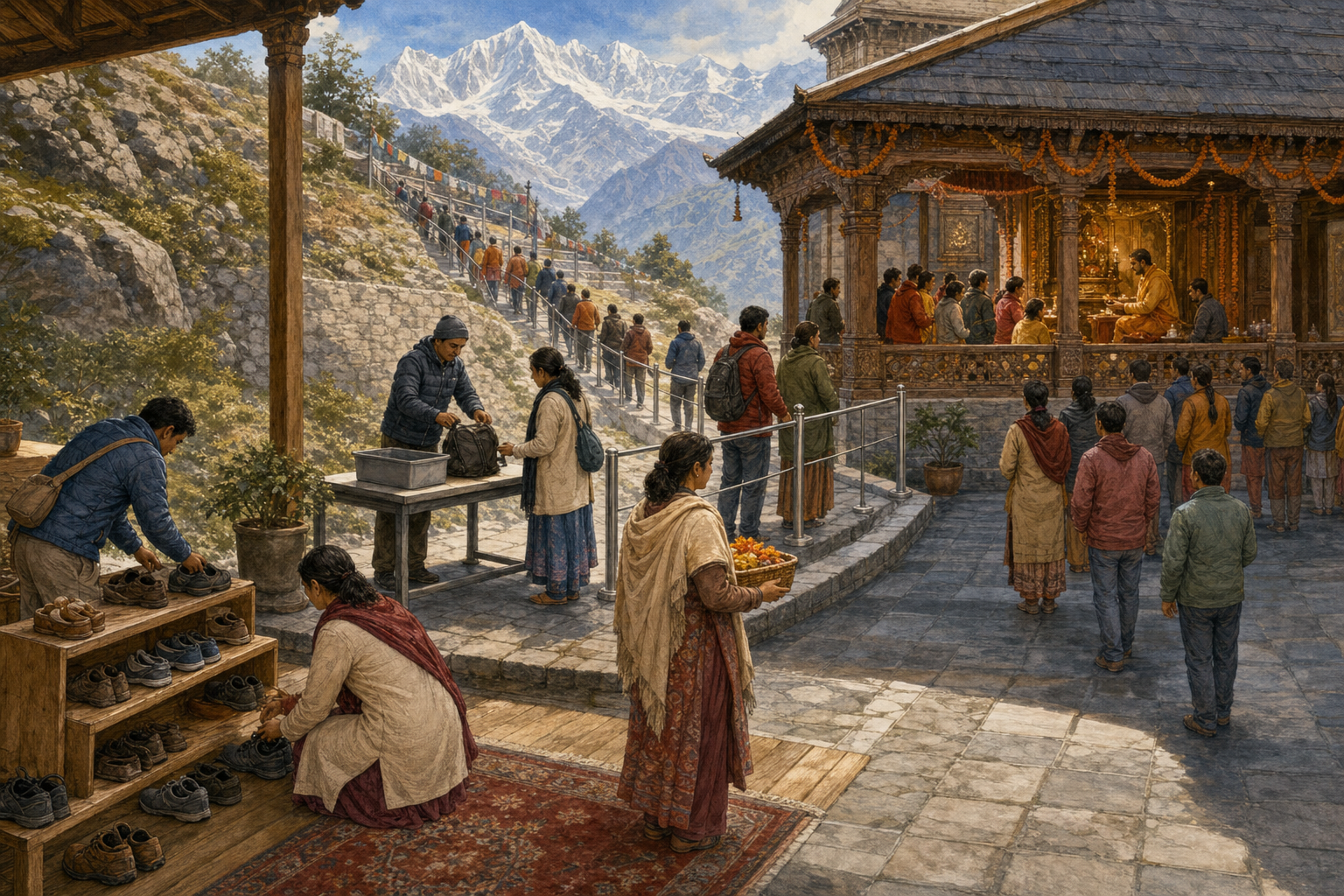
A Hindu temple is not merely a tourist attraction. Darshan, puja, aarti, the presence of the deity, and the discipline of the pilgrim give the place its character. A pro-Dharma access policy need not be apologetic about sacred boundaries. It does, however, need to state exactly where those boundaries lie and what they protect.
As of January 27, 2026, Char Dham authorities were deliberating possible restrictions affecting non-Hindus at Kedarnath, Badrinath, and other Uttarakhand temples. Deliberation is not the same as an operative rule. If you are planning a journey, do not treat an old debate, forwarded message, or news headline as an entry notice. Check the latest published directions from the responsible temple committee and district administration for your travel date.
For policymakers, the first task is to separate four layers that are often collapsed into one argument:
| Layer | Question to answer | Appropriate governance tool |
|---|---|---|
| Yatra corridor | How many people can move through the route without overwhelming transport, services, or the Himalayan environment? | Seasonal planning, timed entry, capacity controls, and last-mile coordination |
| Temple perimeter | Does a person or possession create a security risk? | Professional, consistently applied screening based on risk |
| Darshan route | What conduct preserves order and reverence? | A visible code covering dress, photography, noise, and queue discipline |
| Ritual zone | Who may observe or participate in a particular rite under the temple’s tradition? | Clearly marked boundaries and temple-specific ritual instructions |
This framework avoids a false choice. General access can be broad while participation in a particular ritual remains governed by temple tradition. Admission to a complex does not automatically create an entitlement to enter every space or perform every sacred act. Conversely, ineligibility for one ritual need not erase the possibility of respectful darshan.
The exact ritual boundary will depend on the shrine, its sampradaya, and its established practice. A committee should document that basis instead of inventing a vague restriction at the gate. Before approving any rule, it should be able to identify the protected value, the covered zone, the prohibited act, the responsible enforcer, and the way a visitor can correct an innocent mistake.
Make sanctity enforceable through a conduct code
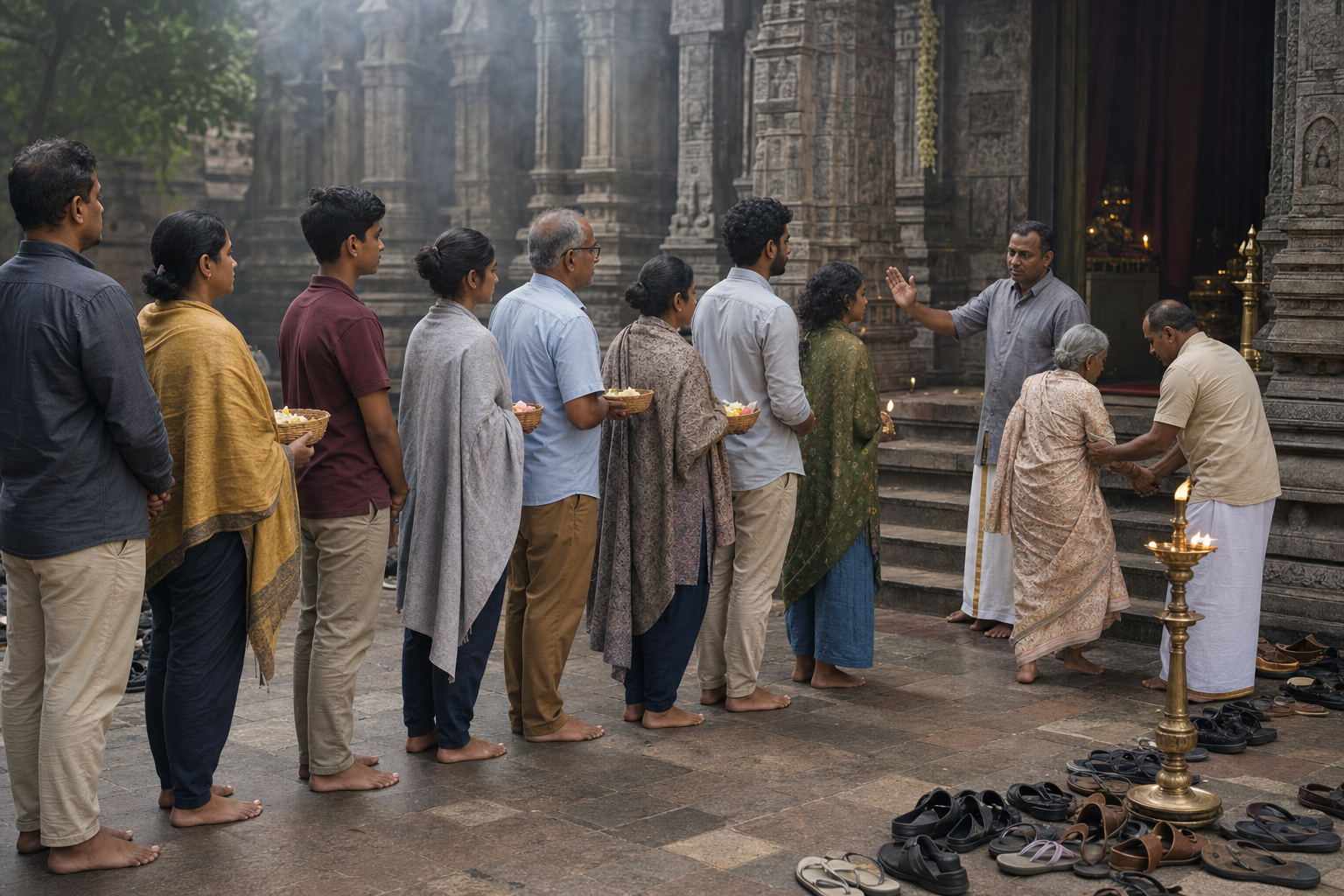
Identity is an imperfect proxy for reverence. A Hindu visitor can push through a queue, ignore a photography restriction, or treat a shrine as a backdrop. A visitor from another faith can enter quietly and follow every instruction. If the actual problem is conduct, regulate that conduct directly.
The atmosphere worth protecting is concrete even when it cannot be measured easily. The quiet associated with dawn aarti at Kedarnath and contemplation beside the Alaknanda at Badrinath depends on thousands of individual choices: lowering voices, waiting one’s turn, putting away a camera, and recognising that darshan is not ordinary sightseeing.
A usable code should tell a first-time visitor what to do, not merely demand that everyone be respectful. It should cover at least these points:
- Dress: describe the required coverage or garment rule in objective terms. Words such as “proper” and “decent” invite inconsistent enforcement unless the notice explains them.
- Photography: identify the precise point beyond which still photography or video is prohibited. Place the warning before the visitor reaches that point.
- Ritual participation: distinguish watching a rite, receiving darshan, entering a reserved area, and performing an act reserved by tradition.
- Queue discipline: state the rules on overtaking, holding places, leaving and re-entering the line, and following steward directions.
- Consequences: explain whether a first violation can be corrected and which conduct can lead to removal or refusal of entry.
Publish the code before booking, repeat it at transport and screening points, and display it again at the relevant temple threshold. Multilingual signs and a short visitor briefing reduce the chance that enforcement becomes an argument between a pilgrim and a guard.
Each proposed restriction should pass five practical tests. These are governance questions, not a substitute for legal review:
- Connection: What specific sacred practice, safety risk, or capacity problem does the rule address?
- Precision: Does it govern the relevant act and zone, or sweep in people who do not create the problem?
- Notice: Can a visitor learn the rule before paying, travelling, or joining a long queue?
- Proportion: Can a warning, corrected dress, stored camera, timed slot, or restricted ritual boundary solve the problem without total exclusion?
- Review: Is there a record of refusals, a grievance channel, and a process for revising a rule that proves arbitrary or ineffective?
This is also where shared Dharmic values become administrative duties. Satya requires accurate rules rather than rumours or shifting explanations. Ahimsa requires enforcement without humiliation or collective suspicion. Seva requires helping a sincere pilgrim comply when the problem can be corrected.
An identity-based eligibility rule raises serious legal questions because constitutional commitments to equality and freedom of worship are part of the dispute. Their application to a particular shrine depends on legal status and facts that a general framework cannot settle. Any committee considering such a restriction should obtain qualified Indian legal advice before adoption and publish the authority on which the final rule relies.
Keep security, capacity, and ritual eligibility separate
Security, ecology, and sanctity can overlap, but they are not interchangeable explanations. When the concern is security, screening should examine risks, possessions, and conduct under a consistent protocol. A person’s religion should not become a shortcut for professional threat assessment.
When the concern is crowding, use a capacity tool. The Char Dham system links Gangotri, Yamunotri, Kedarnath, and Badrinath through demanding Himalayan routes. Seasonal limits, timed entry, improved last-mile connections, and environmentally sensitive infrastructure address pressure on the route more directly than religious eligibility does.
Every pilgrim-facing system should therefore keep four decisions distinct:
- Eligibility: whether the published access rule permits the person to enter a defined place.
- Reservation: whether the person has a valid date or time slot within the site’s capacity.
- Screening: whether a security concern must be resolved before entry.
- Ritual permission: whether the person may enter a reserved zone or participate in a particular observance.
A refusal should identify which decision produced it. “No entry” is not an adequate explanation when the actual problem is a wrong time slot, a correctable dress issue, a prohibited recording device, or a boundary around one ritual area. Clear categories make frontline enforcement calmer and allow administrators to see what is actually failing.
Test the system before expanding it
A pilot at Kedarnath or Badrinath can test whether a proposed code works under real pilgrimage pressure before it is extended to more temples. The pilot must have a published scope, start and end conditions, named decision-makers, and predetermined measures. Otherwise, a temporary experiment can become an unreviewed permanent practice.
Administrators should track:
- waiting time by time slot and queue point;
- warnings, corrections, and removals by type of conduct;
- security referrals classified by the risk that triggered them;
- entry refusals separated into eligibility, reservation, screening, and ritual-zone decisions;
- grievances received, time to resolution, and rules most often misunderstood; and
- structured feedback from priests, pilgrims, security staff, porters, guides, and nearby businesses.
Publish what changed after the pilot. If photography violations fall after signs are moved, keep the better signs. If visitors repeatedly reach a reserved zone without understanding its status, redesign the route or briefing. If a rule produces conflict but cannot be connected to a defined sacred or operational need, reconsider the rule itself.
Give pilgrims and local communities procedural dignity
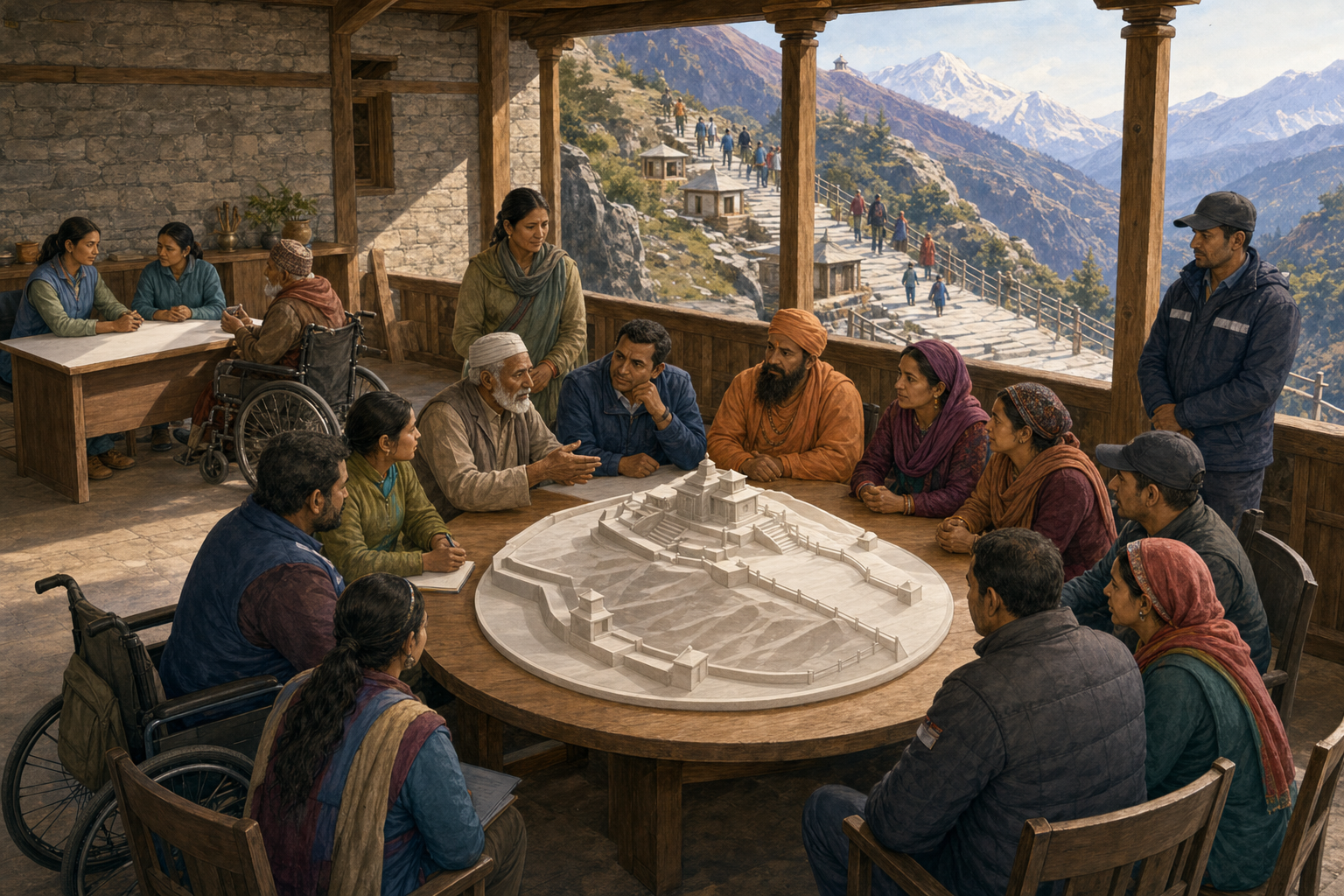
Predictability is not bureaucratic decoration. It protects a pilgrim who has committed time and money to a difficult journey, and it protects the hotels, porters, guides, drivers, and other local workers whose planning depends on a stable yatra. Clear guidelines, family-friendly facilities, multilingual signs, and grievance procedures make the pilgrimage more orderly without weakening its Hindu identity.
Every new access policy should be accompanied by a one-page notice answering eight questions:
- Which temple, route, building, or ritual zone does the rule cover?
- On what date does it take effect, and which authority issued it?
- What does a booking guarantee, and what does it not guarantee?
- Which conduct rules apply to every visitor?
- Which spaces or rites have tradition-specific conditions?
- What screening will occur, and at which point?
- Where can families and visitors who need assistance obtain help?
- How can a refusal, inconsistent instruction, or mistreatment be reported?
Frontline staff should work from the same version of that notice. A priest, police officer, booking contractor, porter, and district official should not give five different explanations of the same rule. Version dates matter: when a policy changes, replace superseded signs and booking text instead of leaving contradictory instructions in circulation.
If you are refused entry, avoid turning the threshold into a confrontation. Ask for the rule’s name, issuing authority, effective date, and covered zone. Ask whether the problem is correctable or limited to a particular ritual area. Request the official grievance channel and retain your booking confirmation and the notice you relied on. Do not photograph or record the exchange where photography is prohibited.
Good consultation also requires clear roles. Priests and traditional authorities should define the sacred practice and ritual boundary. Administrators should design queues, notices, bookings, and facilities. Security professionals should define and apply risk screening. Local representatives should identify operational effects on the yatra economy. Legal reviewers should examine the final wording and authority. No single stakeholder should be expected to answer every kind of question.
Key takeaways
- Start with the place, act, and risk that need protection, not with a visitor’s identity.
- Separate access to the wider site, general darshan, and participation in a reserved ritual.
- Turn reverence into observable rules for dress, photography, queues, noise, and ritual boundaries.
- Use professional screening for security and timed entry or capacity limits for crowd and ecological pressure.
- Publish rules before booking, train every enforcer from the same notice, and provide a usable grievance route.
- Verify the rule in force for your travel date; proposals under discussion in January 2026 do not establish later entry conditions.
If you shape pilgrimage policy, begin with a zone map and a written conduct code, not a slogan. If you are travelling, begin with the latest official notice, not a forwarded claim. Protect the sacred act at the point where it can be harmed, explain the boundary, help sincere visitors comply, and measure whether the system works. That is how Char Dham can remain unmistakably Hindu, spiritually serious, safe, and hospitable to reverence.
References
