
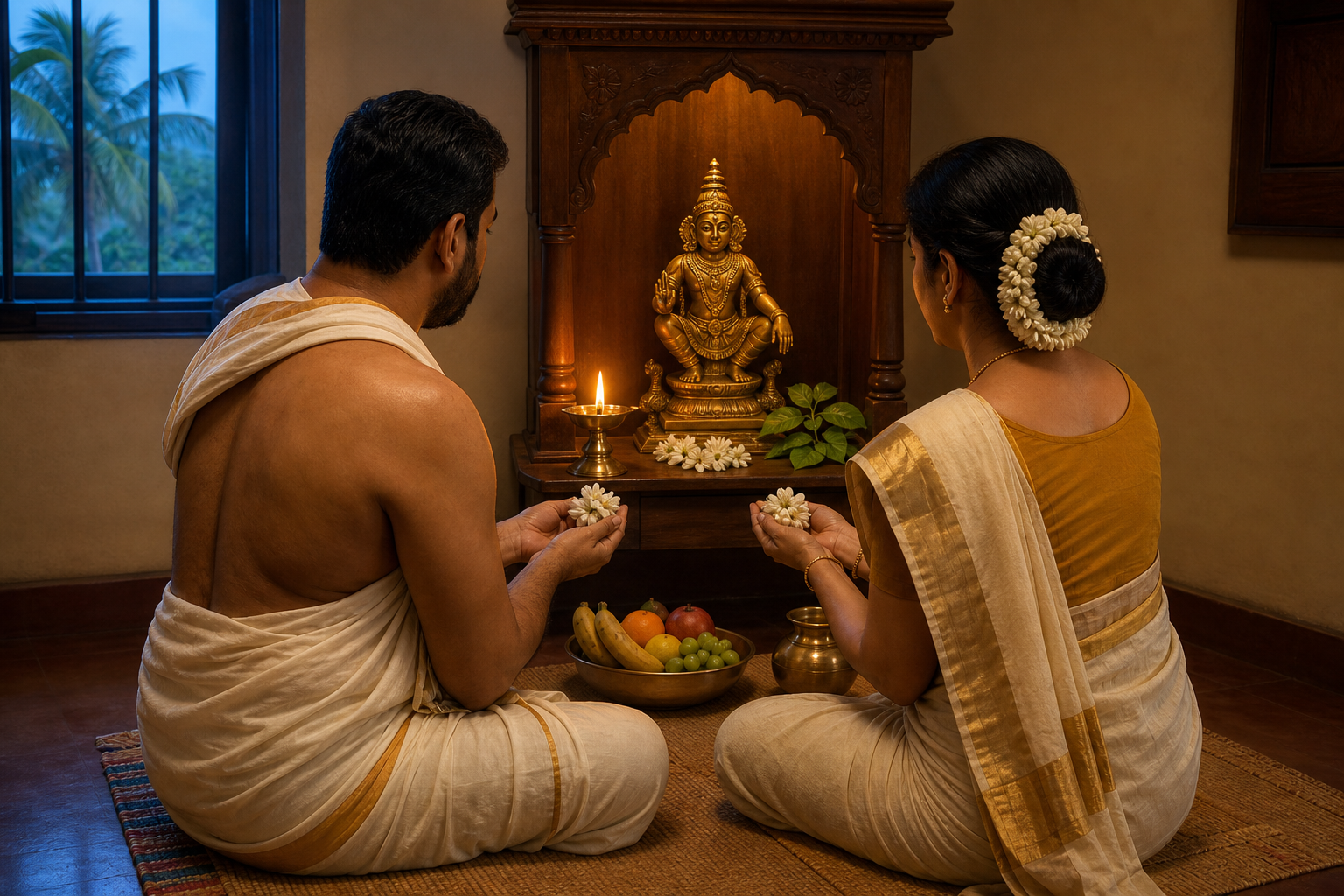
If you are praying for a child, carrying uncertainty about your family’s future, or trying to restore peace at home, you do not need to begin with the most elaborate ceremony you can find. Begin by making your prayer honest, your worship sustainable, and your conduct consistent with what you are asking Shasta to bless.
Santana Prapti Shasta worship gives that prayer a clear Dharmic direction. You may ask specifically for progeny while also seeking the patience, mutual respect, protection, and moral clarity needed to receive and care for any family blessing well.
Understand what you are asking Santana Prapti Shasta to bless
Santana Prapti Shasta is a compassionate manifestation of Dharma Shasta, or Ayyappa, and is counted among the Ashta Shasta forms. This manifestation is especially invoked for progeny, continuity of lineage, protection, prosperity, and harmony within family life.
This is not the worship of an unrelated deity. It is devotion to Shasta with attention directed toward a particular field of grace: the healthy continuation of family life. Here, santana points first to offspring and lineage. Yet lineage in a Dharmic household is more than biological succession. It includes the transmission of character, responsibility, reverence, memory, and service.
That distinction matters when you form your intention. A prayer that asks only to obtain something can easily become anxious or transactional. A fuller prayer asks for both the blessing and the fitness to care for it. If you are seeking a child, you can pray for conception while also asking for patience between spouses, wise decisions, emotional steadiness, and the ability to raise the next generation in dharma.
If your concern is family conflict rather than conception, name that directly. Ask for restraint in speech, freedom from resentment, protection from destructive habits, and the courage to repair what can be repaired. Do not hide the real difficulty behind ceremonial language. Sincerity begins when the prayer corresponds to the life you are actually living.
You can use a plain-language prayer such as this: “Swami, bless our family with wholesome growth. Guide us toward mutual respect, wise care for the next generation, protection from harmful conduct, and the strength to fulfill our responsibilities in dharma.” This is a suggested personal prayer, not a traditional mantra. If your family or temple has an established invocation or stotra, retain that tradition.
A simple home worship you can continue without strain
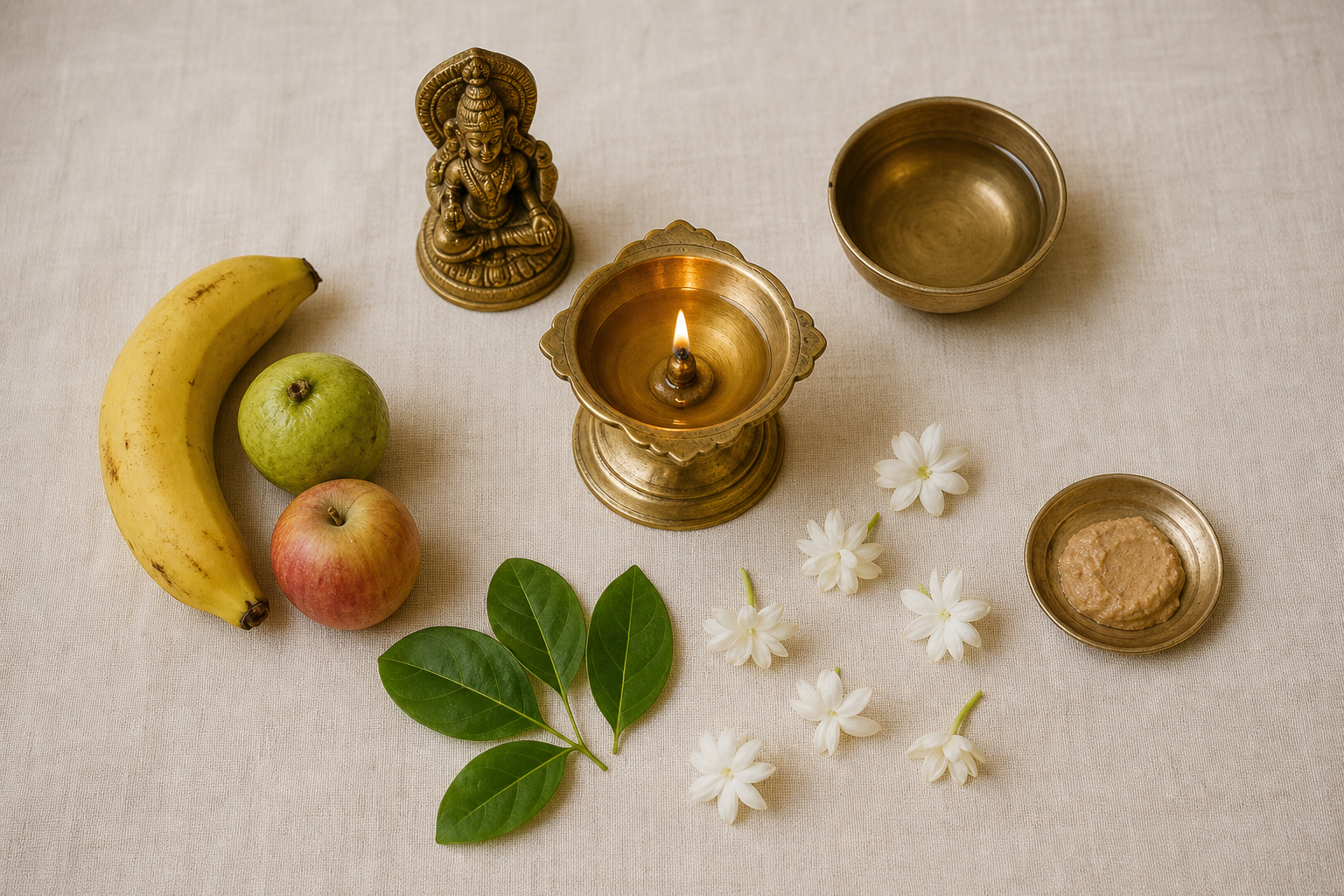
The strength of a household practice usually lies in its steadiness. Santana Prapti Shasta worship may include a lamp, flowers, prasada, archana, and stotras dedicated to Shasta. The governing emphasis is shraddha, sincerity, and regular remembrance rather than ritual complexity.
A practical home observance can follow this sequence:
- Choose a repeatable time. Use a family milestone, an auspicious day recognized in your tradition, or a regular household schedule. Consistency is more useful than selecting a demanding schedule that you will soon abandon.
- Prepare the worship space. Keep the altar orderly and place the image or murti already honored in your family tradition. Set out a lamp, flowers, and a simple offering for prasada. Do not turn the cost of the offering into a measure of devotion.
- Become quiet before asking. Light the lamp safely, bring your attention to Dharma Shasta, and let the household settle. A hurried list of requests is not the same as remembrance.
- State one clear intention. Name the blessing sought without dramatizing it. You might pray for a child, protection during a family transition, reconciliation, or the wisdom to guide children already in your care.
- Recite what you actually know. Use a Shasta stotra, nama, or archana received through your family or temple practice. If you do not know a formal text, offer a sincere prayer instead of assembling unfamiliar formulas from uncertain sources.
- Sit briefly in silence. Let the prayer become more than speech. Notice whether fear, blame, impatience, or gratitude is shaping your mind.
- Offer and share prasada. Conclude reverently and, where appropriate, share the prasada with members of the household.
- Complete one corresponding action. Make the call you have been postponing, apologize for a hurtful remark, attend to a child’s need, keep a medical appointment, or fulfill a family duty. Let worship move into conduct on the same day.
If you are undertaking a formal vrata, do not guess at its requirements. Ask the temple or a trusted person within your established tradition how the observance begins, what disciplines it entails, how long it continues, and how it is concluded. This is especially important when several family members are participating. A shared vow should have a shared understanding.
Archana can be included when you know the form used by your temple or lineage. More recitation is not automatically deeper worship. If a long ritual makes the household irritable, competitive, or preoccupied with mistakes, simplify the practice and restore attention to devotion.
Make family harmony part of the offering
It is possible to pray for family harmony while continuing the habits that damage it. Santana Prapti Shasta worship becomes practical when each request is paired with a household discipline.
- If you seek progeny, remove blame from the marriage. Fertility-related uncertainty must not be turned into an accusation against one spouse. Agree that neither person will be treated as spiritually deficient or publicly discussed without consent.
- If you seek protection, identify what needs protection. Look honestly at speech, spending, anger, neglect, harmful habits, and avoidable conflict. Protection is not merely the absence of an outside threat; it also requires refusing conduct that makes the home unsafe or unstable.
- If you seek prosperity, define enough. Prosperity rooted in dharma supports responsibility, generosity, and family well-being. It should not become pressure to display wealth through offerings or ceremonies.
- If you seek continuity, choose what will be transmitted. Preserve a prayer, story, language practice, act of seva, or family responsibility by practicing it with the younger generation. Values survive through repeated example, not through declarations alone.
- If you seek reconciliation, change the next exchange. Decide in advance which insult you will not repeat, which grievance needs a calm conversation, and which boundary must be stated without cruelty.
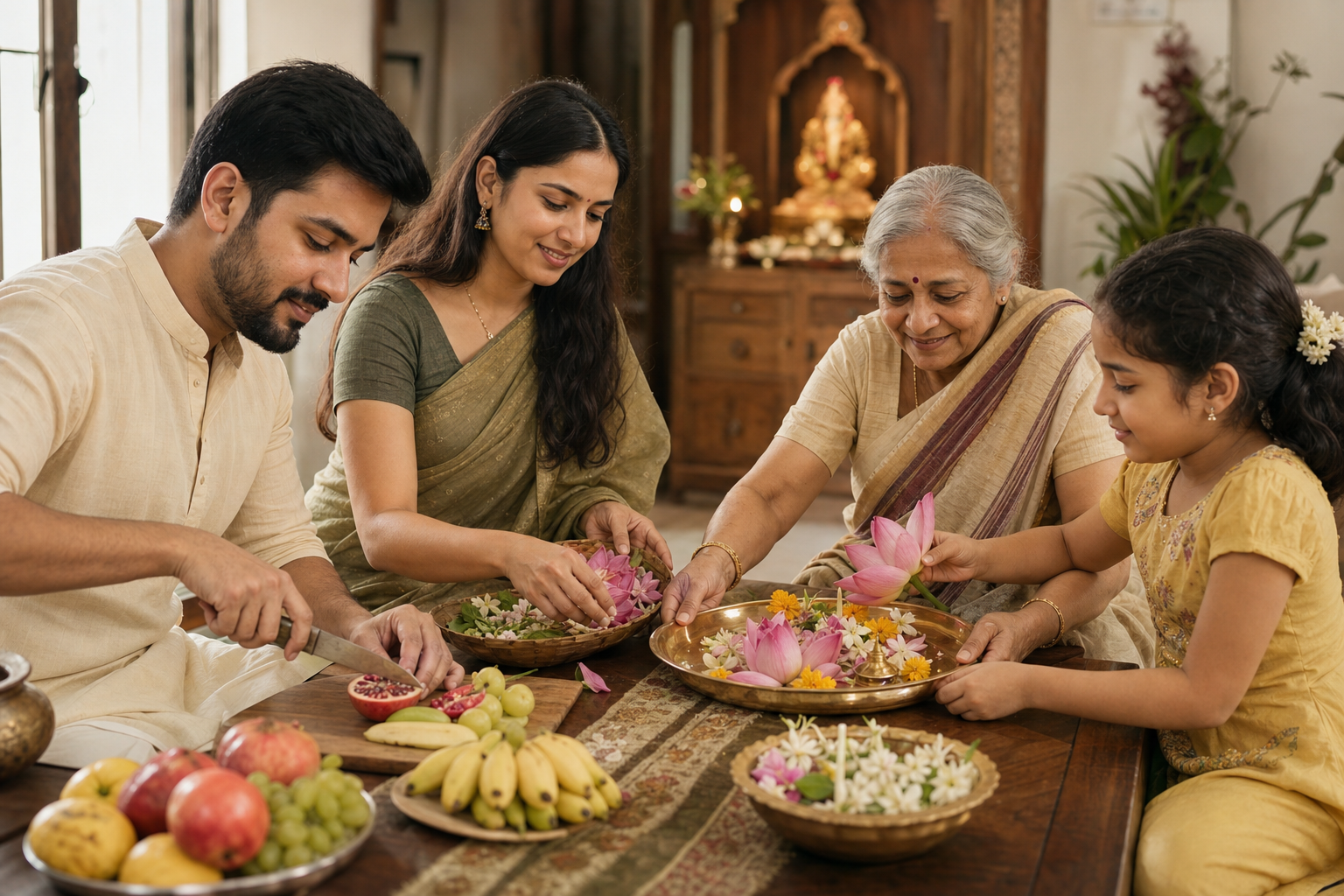
For a family with children, involve them without making devotion feel like a bargain. They can help place flowers, sit for a short prayer, receive prasada, or name something for which they are grateful. Avoid teaching that every wish must produce a visible reward. The deeper lesson is that blessings bring duties and that family life is sustained by reverence, discipline, and care.
If biological parenthood is not present, the wider responsibility toward future generations still remains meaningful. Care for younger relatives, teaching, mentoring, protecting cultural memory, and serving the community can all carry wisdom forward. This broader understanding should never be used to dismiss the specific grief of someone longing for a child. It gives the prayer another field of action without pretending that one form of care erases another.
Keep devotion compassionate when the answer is uncertain
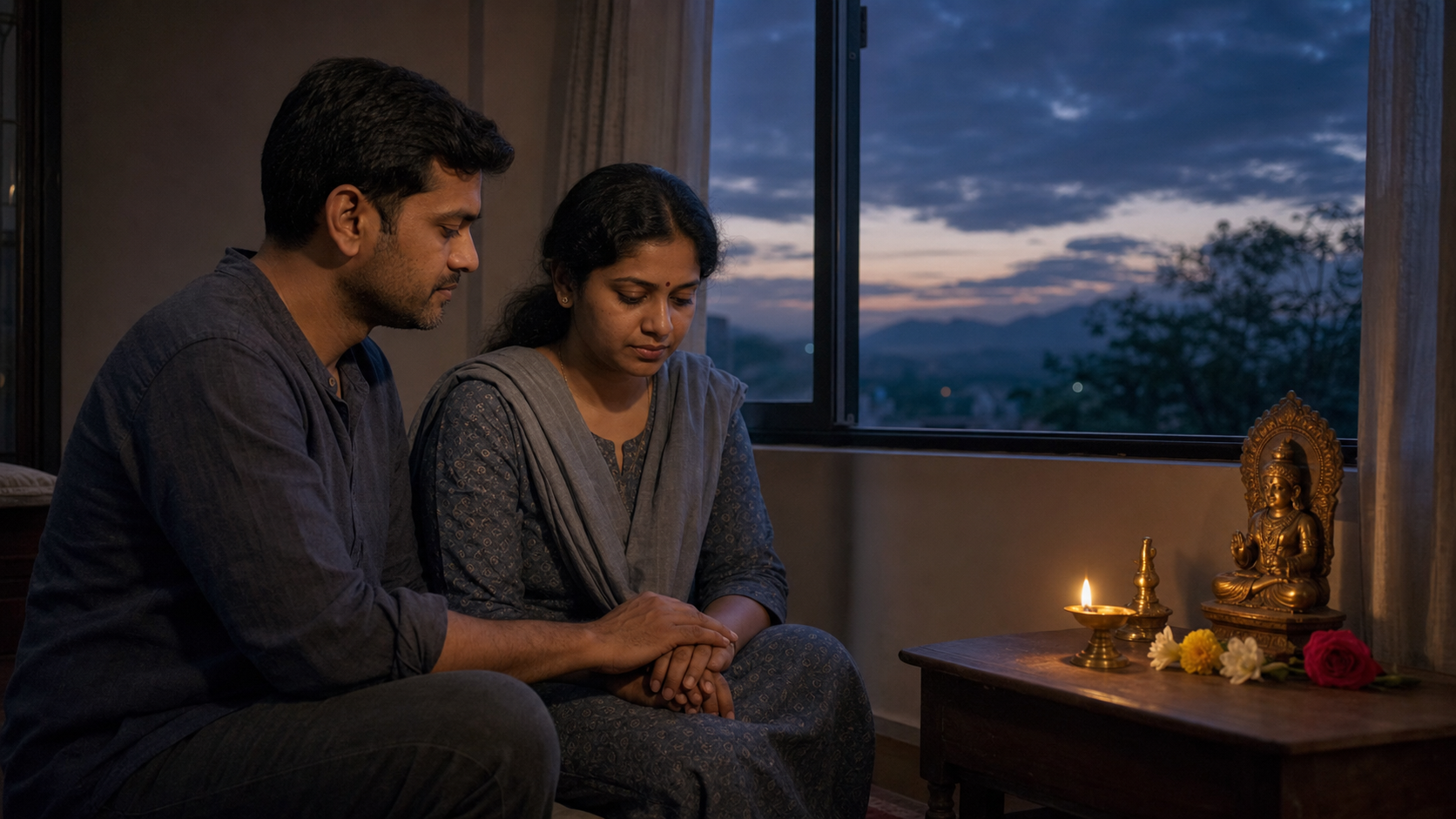
No puja should be presented as a guaranteed mechanism for conception or any other biological outcome. Delayed pregnancy is not proof of weak faith, flawed ritual, divine rejection, or moral failure. Anyone who turns uncertainty into shame is adding suffering to a situation that already requires tenderness and clear judgment.
If conception, pregnancy, or reproductive health is your concern, worship may accompany medical evaluation and treatment, but it must not replace qualified care. Keep appointments, ask clinicians your questions, and make health decisions on appropriate professional advice. Spiritual practice can provide steadiness, meaning, and a disciplined space for prayer; it cannot diagnose a condition or promise a clinical result.
Couples should also decide how widely to share the prayer or vrata. A private hope can quickly become a subject of intrusive questioning when relatives expect news. You may tell family members that you welcome prayers while declining discussion of medical details, predictions, or blame. That boundary protects the dignity of both partners.
Participation should not be coerced. If one spouse is more devotional than the other, invite respectful support without treating identical religious expression as a test of love. The couple can still agree on shared duties: speaking without blame, protecting privacy, attending necessary appointments, caring for elders, and making decisions together.
Watch what the practice is producing in you. Simplify it or seek trusted guidance if worship is increasing panic, compulsive rule-checking, conflict between spouses, unaffordable spending, or dependence on people who promise guaranteed results. A practice centered on Dharma Shasta should strengthen responsibility and clarity, not make the family easier to frighten or exploit.
During grief or disappointment, you do not have to manufacture cheerfulness at the altar. A quiet lamp, a flower, and an honest prayer may be enough. Steady remembrance can hold sorrow without converting it into self-accusation. It can also help you recognize the next duty even when the larger answer remains unknown.
Key takeaways
- Santana Prapti Shasta is approached for progeny, continuity of lineage, family protection, prosperity rooted in dharma, and household harmony.
- A sustainable home practice can use a lamp, flowers, prasada, prayer, and a familiar Shasta stotra; sincerity and consistency matter more than display.
- Pair every prayer with conduct: remove blame, protect privacy, repair harmful speech, fulfill family duties, and transmit values through example.
- Do not treat worship as a guarantee of pregnancy or a substitute for qualified medical care.
- Judge the practice partly by its fruits in daily life: greater steadiness, mutual respect, responsibility, and clarity.
For your next observance, keep the beginning small. Prepare one simple offering, state one honest intention, and choose one family duty that will embody the prayer before the day ends. That is how a request for blessing begins to become a household shaped by dharma.
References
