
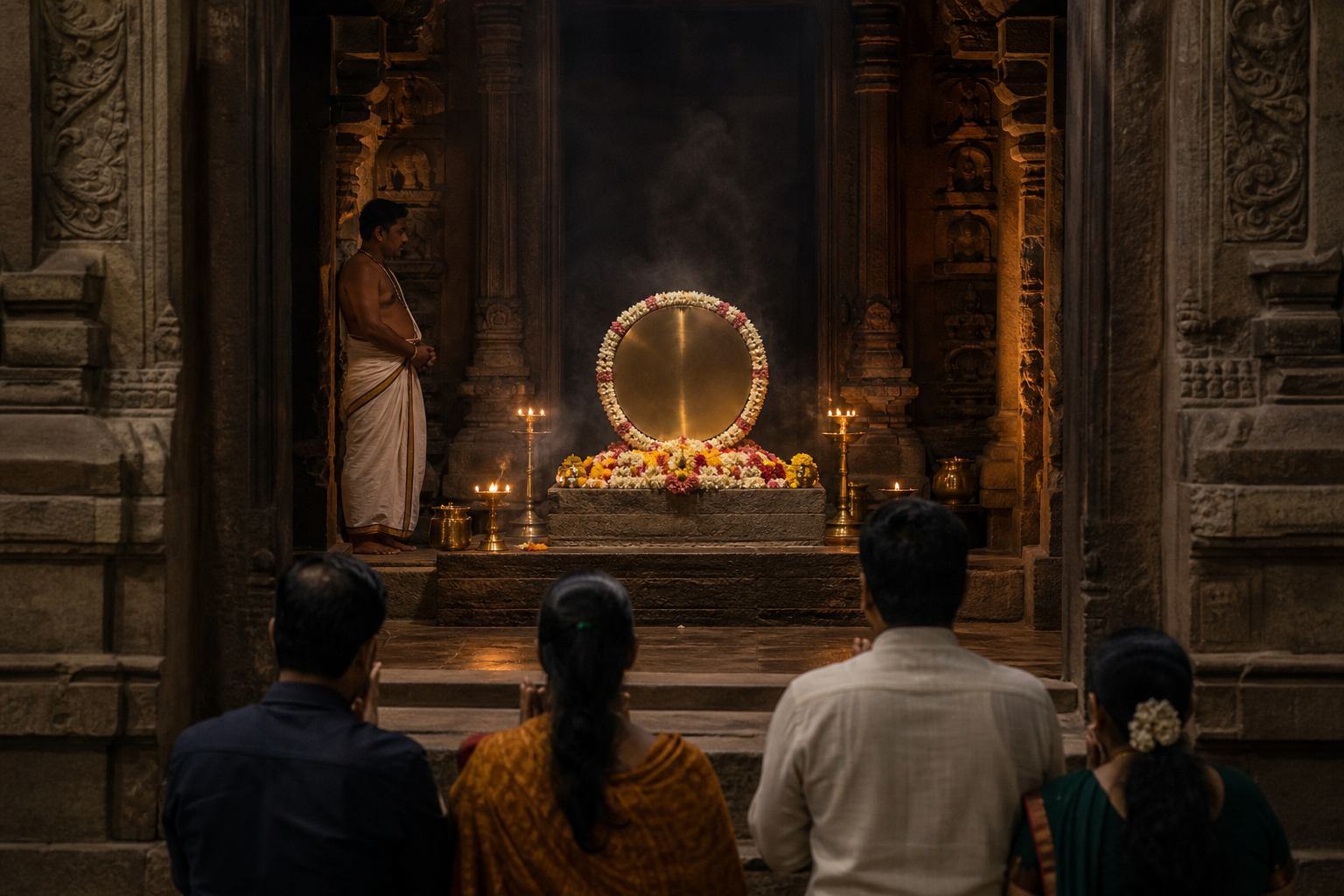
You enter a sanctum expecting to see a divine face, but the focus of worship is a discus, a cradle, or another form without human features. If you wonder whether people are venerating an object, your question is reasonable. It is also too narrow.
The decisive distinction is not between a human-shaped image and a non-human shape. It is between an ordinary object and a form received, consecrated, and served as a sacred presence. Once you understand that distinction, you can read an unfamiliar temple through its consecration, daily ritual, and practice of darshan rather than judging it by visual resemblance alone.
A divine presence does not need a human outline
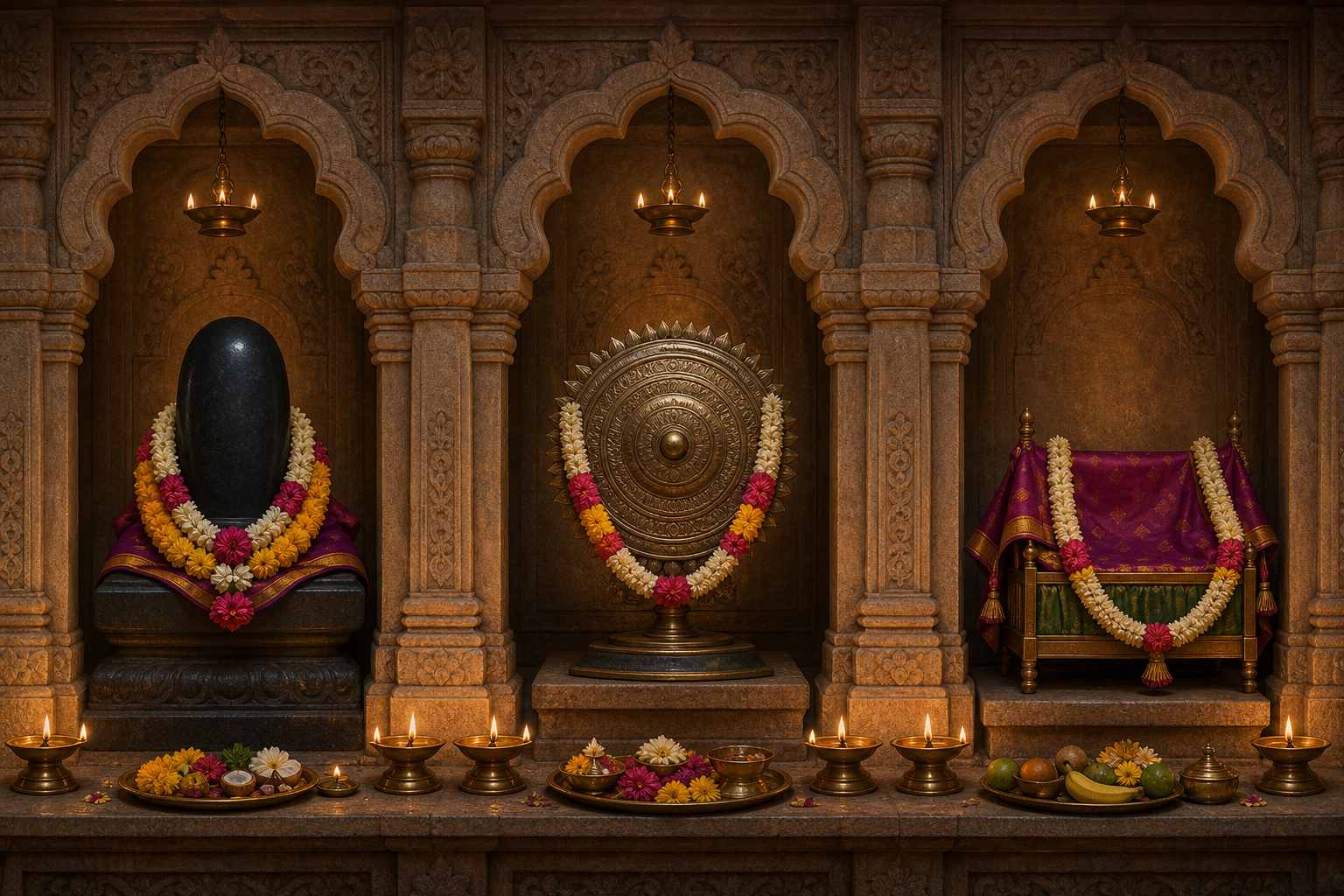
Non-anthropomorphic worship is sometimes confused with formless worship. The two are not identical. A chakra has a definite form. So does a doli, or sacred cradle. Neither portrays the deity with human anatomy, yet each can give a community a precise focus for worship.
At Chakrapani Temple in Kumbakonam, the sanctum centers on Lord Sudarshana through Vishnu’s Sudarshana Chakra. The discus carries meanings of protection, ethical clarity, and cosmic order. It is not simply a substitute used because a human-shaped image is unavailable. The form itself discloses the aspect of the Divine being approached.
At Alopi Devi Mandir in Prayagraj, a sacred doli is revered instead of an anthropomorphic murti. The absence of a face does not create an empty shrine. It redirects attention from physical likeness to the presence of the Divine Mother as understood and sustained by the temple’s living tradition.
This gives you the first practical rule: never decide whether a shrine is spiritually central by asking how closely its object resembles a person. Ask what the form means, whether it has been ritually established, and how the temple serves it.
Prana Prathistha changes the ritual status of a form
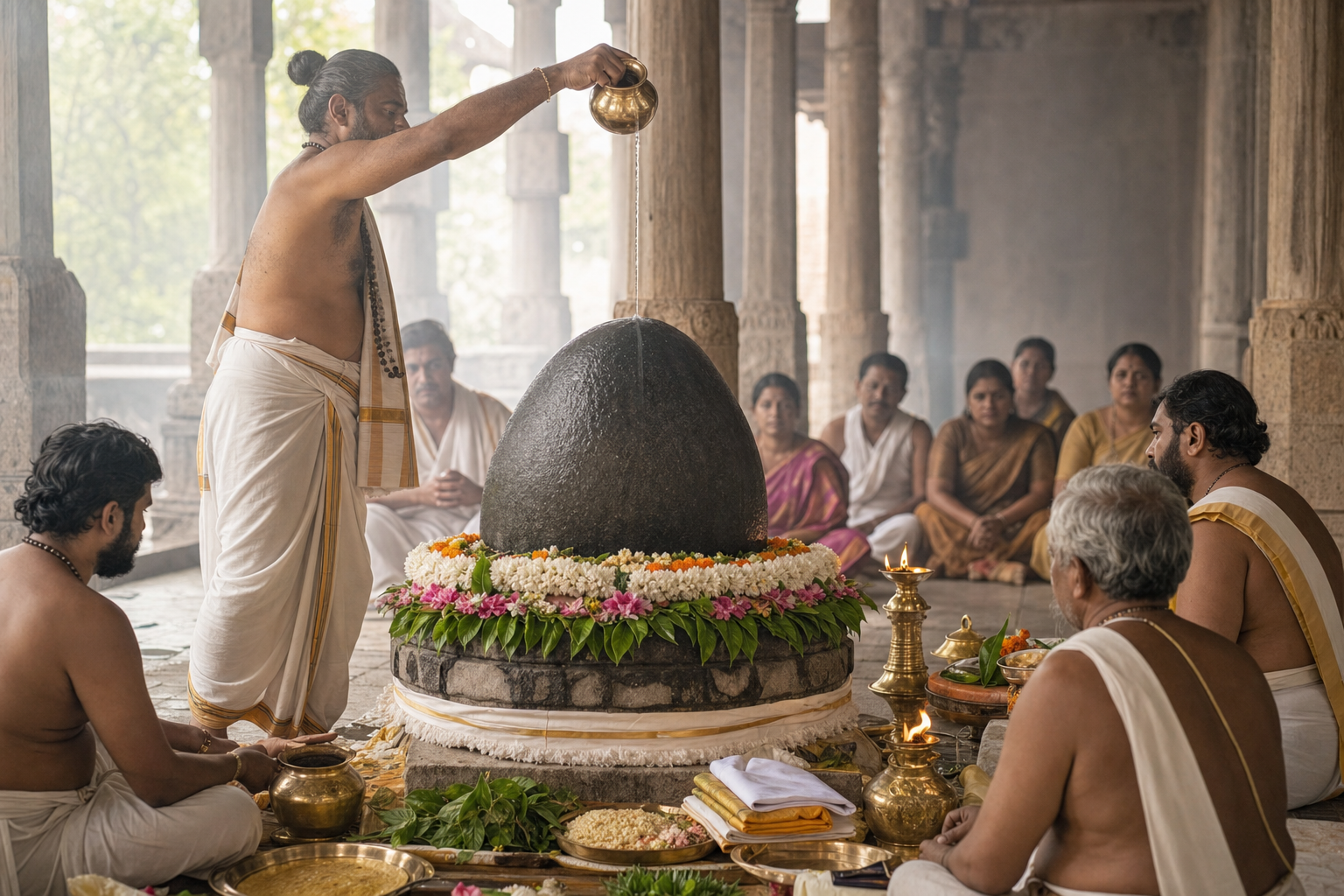
A crafted image can inspire reverence before installation, but formal temple worship makes a more exact claim. Through Prana Prathistha, prana is invited into the chosen form so that it becomes an archa presence: a ritually accessible manifestation toward which worship, service, and darshan are directed.
Depending on the tradition and the form being installed, Agamic and Vedic consecration can include purification, mantra nyasa, ceremonial opening of the eyes, homa, and kumbhabhisheka. These are not decorative preliminaries to a public unveiling. They establish the ritual identity of the shrine, align form and sacred intention, and mark the beginning of sustained seva.
The material does not cease to be stone, metal, or another substance. What changes is its liturgical status and the relationship maintained through it. That is why the choice between saying it is only matter and saying matter has disappeared is misleading. Temple practice recognizes the physical form while addressing the deity through the consecrated presence.
This also explains why a temple can contain many impressive sculptures while its devotional life converges on one sanctum. The installed deity in the garbhagriha receives the most exacting daily seva, the central offerings, and the community’s recurring rhythm of aarti, festivals, darshan, and prasada. Artistic prominence and ritual centrality are not the same thing.
How to approach a non-anthropomorphic shrine
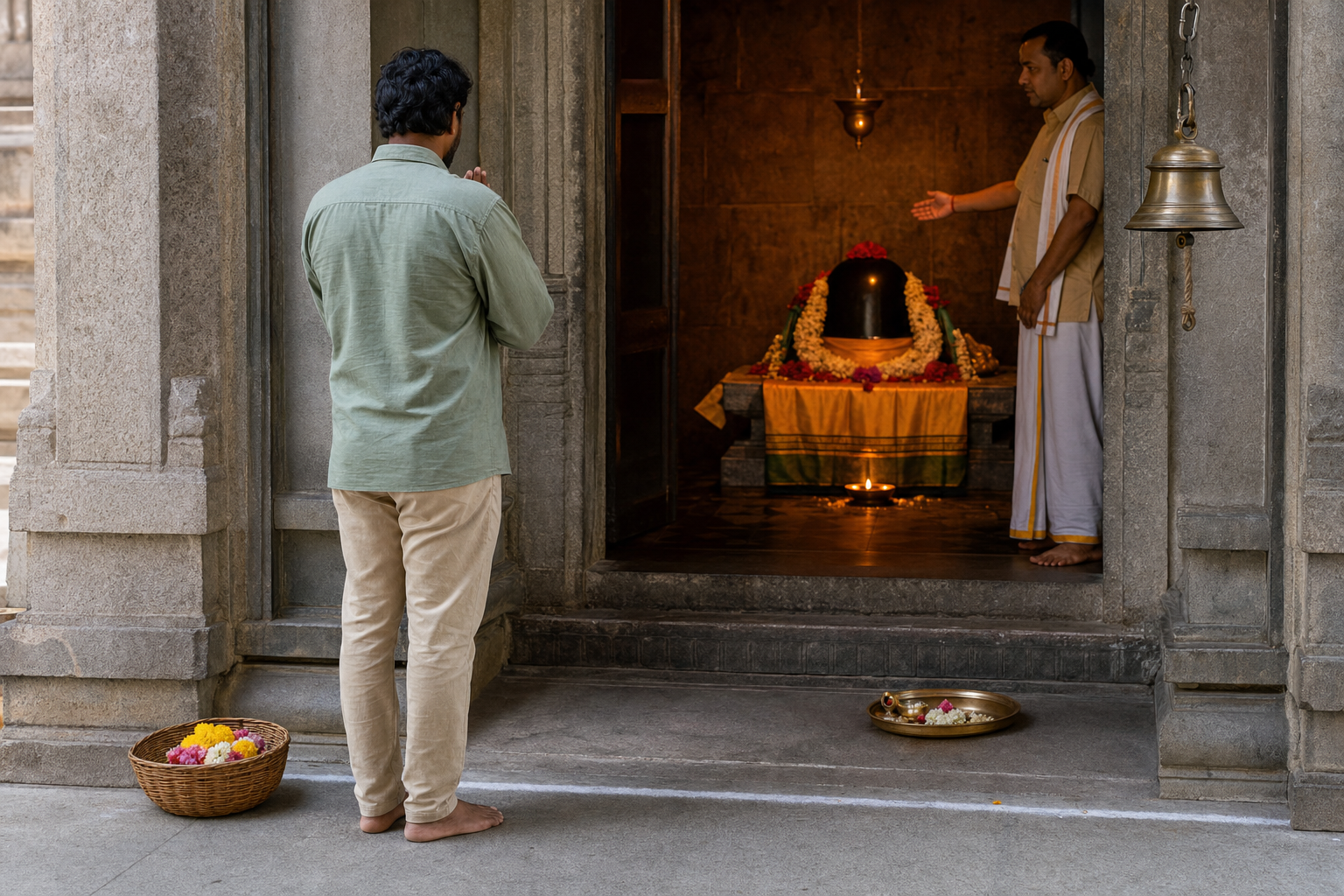
You do not need specialist training to visit respectfully, but you do need to let the shrine explain itself through its ritual life. Use this sequence when the form is unfamiliar:
- Locate the ritual center. Notice where the archaka directs mantras, offerings, lamps, and aarti. The most visually dramatic object is not necessarily the principal presence.
- Learn the shrine’s own identification. Ask, respectfully, which deity or divine form is worshipped and how that form is understood locally. This is more revealing than asking where the idol is.
- Read the actions, not only the silhouette. Daily seva tells you whether the form is treated as decoration, a reminder, a consecrated presence, or some combination defined by that tradition.
- Allow darshan to come before analysis. Stand where visitors are permitted, quieten your attention, and receive the encounter without forcing the form into a mental picture of a human body.
- Observe the shrine’s boundaries. Dress modestly, keep photography mindful, do not touch sacred objects without permission, and follow the archaka or temple staff when ritual access is restricted.
Some devotees experience unusual stillness or uplift near a sanctum. Mantra recitation, acoustic resonance, concentrated ritual, and collective bhakti can all contribute to the atmosphere. Such an experience may be meaningful, but it is neither a compulsory sign of successful darshan nor a universal proof you must reproduce. A quiet visit is not a failed visit.
A more durable test appears after you leave. Notice whether the encounter makes your conduct more disciplined, your judgement clearer, or your relations more humble and compassionate. Sacred presence is not meant to become a hunt for sensations. It should turn attention toward dharma.
Four questions that prevent common misunderstandings
Is the devotee worshipping stone or another material object?
Not in the temple’s own ritual understanding. The material form remains physically real, but it is approached as the consecrated locus of the deity’s archa presence. When explaining this to someone unfamiliar with Hindu practice, you do not need to deny the material or retreat to the phrase only a symbol. Say plainly that the form has been installed and is served as a relational presence.
Is a non-anthropomorphic form merely symbolic?
It can carry powerful symbolism without being merely symbolic. The Sudarshana Chakra communicates order, protection, and moral clarity while also serving as the focus of worship. The doli at Alopi Devi Mandir does not anatomically depict the Divine Mother, yet it anchors her worship. Meaning and presence overlap rather than cancel one another.
If the Divine transcends form, why use any form?
A form gives embodied human beings a disciplined place to direct attention, offerings, mantra, and remembrance. It does not have to define the outer limit of the Divine. In this sense, transcendence and accessibility solve different problems: the Divine is not confined to the shrine, but the shrine lets a community approach the Divine through a shared, sustained practice.
Do all Dharmic traditions understand sacred presence in the same way?
No. Jain communities perform pratistha for Jina murtis, and Buddhist traditions may conduct blessing or eye-opening ceremonies for sacred images. Sikh practice does not use idols and instead enthrones and reveres the Guru Granth Sahib as the living Guru. These practices resonate in their disciplined sanctification of a form, text, or space, but the resonance should not erase their theological differences.
The shared Dharmic lesson is therefore not that every path secretly performs the same ritual. It is that sacred attention can be organized through different material and liturgical forms while directing the practitioner toward remembrance, ethical aspiration, and inner transformation.
Bring the principle home without imitating temple consecration
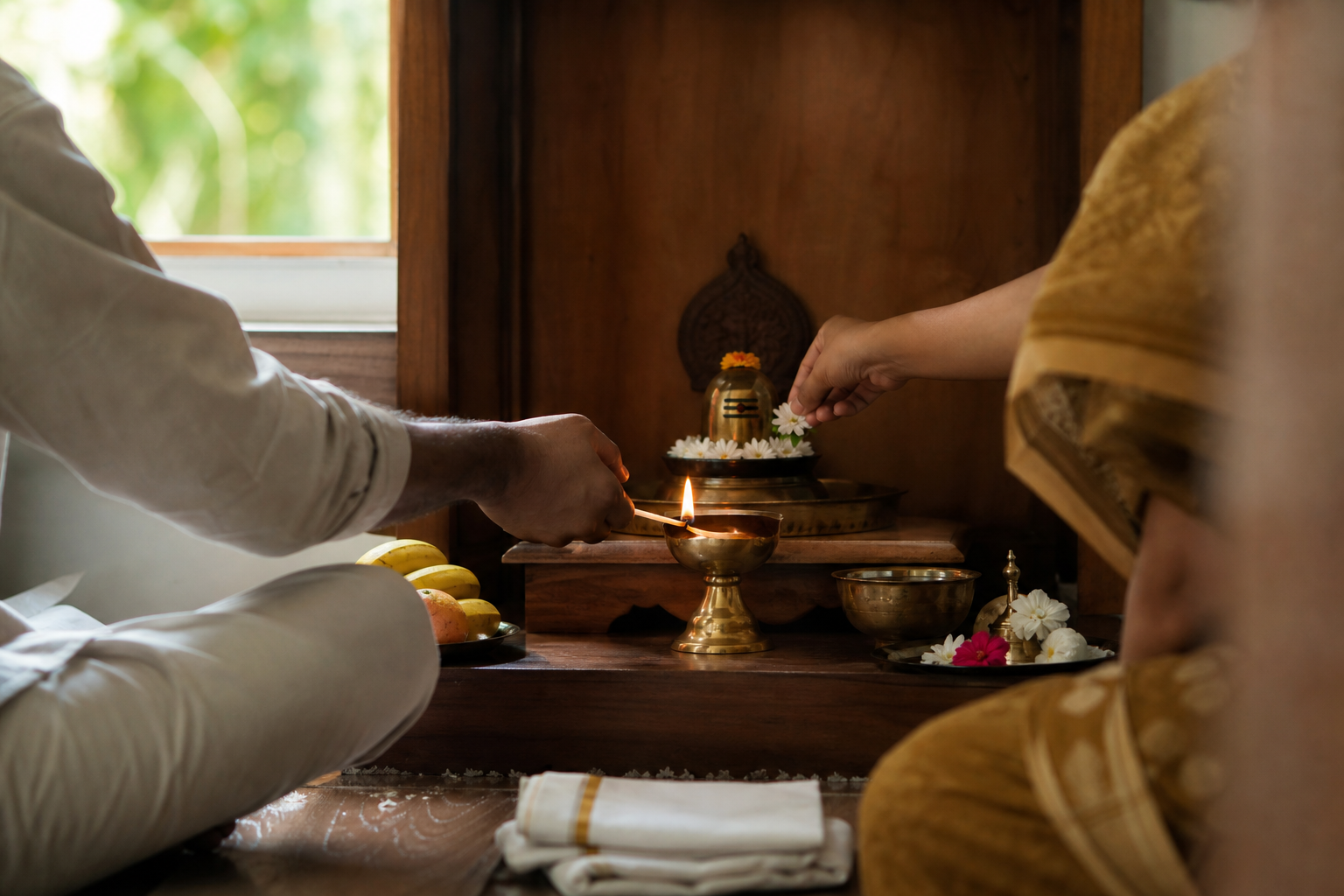
Formal Prana Prathistha belongs to trained archakas working within a particular Agamic or temple lineage. If you want a formal installation, consult someone qualified in that tradition. Do not assemble isolated mantras and ritual gestures from fragments and then declare a temple-style consecration complete.
Your daily shrine does not need ceremonial scale to cultivate sacred attention. A sound household practice can remain simple:
- Keep the shrine and its immediate surroundings clean.
- Light a lamp when you can tend it safely and without distraction.
- State a clear sankalpa, even in plain words, so the act has direction.
- Use a chosen mantra steadily instead of collecting many practices and sustaining none.
- Close with gratitude, then carry one ethical intention from the shrine into your next action.
This does not pretend to duplicate formal consecration. It applies the same fundamentals of purity, attention, steadiness, and remembrance at an appropriate household scale. Regularity matters more than theatrical intensity.
On your next temple visit, ask one precise question: What exactly is worshipped here, and how is that presence served each day? Then watch the ritual before deciding what the form can or cannot mean.
References
- DharmaRenaissance Blog — Prana Prathistha Unveiled: Sacred Energy, Living Idols, and Dharmic Unity in Temples
- DharmaRenaissance Blog — Chakrapani Temple, Kumbakonam: A Stirring Encounter with Vishnu’s Sudarshana Chakra
- DharmaRenaissance Blog — Prayaga Madhaveswari (Alopi Mata) Shaktipeetha: History, Legends & Mahakumbh 2025 Guide
