
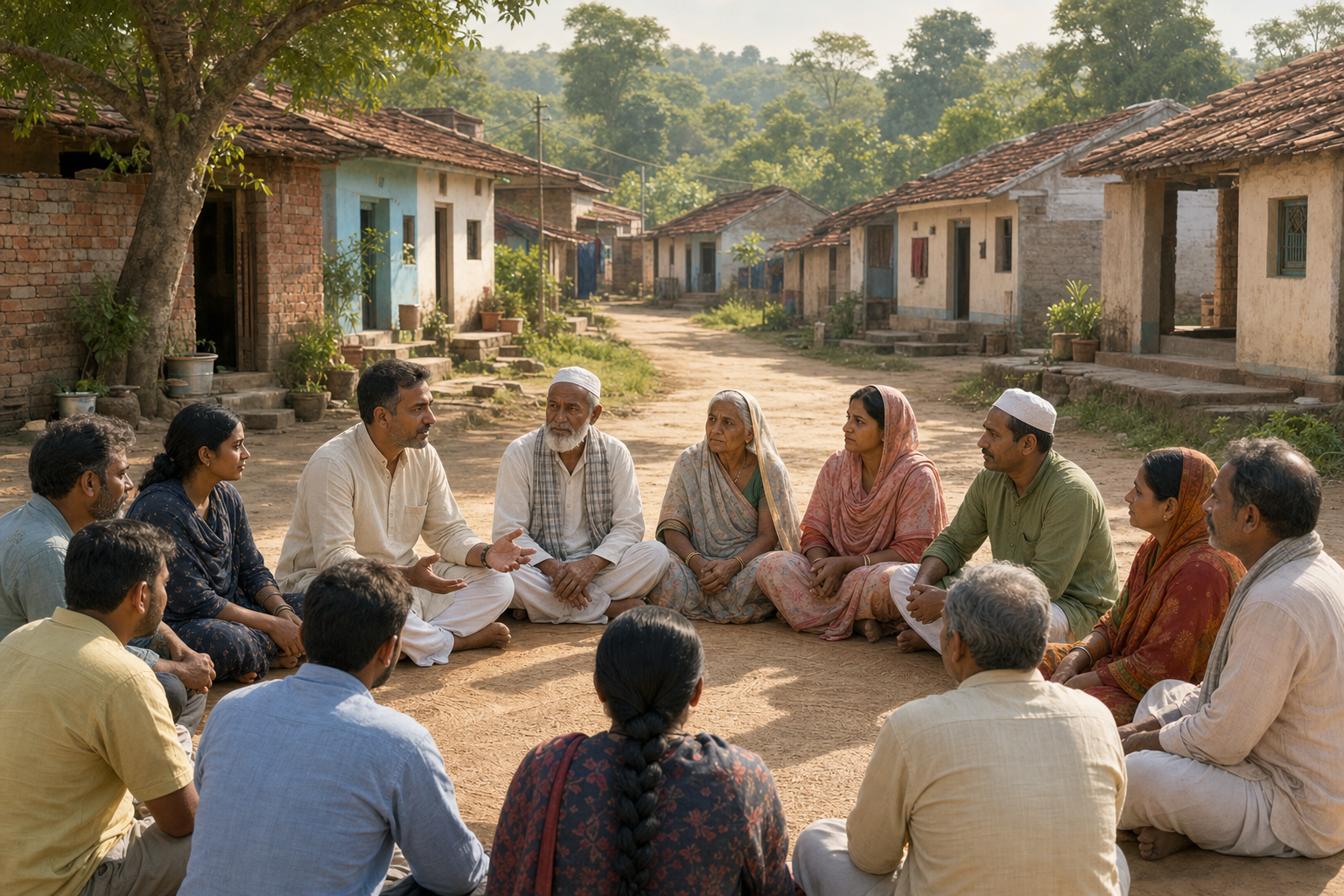
If the reports from Balaghat have left you torn between defending a Hindu community’s right to raise grievances and refusing the collective punishment of Muslim families, hold on to both concerns. You do not have to choose between truth and restraint.
A just response has a clear sequence: protect people from immediate exclusion, identify the specific allegations, test the evidence, send possible offences through lawful channels, and use mediation to repair village life. Reverse that sequence, and rumor becomes verdict while an entire community inherits the alleged guilt of individuals.
Start with the known facts, and leave the blanks blank
As of 6 February 2026, the limited information available indicated that at least ten Muslim families in a predominantly Hindu village in Balaghat, Madhya Pradesh, were facing a reported social boycott amid religious tensions. Important details were still emerging. That is enough to examine the proper response to exclusion, but not enough to pronounce judgment on every underlying allegation or every resident involved.
Your first discipline should therefore be classification. Separate the complainant, the person accused of a specific act, the direct witness, the person repeating hearsay, and the uninvolved family member. A Muslim household does not become responsible for an individual’s alleged conduct because its members share a religion. Nor does every Hindu resident become responsible for a boycott merely because the village has a Hindu majority.
The word boycott can also conceal very different conduct. One person declining a private invitation is not the same as residents threatening shopkeepers, obstructing access to common water, preventing the use of shared transport, or pressuring employers and customers to destroy a family’s livelihood. Before arguing about whether the response is justified, establish what people are actually being asked or forced to do.
- Was any instruction to exclude the families issued, and if so, by whom?
- Were residents merely expressing disapproval, or were threats and penalties used to secure compliance?
- Which water points, markets, transport links, jobs, or other parts of village life became inaccessible?
- What specific incident triggered the dispute, who is alleged to have committed it, and what evidence supports that allegation?
- Which statements come from direct witnesses, and which are repetitions of messages circulating offline or online?
Key takeaways
- A legitimate communal grievance still requires an individualized allegation, evidence, and a lawful remedy.
- Access to common water, willing traders, shared transport, work, and public administration should not become leverage in a religious dispute.
- Serious allegations belong before competent authorities; village consensus is not a substitute for investigation.
- Mediation should follow immediate protection and fact-finding, not pressure vulnerable families to surrender their rights.
- Reconciliation is credible only when ordinary access is restored, intimidation stops, and future complaints have a written route to resolution.
Use four tests before calling any response just
Communal anger often compresses several questions into one: something wrong is alleged, therefore a whole group must prove its loyalty or accept punishment. Slow the reasoning down. Any proposed response should pass four tests.
- Individualization: Does the response apply to the person accused of a defined act, or to spouses, children, relatives, neighbors, and co-religionists who have not been accused of anything? If responsibility cannot be assigned individually, collective punishment is already replacing justice.
- Evidence: Can the allegation be stated in one precise sentence and supported by direct testimony, an original record, or other verifiable material? Preserve original messages, images, and recordings rather than relying on cropped screenshots or repeatedly forwarded claims. Mark what remains unknown.
- Proportionality: Does the proposed measure address the alleged harm, or does it create new harms unrelated to it? A disagreement over religious conduct does not by itself justify cutting households off from water, transport, trade, work, or the village safety network.
- Lawfulness: Is the response being handled by an authority competent to investigate and remedy the alleged conduct? A majority decision, informal decree, or viral demand cannot establish criminal or civil liability. Where intimidation, obstruction, threats, or livelihood pressure are alleged, the legal position is fact-specific and should be taken to district authorities and a qualified legal professional.
All four tests matter. Evidence without individual responsibility can still punish innocents. An individualized accusation without evidence is still rumor. A factually supported grievance pursued through intimidation can still become unlawful. And a formally lawful step can still be disproportionate or needlessly destructive to village life.
This framework protects Hindu complainants as much as Muslim families. It gives a person with a genuine grievance a route to be heard, recorded, and answered. It also prevents the grievance from being discredited by retaliatory acts that shift attention from the original wrong to the collective punishment that followed.
A practical response for residents and village leaders
If you are directly affected, do not wait for a ceremonial peace meeting while access or safety is deteriorating. A person facing threats, physical obstruction, or denial of an essential common facility should seek immediate help from the district administration, local authorities, or a qualified legal professional. Mediation is useful, but it is not a substitute for protection, and it cannot bargain away anyone’s legal rights.
For residents, panchayat representatives, district officials, and peace committees, the work should proceed in the following order.
- Stop the immediate exclusion. Make clear that no resident may be threatened for allowing lawful access to common water, willing traders, shared transport, employment, or administrative services. Identify a local official who can receive reports of obstruction without requiring residents to confront the crowd or alleged organizer themselves.
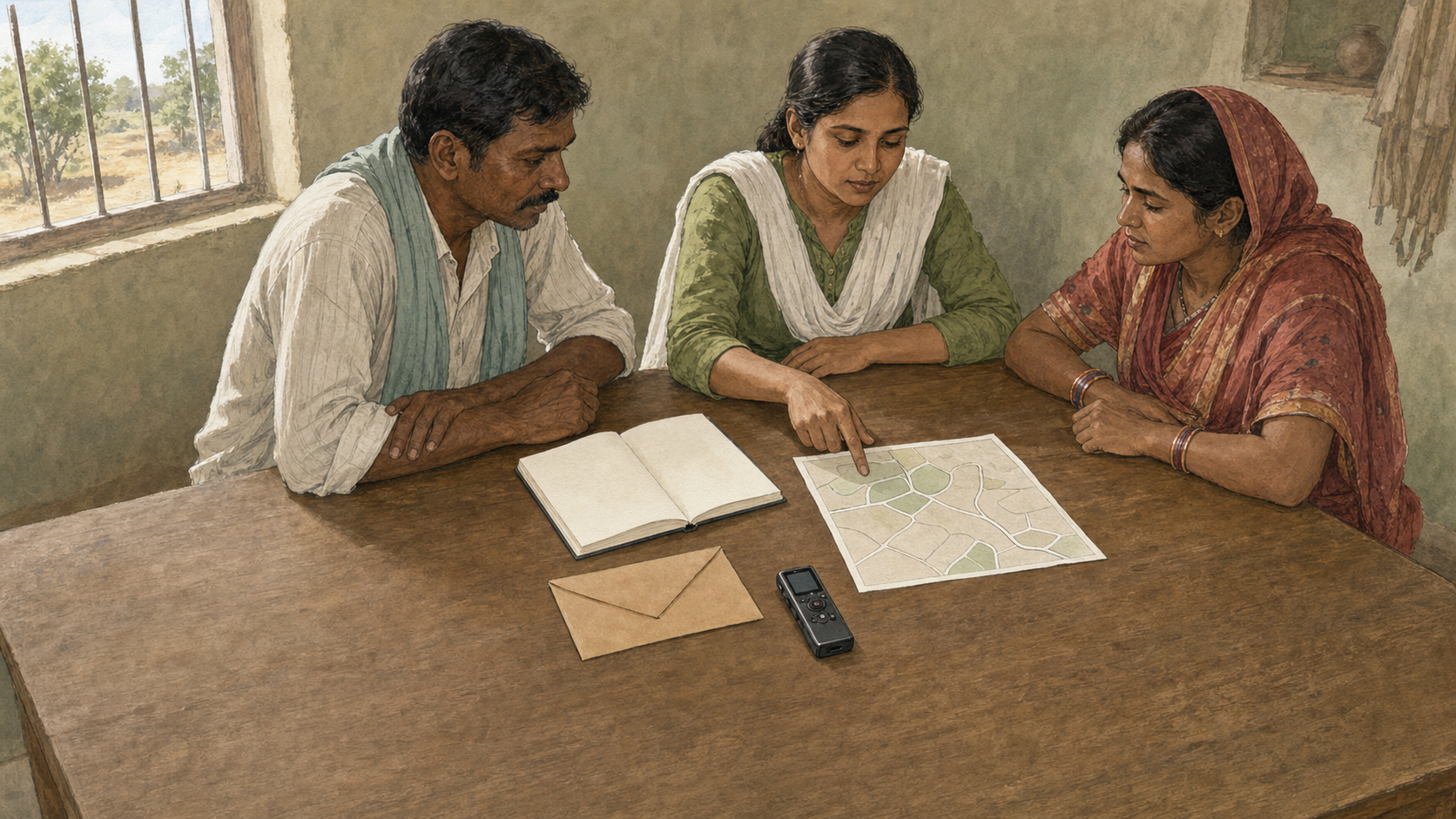
- Create an incident register. Record each alleged act separately: date, place, people directly involved, exact conduct, first-hand witnesses, available material, immediate harm, and remedy requested. Write unknown where a fact has not been verified. Do not publish the register or circulate unverified names online.
- Route serious allegations correctly. Claims involving threats, violence, coercion, property, or other possible offences should go to the competent authorities. The accused must have an opportunity to answer a specific allegation, while complainants and witnesses must be able to speak without intimidation.
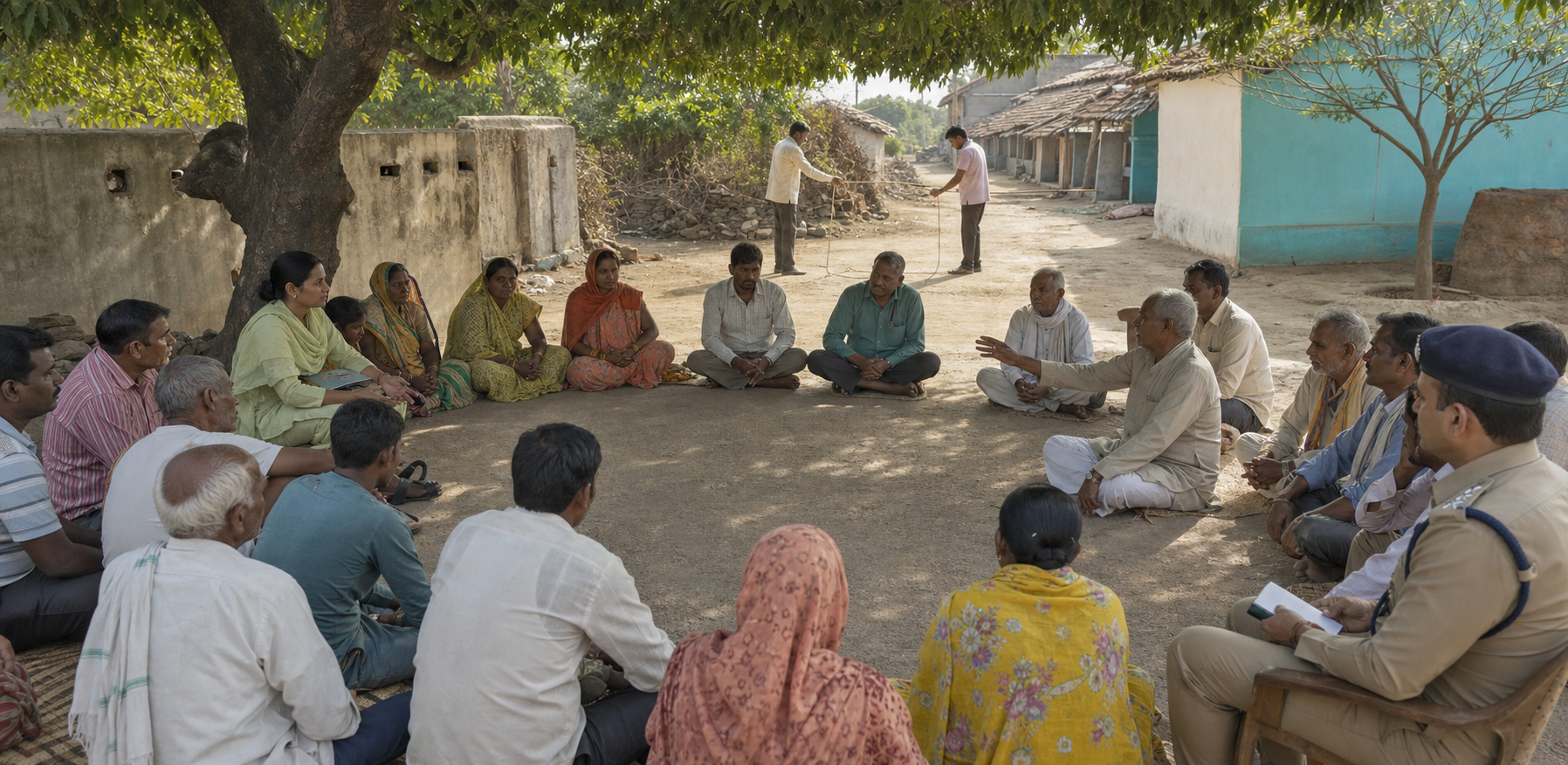
- Convene neutral mediation. District officials, panchayat representatives, or a local peace committee can facilitate the process, provided both communities accept the interlocutors as reasonably neutral. Include residents who experience the practical consequences of a boycott, including women, workers, traders, and younger people, rather than allowing only the loudest factional voices to define the dispute.
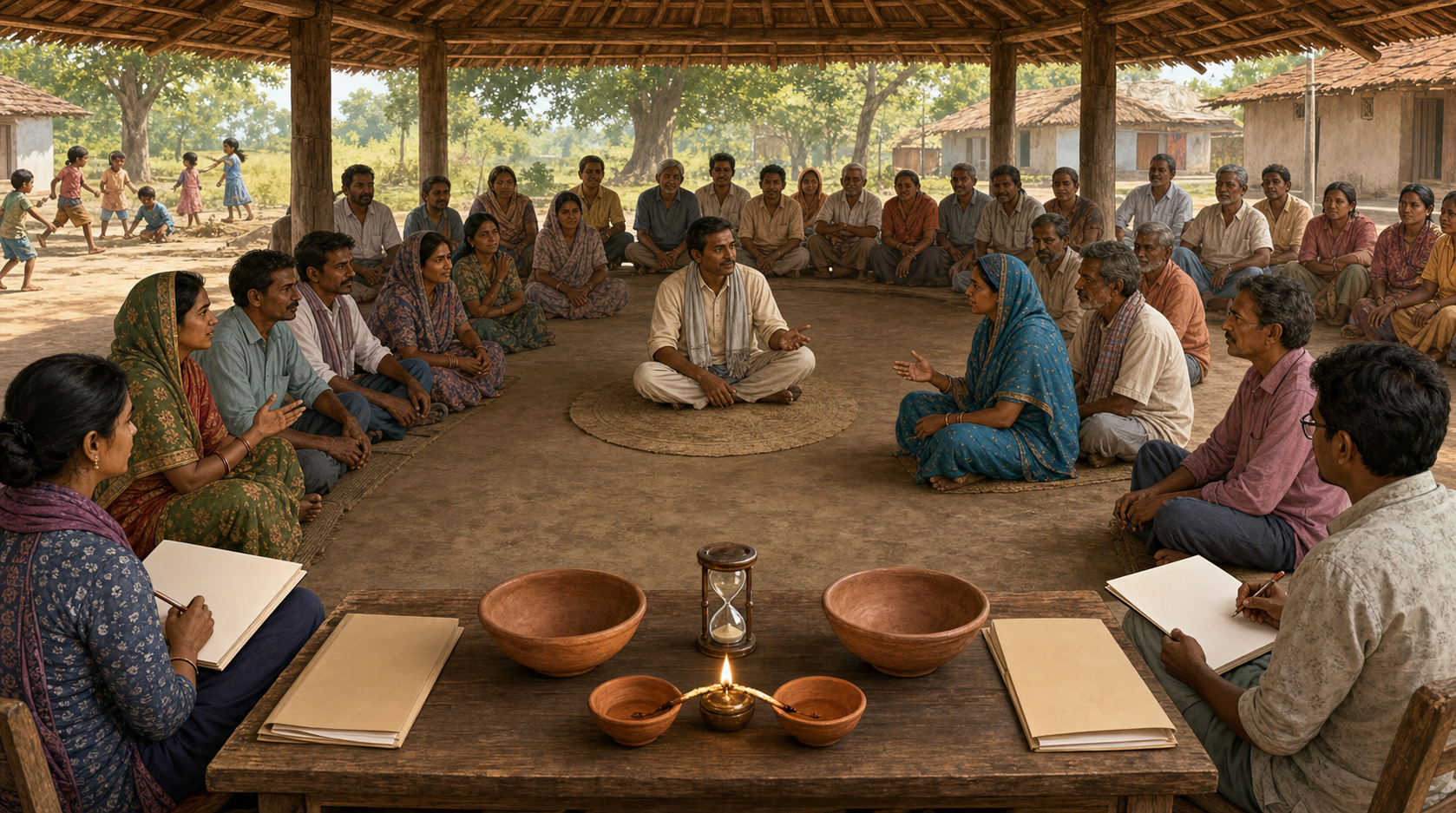
- Put the settlement in writing. A workable agreement should reject threats and collective penalties, restore blocked access, identify how new complaints will be filed, require unverified public claims to be corrected, name contacts for reporting a breach, and set a follow-up review. A photograph of people shaking hands is not an enforcement mechanism.
Communication should be handled with the same discipline. Use a short factual bulletin that separates verified events, allegations under examination, administrative action, and unresolved questions. Do not add religious labels where they are irrelevant. Do not circulate images of families, children, complainants, or alleged offenders merely to prove allegiance to one side. Public exposure can deepen danger before any allegation has been tested.
Dialogue should begin with conduct, not collective character. The useful question is not whether Hindus or Muslims are peaceful in the abstract. It is who did what, who was harmed, what can be verified, what remedy is lawful, and what safeguard will stop the same conduct from recurring.
Dharmic restraint strengthens rather than weakens Hindu society
Rejecting collective punishment does not require you to dismiss Hindu grievances, accept provocation, or pretend that harmony already exists. It requires something more demanding: the capacity to pursue truth without surrendering moral discipline.
Ahimsa, karuna, maitri, and sarvodaya form a shared ethical vocabulary across Dharmic traditions. In a communal conflict, they are not ornamental words. Ahimsa asks whether our chosen remedy creates avoidable injury. Karuna makes the suffering of an uninvolved family morally visible. Maitri keeps disagreement from turning every neighbor into an enemy. Sarvodaya tests whether a response preserves the welfare and stability of the whole settlement rather than satisfying the anger of one faction.
None of these principles demands passivity. Ahimsa does not prohibit firm intervention against intimidation. Compassion does not erase evidence or excuse an offence. Friendliness does not require forced intimacy. Welfare for all does not mean that every claim must be split down the middle. It means that power must remain answerable to truth, proportion, and the dignity of people who have not been shown to have done wrong.
You may choose your private friendships, religious observances, and personal invitations. A coordinated campaign that uses threats or control over essential village relationships is materially different. Do not assume that freedom of association automatically protects every organized act of exclusion; the boundary depends on the conduct and its consequences, and formal calls for a boycott warrant qualified legal review.
A pro-Hindu position should be pro-dharma before it is pro-faction. An action does not become Dharmic merely because Hindus perform it or describe it as community protection. Dharma is tested most sharply when anger supplies an easy excuse to stop distinguishing the guilty from the innocent.
Restorative justice gives that discipline a practical form. It asks three questions: who was harmed and in what exact way; what repair can realistically be made; and what rule or institution will prevent recurrence? Possible repair may include restoring access, correcting a false public claim, addressing a substantiated grievance, or establishing a reliable complaint process. It does not require an entire religious community to confess collective guilt, and it should never make access to ordinary life conditional on religious conformity.
Judge reconciliation by observable conduct
Do not measure success by speeches about brotherhood. Measure it by what residents can safely do after the meeting.
Evidence that the village is making progress
- Families can use common water points, willing shops, shared transport, workplaces, and public services without obstruction or retaliation.
- Each grievance has become a specific, recorded allegation rather than a charge against a whole religion.
- Serious claims have reached competent authorities, and both complainants and accused persons can participate without intimidation.
- False or unverified public claims are corrected through the same channels that spread them.
- A balanced group monitors the agreement, records breaches, and has a defined path for requesting administrative intervention.
- Women, workers, traders, and young residents can describe conditions without being required to repeat a faction’s approved account.
Signs that the conflict is merely being hidden
- Access is restored only if families apologize for conduct that has not been individually established.
- The settlement demands silence from complainants or prevents accused people from answering a defined claim.
- Informal pressure on traders, employers, drivers, or neighbors continues after leaders publicly declare peace.
- No one will state the original allegation precisely, yet collective restrictions remain in place.
- Religious practice, political loyalty, or public submission becomes the price of ordinary economic and social participation.
- Mediation is repeatedly announced, but no incident record, written agreement, responsible contact, or follow-up process exists.
If you have influence in Balaghat or in any village facing a similar dispute, use the next conversation to ask five questions: What precisely happened? Who is individually alleged to have done it? What evidence can be verified? Which lawful remedy fits that conduct? Who needs protection from harm right now? Those questions will not erase disagreement, but they can stop disagreement from hardening into inherited communal punishment.
The immediate task is modest and concrete: keep ordinary village life open while facts are established. Then insist that every genuine grievance receive a fair hearing and every remedy remain within the limits of law and dharma. That is how a community defends both justice and its own moral authority.

References
