
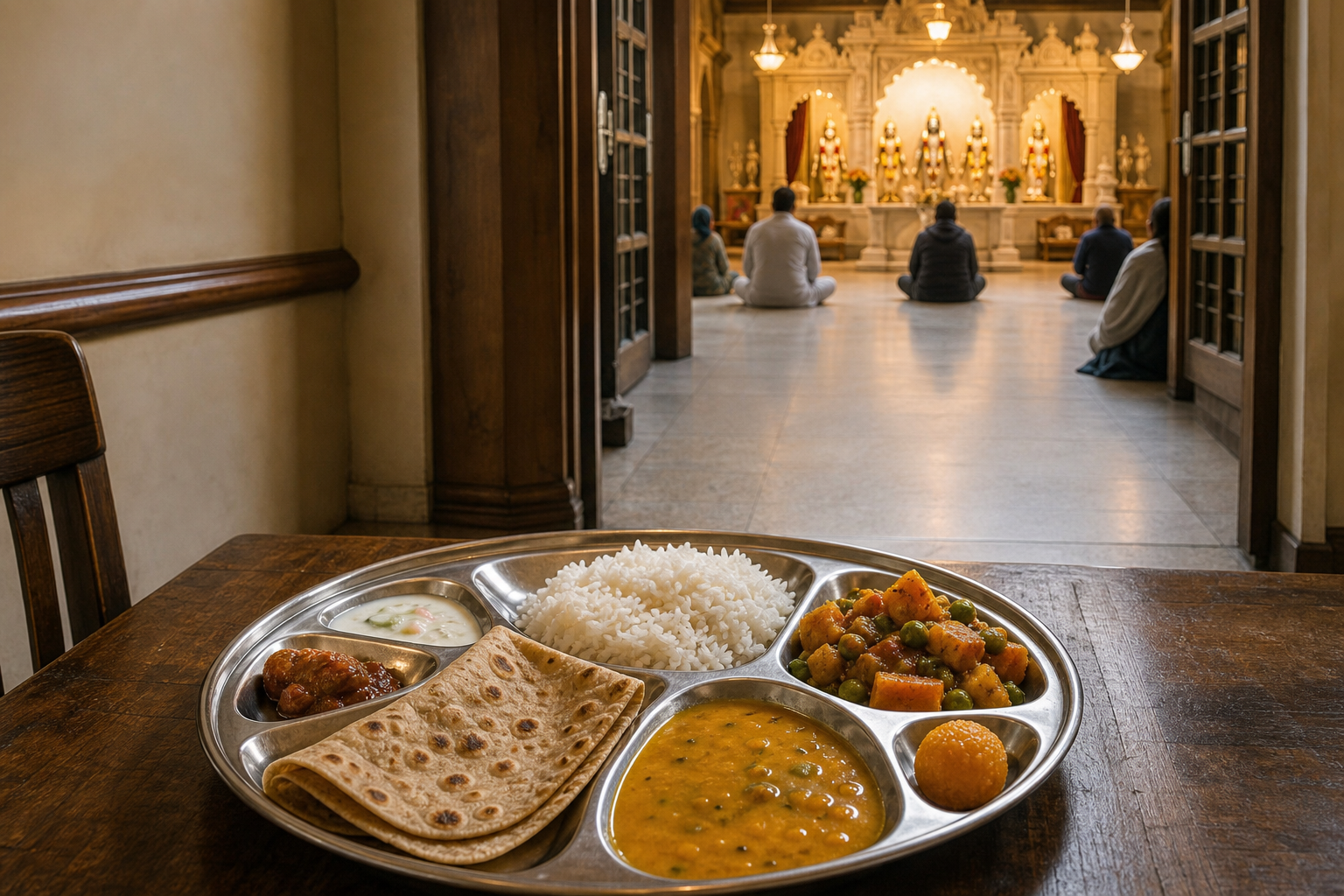
You may be wondering whether Govinda’s is worth adding to a crowded London itinerary, especially if you are not already visiting the ISKCON temple. The clearest answer is this: go when you want the temple and the meal to form one unhurried experience, rather than treating the restaurant as another stop on a food checklist.
The practical appeal is straightforward: vegetarian food, a thali that lets you try several preparations, and a setting that offers some distance from London’s pace. The deeper appeal is the connection between the meal, aarti, and prasadam. Understanding that connection will help you decide whether Govinda’s is the right place for you and how to approach it respectfully.
The short answer: visit for the combined experience
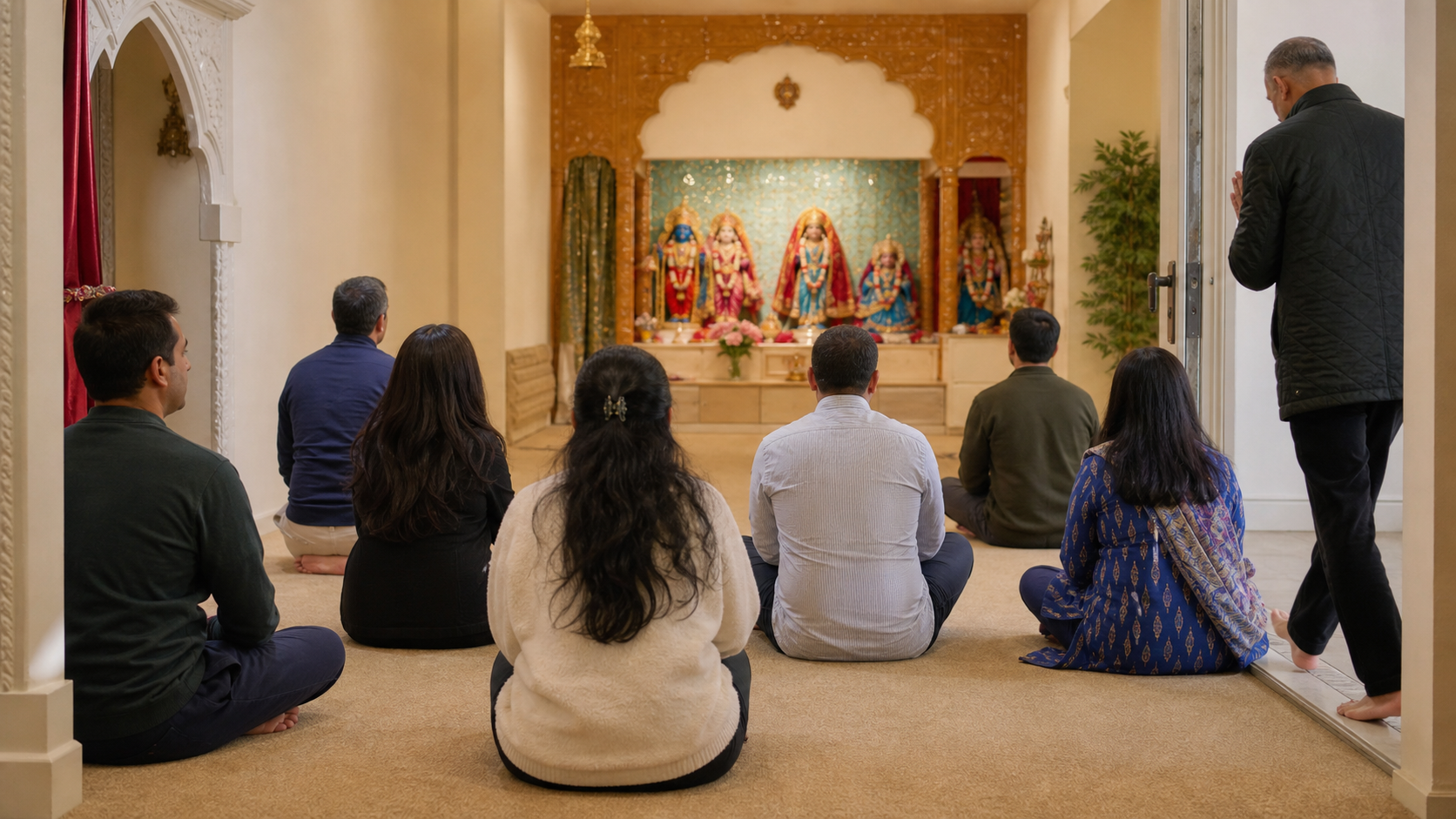
Govinda’s makes the most sense if you want more than a conventional restaurant meal. It is associated with the ISKCON temple in London, so devotional practice, community, and dining occupy the same setting. During one documented visit, chants, bells, kirtan, aarti, and the warmth of the temple preceded the meal. That sequence is important: the restaurant felt like a continuation of the visit, not an unrelated business next door.
You are likely to appreciate it if you want a vegetarian meal, prefer food described as simple and comforting rather than extravagant, or are curious about Krishna consciousness without wanting a formal introduction. You do not have to belong to a particular faith to appreciate a peaceful temple environment. You do, however, need to enter it as a place of worship rather than as a themed attraction.
If your only priority is an elaborate commercial dining experience, a large verified menu, or a tightly timed meal between appointments, the distinctive value of Govinda’s may be lost on you. Its strongest case is not luxury. It is the way food, devotion, and a pause from the city fit together.
Build your visit around the temple, not only the table
A useful visit plan is simple: allow time for the temple first, attend aarti if it is taking place and visitors are welcome, and eat afterward. This avoids rushing into the restaurant, finishing a meal, and leaving without encountering the setting that gives Govinda’s much of its meaning.
- Verify the current temple and restaurant hours before travelling. Opening times, service arrangements, prices, and menus are changeable details and should not be assumed from a visitor’s earlier experience.
- Arrive with enough time to settle before aarti rather than entering midway in haste.
- Silence your phone and follow the congregation’s cues. You can observe respectfully without copying every action.
- Let the aarti end before turning your attention to the meal. The transition from kirtan to food is part of what makes the visit coherent.
- At the restaurant, ask about the day’s dishes and any dietary requirements before ordering.
Aarti should not be approached as pre-dinner entertainment. It is worship. If you are unfamiliar with it, attentive stillness is enough. Listen, make room for regular worshippers, and participate only where you feel comfortable. This is both respectful and more rewarding than trying to document every moment.
Choose the thali for the clearest introduction
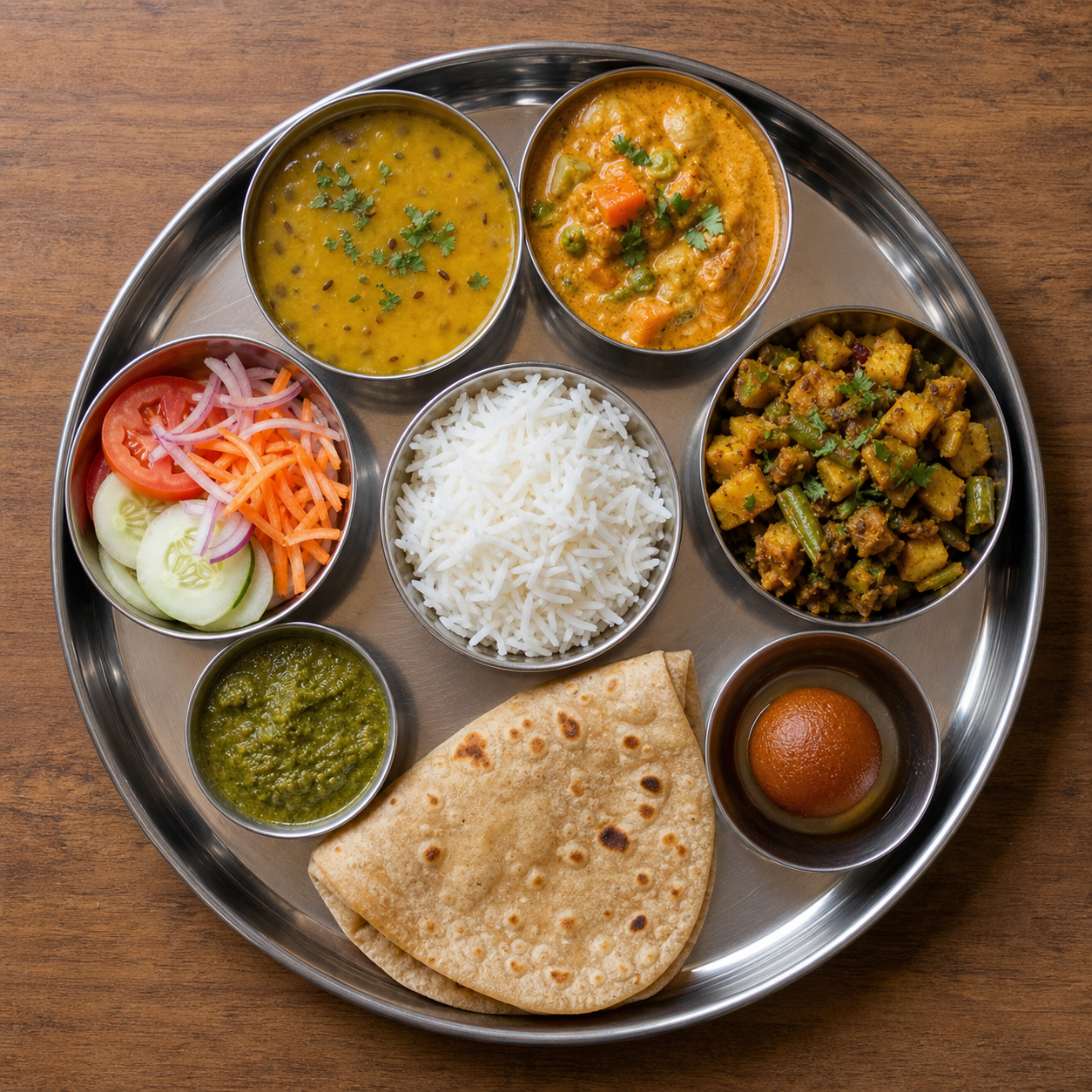
If this is your first visit and the thali is available, it is the most informative order. A thali presents several complementary foods together, so you experience the meal as a balanced whole rather than judging the kitchen by one isolated dish. In the visit described, the tray included rice, chapati, dal, sabzi, dessert, and accompaniments.
That combination gives you grain, bread, lentils, vegetables, something sweet, and smaller supporting preparations in one order. It is especially useful when you do not know the menu or cannot decide which individual dish best represents the restaurant.
Expectations still need to be sensible. One visitor found the food fresh, balanced, comforting, and neither excessively oily nor excessively spicy, but that is a personal experience, not a permanent guarantee about every day’s cooking. The components of a thali can vary, and your own tolerance for oil, chilli, sweetness, or seasoning may differ.
Vegetarian also does not automatically mean vegan or suitable for every allergy. Before ordering, ask which dishes contain dairy and whether any ingredient or preparation method matters for your needs. If you avoid particular foods for religious reasons, explain that clearly as well. A direct question is more reliable than trying to identify every ingredient by appearance.
Understand what prasadam adds to the meal
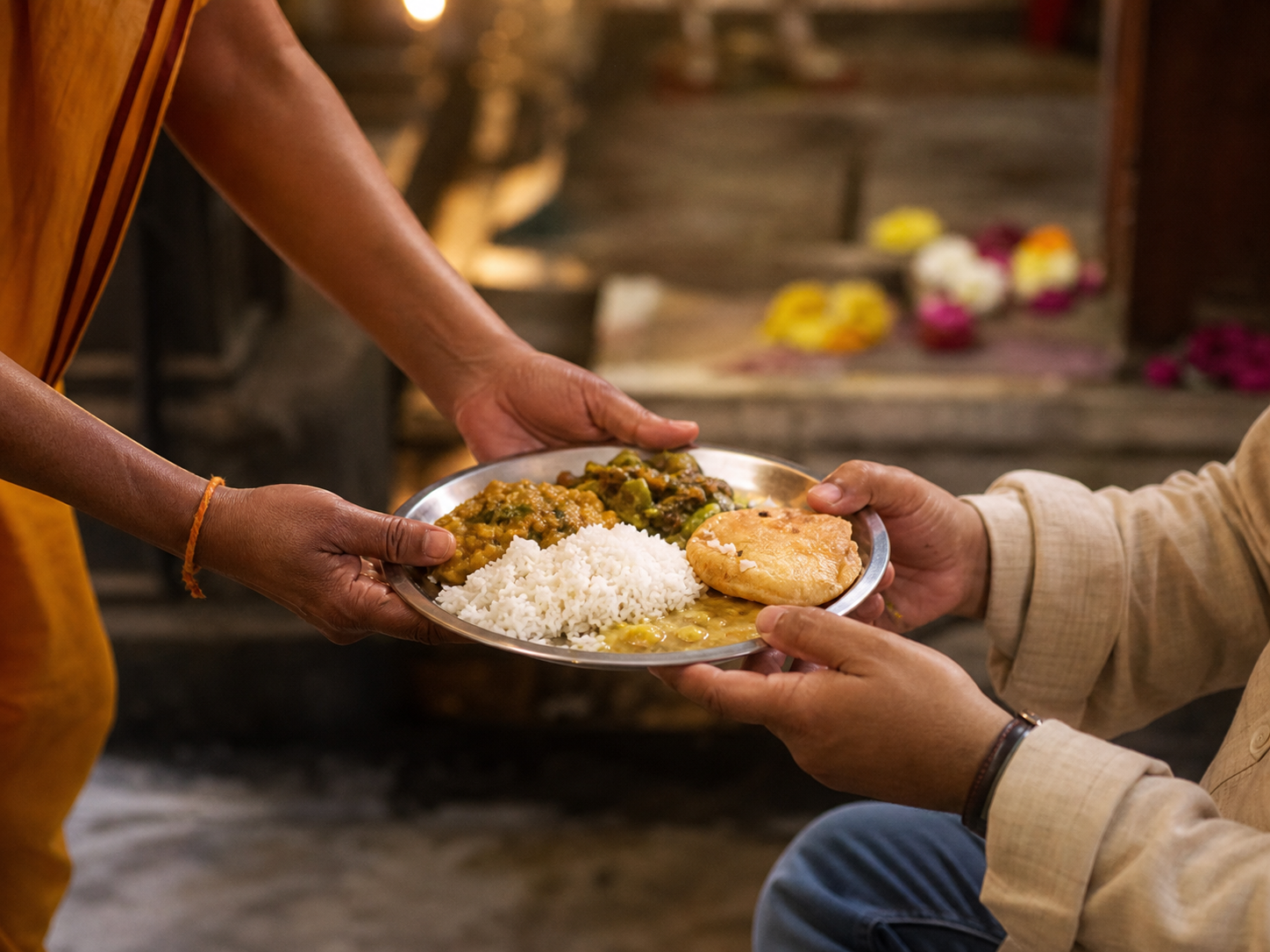
Prasadam is not a cuisine, a flavour profile, or a dietary certification. In Dharmic practice, the word refers to what is graciously received after an offering to the divine. The important change is therefore relational: food is not regarded only as a commodity purchased to satisfy appetite.
At Govinda’s, the devotional distinction was expressed through prasadam from the temple being added to the food. That wording should be handled precisely. It does not, by itself, prove that every component of every meal is prepared or offered in an identical way on every day. If the exact practice matters to you, ask the restaurant or temple staff how the day’s meal relates to the temple offering.
For a devotee, receiving prasadam can be an act of bhakti and gratitude. For a visitor unfamiliar with the theology, the appropriate response is still uncomplicated: receive the food respectfully, avoid waste, and notice that the meal belongs to a culture of offering and community rather than consumption alone.
This also explains why the surroundings matter. Soft conversation, an absence of hurry, and the devotional atmosphere can change how you attend to a simple meal. You do not need to manufacture a spiritual feeling. Eat carefully, remain present, and let the setting speak on its own terms.
Key takeaways
- Choose Govinda’s when you want a vegetarian meal joined to a temple visit, not merely a convenient restaurant stop.
- If possible, attend aarti before eating so that the devotional setting and the meal form one experience.
- Order the thali when available if you want to sample rice, bread, dal, vegetables, dessert, and accompaniments together.
- Ask staff about vegan suitability, dairy, allergens, and current ingredients; the word vegetarian does not answer those questions.
- Understand prasadam as part of a devotional relationship with food, not as a promise about spice level or dietary composition.
- Verify current hours, menu availability, prices, and visitor arrangements before making a special journey.
If Govinda’s fits what you are seeking, give it more than the narrow time required to finish lunch. Confirm the practical details, arrive for the temple first, and let the meal come afterward. That small change in sequence is the difference between simply eating at Govinda’s and understanding why it belongs at ISKCON London.

References
