
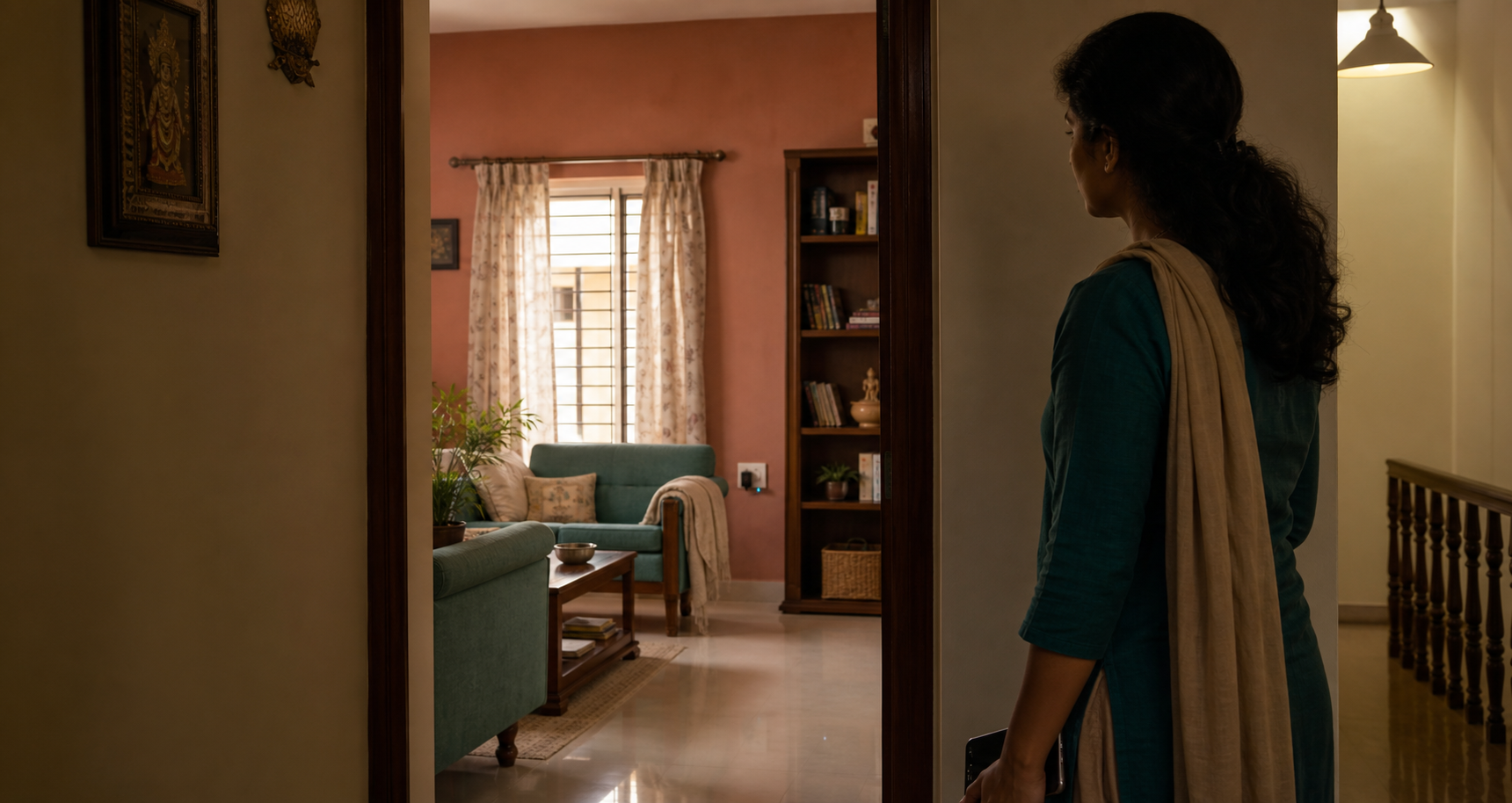
If you have found a concealed camera in your home, or received a threat involving private images, the order of your response matters. Protect yourself first, preserve what can prove the offence, and bring in police and qualified legal help before confronting anyone or trying to solve the case yourself.
That sequence is especially relevant after three people in Belagavi allegedly posed as journalists and placed covert recording devices in a woman’s home for blackmail. The allegations remain under investigation. Taking them seriously does not require abandoning due process; a careful response protects the woman, the evidence, and the credibility of any prosecution.
When blackmail begins, preserve control before proving the case
Blackmail is designed to force a rushed decision. The threat may demand money, silence, a meeting, continued contact, or some other form of compliance. You may feel pressure to answer immediately so that the material is not released. That urgency is part of the coercion.
You do not need to identify every participant, understand the technology, or assemble a complete legal case before asking for help. You need to protect immediate safety and retain the records that investigators can examine.
- Leave immediate danger. If the person making the threat can reach you, knows where you are, or is demanding an in-person meeting, move to a safe place and contact police or emergency assistance. Do not remain at risk in order to photograph a device or collect another message.
- Pause improvised negotiation. Do not confront a suspected person alone or arrange a private meeting. Before sending money, making a promise, or following instructions from the blackmailer, speak with police and obtain case-specific legal advice. A payment cannot give you verifiable proof that every copy was deleted.
- Preserve the communications. Keep the original messages, call records, account names, phone numbers, email addresses, payment demands, links, and visible dates and times. Capture the entire exchange rather than saving only the most frightening line. Do not edit the files or add annotations to the originals; keep explanatory notes separately.
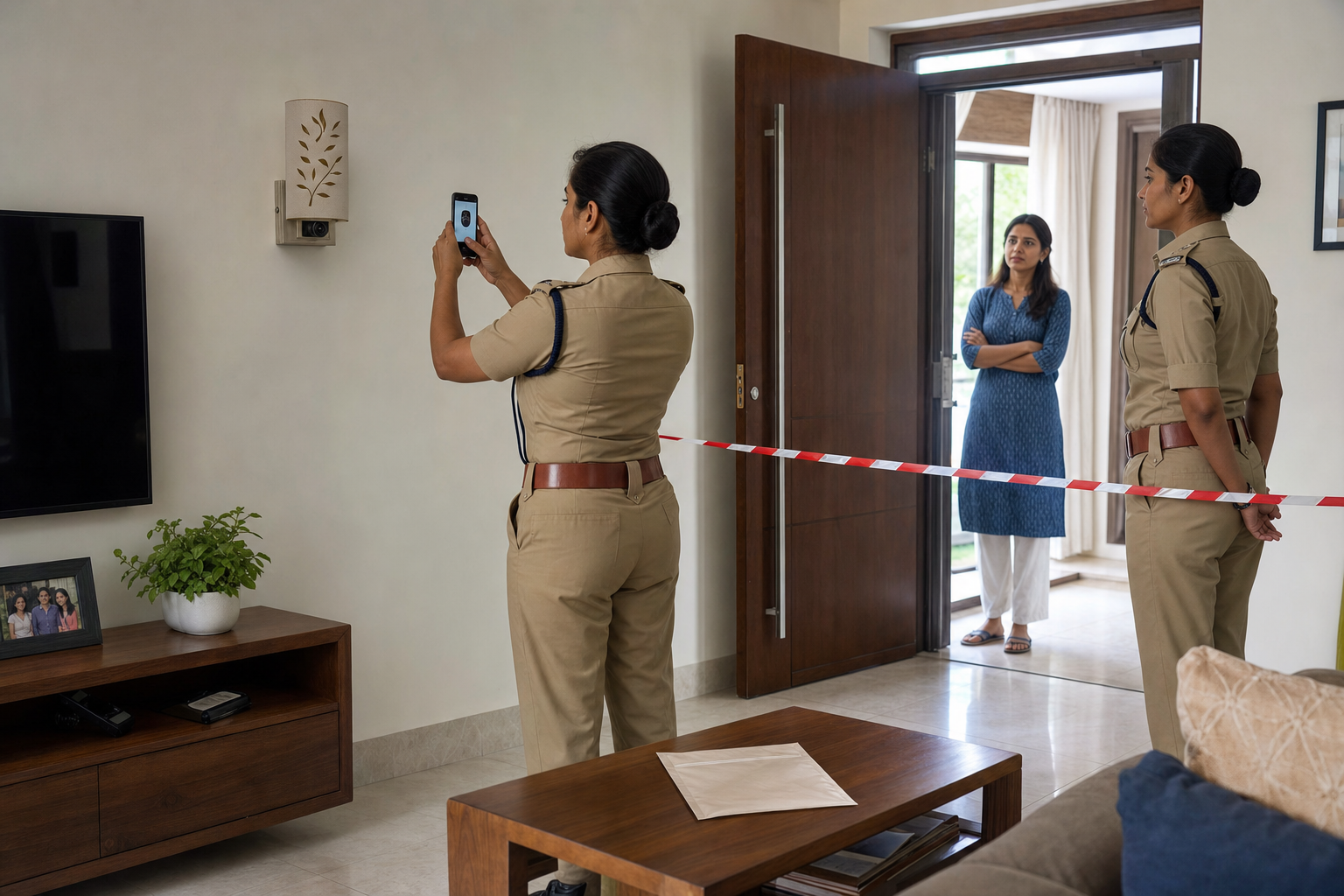
- Protect the suspected scene. If you discover a device, stop using the affected private space if that is feasible, keep other people away, and photograph the object in place without dismantling it. Do not reset it, connect it to your phone or computer, remove its memory, or experiment with its controls. Ask police how they want it handled.
- Write an access timeline. Record who entered the home, why they came, which rooms they could reach, whether they were ever alone, and what objects were installed, repaired, delivered, or moved. Mark what you remember clearly and what remains uncertain. A candid timeline is more useful than one filled with guesses.
- Report promptly and keep an administrative record. Note when and where the report was made, the name or designation of the receiving official, and which devices or documents were handed over. Keep copies of material that can safely and lawfully be retained, but do not distribute intimate content to relatives, community groups, or social media contacts.
If images have already appeared online, preserve the exact link, account name, posting time shown, and the message through which you learned about it. Do not keep forwarding the image to prove that it exists. Repeated circulation compounds the violation and creates more copies outside the survivor’s control.
The eventual legal classification depends on the facts and the law applicable to the case. Voyeurism, intimidation, extortion, impersonation, unlawful access, and technology-related conduct can overlap, but a label chosen by neighbours or social media users is not a substitute for assessment by investigators and a qualified lawyer.
Audit the home through access, not suspicion alone
A useful privacy check begins with opportunity. Instead of treating every electronic object as suspicious, work outward from the people who had access, the rooms they entered, and anything that changed during or after their visits. This produces a clearer record and reduces the chance of damaging ordinary equipment.
- Define the access window. Begin with the last time the room was known to be secure and list every visitor, worker, delivery, repair, inspection, interview, or social gathering since then.
- Prioritise private rooms and unsupervised access. Bedrooms, bathrooms, dressing spaces, and rooms where a visitor was left alone deserve attention before public areas that were continuously occupied.
- Look for change. Pay attention to an object that appeared recently, was repositioned without explanation, now needs an unexplained power connection, or does not belong to anyone in the household.
- Check plausible concealment points without taking hazards apart. Switchboards, smoke detectors, and decorative objects are among the places households are advised to examine. Do not open live electrical fittings or undertake unsafe disassembly; use a qualified technician where electrical work is involved.
- Document before altering. Photograph the room and the object’s position. Record who found it and when. If the situation is not an immediate physical danger, let police advise on removal and storage so that avoidable handling does not compromise evidence.
- Separate an anomaly from proof. An unfamiliar network entry, indicator light, hole, wire, or device deserves examination, but none establishes criminal surveillance by itself. Record what you observed without publicly naming a culprit.
Consumer scanning tools can complement this audit, but they cannot certify that a room is camera-free. Some recording devices do not transmit wirelessly, while an ordinary home contains many legitimate transmitters. A scan may miss a device or flag harmless equipment. Treat the result as a reason for closer inspection, not as a verdict.
Once investigators have had a chance to preserve relevant evidence, review household digital access as well. If a visitor could have seen or received the home Wi-Fi or router credentials, change them from a trusted device and review which household members genuinely need them. Do not disconnect or reset suspected equipment first if doing so could erase information that police need.
Prevention works best as a routine rather than a panic-driven search. Keep private rooms closed during outside visits, avoid leaving visitors unsupervised where privacy is expected, and use tamper-evident seals on fixtures or objects that should not be opened between authorised checks. Photograph the normal placement of unfamiliar installations after legitimate maintenance. If something later changes, you will have a baseline rather than a vague memory.
Verify a visitor’s identity and limit the access it grants
An identification card answers only one question, and sometimes it does not answer even that question reliably. Identity, purpose, and access are separate decisions. Someone may genuinely work for a media outlet, service company, association, or public institution and still have no reason to enter a bedroom or move around a home alone.
- Ask for the visitor’s full name, organisation, purpose, appointment details, and the name of the person who arranged the visit.
- Verify through the organisation’s official public contact channel. Do not rely only on a phone number printed on the presented card or supplied by the visitor.
- Confirm the assignment or service request, who is expected to attend, and which part of the home they need to access.
- Conduct interviews and routine conversations in a common area. If access to another room is necessary, have a household member accompany the visitor.
- End the visit if the identity, purpose, or requested access cannot be reconciled. You do not need to argue or accuse anyone. State that verification is incomplete and reschedule through the organisation.
Apply the same protocol to journalists, technicians, brokers, campaign workers, volunteers, and acquaintances. The point is not that every visitor is dangerous. The point is that professional status should not bypass ordinary consent. Genuine journalists and service professionals also benefit when impersonation is harder, because false credentials damage the trust on which legitimate work depends.
Families should decide this protocol before a stranger arrives. Choose who verifies appointments, identify rooms that remain private by default, and make clear that social courtesy does not require unsupervised access. A rule applied consistently is easier to enforce than a sudden objection made after someone is already inside.
Protect the woman without multiplying the violation
Covert recording turns privacy into a weapon. The survivor’s clothing, relationship history, decision to admit a visitor, or response to a threat does not transfer responsibility from the person who allegedly installed, obtained, or used the recording. Blame directed at the woman assists the coercion by making disclosure more frightening.
Family and community support should reduce exposure, not create a larger audience for the material.
- Ask what immediate help she wants: a safe place, accompaniment to police, transport, contact with a lawyer, or access to qualified counselling and survivor support.
- Keep the circle of knowledge small. Do not demand to see the footage, show it to community elders, or send it to an informal messaging group for verification.
- Choose one trusted liaison, with the survivor’s consent, to coordinate practical help. This prevents her from having to repeat the experience to every relative, official, or supporter.
- Let her retain agency wherever safety allows. Do not publish her name, address, images, or personal history to build public pressure.
- Preserve exact evidence while avoiding commentary on intimate details. Investigators may need the original communication; the public does not need the content.
- Do not organise a raid, threat, public confrontation, or retaliatory exposure. Vigilantism can endanger the survivor, contaminate evidence, and replace lawful accountability with another form of intimidation.
Community discipline also means separating individual allegations from collective guilt. The conduct attributed to particular suspects must be investigated as their conduct. A person’s name, faith, caste, profession, or political identity does not prove another person’s complicity. Communal speculation can trigger harassment, distract from the evidence, and make the survivor’s case serve agendas she did not choose.
A Dharmic response joins protection with restraint. Ahimsa here is not passivity toward wrongdoing. It means refusing the second injury of victim-blaming, uncontrolled circulation, collective hatred, or revenge, while insisting on truthful investigation and proportionate accountability. Compassion for the woman and due process for the accused are not opposing duties. Both are necessary if justice is to remain credible.
Key takeaways
- If there is an immediate threat, move to safety and contact authorities before collecting more evidence.
- Preserve complete messages, links, account details, access records, and photographs without editing originals or circulating intimate material.
- Do not dismantle, reset, connect to, or publicly display a suspected recording device; restrict access to the room and ask police how to handle it.
- Audit private spaces by tracing visitor access and recent changes, and remember that a consumer scan cannot prove that a room is secure.
- Verify identity, purpose, and requested access separately. A credential does not entitle anyone to enter private rooms unsupervised.
- Support the survivor’s choices, confidentiality, and access to professional help while rejecting victim-blaming, vigilantism, and collective blame.
Before the next outside visitor enters your home, decide who will verify the appointment and which rooms are off-limits. If a surveillance or blackmail incident is already active, begin elsewhere: get the woman to safety, preserve the evidence, and contact police and qualified legal support. Calm procedure is what turns a private threat into a case that can be investigated.



References
