
If you are planning an Amavasya vrata, family remembrance, or quiet evening of prayer in February 2026, the important question is not simply which date to mark. You need to know which tithi is active when you perform the observance.
In India, the practical cutoff is 5:23 PM IST on February 17. Amavasya ends then, while Shukla Paksha Pratipada begins. That transition falls early enough that someone waiting until later in the evening could unknowingly begin an Amavasya-specific practice after the tithi has changed.
The exact Amavasya and Pratipada timings
On Tuesday, February 17, 2026, Amavasya remains in effect until 5:23 PM IST. Shukla Paksha Pratipada begins at that point and continues until 5:05 PM IST on February 18.
| Period | Tithi | What it means for your plan |
|---|---|---|
| February 17, up to 5:23 PM IST | Amavasya | Use this period for an observance that must be performed while Amavasya tithi is active. |
| February 17 after 5:23 PM IST | Shukla Paksha Pratipada | The waxing fortnight has begun; do not describe a later ritual as occurring during Amavasya. |
| February 18, up to 5:05 PM IST | Shukla Paksha Pratipada | Pratipada continues until the next tithi transition. |
This distinction matters because a civil date and a lunar tithi are not the same unit of time. The date changes at midnight, but a tithi can begin or end at any time of day. February 17 may be labelled as the Amavasya date on a calendar, yet the whole evening does not remain Amavasya.
If your sankalpa or family procedure requires Amavasya to be current, complete that part before 5:23 PM IST. If your custom instead depends on sunrise, sunset, or another prescribed ritual point, follow that rule and check a Panchang calculated for your location. The published IST timing is a useful guide across much of India, but local Panchangs and regional conventions can differ slightly.
A simple observance you can prepare without overcomplicating it
Amavasya practices are not identical across Hindu households or sampradayas. Some families keep a vrata. Some give priority to remembrance of ancestors. Others reserve the period for prayer, japa, restraint, or quiet reflection. Begin with the practice you have actually received from your family, guru, or community rather than assembling unrelated customs from a general checklist.
- Decide what you are observing. Write down one clear intention: a customary vrata, remembrance of departed family members, established prayer, japa, or a period of contemplation. This prevents the day from becoming a collection of disconnected activities.
- Check the cutoff before arranging the rest of the day. If you are following the IST schedule and the practice must occur on Amavasya, reserve enough uninterrupted time to finish it before 5:23 PM. Do not make “the evening” your only plan, because the tithi will already have changed after that hour.
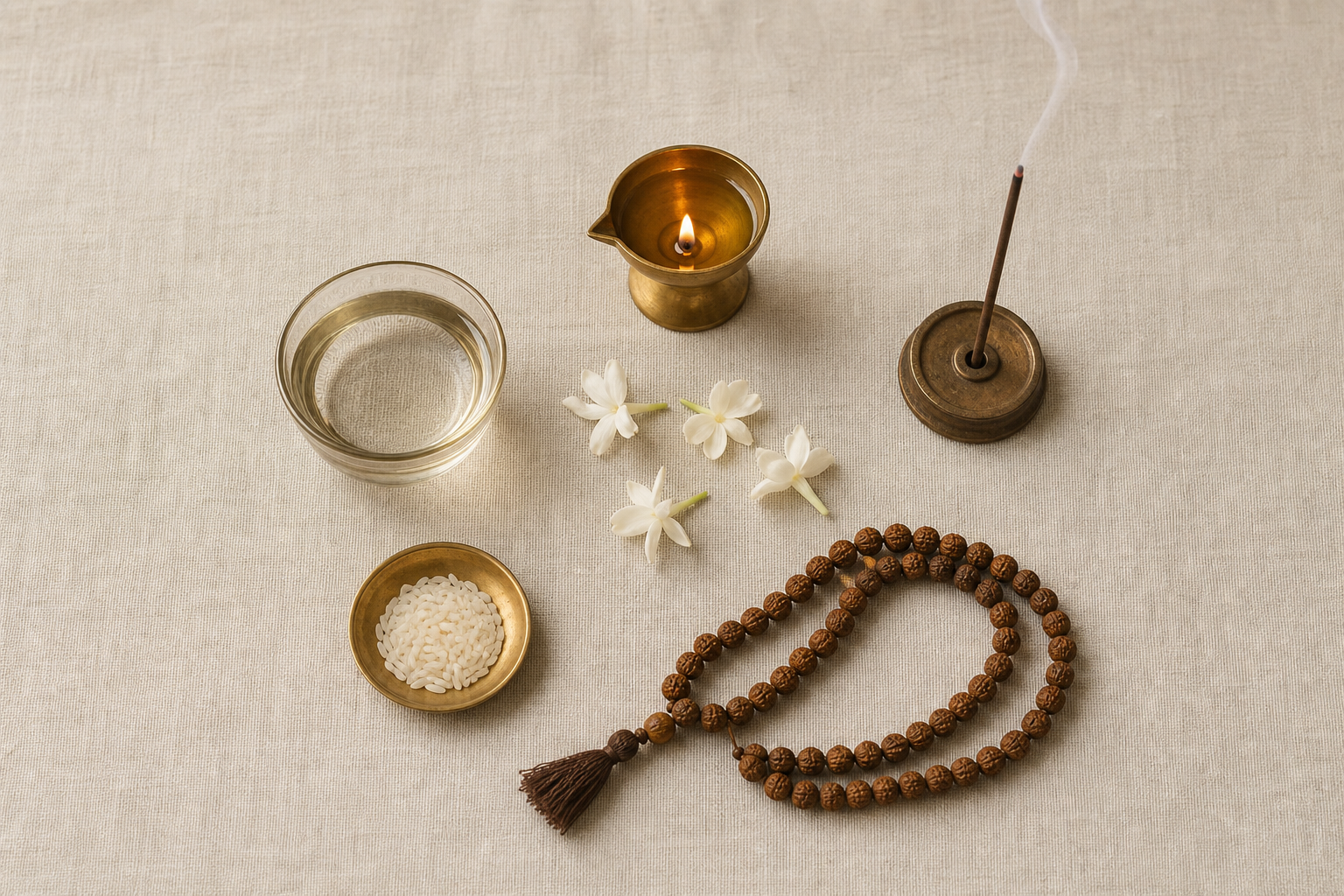
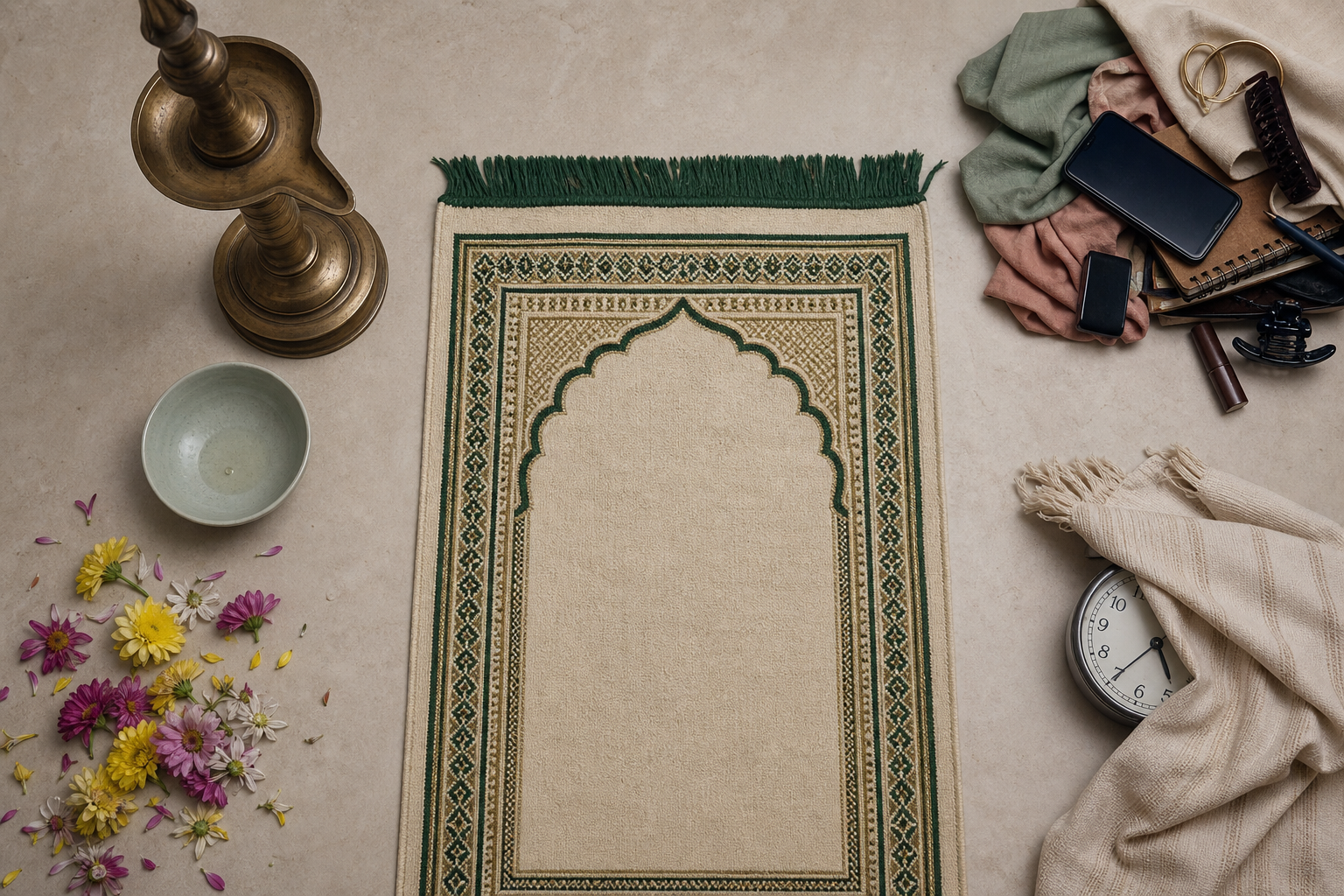
- Prepare a quiet and clean place. Set out only the lamp, image, text, or offerings normally used in your tradition. A modest arrangement supports attention better than an elaborate setup assembled in haste.
- State the purpose in your sankalpa or inward resolve. Keep it specific. You might dedicate the observance to remembrance, gratitude, self-restraint, prayer, or the completion of an established family duty.
- Perform the practice you know. Use the mantra, prayer, vrata rule, or remembrance procedure accepted in your household or lineage. If formal ancestral rites are not part of your received practice, respectful remembrance and prayer are more appropriate than improvising a complex rite.
- Close before moving into ordinary activity. Sit quietly for a few moments, complete the prayer, and tend any lamp safely. The purpose is to let the observance end deliberately rather than allowing it to dissolve into distraction.
If vrata is customary for you, follow its established form. Amavasya does not impose one universal fasting rule on every practitioner. A stricter practice is not automatically a more authentic one, especially when it has been detached from the tradition that gives it meaning.
What changes when Pratipada begins at 5:23 PM
The change to Shukla Paksha Pratipada marks the first tithi of the waxing lunar phase. In the rhythm of the Panchang, Amavasya lends itself to inwardness, restraint, and remembrance; Pratipada opens a phase associated with renewal and the gradual return of light.
You can reflect that transition in the shape of your day. Complete the inward or remembrance-centred portion before the cutoff. After 5:23 PM IST, turn gently toward preparation: set an intention for the waxing fortnight, arrange the next day’s responsibilities, or identify one constructive task to begin. The shift need not become a second elaborate ceremony.
Pratipada, however, is not a universal declaration that every undertaking after 5:23 PM is auspicious. A proper shubh muhurat can depend on tithi together with Nakshatra, Rashi, locality, the nature of the activity, and the conventions of the relevant tradition. If you are scheduling a wedding rite, samskara, temple ceremony, house entry, or another consequential event, do not approve the time from the waxing phase alone. Consult the appropriate regional Panchang or a knowledgeable practitioner.
Five mistakes that can disrupt the observance
- Treating February 17 as twenty-four hours of Amavasya. The tithi ends at 5:23 PM IST. A calendar label identifies the principal observance date; it does not erase the transition within that date.
- Waiting until late evening without checking the clock. Lamps and family prayers may normally be associated with evening quiet, but an Amavasya-dependent act performed after the cutoff would fall in Pratipada under this schedule.
- Copying IST abroad as though it were local Panchang time. If you live outside India, use a reliable Panchang for your city and tradition. A simple clock conversion may not reproduce all the conventions used in a locally prepared calendar.
- Using the visible sky as the test. Tithi is a calendrical and astronomical division, not a judgement made by whether you can see the Moon from your home. Cloud, horizon, and visibility do not decide when Amavasya ends.
- Assuming that Shukla Paksha alone supplies a muhurat. The beginning of the waxing phase can carry the symbolism of renewal, but important event timing still requires the other relevant Panchang factors.
There is also no need to combine every practice associated with Amavasya in different regions. A family remembrance, a vrata, and a sectarian puja may each rest on distinct rules. Preserving one coherent observance is more faithful than blending several unfamiliar procedures because they share the same calendar date.
Key takeaways for February 17
- Amavasya is active on Tuesday, February 17, 2026, until 5:23 PM IST.
- Shukla Paksha Pratipada begins at 5:23 PM IST and lasts until 5:05 PM IST on February 18.
- Complete an Amavasya-specific observance before the cutoff if you are following the stated IST timing.
- Use a local Panchang when your location, sampradaya, or ritual rule requires greater precision.
- Do not treat the onset of Pratipada as a complete shubh muhurat calculation.
Put the 5:23 PM cutoff into your calendar now, then choose the one practice your family or tradition regards as essential. That small preparation will let February’s Amavasya remain what it is meant to be: a deliberate interval of remembrance and inward attention, followed by a measured return to action.
References
