
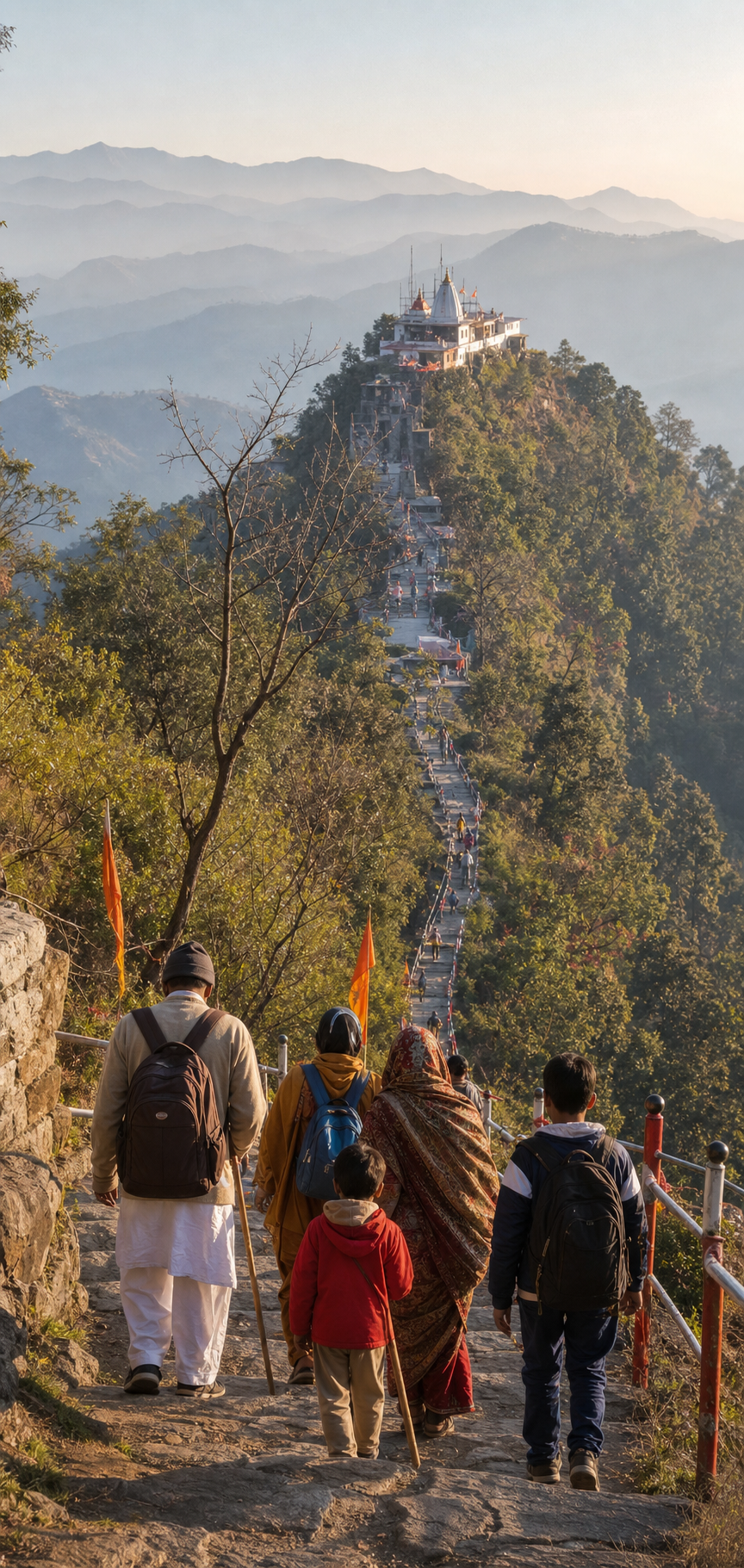
If you are planning your first Purnagiri pilgrimage, the central question is not simply how to reach the temple. You need to decide when to go, how much effort your group can comfortably manage, and how to protect enough time for darshan and the descent.
Purnagiri rewards that preparation. The shrine brings Shakti bhakti, Himalayan sacred geography, and physical ascent into one experience. A sensible plan keeps the logistics from consuming the pilgrimage.
Choose between the Navratri mela and a quieter pilgrimage
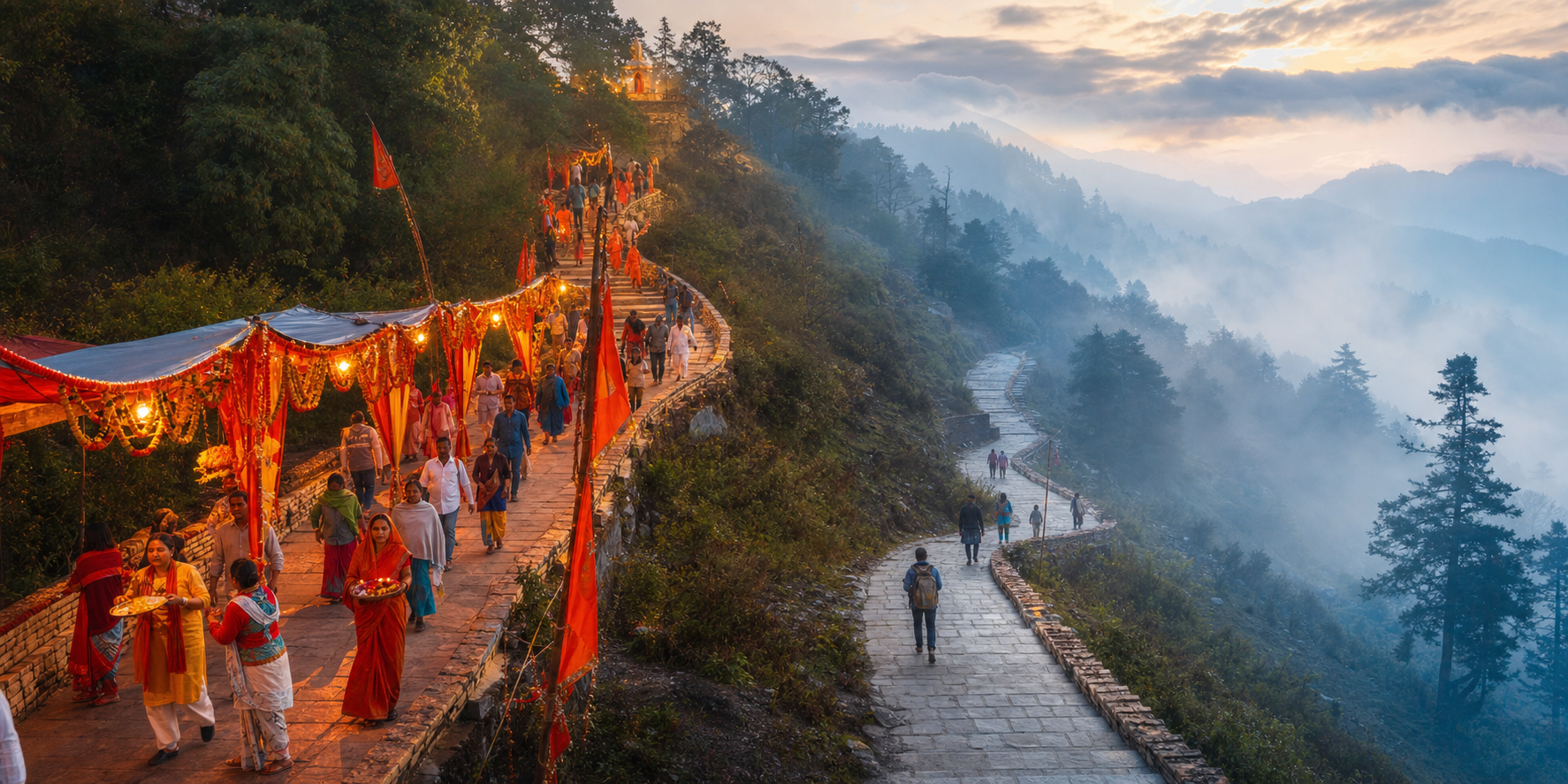
Your choice of season will shape the character of the visit. Purnagiri’s major gathering takes place during Chaitra Navratri, generally in March-April. Thousands of pilgrims come together during the mela, making collective devotion part of the experience.
Choose Chaitra Navratri if the energy of a large yatra matters to you and you are prepared to allow extra margin for crowds. Do not build that journey around a tight return connection. A mela visit is not the time to assume that transport, ascent, darshan, and descent will all proceed at the quickest possible pace.
If you want more silence and room for contemplation, consider the post-monsoon period. Clearer skies and cool mountain air can support a quieter visit, although mountain weather can still change. Post-monsoon does not mean that rain protection or warm layers become unnecessary.
The useful decision is therefore devotional as well as practical: choose Navratri for the shared force of the mela, or choose a quieter period when you can give more attention to the ascent, the landscape, and inward prayer. Neither is a lesser form of pilgrimage.
Use Tanakpur as the gateway, not merely a map reference
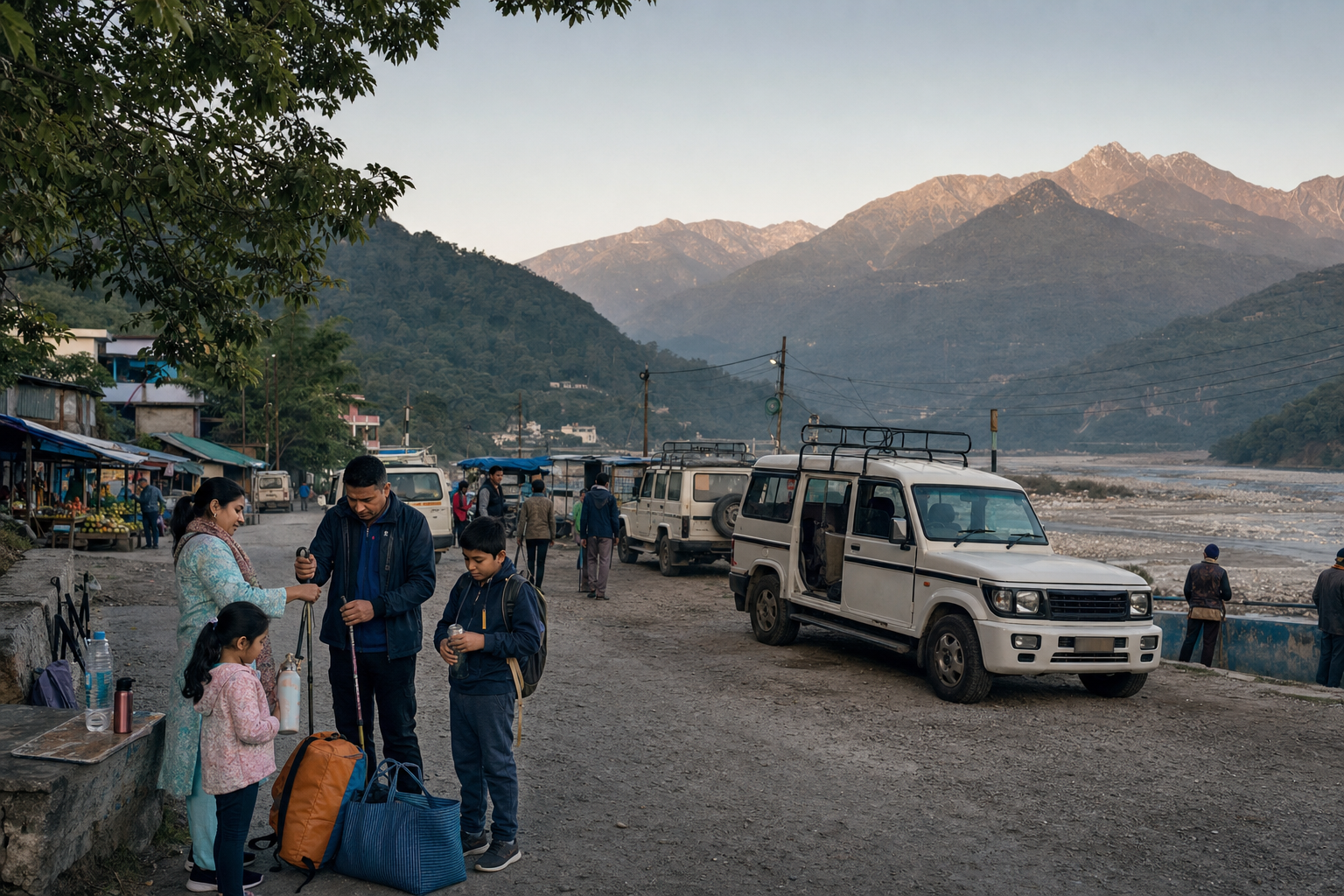
Tanakpur is the principal gateway to the shrine. Purnagiri lies about 20 km from Tanakpur, 92 km from Champawat, and 171 km from Pithoragarh. Those figures help you orient the journey, but they do not describe the physical effort of the ascent or predict your total travel time.
| Reference point | Approximate distance to Purnagiri | How to use the figure |
|---|---|---|
| Tanakpur | 20 km | Treat it as the main gateway and the place from which to confirm local onward arrangements. |
| Champawat | 92 km | Allow for the approach to the pilgrimage area before beginning the temple journey itself. |
| Pithoragarh | 171 km | Do not combine the longer approach with an inflexible darshan or return schedule. |
The usual approach combines a road journey from Tanakpur with a steady climb toward the temple area. Local transport is available along the established pilgrimage route, but you should confirm the current departure point, onward reach, return arrangement, and expected operating window locally. Fixed assumptions are especially unhelpful during a busy mela or changeable mountain weather.
- Reach Tanakpur with enough margin to make local enquiries without rushing straight into the ascent.
- Confirm how far your chosen transport will take you and where you are expected to begin the climb.
- Ask about the return before departing. An outbound ride is only half of a workable transport plan.
- Start early enough to preserve time for rest, darshan, and an unhurried descent.
- Keep the onward journey flexible. Do not make your entire itinerary depend on completing every stage at the fastest plausible pace.
This is particularly important if you are arriving from Champawat or Pithoragarh. The journey to the gateway and the climb to the shrine are separate demands. Treating them as one uninterrupted dash can leave the group tired before the most meaningful part of the yatra begins.
Plan for a high-altitude climb, even with a family group
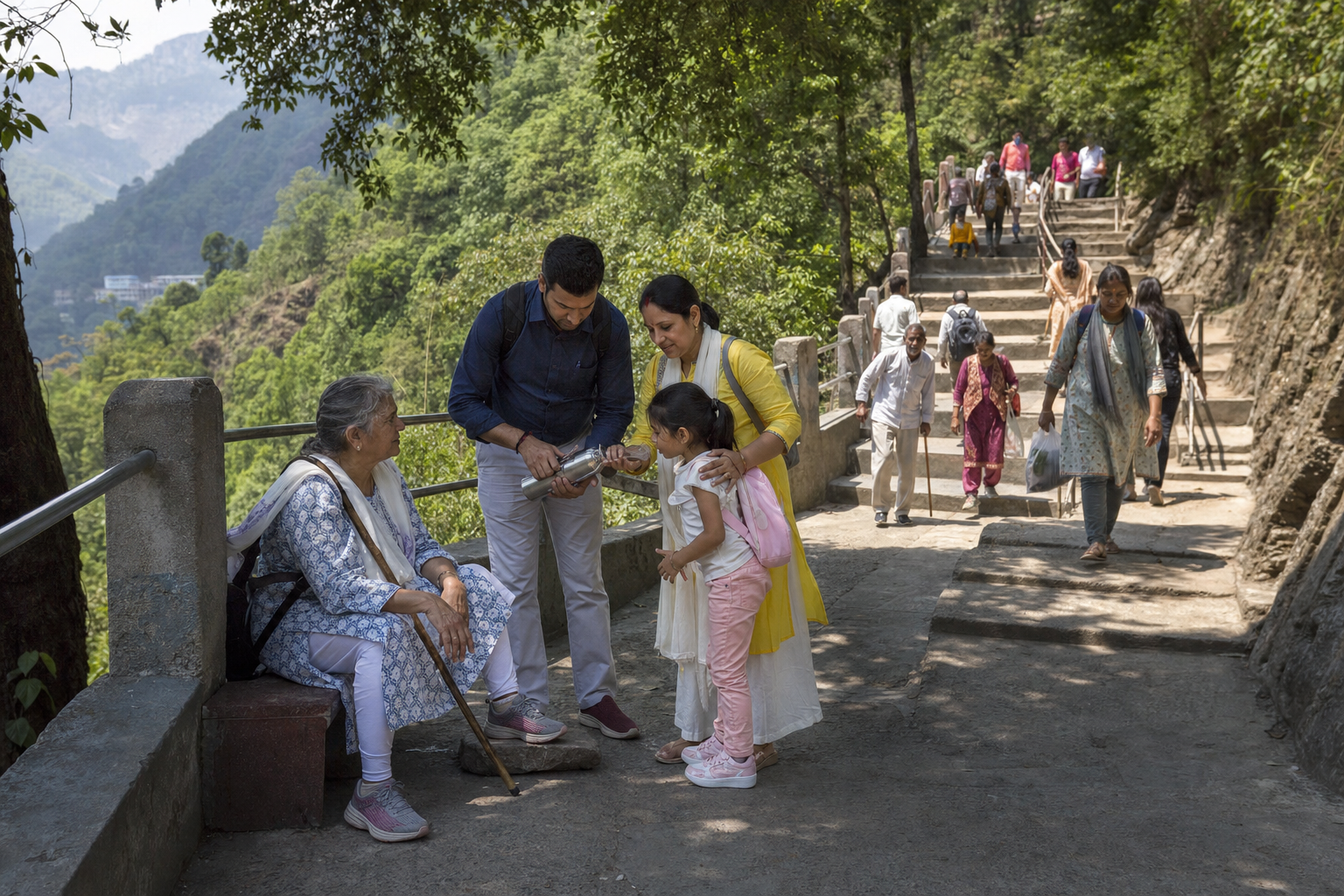
Purnagiri stands at an elevation of approximately 3,000 metres. Families and senior pilgrims commonly make the journey, but their presence should not be mistaken for proof that the climb is effortless. The gradient, elevation, and changing weather make pacing part of the pilgrimage plan.
Set the group’s pace by the slowest member. A strong walker can wait; a tired pilgrim cannot recover comfort simply because the timetable is tight. Build pauses into the ascent before anyone is exhausted, drink water regularly, and preserve energy for the descent. Reaching the temple is not the end of the physical journey.
Carry what solves the most likely problems
- Water: carry enough for the ascent and keep drinking at intervals rather than waiting until the group feels depleted.
- Light snacks: choose simple food that is easy to carry and share during a rest stop.
- Layered clothing: layers let you respond to cool air and changing conditions without burdening yourself with one heavy garment.
- Simple rain protection: keep it accessible rather than buried beneath the rest of the luggage.
- Sturdy footwear: use shoes suitable for a steady climb. A pilgrimage is a poor occasion for testing unfamiliar footwear.
- Essential personal items: carry what children, seniors, or other members of your group specifically need, but avoid loading everyone with nonessential baggage.
Agree on a family plan before starting
A family group should decide three things before leaving Tanakpur: who stays with the slowest pilgrim, what the group will do if separated, and how much time must remain for the descent. Children should not be expected to infer the plan in a crowd, and an older pilgrim should not have to hurry because the rest of the group failed to allow enough time.
If your health or mobility makes a high-altitude climb uncertain, seek advice from an appropriately qualified clinician before committing to it. Another pilgrim’s successful ascent cannot establish what is safe for you. On the route, do not treat significant physical distress as a test of devotion; stop, seek local help, and choose the safer course.
Let the ascent support darshan rather than compete with it
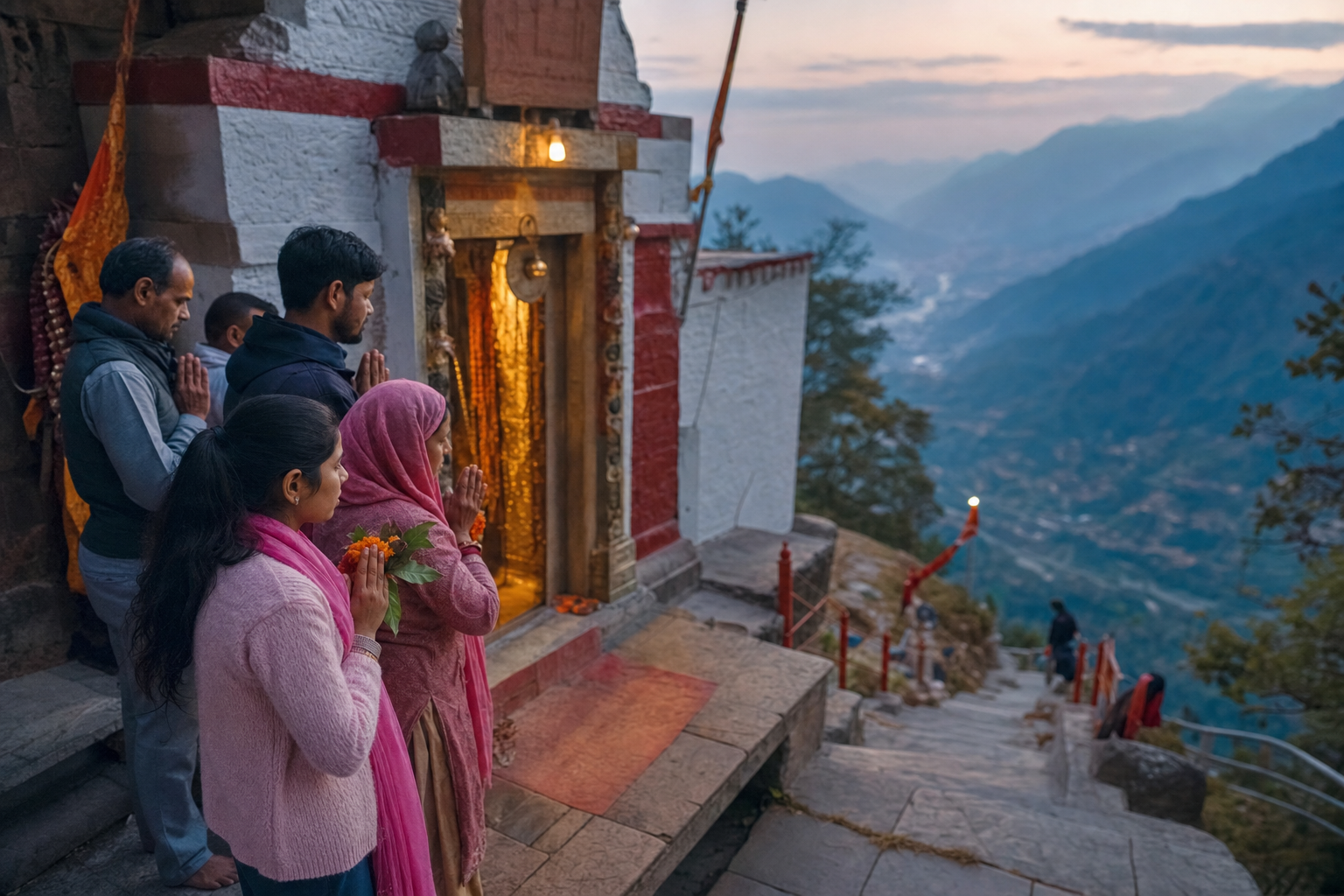
Purnagiri, also known as Punyagiri, is revered within the Shakti Peeth tradition associated with Sati. That sacred identity places the shrine within a wider geography of Shakti worship across Bharat. The physical movement upward can therefore be approached as more than the price of admission: it can prepare your attention for darshan.
Before beginning, choose a simple sankalpa or devotional intention. It might be a prayer you will repeat, a quality you want to cultivate, or a burden you wish to place before Mata. Keep it modest enough to remember when the path becomes demanding. The purpose is not to manufacture an extraordinary experience; it is to stop distraction from taking over the yatra.
At the shrine, the customary rhythm is straightforward: approach reverently, offer prasad, participate in aarti if the timing permits, and follow the directions in the sacred precinct. If the temple is crowded, prepare your prayer before reaching the front. A brief darshan does not become spiritually empty merely because it is brief.
Cleanliness is part of that reverence. Keep wrappers and disposable items with you until they can be placed in an appropriate receptacle. Do not leave devotional materials casually on the route, and do not make another pilgrim’s path harder by blocking movement for photographs or extended personal rituals.
Purnagiri’s atmosphere also reflects values recognisable across dharmic paths: self-discipline, compassion, and respect for sincere spiritual practice. You express those values concretely when you make room for seniors, keep your group orderly, avoid pushing, and allow other devotees to worship without interference. Conduct is part of the offering.
Key takeaways for your Purnagiri pilgrimage
- Base the journey around Tanakpur, the principal gateway about 20 km from the shrine.
- Choose Chaitra Navratri in March-April for the mela atmosphere; choose a post-monsoon visit if you prefer greater quiet.
- Confirm current local transport and the return arrangement in Tanakpur instead of relying on a rigid assumption.
- Start early and budget separately for the road approach, ascent, darshan, rest stops, and descent.
- At approximately 3,000 metres, pacing matters. Walk at the speed of the slowest member of your group.
- Carry water, light snacks, layers, rain protection, and sturdy footwear without overloading yourself.
- Keep your prayer simple, observe the shrine’s directions, and treat cleanliness and consideration for other pilgrims as part of seva.
Your next step is simple: choose whether you want the Navratri mela or a quieter post-monsoon yatra, then build the journey outward from Tanakpur with generous time for the climb and descent. Once that margin is protected, you can approach Purnagiri as a pilgrimage rather than a race against an itinerary.
References
