

You can go without food and still miss the fast. If the day leaves you counting the hours, planning the next meal, displaying your endurance, or speaking harshly to the people around you, hunger has become the main event.
Devotional fasting asks a more searching question: did reducing bodily demands make room for remembrance, prayer, hearing, and service? In Vaishnava practice, especially on Ekadasi, the food restriction supports the vow. Your redirected attention is the real offering.
Decide what the fast is for before choosing what to eat
The same outward act can carry very different intentions. Someone may fast for political protest, bodily change, social recognition, or spiritual discipline. Hunger alone does not make any of those purposes devotional.
The Vedic purpose of fasting is to help bring the mind and senses under discipline so that spiritual realization can deepen. That changes how you evaluate the observance. The central question is not, “How little did I eat?” It is, “Where did my attention go when I stopped serving every demand of the tongue and stomach?”
Before the fast, complete this sentence in plain words: “I am observing this fast so that I can…” A workable answer names a devotional movement, not a material reward. You might intend to remember Krishna more steadily, give undistracted time to japa, hear or discuss Krishna-katha, read scripture, or perform a neglected act of seva.
- Name one restraint: a demand of the tongue, a distracting habit, impatience, unnecessary entertainment, or critical speech.
- Name one positive practice: japa, kirtana, scriptural hearing, devotional discussion, worship, or service.
- Name the space you will use: the time and attention normally consumed by choosing, preparing, eating, and thinking about food.
This also prevents a common mistake: using one austere day as a substitute for steady habits. A fast does not automatically correct the patterns to which you return afterward. Its value lies partly in showing you those patterns clearly enough to change them.
Vaishnavas may fast on Ekadasi and on appearance days of the Lord and his empowered representatives. The precise observance can differ by sampradaya and community. Follow the rule received in your own lineage when it differs from the practical Ekadasi pattern described here.
Choose an Ekadasi observance you can follow honestly
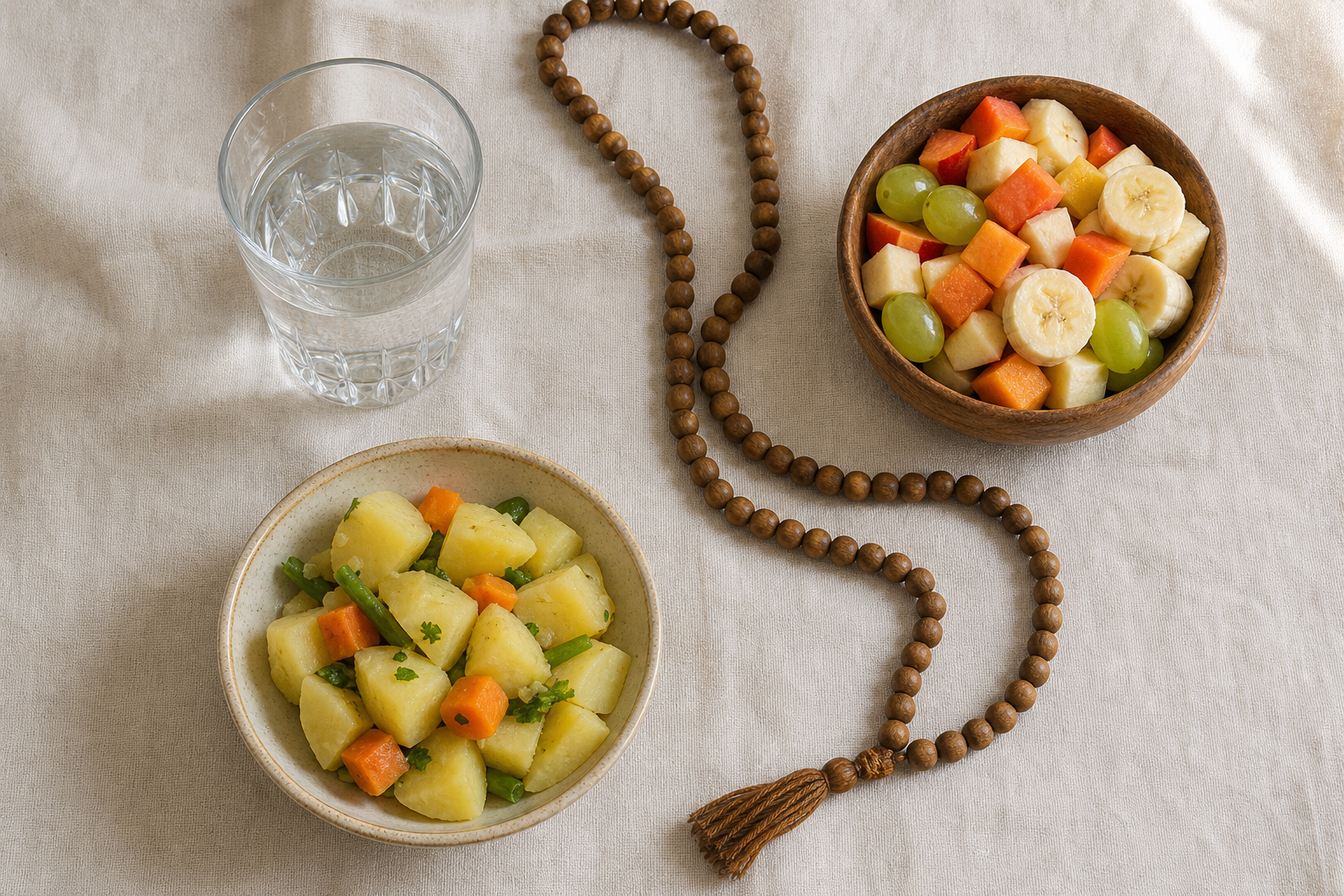
Ekadasi falls on the eleventh day after the full moon and the eleventh day after the new moon. Because it recurs in both halves of the lunar cycle, it gives you a regular opportunity to practise restraint rather than waiting for inspiration. Confirm the applicable date and concluding observance through the calendar or temple authority used by your own community.
There is more than one recognised level of food restriction. Choosing the strictest option is not automatically the most devotional choice. Choose a form that is consistent with your lineage, responsibilities, experience, and safety, and then observe it without quietly rewriting the rule when hunger arrives.
| Form of observance | What it permits | What to decide in advance |
|---|---|---|
| Complete fast | No food for the day | Whether this form is appropriate for you and how ordinary duties will be handled |
| Fruit-only fast | Fruit | Which simple foods you will have ready, so the day does not become a search for special dishes |
| Fruit, dairy, and selected roots | Fruit, milk, milk products, and allowed foods such as potatoes, beets, white radishes, and peanuts, prepared with simple seasoning | Which ingredients your tradition permits and how you will keep preparation uncomplicated |
| Grain-and-bean abstinence | Ekadasi foods other than grains and beans | How you will avoid rice, wheat, corn, string beans, peas, dals, and seasonings mixed with flour |
The grain-and-bean form is the most commonly described Ekadasi observance. Ingredient checking matters because flour can appear in a spice preparation even when the meal itself looks grain-free. Asafoetida preparations mixed with flour are one example. Check packaged ingredients before the day begins instead of turning the fast into anxious label-reading at mealtime.
Keep permitted food simple. An elaborate feast made from technically acceptable ingredients can occupy more thought, shopping, and preparation than an ordinary meal. That satisfies the food rule while defeating the practical aim of minimizing bodily demands. If you eat, prepare what your observance allows, offer it to Krishna, receive it as prasada, and let the meal remain secondary.
Safety is part of an honest vow. If restricting food could conflict with a health condition, prescribed medication, pregnancy, recovery from illness, or a history of disordered eating, do not use severity as a test of faith. Ask a qualified healthcare professional what is safe, and ask your spiritual teacher how to preserve the devotional intention without a risky food restriction. Fasting is not a substitute for medical care.
Give the time saved from food to a definite practice

A spiritually empty schedule does not become devotional merely because meals disappear from it. If you remove food but leave the rest of the day unchanged, the mind usually fills the vacancy with work, scrolling, entertainment, menu planning, or anticipation of when the fast will end.
Plan the devotional use of that space before Ekadasi begins. You do not need an elaborate programme. You need a clear transfer: less time serving the body, more time hearing, remembering, chanting, discussing, or serving Krishna.
- Confirm the observance. Check the date, permitted foods, and method of concluding the fast with the calendar and authorities followed by your community.
- Choose one devotional anchor. Select a specific reading, period of japa, kirtana, Krishna-katha, temple service, or act of care that will receive your best attention.
- Remove avoidable food decisions. If you will eat, choose a plain permitted menu in advance and have its ingredients ready.
- Transfer the recovered time. When you would normally prepare or eat a meal, begin the practice you selected instead of merely waiting for the meal to pass.
- Restrain more than the palate. Watch what the mind reaches for when food is restricted: praise, distraction, irritation, gossip, argument, or sensory entertainment.
- Review the day without scoring it. Notice which attachment became louder and choose one small habit to continue addressing after the fast.
Discomfort is not necessarily failure. It can expose how quickly the mind expects gratification. But discomfort is not an achievement by itself either. When it makes you unable to perform necessary duties, creates a health risk, or consumes all your attention, it is no longer serving the purpose for which you accepted it. Adjust the form with appropriate spiritual and medical guidance rather than turning avoidable harm into a badge of devotion.
Notice when austerity starts replacing devotion

A fast can drift away from its purpose while remaining outwardly correct. Four warning signs are especially worth noticing.
- Hunger becomes a spiritual scoreboard. You begin to assume that a longer or harsher fast proves greater purity. Return to the practice the restriction was meant to support. Faith and absorption cannot be measured by the emptiness of the stomach.
- You imitate an advanced devotee’s absorption. Uddhava and the six Gosvamis are remembered as devotees who could become so absorbed in service and remembrance that eating receded from awareness. Their forgetfulness arose spontaneously from devotion. Deliberately neglecting the body does not manufacture their consciousness.
- Food compliance replaces sense control. You avoid every grain but spend the day angry, boastful, distracted, or obsessed with Ekadasi recipes. The rule has been observed externally while its purpose has been postponed.
- The fast ends in compensation. You treat its conclusion as permission for indulgence. Conclude according to your tradition, eat with moderation, and observe the craving to “make up” for what was missed. That craving may be the clearest instruction the day gives you.
Bhagavad Gita 17.28 makes faith in the Supreme decisive in evaluating sacrifice. Austerity detached from that faith remains external, however impressive it looks. The Brahma-vaivarta Purana likewise frames Ekadasi in terms of freedom from sinful reactions and advancement in pious life. These are spiritual and moral claims, not promises that hunger mechanically erases misconduct.
That distinction matters after the observance. If you fast carefully but return unchanged to conduct that harms others, the vow has been reduced to a transaction. Let the restraint of Ekadasi train restraint beyond Ekadasi: in speech, appetite, attention, and action.
Key takeaways for your next devotional fast
- If you are new to Ekadasi, begin with the standard form taught in your lineage, not with the maximum deprivation you can endure.
- If food planning dominates the day, simplify the permitted menu until it stops competing with remembrance.
- If reduced eating does not increase hearing, chanting, prayer, or service, revise the schedule rather than merely intensifying the restriction.
- If a food restriction may be unsafe, seek medical guidance and arrange an appropriate devotional observance with your spiritual teacher.
- Judge the day by the direction of your attention and conduct, not by hunger, weight, public recognition, or pride in endurance.
For your next Ekadasi, decide three things before the day begins: the form you will follow, the devotional practice that will occupy the space, and the habit of mind or speech you especially intend to restrain. Keep the menu plain, the attention on Krishna, and the standard honest. A modest fast that deepens remembrance serves devotion better than a severe one that makes the body the whole story.
References
