
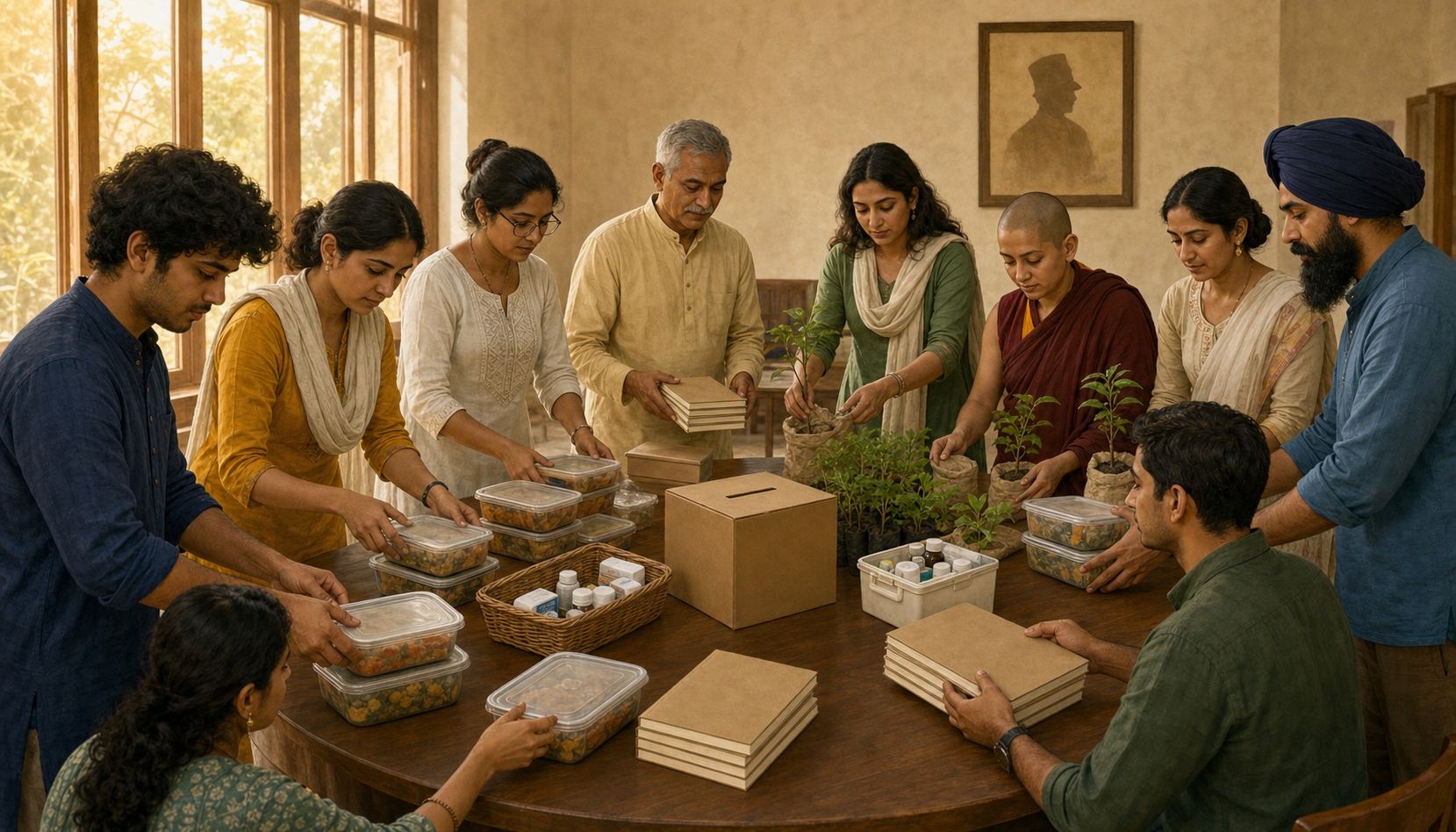
You are trying to turn Dharmic unity into local work. Perhaps young people know little about their civilizational inheritance, a sacred site needs responsible care, or a festival is becoming vulnerable to rumor. Someone invokes Savarkar. The name may energize the room, but it does not tell the room what to do next.
The practical answer is to use Savarkar’s thought as an operating discipline: remember the civilization, reform weaknesses within society, and build durable civic capacity. Place that discipline inside Dharmic ethics and constitutional restraint. Unity can then be recognized by what people learn, preserve and serve together – not by how loudly they declare agreement.
Define unity without demanding uniformity
Dharmic unity should be a compact for cooperation, not a demand for a common creed. Hinduism, Buddhism, Jainism and Sikhism have distinct doctrines, lineages, institutions, disciplines and self-understandings. A credible coalition does not erase those differences or relabel participants against their wishes.
Dharma, karuna, ahimsa and seva provide meeting points, although their meanings and emphasis are not identical in every tradition. The shared field is practical: civilizational literacy, care for sacred heritage, lawful exercise of constitutional rights, ethical public conduct and service to people in need.
This also clarifies the relationship between Hindu consolidation and broader Dharmic cooperation. Hindu institutions can address fragmentation within Hindu society while working respectfully with Buddhist, Jain and Sikh institutions on common concerns. Partnership does not authorize one participant to speak for all the others.
- Apply the identity test. Can every participant retain the name, language and symbols of their own tradition?
- Apply the reciprocity test. Are priorities shaped together, or is one organization merely asking others to endorse a finished agenda?
- Apply the reform test. Does the effort remove exclusion within its own institutions, including barriers faced by marginalized communities and women?
- Apply the public-benefit test. Will the work produce learning, preserve heritage, resolve a civic problem or deliver useful service?
- Apply the consent test. Can a person or institution decline participation without being denounced as disloyal?
If a proposal fails these tests, it may produce a photograph or a slogan, but it is unlikely to produce trust.
Use Savarkar as a method, not a ceremonial name
One influential reading of Hindutva: Who Is a Hindu? emphasizes a cultural-civilizational identity grounded in shared history, sacred geography and social memory, rather than a single theological or ritual code. Savarkar’s modernist side is just as relevant: scientific temper, caste-transcending reform, temple access, inter-dining and civic discipline formed part of the inheritance invoked in contemporary calls for Hindu unity.
That combination matters. Civilizational memory without reform can protect inherited injustice along with inherited wisdom. Reform without memory can leave a community detached from the institutions and stories that give it continuity. Organization without either can become a machine with no moral direction.
Whenever Savarkar’s name is proposed as the basis of an initiative, ask three concrete questions:
- What are we preserving? Name the language, practice, archive, sacred site, institution or historical memory at risk.
- What are we reforming? Identify the exclusion, ignorance, poor administration or social barrier that weakens the community from within.
- What capacity are we building? Specify the volunteers, records, procedures, partnerships and lawful channels that will remain after the gathering ends.
Savarkar remains a contested political figure. Dharmic cooperation does not require participants to pretend that every argument about his life or ideas has been settled. It requires intellectual honesty about the part of his inheritance being used. If the claim is disciplined organization, rational inquiry and internal social reform, say exactly that. Do not make assent to every interpretation of Savarkar a loyalty test.
Build unity through five forms of common work
A coalition becomes durable when it repeatedly completes useful work. The following workstreams translate civilizational solidarity into tasks that a local trust, youth mandal, mahila group, gurudwara committee, monastery, Jain institution or temple organization can actually undertake.
- Teach civilizational literacy through primary texts. Create a reading circle around short, manageable passages rather than speeches about an undefined glorious past. Label statements as textual quotation, historical evidence, interpretation or present-day opinion. When traditions are compared, invite knowledgeable participants to explain their own teachings. The aim is not to manufacture agreement; it is to teach people how to disagree without ignorance or caricature.
- Conduct consent-based heritage audits. Work with the lawful custodian of a temple, monastery, gurudwara or other sacred site. Record its condition, administrative contact, known risks, available documents and maintenance needs. Photographing vulnerable areas, moving objects, copying records or beginning repairs without permission can create security, conservation and ownership problems. An audit should lead to an authorized maintenance request, conservation referral or municipal engagement, not an uncontrolled volunteer intervention.
- Develop local legal literacy before a dispute. Identify the applicable process for event permissions, noise and safety compliance, heritage regulation and grievance redress before announcing a procession or public program. Articles 25-28 provide an important constitutional setting for religious freedom, but they are not a substitute for local compliance. Requirements vary by place and event, so obtain current written guidance from the responsible authority and qualified legal help when a genuine dispute arises.
- Adopt a rumor-control protocol. Treat an alarming screenshot or clipped video as a lead, not proof. Stop forwarding it, locate the earliest available version, check the named institution or official record, and contact someone able to verify the event. Corrections should state what was checked and what remains unknown. Do not publish private addresses, phone numbers or personal details while attempting to rebut a rumor.
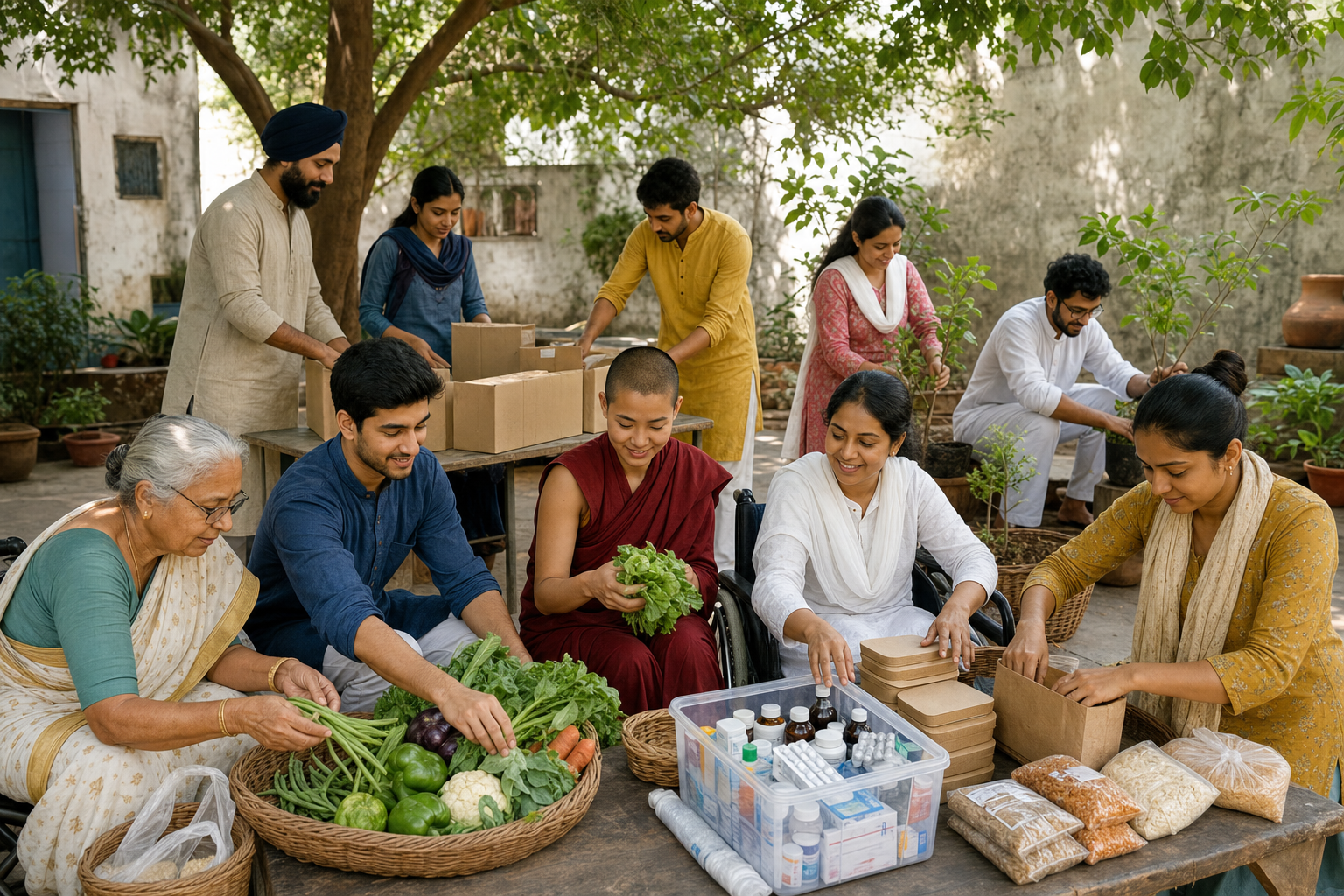
- Choose seva that requires cooperation. Annadanam, langar, hospital support, mentoring, cleanliness work, food-security efforts, blood donation and disaster response can create trust because participants solve a real problem together. Begin with the need, then identify an authorized partner, safe volunteer roles and a clear handoff. Blood donation must run through recognized medical organizers, and disaster work should be coordinated with trained responders rather than improvised at a hazardous site.
Do not launch every workstream at once. Choose the local problem for which there is consent, a responsible custodian and a realistic path to completion. A finished heritage record or well-run mentoring effort builds more confidence than a large coalition that accumulates announcements but leaves every task open.
Put constitutional and Dharmic guardrails in writing
Restraint is not weakness. It is the discipline that keeps collective strength from becoming coercion. A written charter should bind organizers before a controversy tests them.
- Participation is voluntary, and no tradition is required to surrender its self-description.
- Hate speech, collective humiliation and dehumanizing language are outside the project.
- Vigilantism, threats, forced entry and unauthorized confrontation are prohibited.
- Women and members of marginalized communities participate with dignity, not as decorative endorsers.
- Public events follow applicable permission, safety and heritage rules.
- Personal information, site vulnerabilities and confidential records are protected.
- Party allegiance is not a condition for joining civilizational, heritage or seva work.
- Money, materials and institutional endorsements are documented by the people authorized to approve them.
Use a fixed response when disagreement begins
A dispute becomes dangerous when outrage moves faster than verification. Agree on the response sequence before the first difficult incident:
- Pause public circulation of the disputed claim.
- Separate a doctrinal disagreement from a safety threat, property issue or alleged legal violation.
- Preserve relevant records without exposing private information.
- Ask the affected institution to identify its authorized representative.
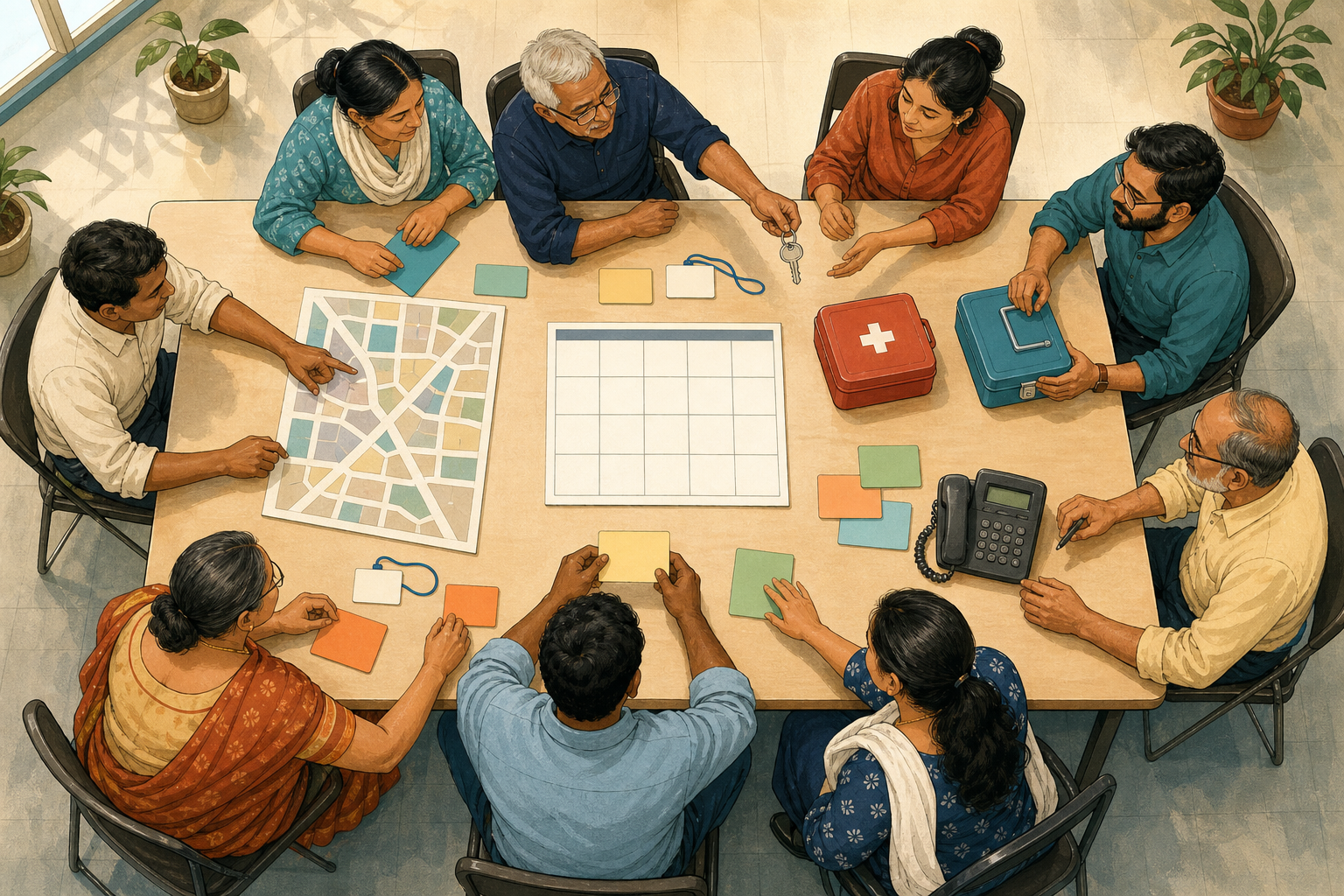
- Meet through designated coordinators in a neutral setting when direct dialogue is safe.
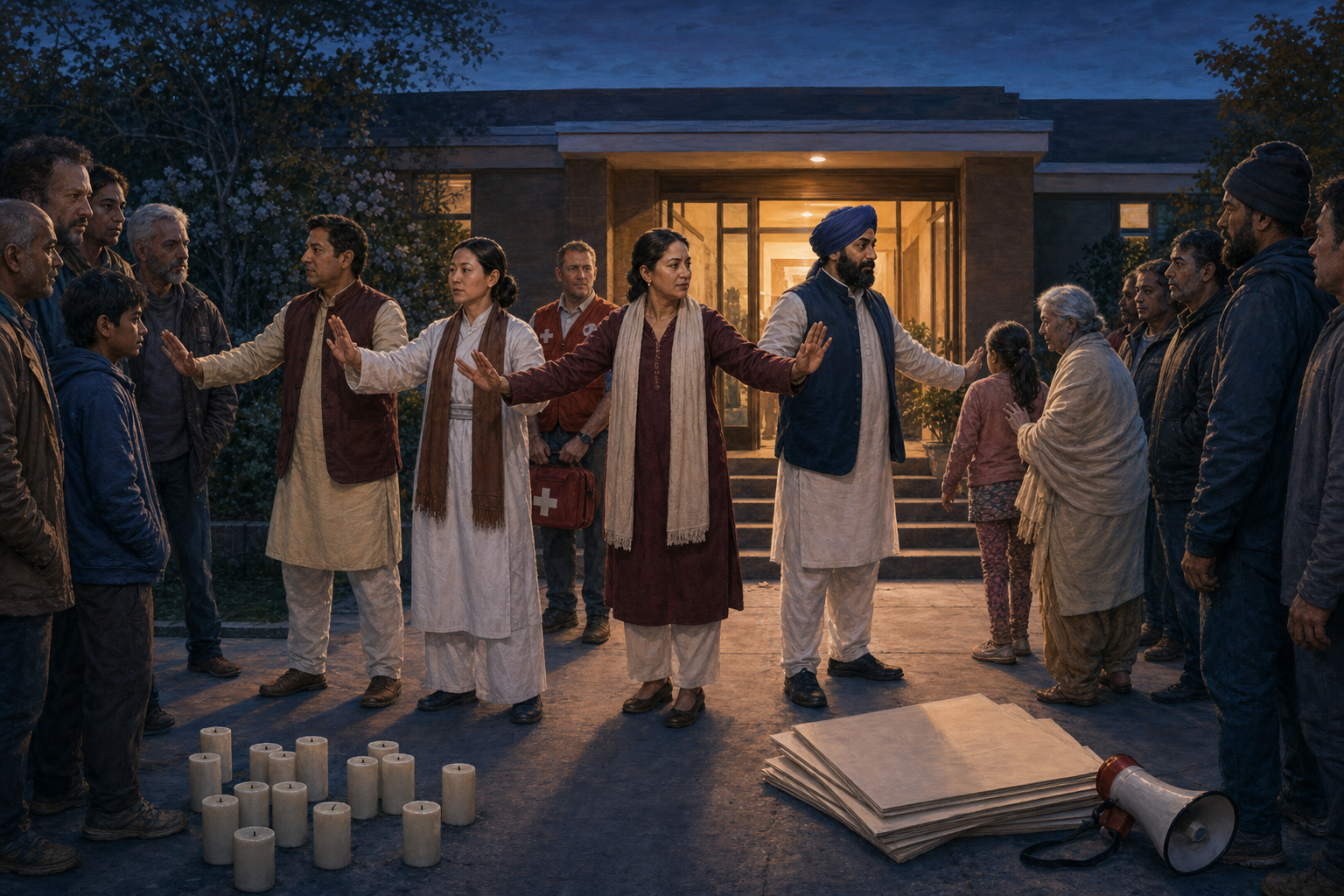
- If rights, safety or property are genuinely at risk, use the appropriate administrative, police or legal channel instead of mobilizing a crowd.
- Publish a correction or outcome note once the verifiable facts are clear.
This procedure will feel slower than reacting online. That is precisely its value. It prevents a false or incomplete claim from converting a manageable disagreement into a law-and-order problem.
Measure outcomes that reveal trust and capacity
Attendance, views and slogans are easy to count. They do not show whether unity has become useful. Track evidence connected to the stated purpose, and retain only information that can be stored lawfully and safely.
| Area | Evidence worth retaining | Warning sign |
|---|---|---|
| Civilizational literacy | Reading list, participating institutions, questions raised and learner feedback | One-way speeches with no primary texts or room for questions |
| Heritage stewardship | Custodian-approved condition record, referrals made and maintenance issues resolved | Unauthorized repair, uncontrolled photography or an audit with no follow-through |
| Legal literacy | Permission checklist, responsible contact and documented grievance outcome | Rules are considered only after an event or dispute has begun |
| Digital civility | Rumor log, verification path, correction issued and repeat incidents | Viral reach is treated as success even when a claim remains unverified |
| Seva | Need identified, authorized partner, safe roles, completion record and beneficiary feedback | Branding dominates while delivery or handoff remains unclear |
| Festival mediation | Issue documented, parties consulted, lawful arrangement reached and recurrence noted | Temporary calm with no record of what was agreed |
For a review over the next year, look at the number and quality of literacy workshops, heritage sites responsibly audited, festival disputes successfully mediated, multi-community seva projects completed and misinformation incidents corrected or prevented. Establish the starting position first. Otherwise, an impressive total may reveal activity without showing improvement.
Assign an owner to each outcome and identify the record that will prove completion. Keep sensitive site information private, publish financial information only through authorized processes, and ask participants whether they would work together again. Repeated voluntary participation is a stronger trust signal than compulsory attendance at a single event.
Key takeaways
- Dharmic unity is cooperation among distinct traditions, not the merger of their doctrines or identities.
- The most usable Savarkar inheritance combines civilizational memory, internal social reform, rational inquiry and disciplined organization.
- Education, heritage care, legal literacy, rumor control and seva give a coalition concrete work.
- Consent, non-coercion, inclusion and lawful conduct are operating rules, not public-relations language.
- Measure completed work, resolved problems and recurring trust rather than crowd size or online reach.
Choose the local problem now. Write a short charter naming the participants, the need, the lawful method, the responsible owner and the evidence of completion. Begin only after the affected institution consents. When people can point to a learner better equipped to judge evidence, a sacred site more responsibly cared for, a rumor stopped or a neighbor served, Dharmic unity has moved from the podium into public life.
References
